Up early (again) on Monday morning for a day crammed with activities.
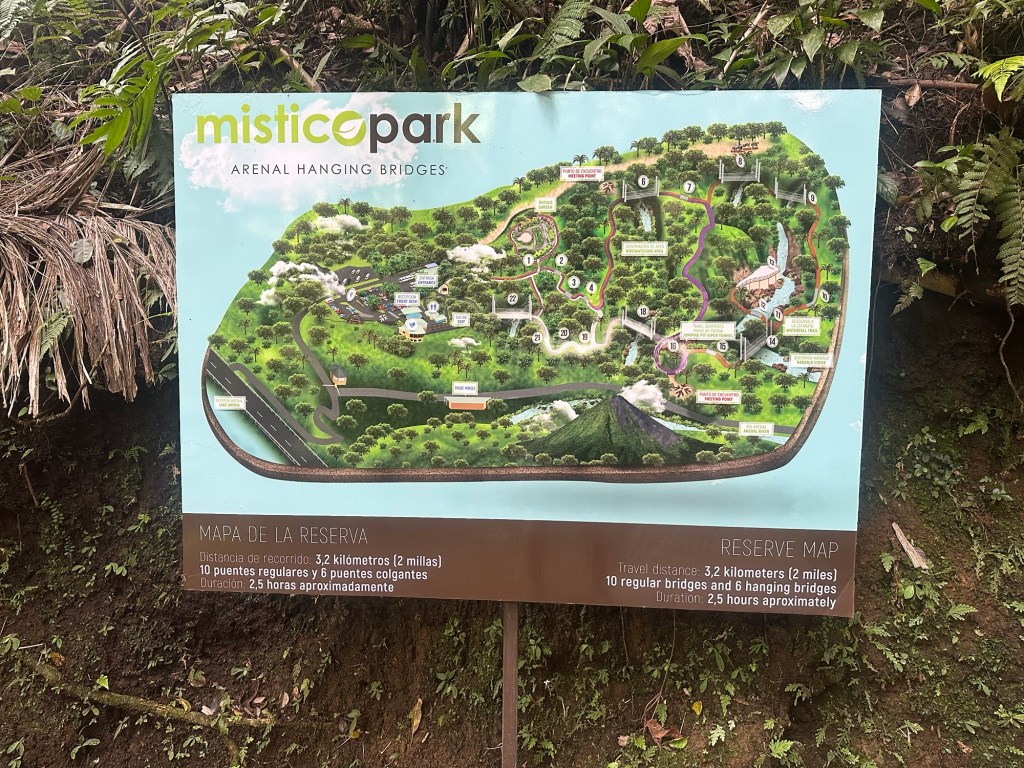
First up- a walk up and back to a viewpoint of the volcano. Followed by a ‘hanging bridge’ ‘adventure’ through the rainforest / treetops ( 16 bridges, 6 of them long suspension bridges like you get on the great walks in NZ), then volcanic hot springs. The final activity being tortilla making and a home cooked meal with a local family.
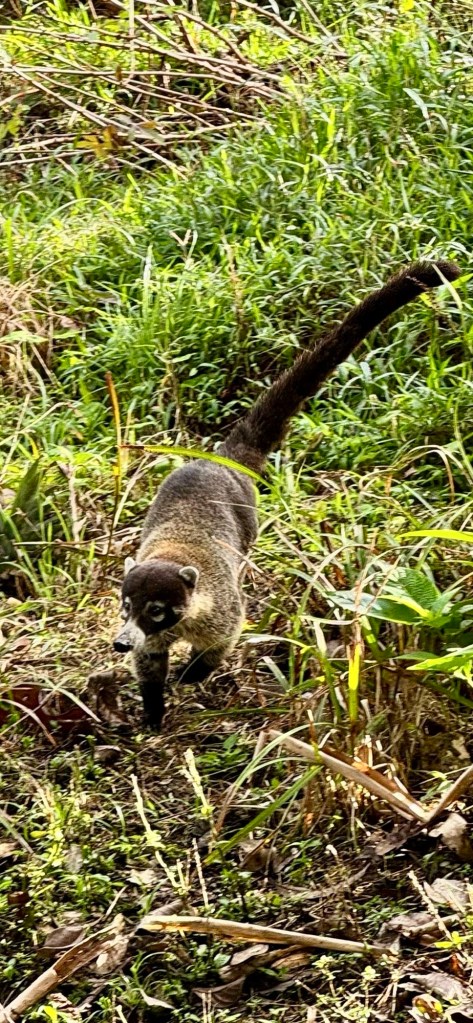
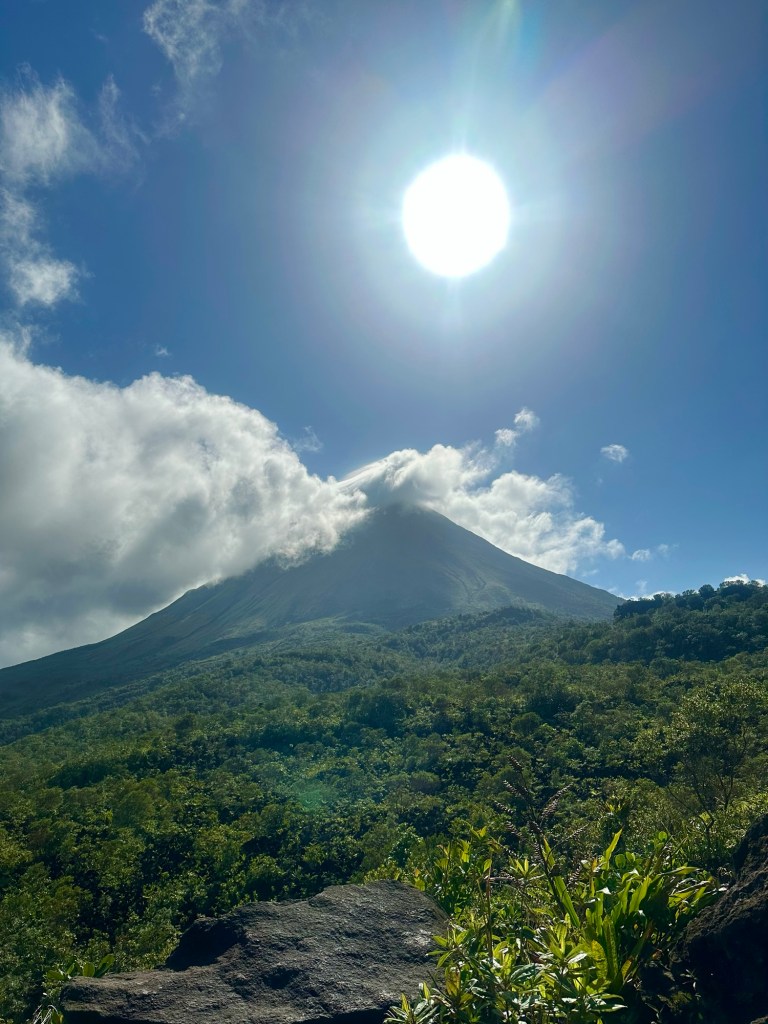
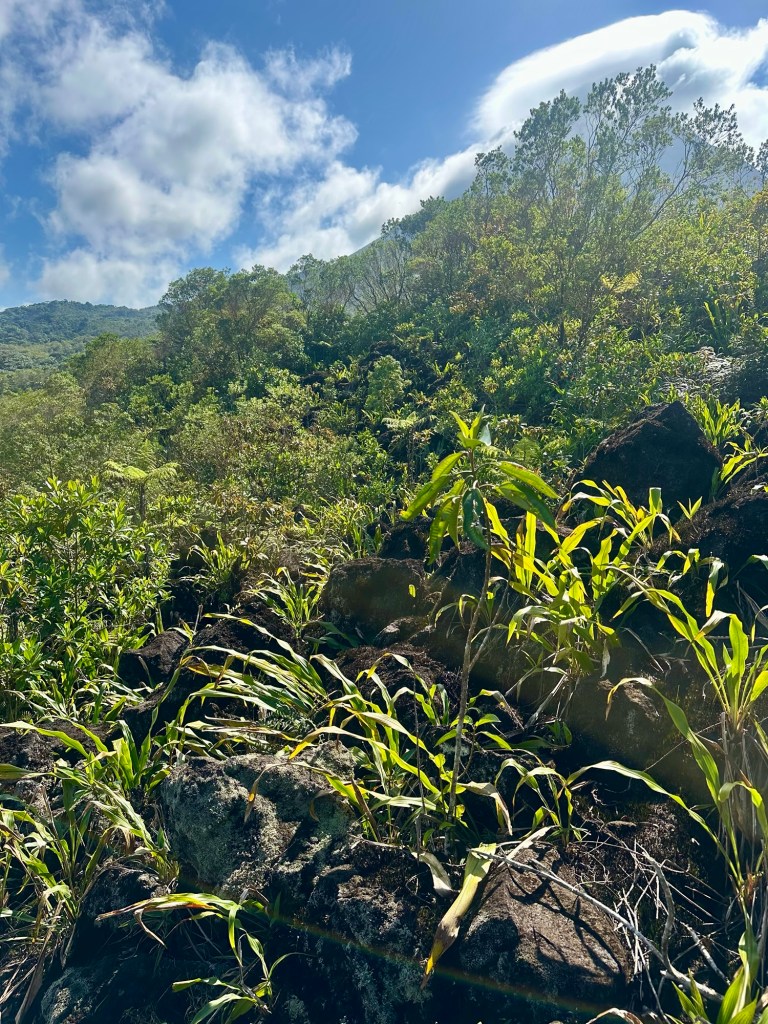
The hike to the volcano viewing point was good. Including a steepish up and down bit through the 1968 lava flow field. What was interesting was how quickly the forest is taking back what was bare tracts of black lava. It was also cool to see a Coati ( like a Costa Rican rainforest raccoon) loitering in the carpark.
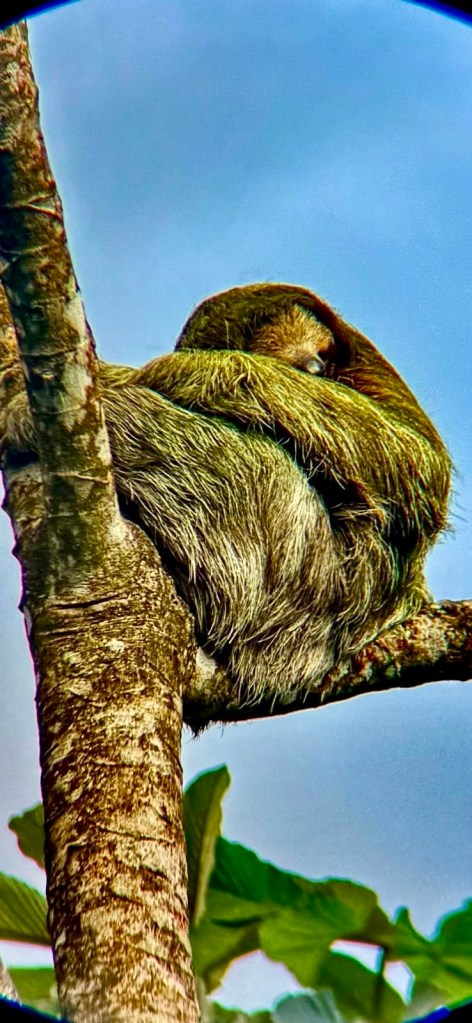
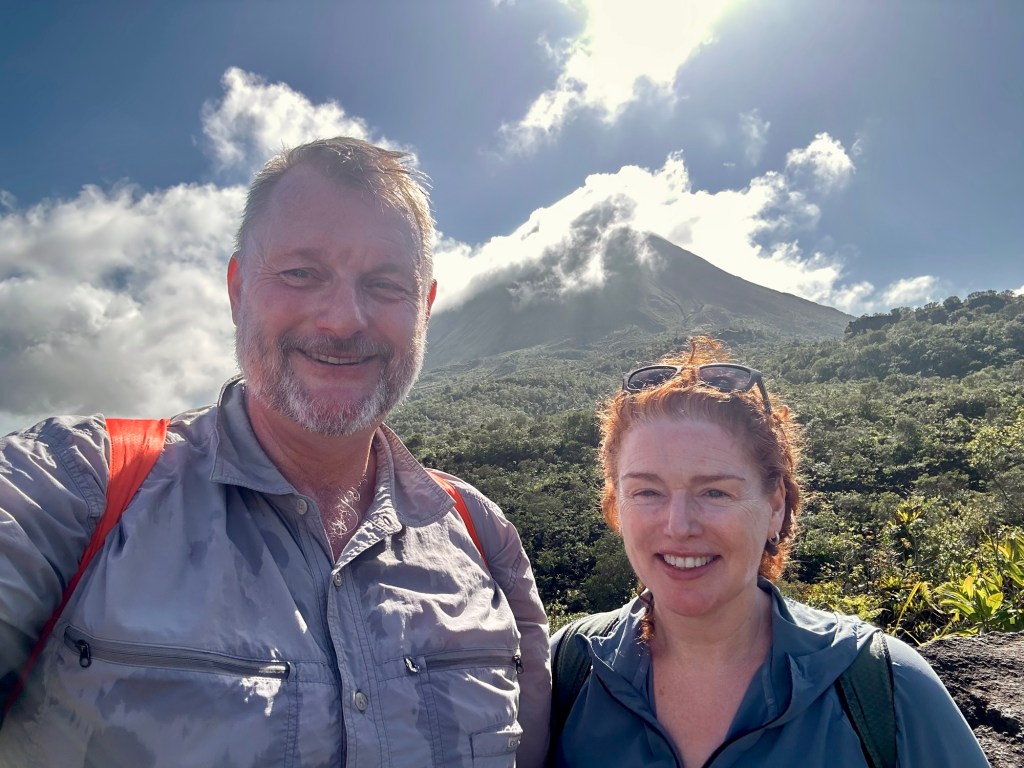
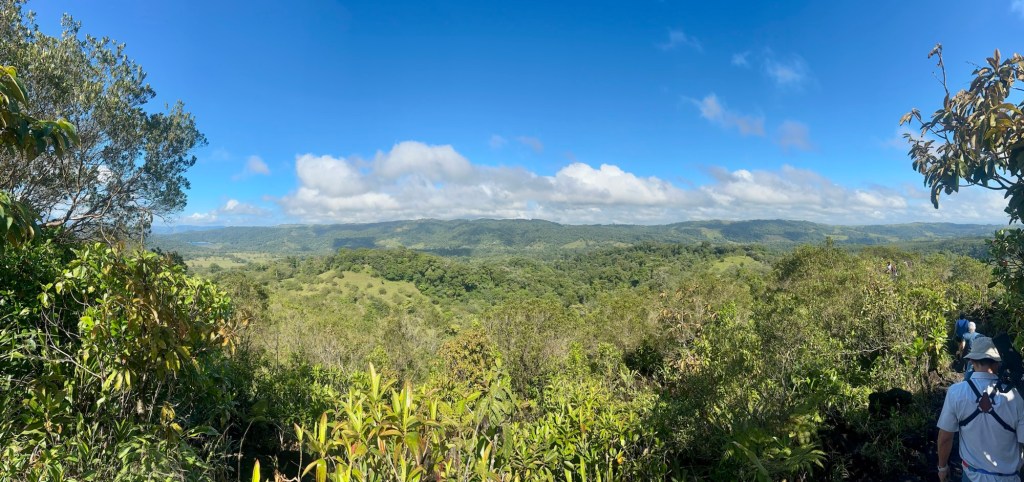
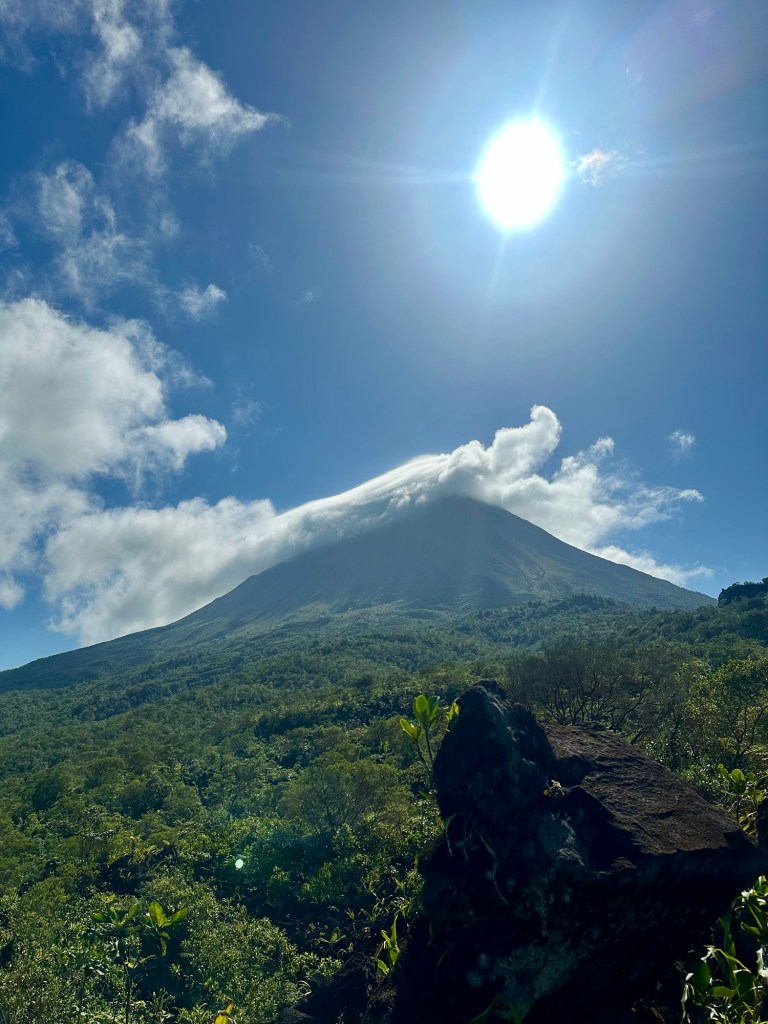
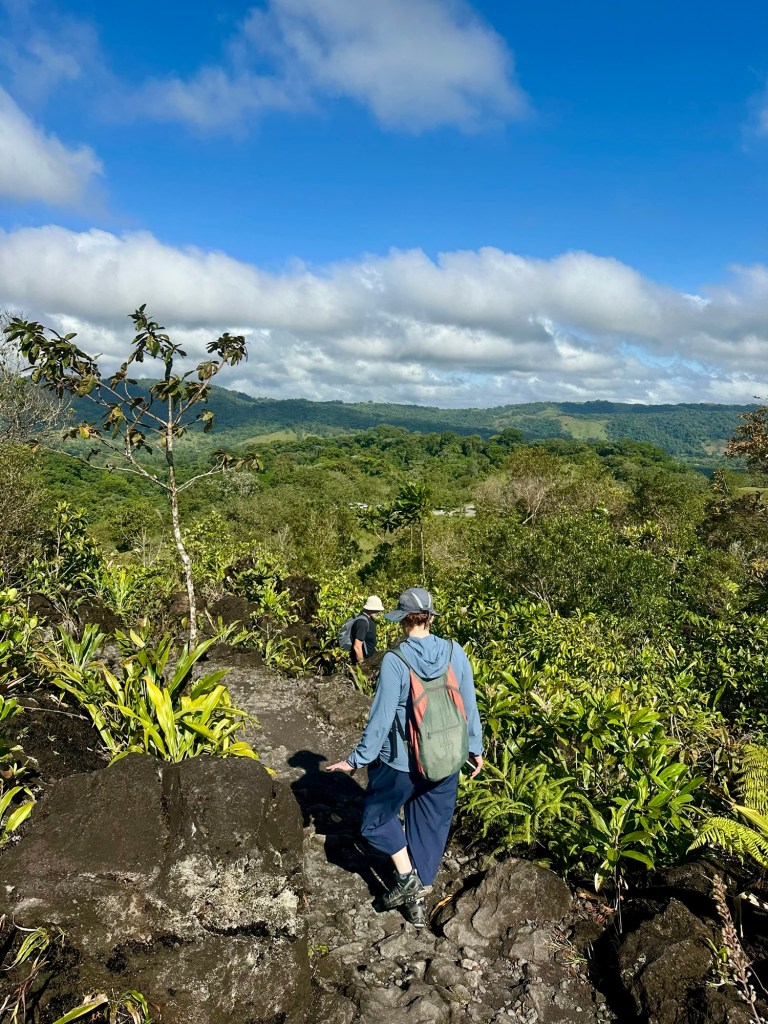
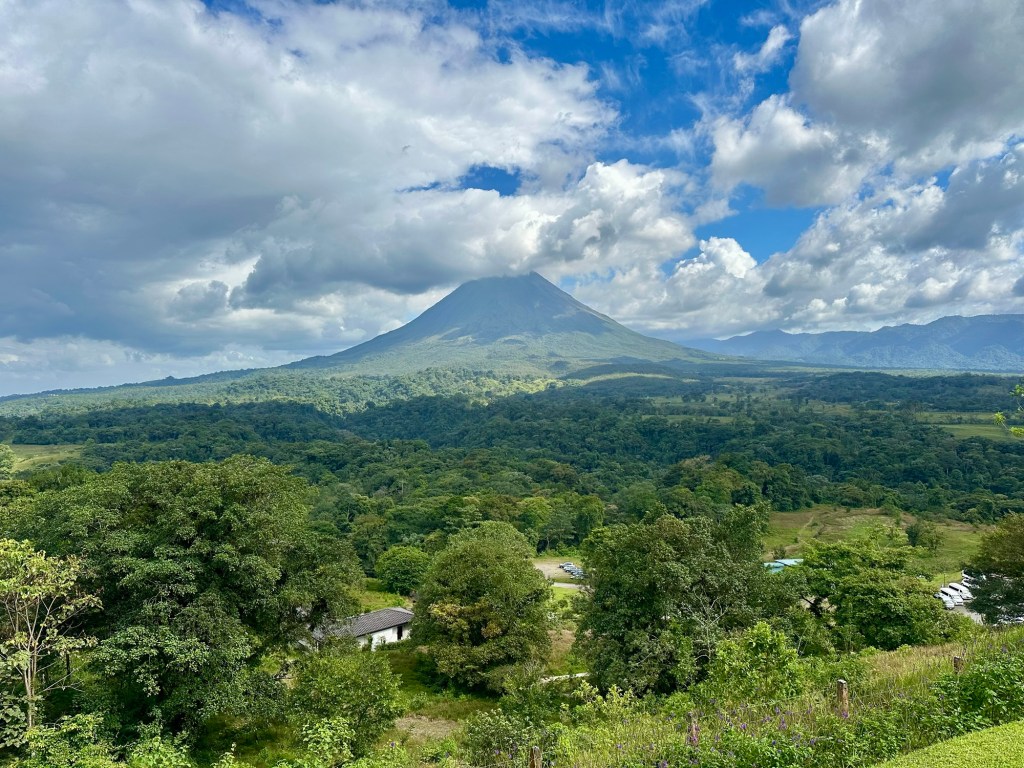
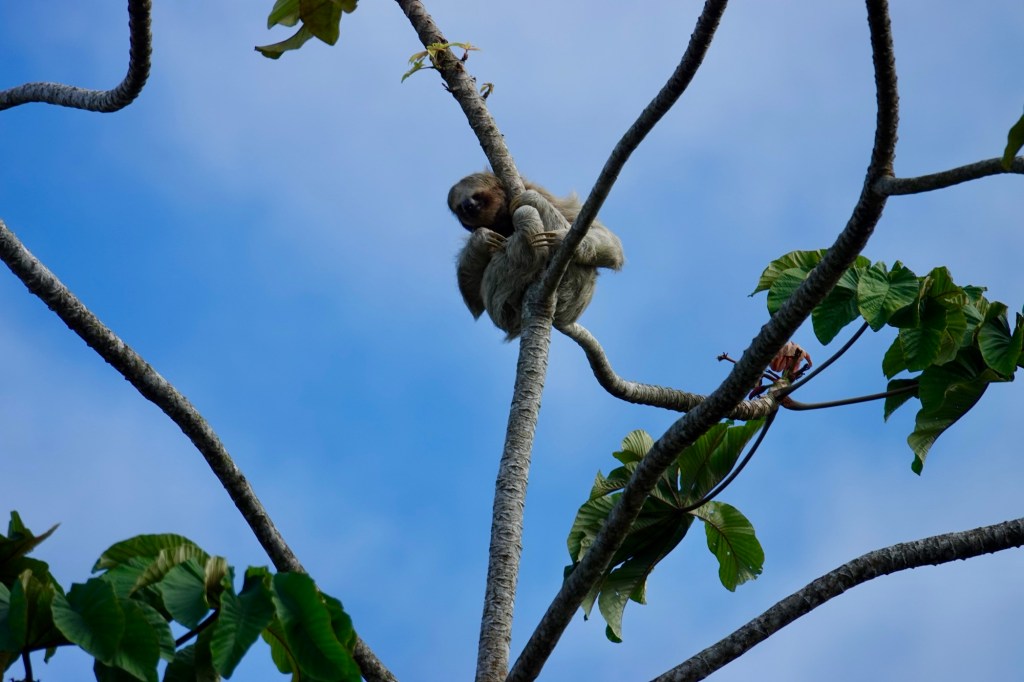
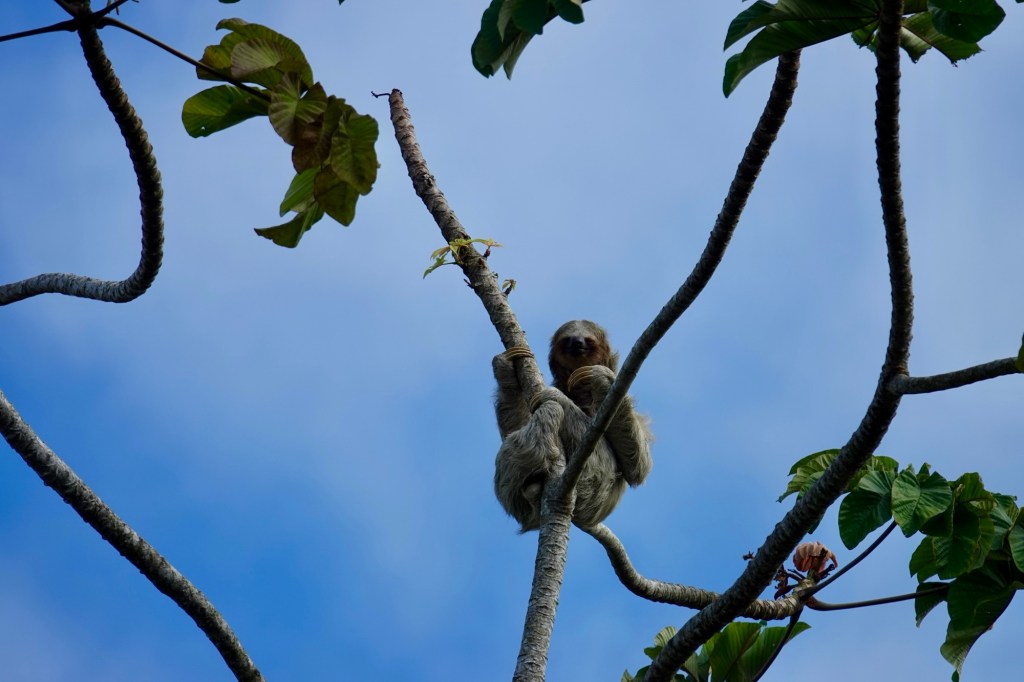
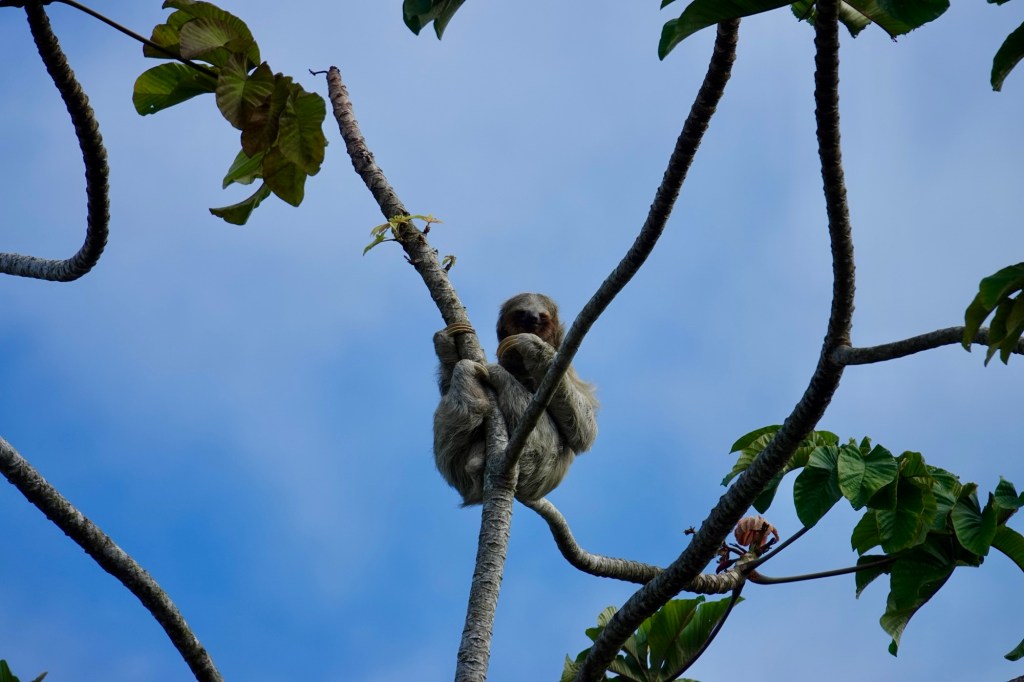
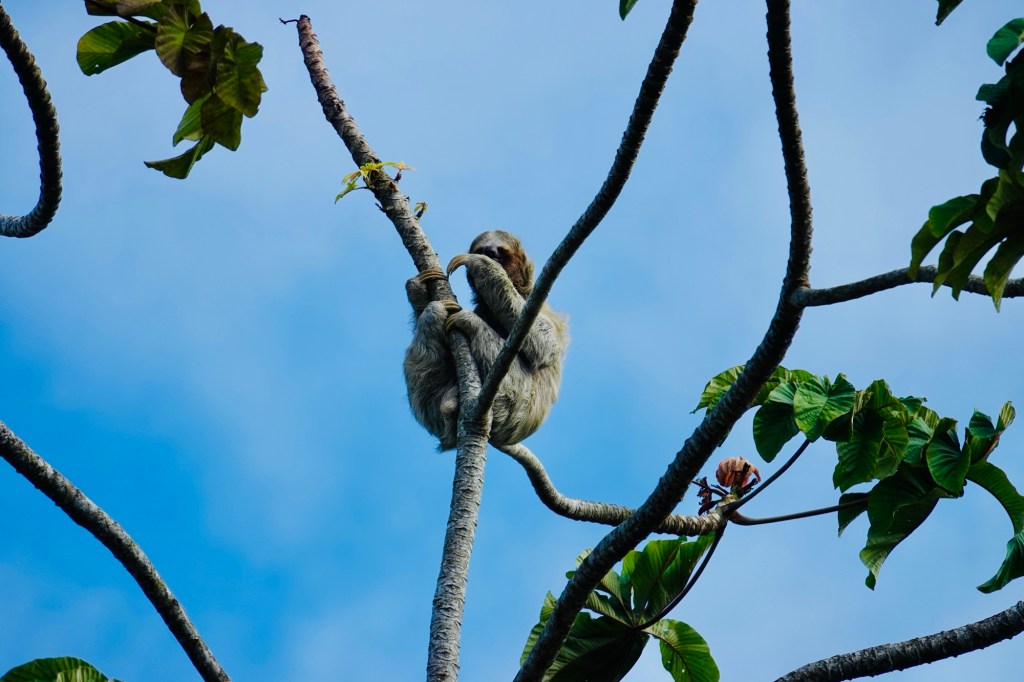
The carpark CoatiOh , and we also saw another road side three toed sloth enroute to the volcano hike. H/T Sergio for the best image Arenal volcano Arenal volcano + hot & sweaty authorsView looking away from the volcano Ness heading back down the lava field The regrowth on the lava field
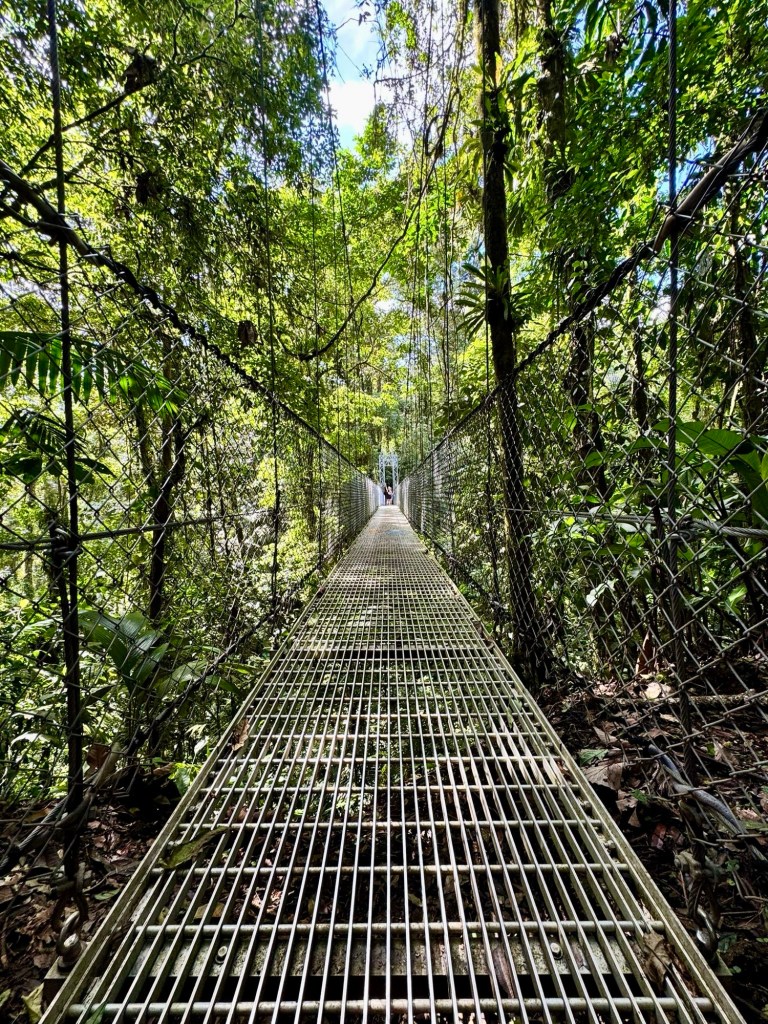
Then it was onto the ‘hanging bridges’ with six thousand of our new Costa Rican friends- the first place was extremely popular. There are some nice gardens on the approach paths
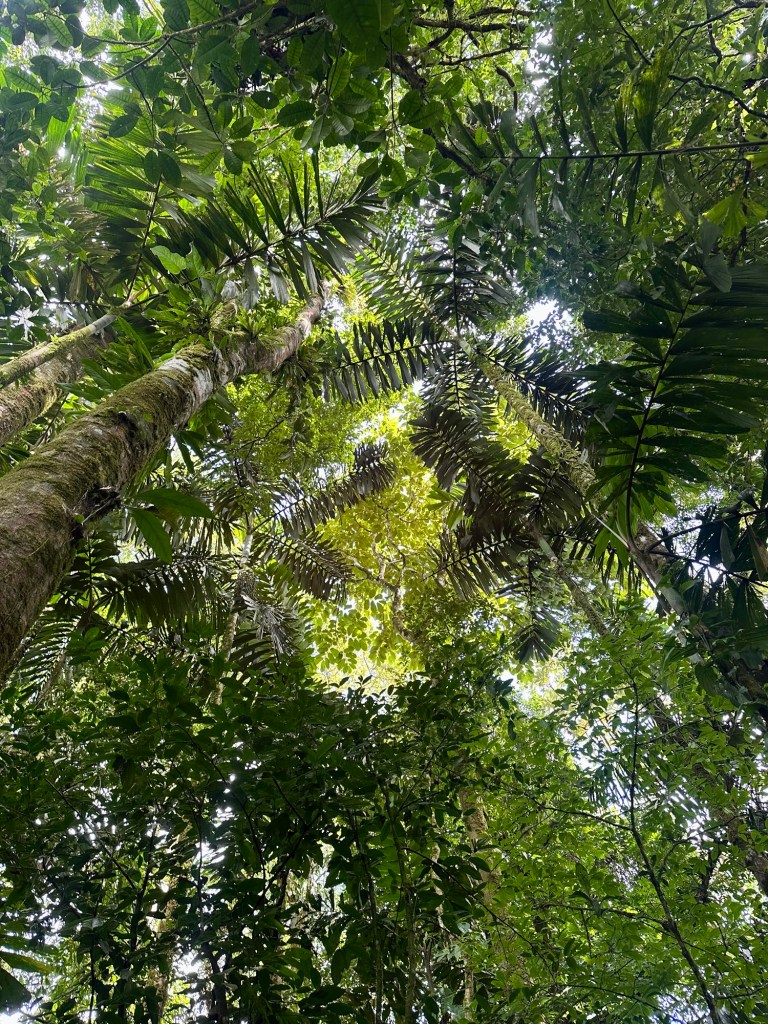
High canopy rainforest at the bridges
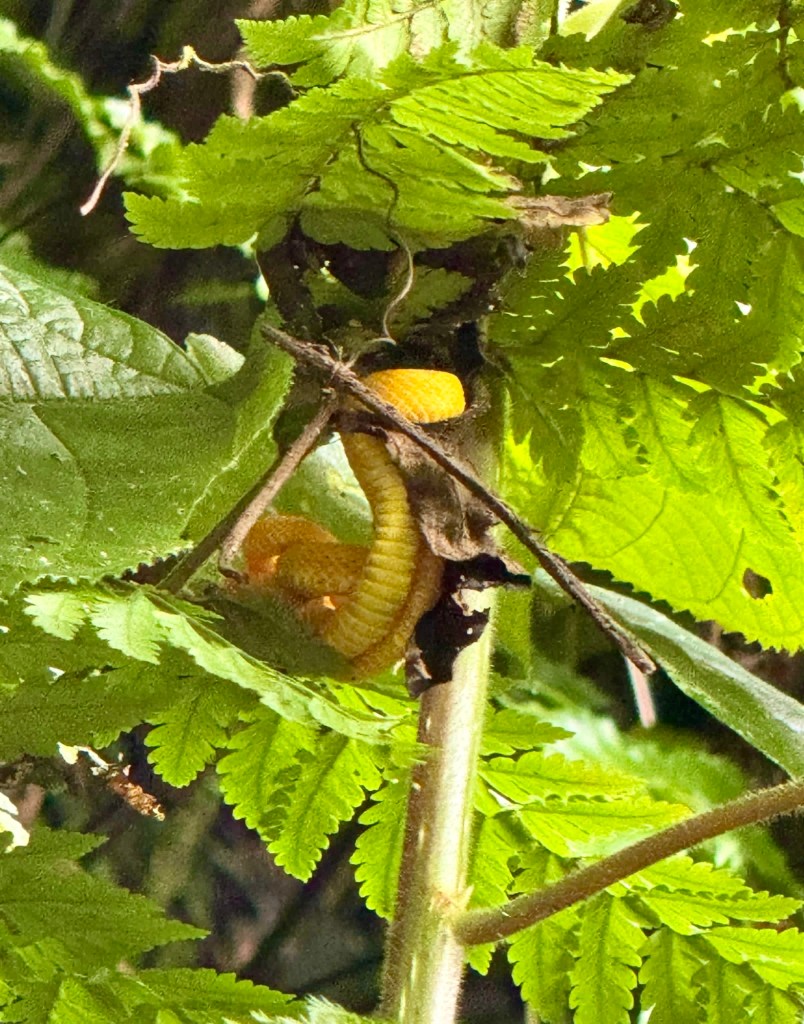
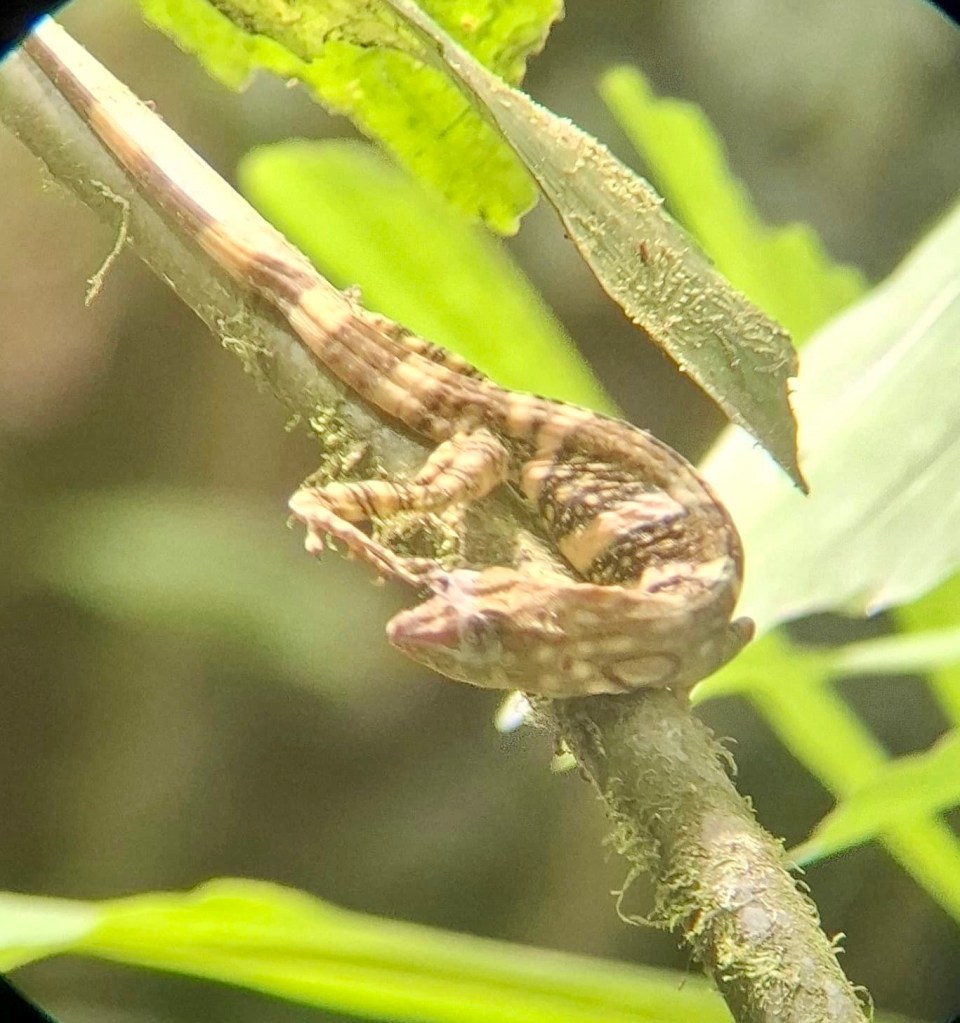
As we neared the first big suspension bridge we saw a troop of Spider Monkeys doing their thing among the tree tops. They were simultaneously fascinating and impossible to photograph through the vegetation. We did see and manage to photograph a variety of reptiles, including a yellow eyelash pit viper – which is apparently highly venomous.
Yellow eyelash pit viper ( H/T Robin for this image)Forgot the name of this one…One of the many suspension bridges A different perspective of Arenal from the end of the hanging bridges walk
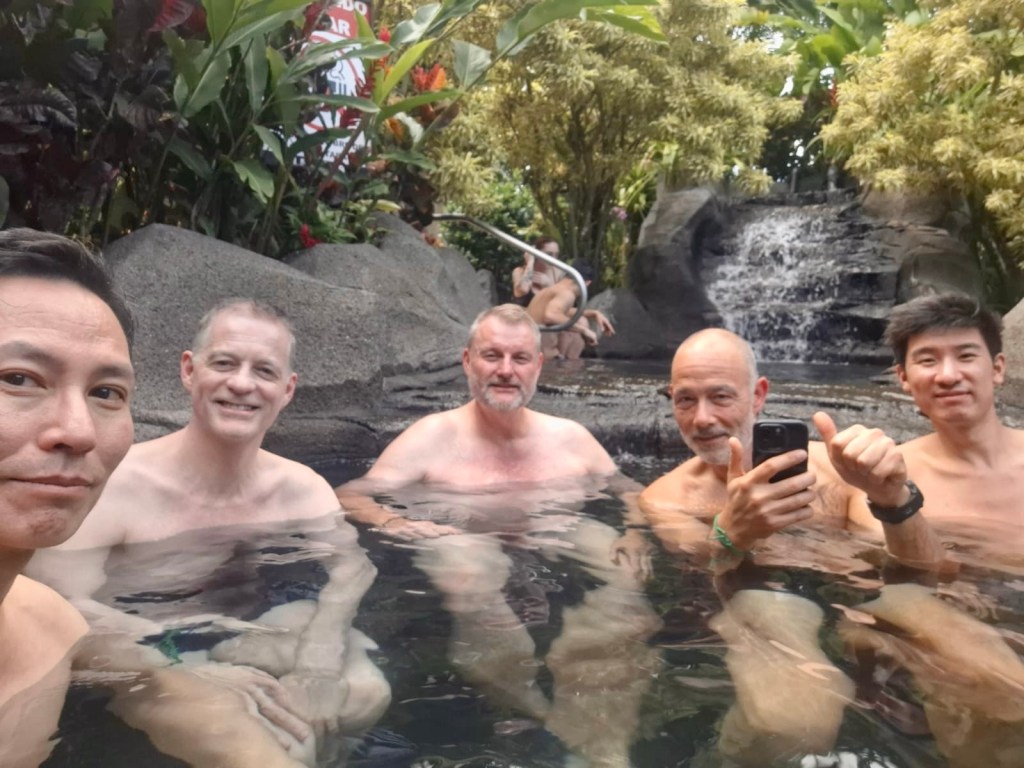
After a late lunch it was off to the volcanic hot springs. A feature of the hot springs was a dude who brought beers and margaritas while you sat in the various hot pools. This feature was well exercised by the group.
The tour group that bathes together…
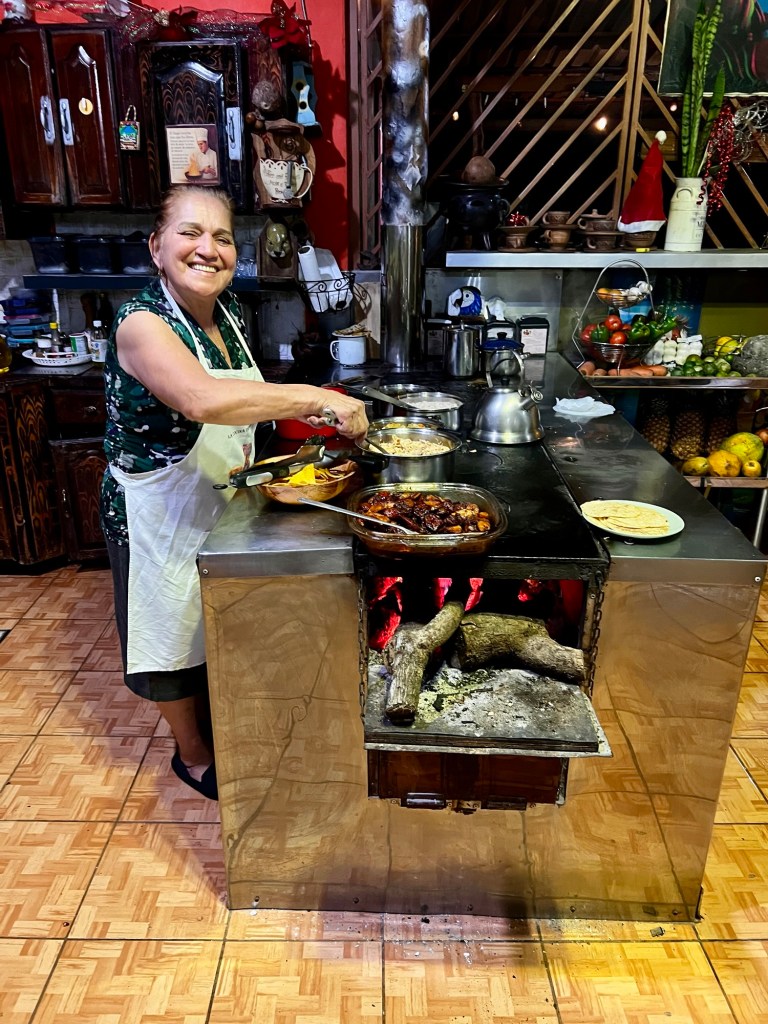
After the hot springs it was back to the hotel and a quick split before heading out into the hills for a home dinner ( after tortilla making) in a local’s home. Dona Mara was warm, welcoming, funny and a great cook.
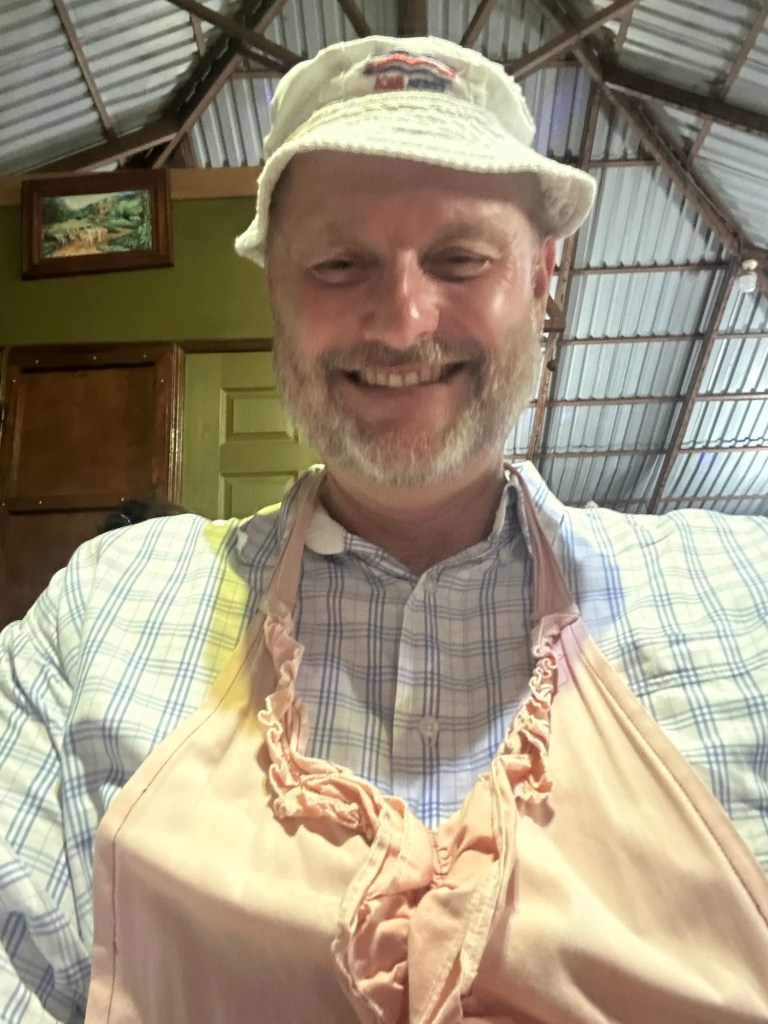
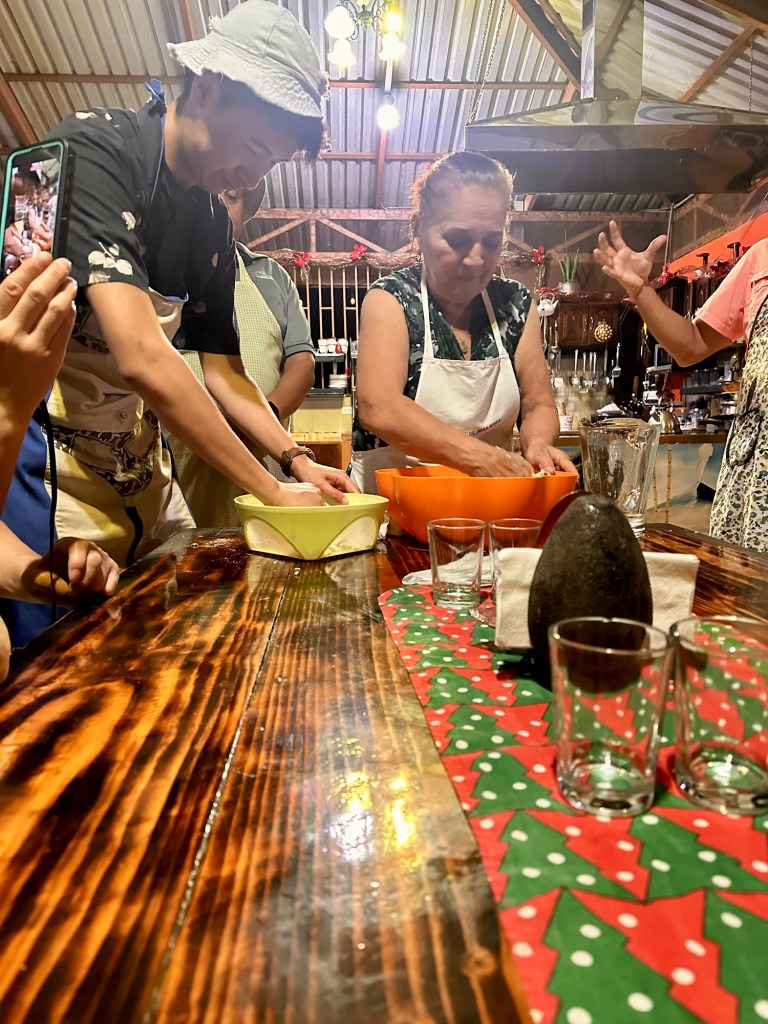
Hat and apron required for tortilla making – Mark definitely got the short straw in apron selection Dona Mara taking care of business on her wood fired stoveAlex making Tortillas w/ MaraDinner – it was excellent!
Tuesday came around and was one of those days described in the tour guides as ‘free time’. So …no early start! 😊
We used our free time to 1. Sleep in ( we are on holiday after all) 2. Catch up on laundry 3. Walk around town and 4. Have a fantastic massage at a local spa. A nice slow day. Tomorrow: up the dividing range to Monte Verde ⛰️
Up early (again) on Monday morning for a day crammed with activities.
First up- a walk up and back to a viewpoint of the volcano. Followed by a ‘hanging bridge’ ‘adventure’ through the rainforest / treetops ( 16 bridges, 6 of them long suspension bridges like you get on the great walks in NZ), then volcanic hot springs. The final activity being tortilla making and a home cooked meal with a local family.
The hike to the volcano viewing point was good. Including a steepish up and down bit through the 1968 lava flow field. What was interesting was how quickly the forest is taking back what was bare tracts of black lava. It was also cool to see a Coati ( like a Costa Rican rainforest raccoon) loitering in the carpark.
The carpark CoatiOh , and we also saw another road side three toed sloth enroute to the volcano hike. H/T Sergio for the best image Arenal volcano Arenal volcano + hot & sweaty authorsView looking away from the volcano Ness heading back down the lava field The regrowth on the lava field
Then it was onto the ‘hanging bridges’ with six thousand of our new Costa Rican friends- the first place was extremely popular. There are some nice gardens on the approach paths
High canopy rainforest at the bridges
As we neared the first big suspension bridge we saw a troop of Spider Monkeys doing their thing among the tree tops. They were simultaneously fascinating and impossible to photograph through the vegetation. We did see and manage to photograph a variety of reptiles, including a yellow eyelash pit viper – which is apparently highly venomous.
Yellow eyelash pit viper ( H/T Robin for this image)Forgot the name of this one…One of the many suspension bridges A different perspective of Arenal from the end of the hanging bridges walk
After a late lunch it was off to the volcanic hot springs. A feature of the hot springs was a dude who brought beers and margaritas while you sat in the various hot pools. This feature was well exercised by the group.
The tour group that bathes together…
After the hot springs it was back to the hotel and a quick split before heading out into the hills for a home dinner ( after tortilla making) in a local’s home. Dona Mara was warm, welcoming, funny and a great cook.
Hat and apron required for tortilla making – Mark definitely got the short straw in apron selection Dona Mara taking care of business on her wood fired stoveAlex making Tortillas w/ MaraDinner – it was excellent!
Tuesday came around and was one of those days described in the tour guides as ‘free time’. So …no early start! 😊
We used our free time to 1. Sleep in ( we are on holiday after all) 2. Catch up on laundry 3. Walk around town and 4. Have a fantastic massage at a local spa. A nice slow day. Tomorrow: up the dividing range to Monte Verde ⛰️
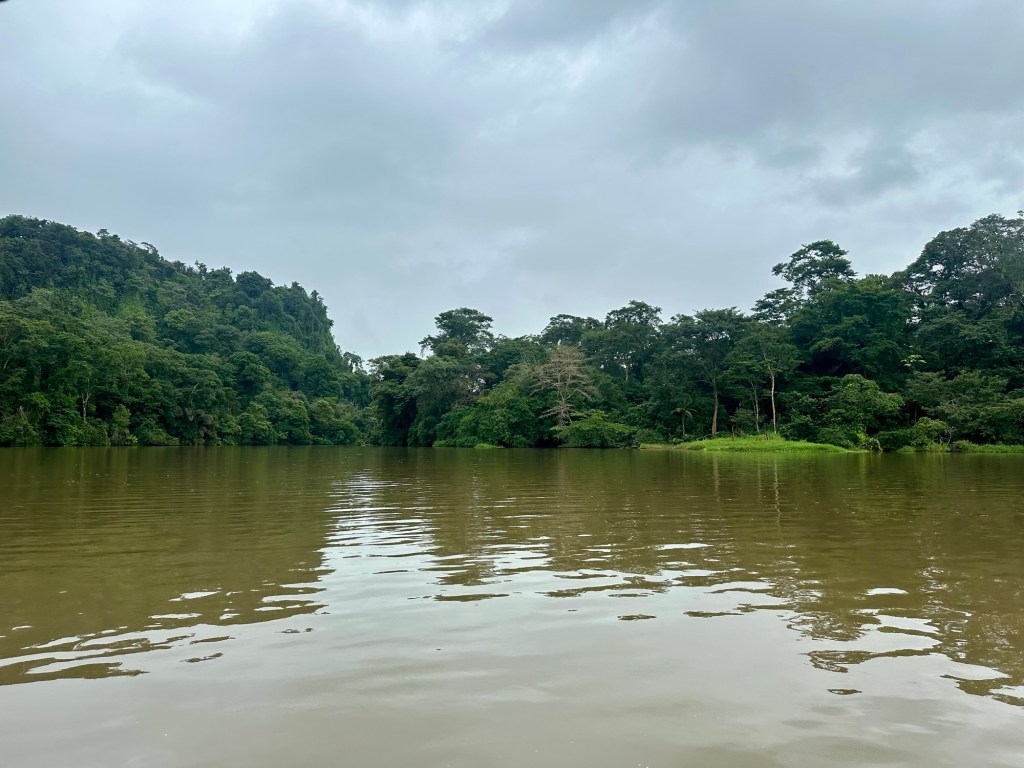
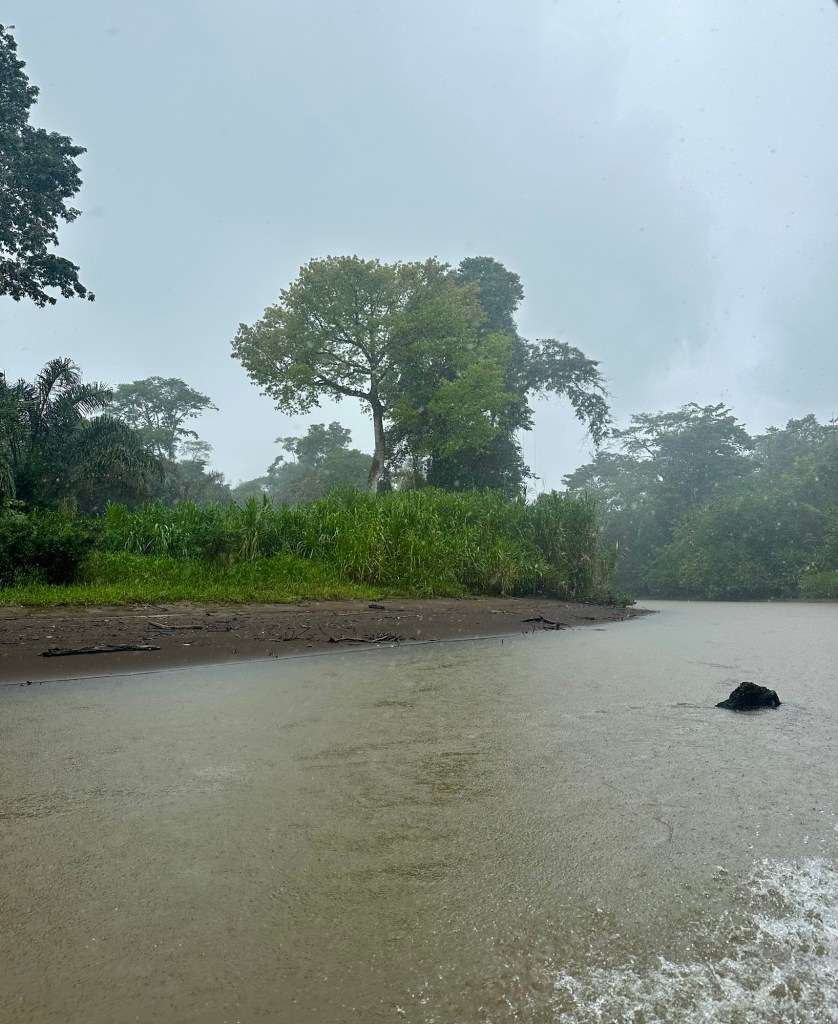
Up early (again) and on the boat straight after breakfast for the transfer back through the ‘canals’ and upriver out of the Tortuguero National Park. The jungle gives the journey a real Conradian ‘Heart of Darkness’ vibe.
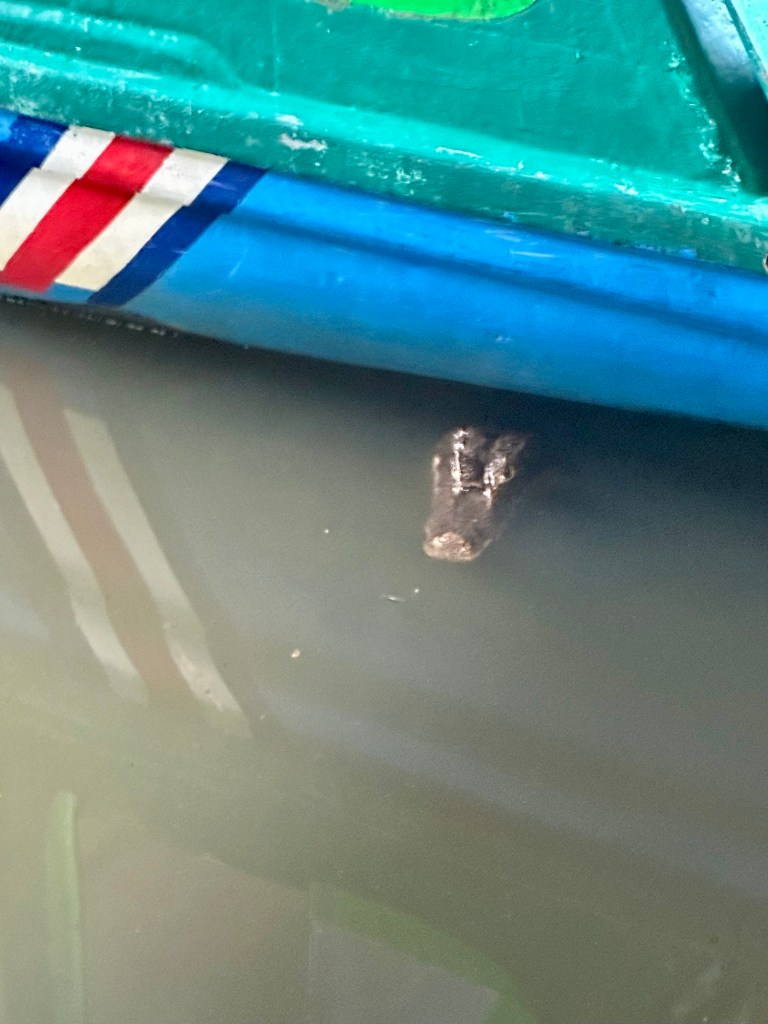
‘Juan’ the resident caiman at the dock
It belted rain most of the way
It was then onto a minivan for around three hours across one or two of the Caribbean lowland provinces- endless fields of pineapple, banana and papaya with the odd heart of palm plantation to export transfats to the US. Then into some foothills at around 1,000 metres AMSL for lunch at, and a tour of, a collective coffee farm and processing place.
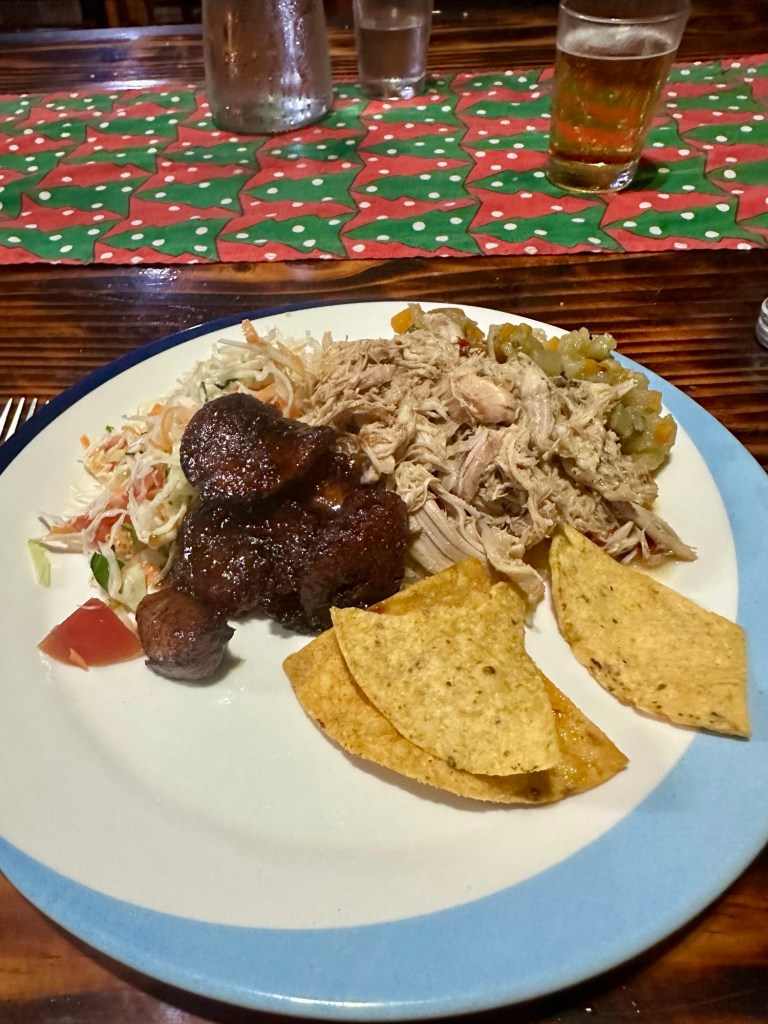
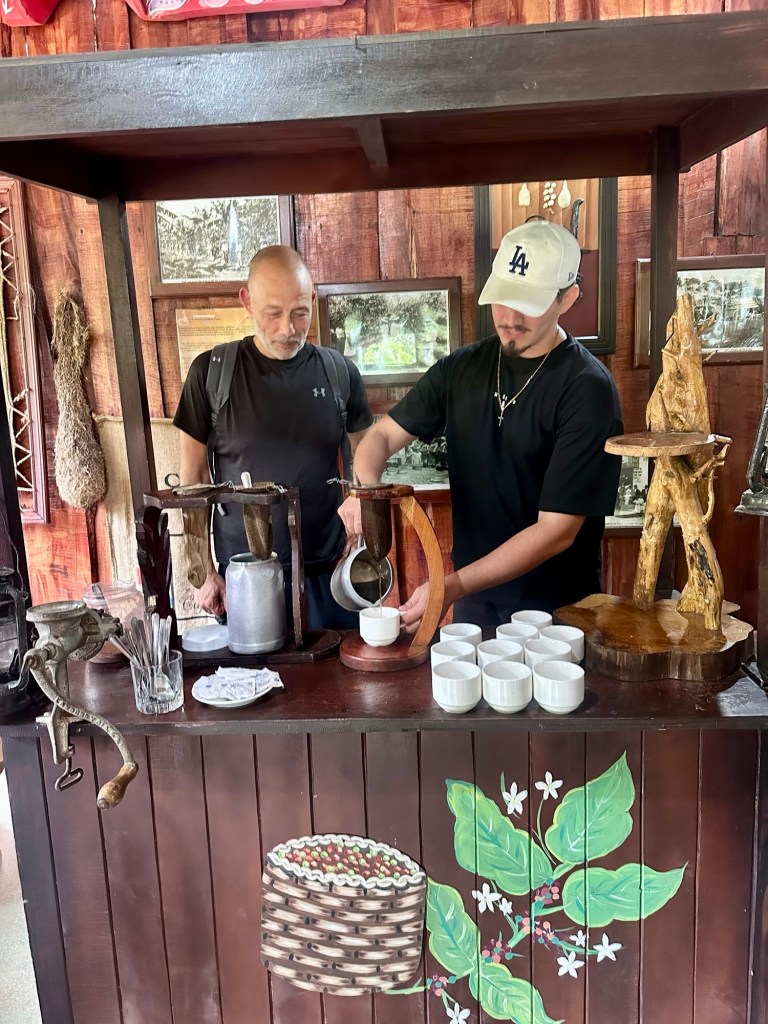
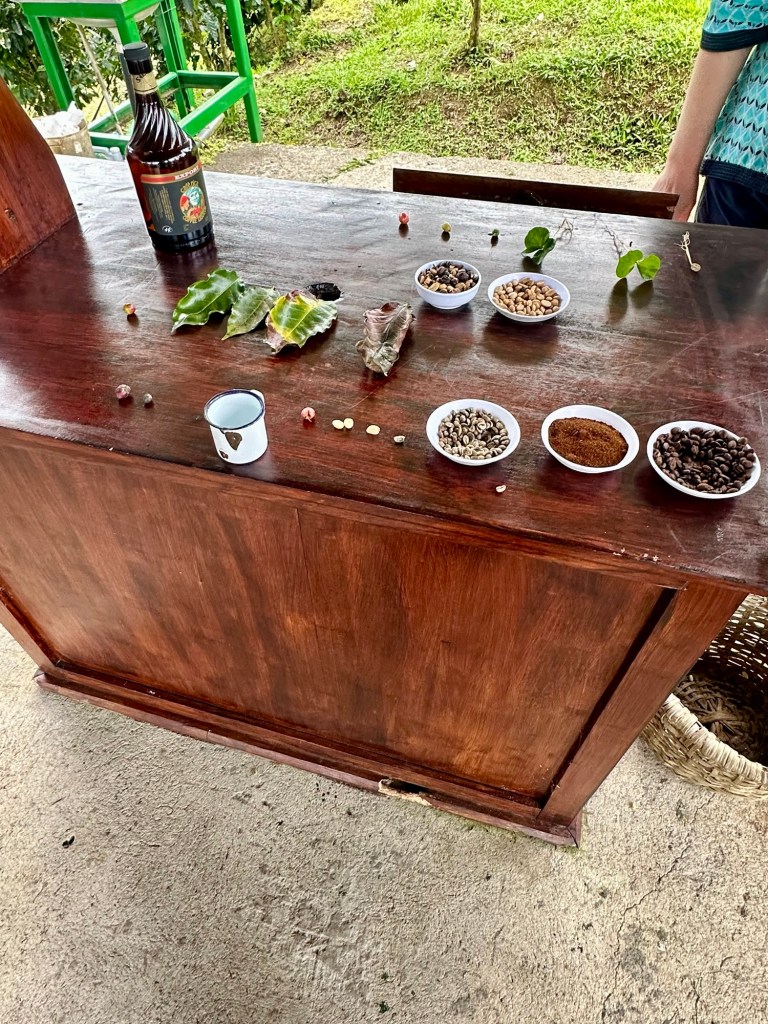
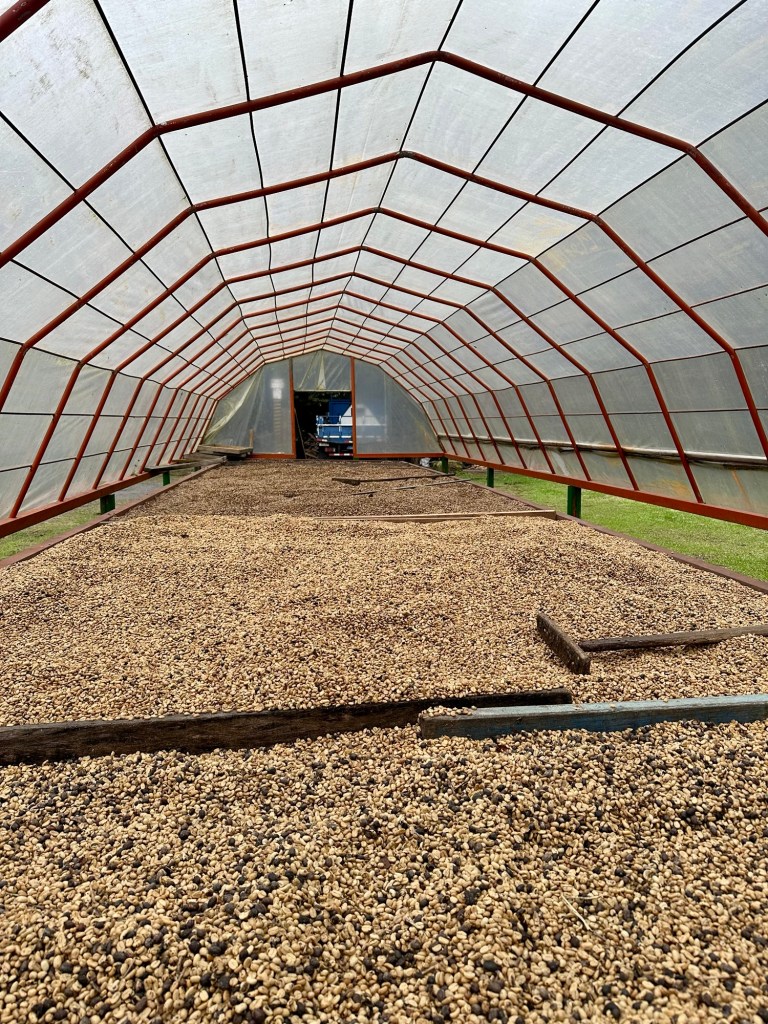
Lunch was classic tico food – pico de gallo, plantains etc – and tasty . It was then into the coffee – tasting and tour. Very interesting to see how our daily coffee gets to us – and the Q&A was incentivised with shots of coffee liqueur made on site from the ‘second skin’ of the coffee beans. We got very good at answering questions! 😋
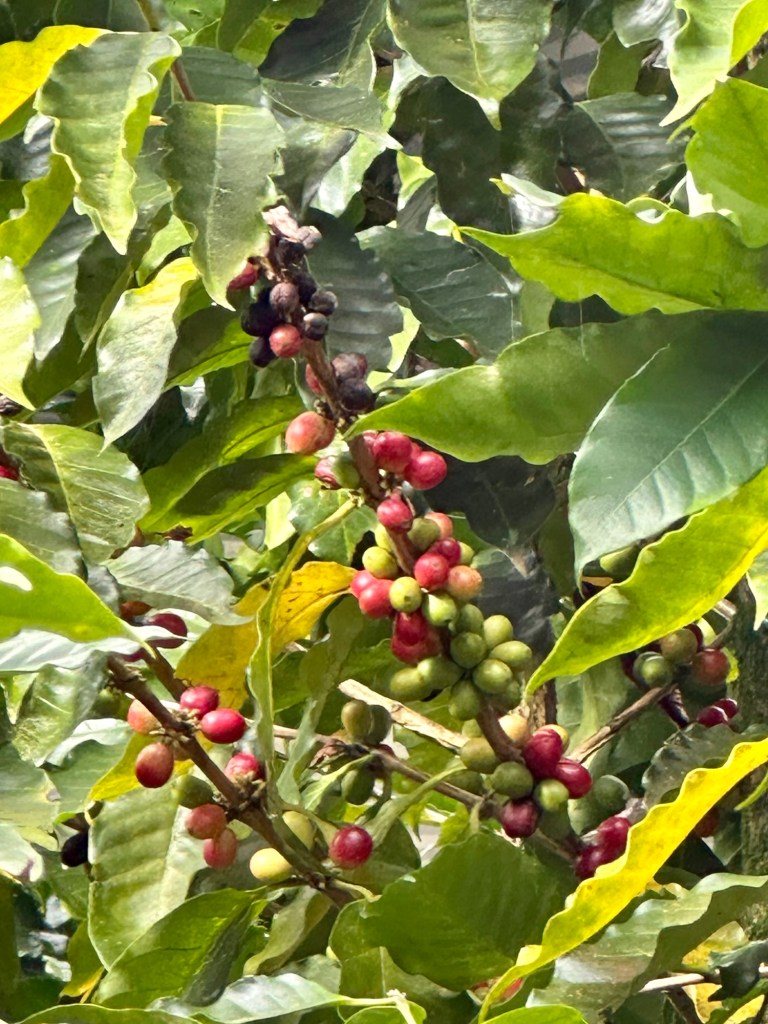
Demo of making coffee the Costa Rican way… Sergio from Spain assisting The ‘coffee’ life cycle being explained- coffee liqueur bribes visible Coffee beans! They are ripe when fully red.Coffee beans drying before roasting- the lower the grade, the longer they take to dry. These are 2nd grade beans
Some stats we learned – of the 3 – 4 grades of arabica beans produced in Costa Rica , different buyers take different grades. Grade 1 is the best, Grade 4 is the crap Army puts in ration packs.
Illy and Lavazza only take 1st Grade. Starbucks takes 3rd Grade – which explains a lot. Maxwell house instant also. Surprisingly, McCafe at Maccas takes mainly 1st Grade with some 2nd.
Another interesting thing. The coffee beans are handpicked. For some really cruddy wages. A 12 kg Bushel of picked beans , which will ultimately produce approximately 6 kg of roasted beans, earns the picker $US 2. The really good pickers might pick 10-12 bushels a day. The work is hot , back breaking and very poorly paid – so much so that Ticos ( Costa Ricans) won’t do it and the harvest is done by seasonal workers from Nicaragua ( the next country north). So when you hear in Australia from your local coffee shop that prices are rising because of the price of beans where they grow – that’s horseshit. They are rising because of something that happens somewhere after the beans have been harvested…
After the tour … and sufficient shots of coffee liqueur … we proceeded (very caffeinated) with the trip to La Fortuna, arriving around 5pm.
La Fortuna is a popular destination for locals and international tourists alike. It lies adjacent to the (active) Arenal Volcano. The town has a ‘Queenstown NZ in Latin America’ type vibe – with similar crowds, prices and a multitude of adventure activities on offer.
We spent the rest of Christmas Eve in strip mall heaven ( if there is such a thing …) Our hotel was close to the airport, hence a bit of the way out of town. Inertia and stunned body clocks after 24 hours on the move decided the agenda, so we stayed local rather than heading into the city.
Keen to help reset our body clocks we went for a walk in the sunlight, ending up at a Walmart about a kilometre down the road. Interesting place – as is often the case in places that may otherwise seem outwardly familiar, when you look closely some differences emerge. For example, we were reassured to see Walmart taking firearms sales seriously. There is absolutely no way any random person can buy a firearm there….unless they meet the high bar of being 18 years old and having photo identification.
H/T Razzle
It was interesting to see Australia’s favourite export’s Mum as a Christmas garden lamp manufactured in China being sold at a discount in a US store.
Where did we go wrong Chilli?
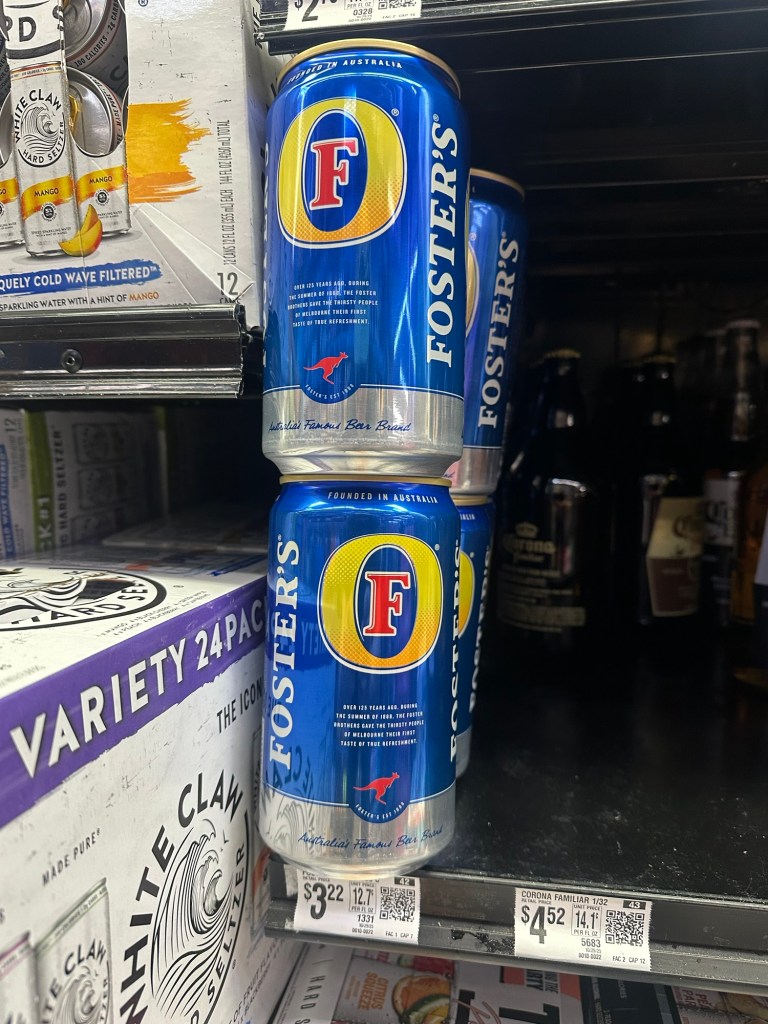
We also found out where Australia’s other famous export 😉 ended up:
Even Americans won’t buy the stuff
Ribs , tacos and more margaritas for dinner and we were done.
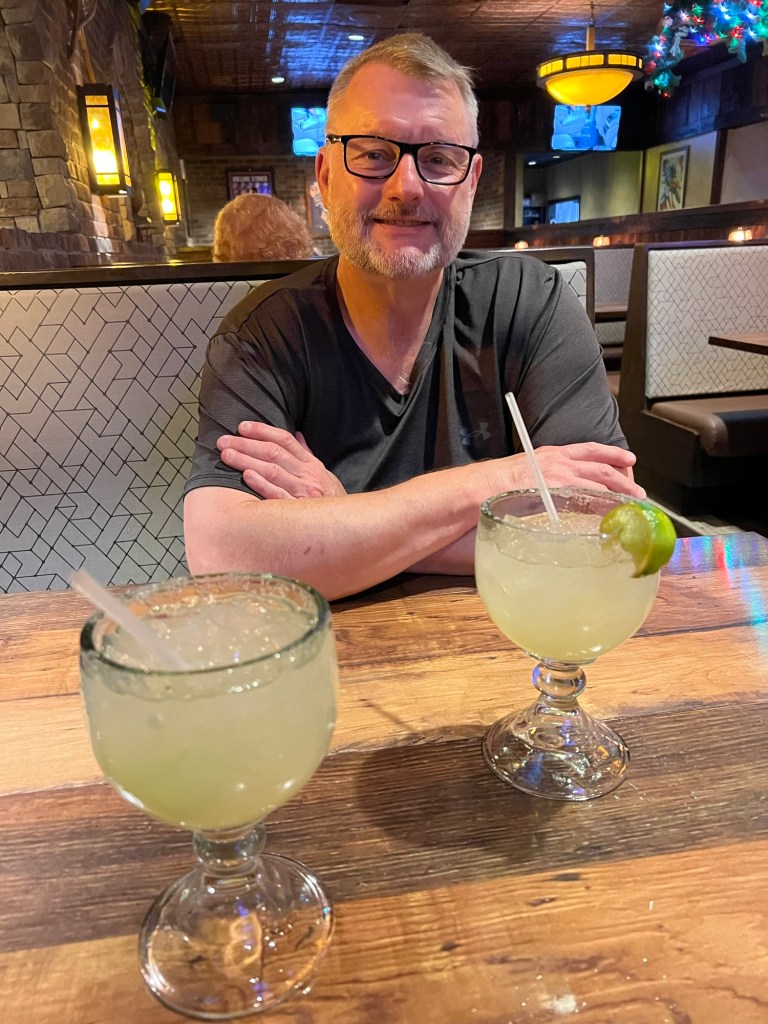
The ‘small‘ margaritas
Christmas Day
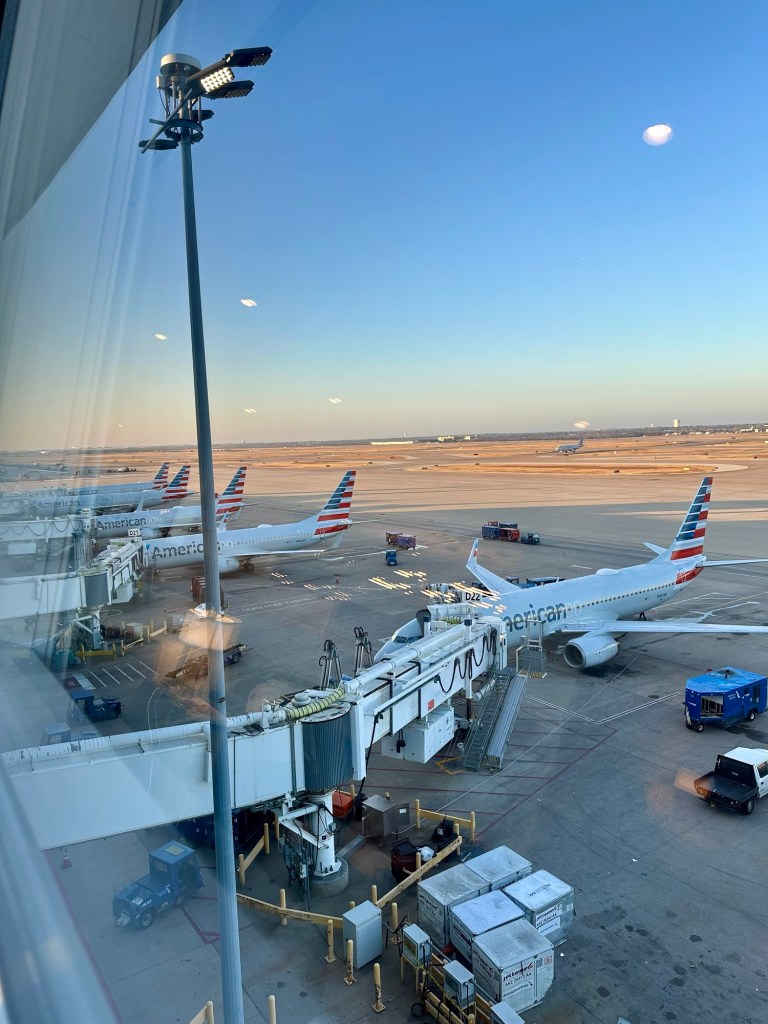
We were up early for the shuttle back to DFW as our San Jose flight departed at 10 and we were unsure of what the situation with crowds and security would be. It turned out to be very smooth and we were in the American Airlines Flagship lounge by 0830. Mark was in plane spotter heaven with the view of one of the aprons and runways. The glass of Xmas Bolly we were offered on entry helped the mood!
After an uneventful departure and a smooth flight over the Gulf we tracked over a bit of Mexico 🇲🇽, Guatemala 🇬🇹 , Honduras 🇭🇳 and Nicaragua 🇳🇮 before landing early in Costa Rica 🇨🇷. We then had airport fun for a while.
The distance from our gate to the other side of the immigration gate was around 250 metres if walked directly. There were so many simultaneous aircraft arrivals that the arrivals hall was heaving. It took 30 minutes just to get to the arrivals hall and another 90 minutes through an endless series of chicanes to get to the immigration desk. To give you an idea of the situation, Mark’s Garmin recorded 7,900 steps between leaving the aircraft and the immigration gate.
San Jose
Our transfer driver was waiting and a smooth run into our accommodation followed. The rest of the evening was spent in pre- tour briefings, meeting our guide and six travel companions and repacking to leave behind in San Jose stuff we wouldn’t need until Mexico in a few weeks time. And another margarita – somewhat disappointingly normal sized ( it appears that everything is indeed bigger in Texas).
San Jose to Tortuguero
We were up early for coffee and first breakfast before piling in the minibus for the drive to our first destination. San Jose is in the so-called ‘central valleys’ of Costa Rica, wedged between two (volcanic) mountain ranges at around 1000m AMSL. We were heading across ( through) the eastern range and down to eastern ( Caribbean) lowlands. Our destination was the Turtle Beach Lodge in the remote North Eastern corner of the country in the Tortuguero National Park. The journey takes between 3-4 hours, depending on traffic and ends with an hour long-ish boat ride as Tortuguero is only accessible by boat or air.
Coming down the eastern range towards the Caribbean lowlands
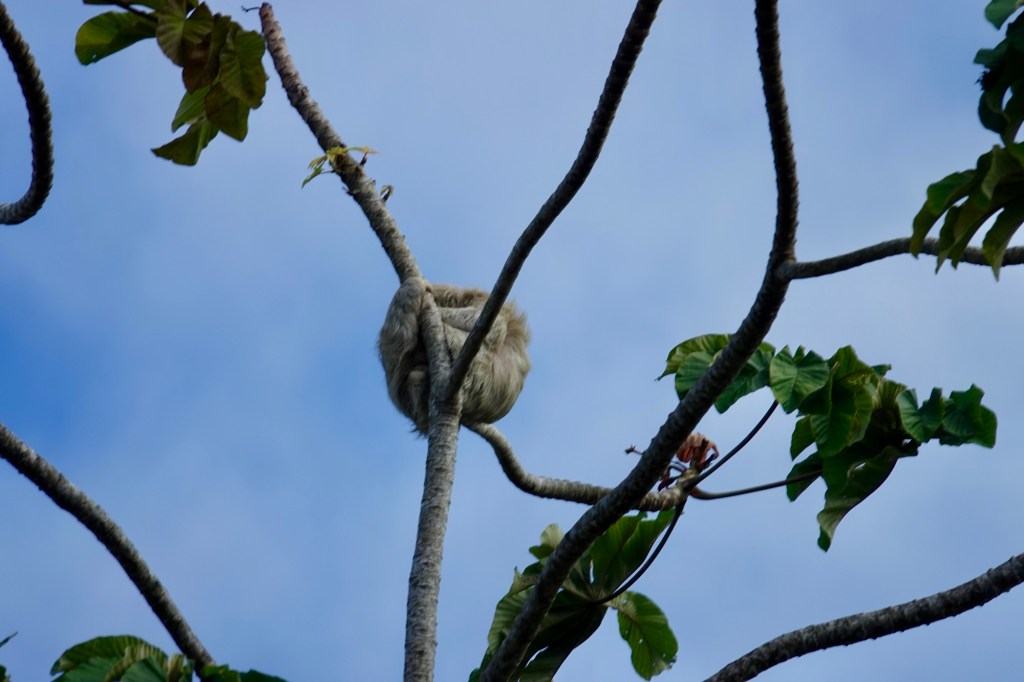
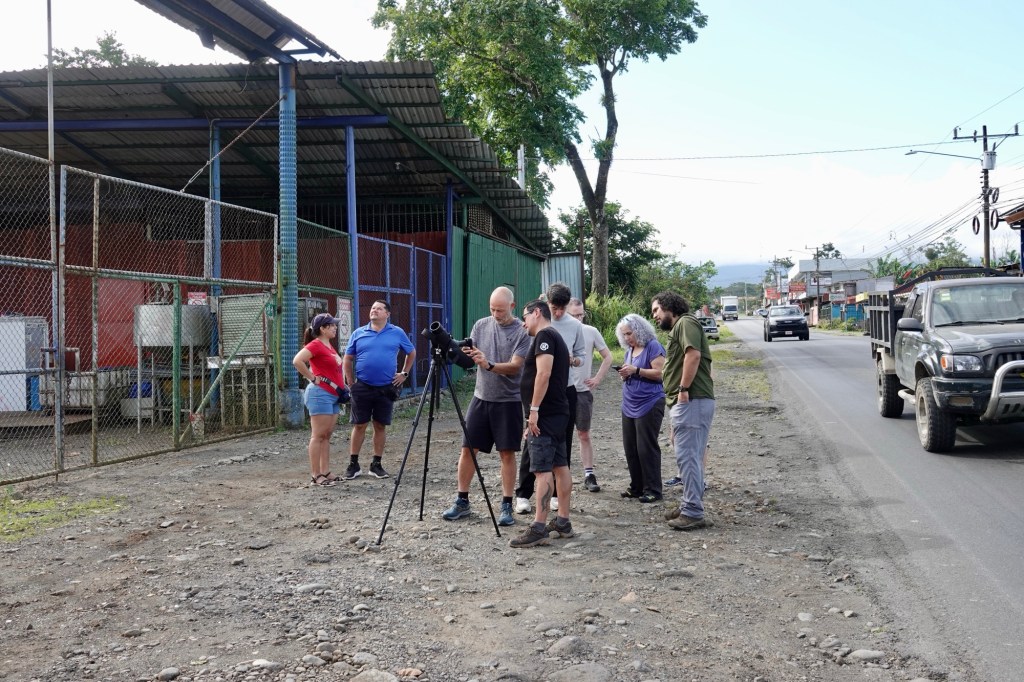
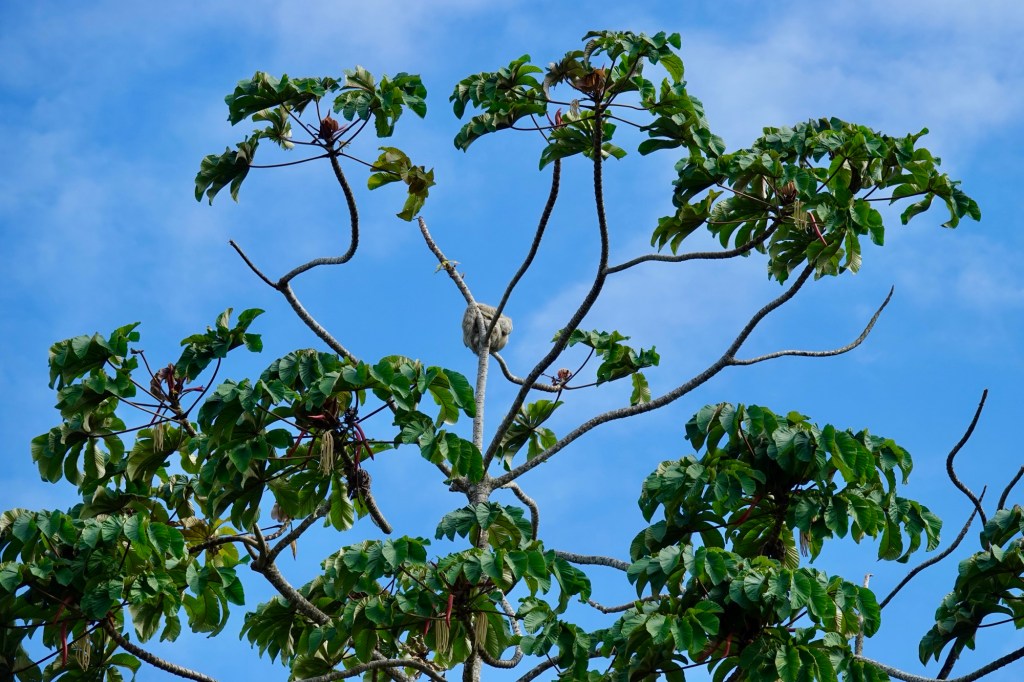
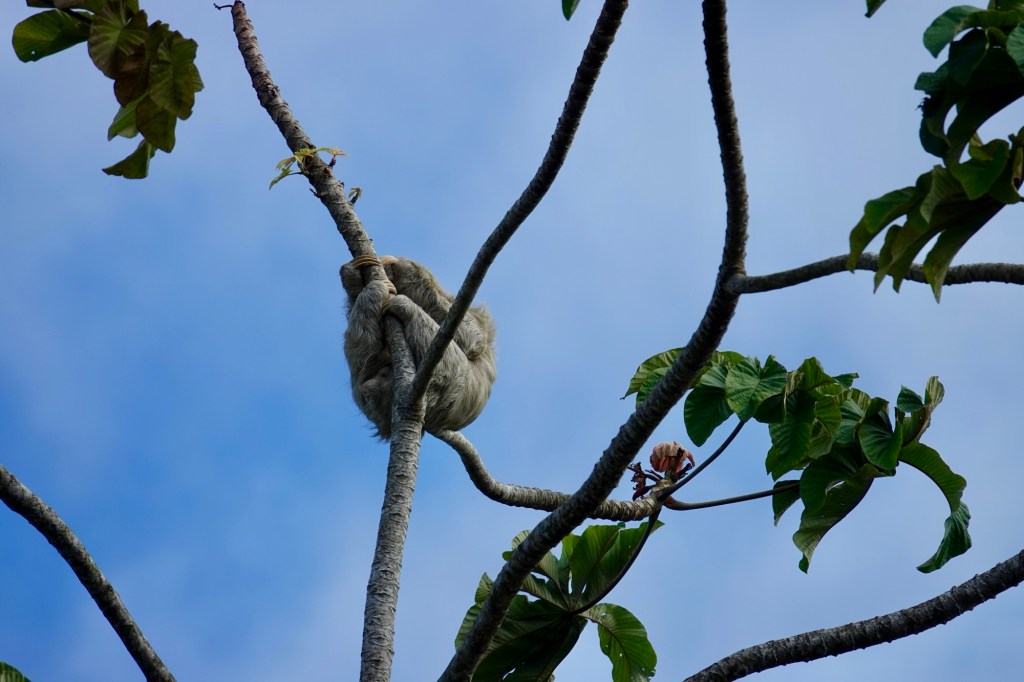
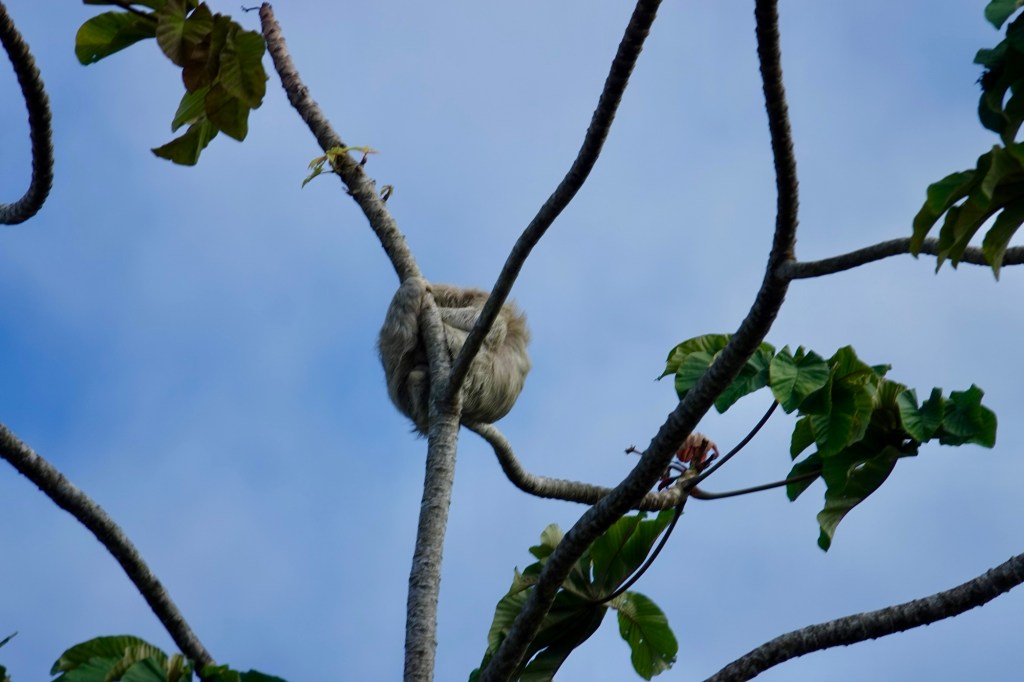
After stopping for coffee and second breakfast ( this tour was seemingly designed by a Hobbit) we were driving through the outskirts of a small town when the driver slammed on the brakes and pulled over. Our guide had spotted a sloth!
The Sloth not being interested in usThe group being very interested in the SlothThe Sloth’s cycle of not interested, interested , get stuffed and not interested again
This was a three toed sloth. Fun fact, apparently all sloths have three toes – the phalange difference between the three toed and the two toed sloths is an apparently the ‘fingers’ on their forearms.
After another hour-ish of driving through fields of bananas, pineapples , papayas, cassava ( manioc) and some beef cattle we arrived at the river head and transferred to our boat.
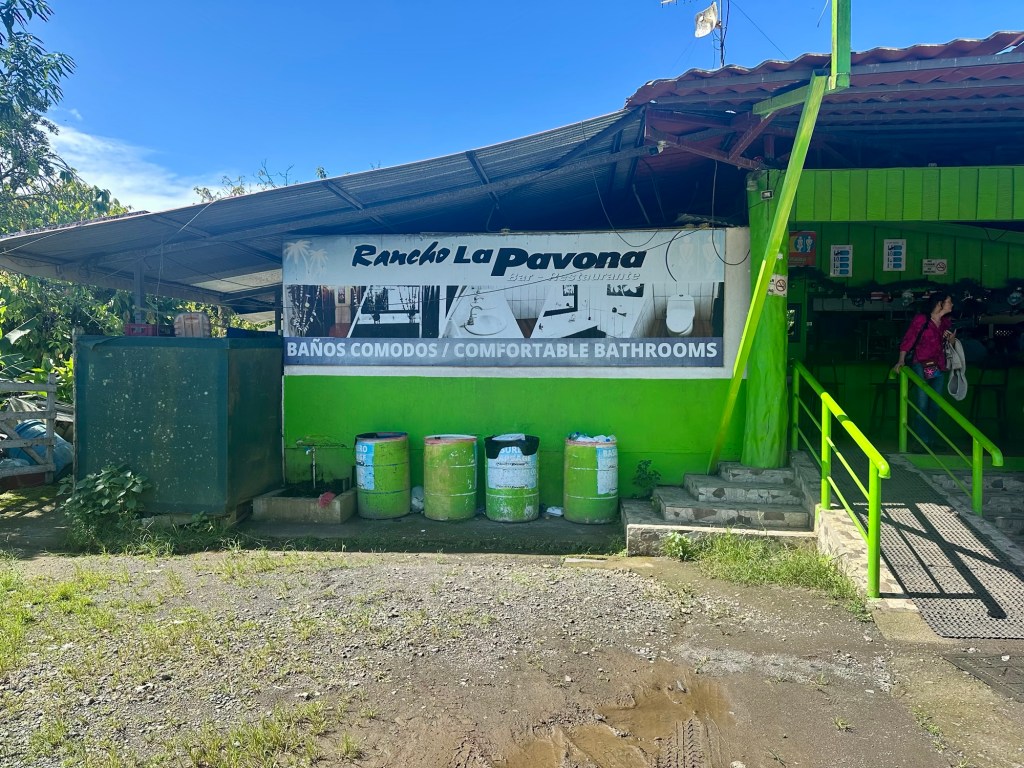
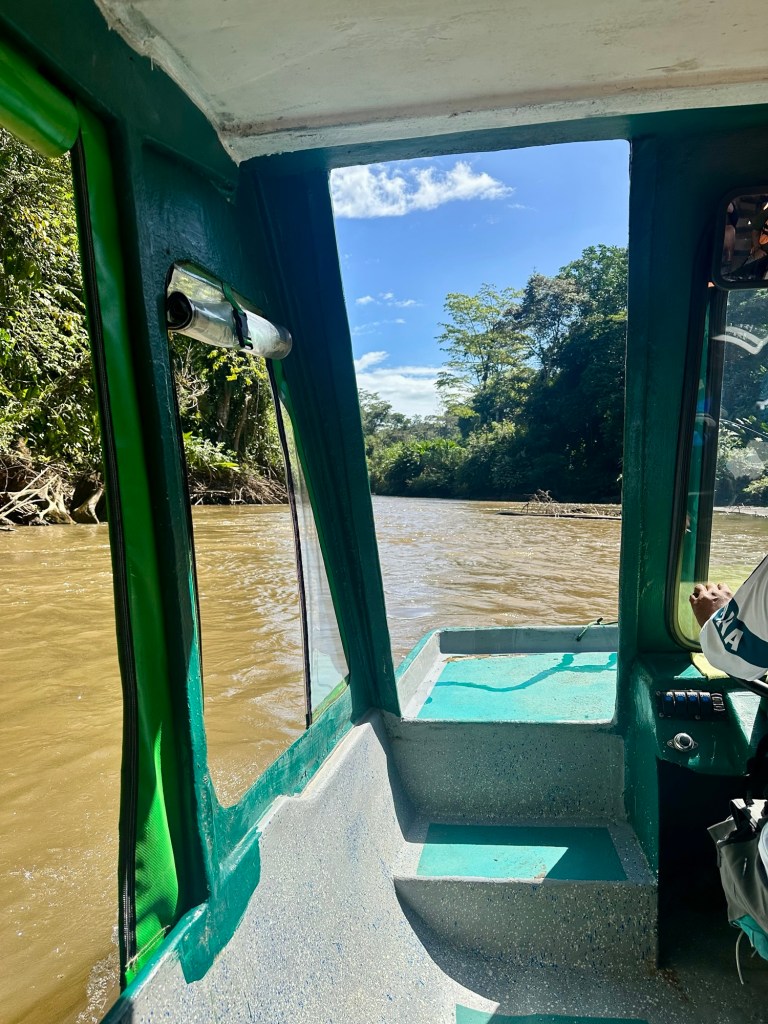
They lied… unless you think filthy bathrooms with urine flowing across the floor are ‘comfortable’Heading up river
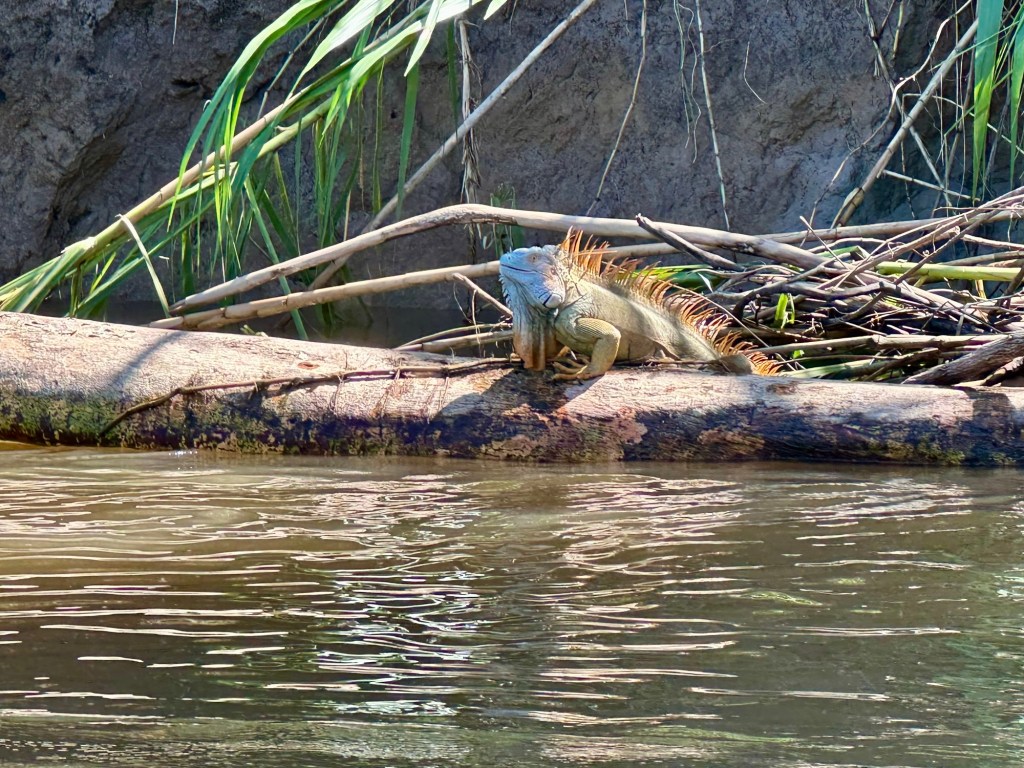
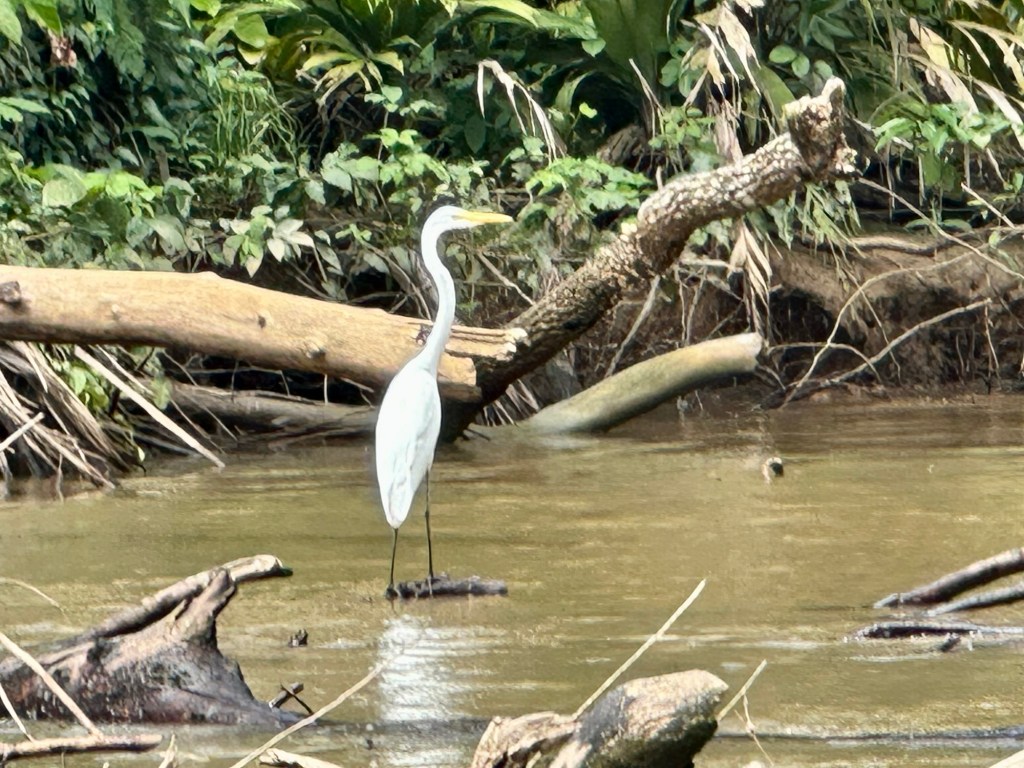
Some things seen along the way:
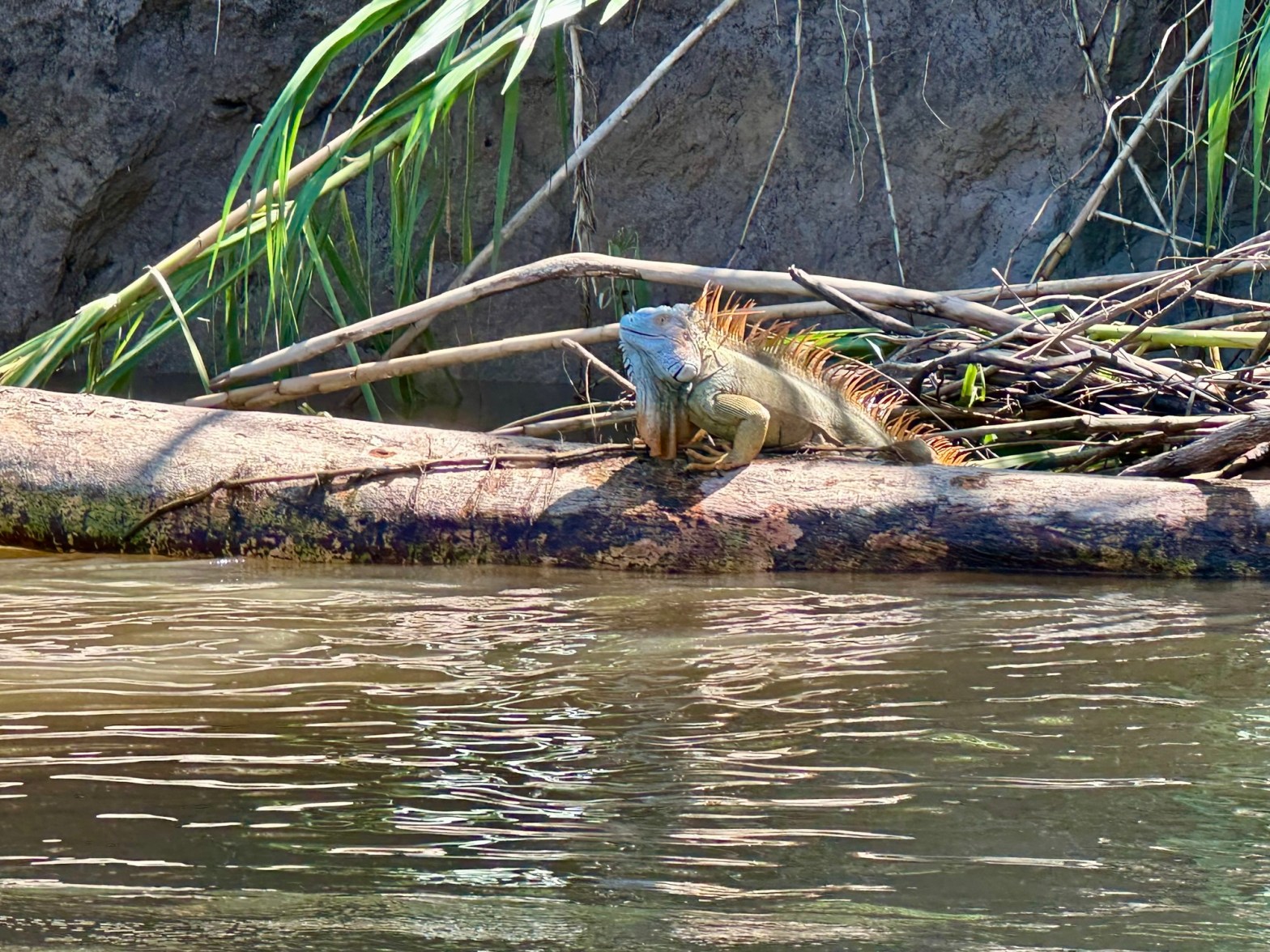
Male Green Iguana. They change to this orange colour when they are feeling frisky. We had just watched this one fight and try to drown a love rival A small crocodile just plus of the logWhite Heron
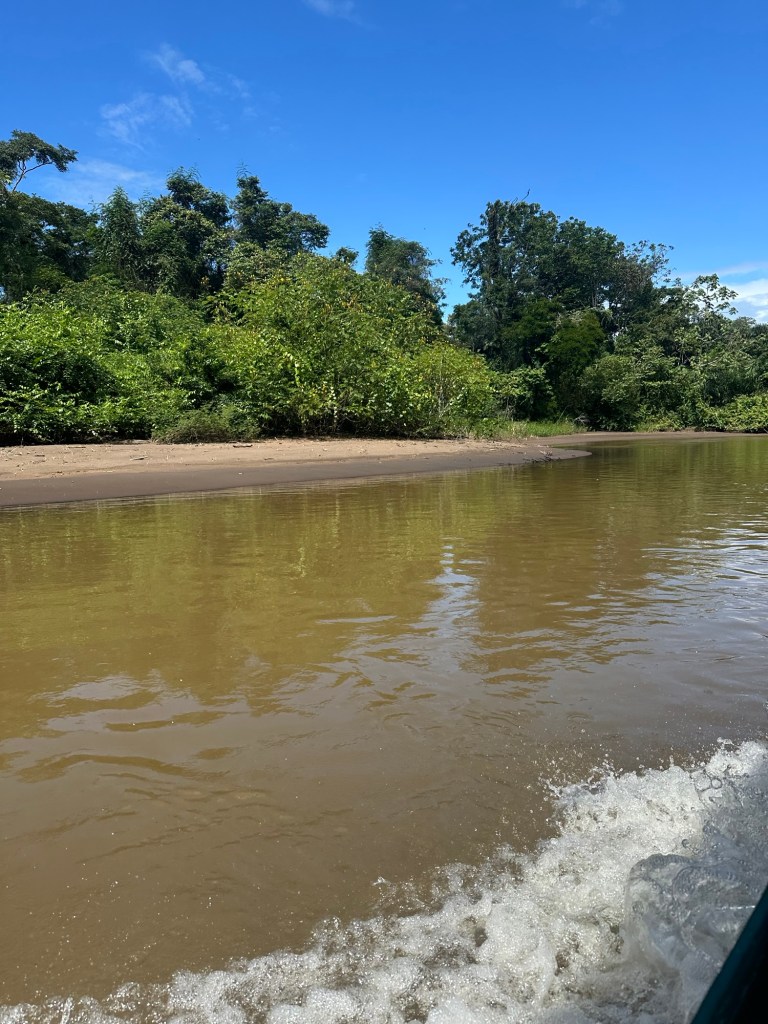
Heading up a tributary, water stained very dark by tannins, making the river incredibly reflective of the surrounding rainforest
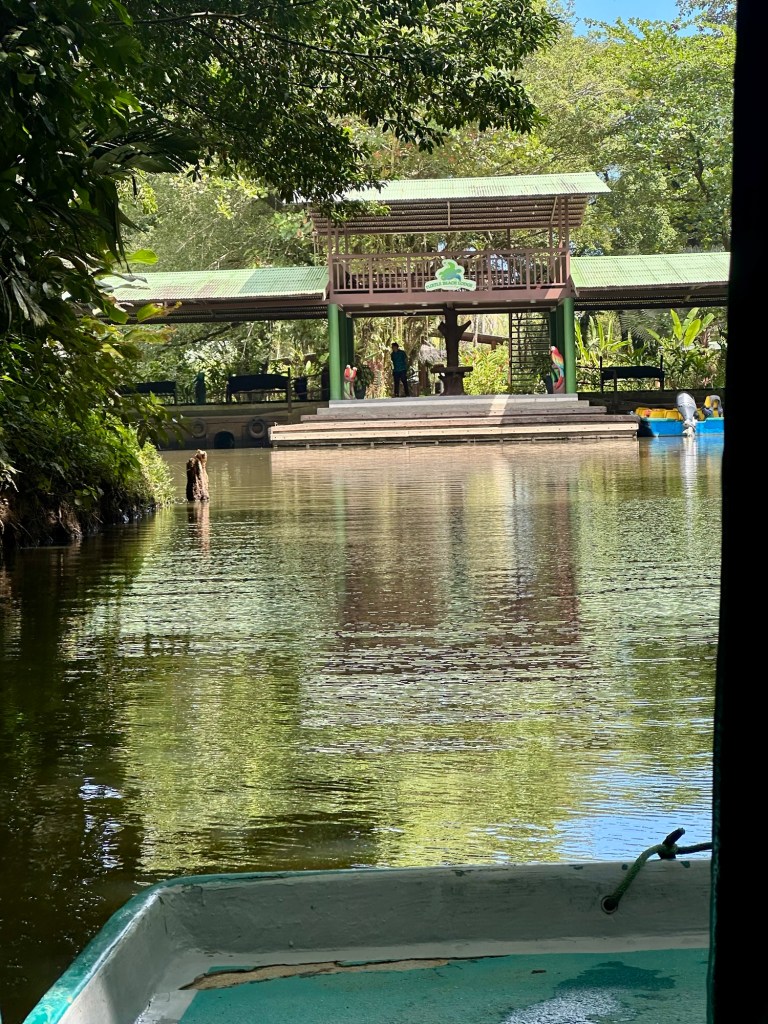
‘Canal’ getting closer to the lodge Approaching the lodge
The lodge is called ‘Turtle Lodge’ reflecting the fact that between roughly May and October each year four species of sea turtle – the Leatherback, Green , Loggerhead and Hawksbill come from all over the Caribbean to nest along this 30 km stretch of coast. All of these species are endangered in some way, some are on the critical list.
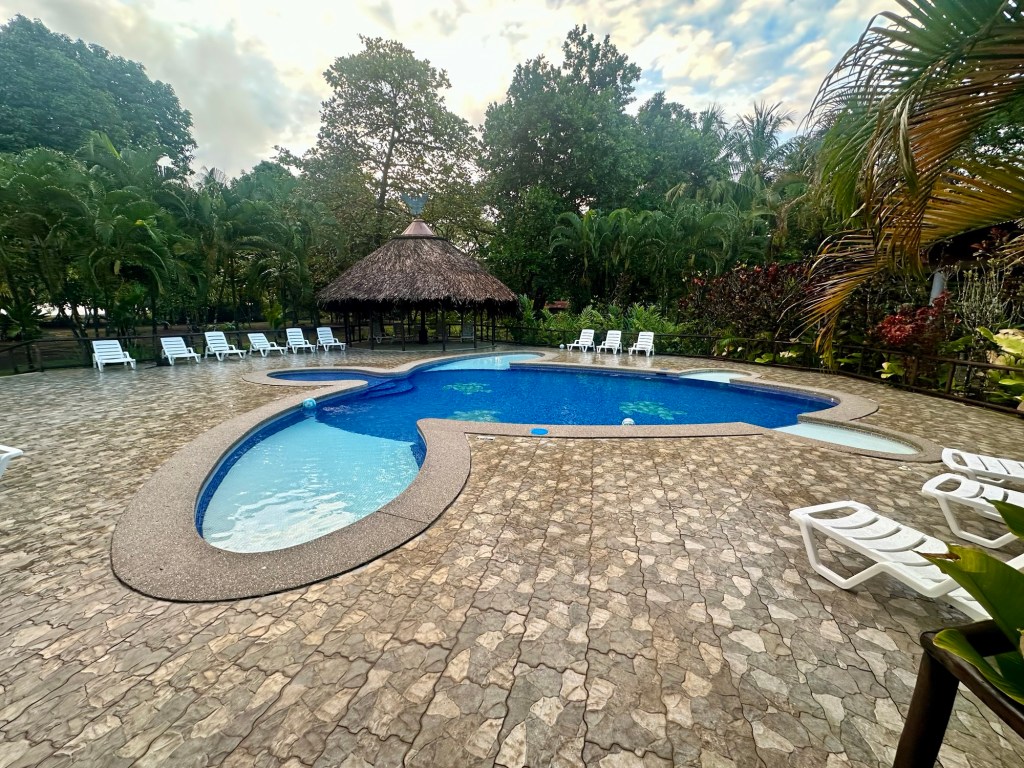
The lodge’s pool getting into the theme
After lunch and a little rest it was back in the boat for a spin to the village of Tortuguero itself, on an isthmus between a lagoon and the sea. ‘Tortuguero’ effectively means ‘turtle town’ or region in Espanol.
The village is quite small, with a focus on turtle tourism now and the adjacent national park. Previously, and especially during the colonial period, the focus had been on clubbing, eating and exporting turtles to the US, Canada and UK.. with predictable results for the turtle population. At the same time US logging companies were smashing the life out of the adjacent rainforest to get a lot of exotic hardwoods such as mahogany.
This all came to an end in the late ‘50s and early ‘60s as they started to run out of both turtles and suitable trees. The focus then turned to conservation of both and the national park was established.
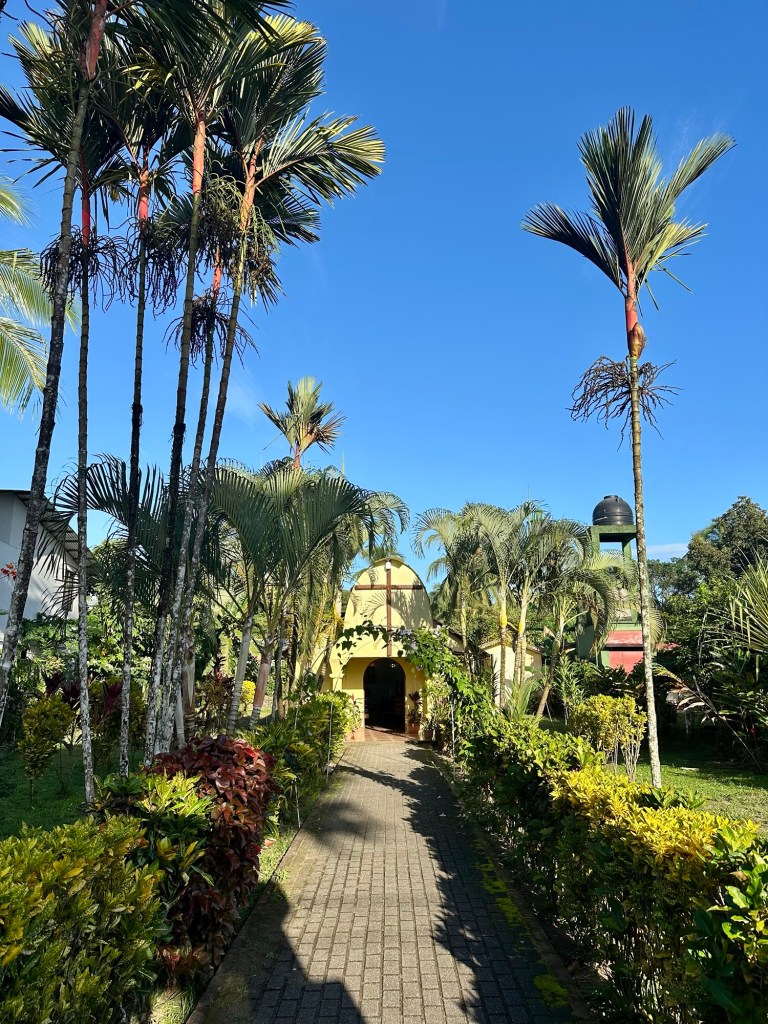
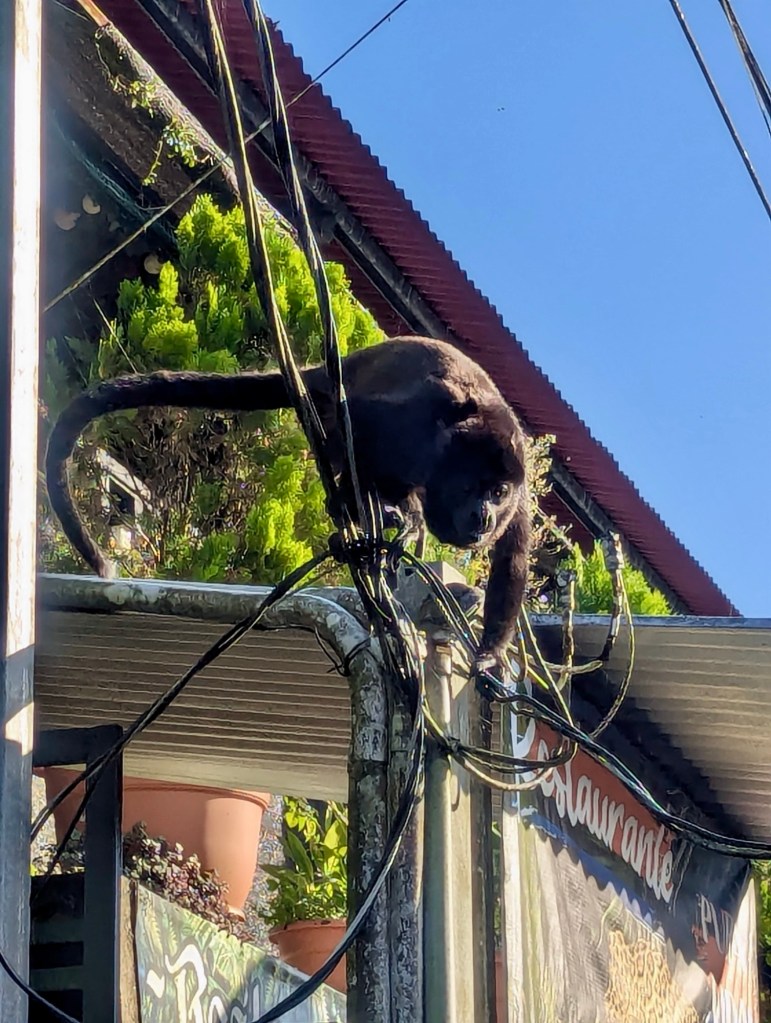
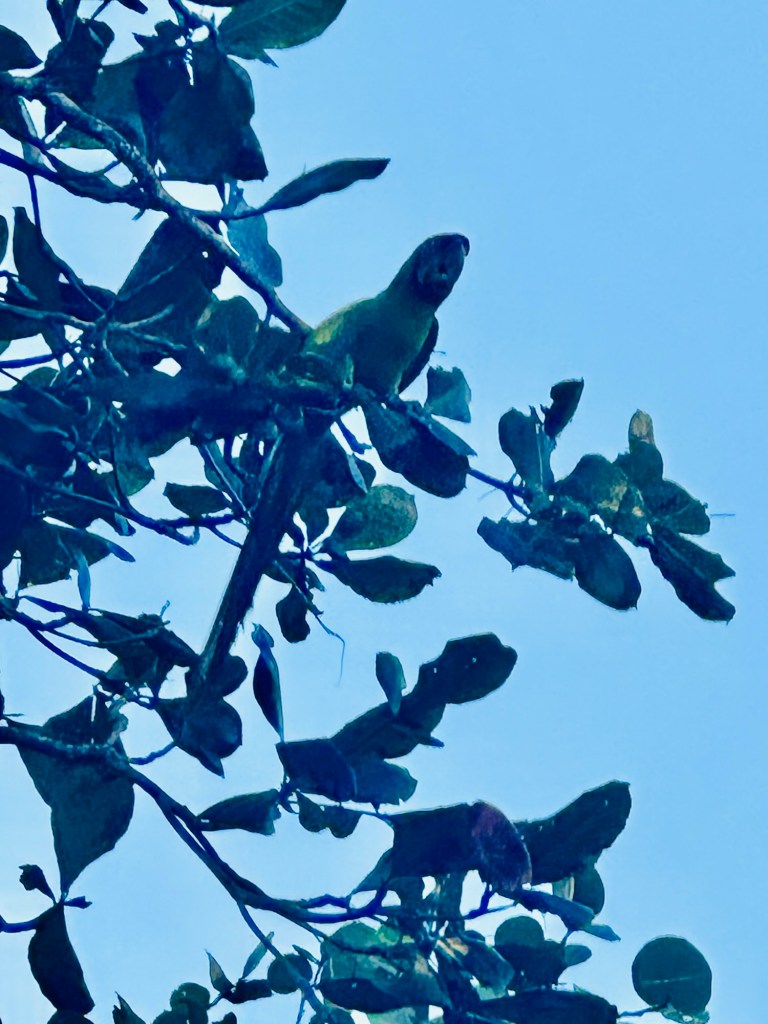
View down the lagoon Catholicism is big here – the Tortuguero church A male Howler monkey hanging out in the village (H/T tour buddy Alex from Belgium)🇧🇪 A green Macaw
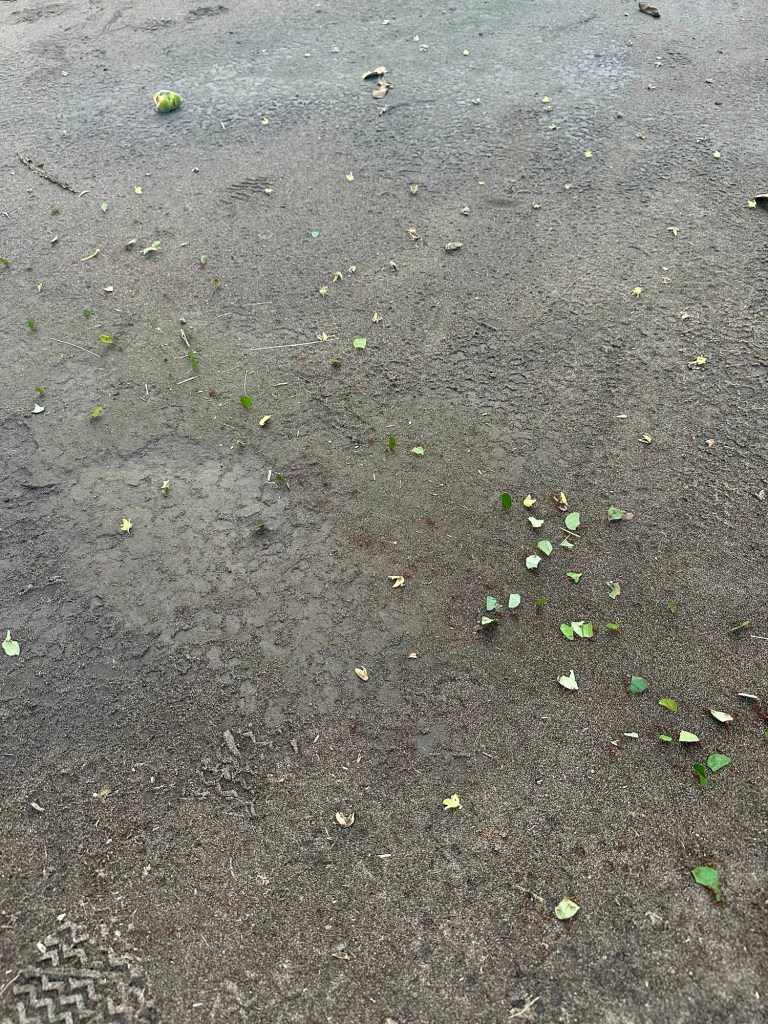
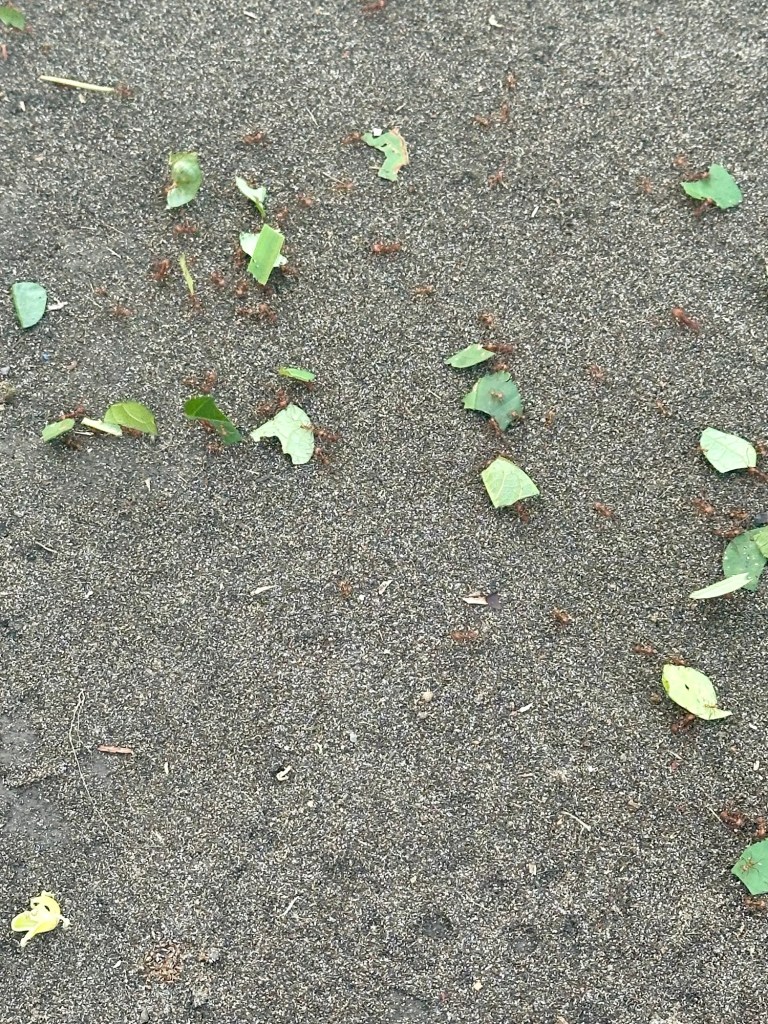
Two pictures of ‘Cutter’ ants follow. These ants cut up leaves and take them back to their nest. They don’t eat the leaves – they masticate them and turn them into to food for fungi that they feed … they then eat the fungi. Essentially, these ants are mushroom farmers!
Cutter ants #1Cutter ants #2
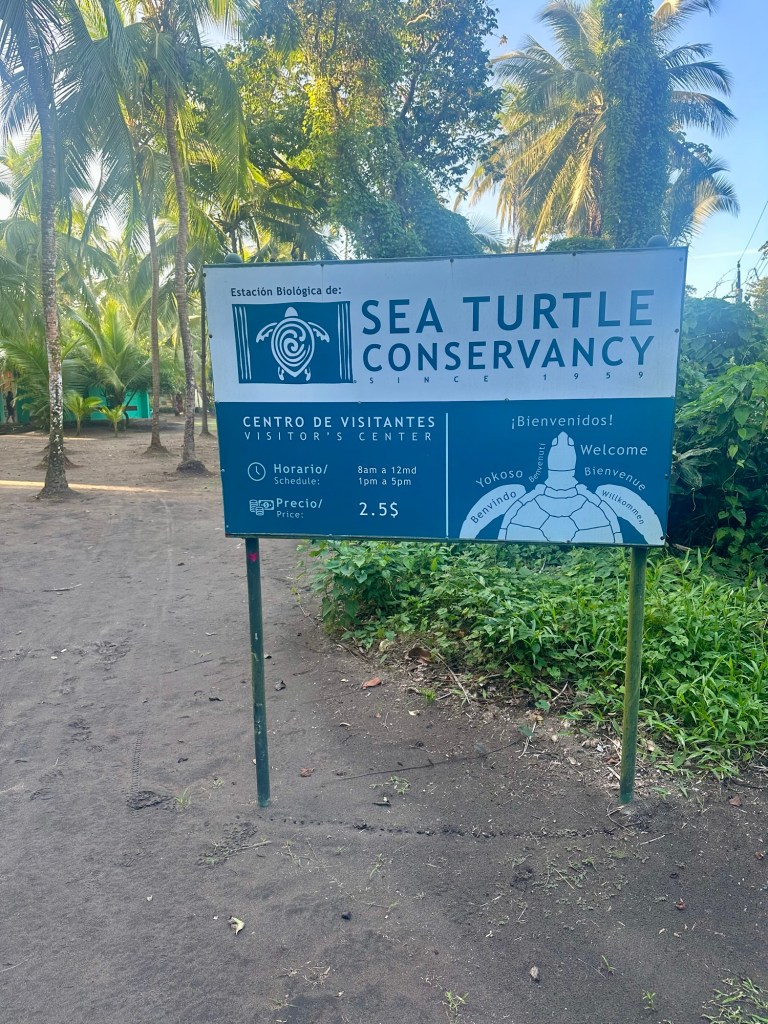
We also went to the sea turtle conservation centre and had a great briefing on the turtles and the conservation program from an informative and enthusiastic local researcher
After the turtle briefing it was back in the boat for a run in the dark back to lodge, dinner and bed.
During the night there was an epic deluge – very common on the eastern side of the ranges / country , hence all the rainforest….
We were up early ( 0500) for a ‘game spotting’ open boat trip through the waterways. Mark ended up staying ‘home’ as he had a delicate stomach and a small open boat with eight others isn’t the best place to have an exploding butt.
After a late breakfast ( and Mark’s recovery) we went a very muddy but fascinating guided walk through the rainforest, having the ecosystem explained by one of the guides.
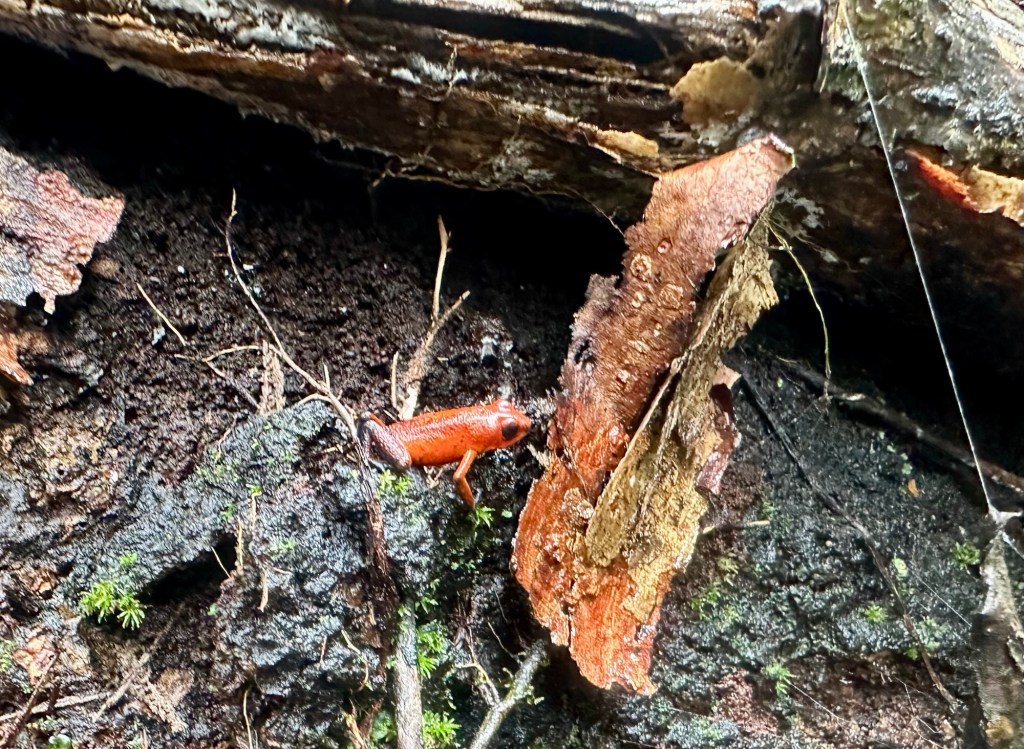
A ‘poison dart’ frog
Incredible skills for an amphibian to use a poison dart, right ? Turns out this little red frog excretes a toxin to make it unpalatable to predators. The local indigenous folks would wipe their blowpipe darts with this toxin and use it to stun / kill prey.
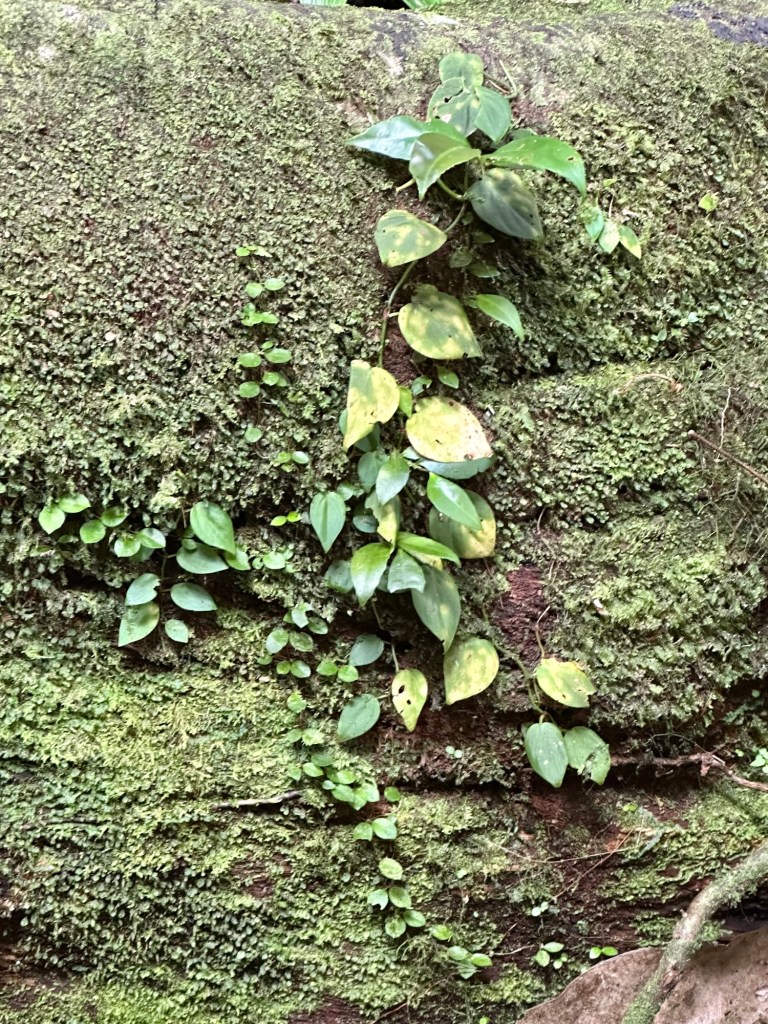
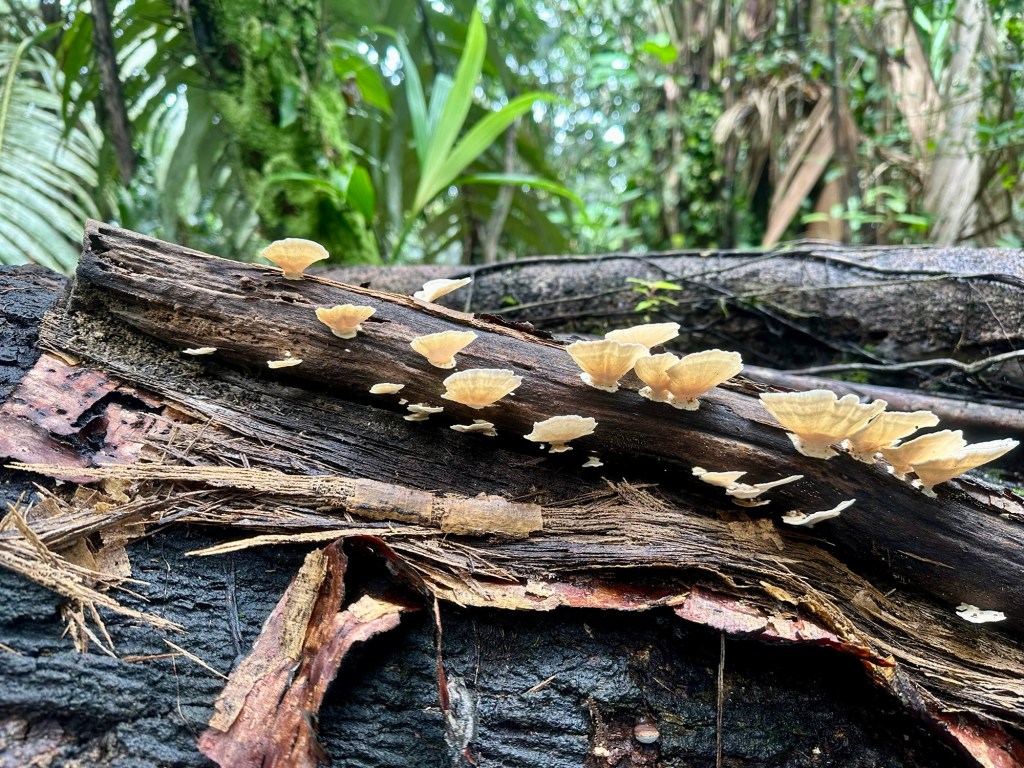
The forest is full of various fungi
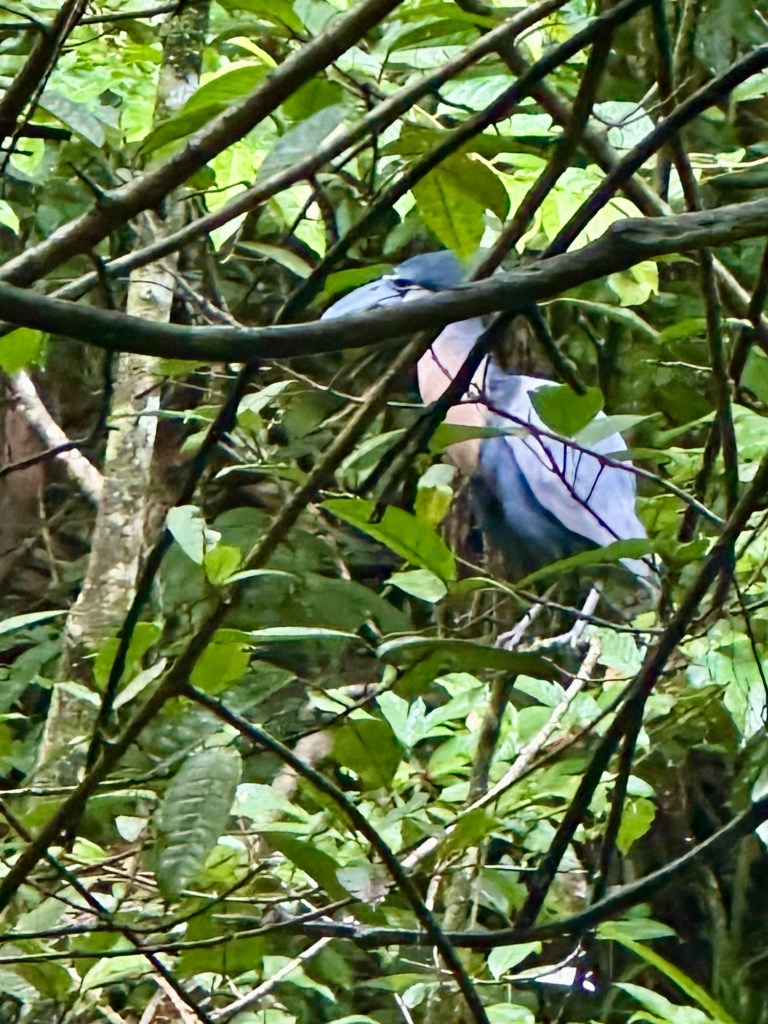
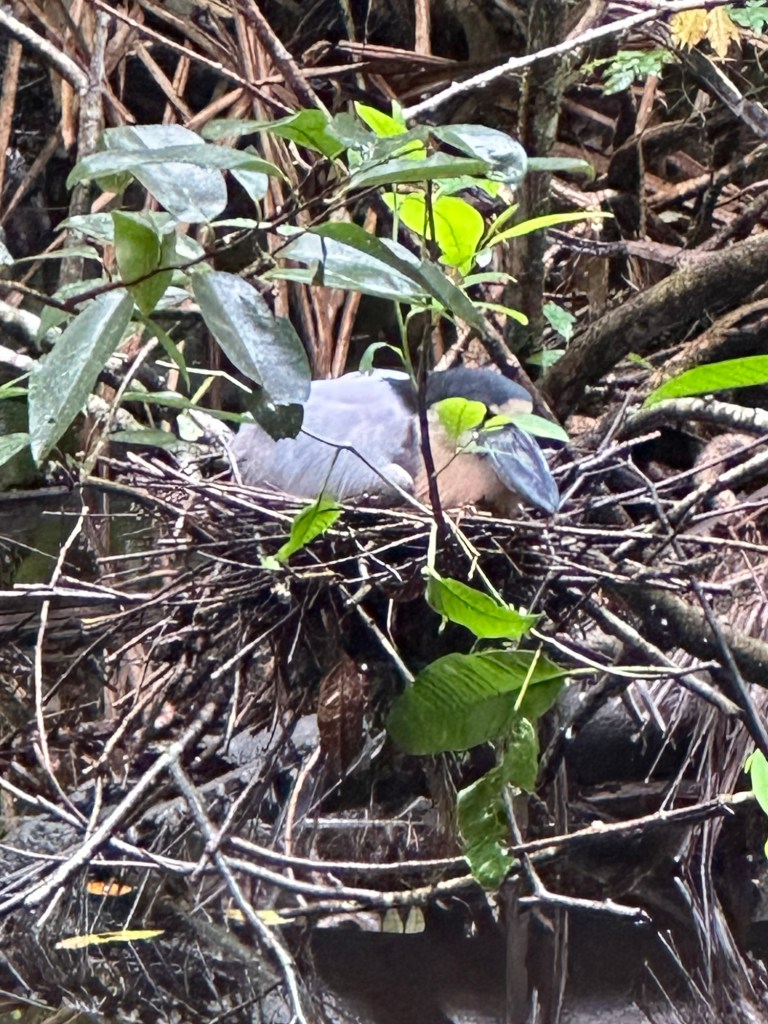
We also saw a small group of Broadbill Herons nesting over a creek.
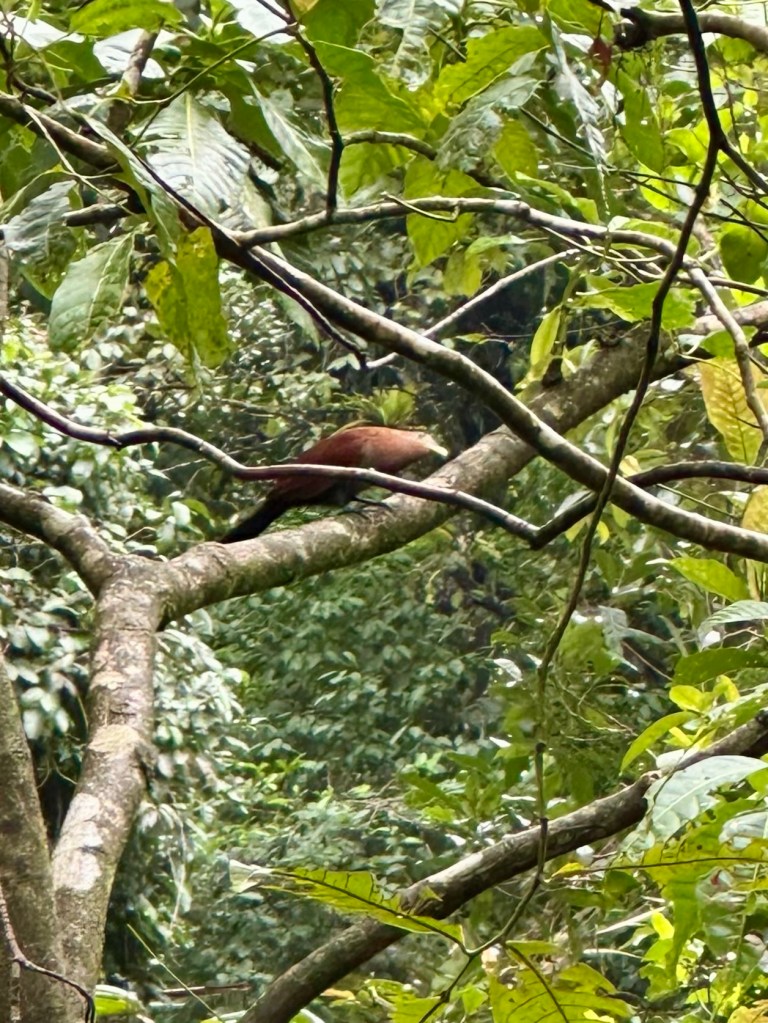
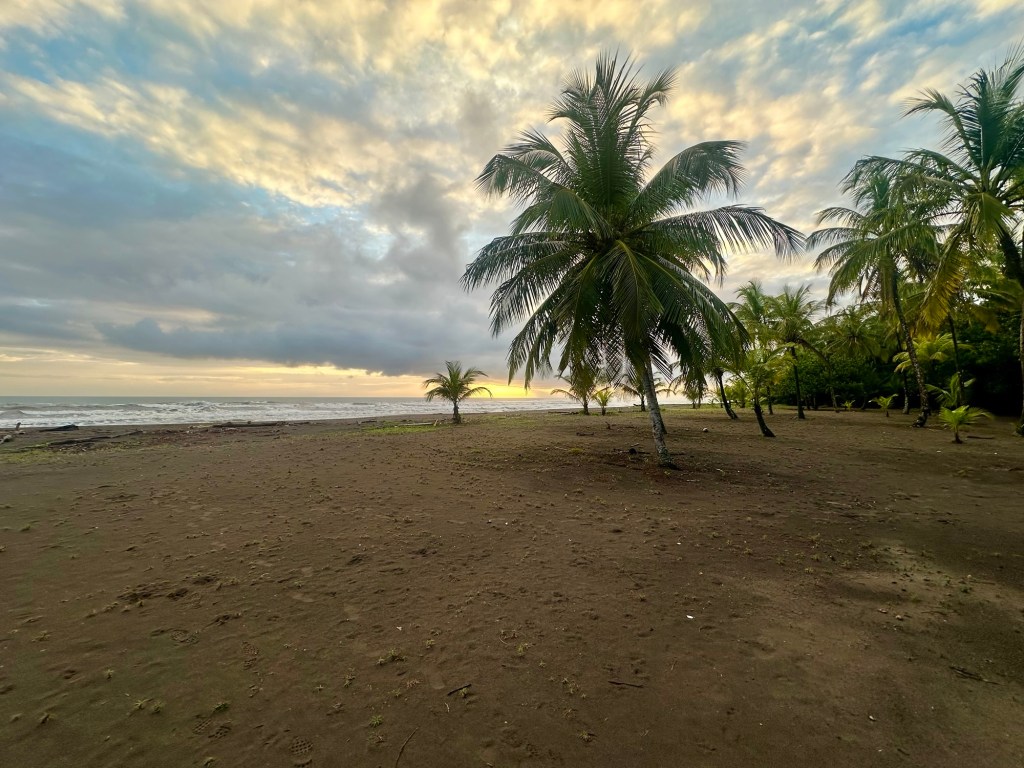
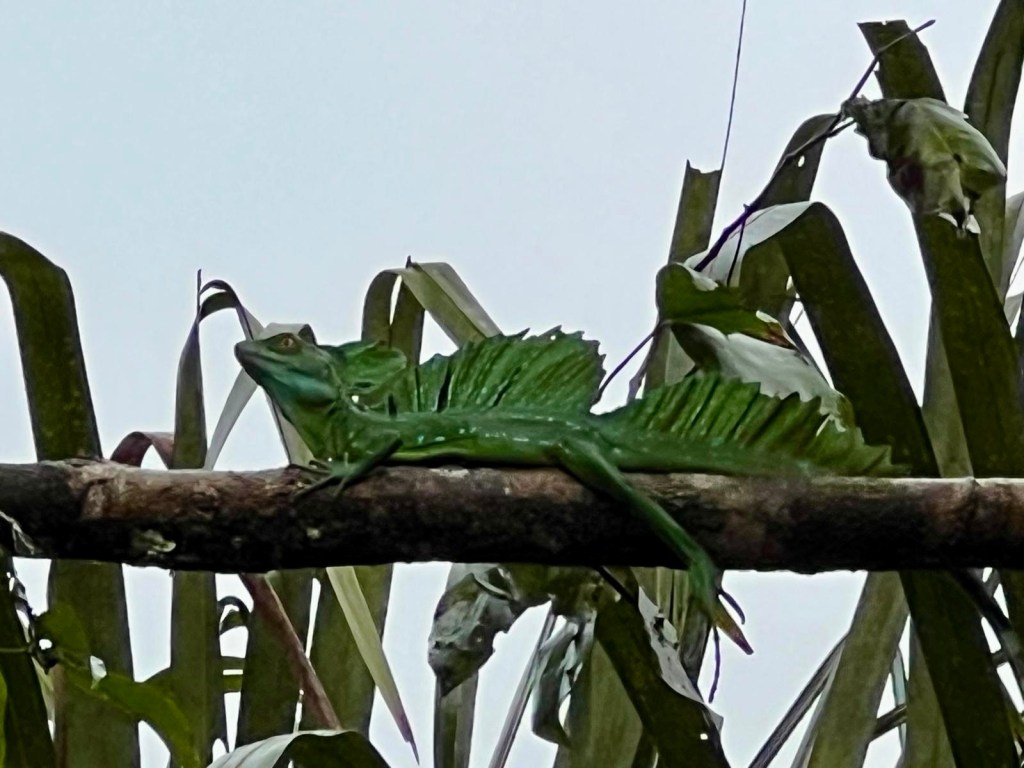
Broadbill HeronOn the nestAnd a Squirrel Cuckoo Turtle Beach at sunrise the dark sand is of volcanic originA Green Basilisk lizard
The old proverb is that a journey of a thousand miles starts with one step. In our household the journey of many thousands of miles always begins with Ness setting off ‘moth bombs’ as we go out the door. The Global War on terror may have lasted a few decades , Ness’ family’s war on moths attacking woollens has already outlasted the 30 year war of the Hapsburgs.
Qantas got the trip off to a stressful start by repeatedly delaying the flight from Canberra to Sydney- we departed nearly two hours later than scheduled – a thing that is becoming all too common on that route. We will drive next time – elapsed time would have been significantly less. Net result was boarding was underway as soon as we cleared immigration departure in Sydney, with concomitant worry as to whether our bags had made the transfer ( they did ).
A short 3.5 hours later we were in Nadi 🇫🇯 for a 2 hour transit prior to the 12 hour flight to Dallas Fort Worth. Fiji Airways was quite good – some of the other airlines might take a look at their service compared to Fiji ( we are looking at you Qantas, Virgin and Singapore).
Upon an on time arrival in Texas 🇺🇸it was a very smooth run ( quick and pleasant) through immigration at DFW. Perhaps surprisingly ‘alien’ Mark had a slightly quicker run through than citizen Ness, although line choice seems to have been a factor. Followed by a 40 minute wait for bags…
Shuttle bus to the hotel and then trying to stay awake to help acclimatise to the time zone changes. Aided by a nice meal at the local steakhouse supported by a killer margarita.
Today ( Xmas eve) is about catching sun to help reset the body clock prior to tomorrow morning’s flight to San Jose, Costa Rica 🇨🇷. Plan today is a good walk, then to find and sample an authentic Texas BBQ joint for dinner…. maybe supported by another margarita 🍹.
Well it’s been a while … but next week a new adventure kicks off .
On Tuesday the 23rd December we head off to Central America, Costa Rica and Mexico specifically. I’ve never been and Ness, although well travelled in South America, was last in Mexico as a young child.
We are looking forward to culture, history and nature – we are excited to see something new. And try out our Spanish- Ness had studied it for a while as an undergraduate and the practiced it backpacking around South America . And I’ve just tried to stay an awake in a basic Spanish course for two hours a week after work for the last 9 weeks… we have got this … or not 🙃
It has been two years since we have been back to New Zealand- two years too long we think . The plan this trip is to explore the bits of Te Waipounamu ( the South Island) that we are less familiar with. No multi-day tramps planned this time as work over the last few months has precluded any decent preparation walks. Our aim is to travel down the West Coast, then loop cut back in through an old friend (Central Otago) to Christchurch. Mark briefly transited the West Coast 17 years ago, the area is new to Nessie, so we are looking forward to some new sights and experiences.
We left Canberra midday on Christmas Day, enroute to Christchurch via Sydney. A lengthy layover in Sydney , extended by a Qantas delay for some reason or another, meant Christmas Day 🎄 spent in the QF lounge at Sydney. A less than ideal way to spend the day. We landed in Christchurch at 0100 local time and didn’t clear quarantine and customs until 0200.🥱. Thankfully it was only a short 200m walk to our Airport Hotel and we were in bed by 0300ish.
Would have been much quicker to hitch a ride with this bloke..
Thursday 26th December ( Boxing Day ) . We were up at 0500 for a quick WOD and 5 km run … not true! We struggled awake around 9 and managed to get out and pick up our hire car by Elevenish … not the most productive morning on holidays ever after the late finish to Christmas Day travel.
The day picked up though as we headed North out of Christchurch then West towards Lewis Pass as the portal to the West Coast. The day was overcast and wet , but it cleared markedly once through the Pass and its stunning scenery ( sorry, forgot to take photos 🤦♂️). We also passed through some lovely Beech Forests and a lot of Manuka growing along the river ways and lower foot hills.
We arrived in Reefton around 1630 and to a nice AirBnB called the Vicarage for our overnight stay. By now the weather was dry and a cracking 25 degrees C.
The Vicarage – our stay in Reefton
Reefton is a neat town in the hills that owes its start to the discovery of gold in the near region in the mid-nineteenth Century. It sits astride the Inangahua River, a pleasant , wide and shallow stream at this point.
The Inangahua River river
Like many such towns it had suffered a bit of ‘boom and bust’. 19th Century gold mining was replaced by 20th Century coal mining. Today the town presents as a neat little rural centre with a nice green hilly backdrop.
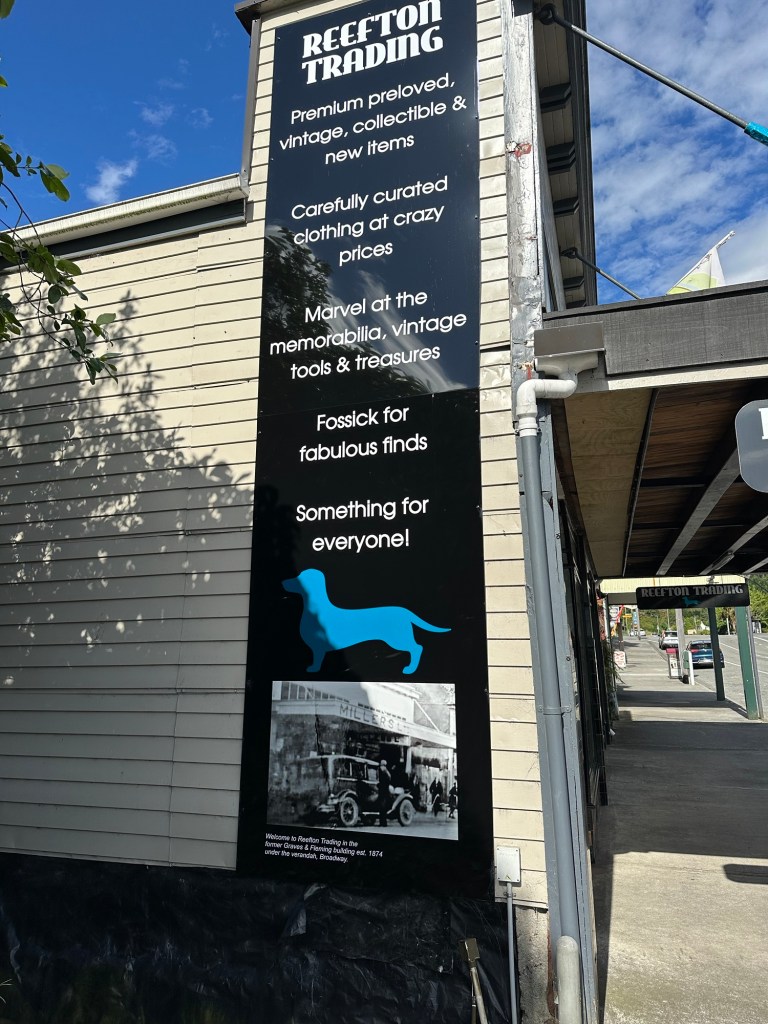
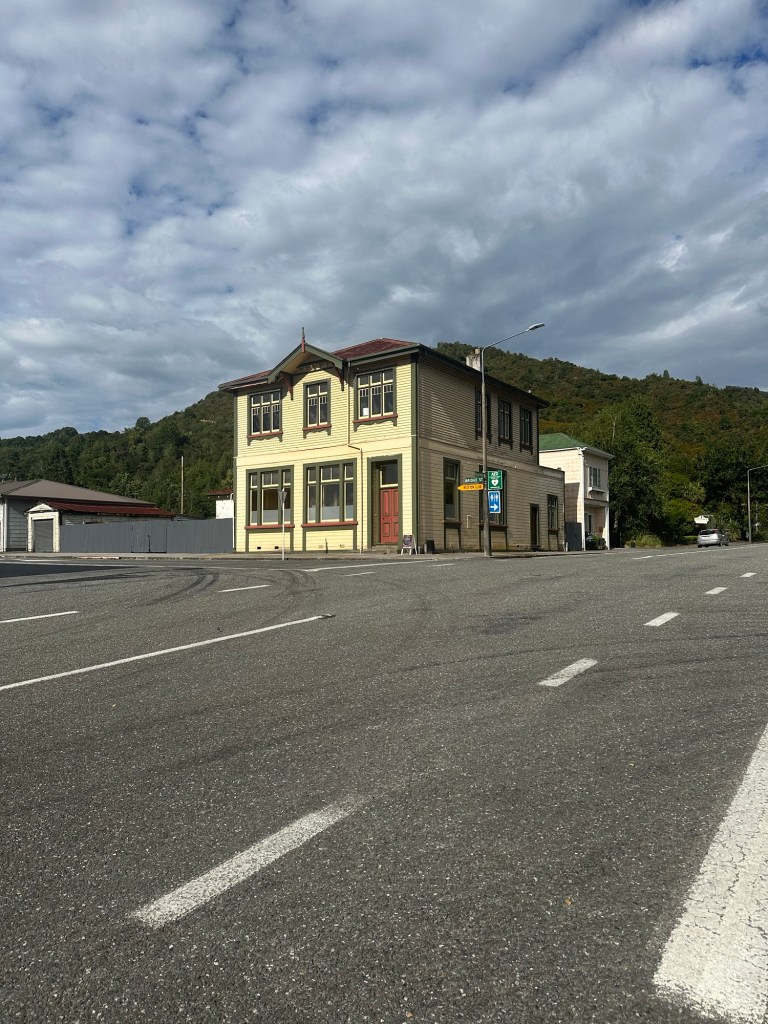
The Main Street of Reefton looking east-ish.This Reefton store makes a killing in the Blue Dachshund tradeTypical architecture in Reefton, they were too busy digging for gold to make bricks for houses
We went for a walk around town, downed a pint of Speights without fighting anyone, and had dinner at a really good wood fired pizza place . Evening entertainment consisted of sitting on the porch listening to the river babble over the rocks. And swatting sandflies. Definitely back in NZ!
After a reasonable night at a hotel near OR Tambo it was back to the airport Thursday morning for the short-ish flight (55 minutes) to Hoedspruit in South Africa’s Limpopo Province. Gary from Imagine Africa Luxury Tented Camp picked us up at the Airport and we set off for the 45 minute drive to the Balule Private Game Reserve.
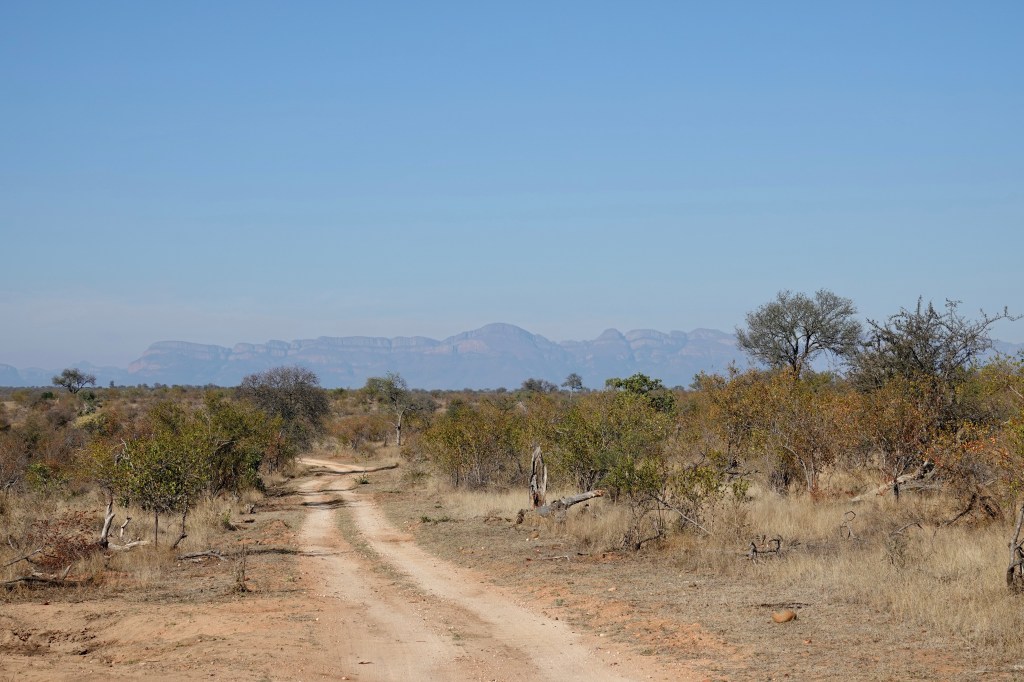
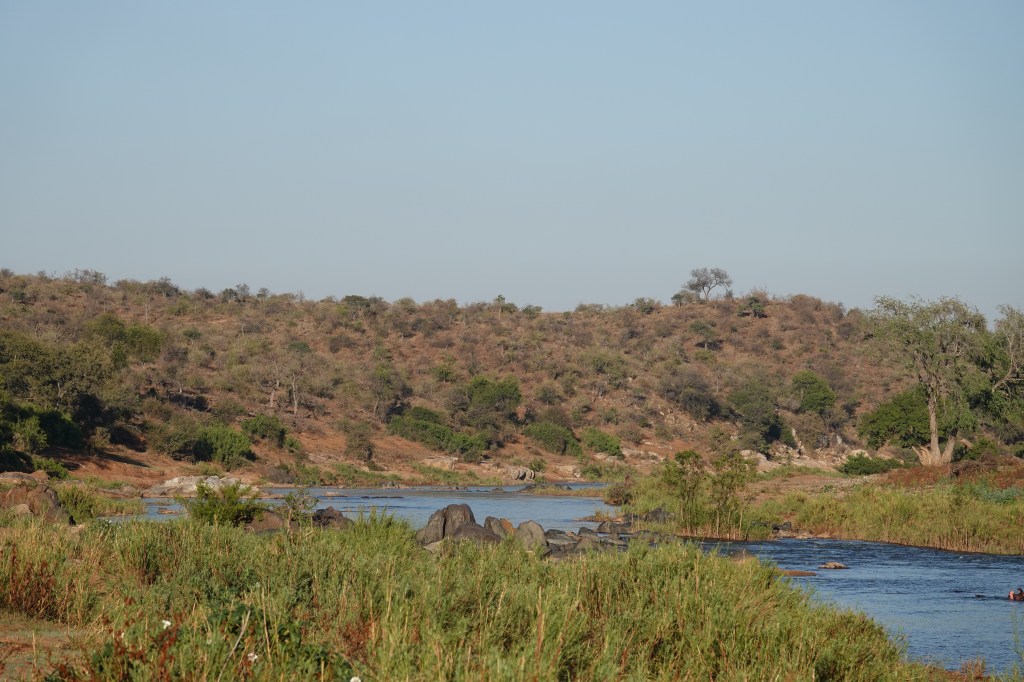
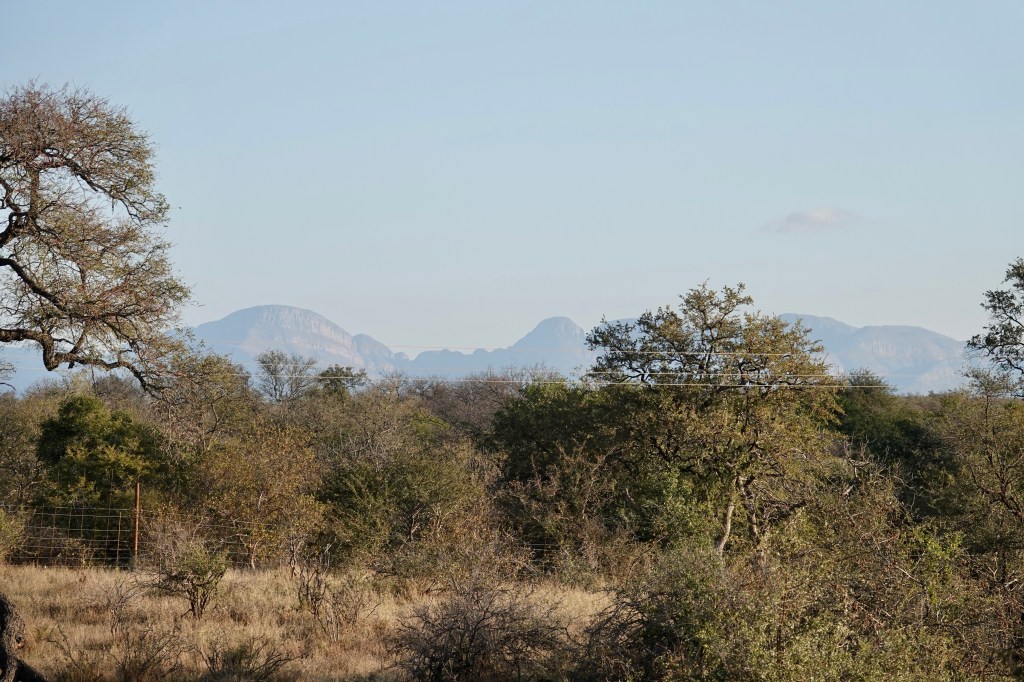
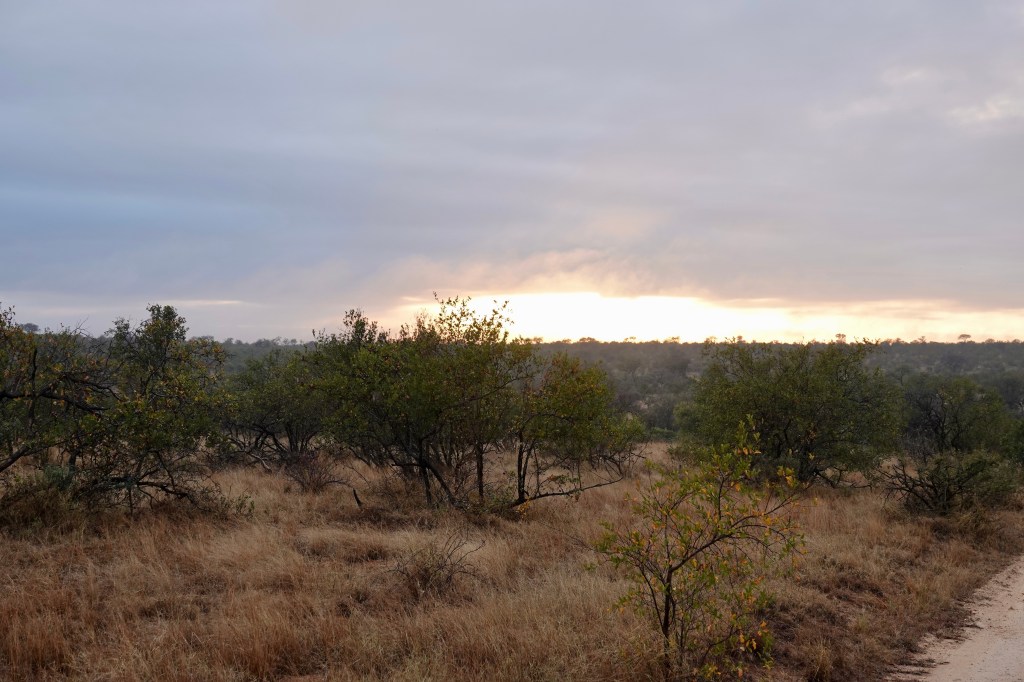
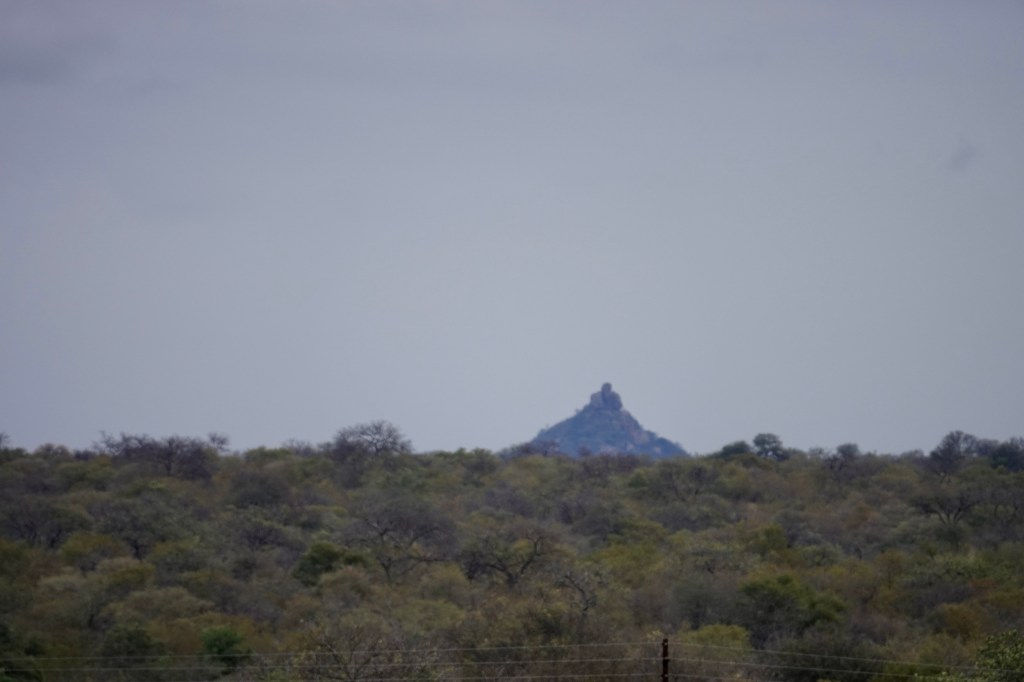
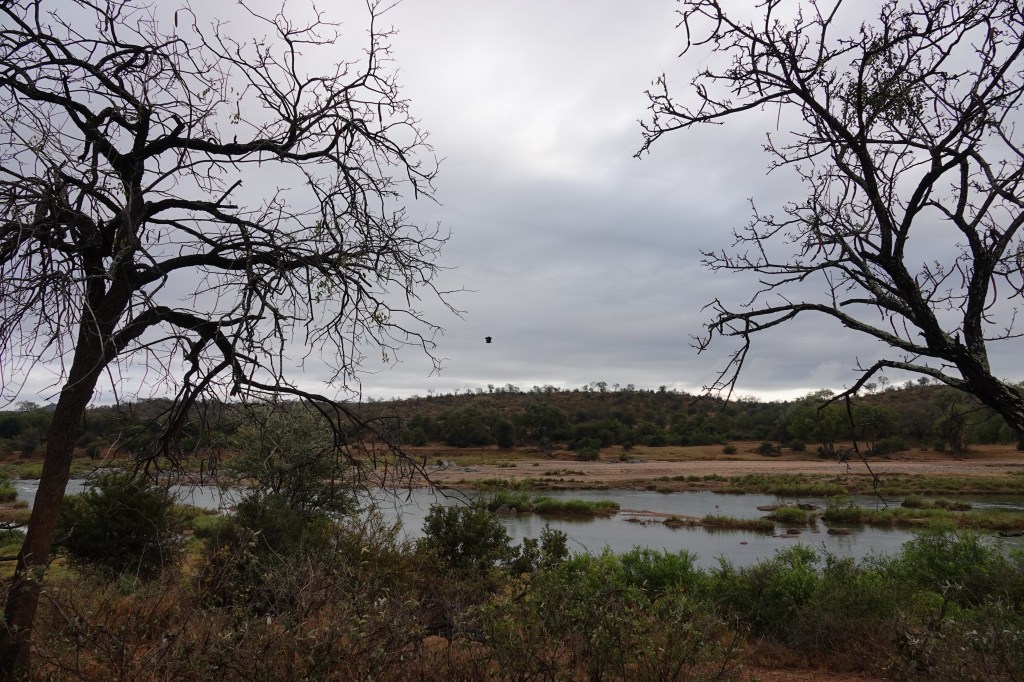
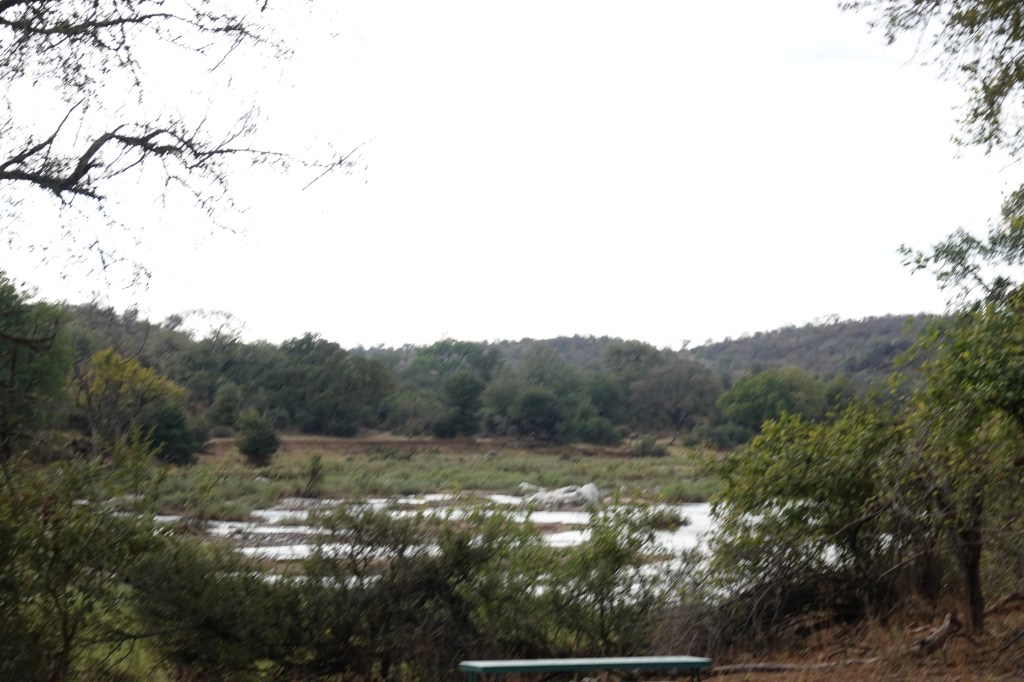
Balule is bounded on the north by the Olifants River, with the Kruger National Park ( there is no fence between the two) forming the eastern boundary. The northern part of the Drakensberg Mountains form a spectacular backdrop just a few kilometres to the west.
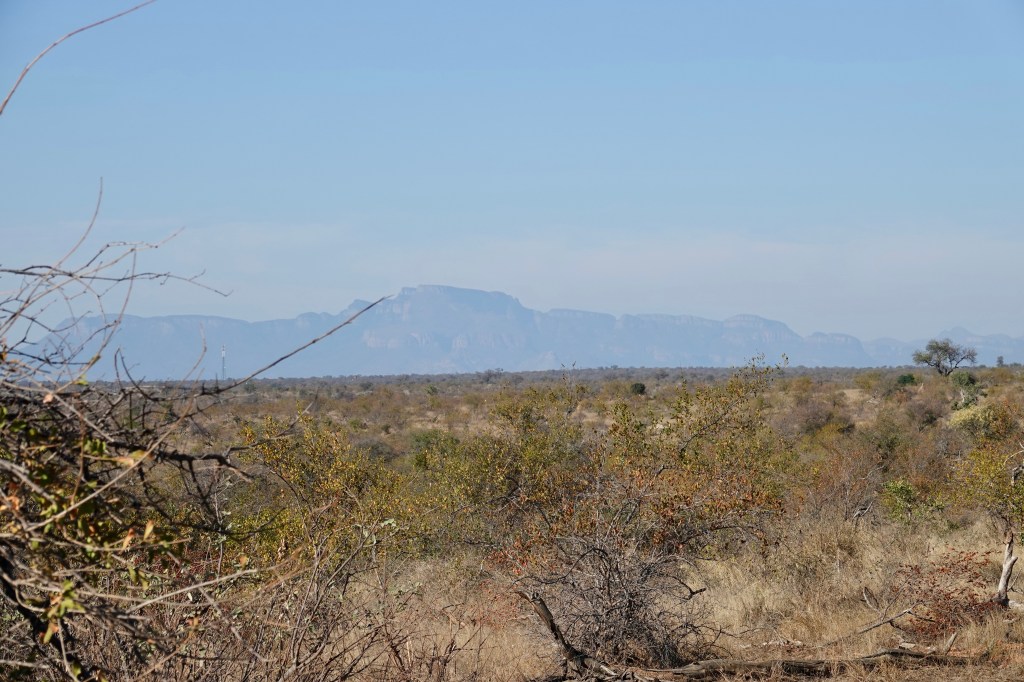
Part of the Drakensberg mountains in the distance Olifants River in the very northwest corner of Balule Sun rising over the Kruger National ParkThe Olifants River The Olifants flows on through the Kruger Park and then into Mozambique The landscape in Balule Private Game Reserve
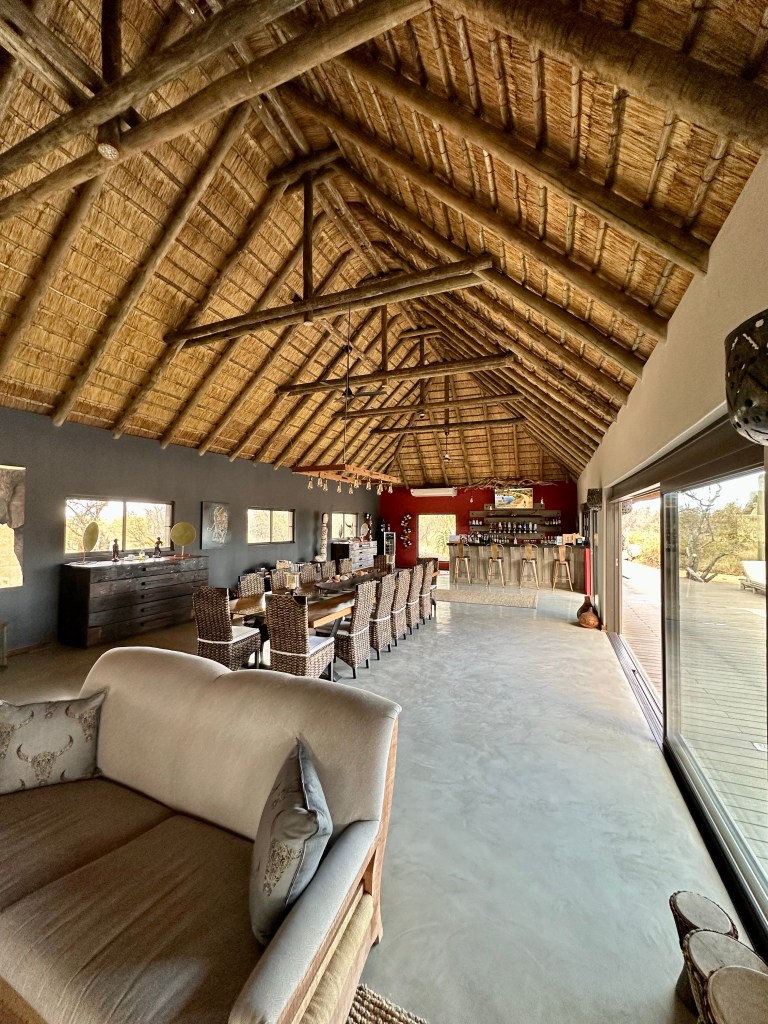
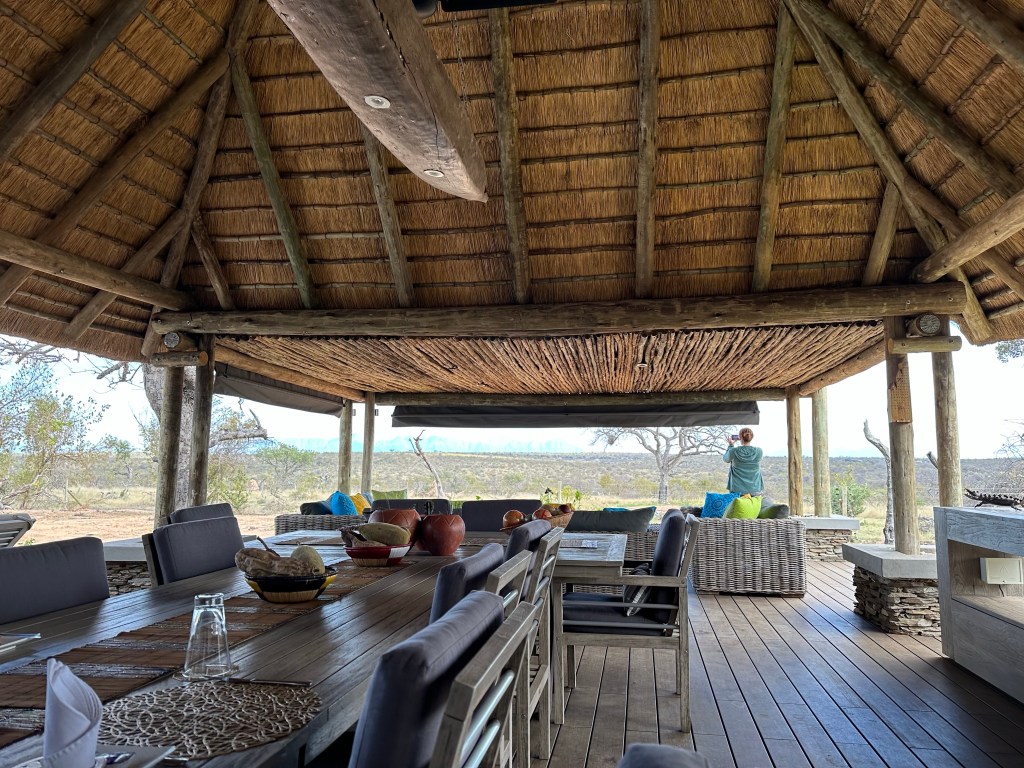
The Imagine Africa Luxury Camp was, as accurately (and somewhat immodestly) described in the title, luxurious. But simply so. It was quite probably the nicest place we stayed during the entire trip. The routine was simple – up at 0530 for a game drive, back for breakfast around 0900. The day at leisure reading, sleeping or swimming ( the pool was , again, very cold). At 1600 it’s time for another game drive ( with sundowners on a hill somewhere), returning around 1900 ish. After a shower it’s dinner time, then rinse and repeat. A simple but good way to spend the days out in the African bush.
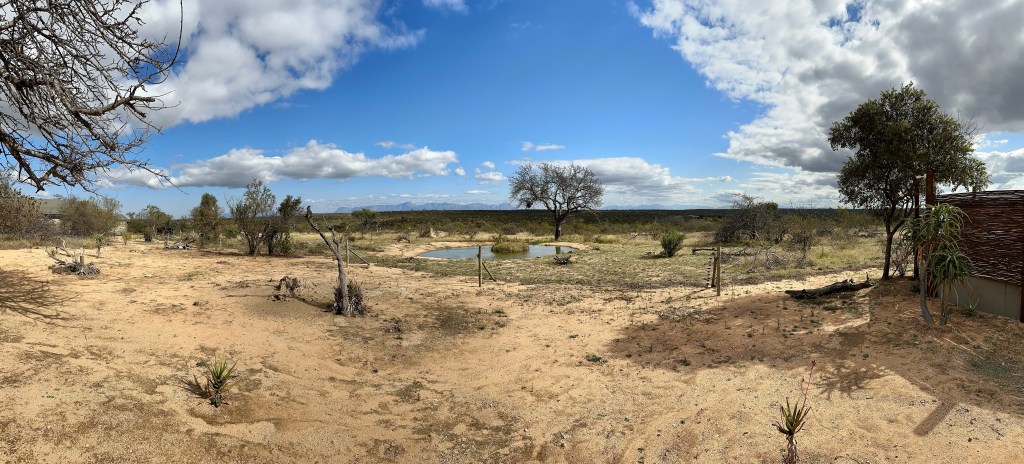
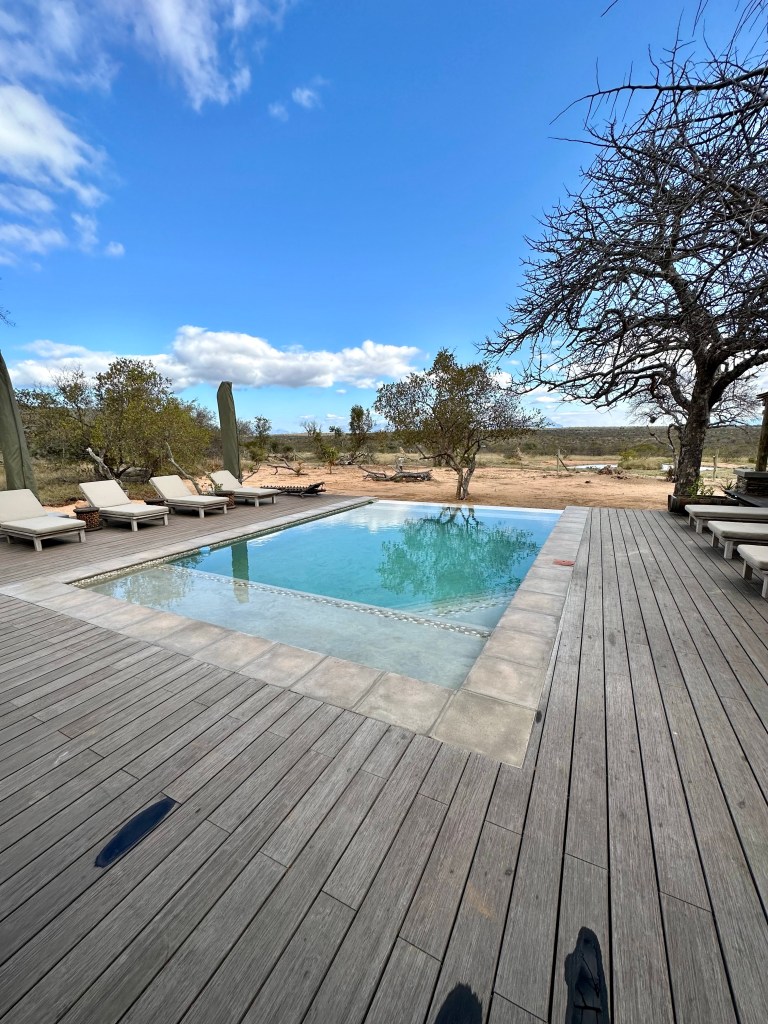
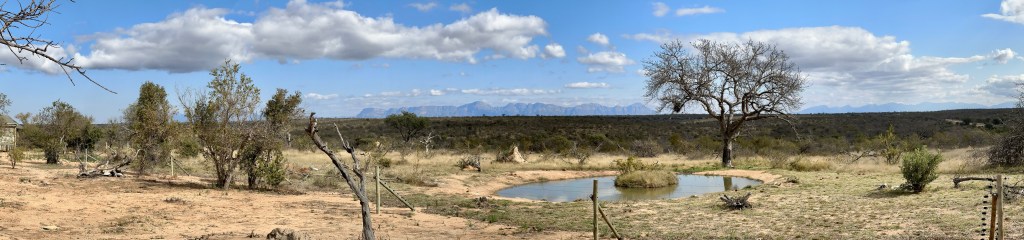
Inside the main lodge area at the campCamp swimming pool overlooking the waterhole Panoramic view of the camp waterhole with the Drakensberg in the distance Outside dining and lounge area overlooking the pool and waterhole… now with added Ness!
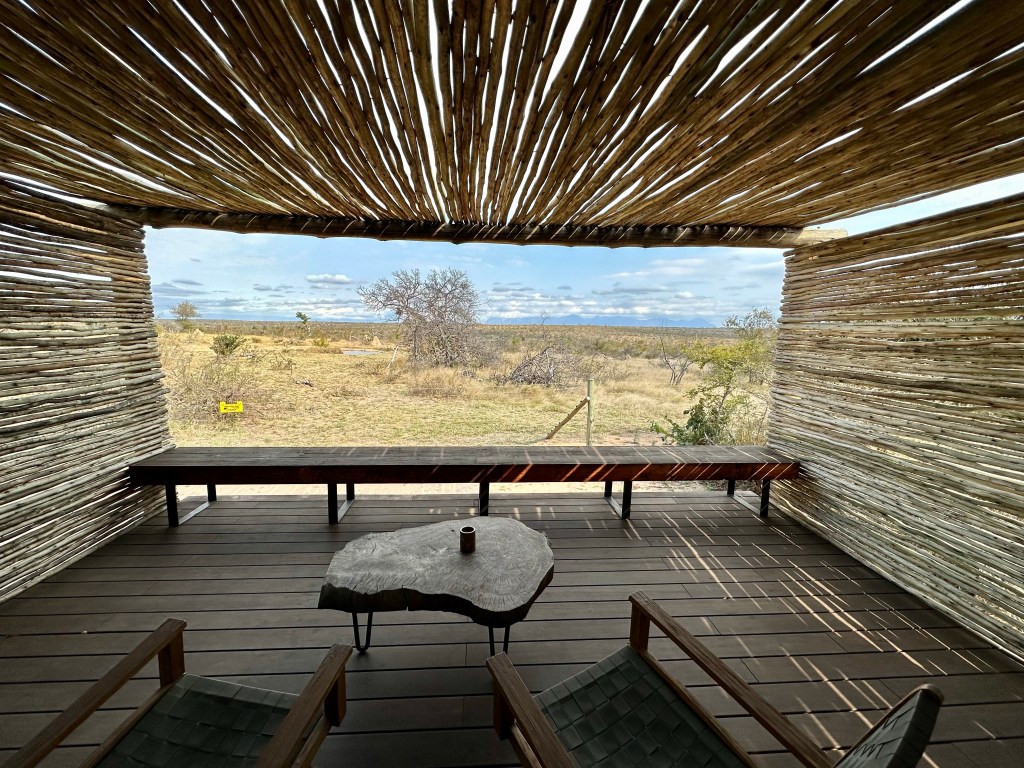
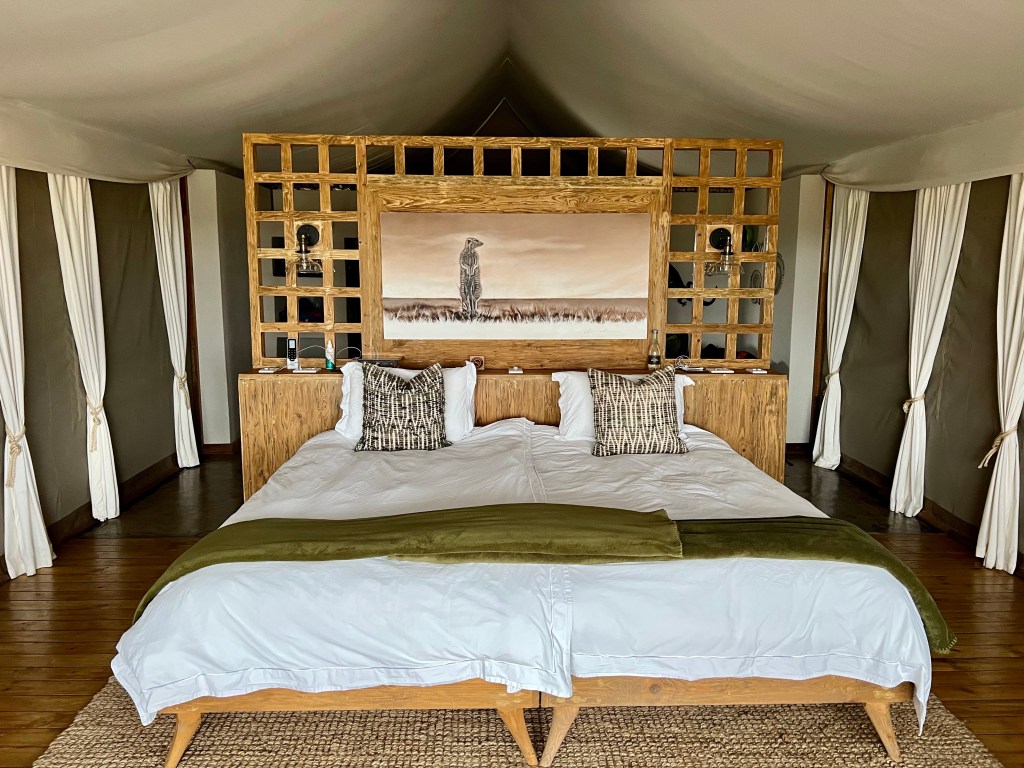
Our tent had a direct view from our bed of the waterhole immediately in front of the lodge. We saw elephants, kudu, hyena, wild dogs and stacks of various types of birds. The ‘tent’ itself had a covered deck, king sized bed, aircon, fan , en-suite , dressing room, desk, inside shower, and an outside shower and bath. Not too shabby!
View looking out from our tent’s deckOn a late afternoon game drive
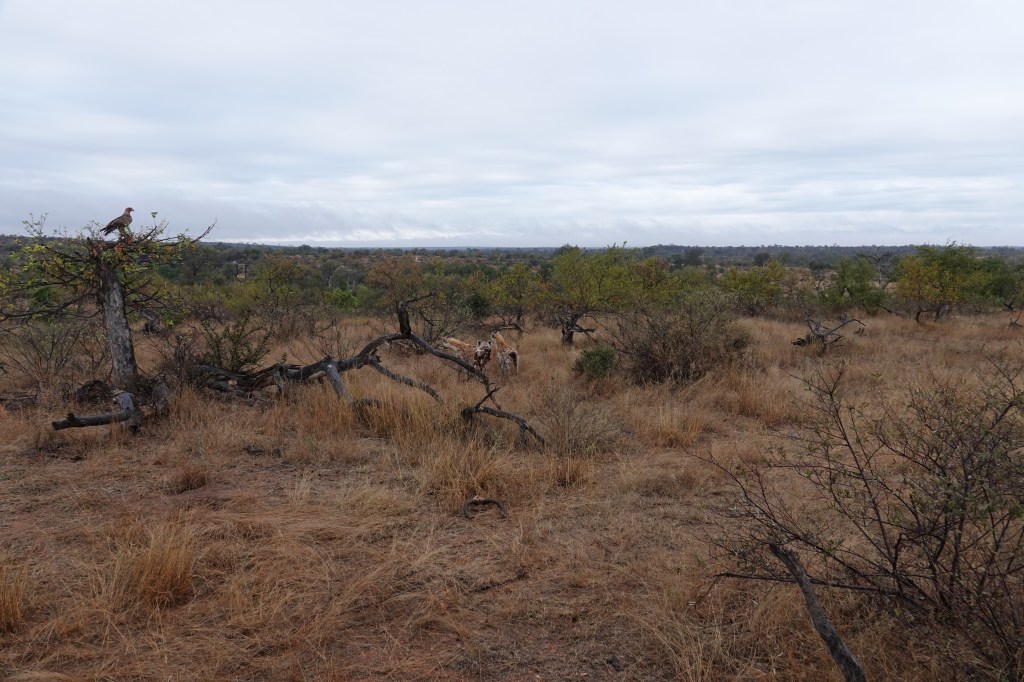
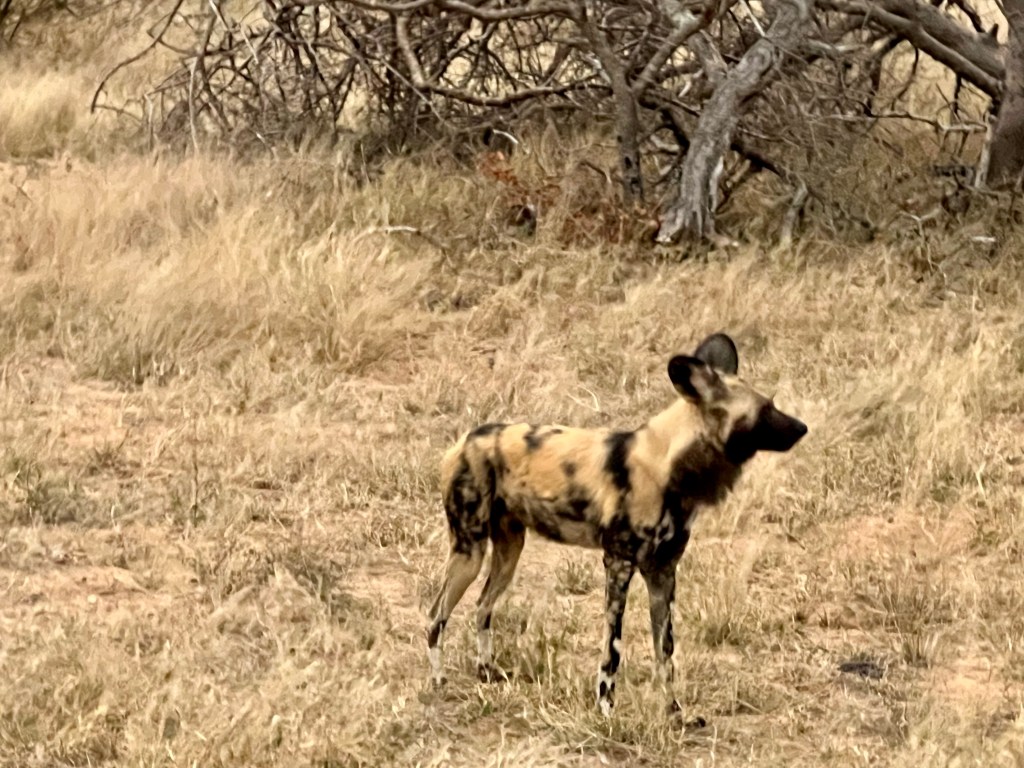
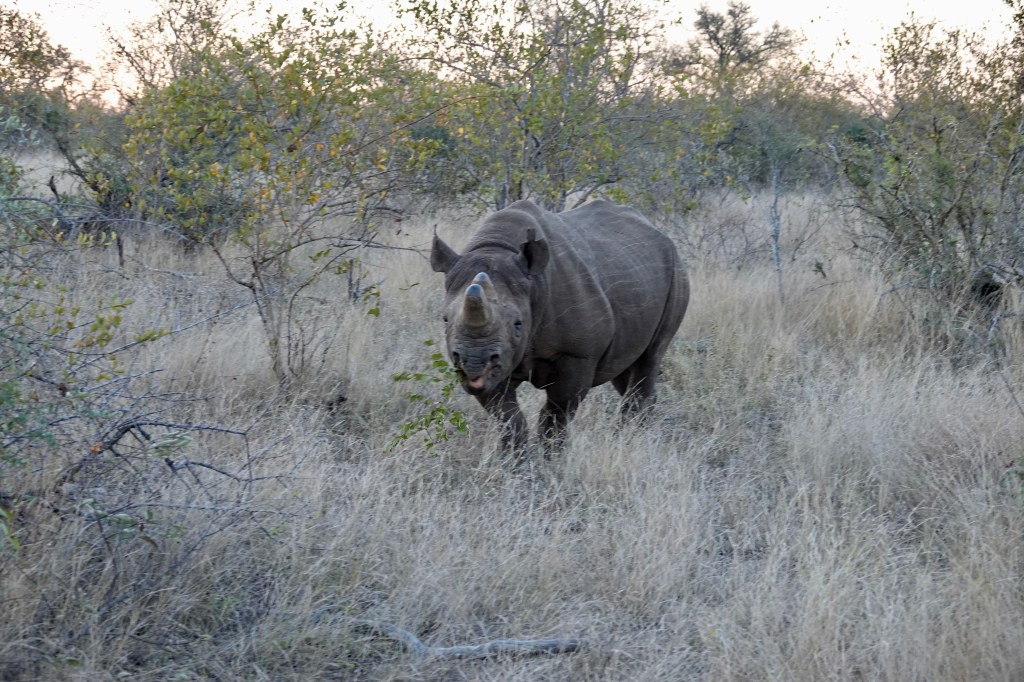
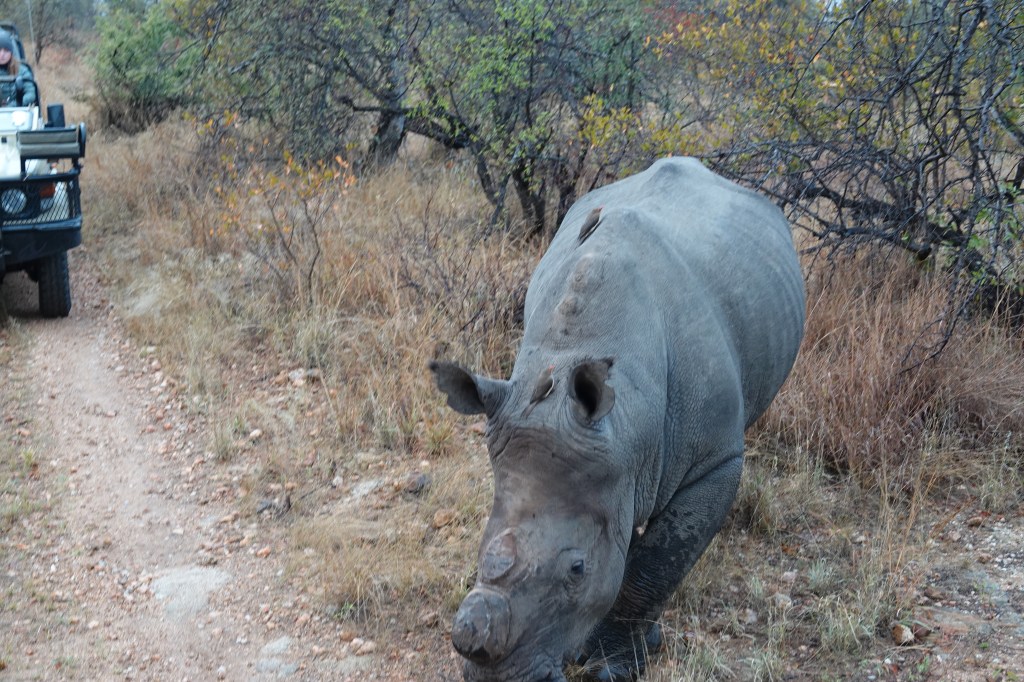
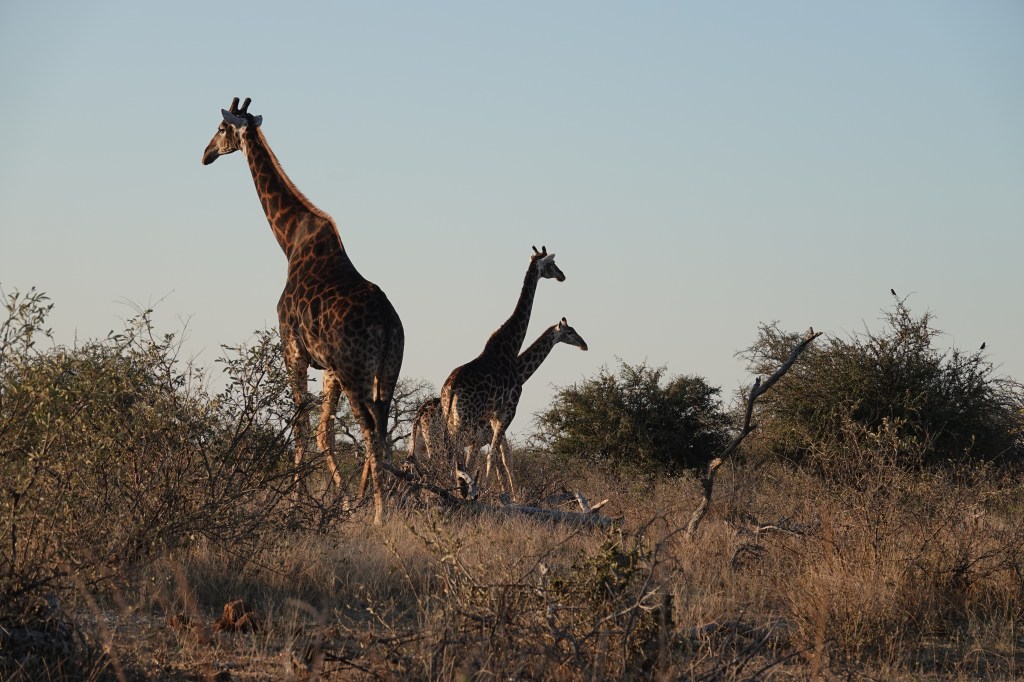
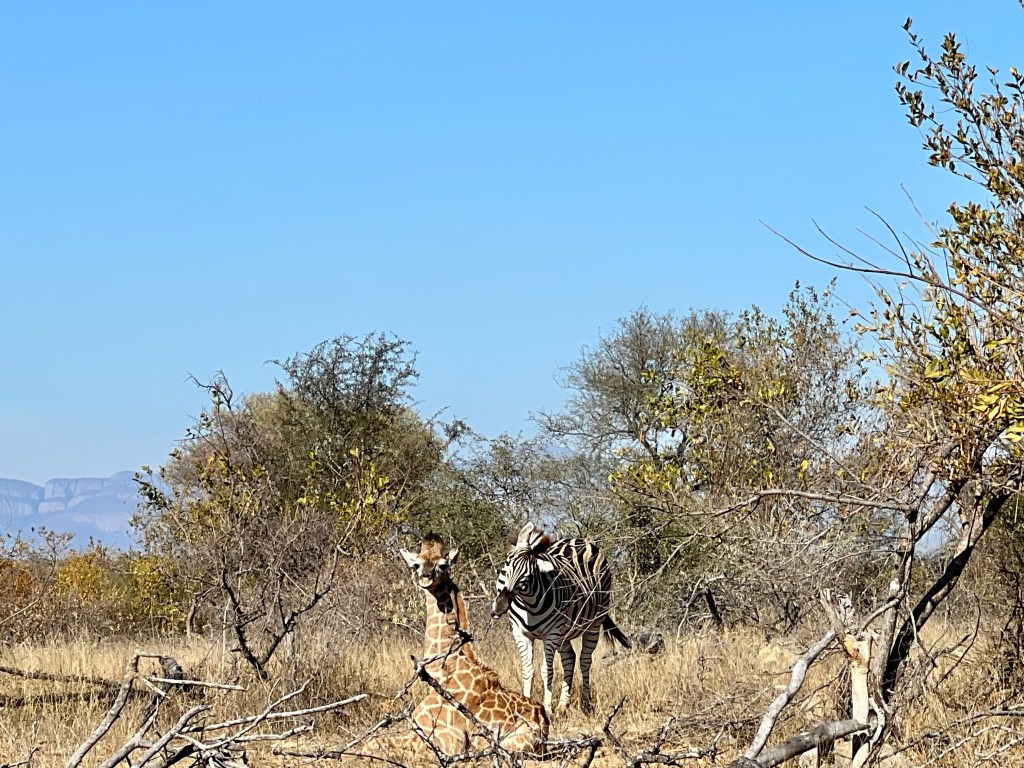
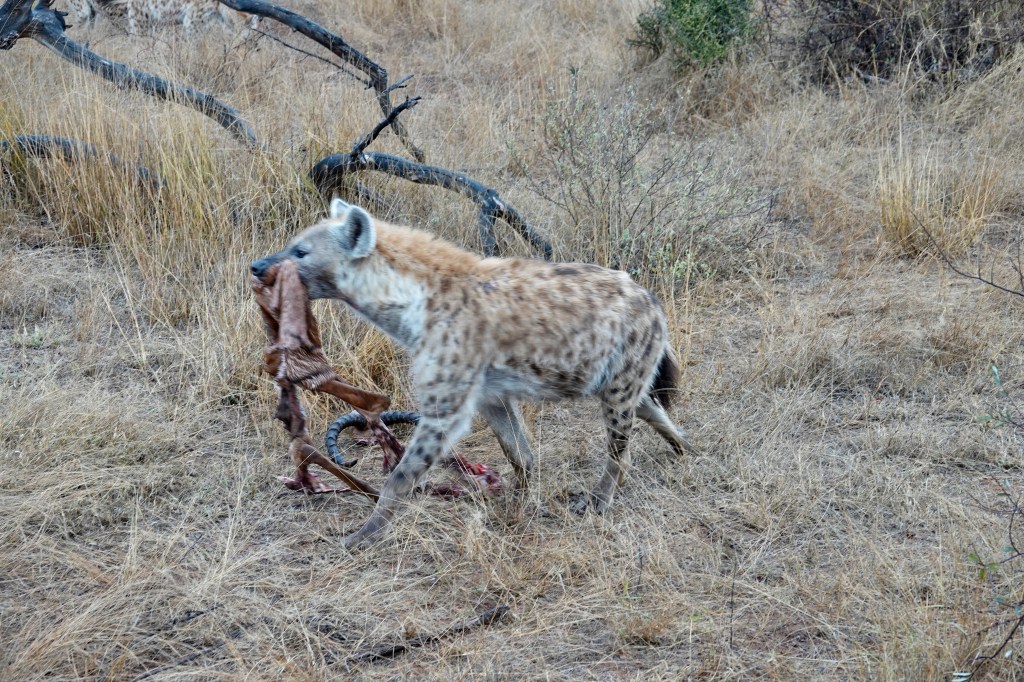
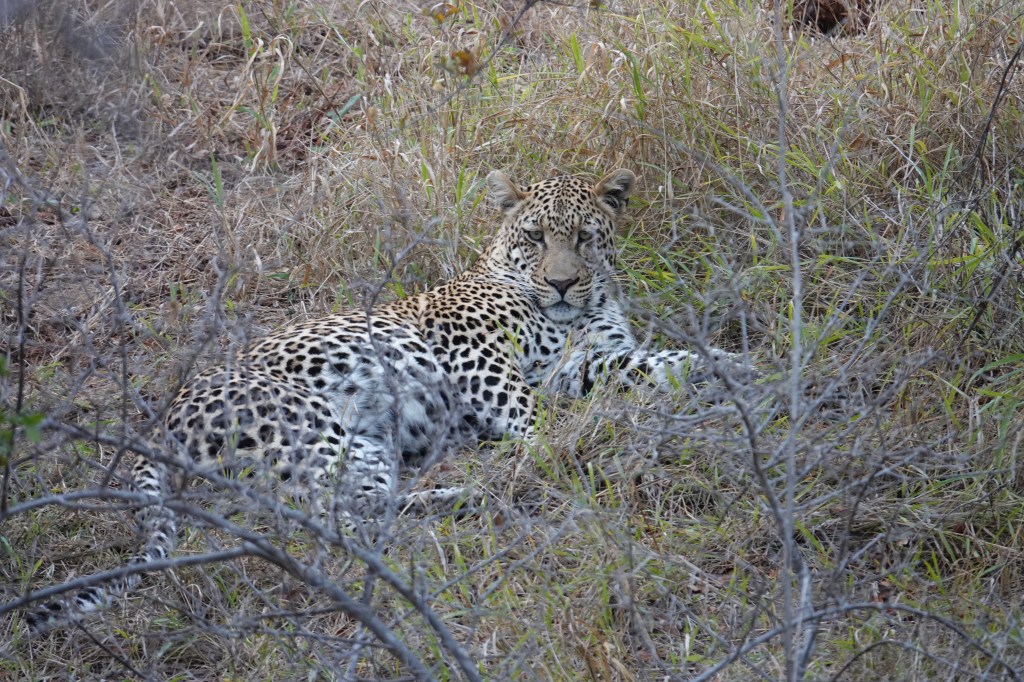
The game viewing was good. Highlights included a small pack of African Wild Dogs, Black Rhinos ( one crotchety and charging, one mega-chilled), a massive White Rhino, a 3 week old Giraffe foal, a Leopard on an Impala kill, another smaller Leopard just trying to mind her own business , a small pack of Hyenas on a kill ( stolen from Wild Dogs) and … a chameleon trying to blend in on a high tension power line! Plus the ‘usual’ Impala, Waterbuck, Kudu, Bush Buck, Grey Duiker, Zebra, Giraffe and Elephants, along with plentifuli bird life.
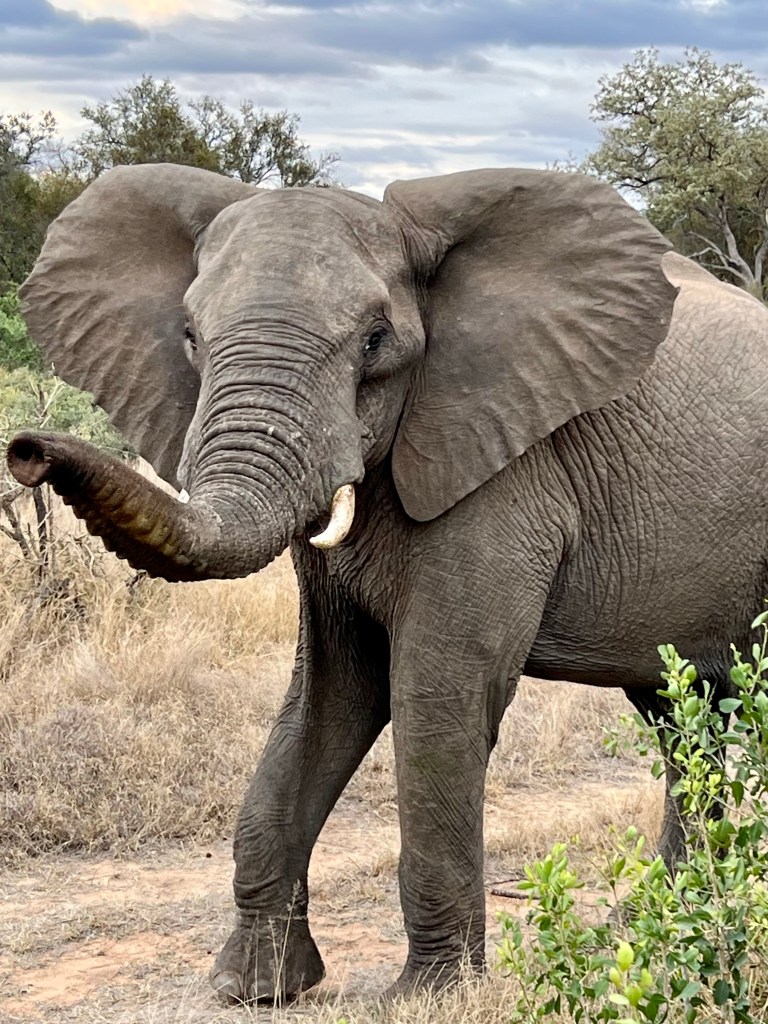
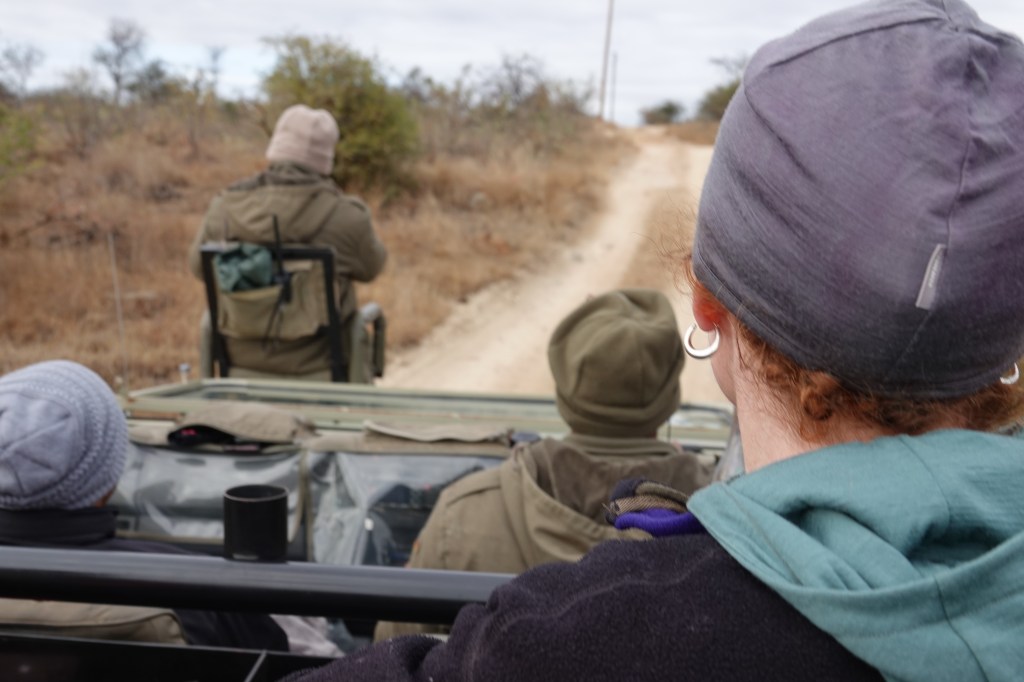
Ness checking something out on the Sunday morning game drive after the sun came up… being rugged up was vital before dawnA member of the wild dog packThe ‘chill’ black rhino – the guides have christened him ‘Zulu’A very relaxed and friendly white rhino male – the photo doesn’t necessarily convey it, but he was nearly half as big again as the two black rhino in the images on this post (all the rhino in the Balule Game Reserve have been de-horned as an anti-poaching measure)
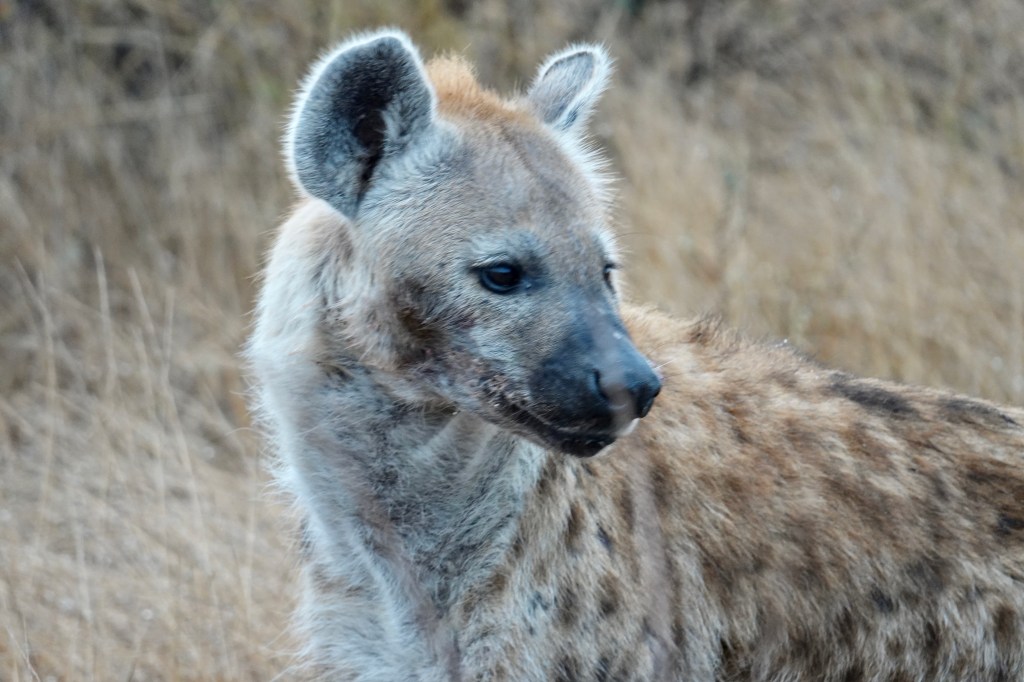
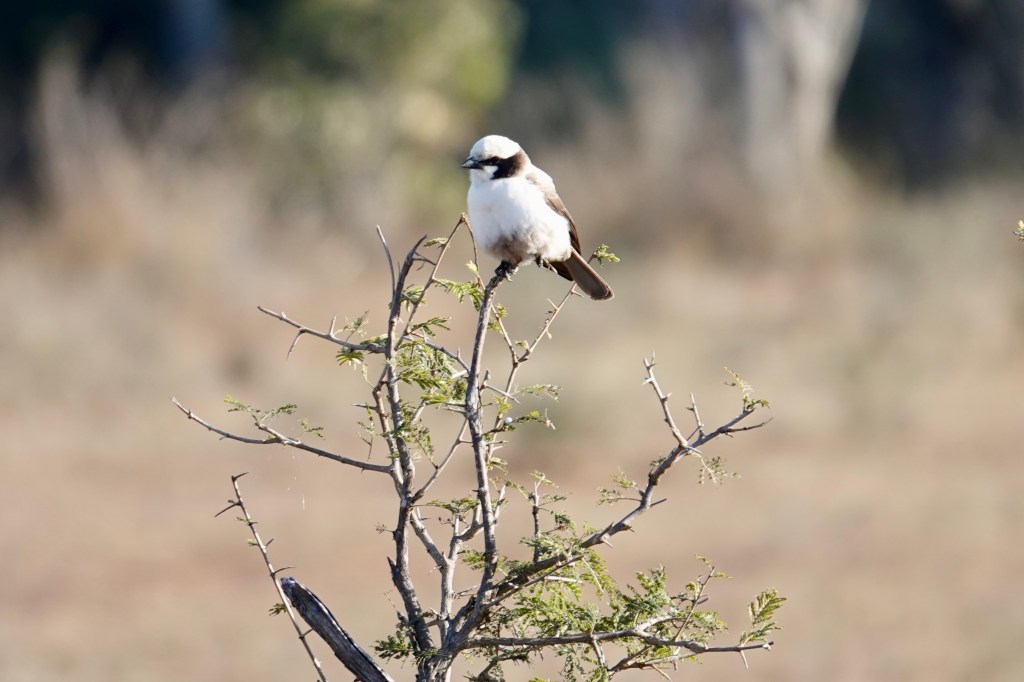
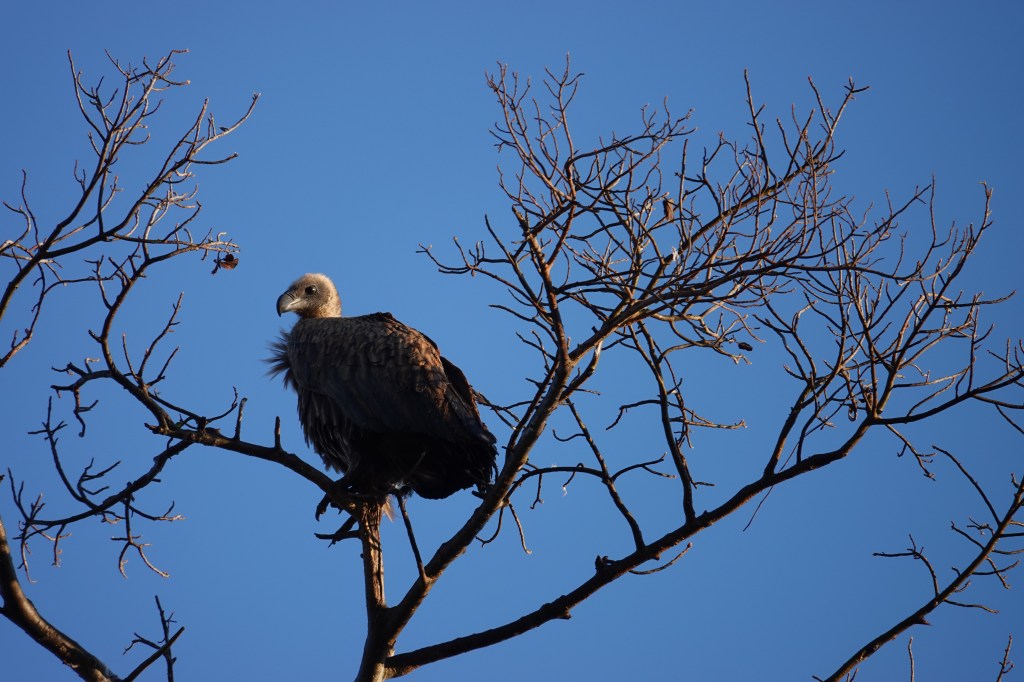
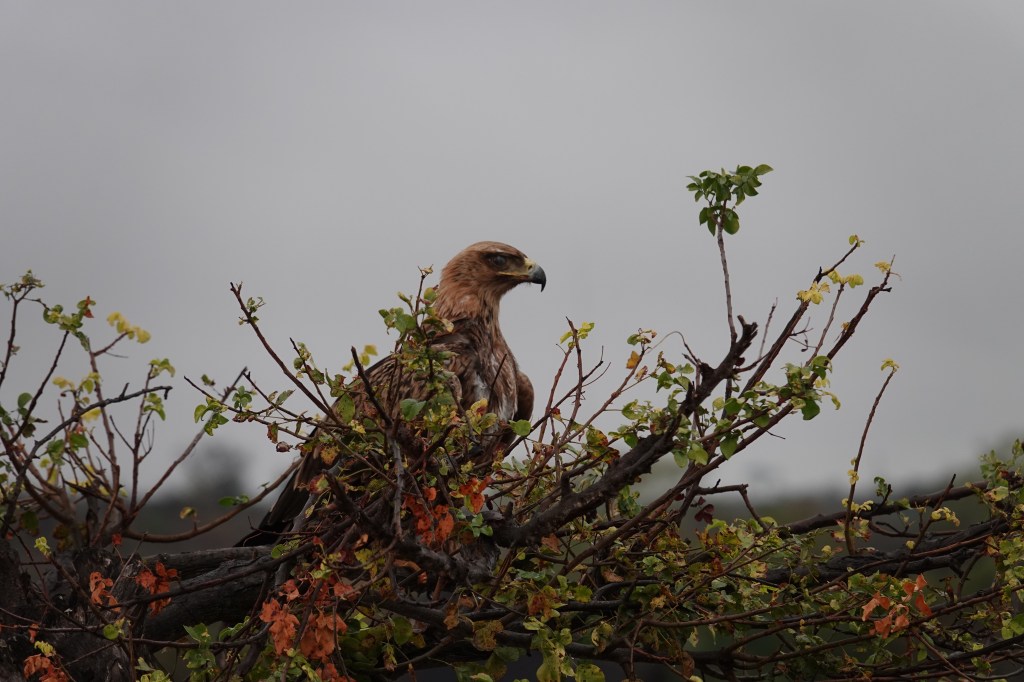
Video of the non-chilled black rhino male. Our guide, Hendrick, said this fella had form for grumpiness; he lived up to it when we encountered him! Some of the usual suspects A three week old giraffe having a rest, zebra apparently helpingSpotted Hyena White Crowned ShrikeAfrican White-backed Vulture hanging out by the Olifants river Remains of an Impala, stolen from the African Wild Dogs which had caught and killed it A Tawny Eagle watches over the Hyenas as they devour their stolen Impala A big male Leopard digesting an Impala
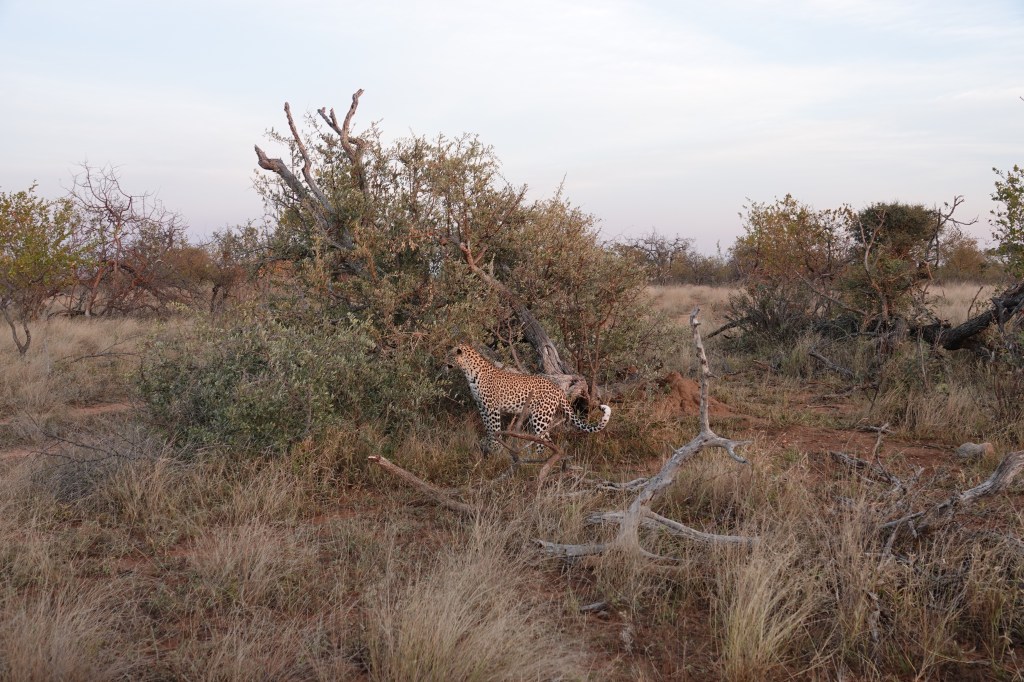
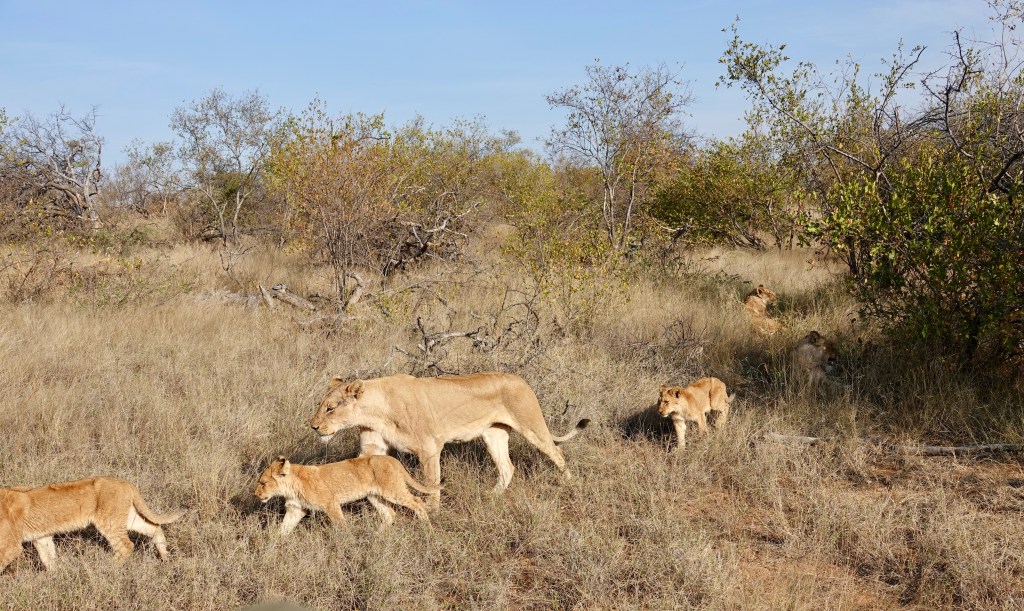
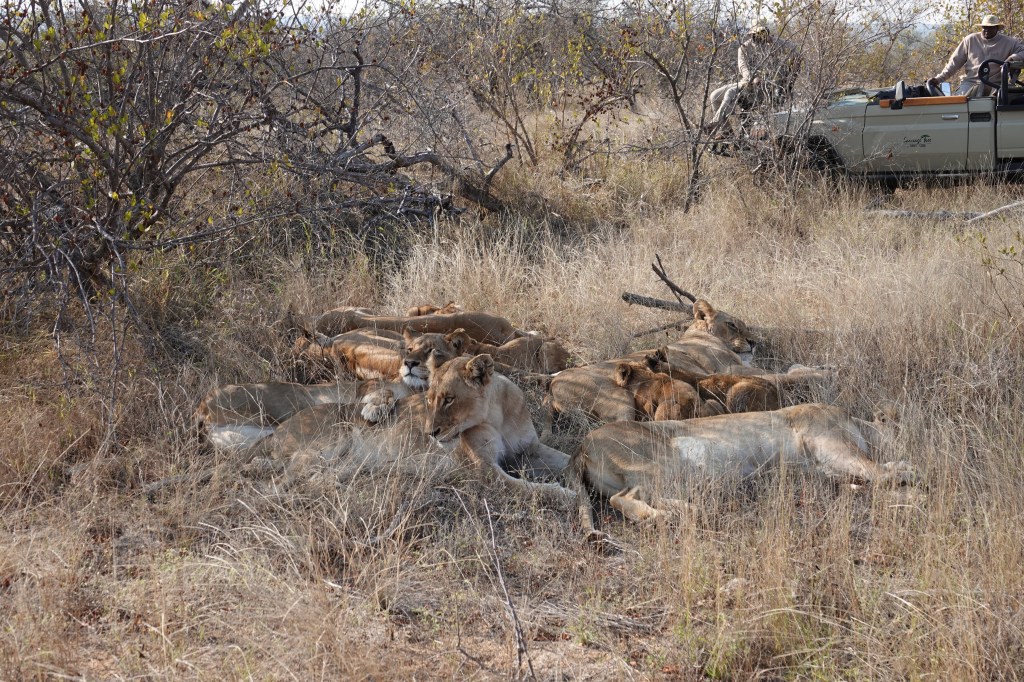
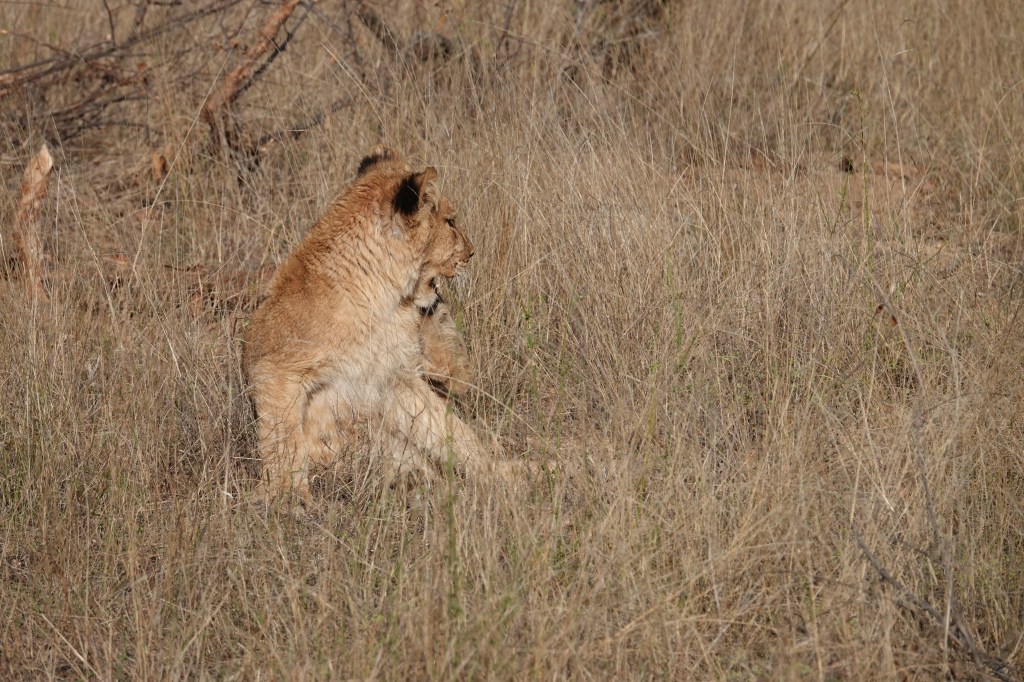
On Monday morning we were up early (again) for our final game drive of this trip. Highlights were the young female leopard stalking Impala and a pride of lions with six cubs.
Young female leopard heading off on an early morning stalk of Impala Last morning lions!A nest of lionesses and cubsOne of the six cubs. Apparently there were seven, a leopard took care of one of them…
After breakfast we transferred back to Hoedspruit Airport for the flight back to Johannesburg OR Tambo airport.
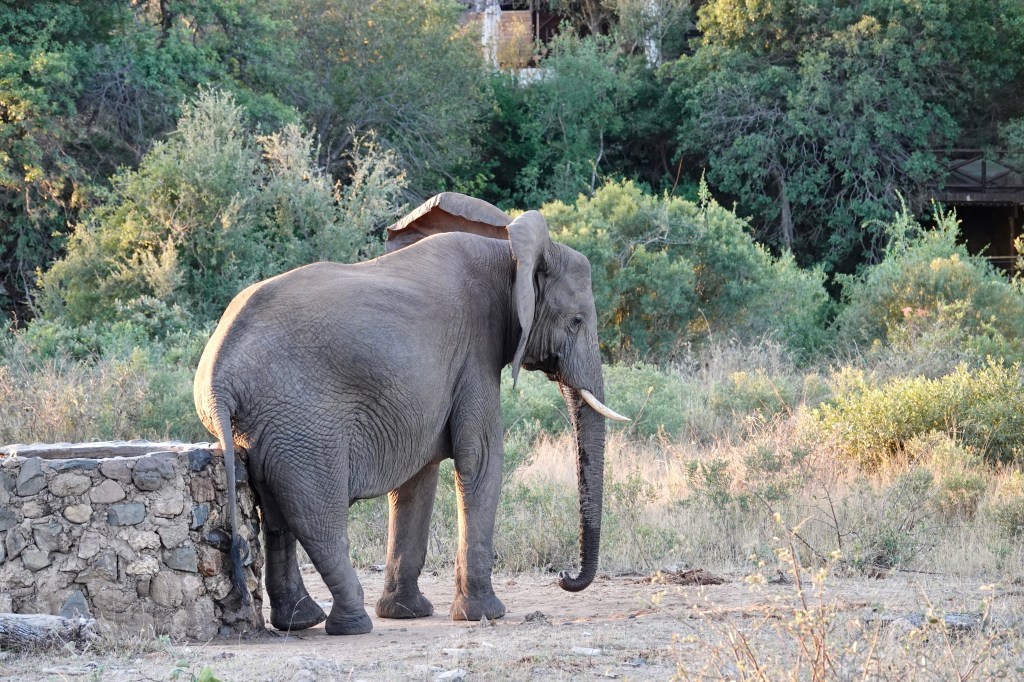
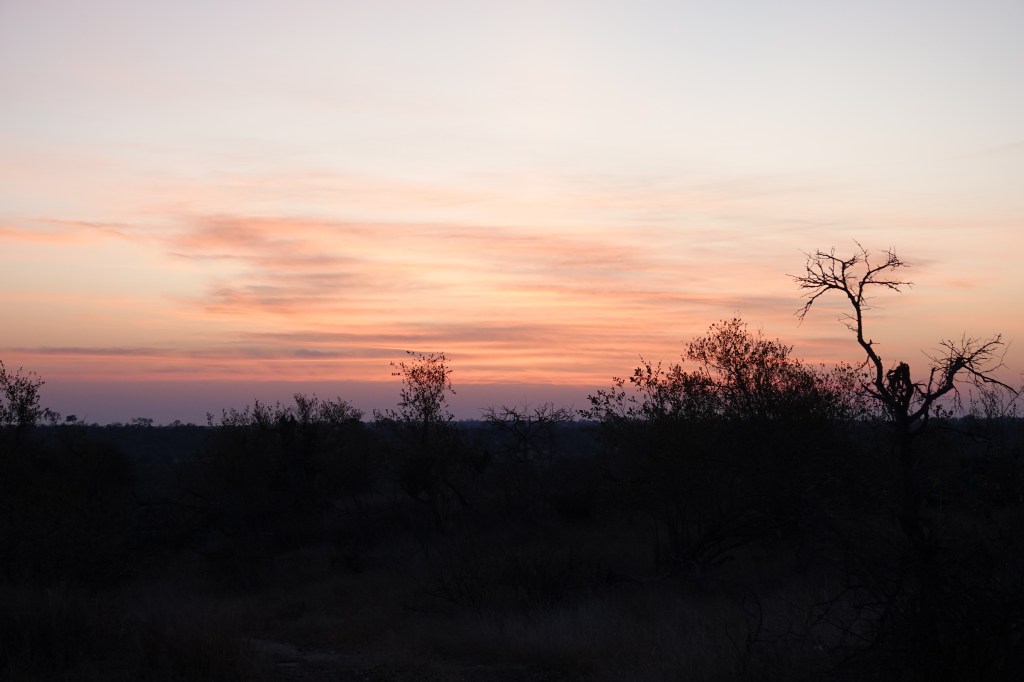
Female Ele with a lame right rear leg having a rest on a water point – she literally sat on it for a few minutes Sunset over the bushSunset Monday evening on our last night out bush on this trip
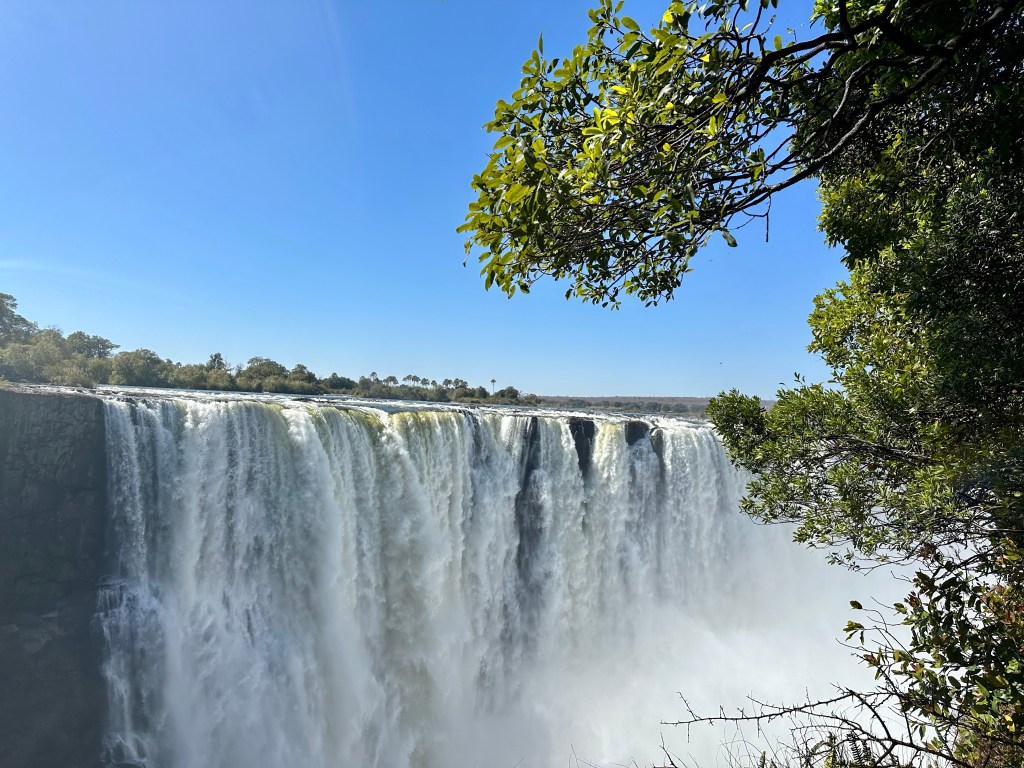
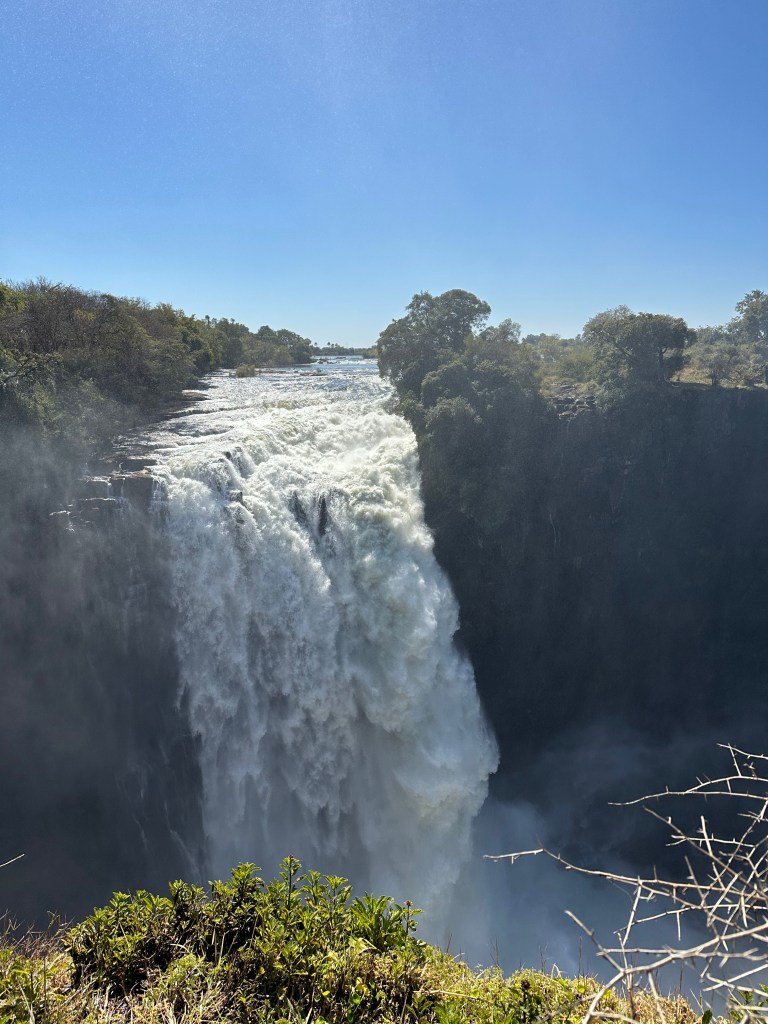
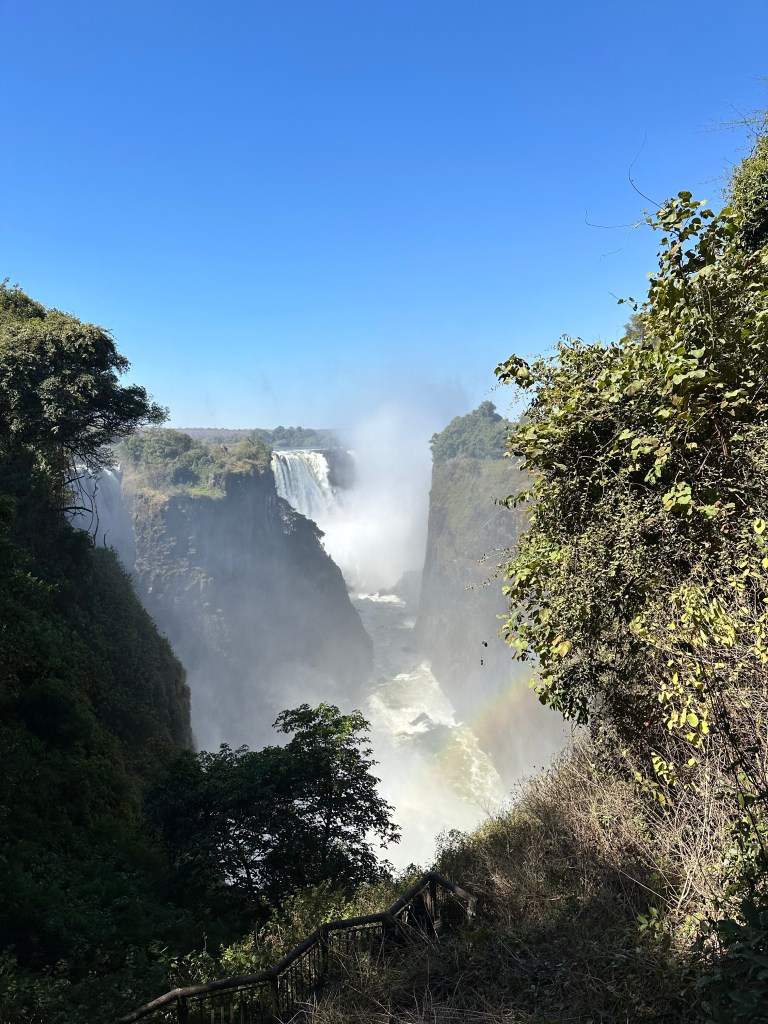
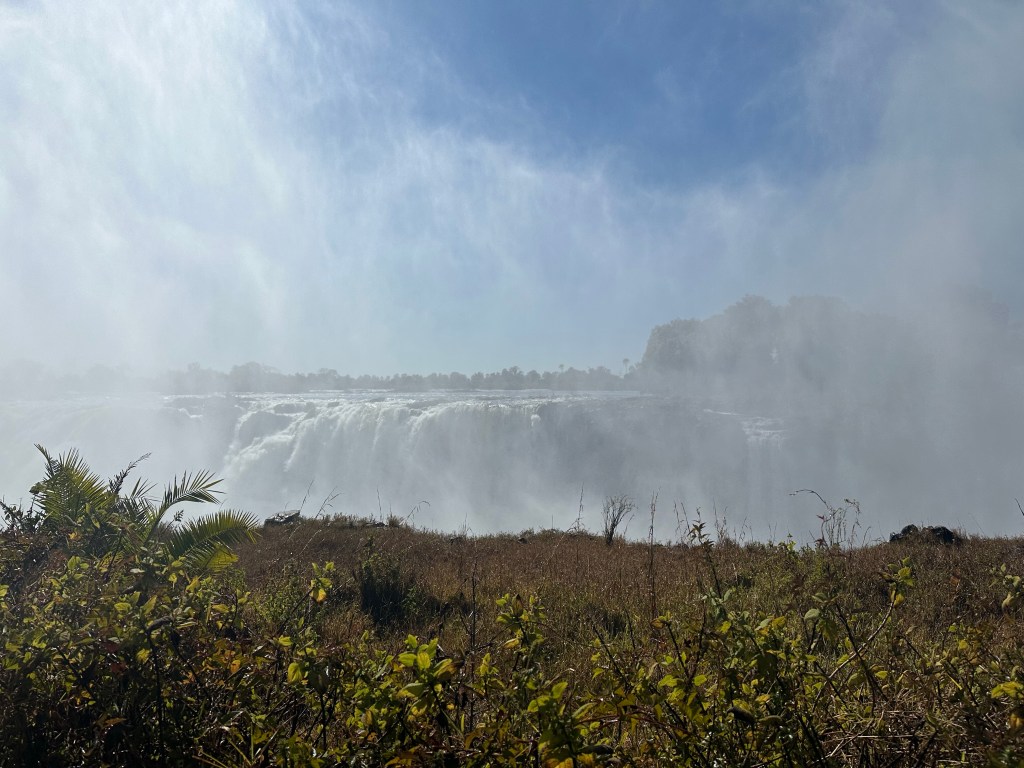
An early start for breakfast on Monday morning in order to get to the border early was frustrated by a miscommunication with the lodge staff. The net result was a later arrival at the Botswana/ Zimbabwe Border. Clearing Botswana was smooth, the border crossing at the Zimbabwe gate was a total rock show. Three leisurely hours in a hot queue later we were clear and on our way to Victoria Falls (another hour by road). After a quick lunch we went into the Victoria Falls National Park to check out the falls for a few hours. This was Mark’s third visit to the falls, but they remain just as fascinating as the first time in 1999.
‘The Devil’s Cataract’ at the Zimbabwe end of the fallsLooking down the falls gorge from the farthest The ‘Horseshoe Falls’ at Victoria Falls, showing some of the incredible amount of mist thrown up by the volume of water going over the falls
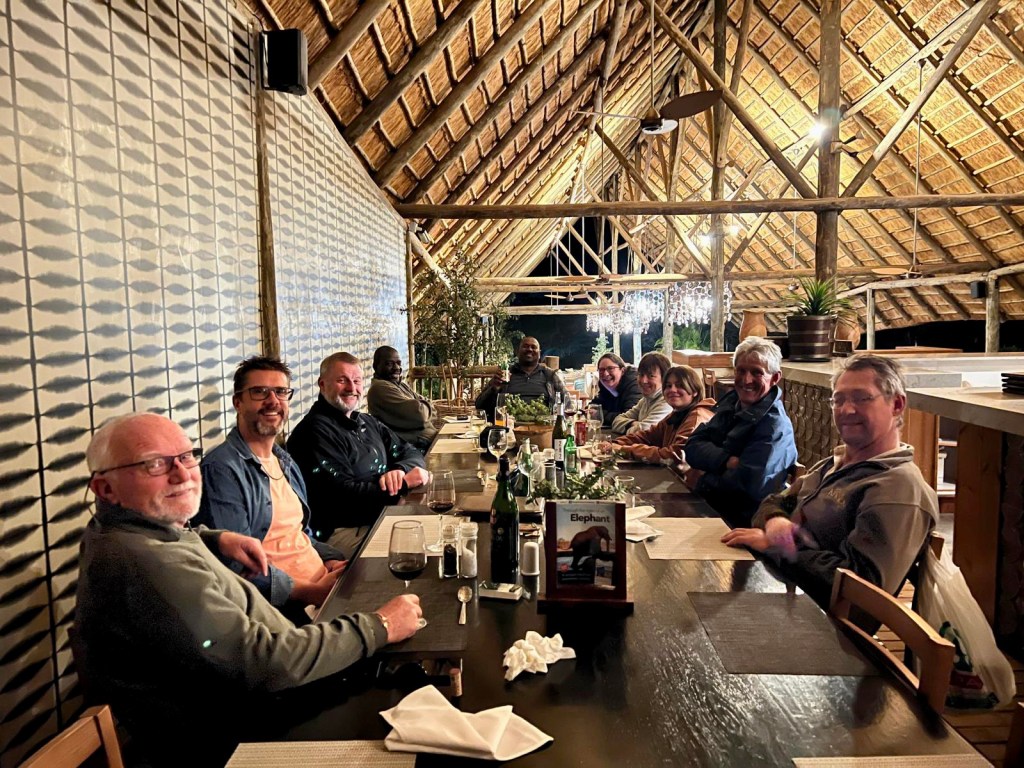
After the falls we headed back to our hotel and the our last dinner with our Nomad Tour Group. They were a good bunch of people – as it turned out four of the 5 amigos who started in Cape Town three weeks earlier were staying on in Victoria Falls. We were joined on Tuesday by Kevin’s wife, Sandy, who had flown up from Cape Town to join Kevin for a holiday in Zimbabwe.
Last Supper with the full Nomad
On Tuesday we went white water rafting down the Zambezi for the day. Warren and Kevin did it too, so we had a ‘Nomad Crew’ boat with our rafting guide Kazi. The walk-in and walk out of the gorge were tricky, but the rafting was awesome. Even better , although probably nothing to do with our efforts and everything to do with Kazi, the Nomad Crew actually did white water rafting rather than white water swimming 😀. The smug levels were high after not flipping the raft.
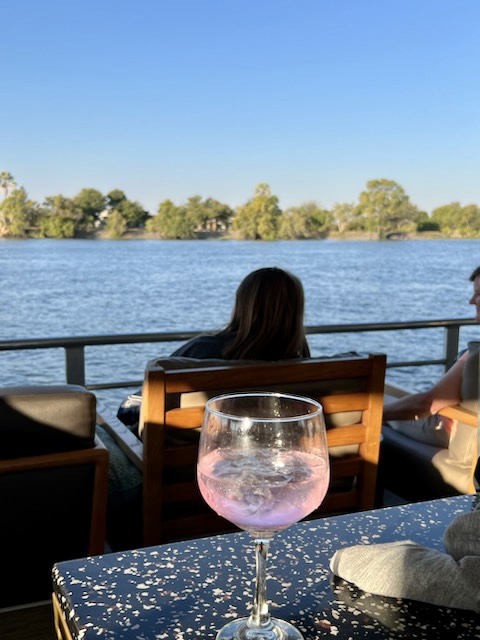
A gallon sized boutique South African made G&T on our evening Zambezi River cruise 😀
After all the excitement it was time for a quick shower and off to a sunset cruise on the Zambezi River above the Falls.
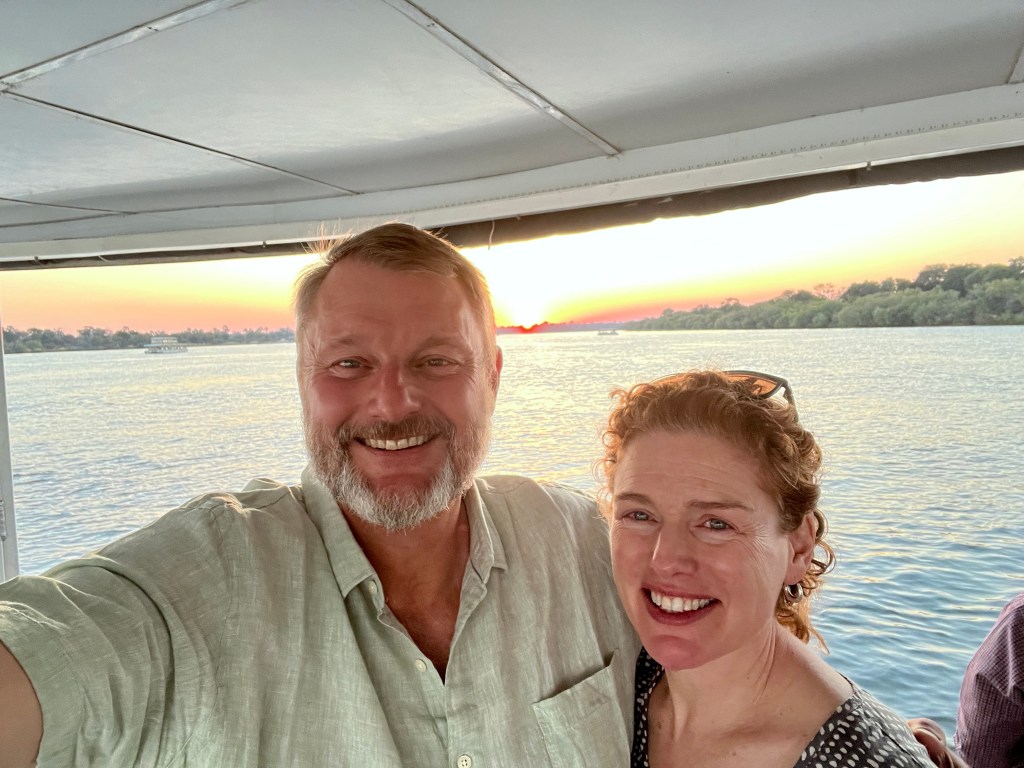
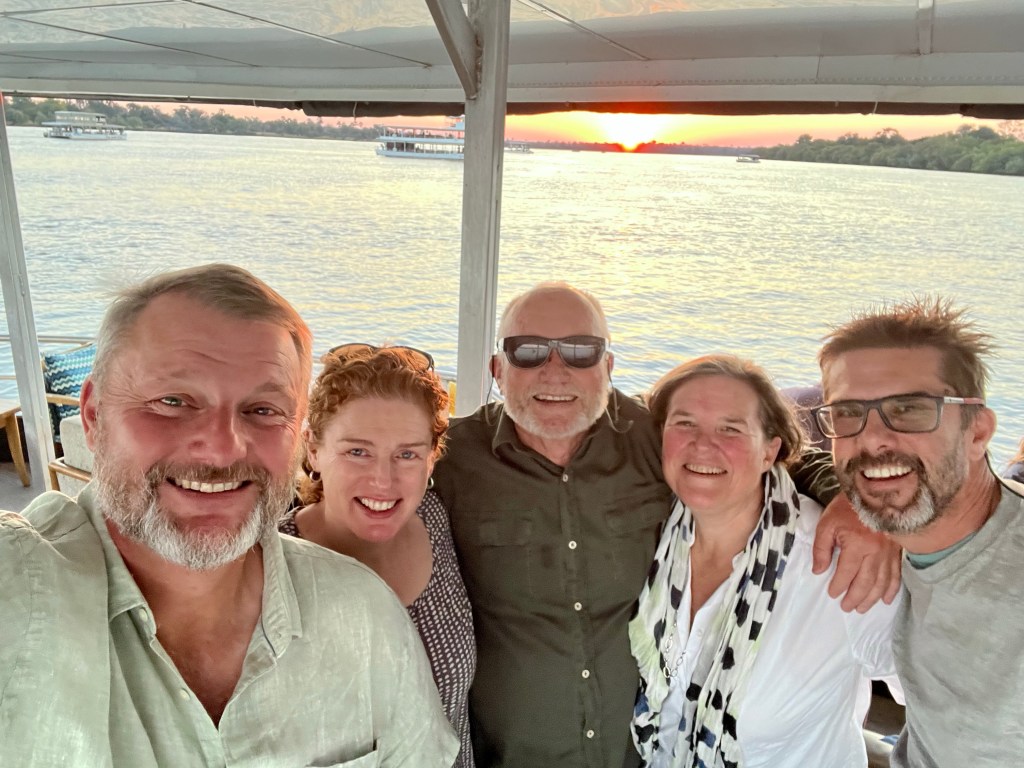
Zambezi sunset cruise- 2 G&T in Mark, Ness, Kevin, Sandy and Warren
We saw crocodiles, hippos, buffalo, and African Fish eagle. And drunken Russians – four of them drank two bottles of tequila in less than an hour 🙄. It was quite an effort for them to get down the gang way at the end of the cruise!
The sunset cruise was followed by dinner back in ‘town’ at a nice place. Wednesday saw a welcome sleep in, fond farewells to the remaining friends and departure from Zimbabwe by air . We arrived in Johannesburg for an overnight stay around 4pm . And got to say goodbye to Warren again, his flight was late in and we saw him collecting bags at OR Tambo, in transit back to Cape Town.
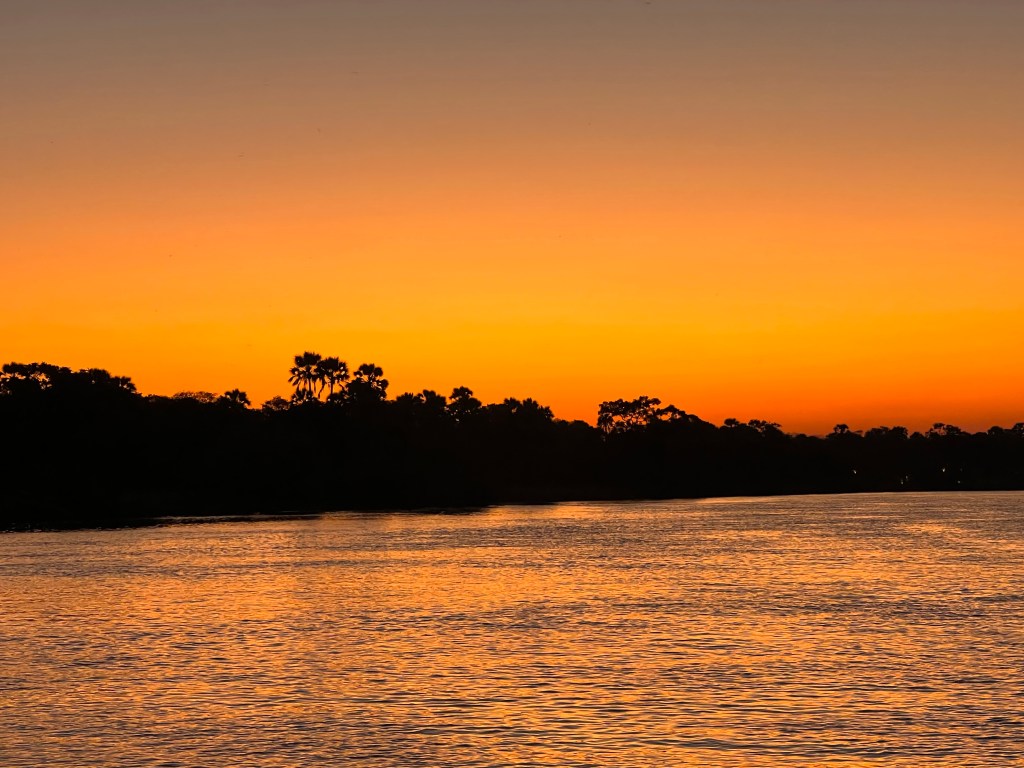
Sunset over the Zambezi and Zimbabwe side from the Zambian side of the river channel
Friday morning saw us up at 0500 for an early breakfast before heading out on a game drive in the Khwai conservation area. We were pretty much wearing every warm piece of clothing we had as the morning was very cold and the vehicle movement added considerable wind chill.
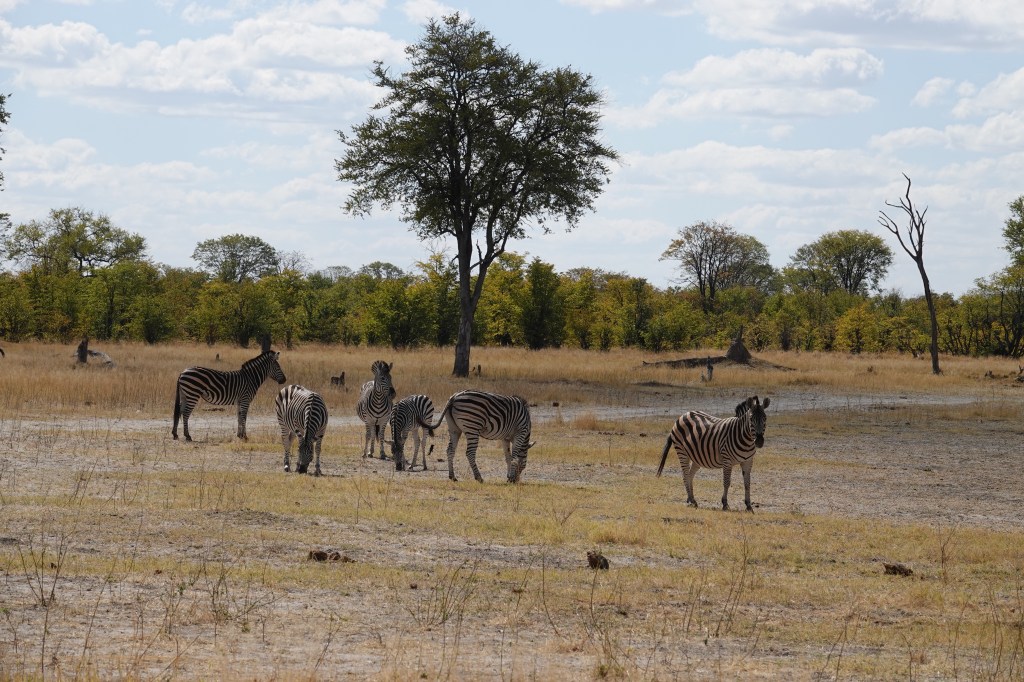
More stripey horses – these ones being Plains Zebra like we saw in Tanzania, unlike the Burchell’s Zebra which were predominant in Namibia
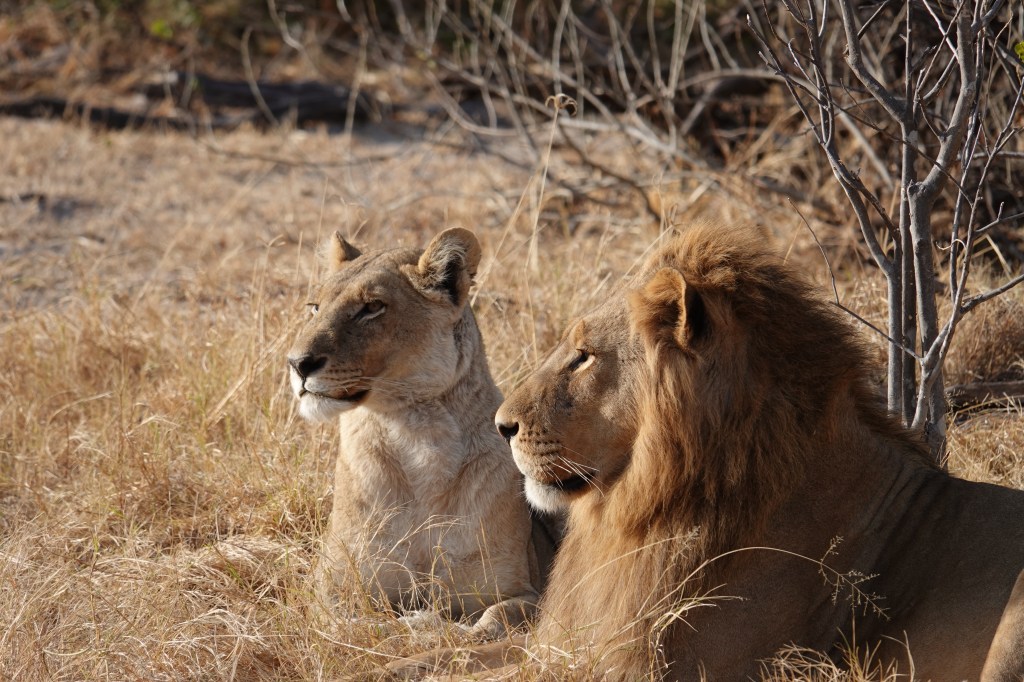
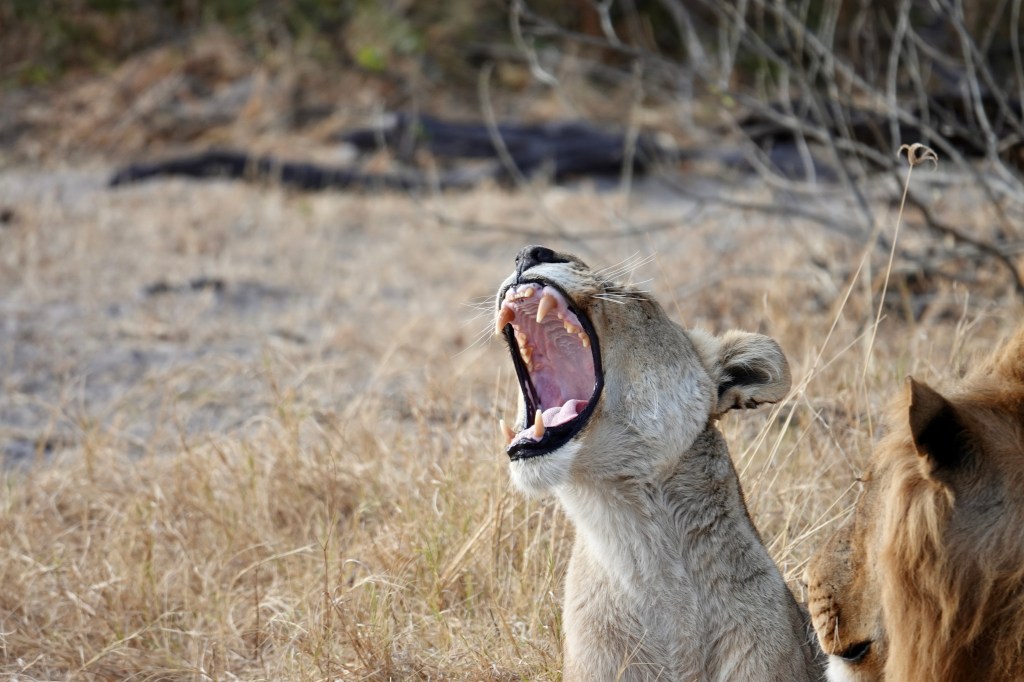
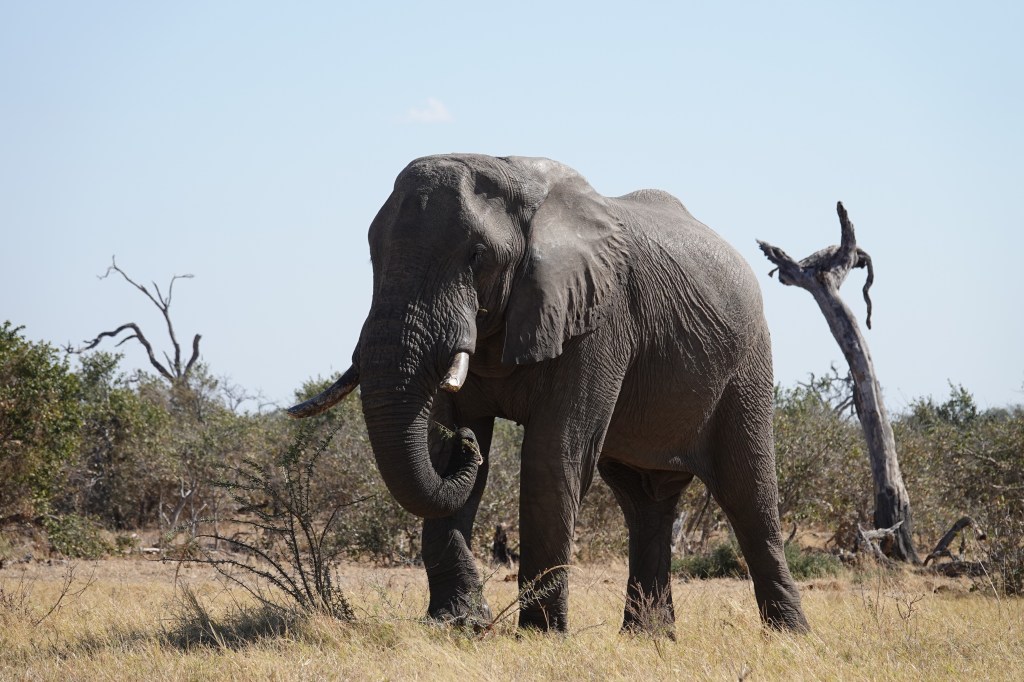
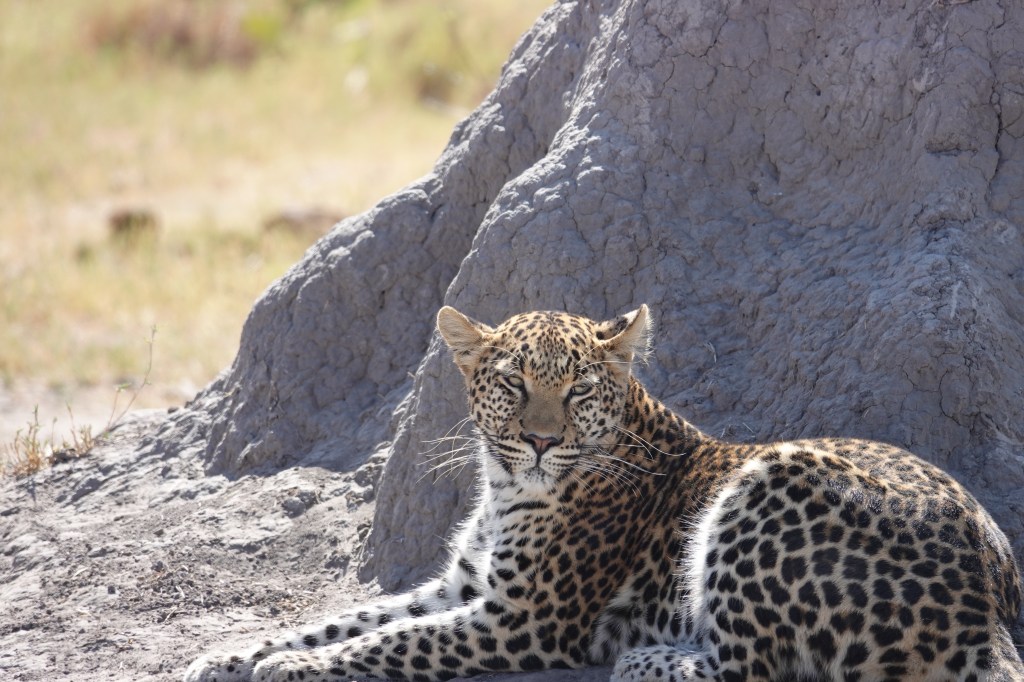
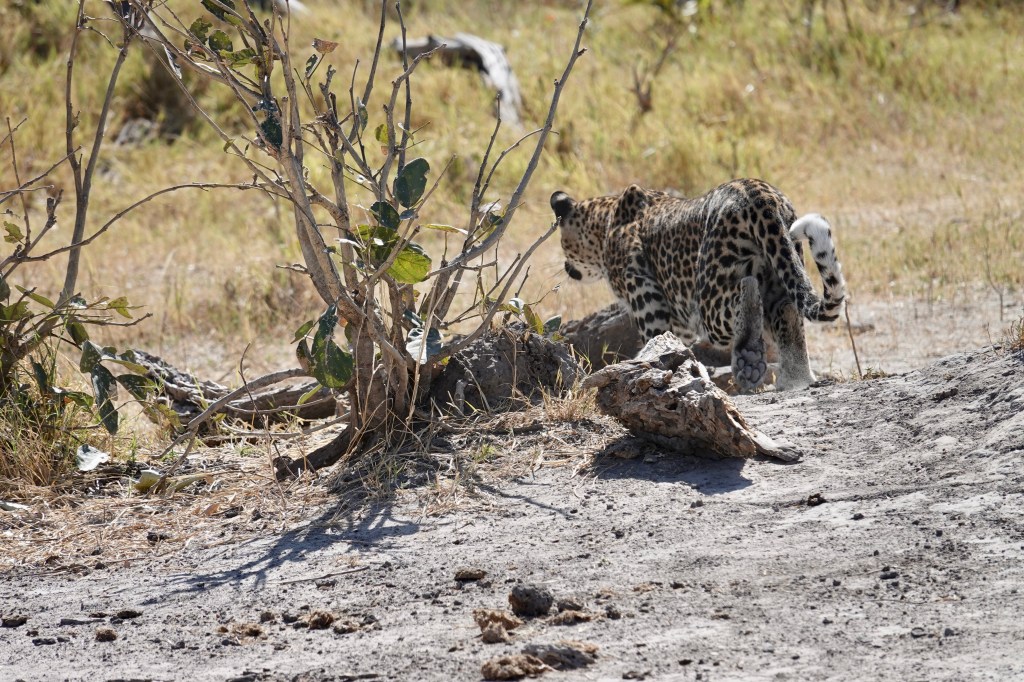
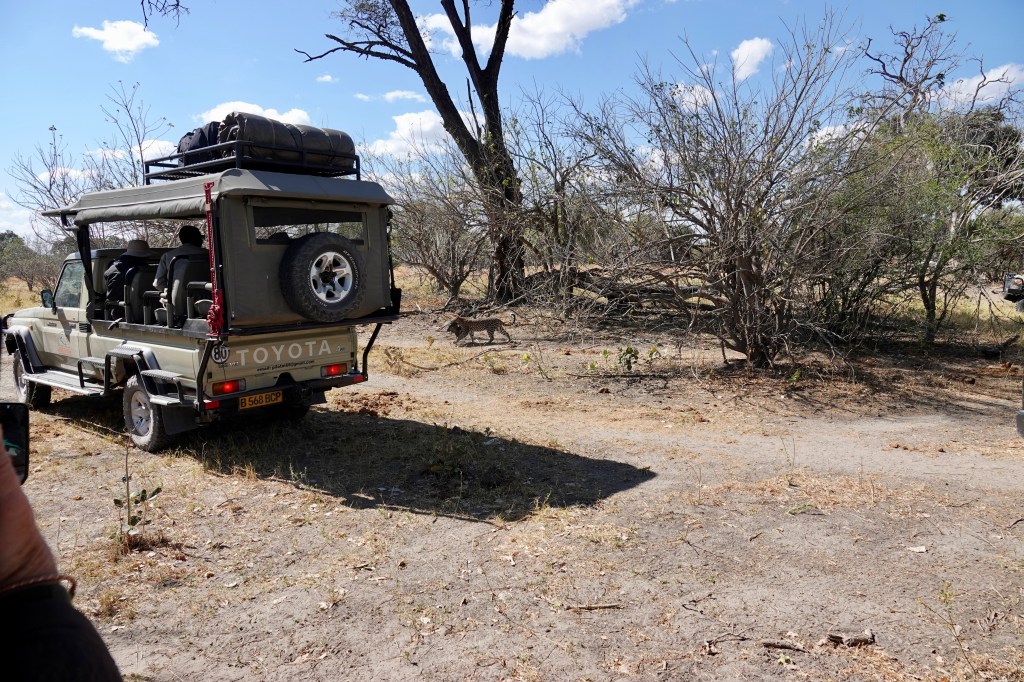
The temperature was quickly forgotten as we had sone high quality game spotting. Two separate, great leopard spottings, a couple of lions seeking peace , quiet and privacy for a breeding session (they were sorely disappointed) and numerous elephants and birds.
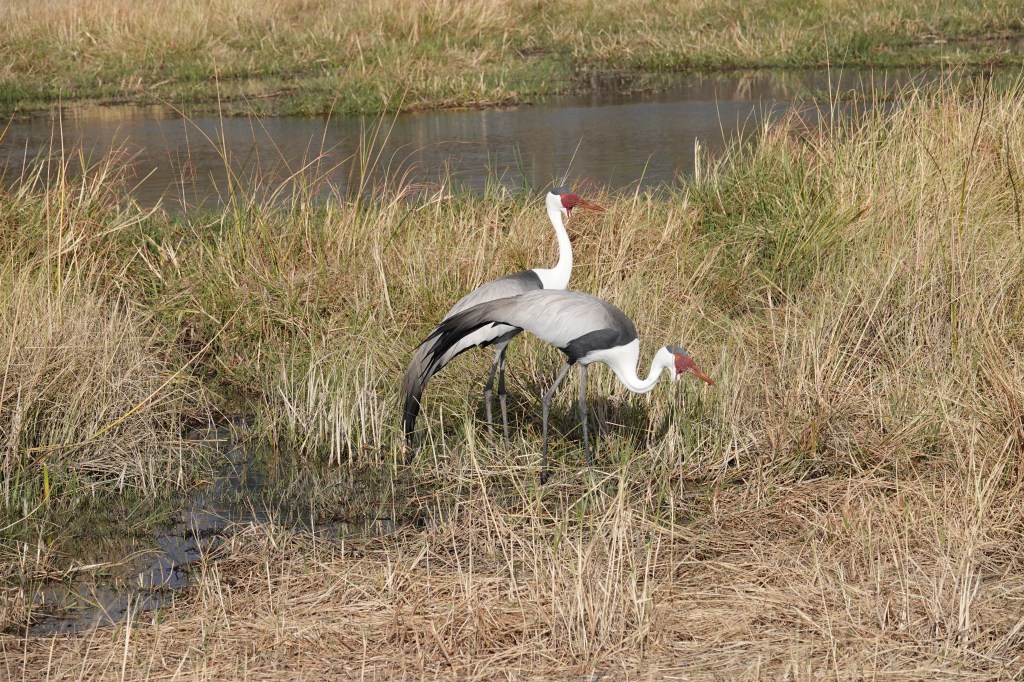
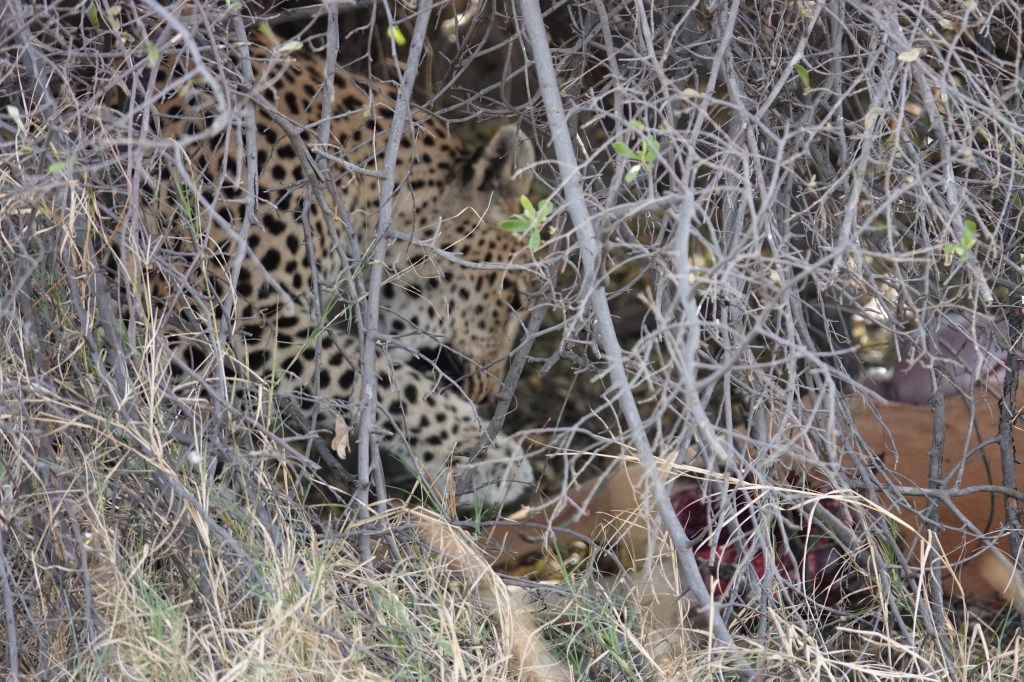
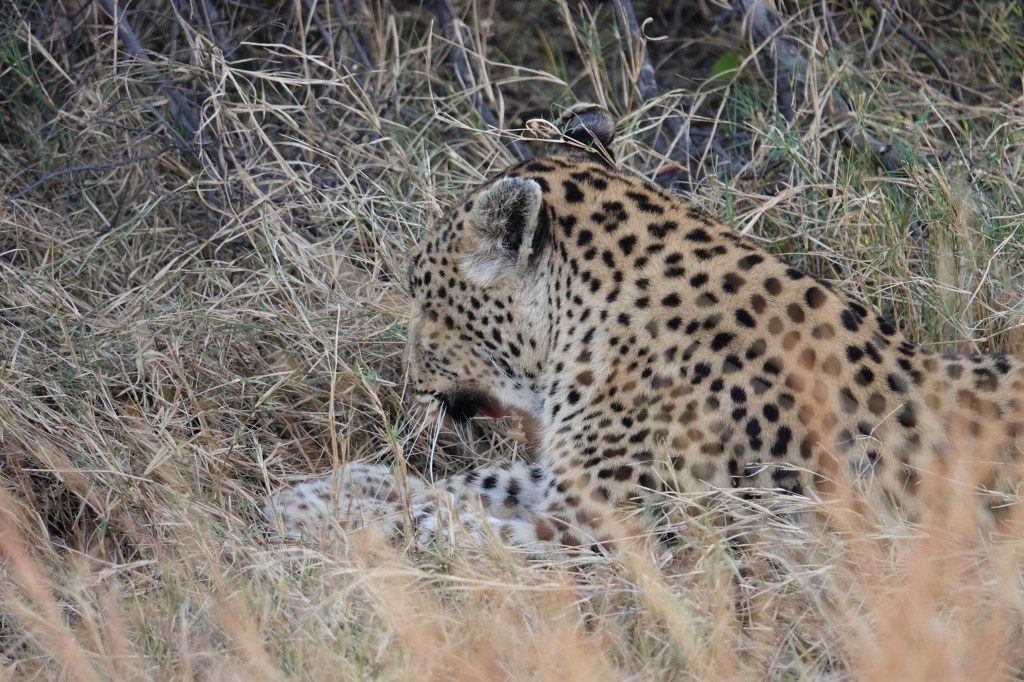
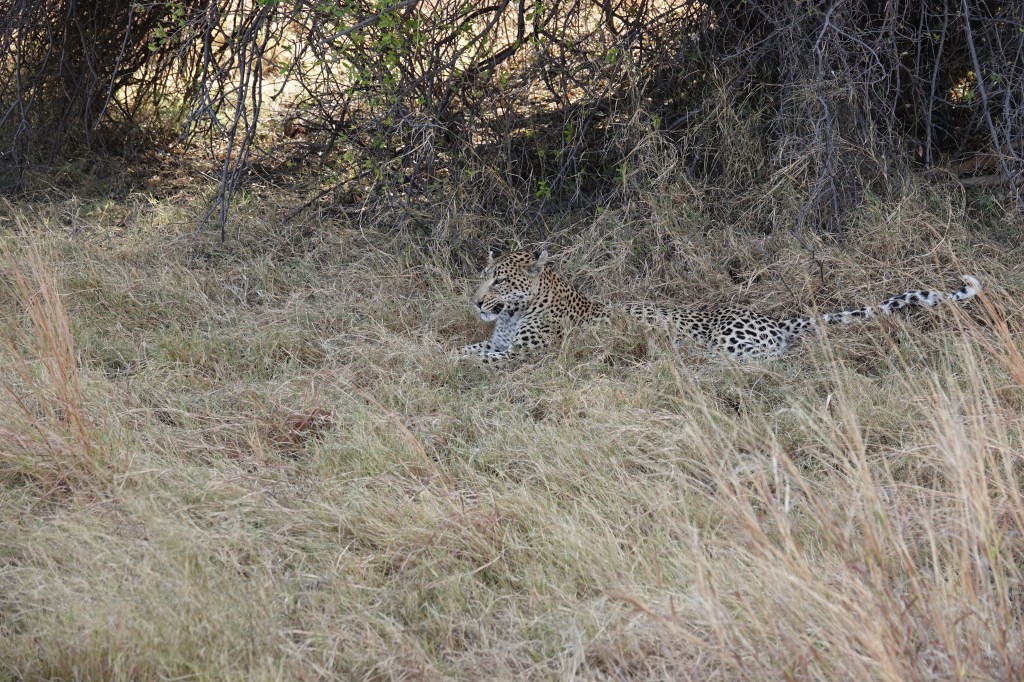
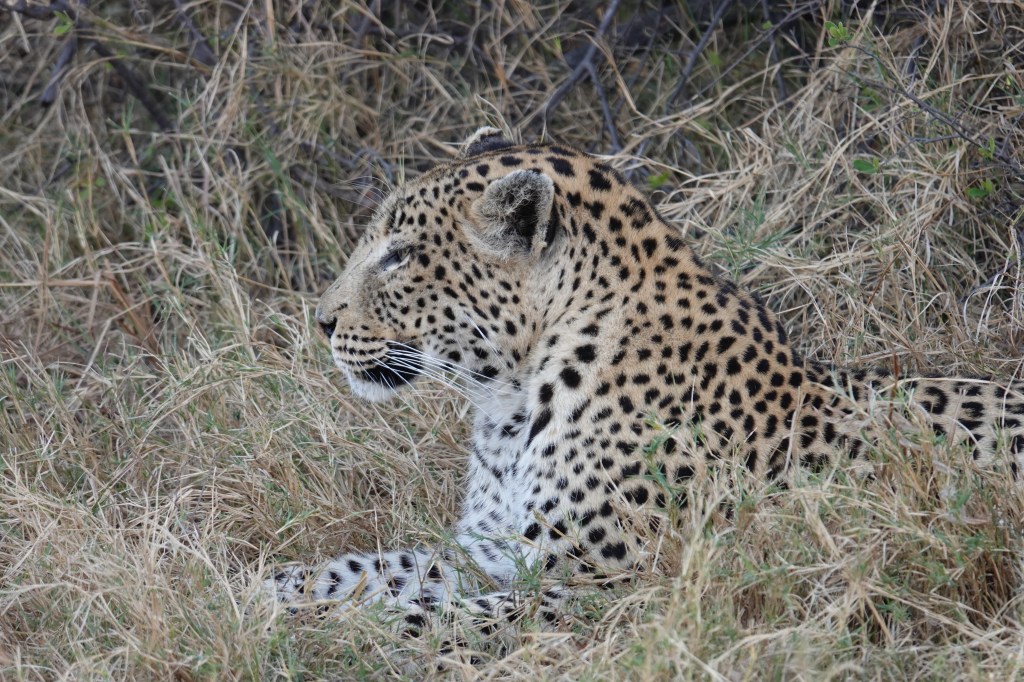
Frustrated lovers Bored with the attention Wattled Cranes – apparently increasingly rare- not sure why.Look closely into the bush and you can see the leopard eating the bum out of an impala she had just killed and dragged in there Grooming herself after her mealStretching out
The first leopard was a female who had just killed an impala doe. She had dragged it into a bush, ate a bit, cleaned herself up and then layout for a stretch and snooze.
Contemplating something
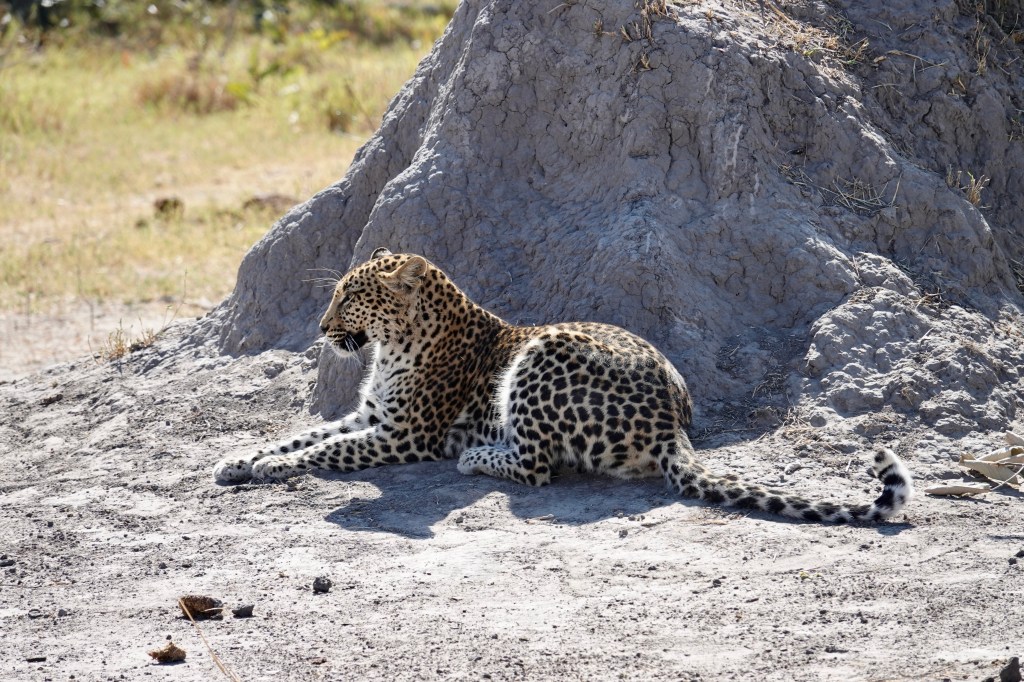
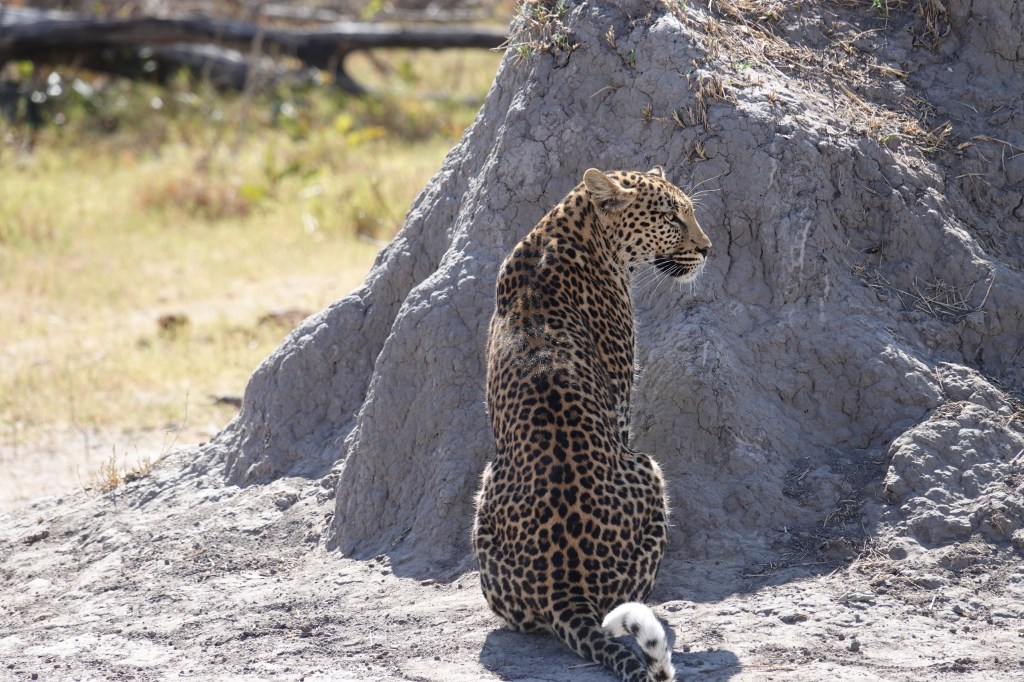
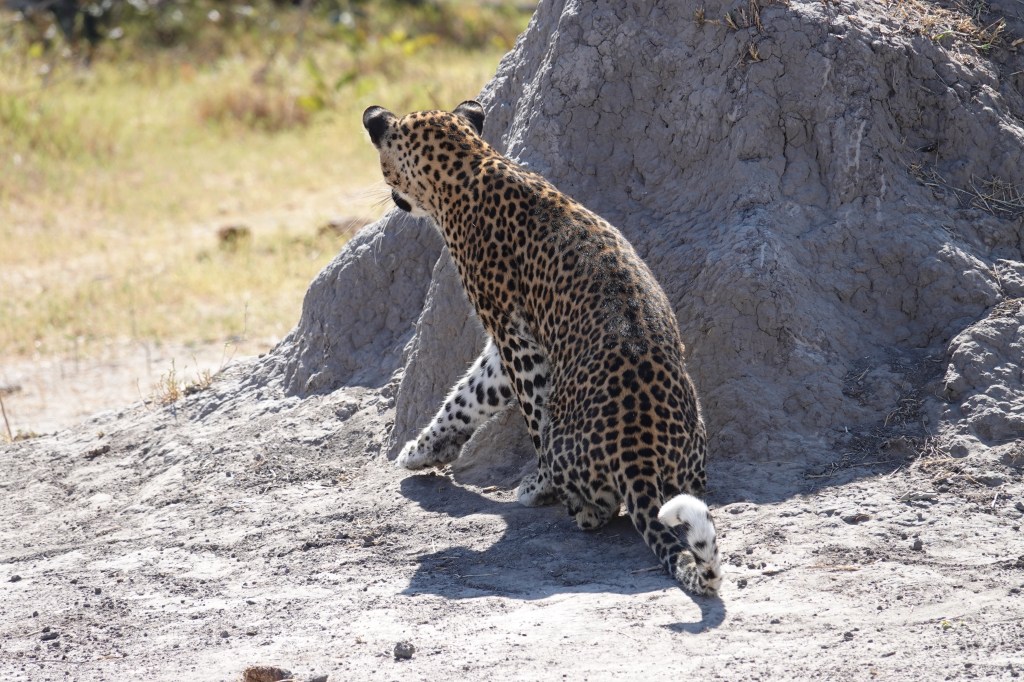
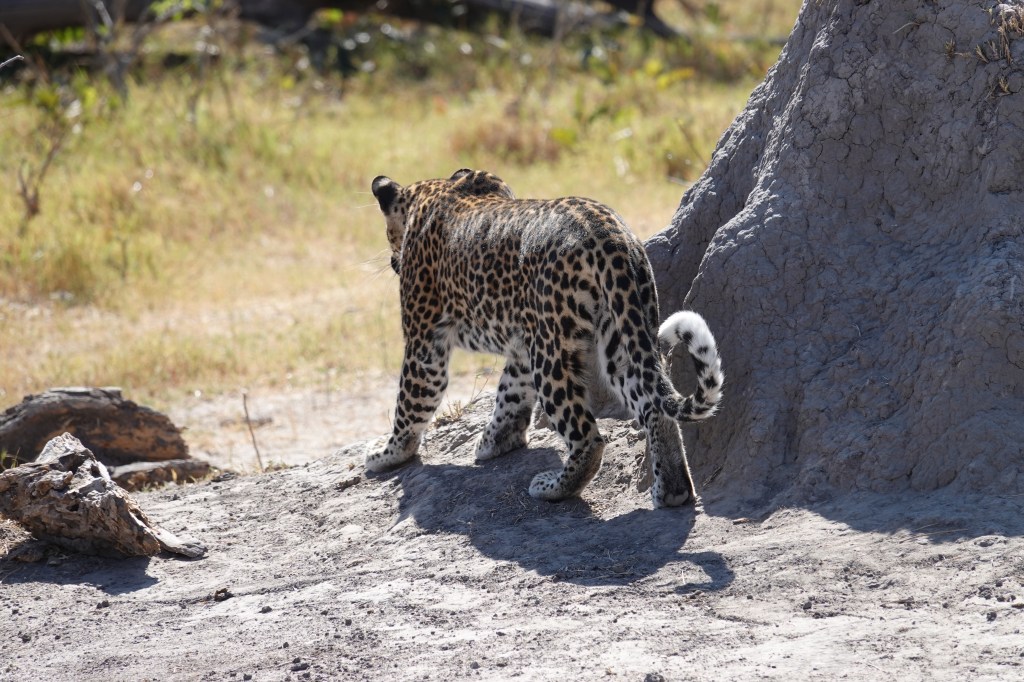
We think the second leopard was a male. We found him about an hour later, after seeing more elephants.
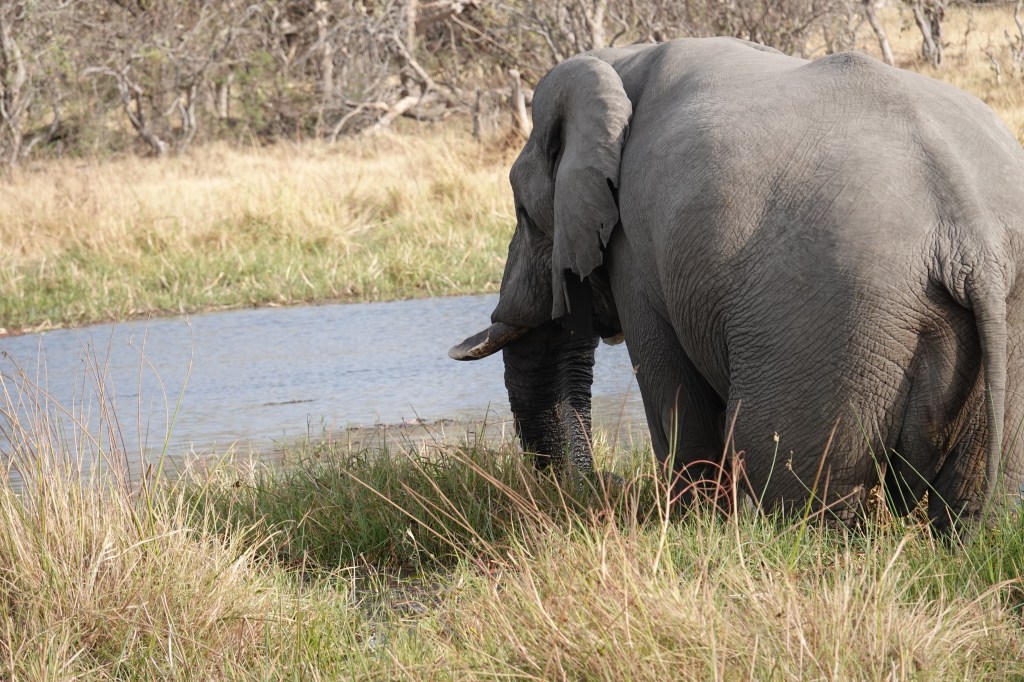
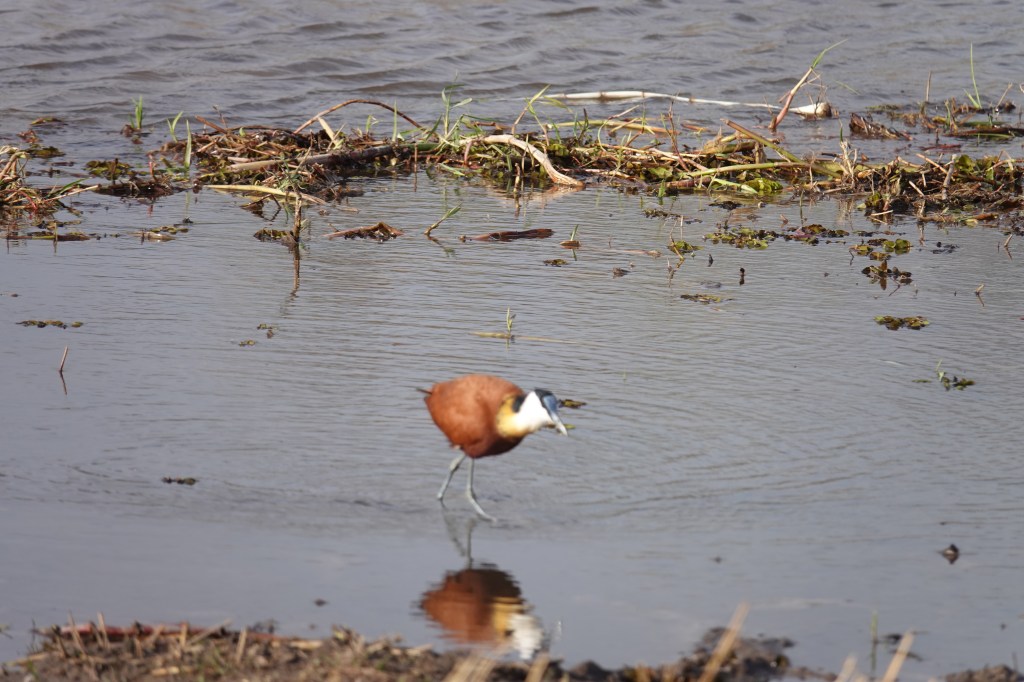
Elephants drink a hell of a lot of waterAfrican Jacana ( the so-called ‘Jesus Bird’ because it seemingly walks on water)
He hung out behind a termite mound for a bit, then stalked and killed a Guinea fowl for a snack as we watched. We didn’t get the shot, but he leapt around 1.5 metres into the air and plucked the bird in mid-flight – a spectacular jump. We left him spitting out mouthfuls of feathers.
Relaxing behind a ubiquitous termite moundHe hears somethingOff on the stalkHeading to pluck the bird, Guinea fowl in mouth
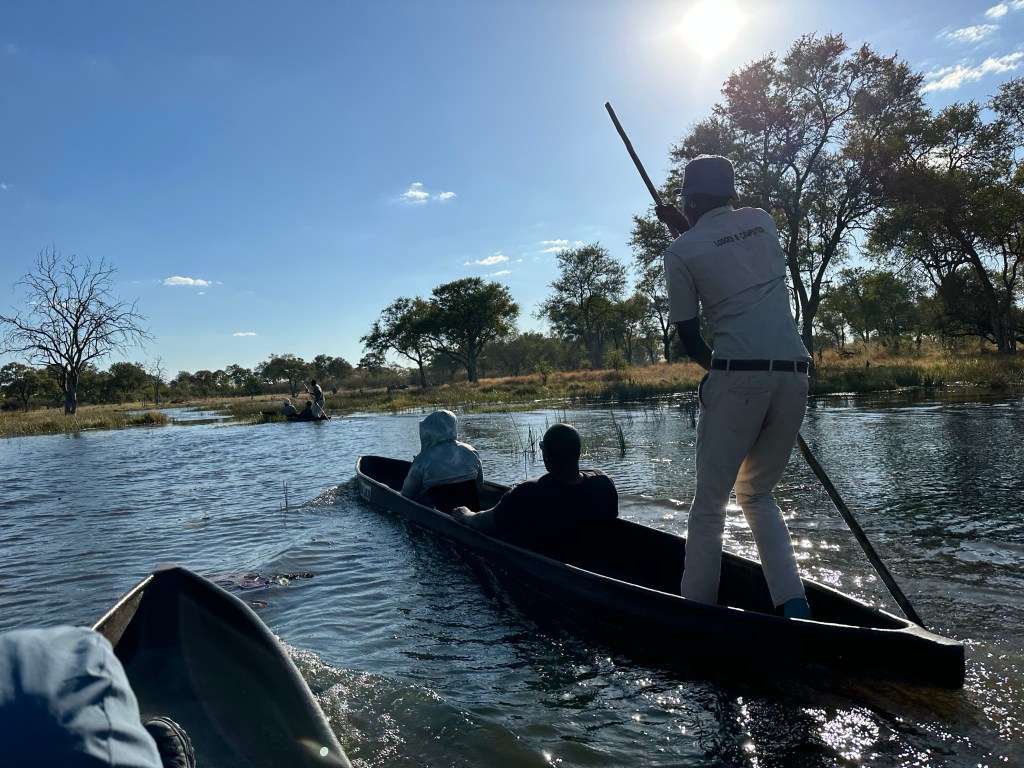
After a brief sojourn back at our camp for lunch we went down one of the main branches of the delta channels in a traditional canoe known as a Mokoro. The difference from the old days is that they are now made from fibreglass, they previous practice of using 200 year old plus trees ultimately proving unsustainable in the delta.
On the mokoros in the delta
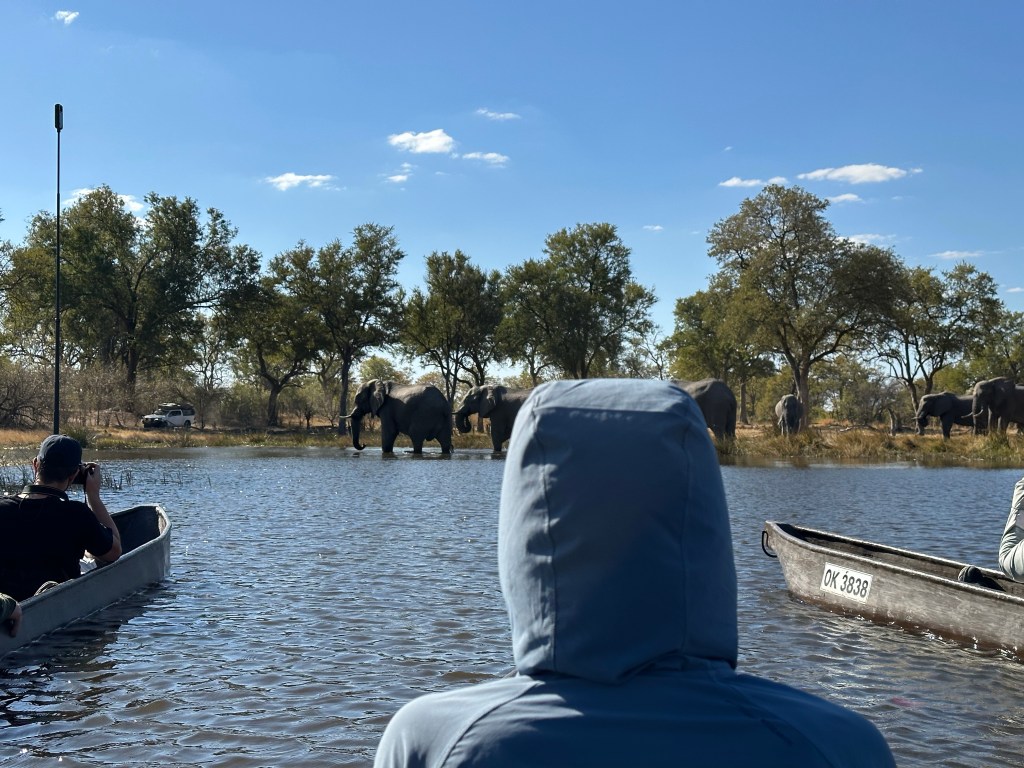
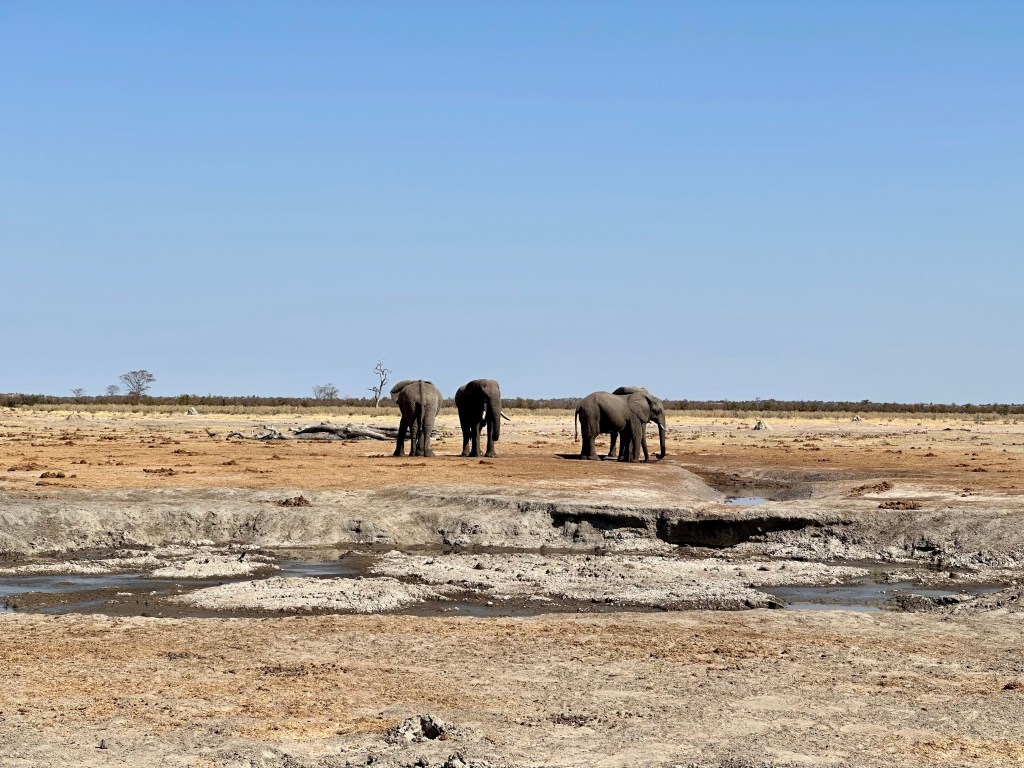
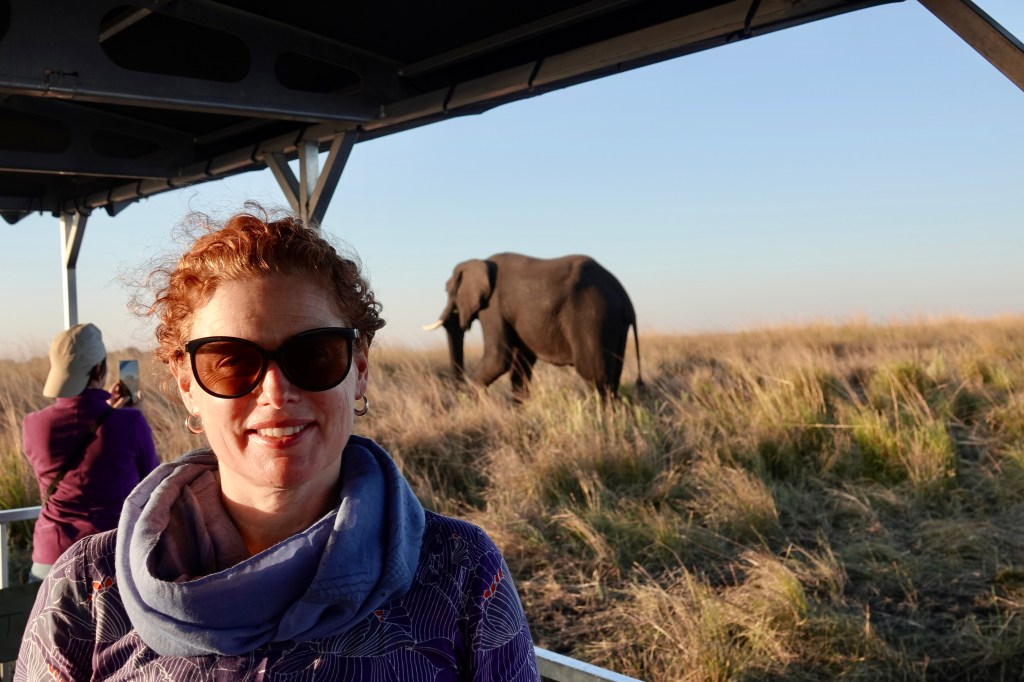
A massive highlight of being in the Mokoros was the ability to get very close ( almost uncomfortably close) to game. On this afternoon we literally ended up on a breeding herd of over 30 elephants taking on their afternoon drinking water.
Some of the herd of elephants seen from our mokoro
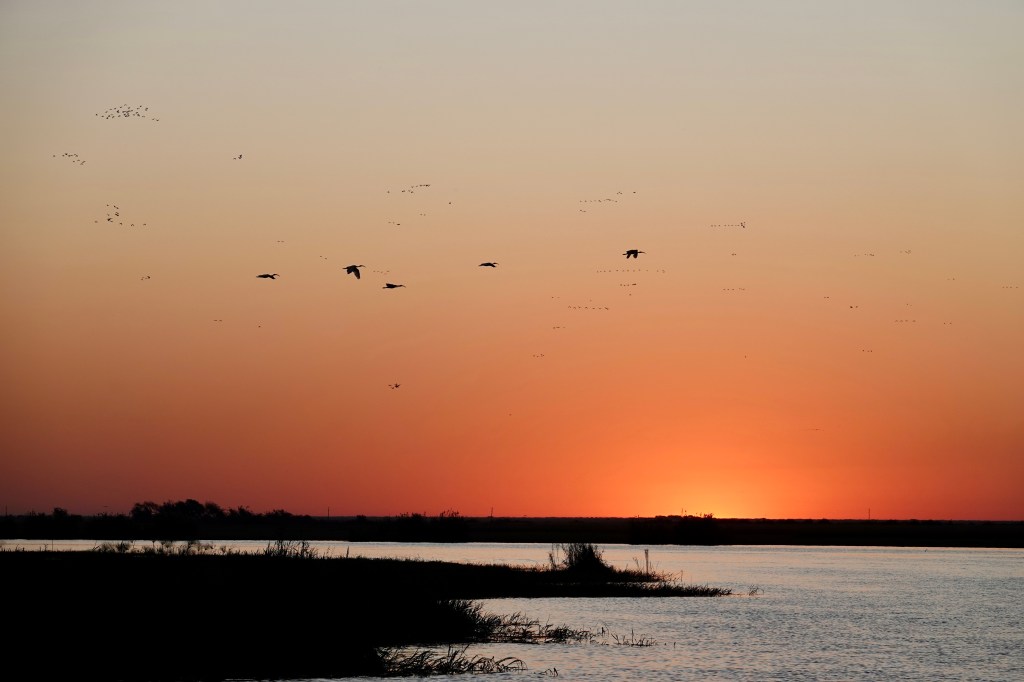
After the mokoro adventure our guide found us a waterhole with hippos and crocs. We watched the sunset over the waterhole with G&Ts or Talisker. A great end to an another beautiful day out bush. Good leopard sittings are quite rare- two like we had in one were exceptional and we were more than happy with the great game viewing we had. Back to the camp for dinner and fire pit story time before another snug night under the quilt in our tent.
We were up very early on Saturday morning the 15th July. There are two ways to drive to Kasane from the Khwai conservation area. Back to Maun and a nearly 650km journey from their on the highway, or directly through the Khwai, Savute, Linyati and Chobe parks / conservation areas on very crappy roads. We did the latter, a distance of just over 200km that took us 11 1/2 four wheel driving ours – with ever changing scenery and game thrown in. We even got to refresh our tyre changing skills about halfway through – certainly easier with a few people helping!
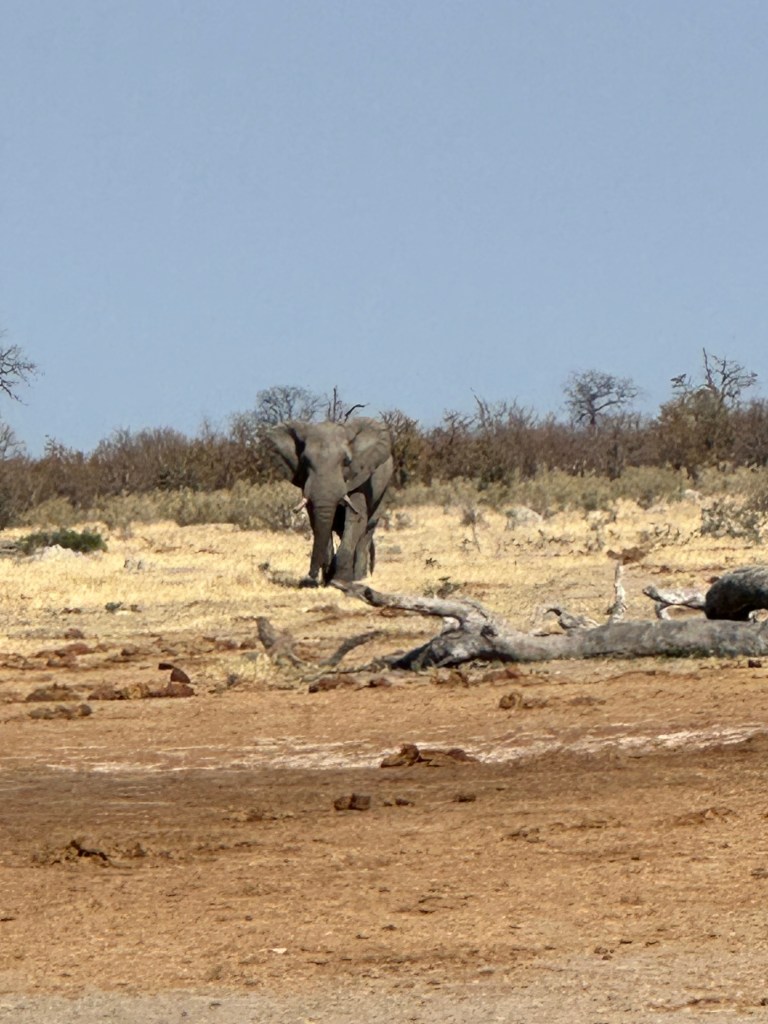
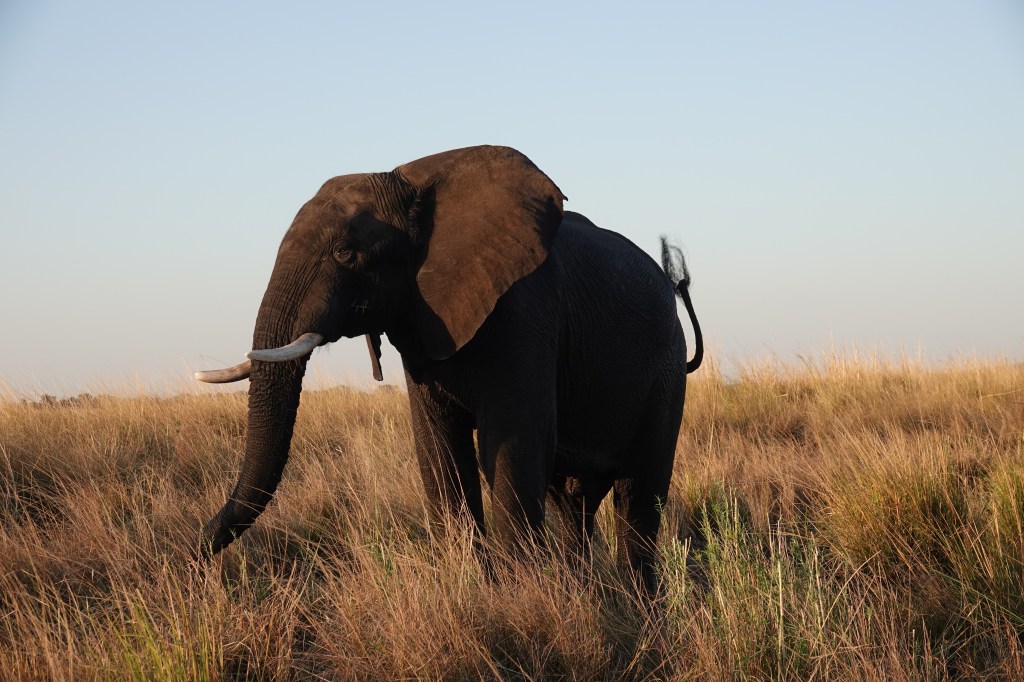
Elephants in the SavuteAnother Savute elephant
We arrived in Kasane ( on the Chobe River, near the intersection of Botswana with Namibia ( the Caprivi Strip), Zambia and Zimbabwe at 1730. We were all a bit shattered after 11 1/2 hours exposure to the elements and corrugations in an open game vehicle. It wasn’t long after dinner before everyone did the AJ fade away and hit the rack.
On Saturday morning the 16th most of the group opted for a sleep in after a week of 5am starts our earlier. Our two Americans, Mel and Matt braved an early morning game drive in the Chobe Park and were rewarded with sone sightings they had been chasing.
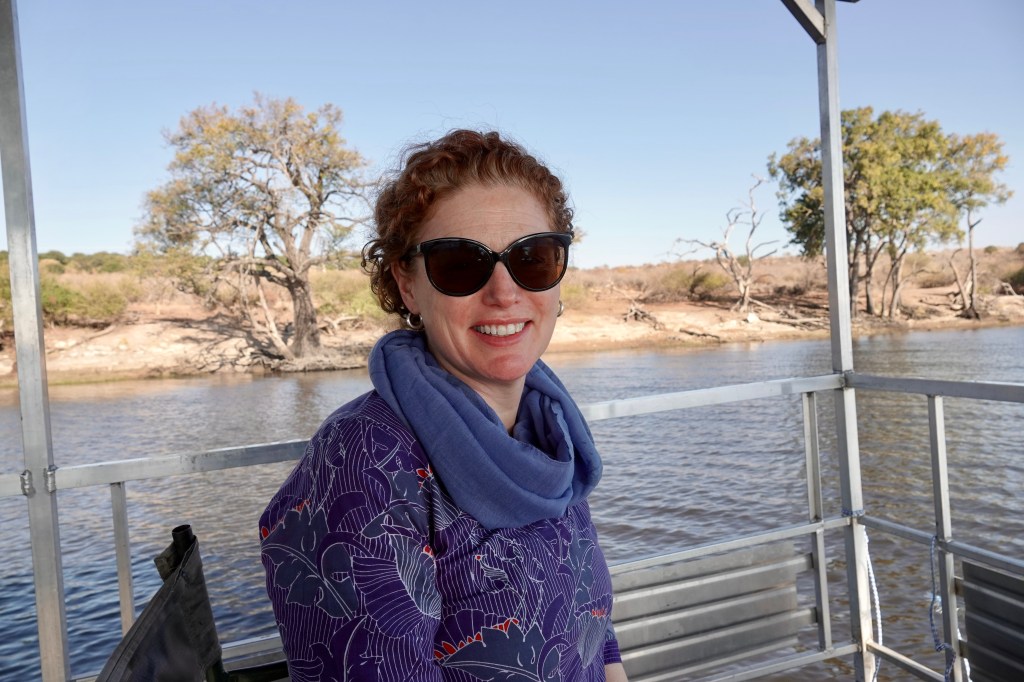
In the afternoon we took a sunset cruise on the Chobe River, which at this point marks the border between Botswana and Namibia. We actually had to provide the tour boat operator with our passport details in case we ended up at in Namibia again at some point .
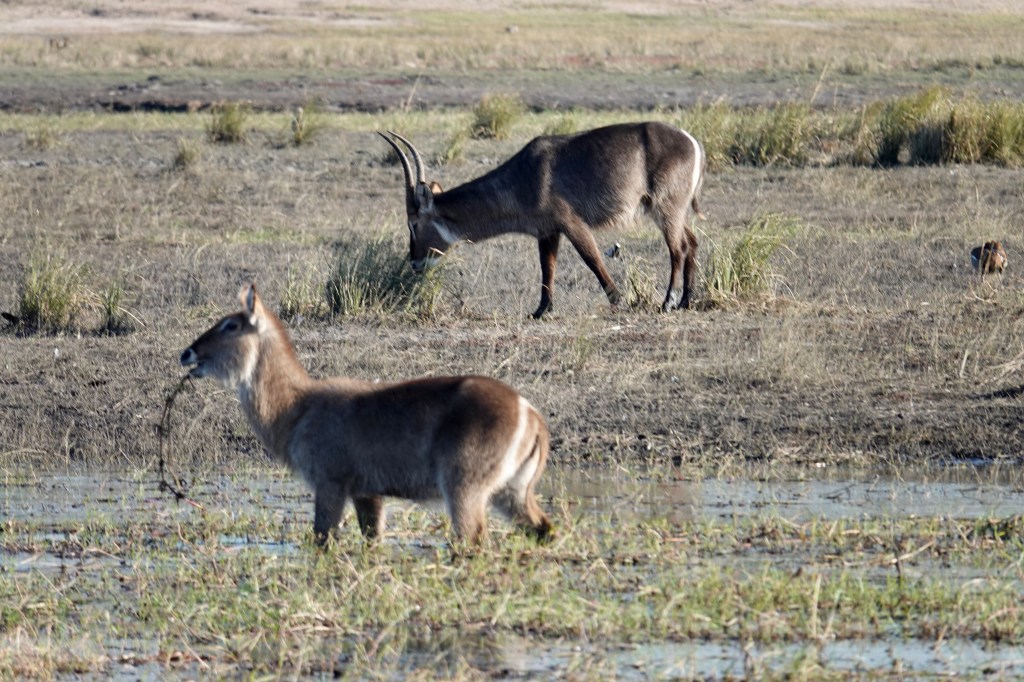
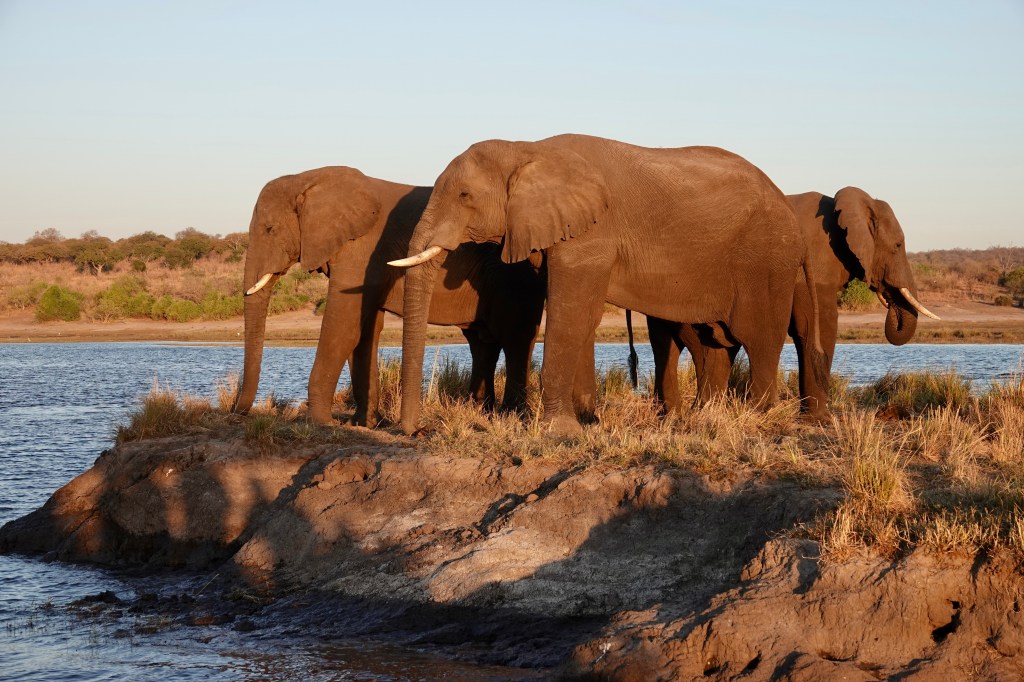
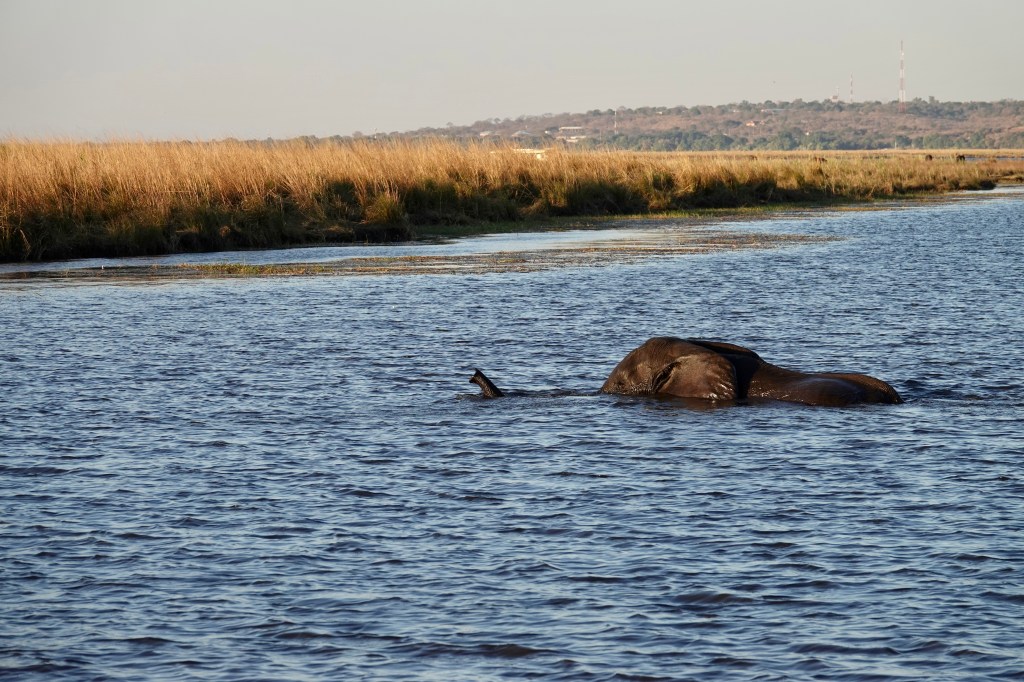
The river cruise was great. Apart from the sunset, highlights were the bird life, water buck, stacks of hippos and elephants swimming the river to get to an island in the middle for sweeter pastures,.
Chobe River sunset cruiseWater BuckBull elephant swimming across the Chobe River to the Namibian side Sunset on the Chobe looking back at the Caprivi Strip
After the cruise it was back for dinner on our last night in Botswana- and the novelty of watching the Wimbledon men’s final at an early hour.
Wednesday morning the 12th was a cold morning in Windhoek. The day was spent in transit to Botswana- it was a long day with the strong easterly still blowing , the head wind making the truck’s progress even slower.
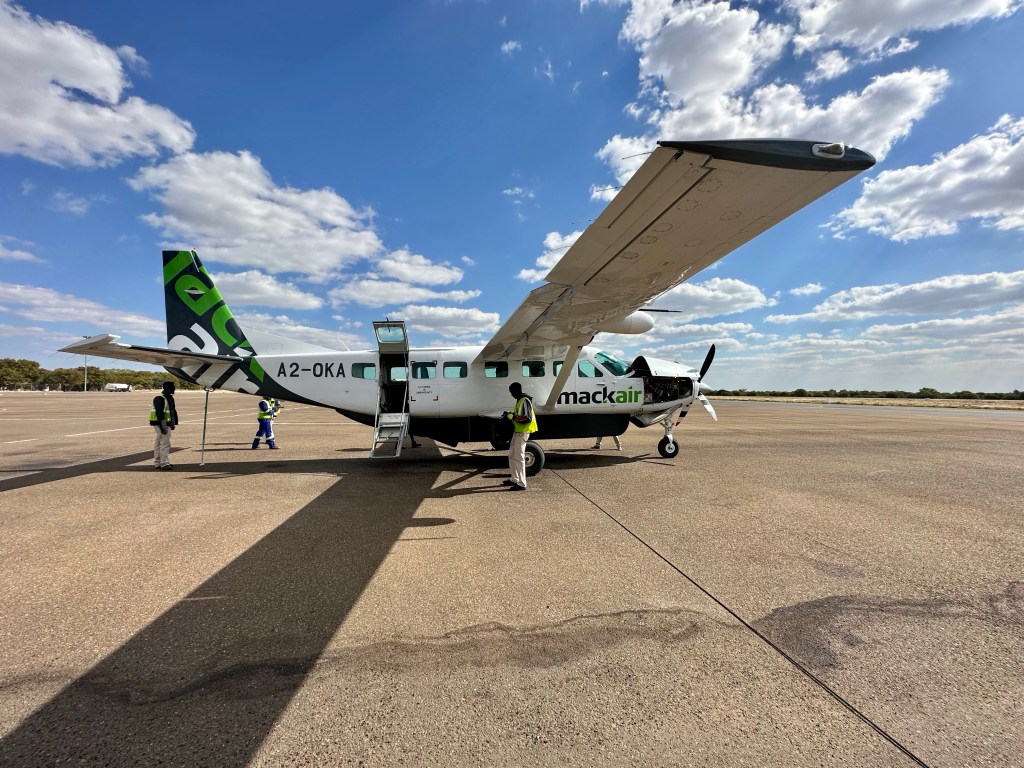
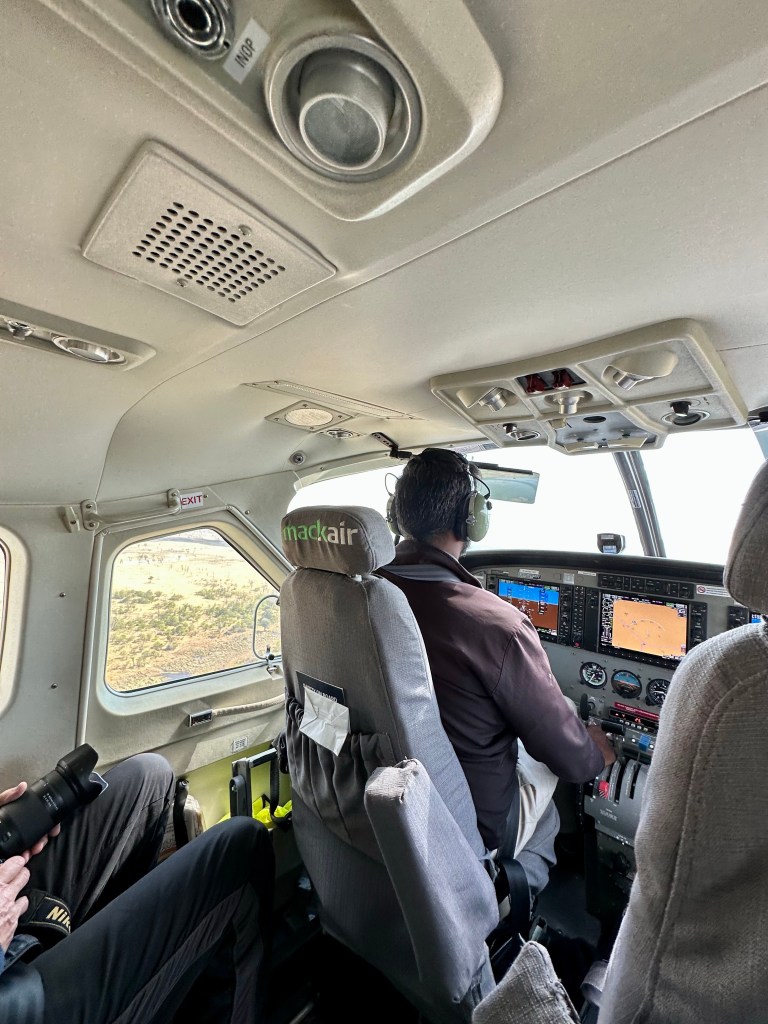
Our Cessna Caravan for the Delta flight
A highlight of an otherwise‘slow’ day was entering the Kalahari Desert. While much larger than the Namib Desert, it has a lot more vegetation. The landscape is reminiscent of parts of the Northern Territory- although very, very flat.
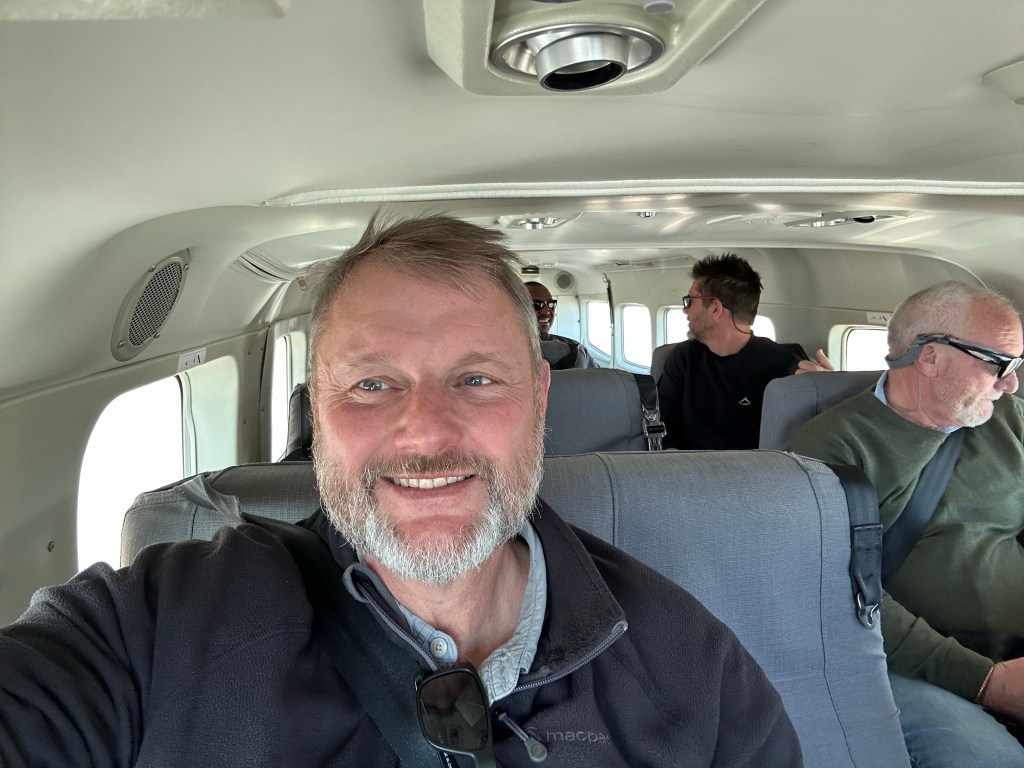
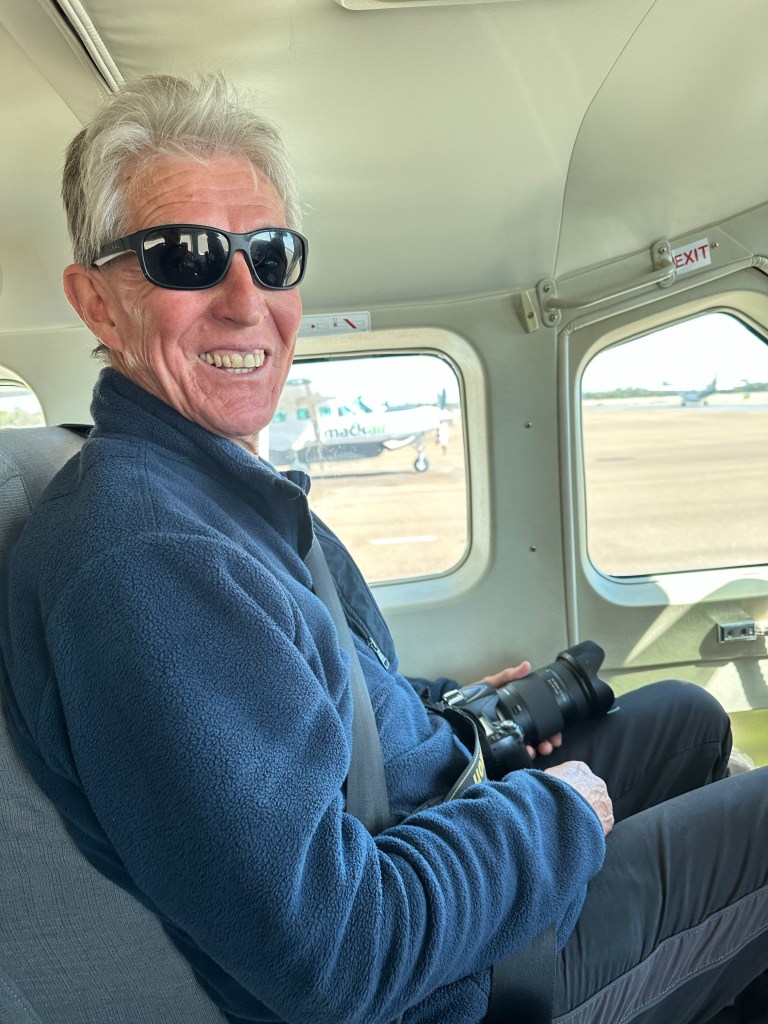
Mark excited because he had the front seat and could ‘help the pilot’😉🤣🤭🙄 Kevin, Warren and Matt behind
After an uneventful border crossing it was a couple more hours until we arrived at our lodge just outside the town of Ghanzi. We also stopped briefly to get Pula from an ATM in town. All in all, a long day.
Thursday AM and another early start. Our destination was Maun ( the ‘Safari Capital’) of Botswana. After a great coffee and cake at the ‘Dusty Donkey’ cafe in Maun ( very good coffee!) we headed to the airport for a scenic flight over the Okavango Delta ( Less Nessie, who has an aversion to low, bumpy flights and the nausea they induce).
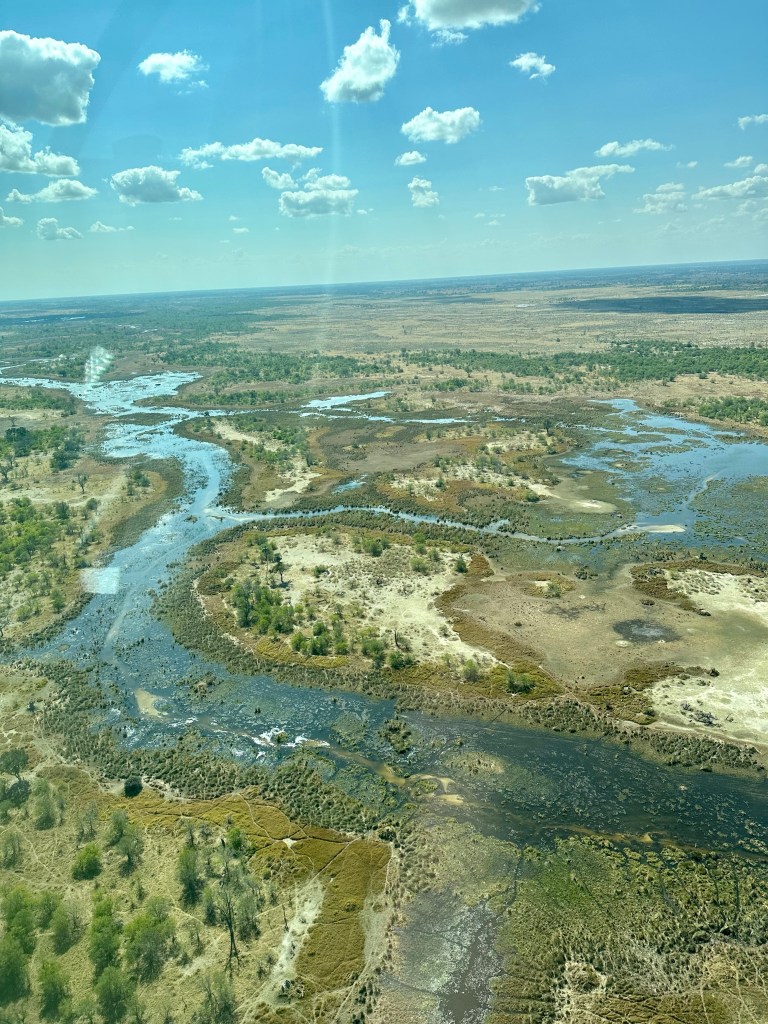
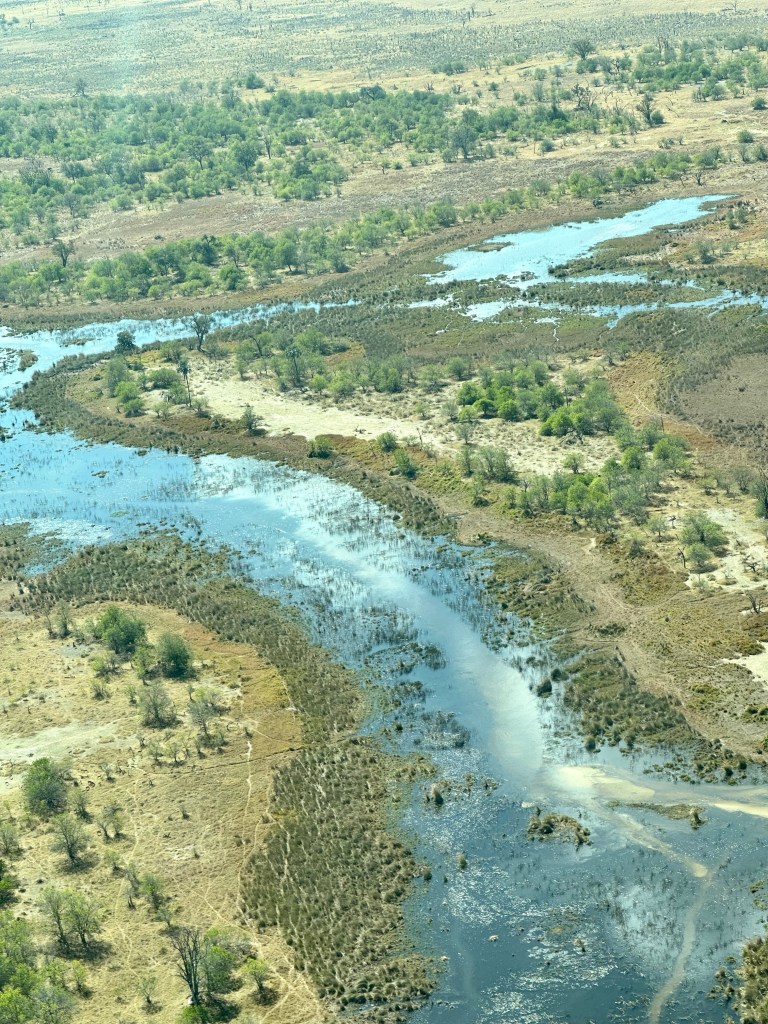
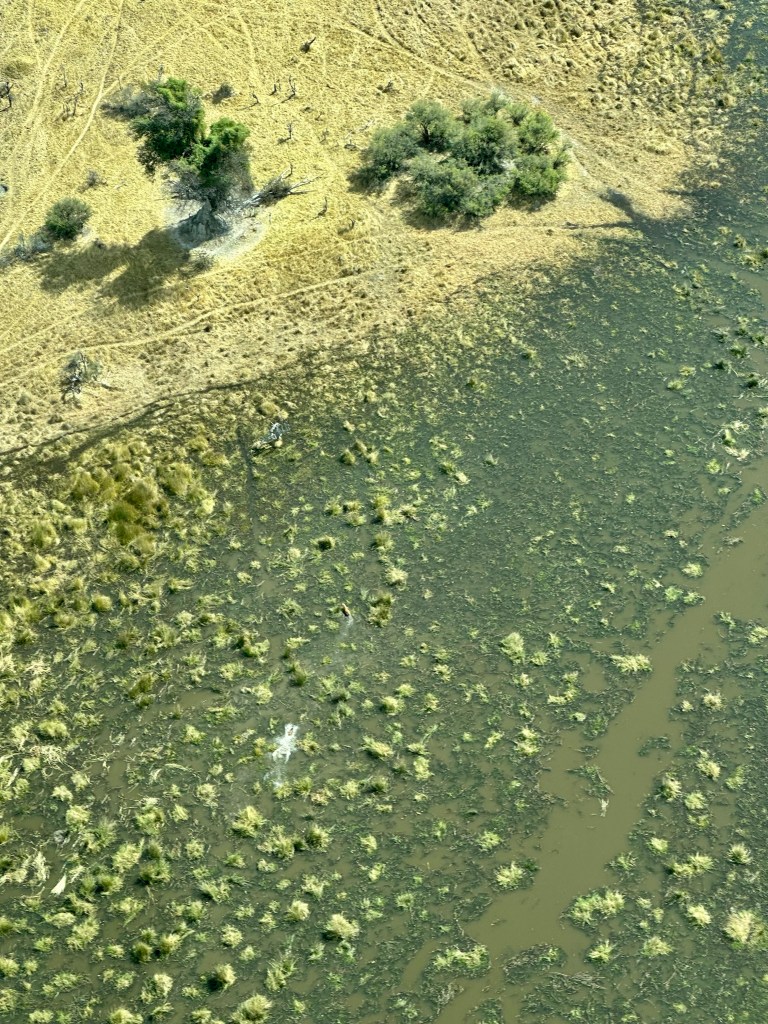
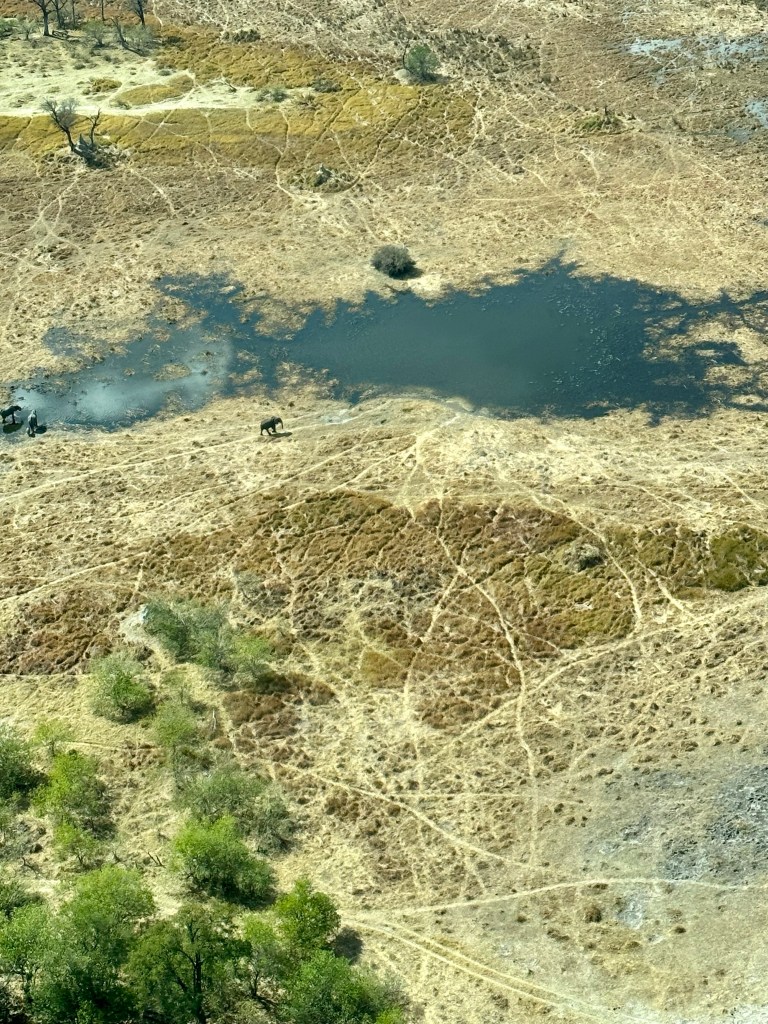
Part of the Delta!
The Okavango Delta covers a large area off central west Botswana. It is fed by the Okavango River, which rises to the north in the highlands of Angola. The river delta comprises five major branches and countless minor streams and watercourses. The five major branches contain water permanently, the other areas wax and wane according to seasonal variations and inputs.
Our pilot, Ash
An interesting fact about the Okavango Delta is it is the only river delta in the world that doesn’t end in the sea. It is essentially sucked up and disappears into the sands of the Kalahari Desert.
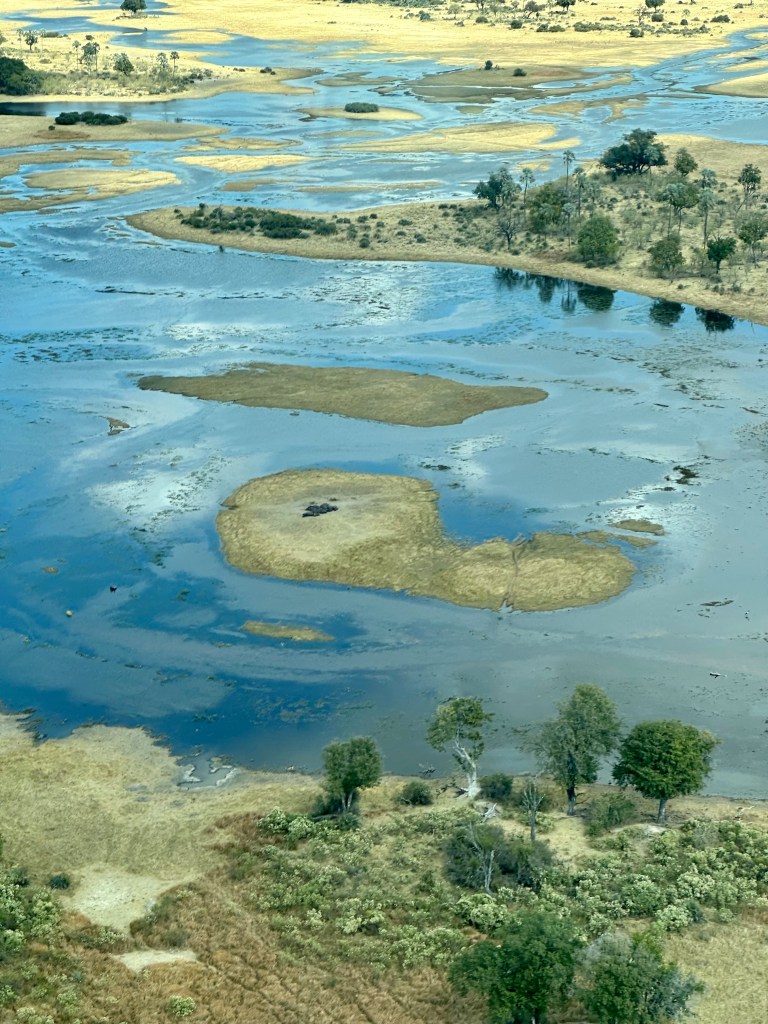
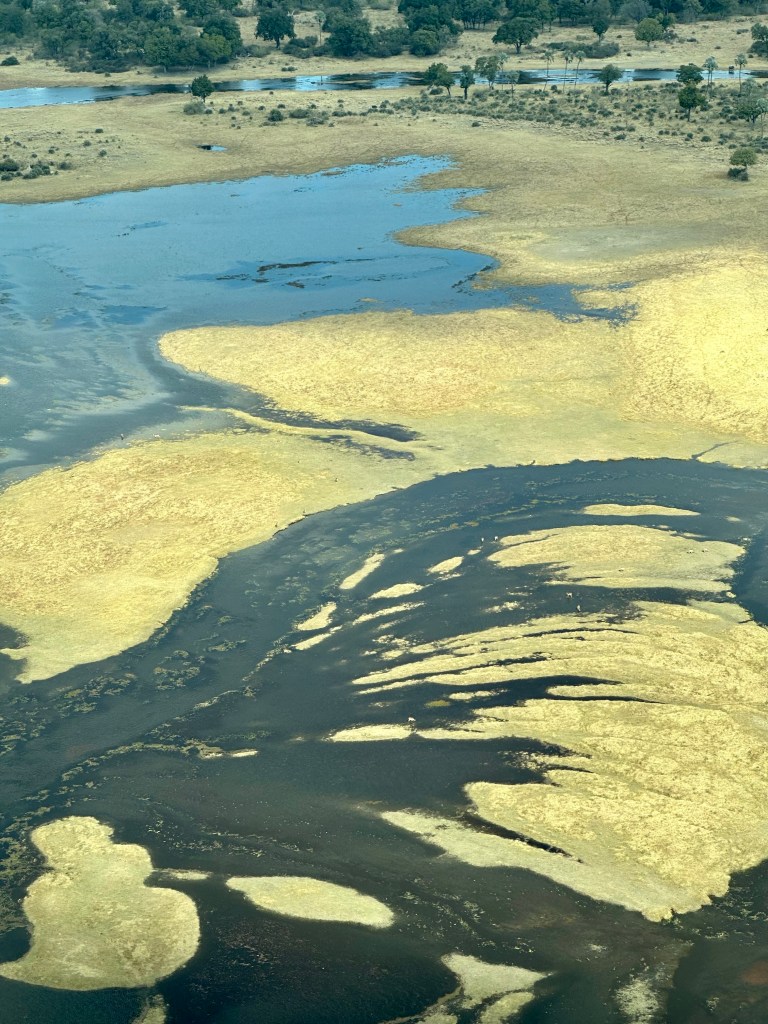
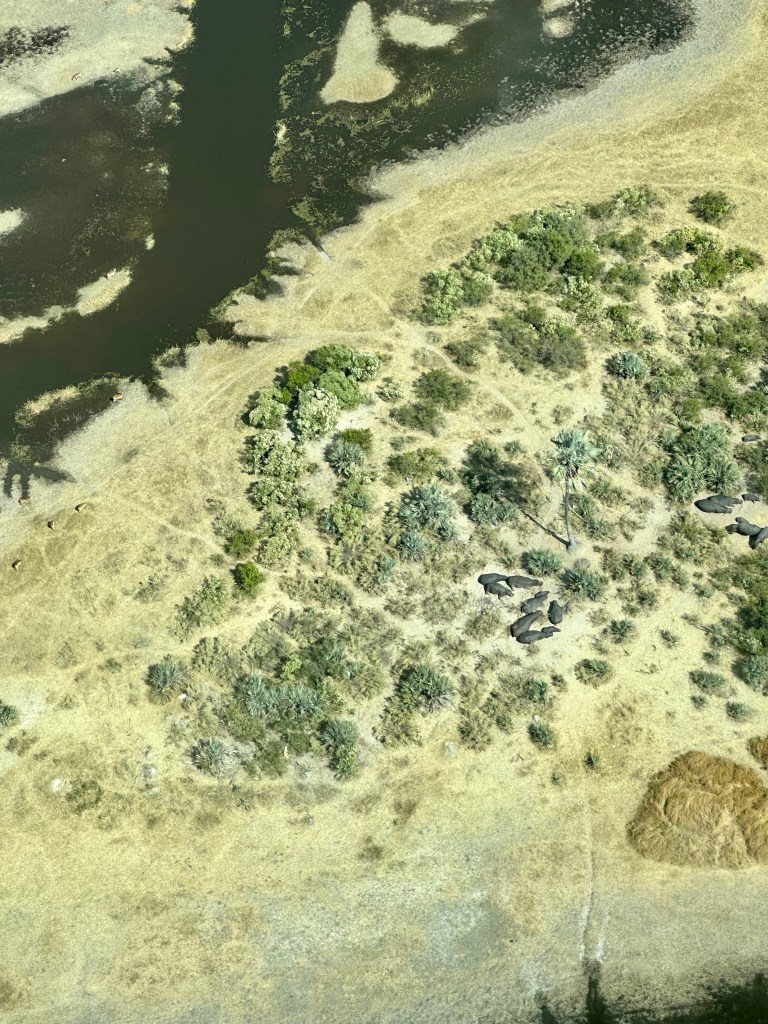
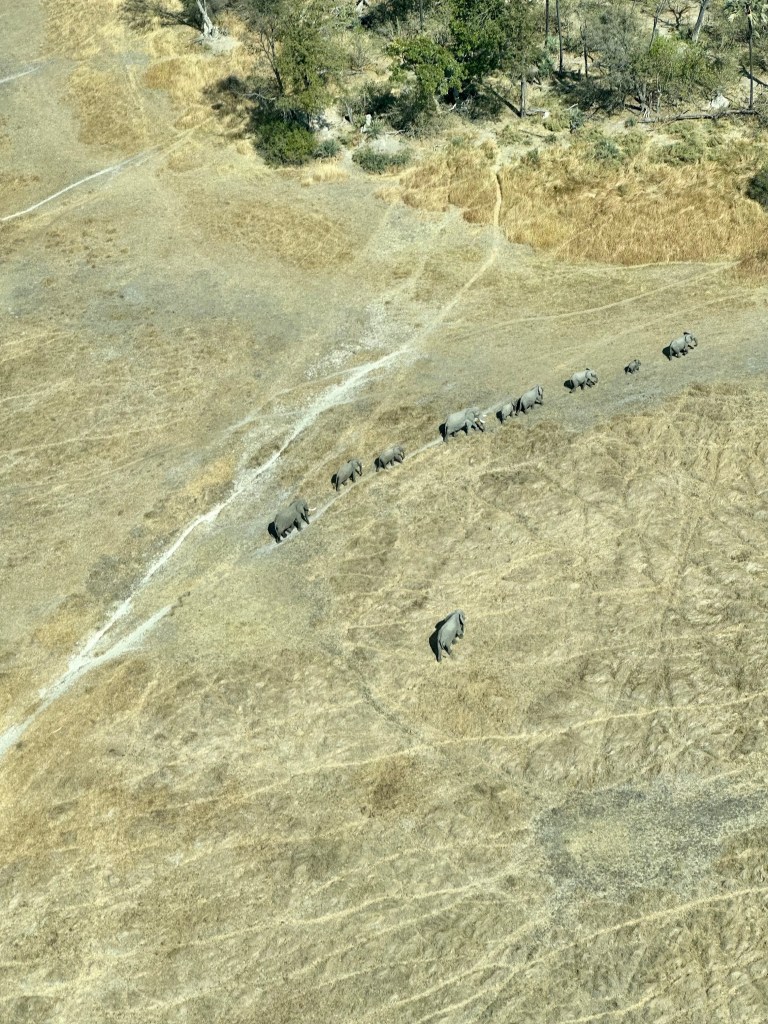
The ‘blob’ on the island is actually a pod of hippo working on their tan ☀️The white ‘splotches ‘ just left of centre low are Impala running across a shallow panLone Elephant heading for a drink Another tanning
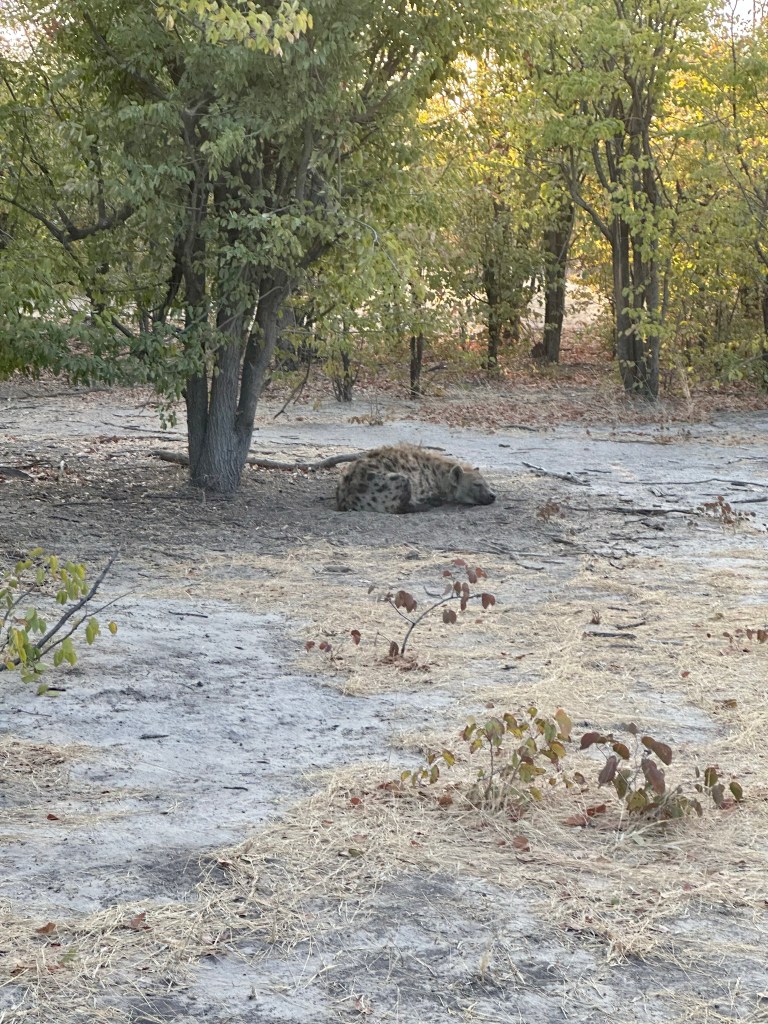
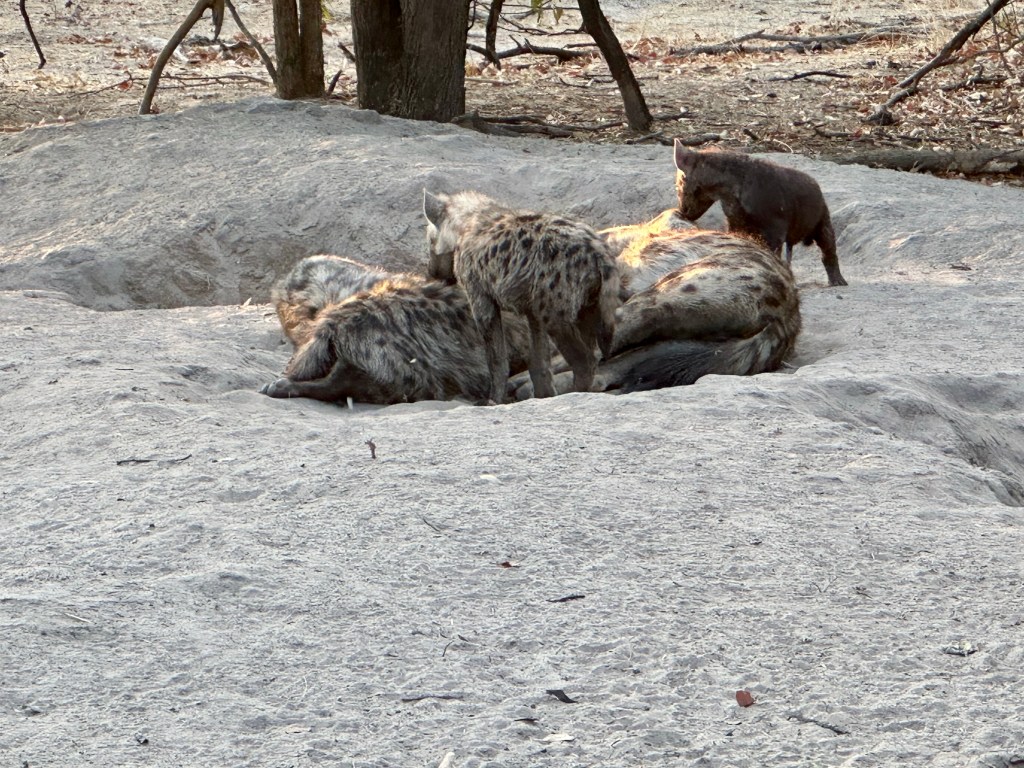
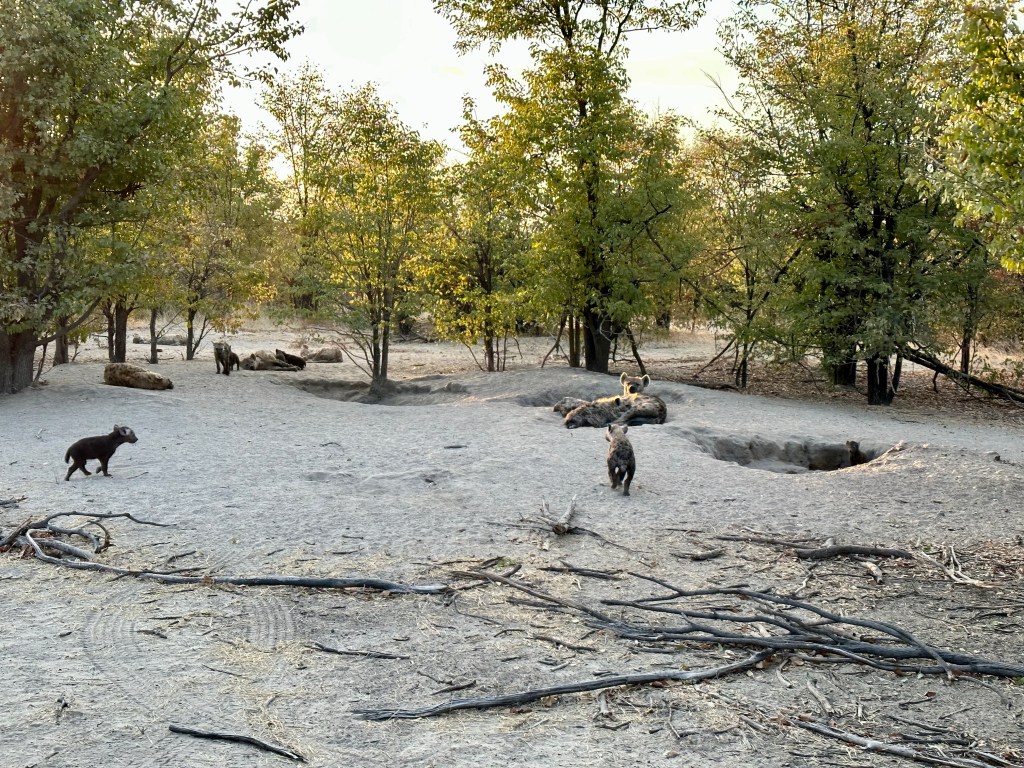
After the flight we hopped into an open Toyota Landcruiser Safari vehicle which was to be our mode of transport for the next three days. Five chilly and bouncy hours ( and a very good sighting of a pack of Spotted Hyena later) we were at our lodging for the next two nights. We stayed at the ‘Pride of Africa’ tented camp, situated on a water course on the border between the Moremi and Khwai conservation areas. After a hearty (and warming) dinner, and a few red wines around the fire we were quite tired. We went to sleep to the sounds of lions doing their thing in the marsh at the edge of camp.
Ross on the planeVideo of heading out on the Landcruiser – we were to spend a lot of time in this vehicle as we crossed the wild areas of Botswana over the next three days
We saw a lot of game from the air – it is surprising how much you still see at 450 feet AGL and around 140 knots IAS. A phenomena Mark hadn’t seen before the flight was pods of Hippopotamus lying around sun bathing during the day – they are normally immersed in a body of water during the day. There was were also countless groups of elephants and the ‘usual’ zebra, giraffe and different sorts of antelopes. We didn’t see any predators- their camouflage, and our speed, precluded spotting them.
Breeding herd of Elephants A ‘senior’ member of the Spotted Hyena pack taking a break from the cubs – Khwai conservation areaThe cubs mugging adult hyena at the denWider view of the Spotted Hyena den area Video of Spotted Hyena cubs mucking around




 Ness’ and Mark’s Wandering
You must be logged in to post a comment.