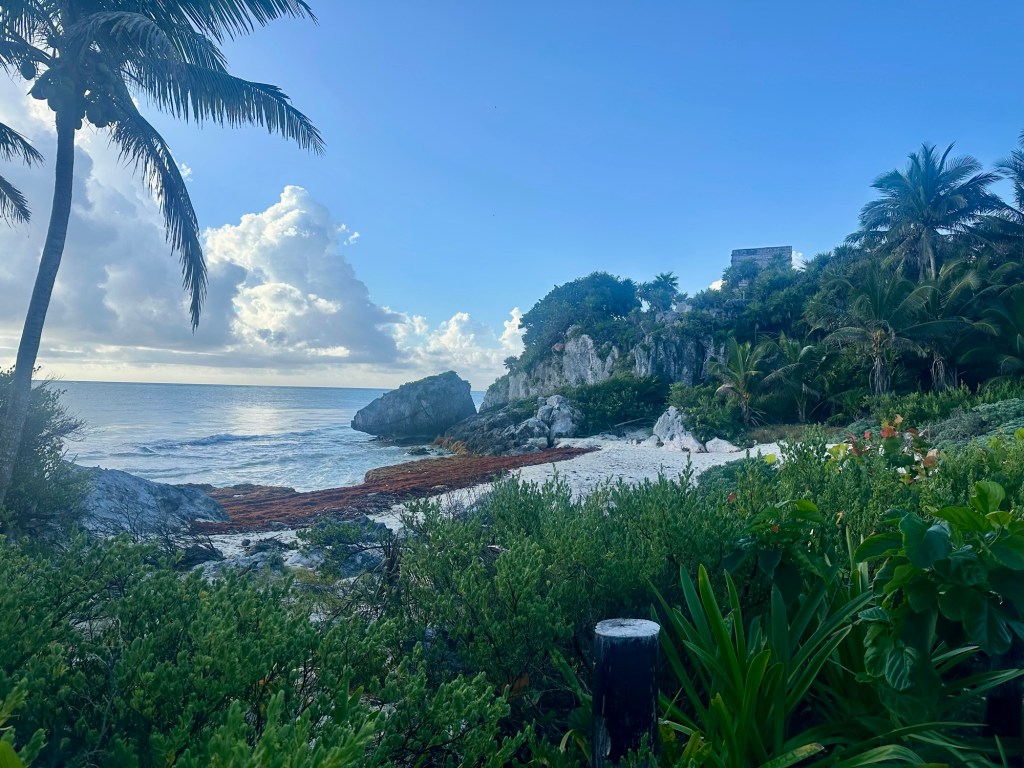
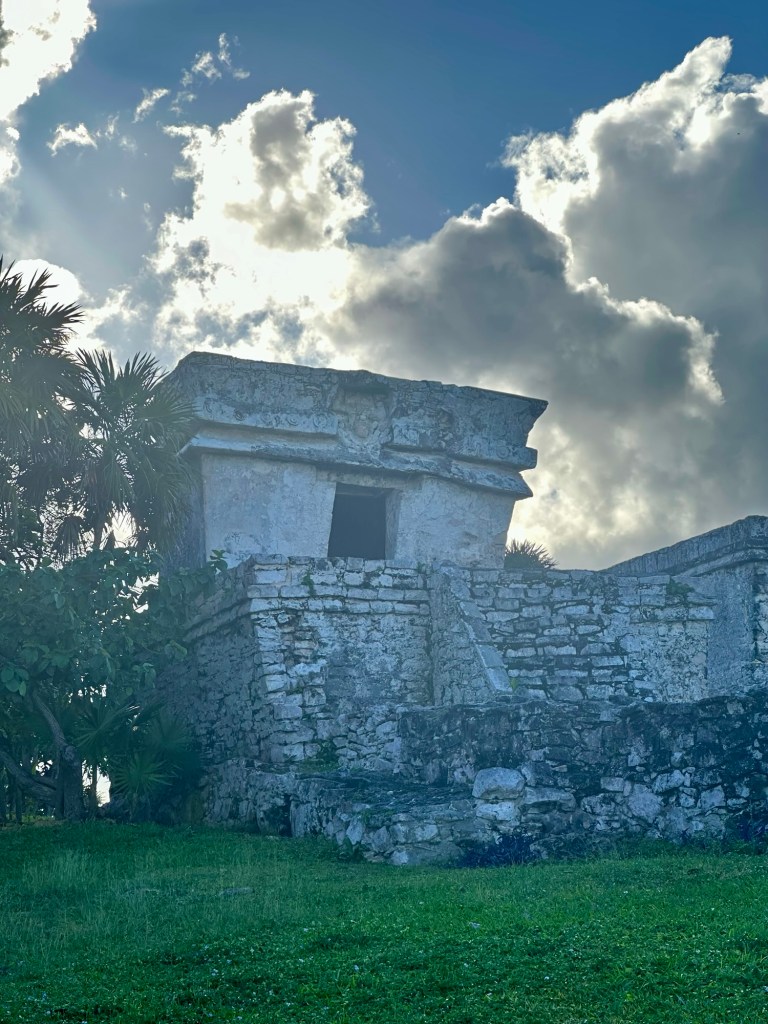
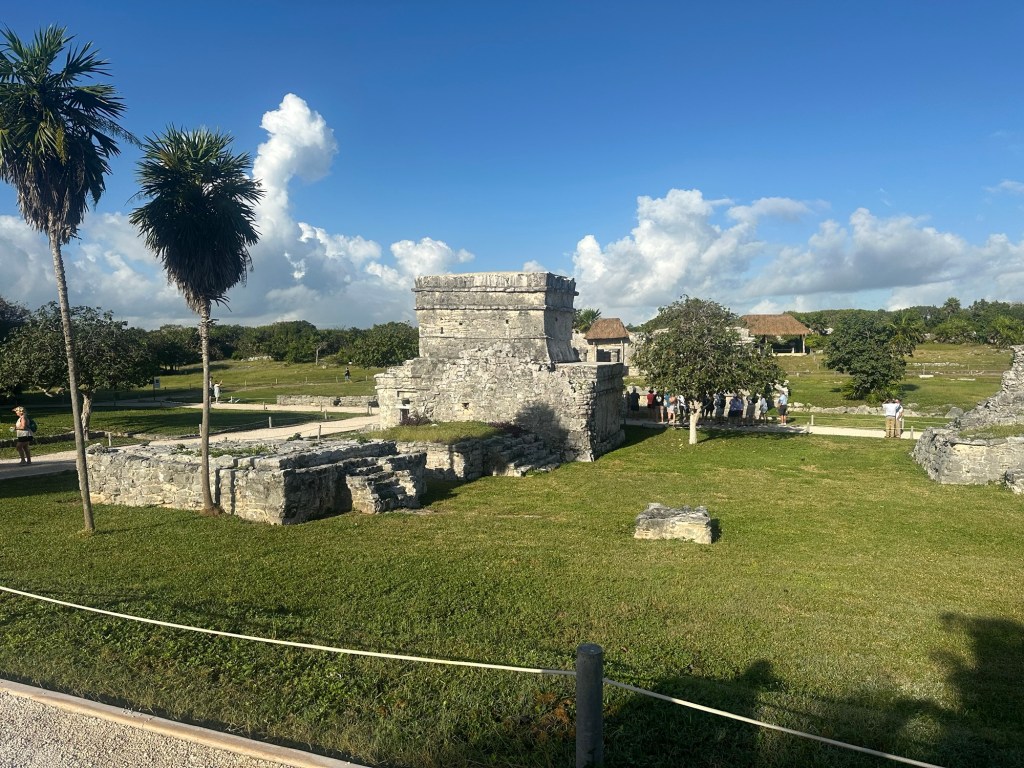
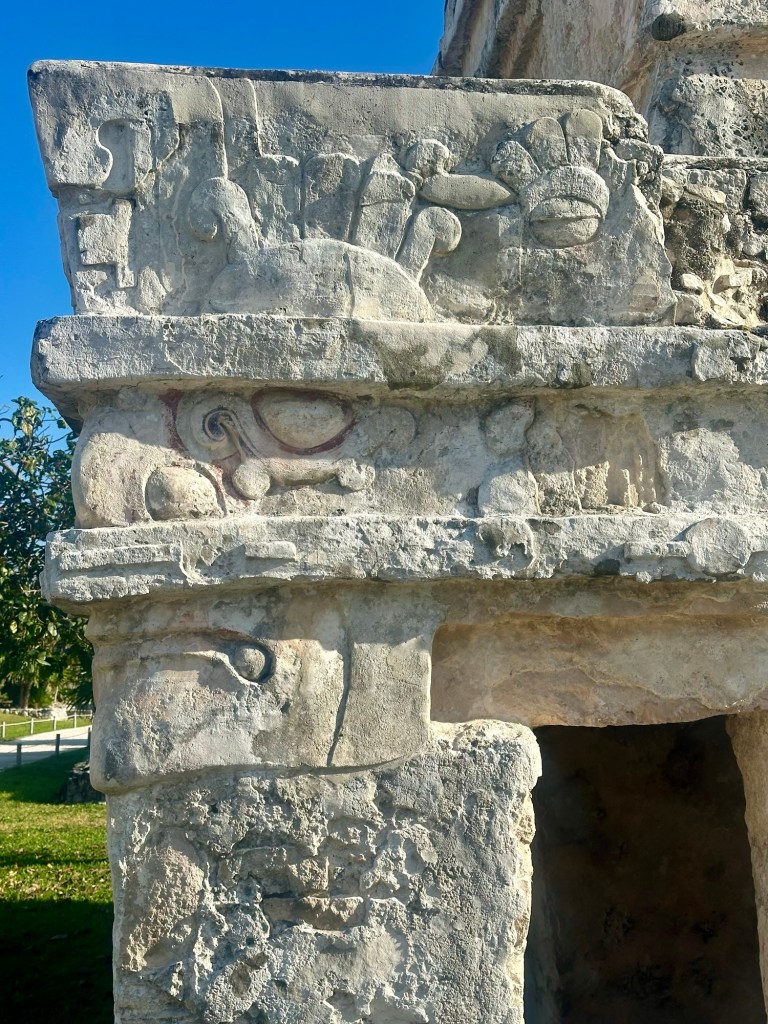
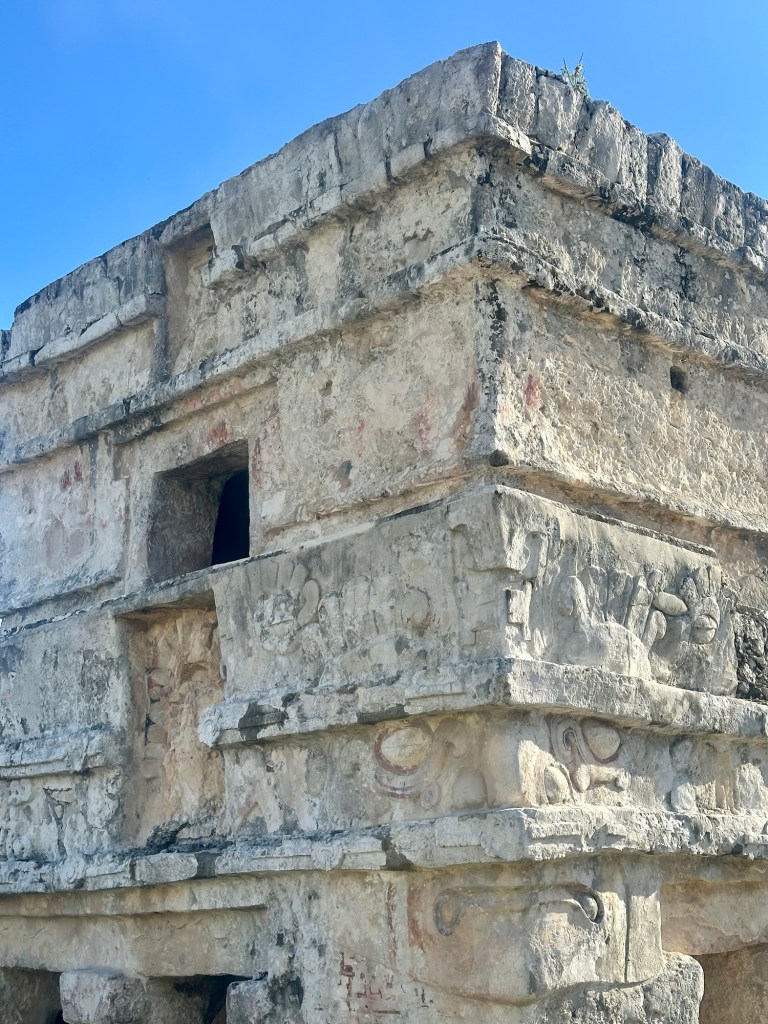
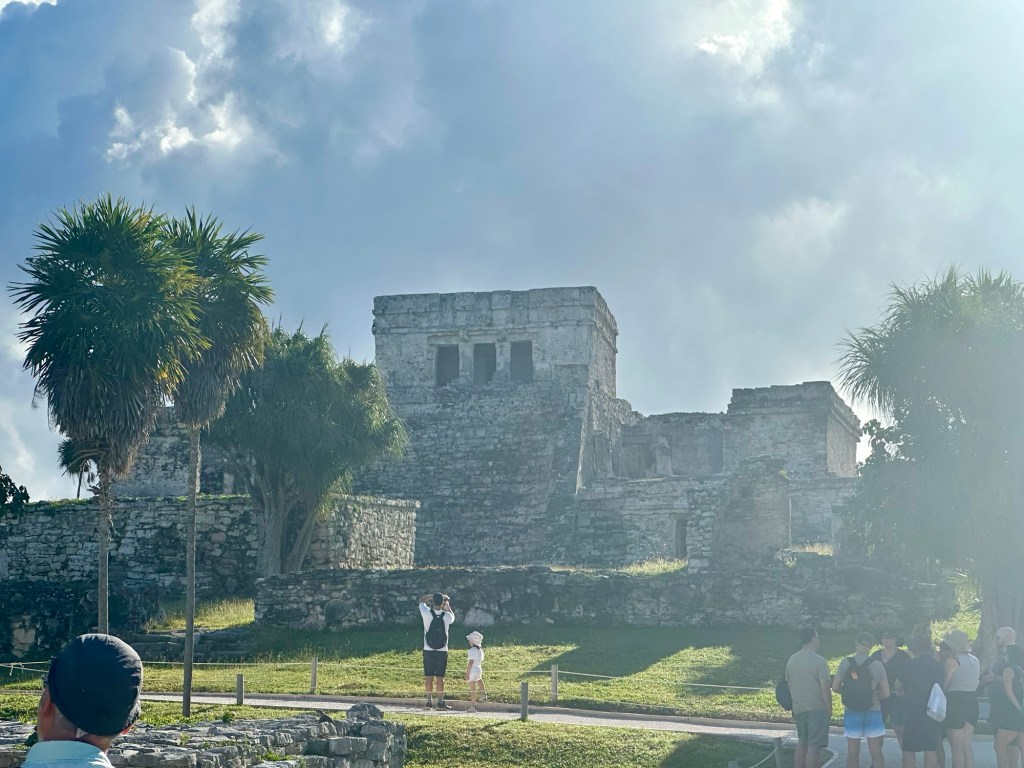
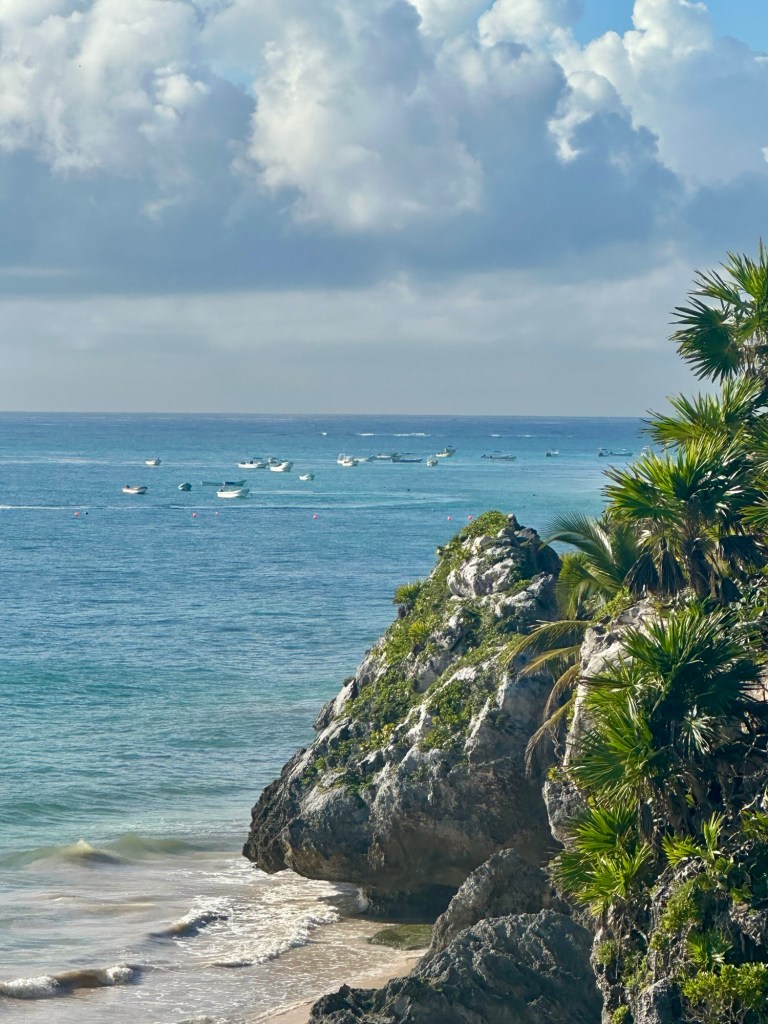
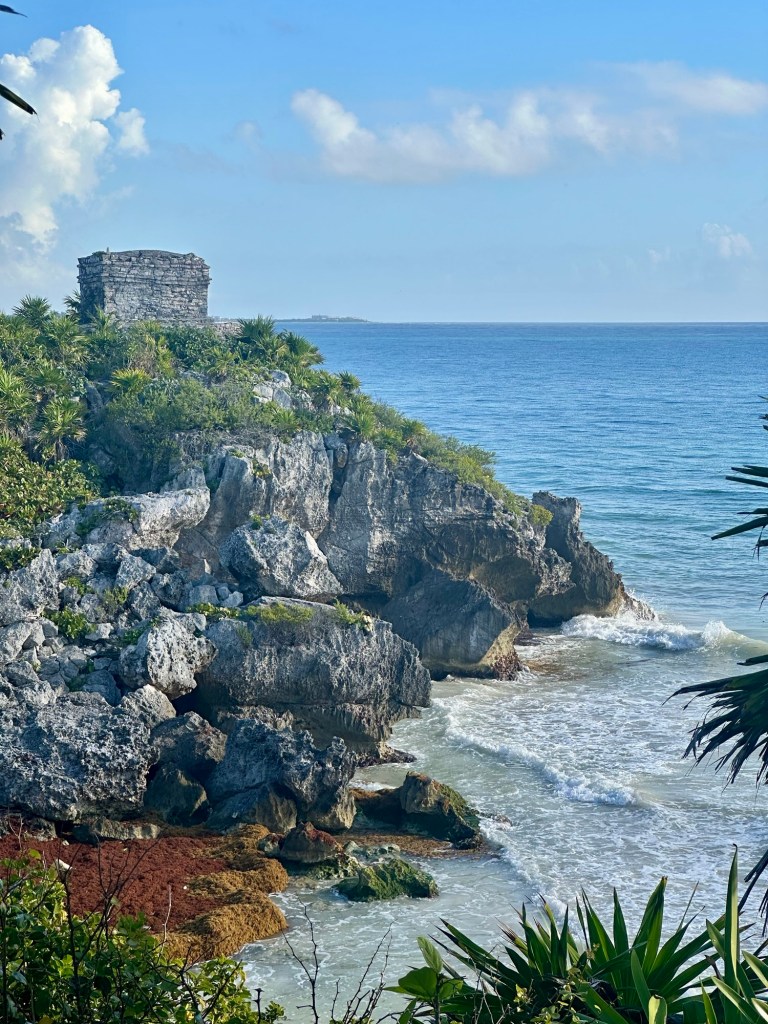
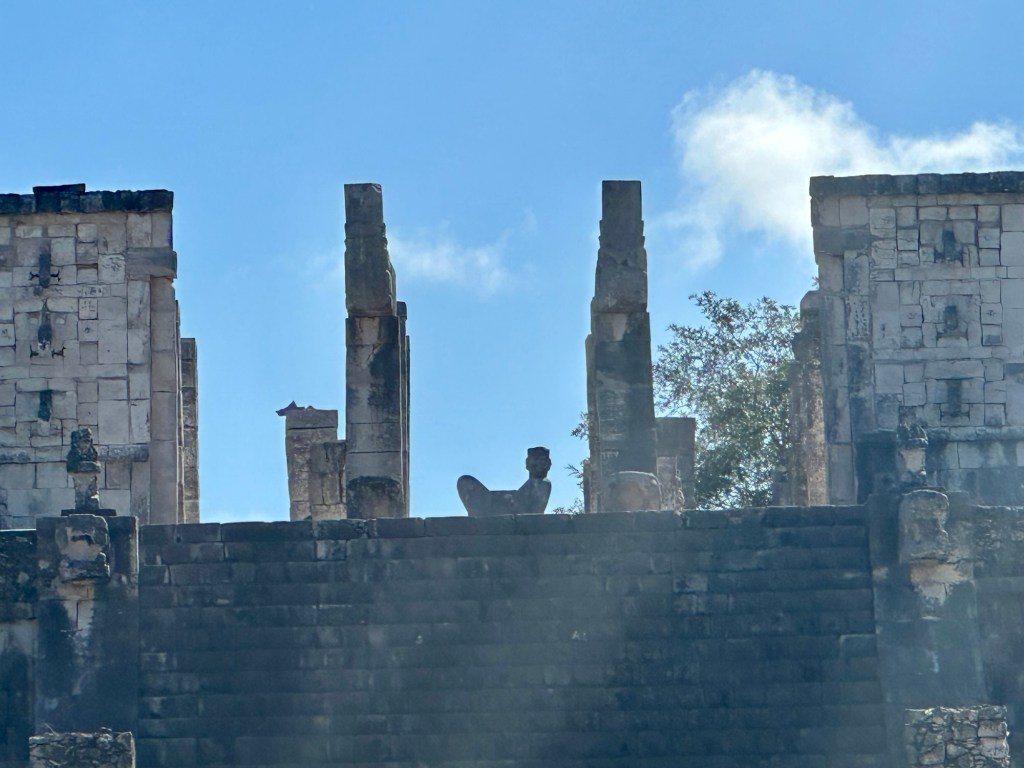
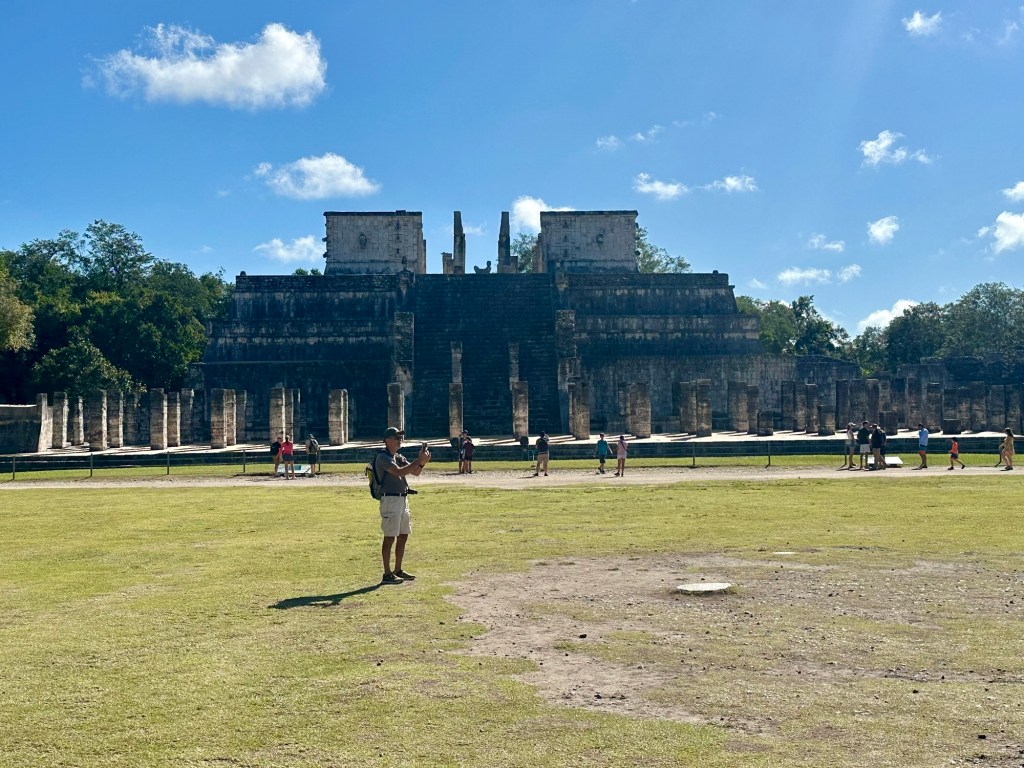
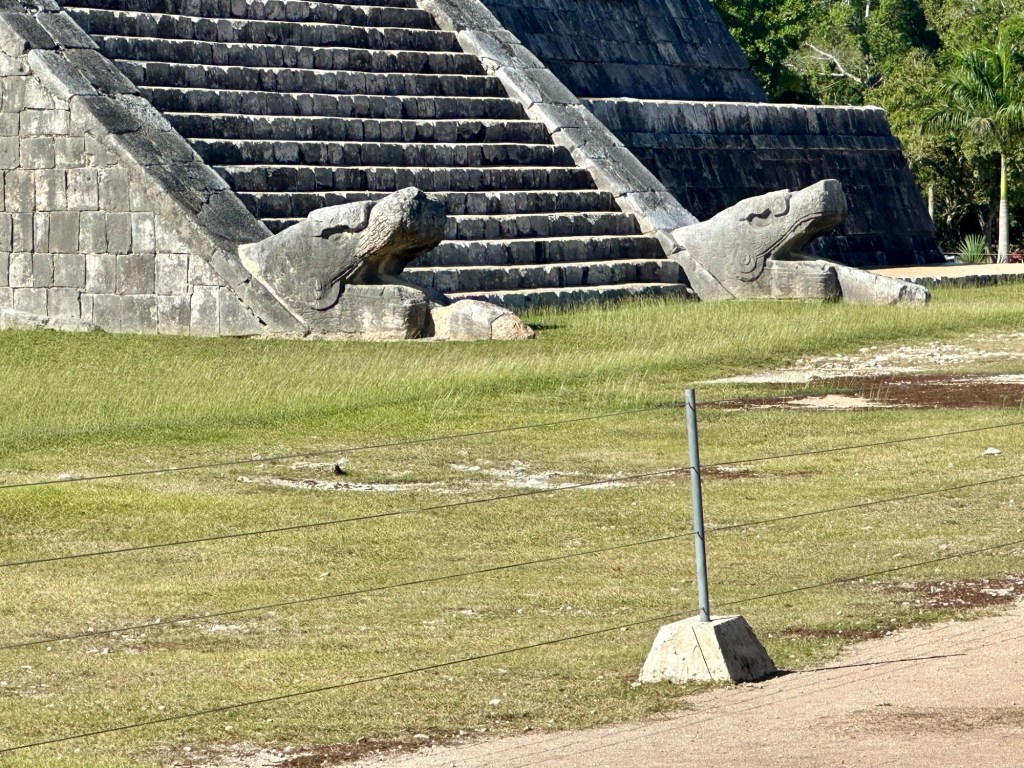
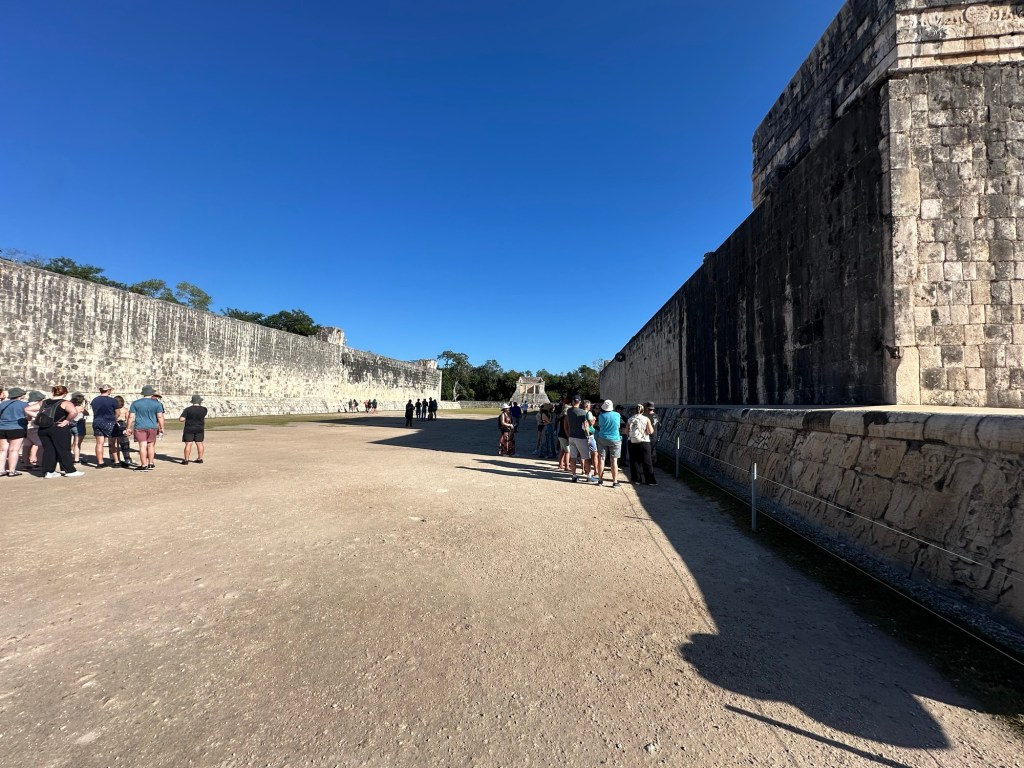
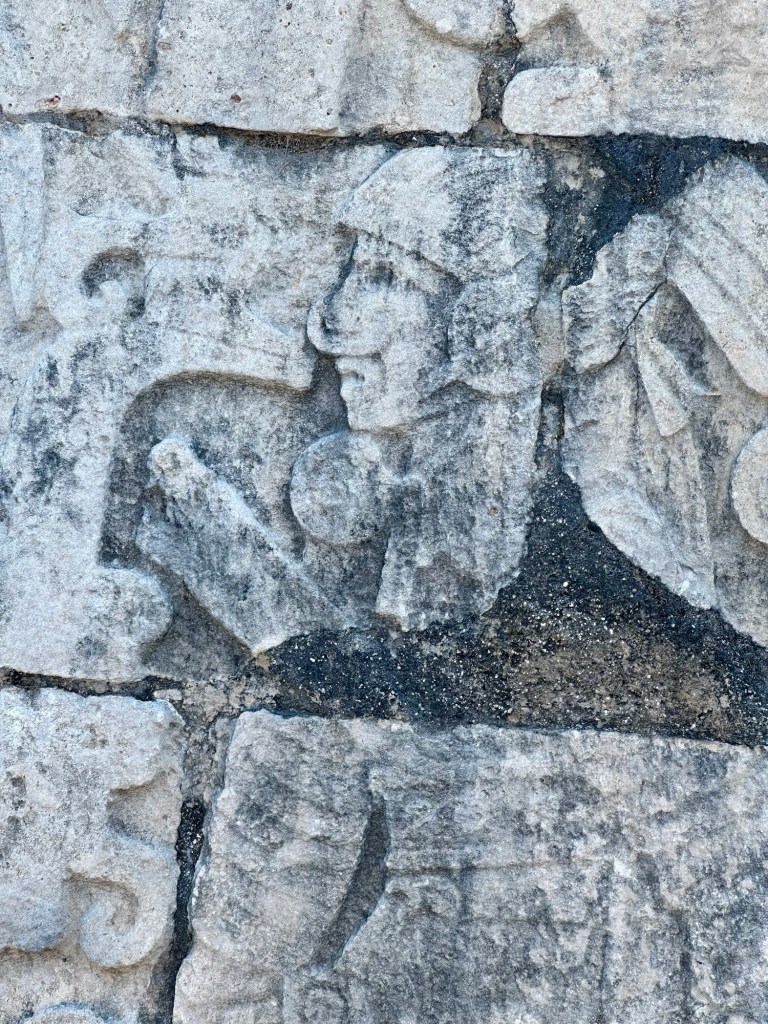
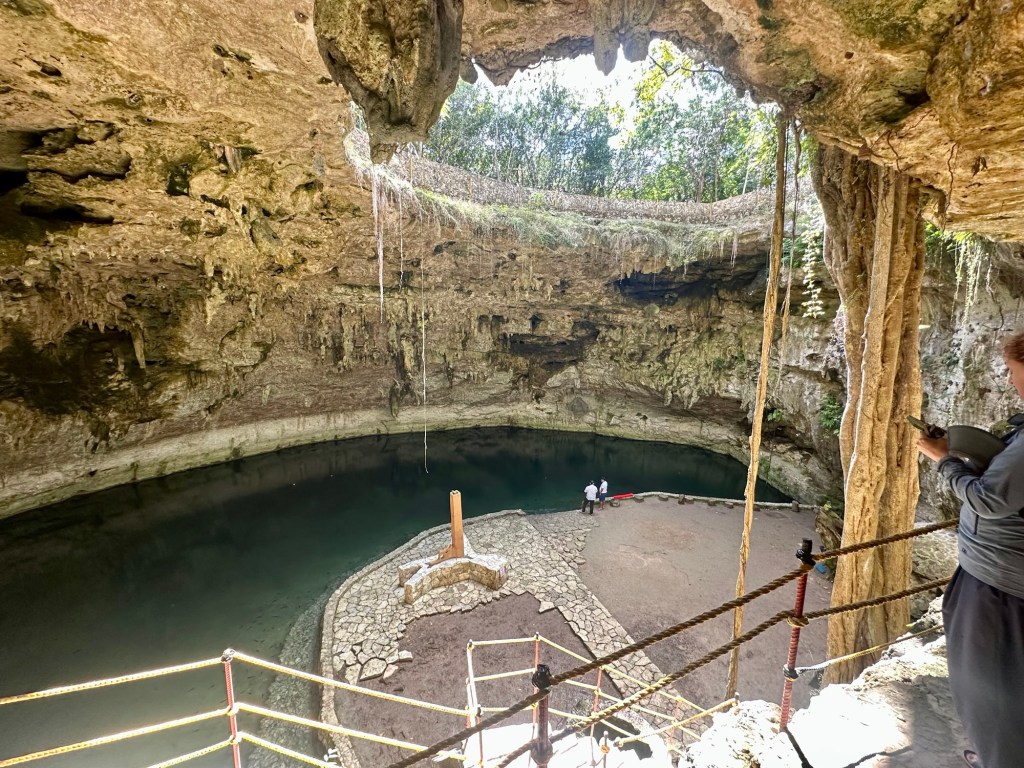
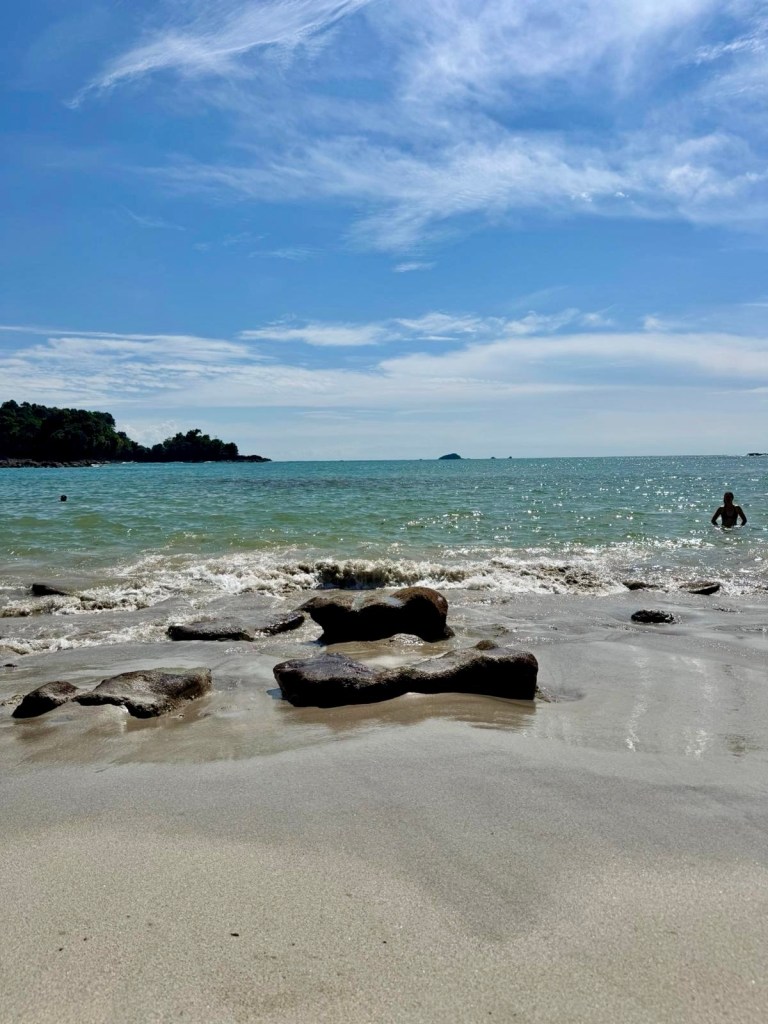
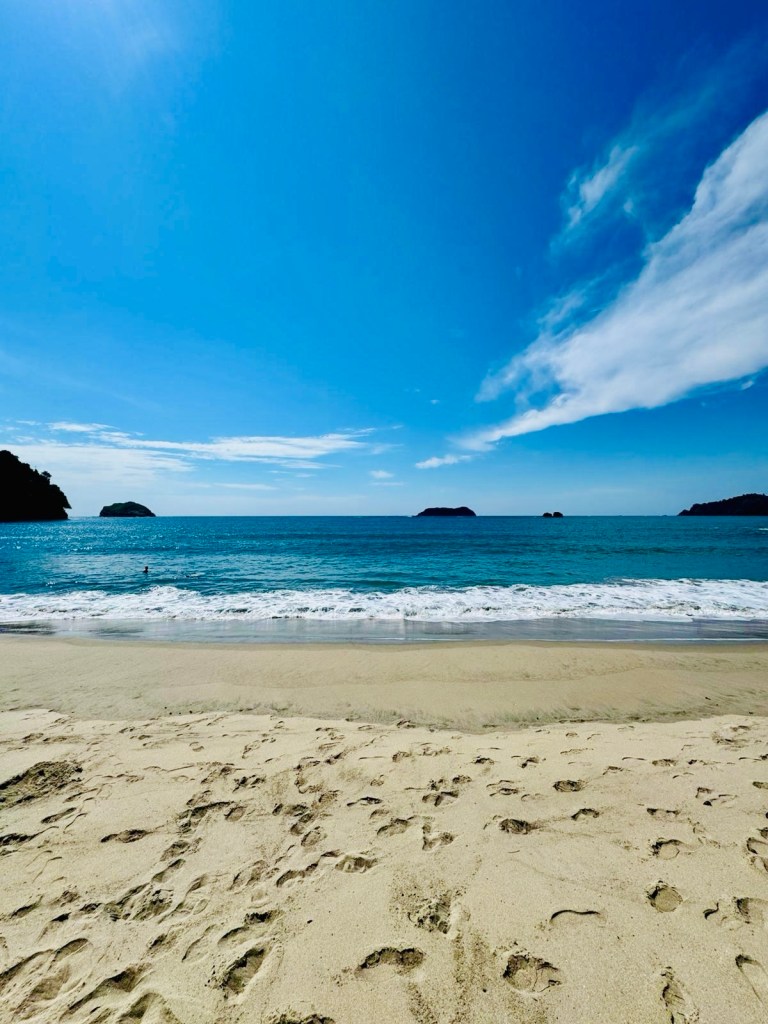
Deeper into the Yucatan Peninsula, Sunday 18 – Wednesday 21 January

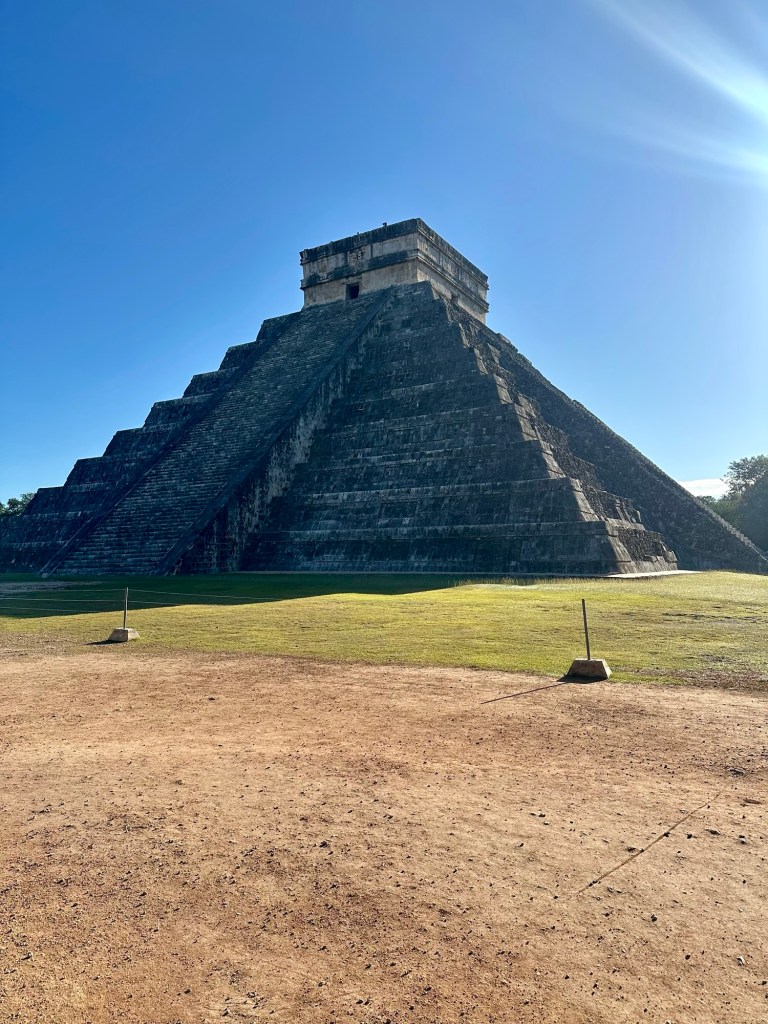
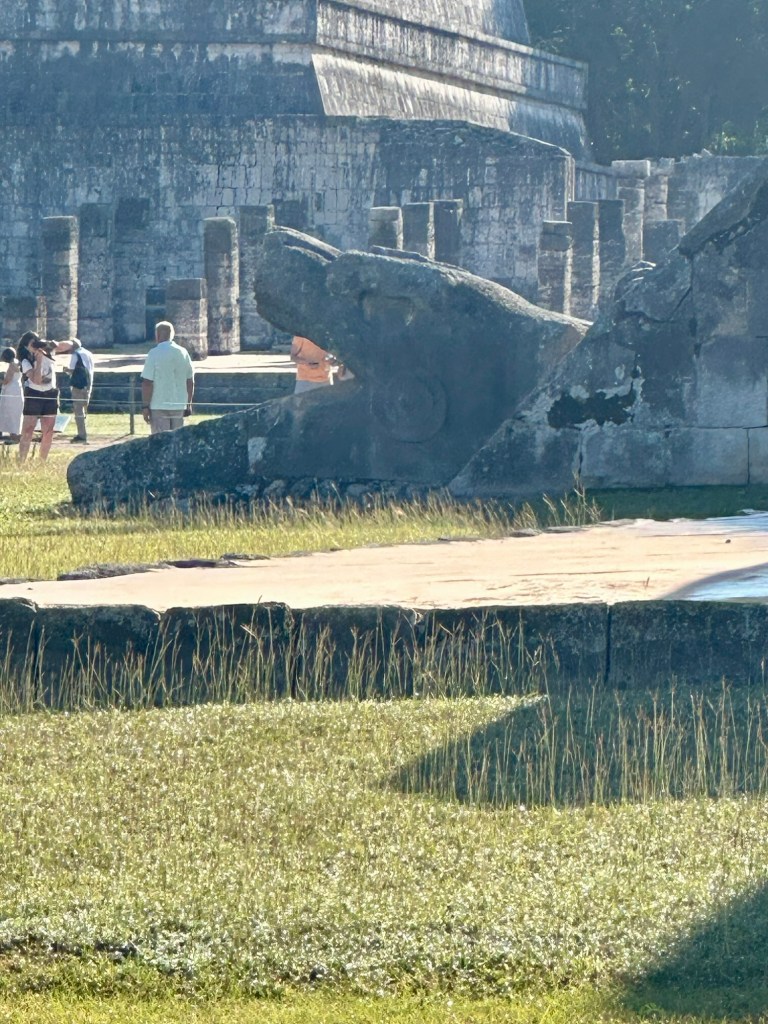
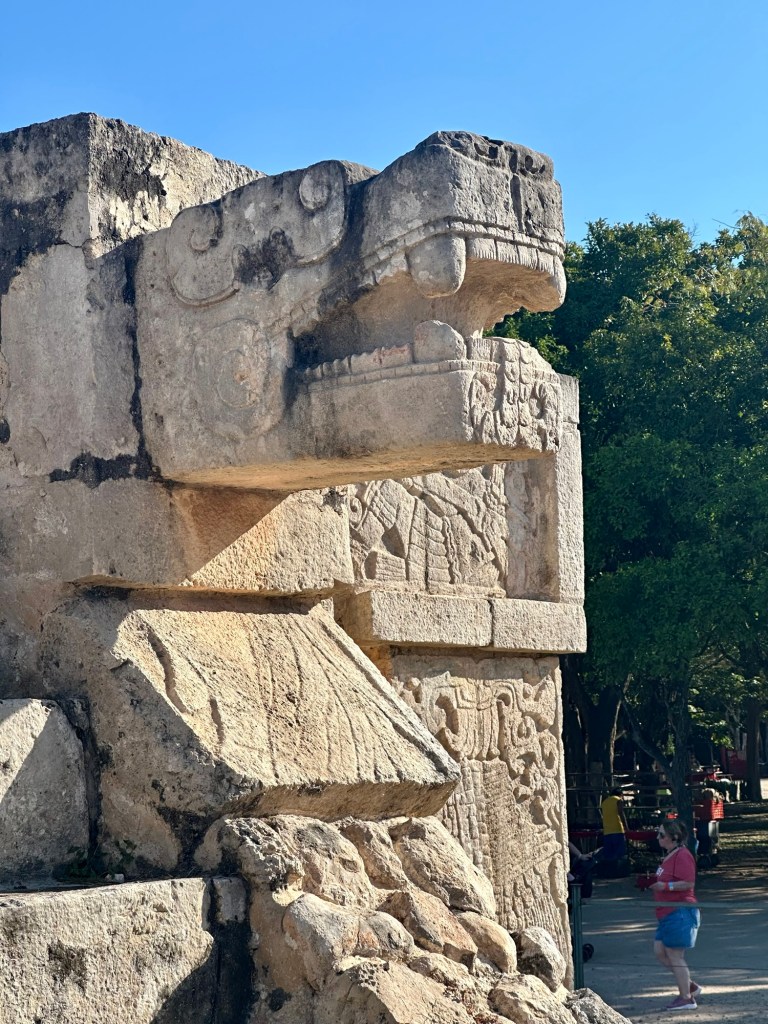
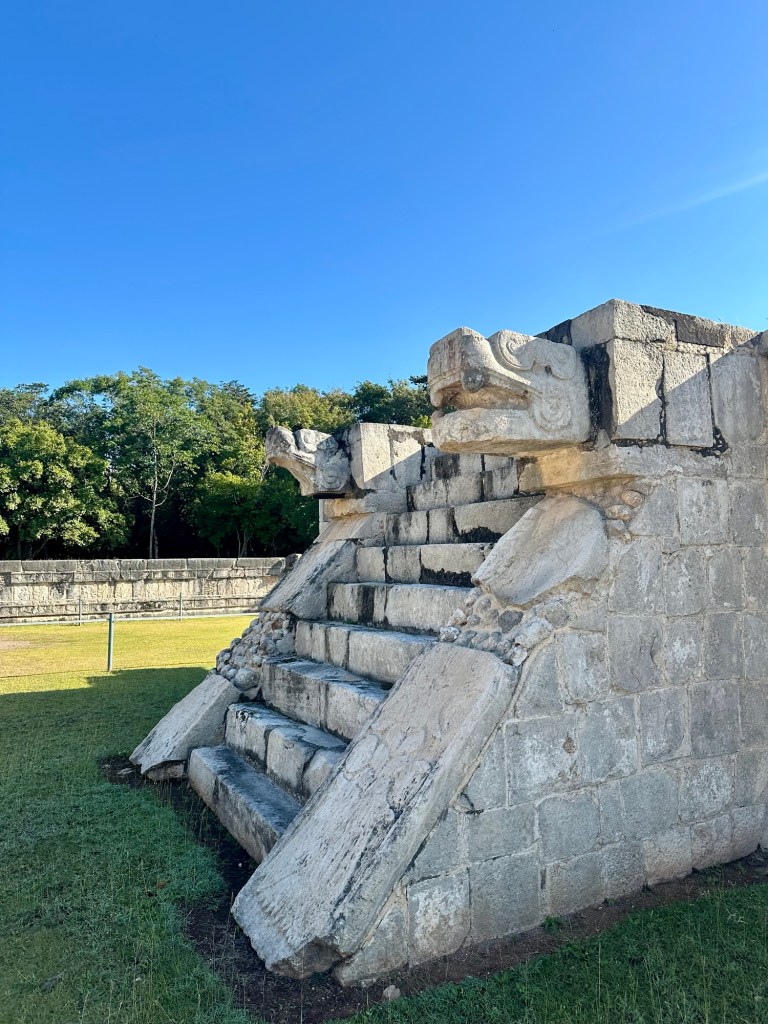
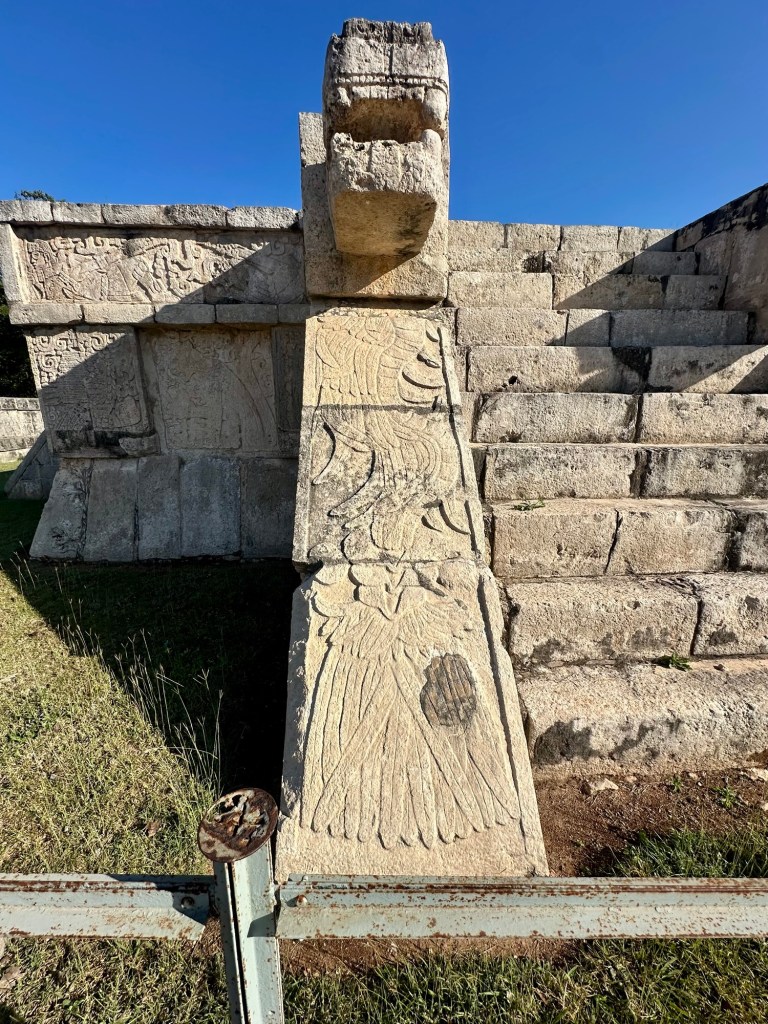
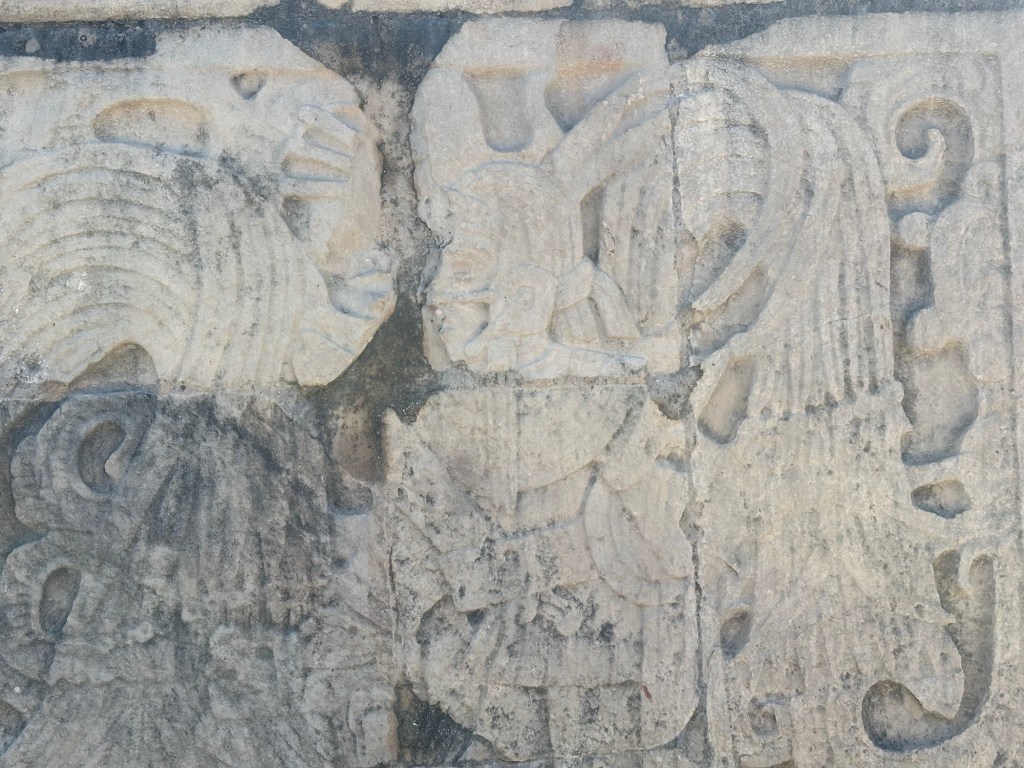
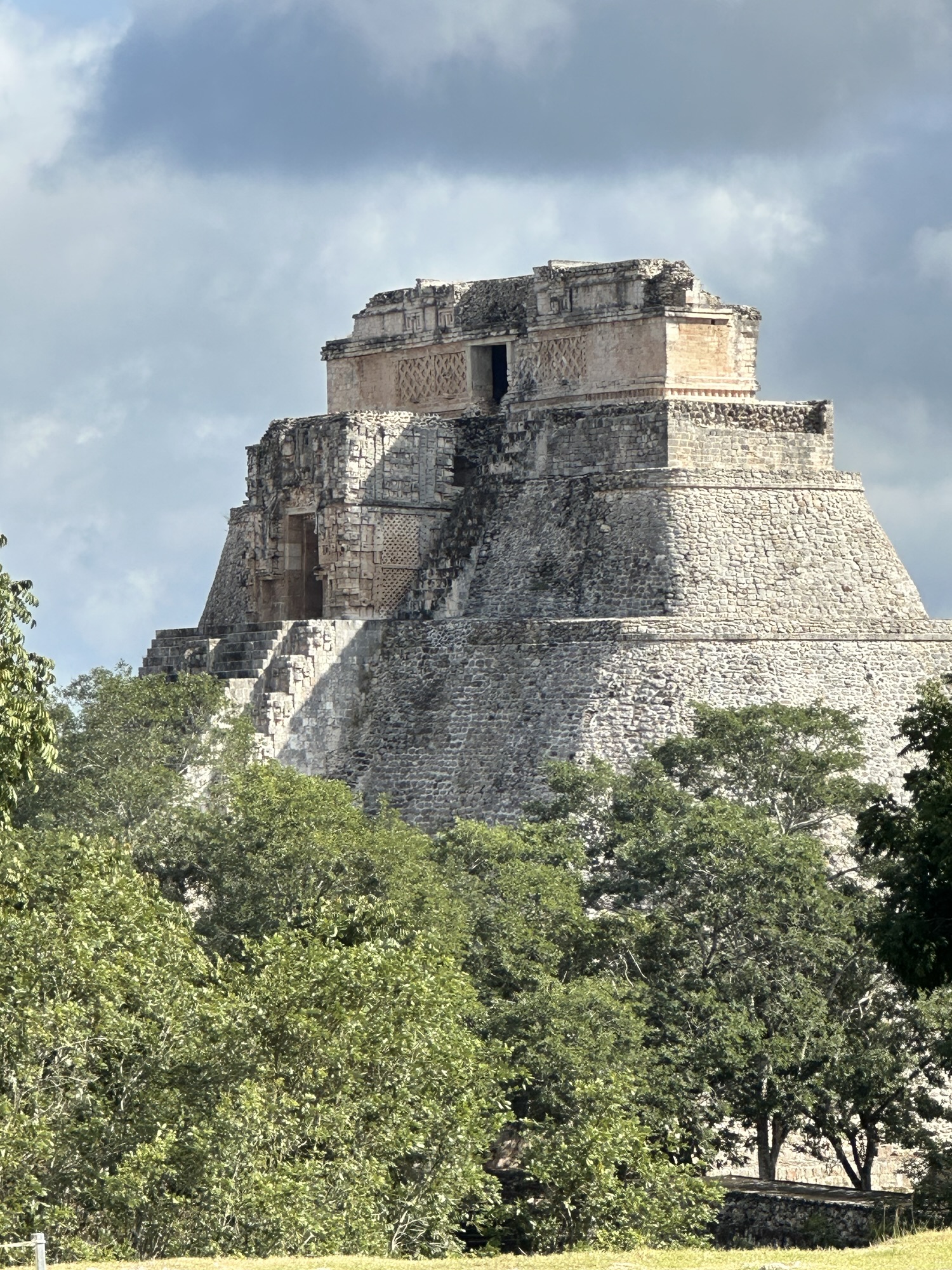
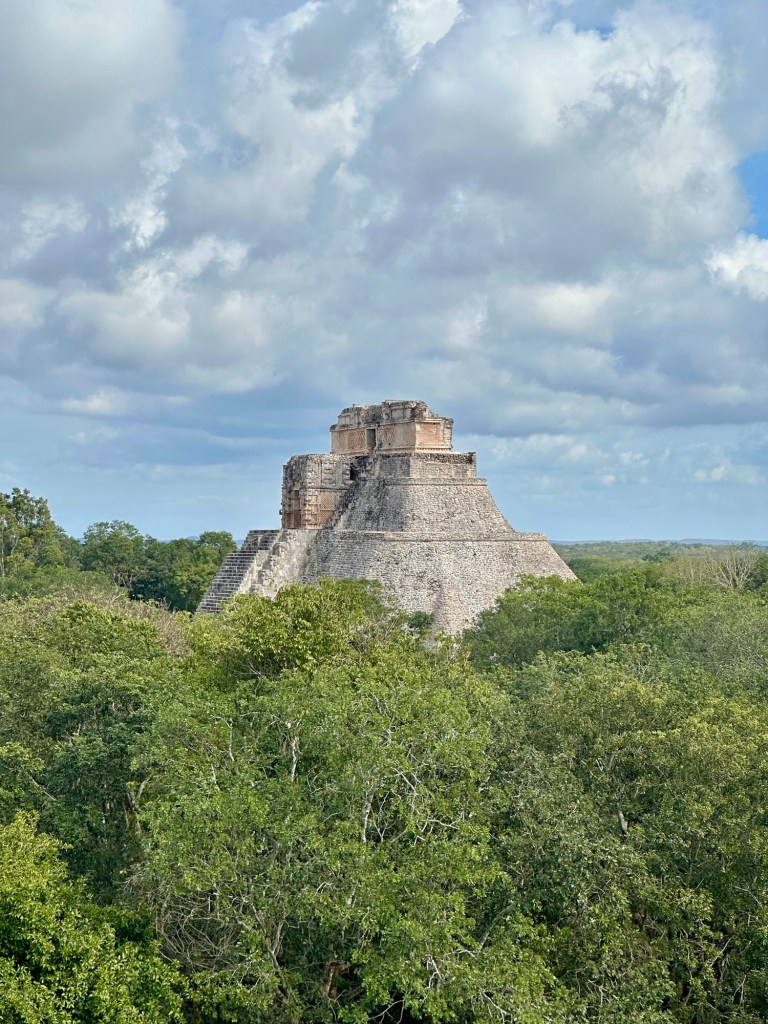
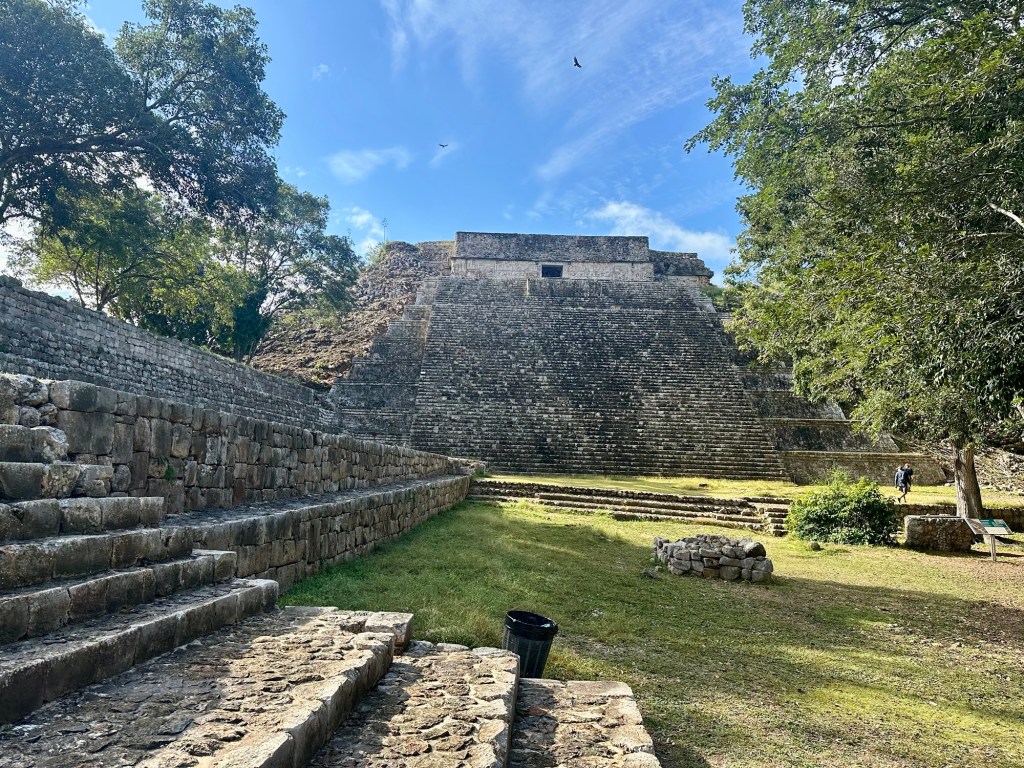
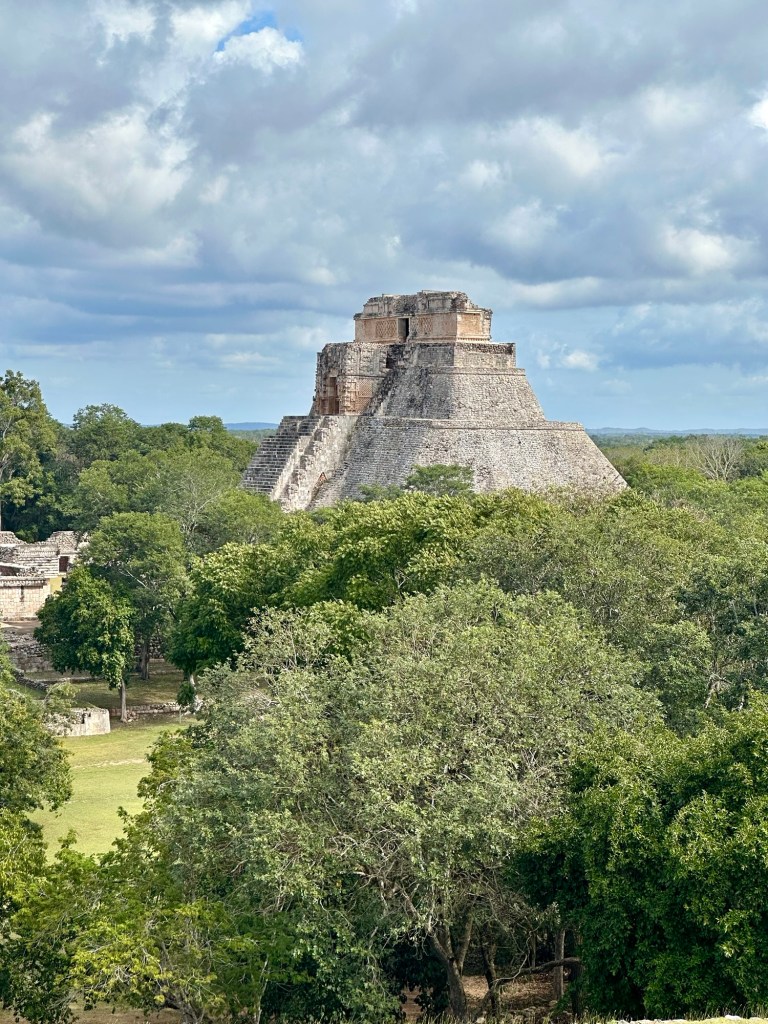
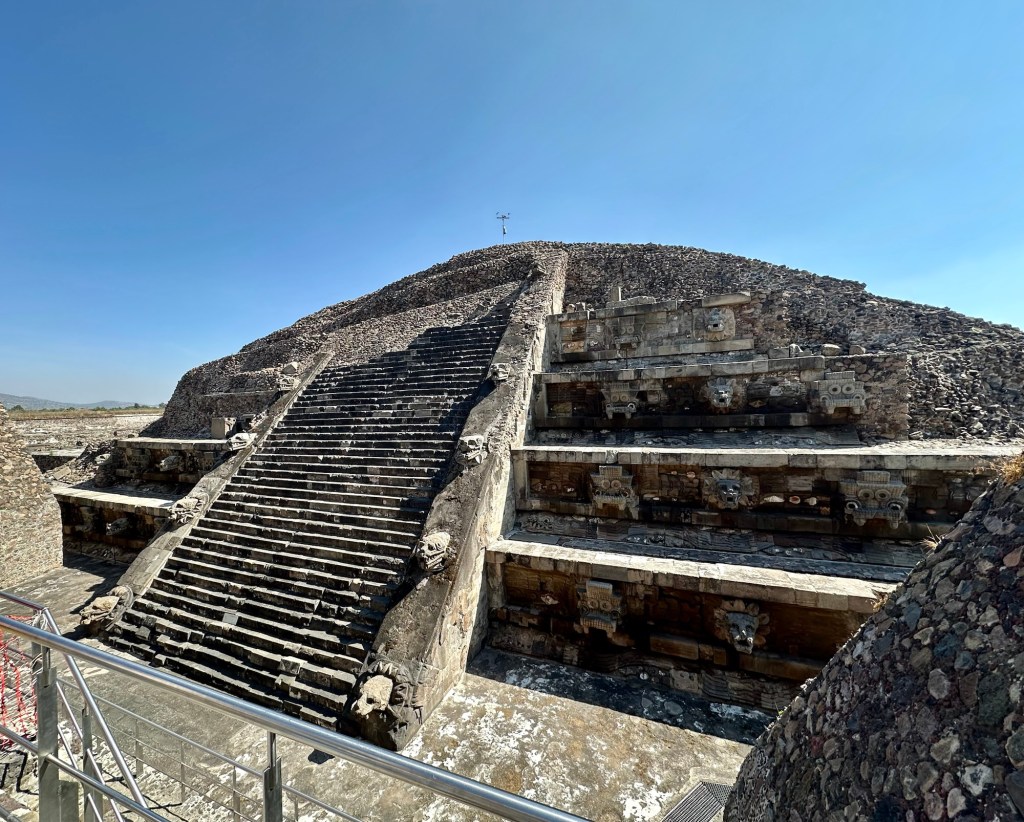
The ‘Magician’s’ Pyramid, Uxmal – apparently ‘magic’ because legend states it was built in a day…

Uxmal

Up early on Sunday to head to Uxmal (pronounced ‘Oosh – Mal’), a Mayan archeological site deep in the jungle of the central Yucatan.

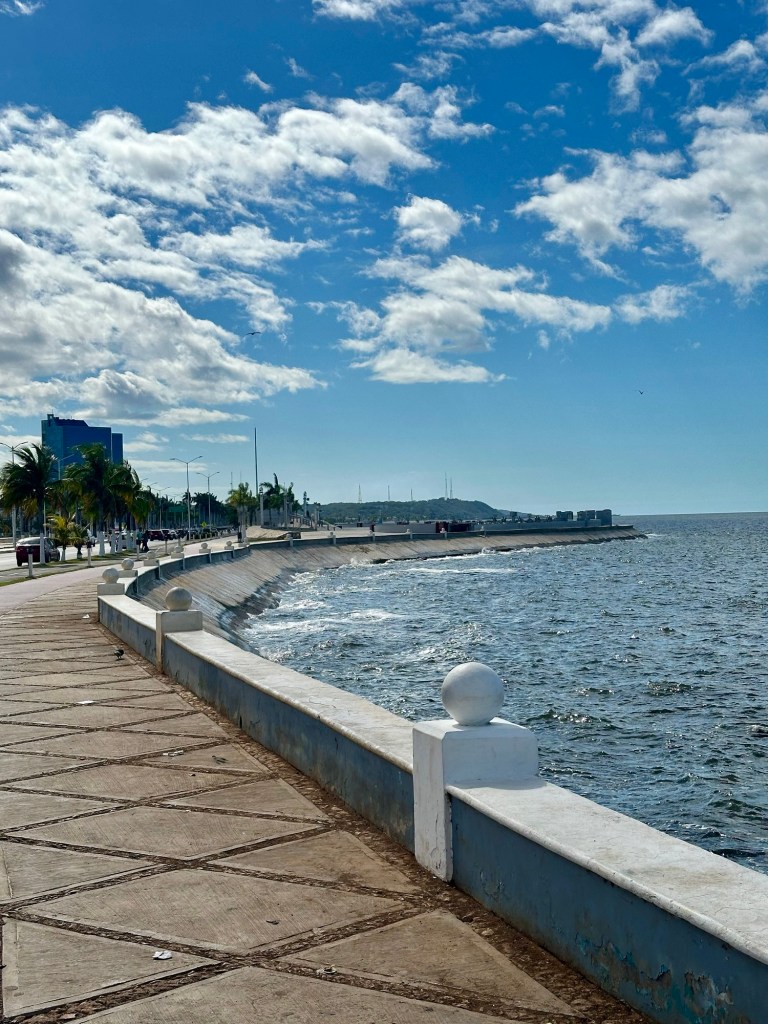
Miguel, our driver picked us up promptly at 0600 and we left Campeche via the north along the esplanade and then onto quite a good dual highway.

A key thing about Uxmal is that it had essentially been abandoned by the Mayan a few centuries at least before the Spanish arrived. A key reason appears to have been a lack of water to support the size of the city it had become. This relative lack of water persisted, which is why the Spanish didn’t settle in the area… and do their usual trick of tearing down the temples and building a cathedral on top…

We arrived at Uxmal around 0745 , paid a confusing array of different entry fees and state and regional taxes and were underway by 0800. We also acquired an English speaking guide , Gamma. The good thing about being there so early was we missed the heat of the day and the majority of the tourist buses that start to flow in from around 10 – 10:30.

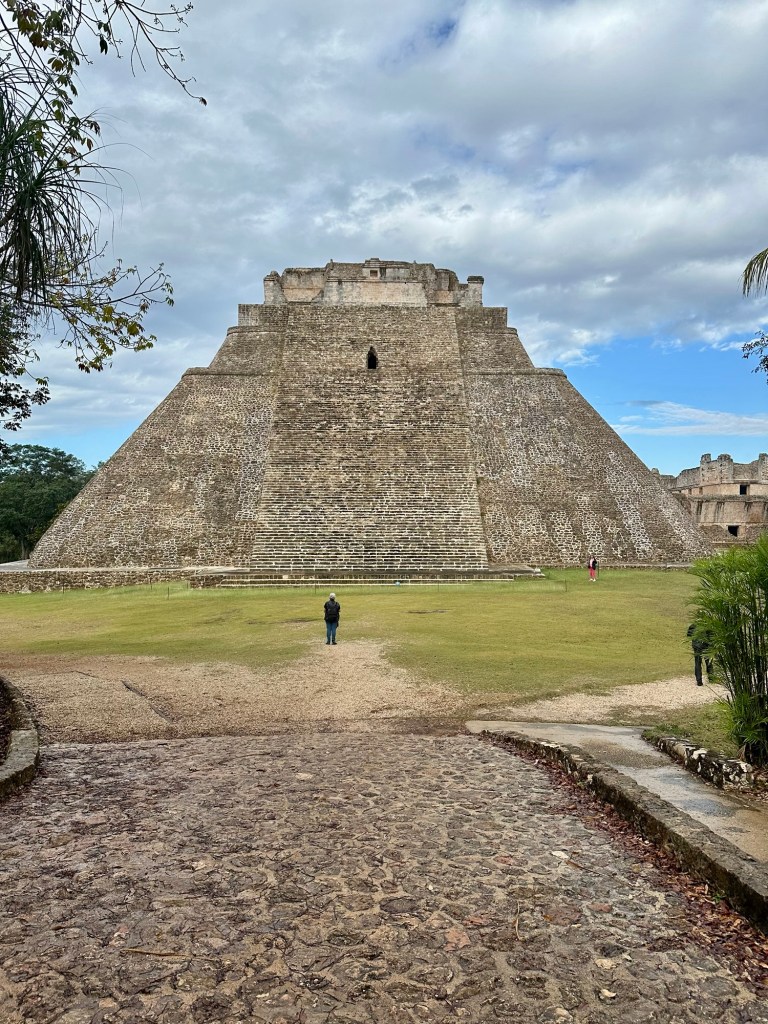
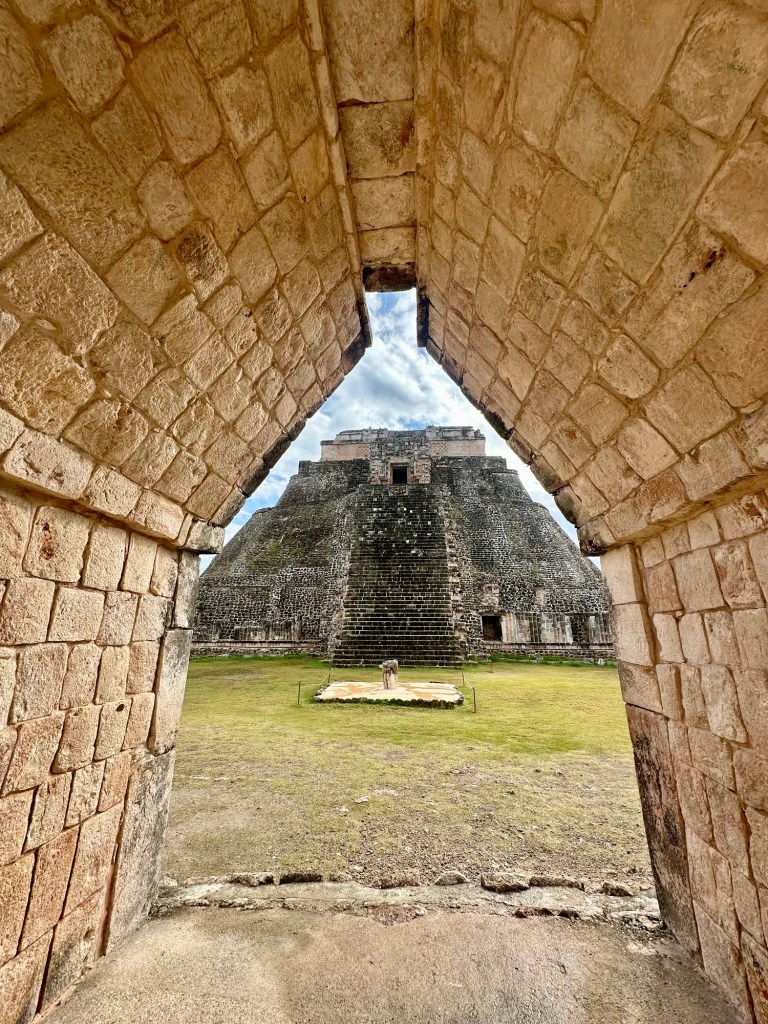
The first major thing you come across is the Magician’s Pyramid. This one is a bit different that the ones we saw previously in that it’s edges are rounded rather than square- so it is a kind of ellipsis shaped. You approach it from the ‘rear’, which is quite impressive, but the true grandeur of the thing emerges on the other side.

The ‘back’ of the Magician’s Pyramid
The front, viewed through a wall portal
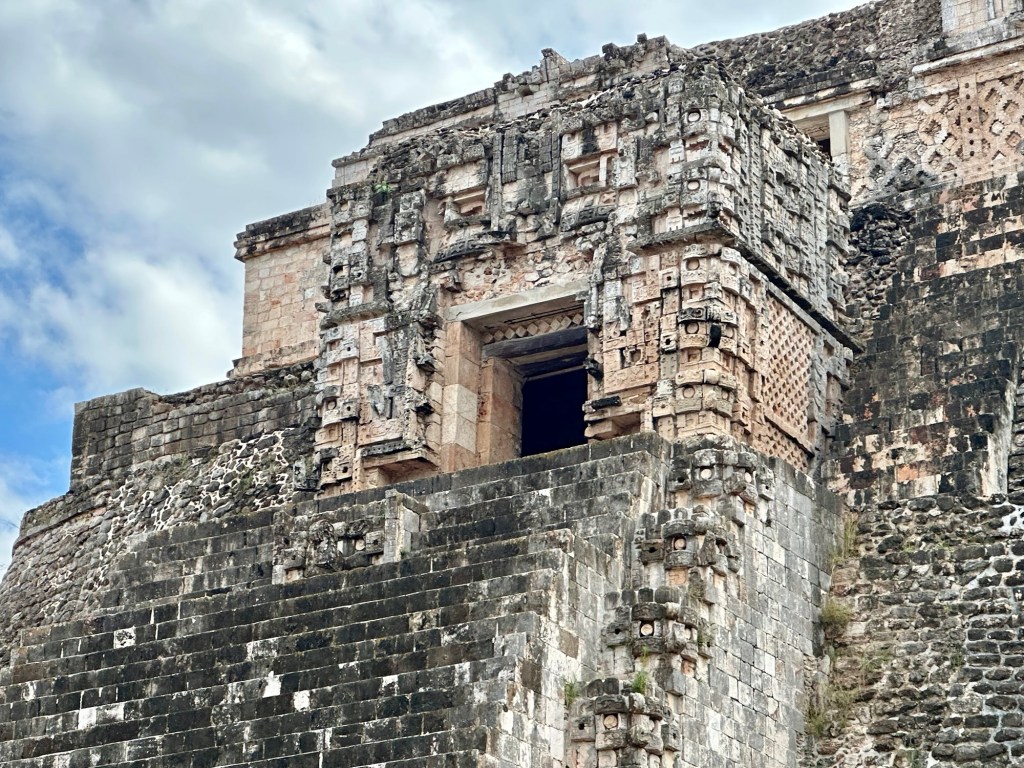
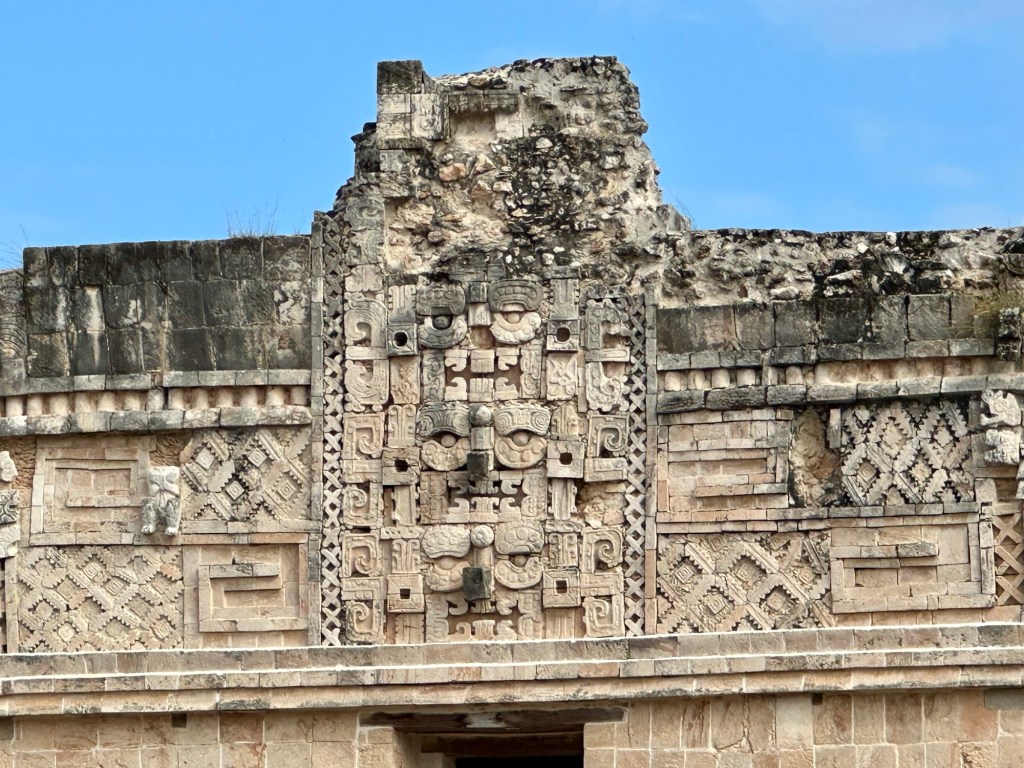
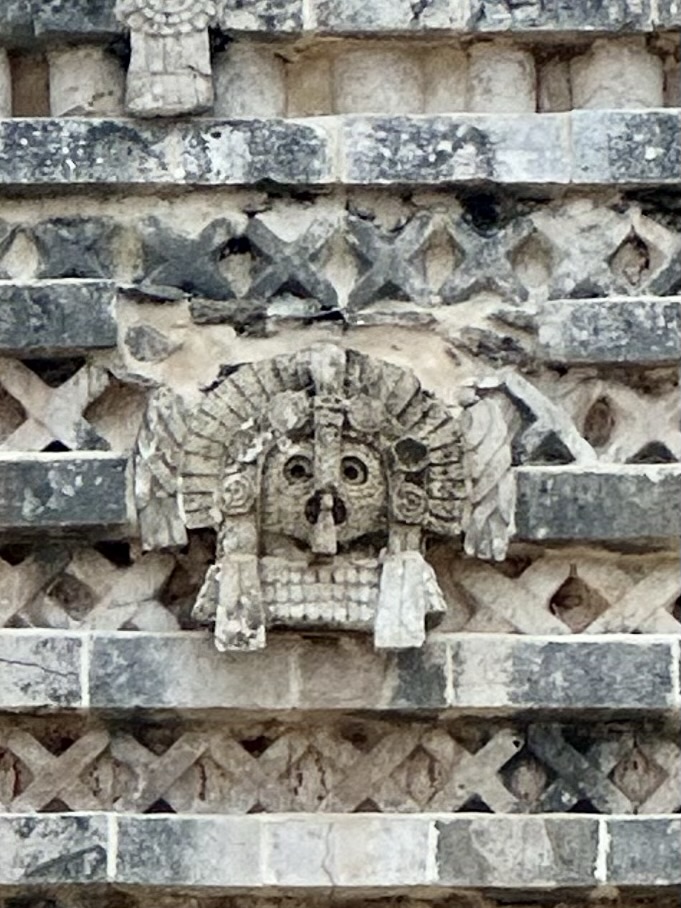
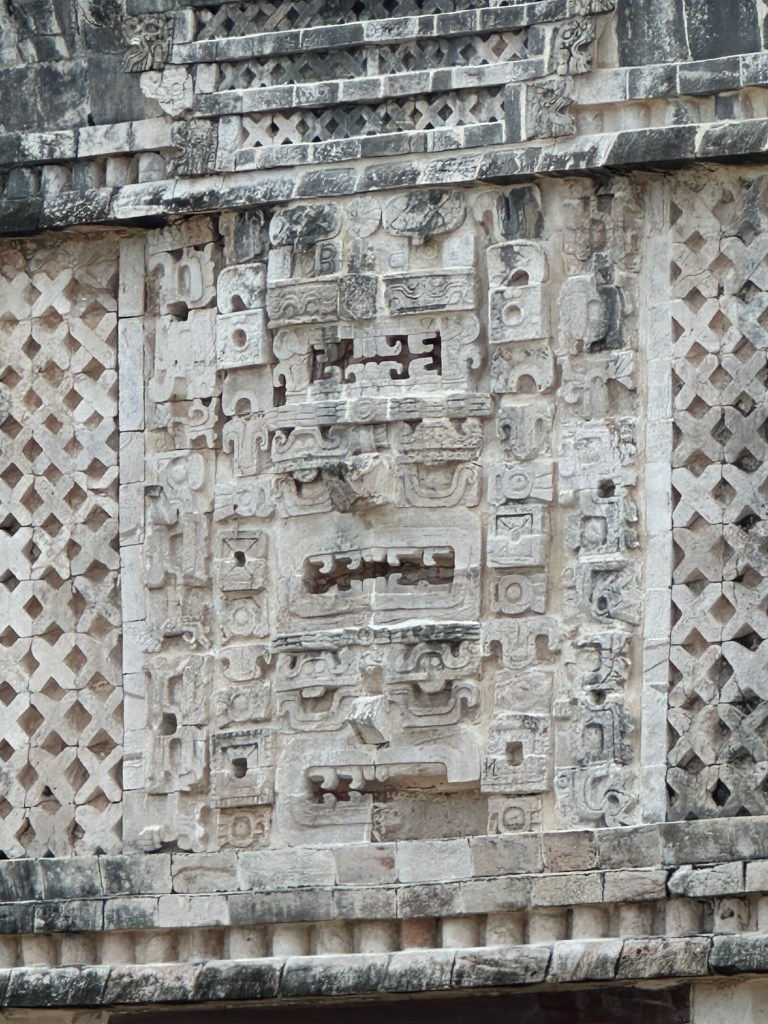
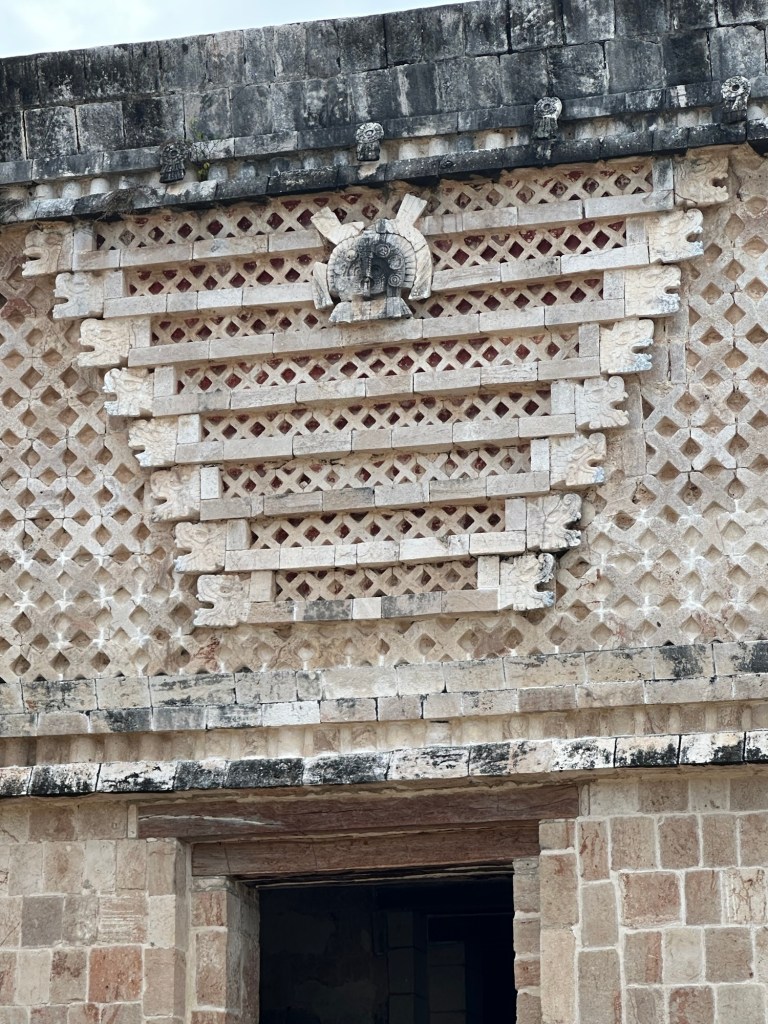
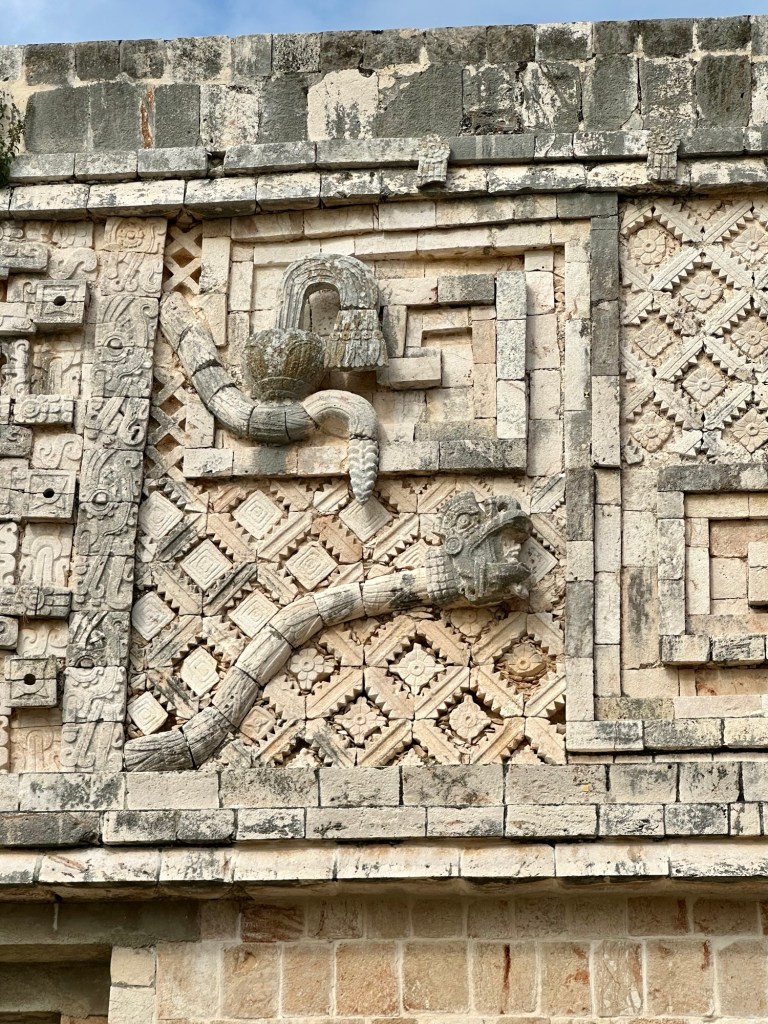
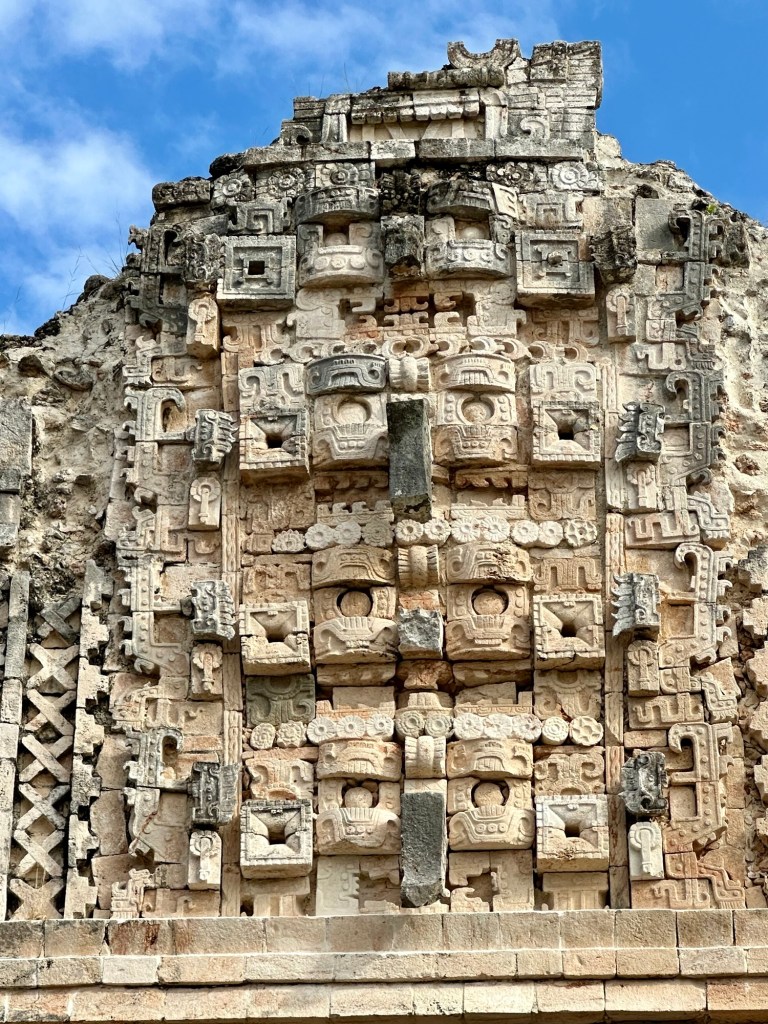
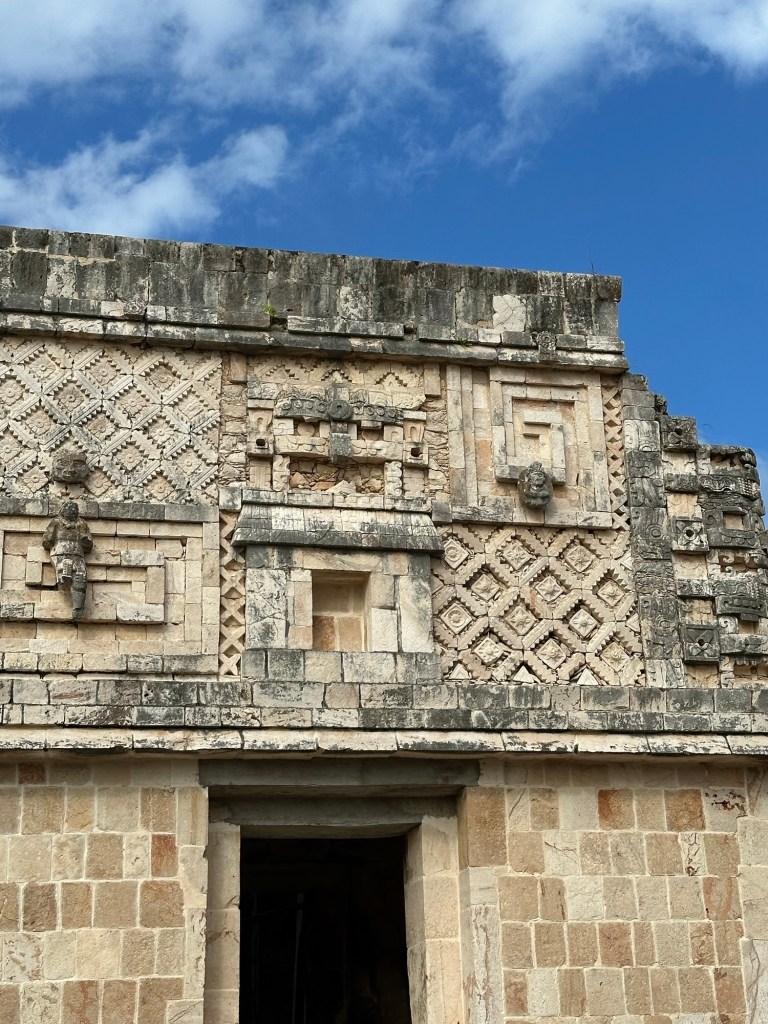
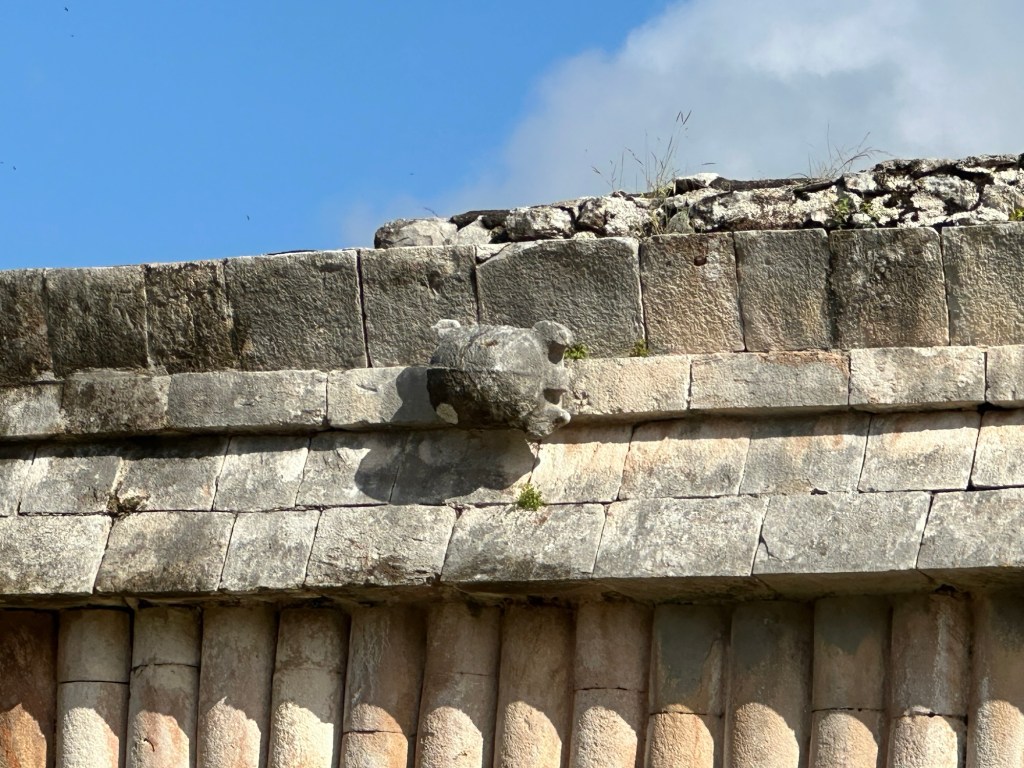
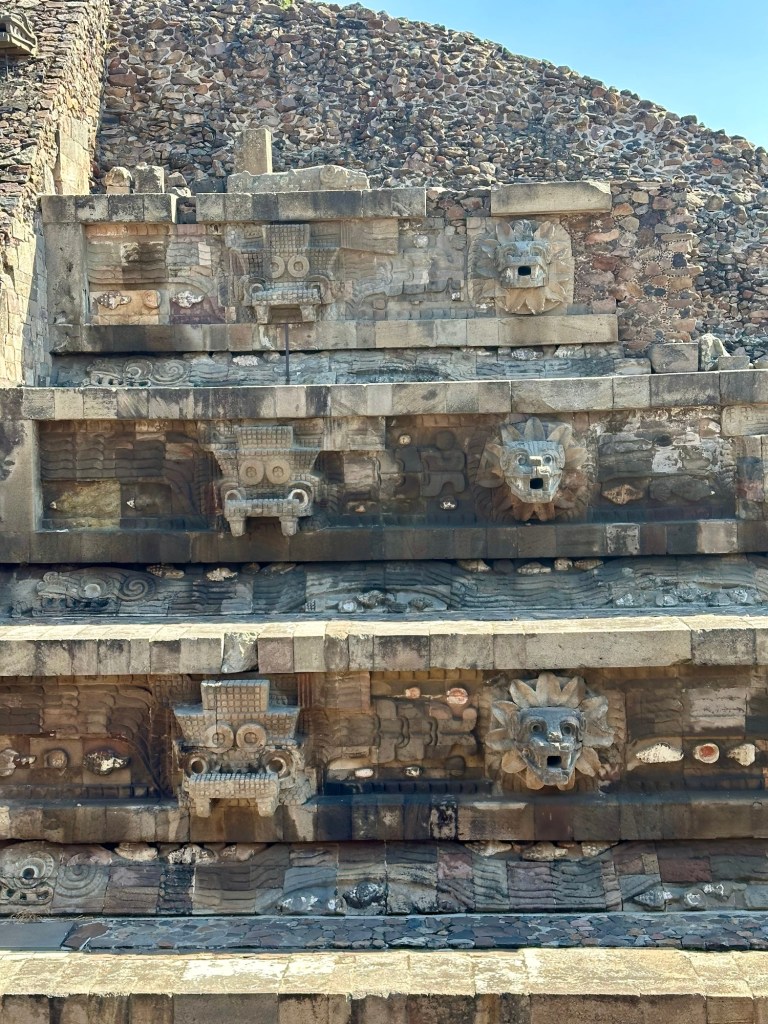
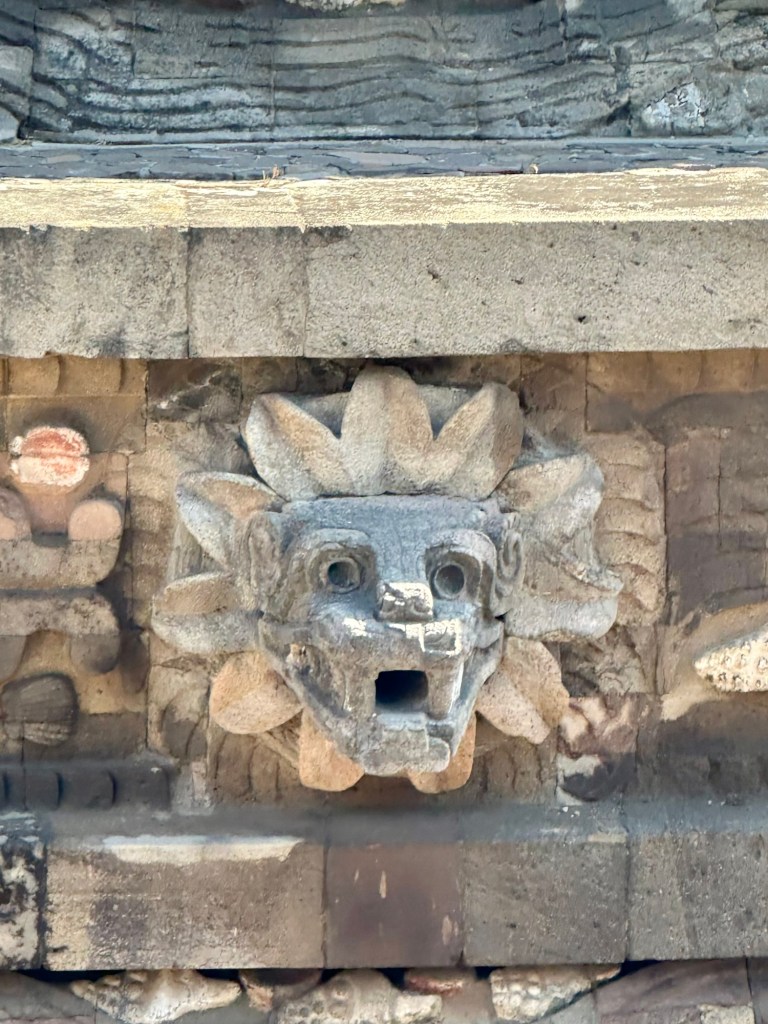
Some of the detail – the imagery on the facades largely depict the rain god, Chuuk

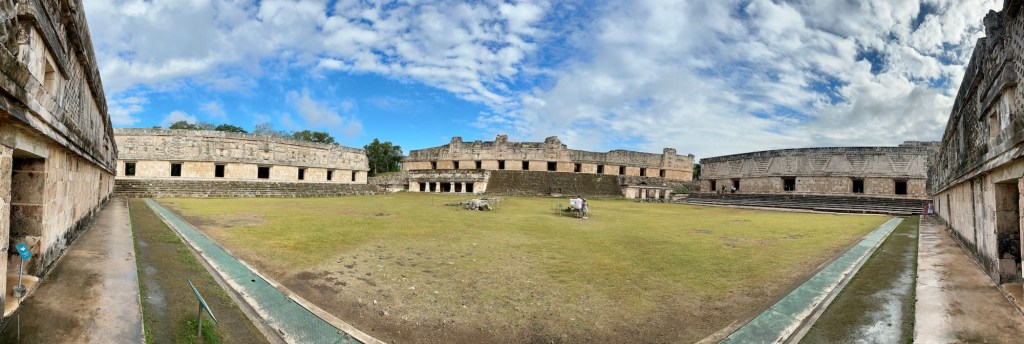
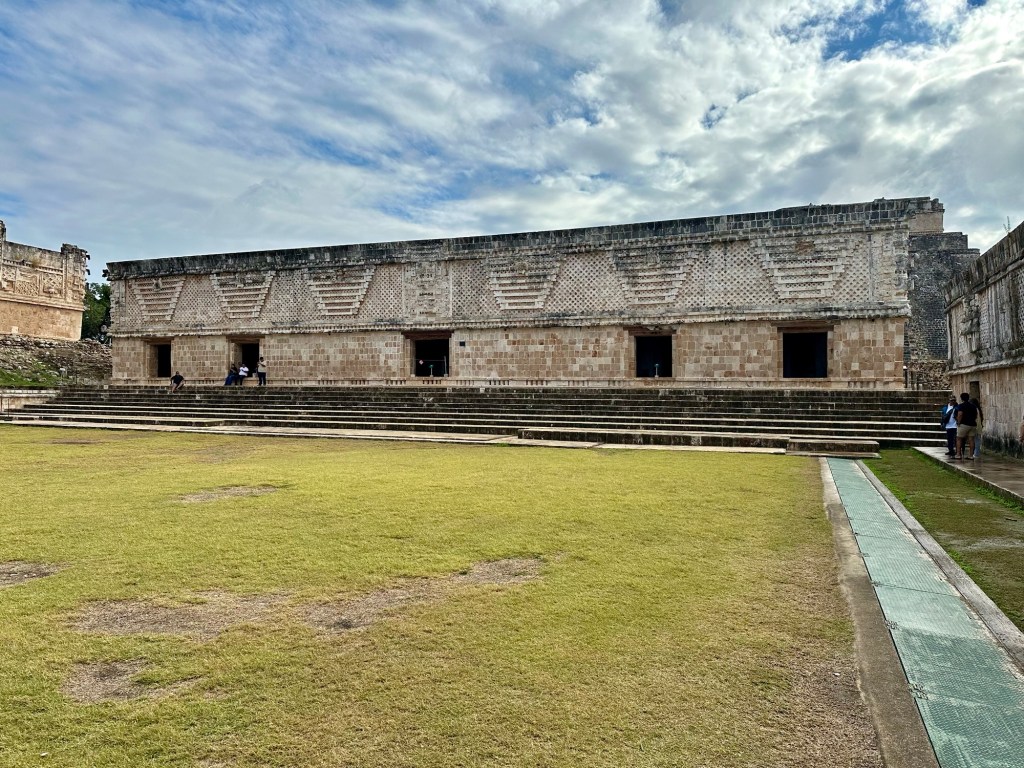
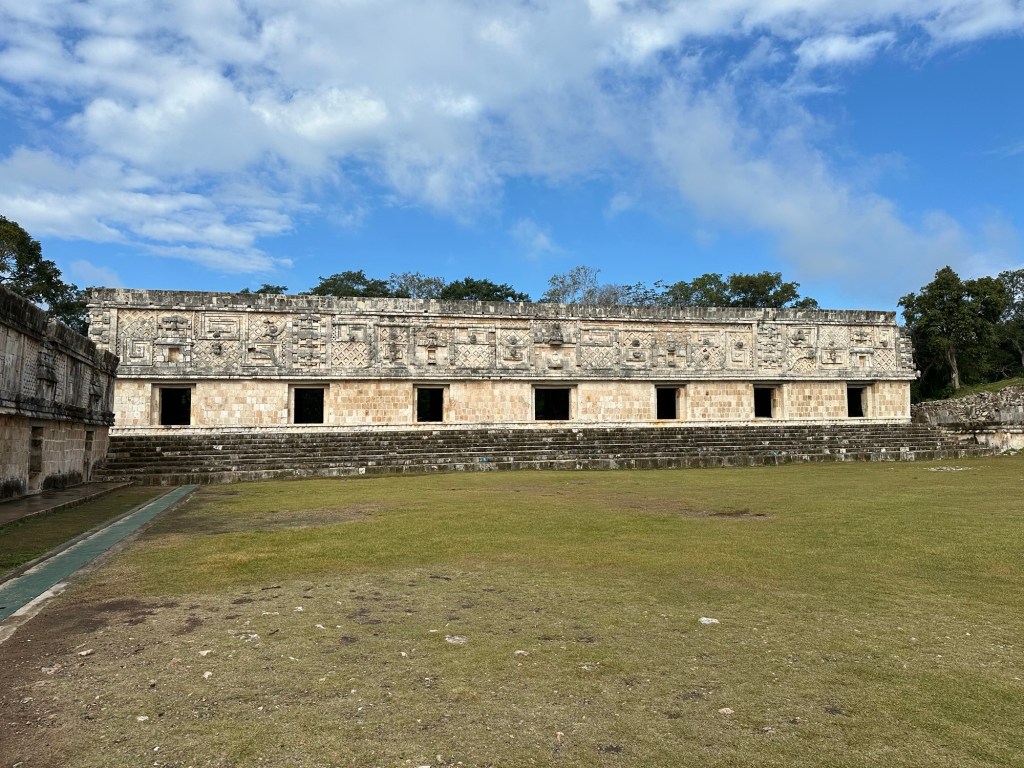
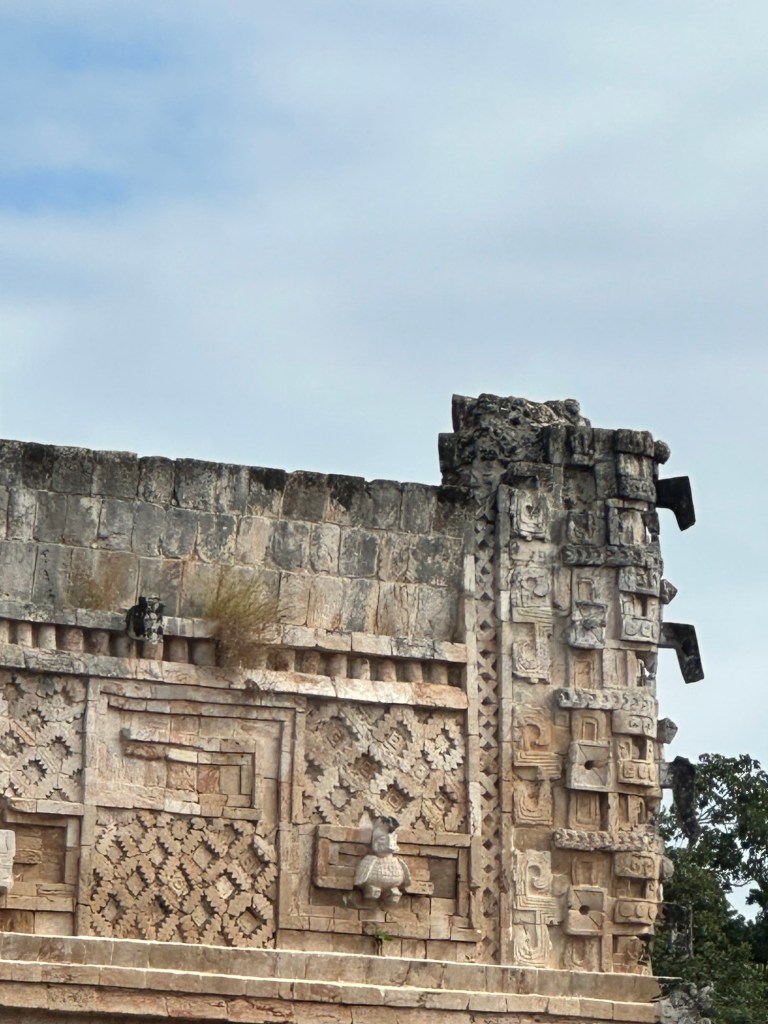
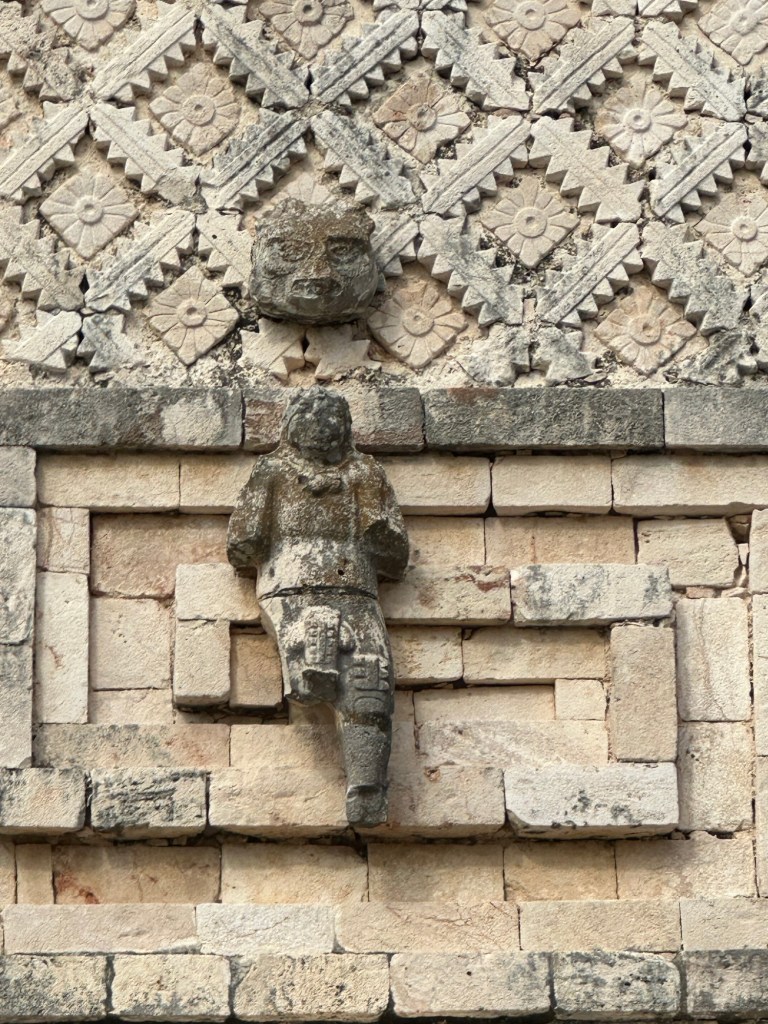
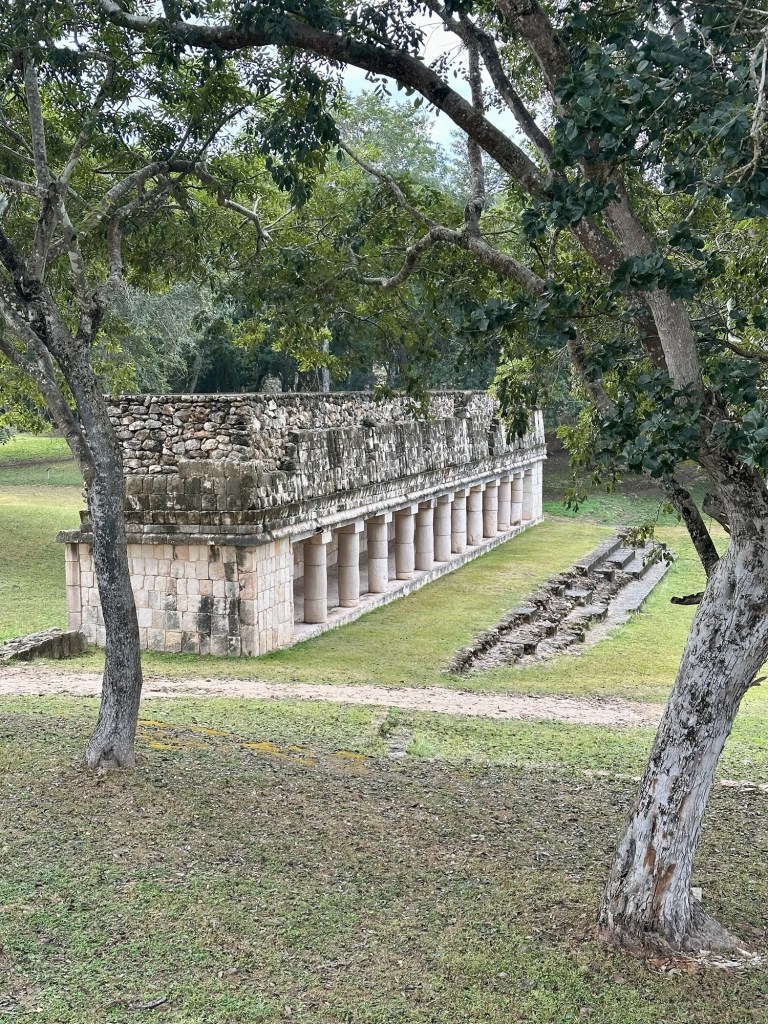
Just behind the Magician’s Pyramid is an area the Spanish labelled ‘The Nunnery’ as it reminded them of the cloisters in a convent. Archaeological research tells us today that it was a centre of government and administration for the city. The quadrangle is surrounded by various buildings which are laden with features and carvings of religious and political significance

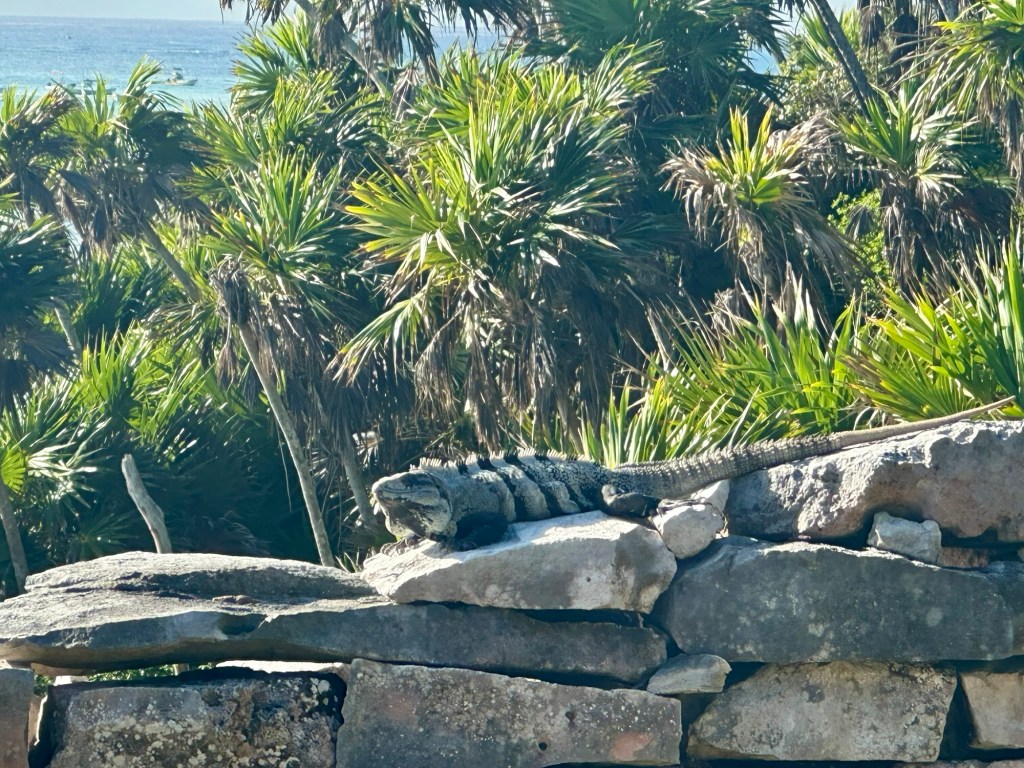
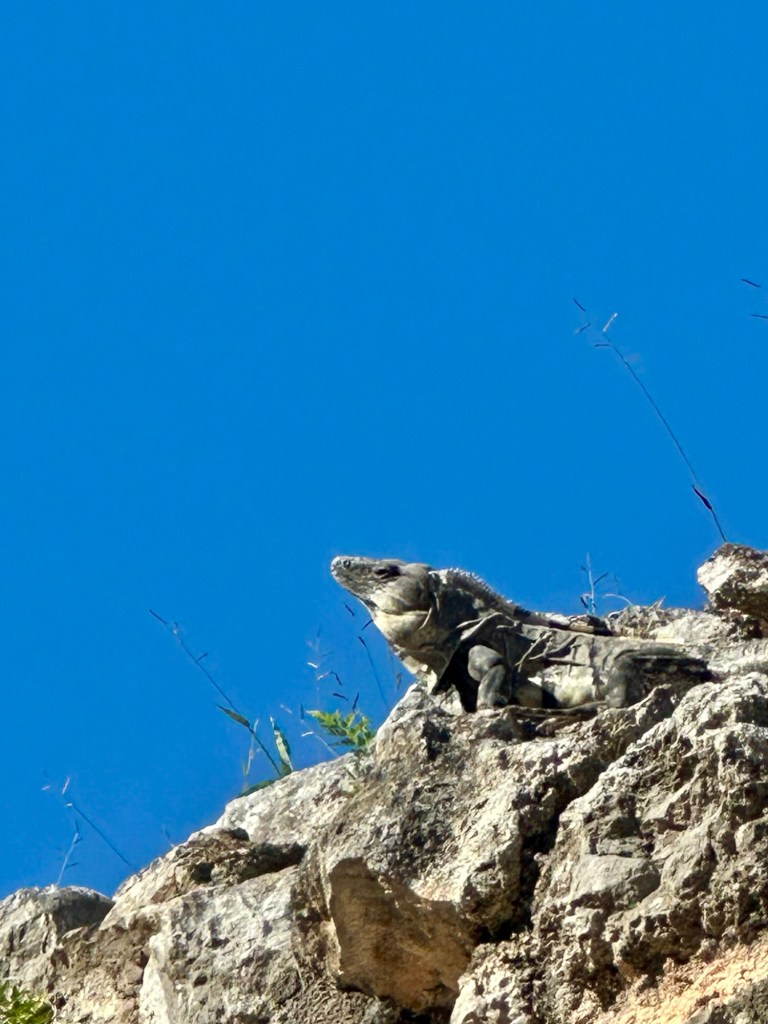
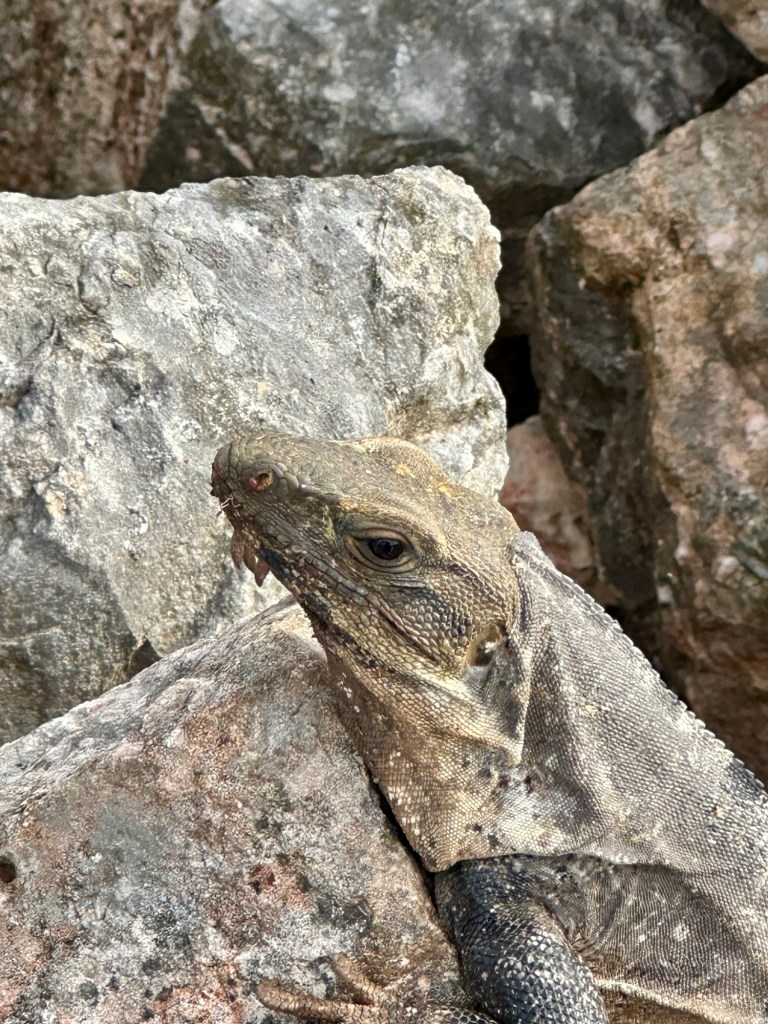
The nunnery also had resident iguanas- one a little more shy than the other:

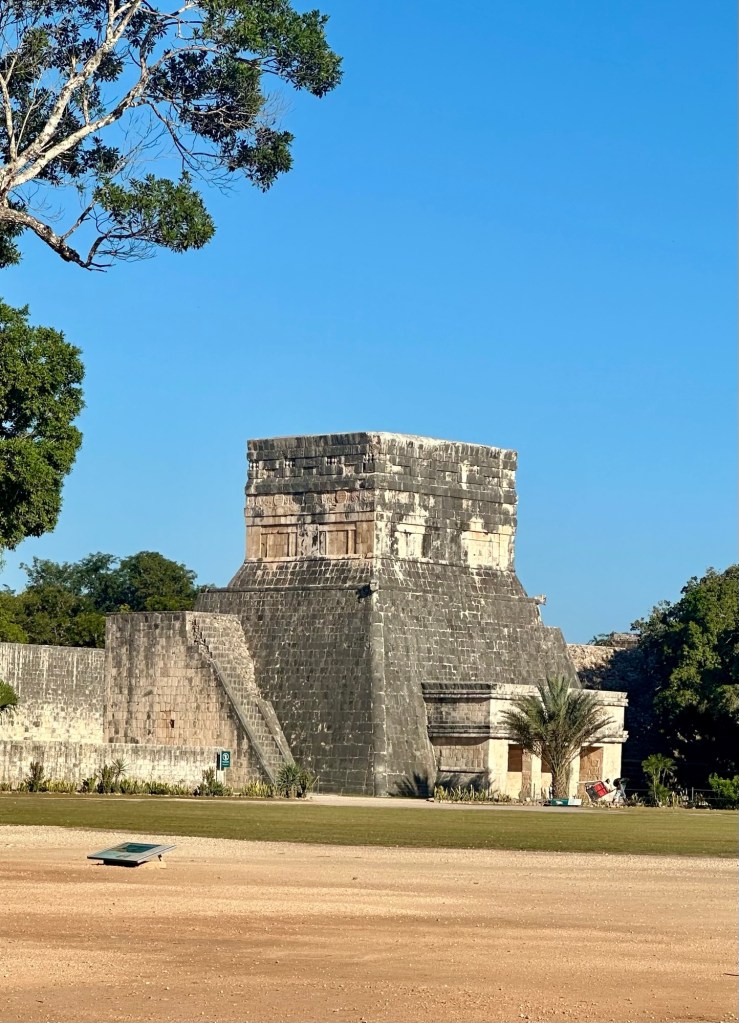
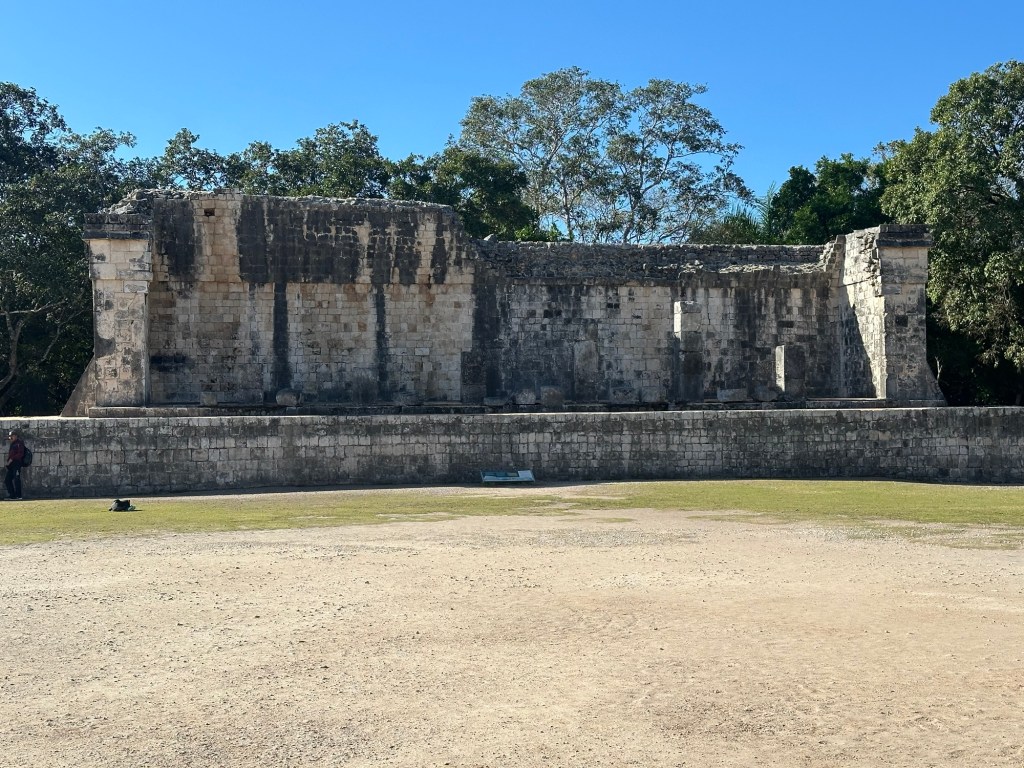
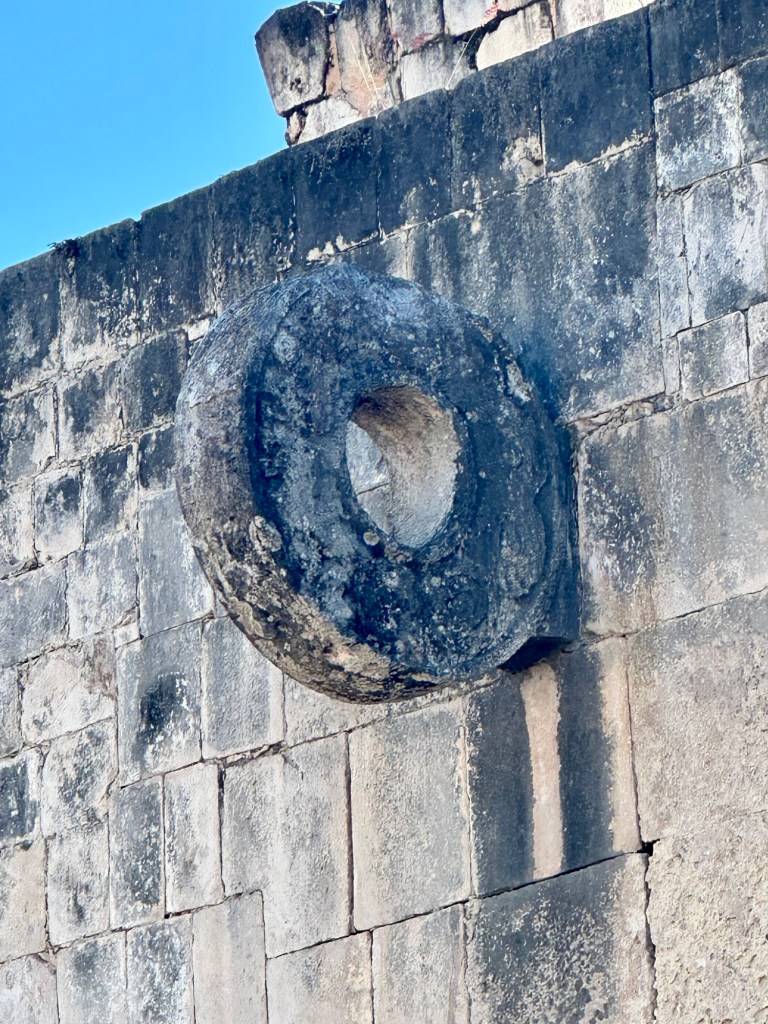
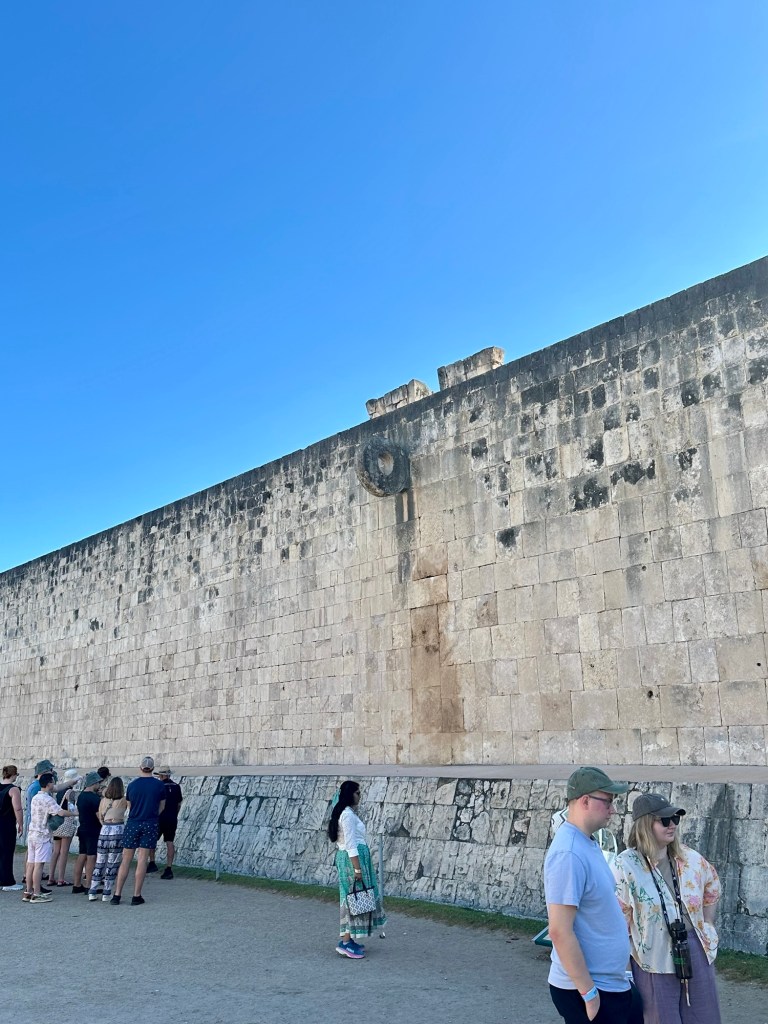
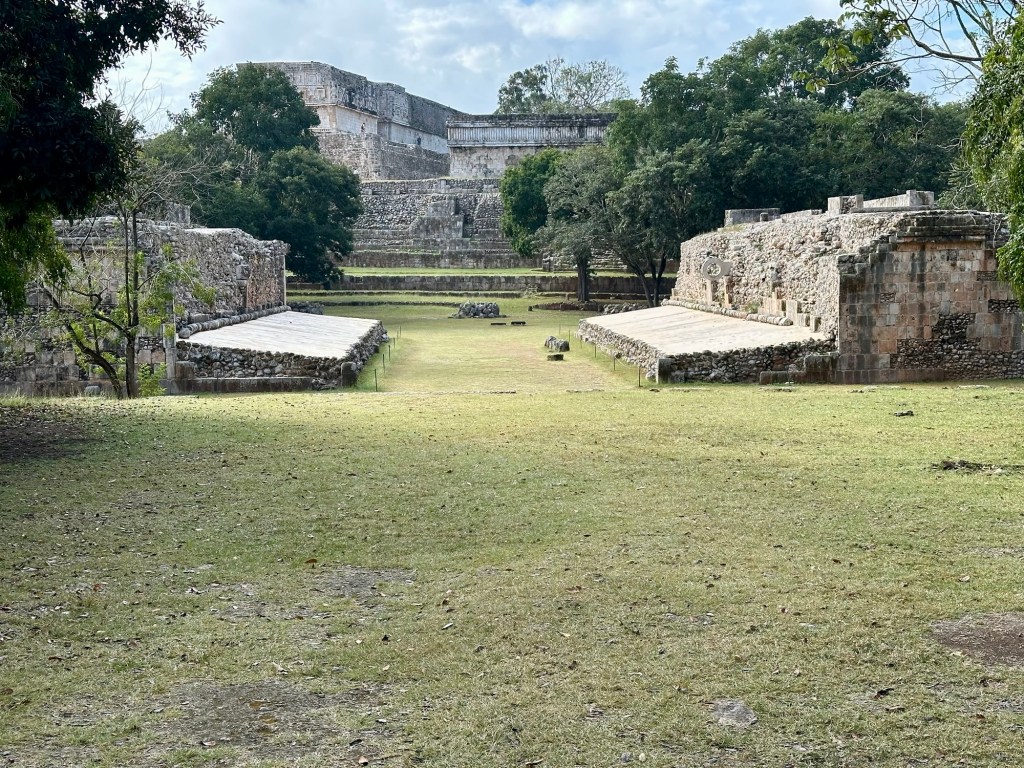
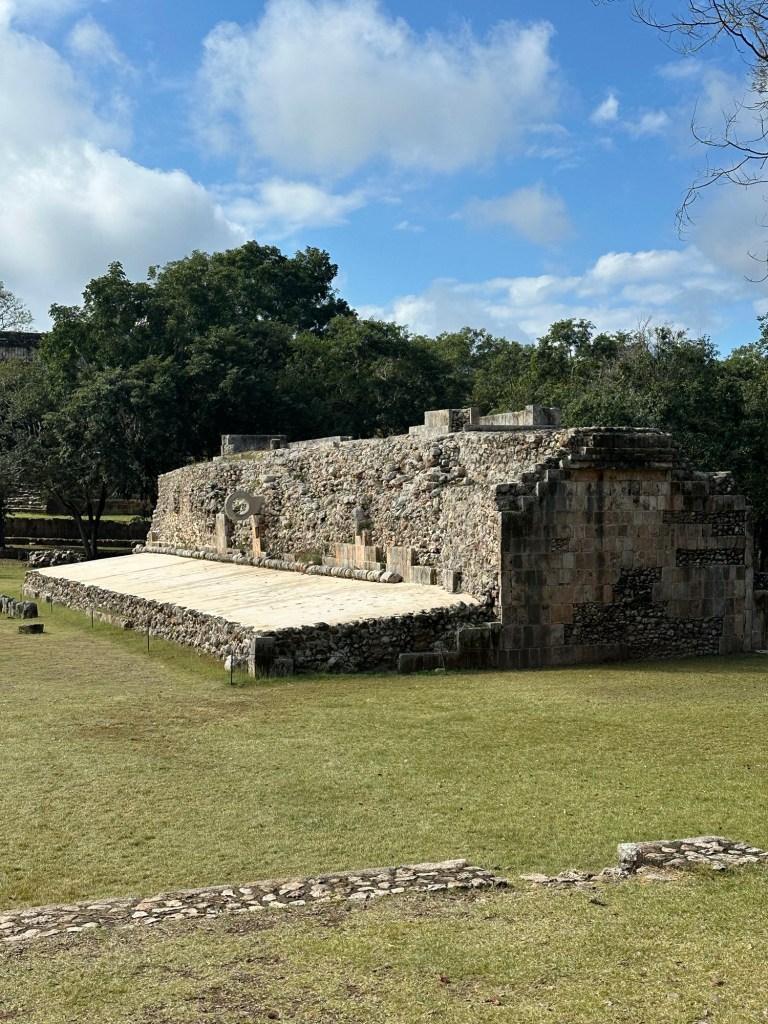
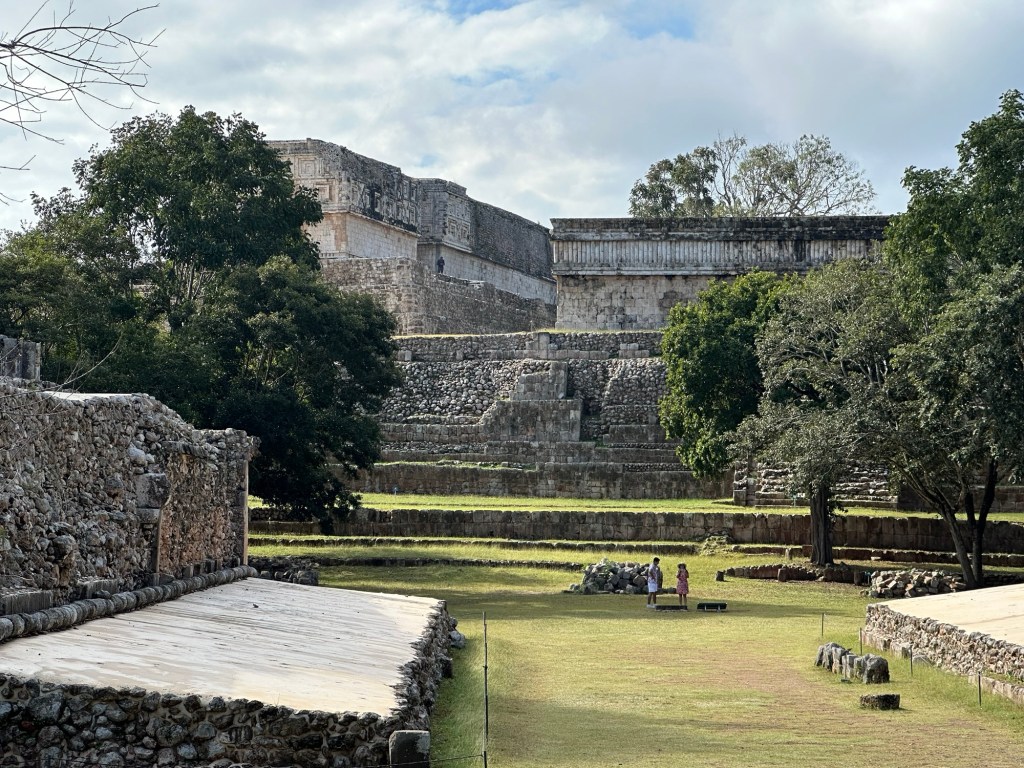
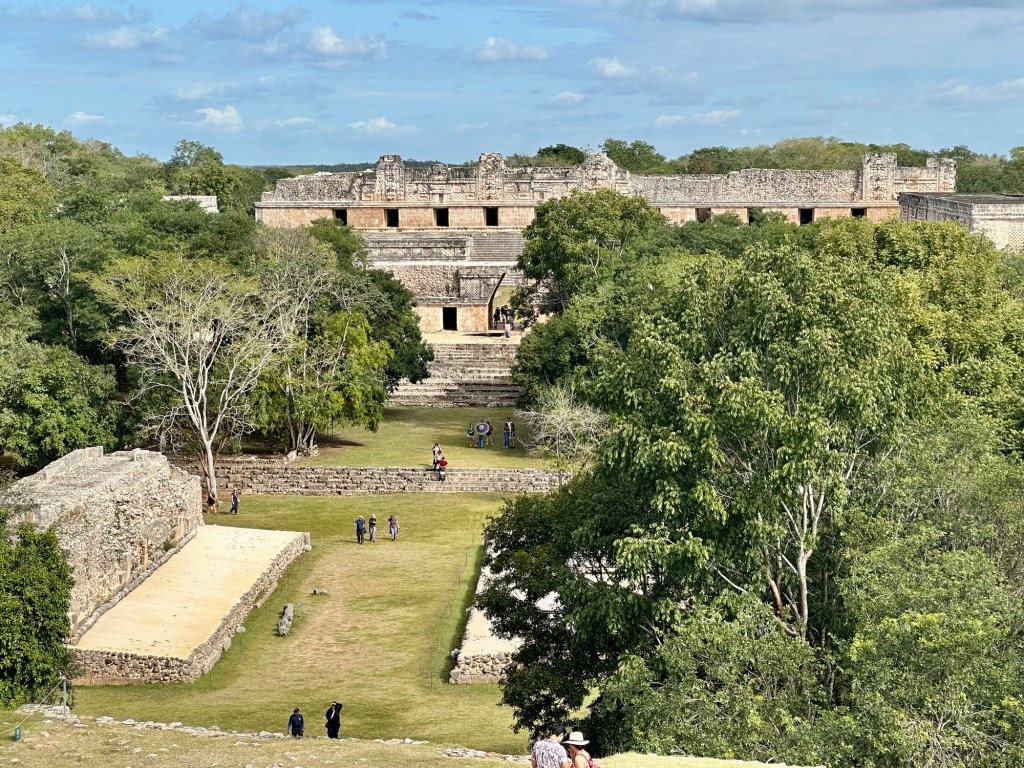
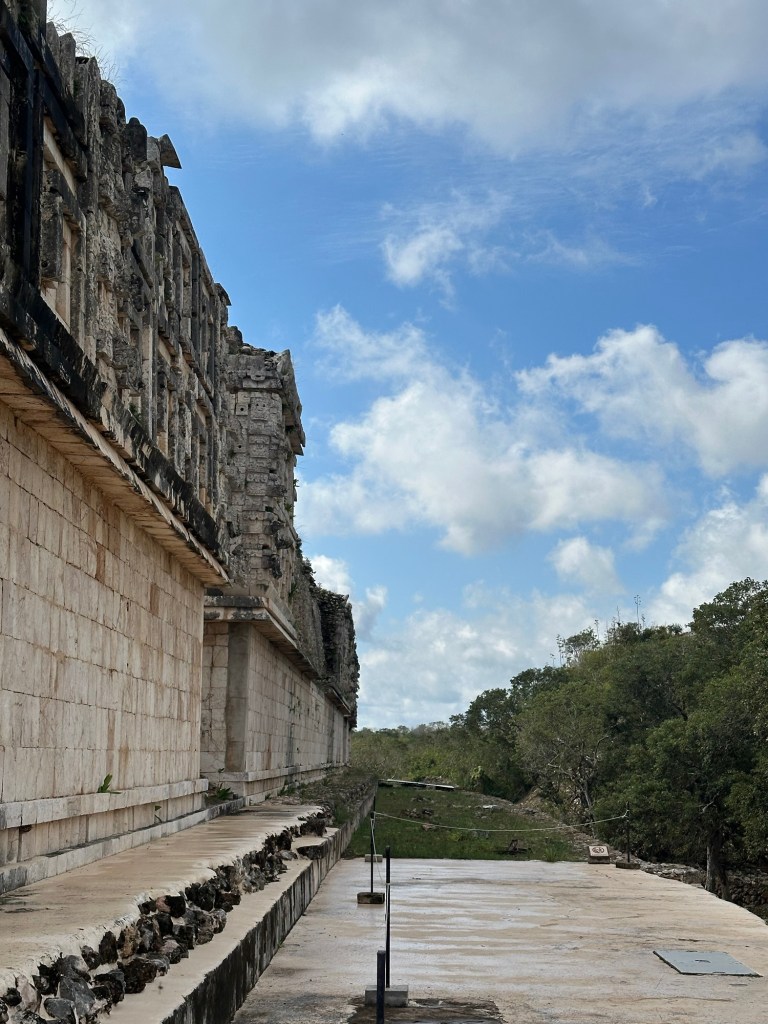
After the nunnery we went past a ‘ball court’ – another version of the Meso-American ball game we have seen at other sites with the Teotihuacans, Aztecs, Mexcicas and Zapotec cultures.

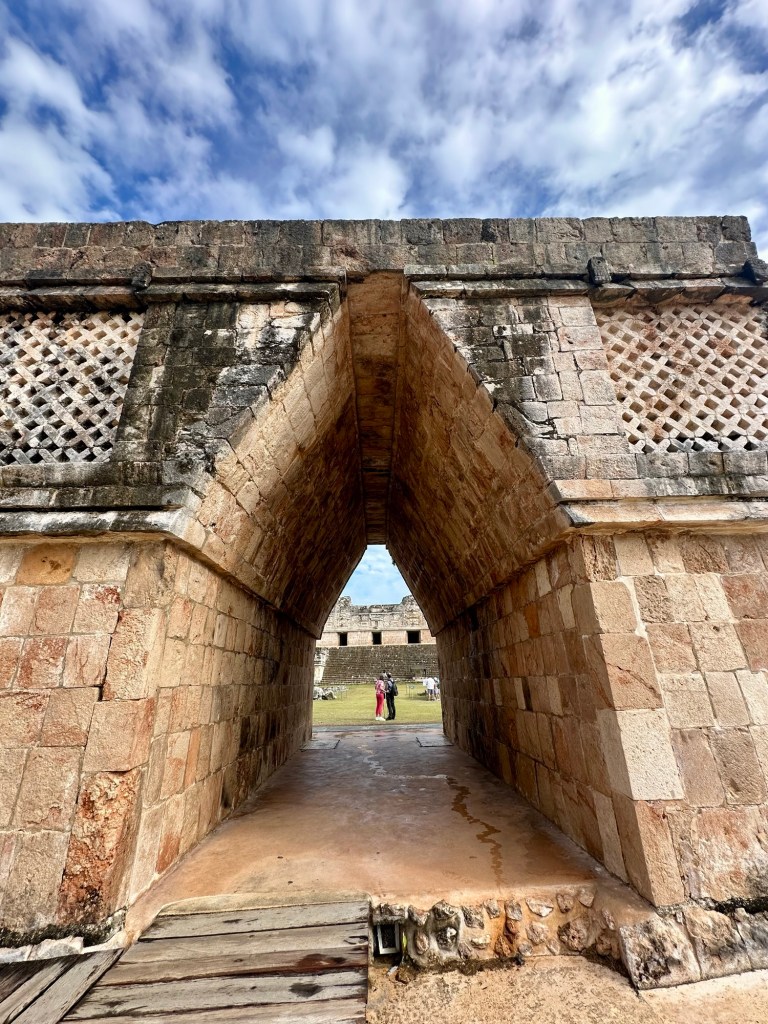
A portion of Uxmal’s outer wall… at certain times the shape of the wall and the sun casts an image of a ‘feather serpent’ on the adjacent ground

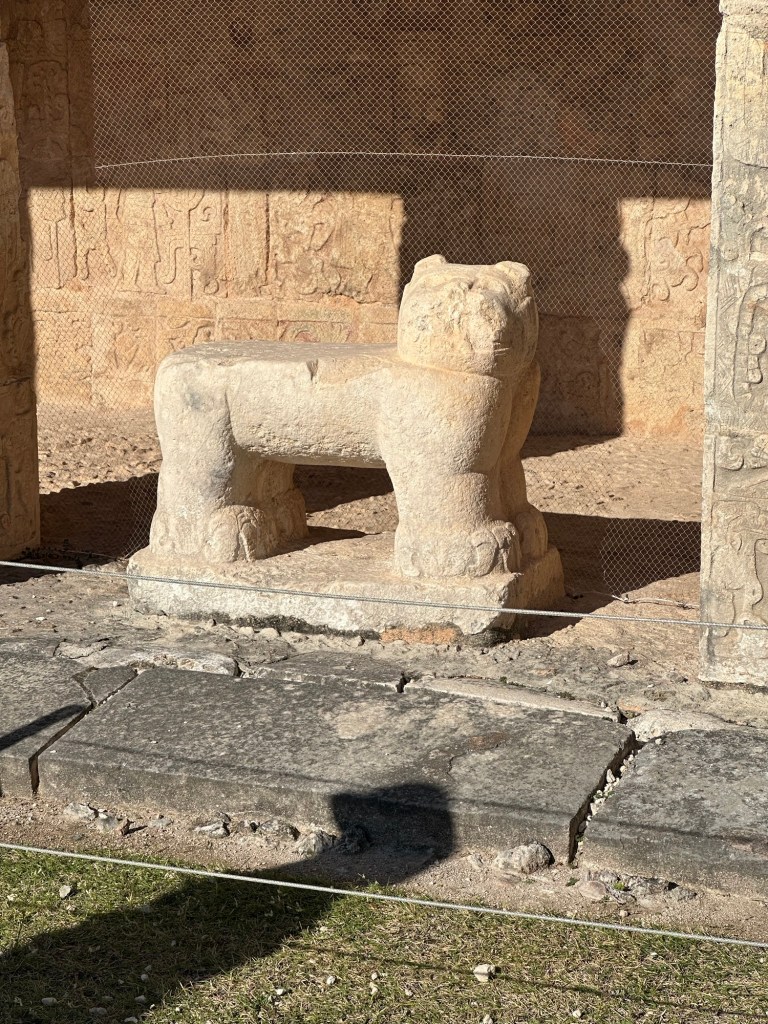
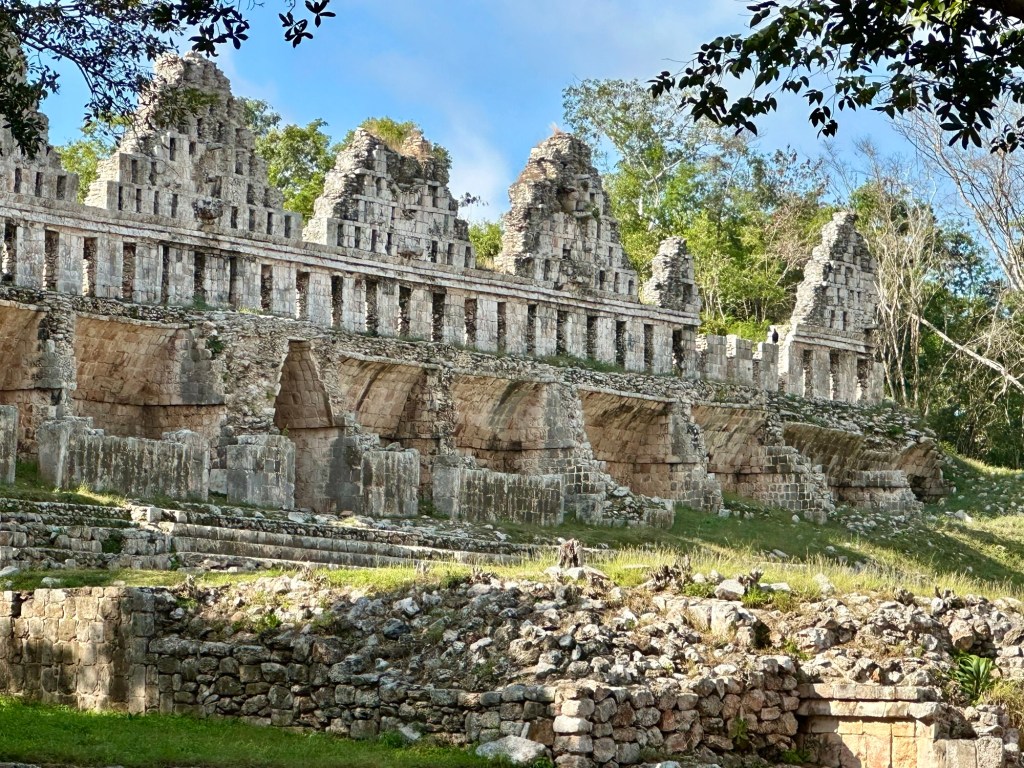
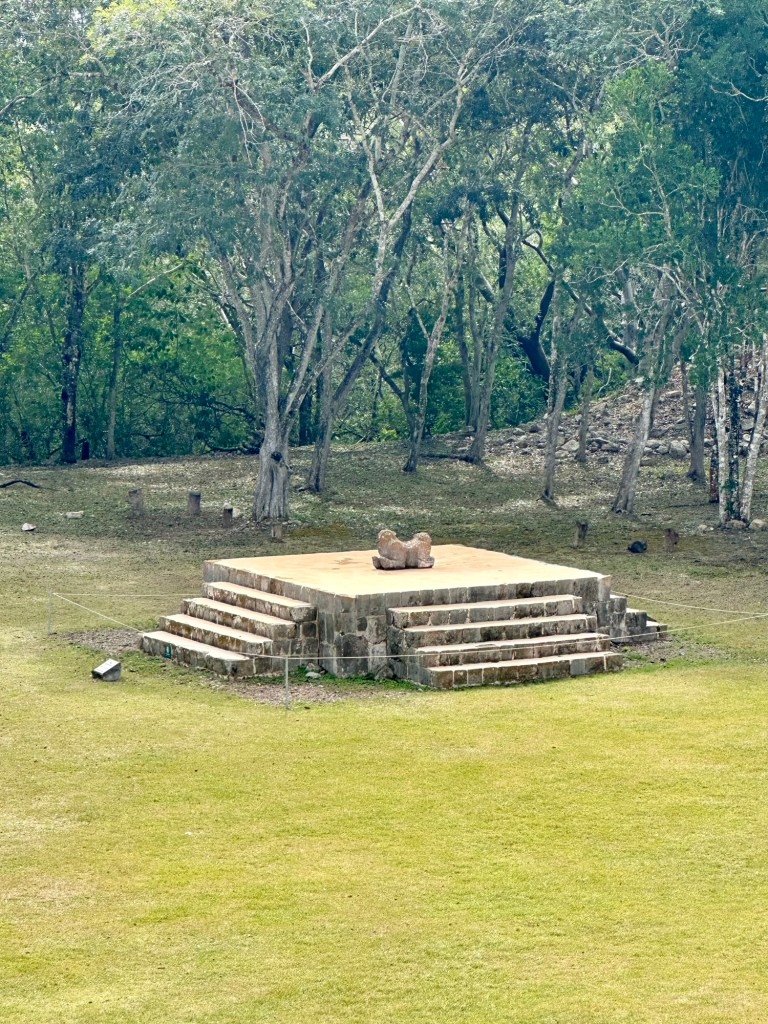
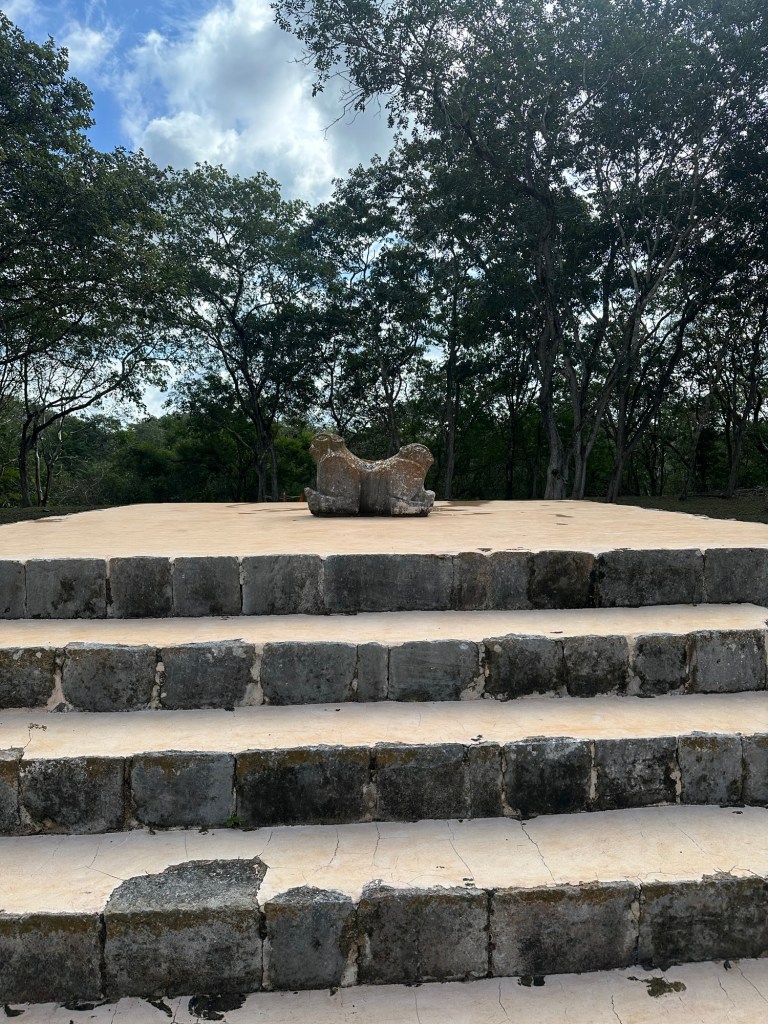
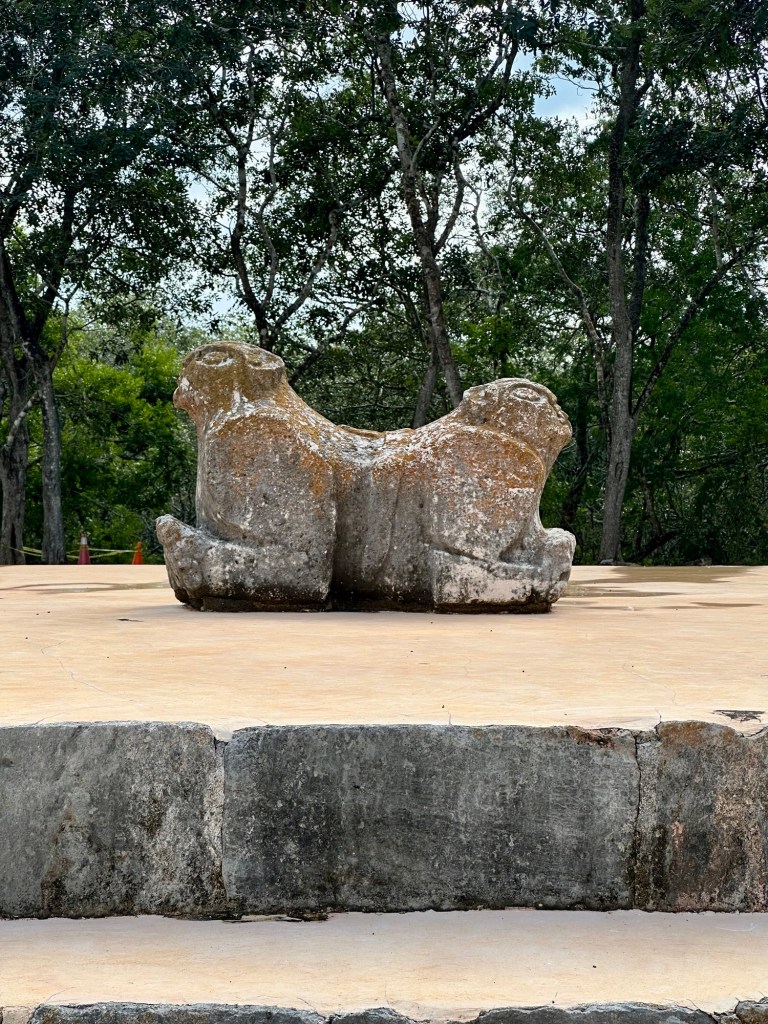
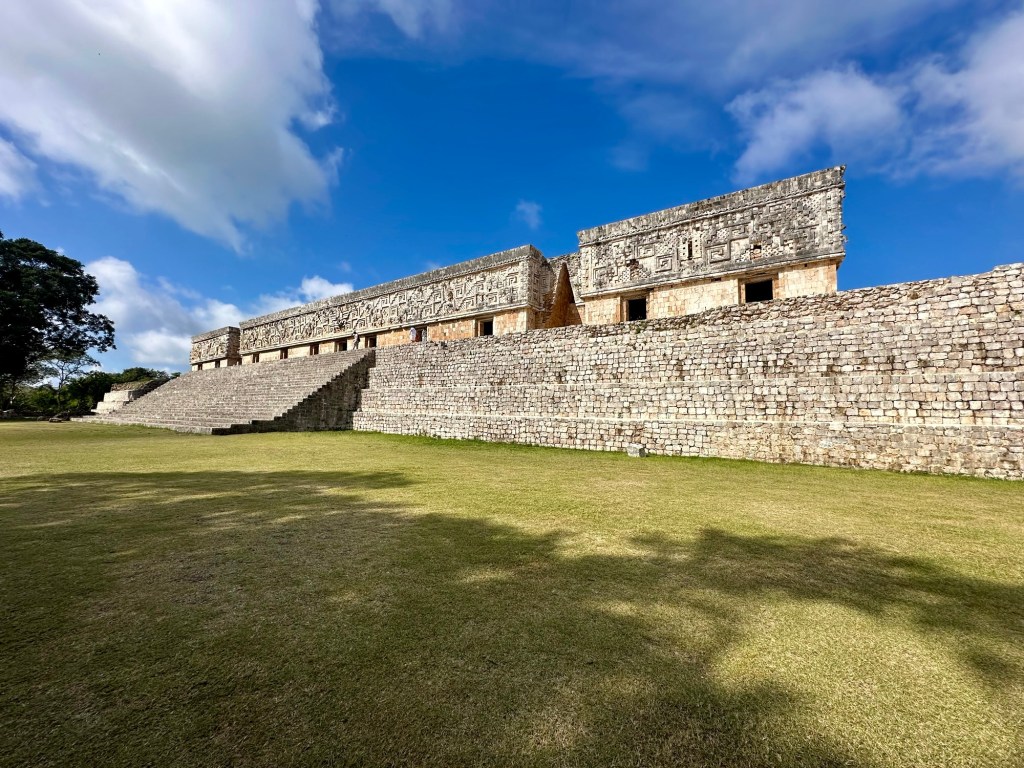
It was then onto the area around the ‘Governor’s Palace’ . This area also contained the partially excavated / restored remains of the ‘Great Pyramid’ and, adjacent, the ‘double headed Jaguar throne’ where the ruler would sit and adjudicate on matters.

The Great Pyramid

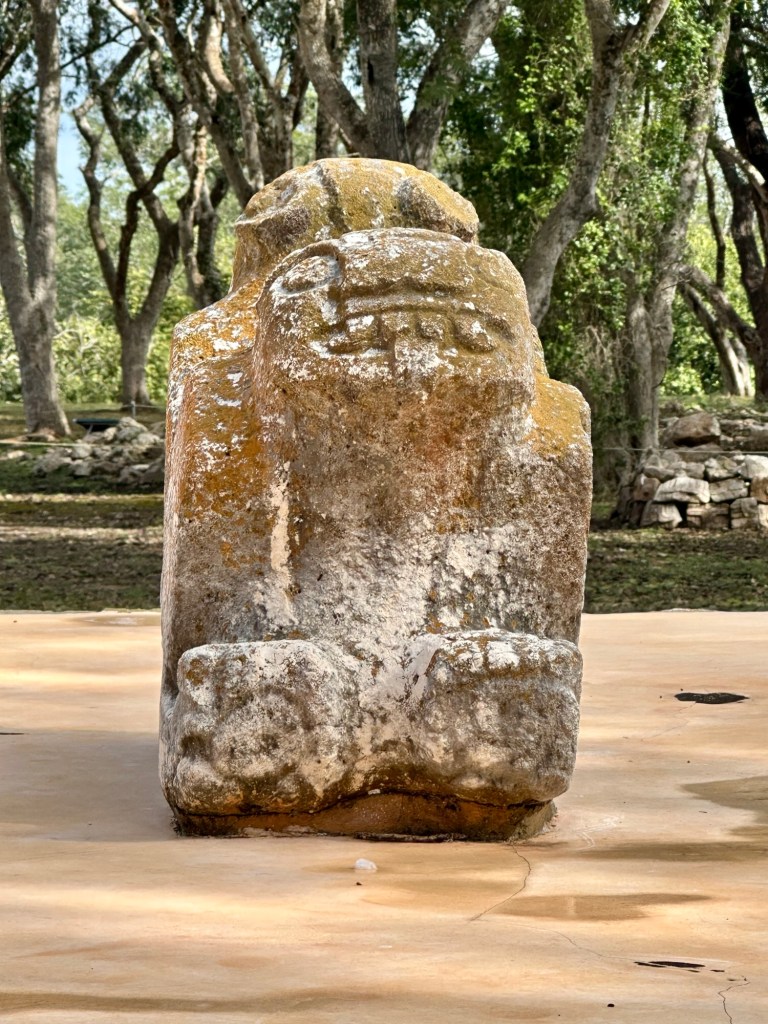
The Double Headed Jaguar Throne:

The Governor’s palace

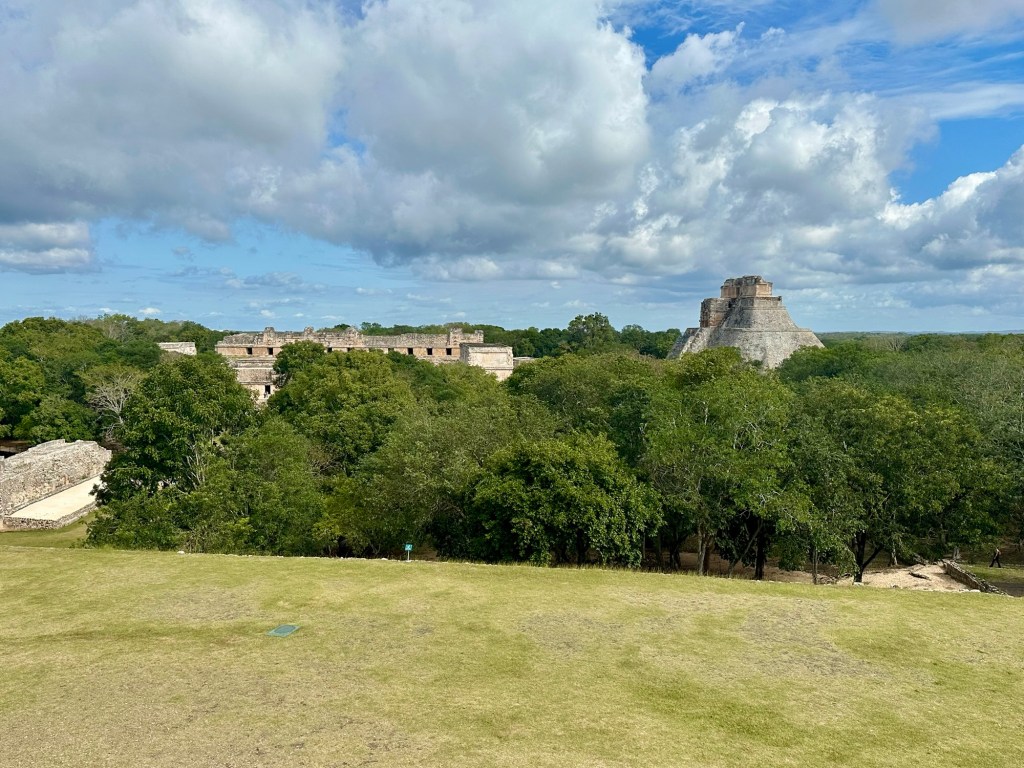
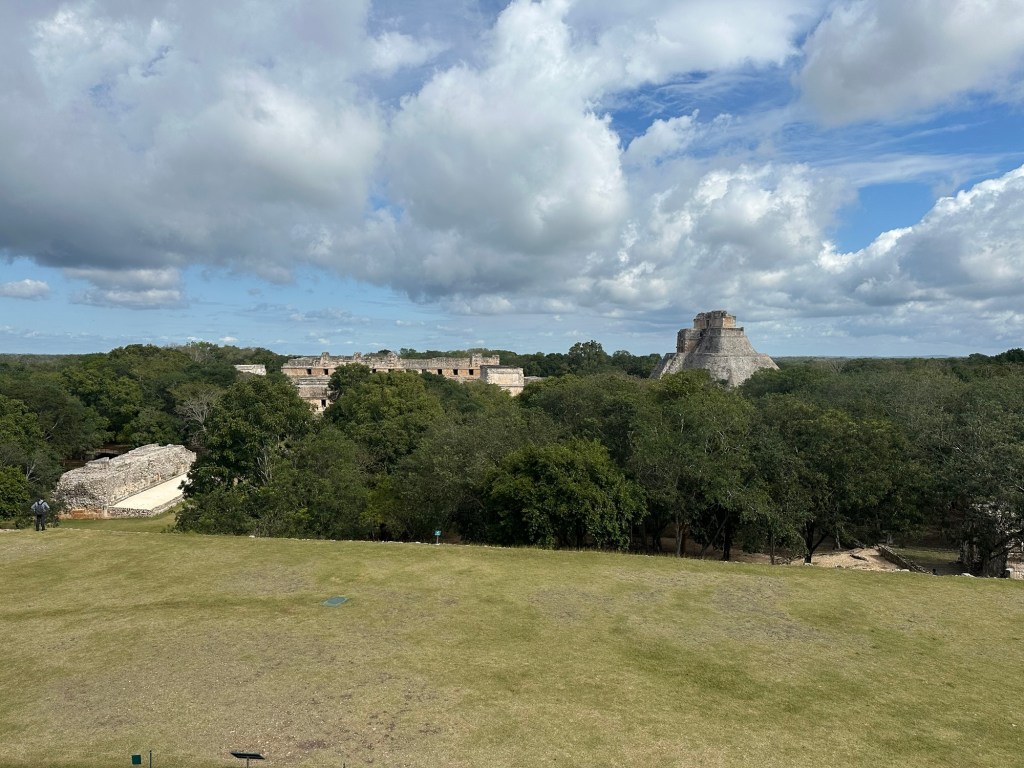
Some views from atop the first platform of the Governor’s palace:

By now we had exhausted the interest of our guide who had wandered off in search of other prey… er … tourists. It was also getting hot and sticky and the proverbial bus loads of tourists were now pouring into the site. We stepped out the front door and Miguel was there with air-conditioned goodness to whisk us to Mérida.

The drive to Mérida took an uneventful hour or so. Turns out the scenery in the Yucatan isn’t much chop – the place is almost entirely flat , a metre or two above sea level. It is essentially a large limestone plain covered with a lot of scrub. In parts it is reminiscent of driving along the coastal plain north of Maputo, Mozambique- with fewer waterways.

Mérida

Mérida is the state capital of Yucatan state and apparently has a population of near 1.8 million people. We stayed in the central district, an older and more ‘historic’ area , so we didn’t get to meet all 1.8 million of the locals.

Mérida downtown was pleasant. But we didn’t do a great deal other than some gentle strolling around and sampling some Yucatan cuisine, as Ness was feeling a little crook – having caught whatever bug Mark had in Oaxaca.

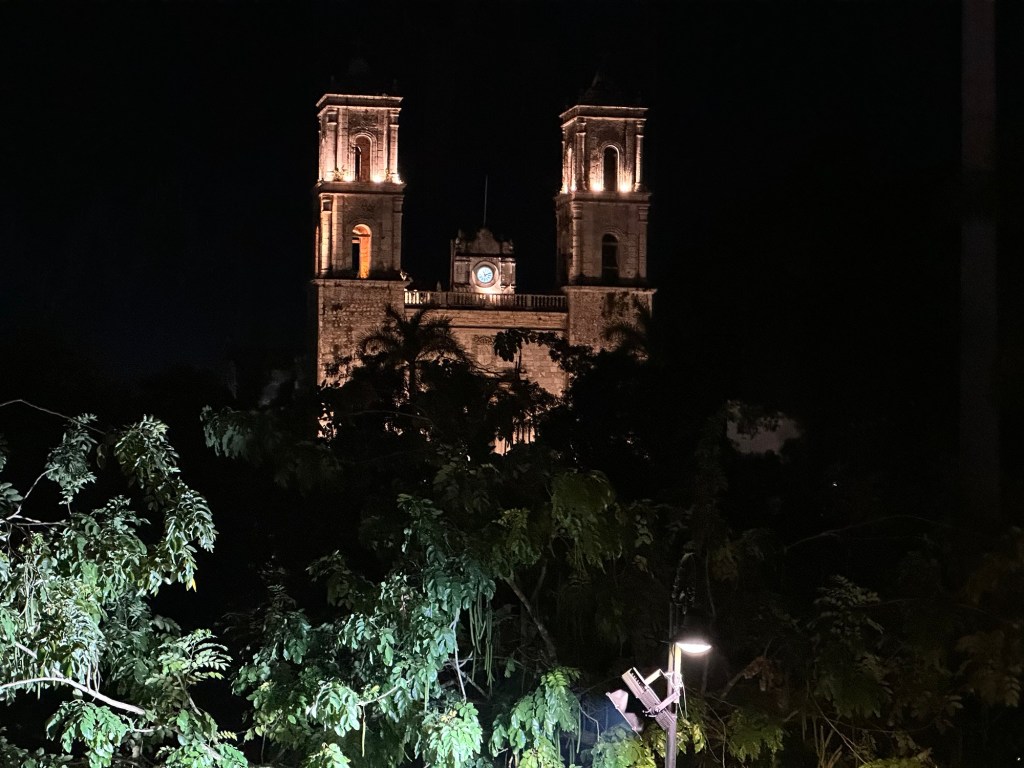
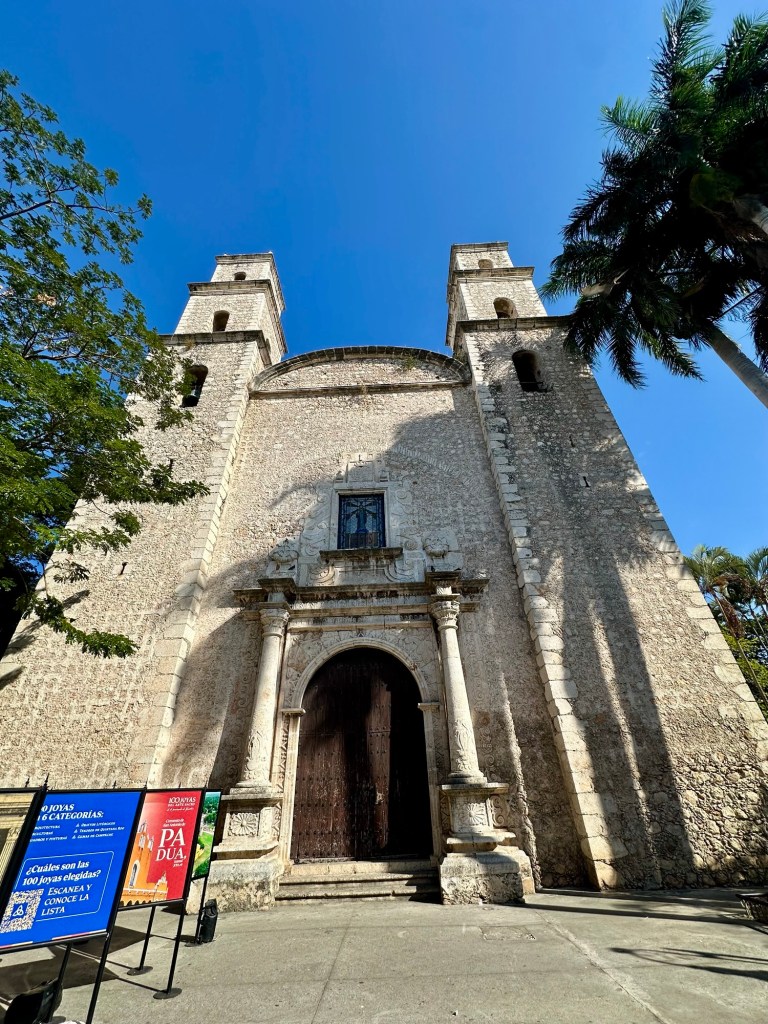
The obligatory cathedral in Merida
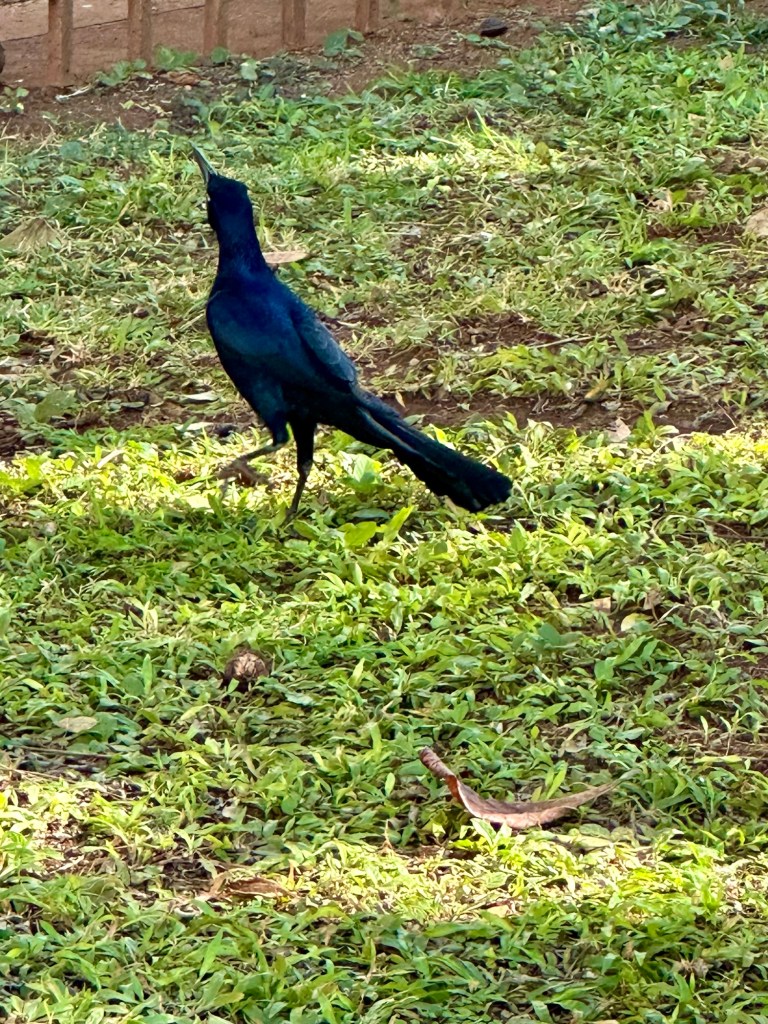
A local bird called the ‘Grackle’, the male ( shown here) sometimes makes a call that sounds like a late 1990’s modem trying to connect

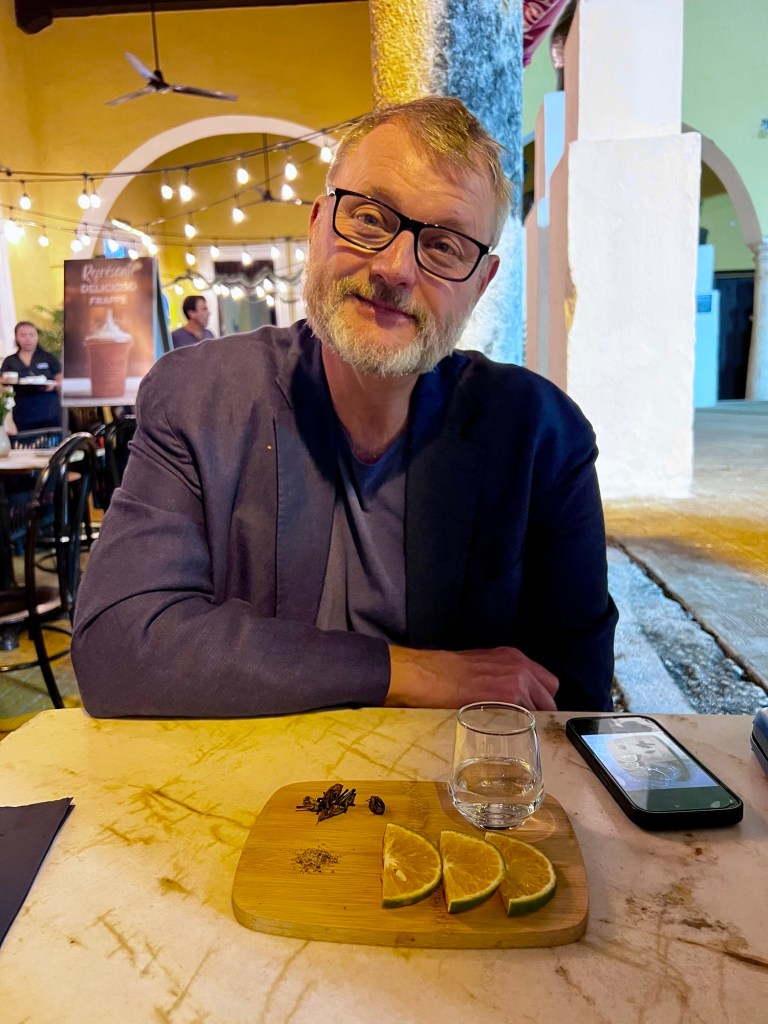
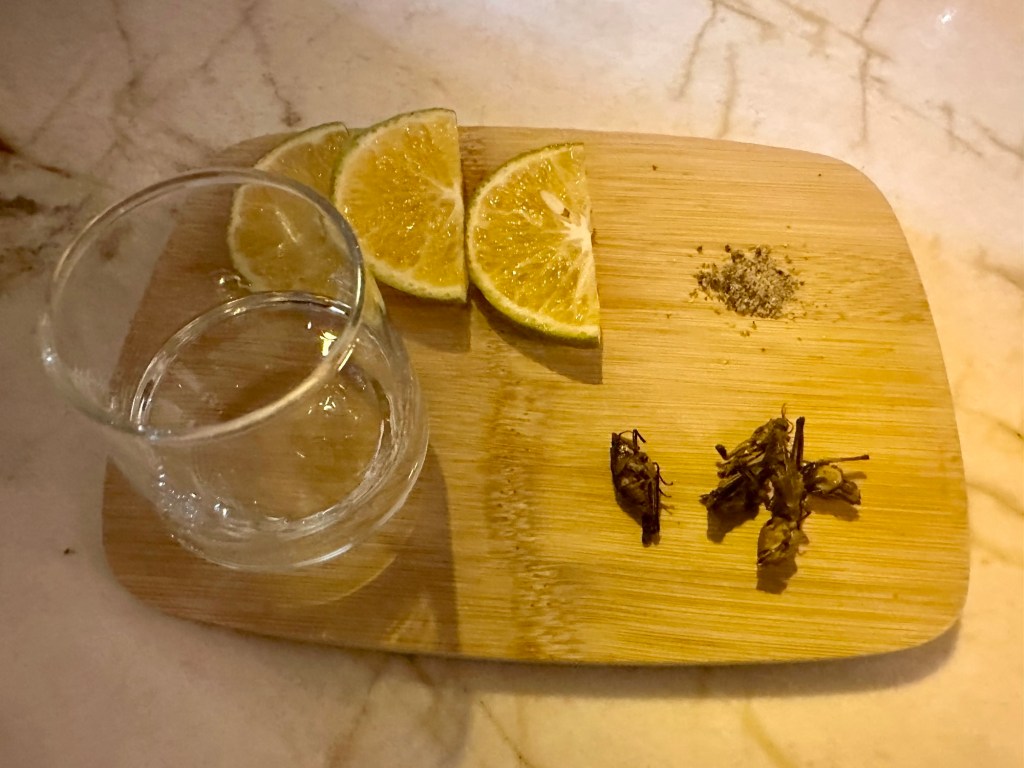
At dinner on Monday night we had some Mezcal with the local “trimmings” – including Chapulines. That’s grasshoppers to the rest of us:

Izamel

A gentle start on Tuesday morning as the drive from Mérida to Izamel only takes about an hour or so.

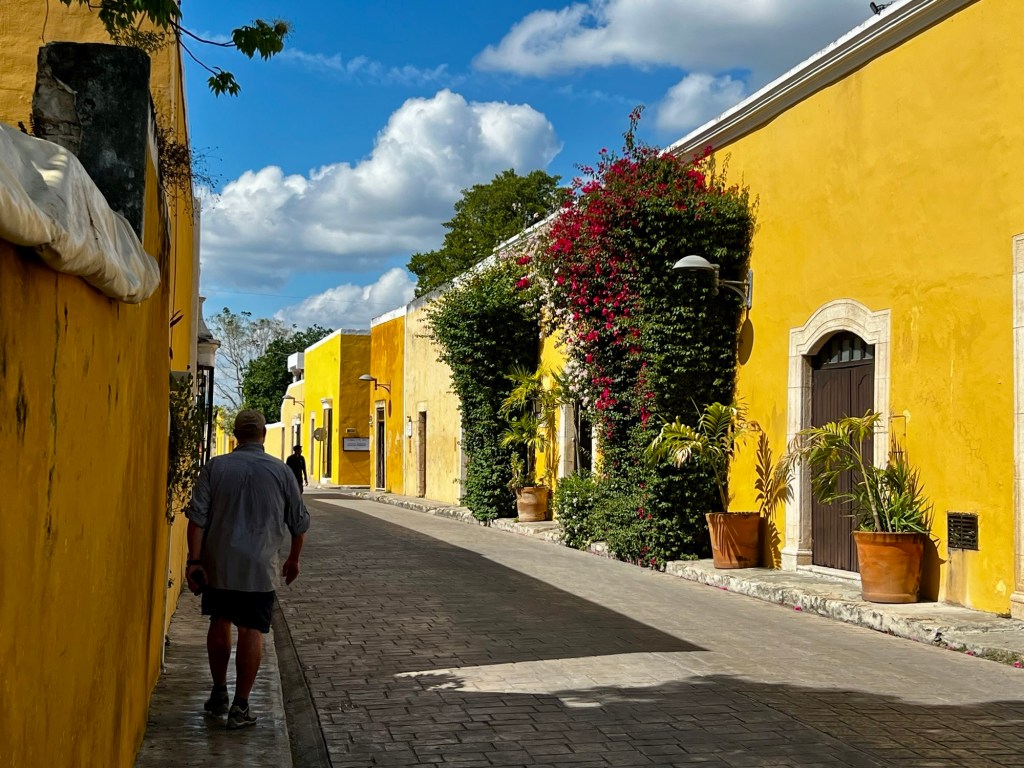
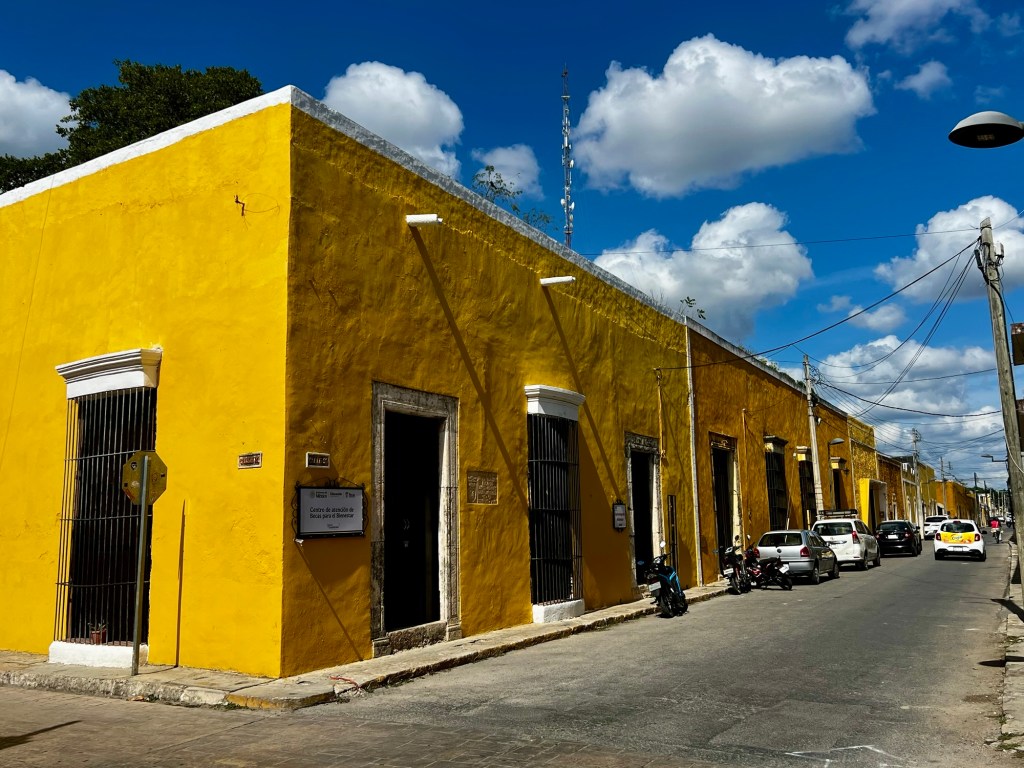
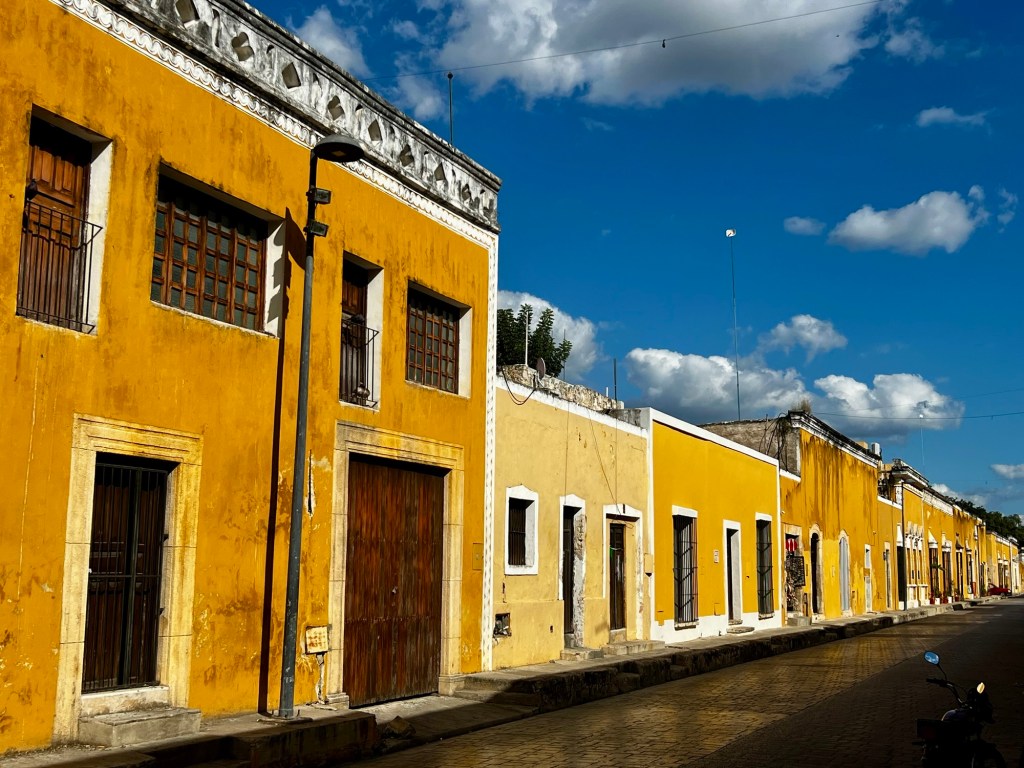
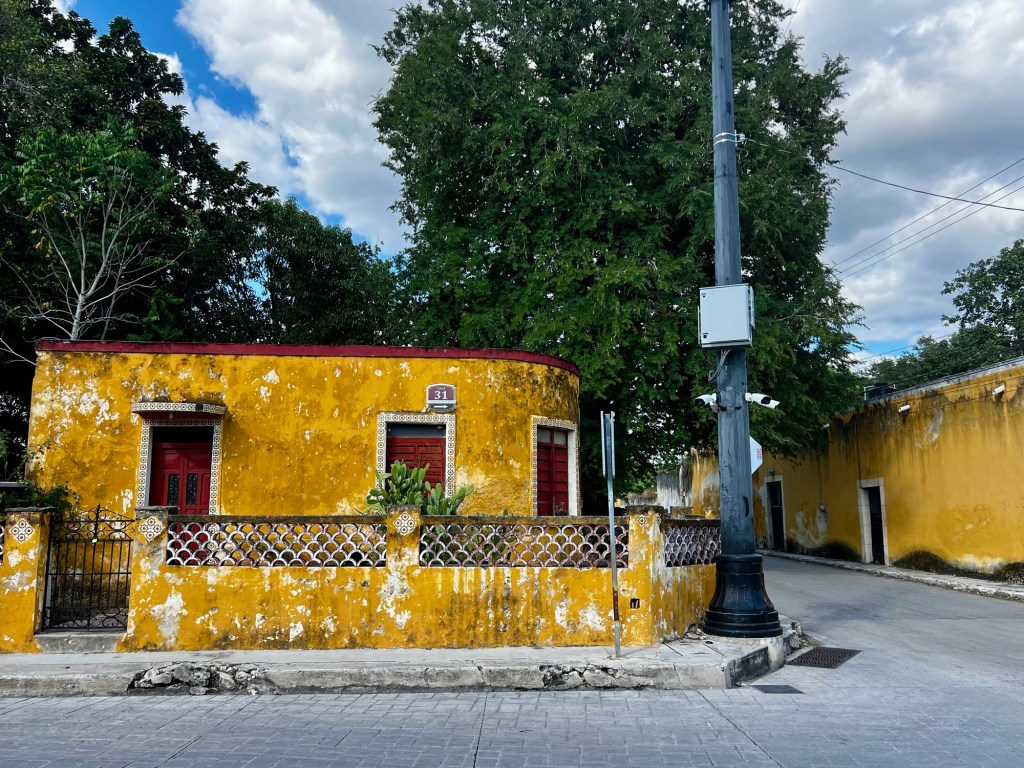
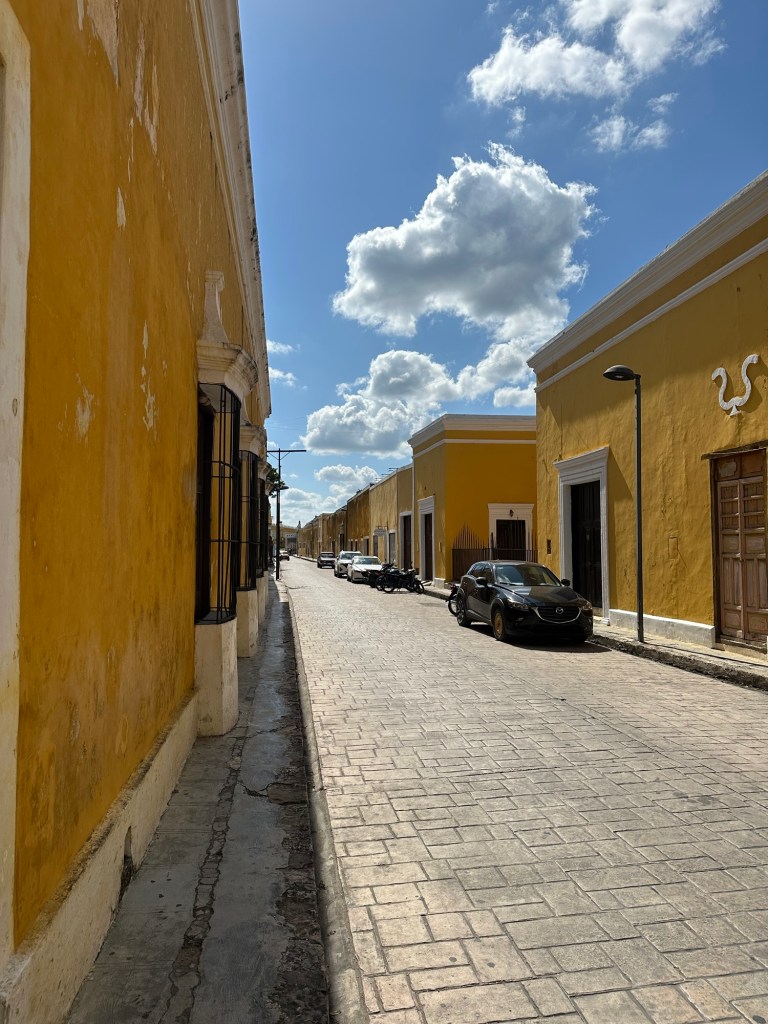
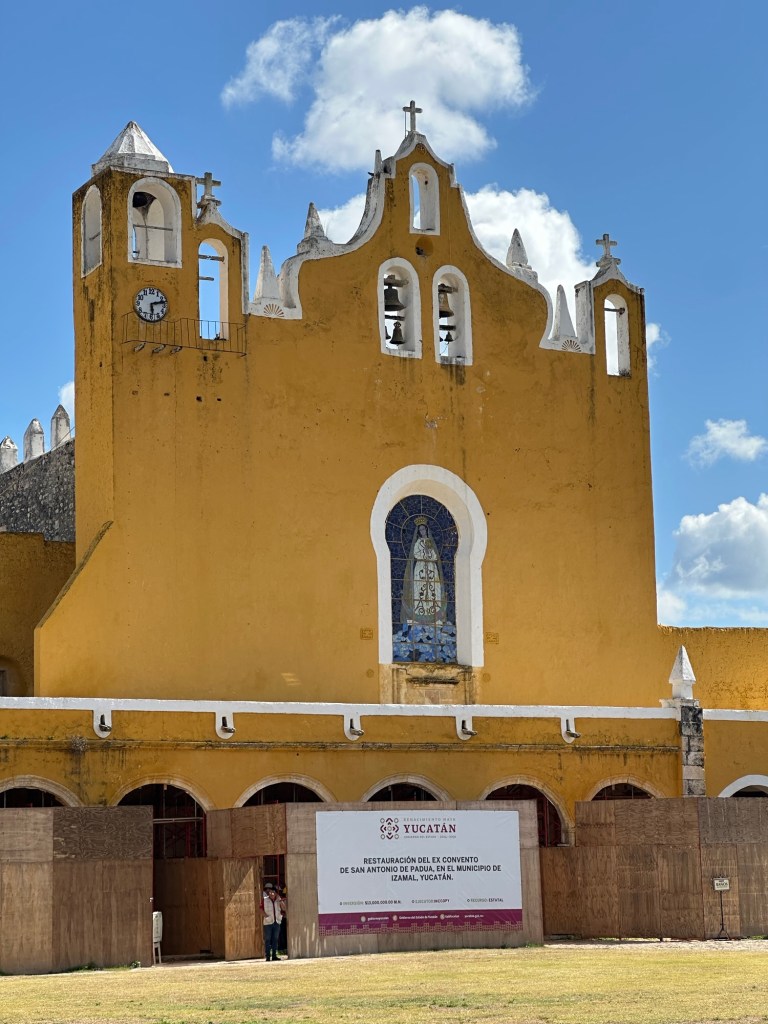
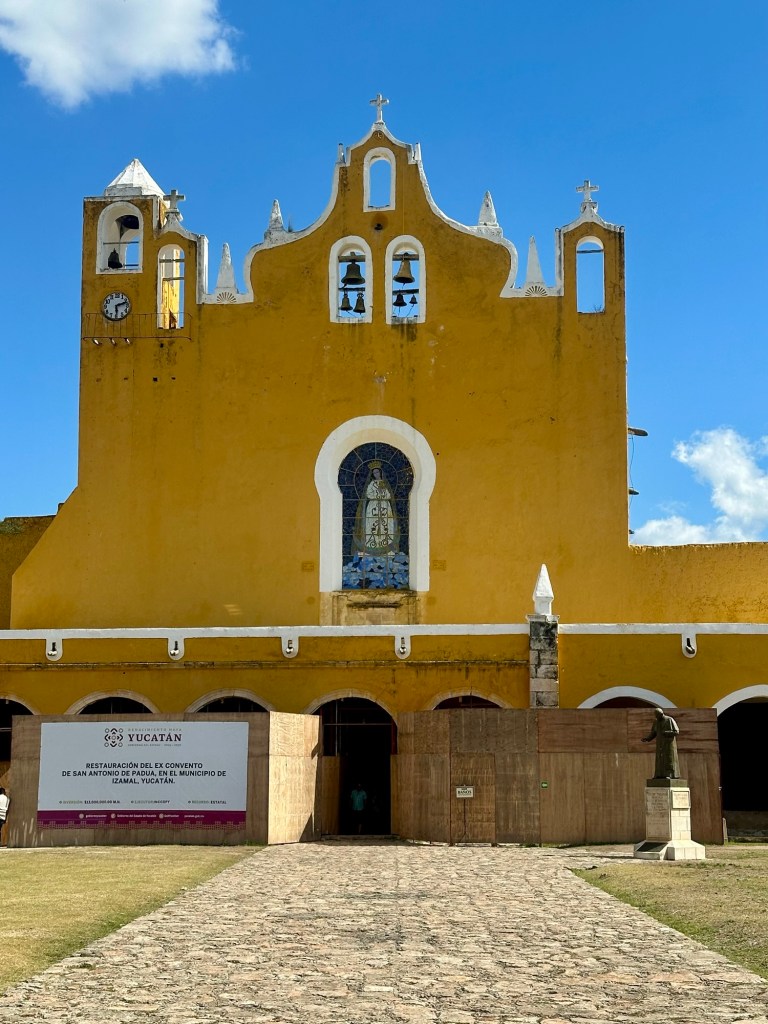
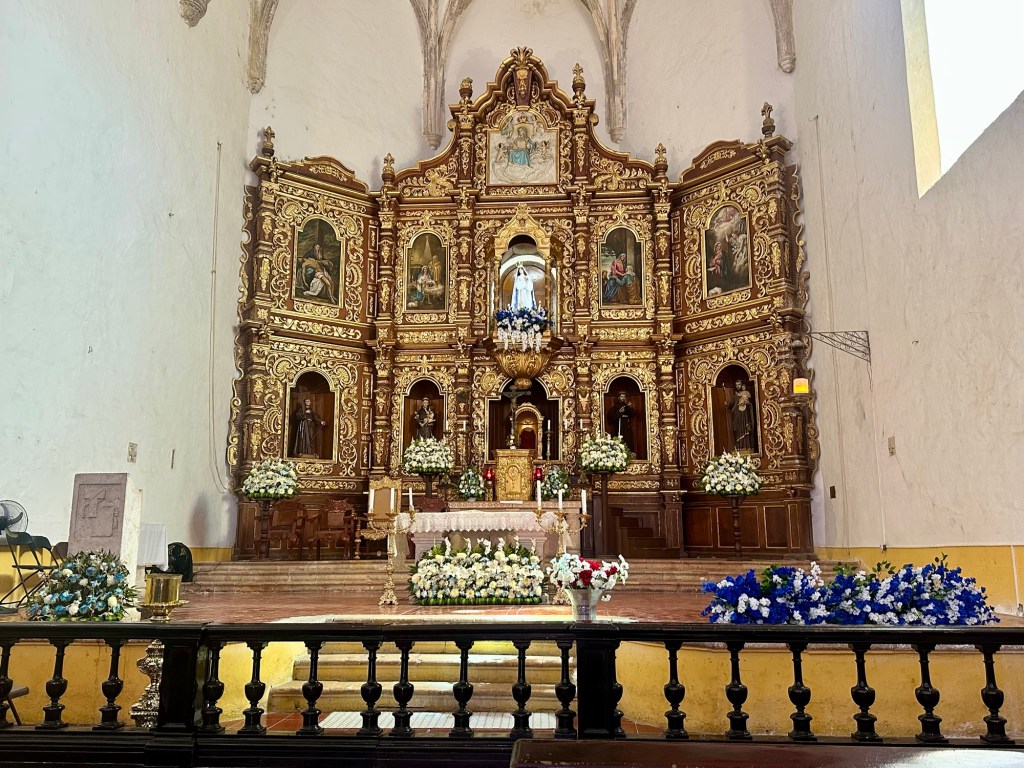
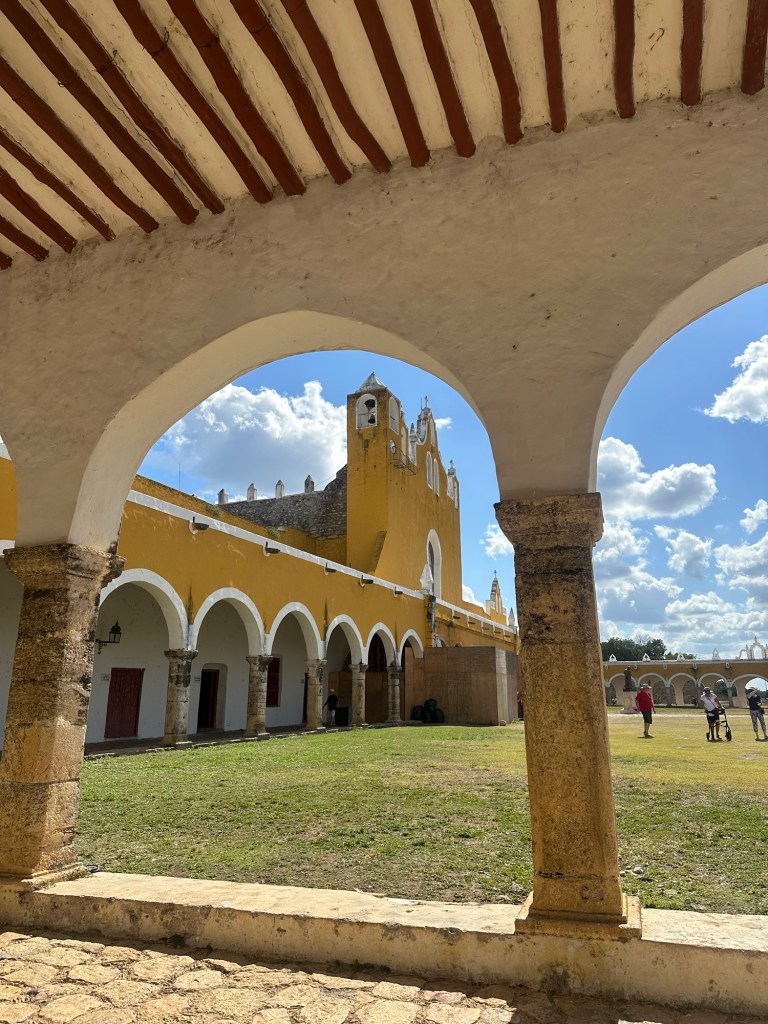
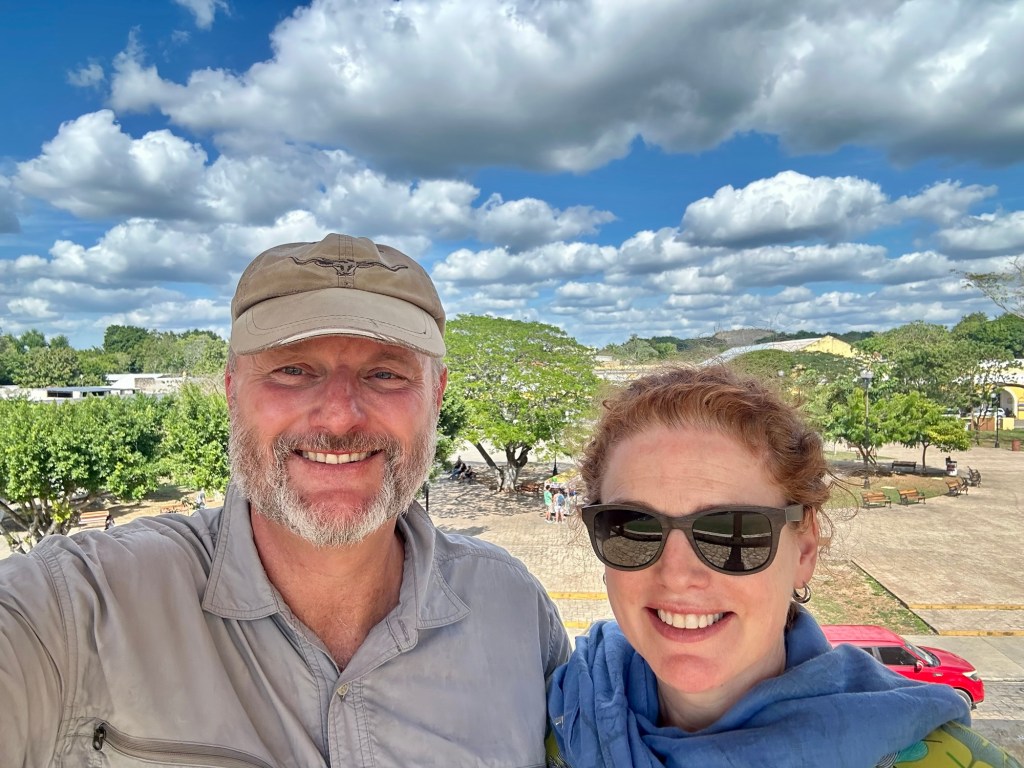
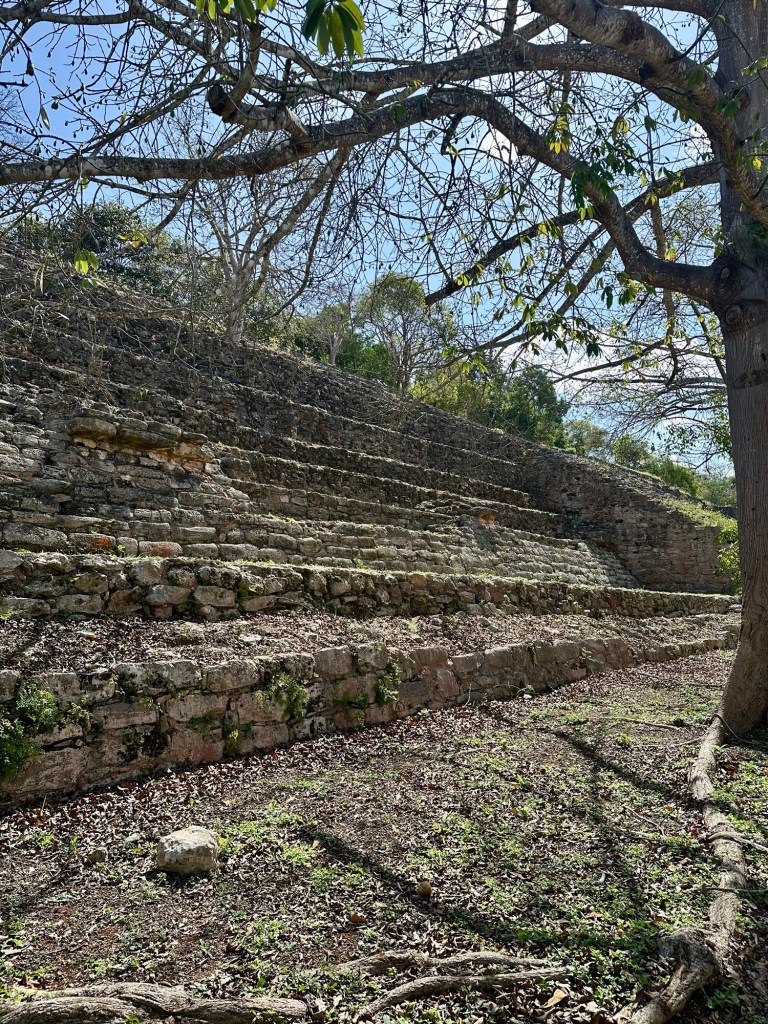
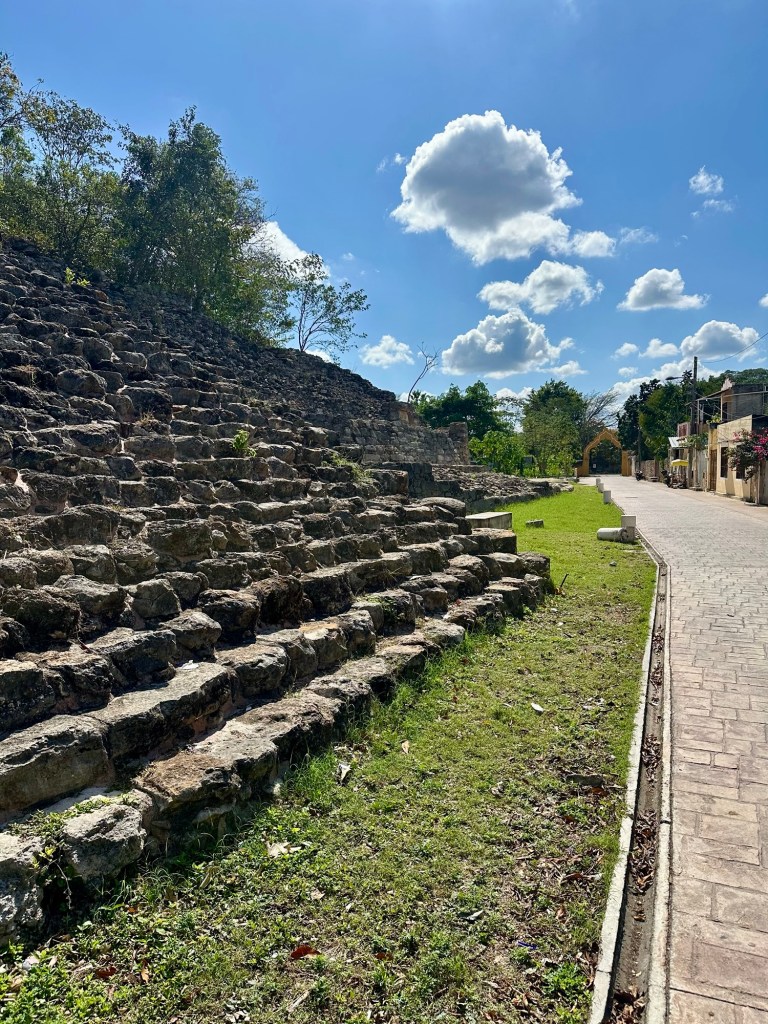
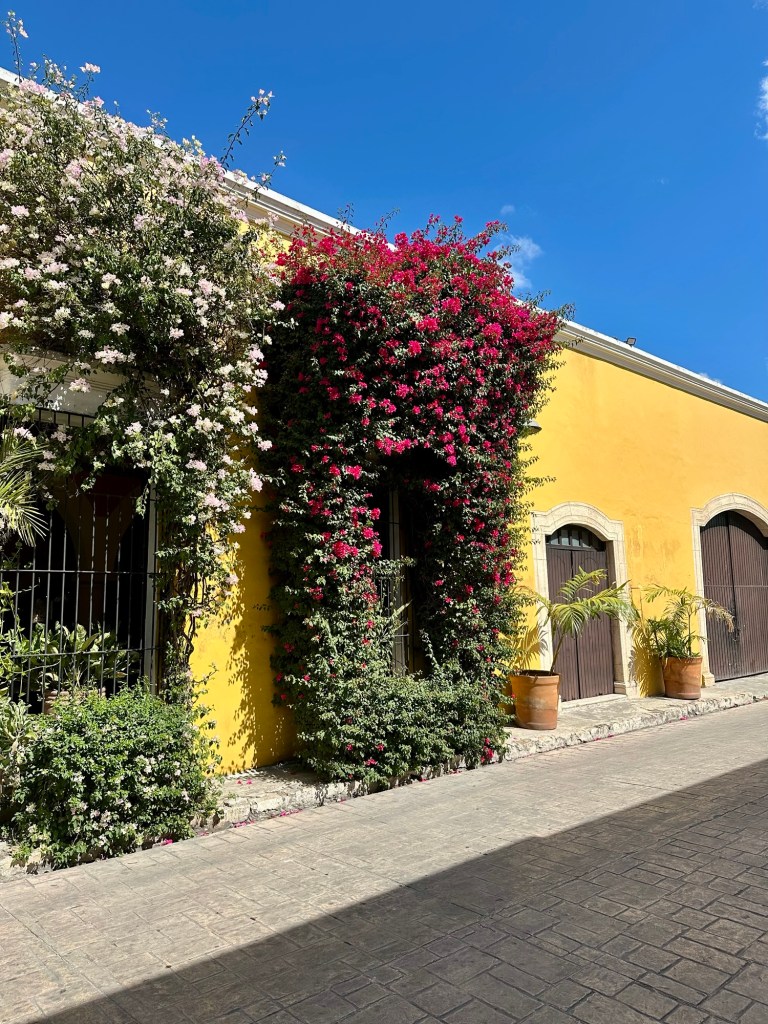
Izamel is also known as La Ciuadad Amarilla, or ‘The yellow city’ . This is an accurate name , as it seems like at least 95 % of the buildings are painted yellow.

Located to the east of Merida, it is more of a large country town than a city.

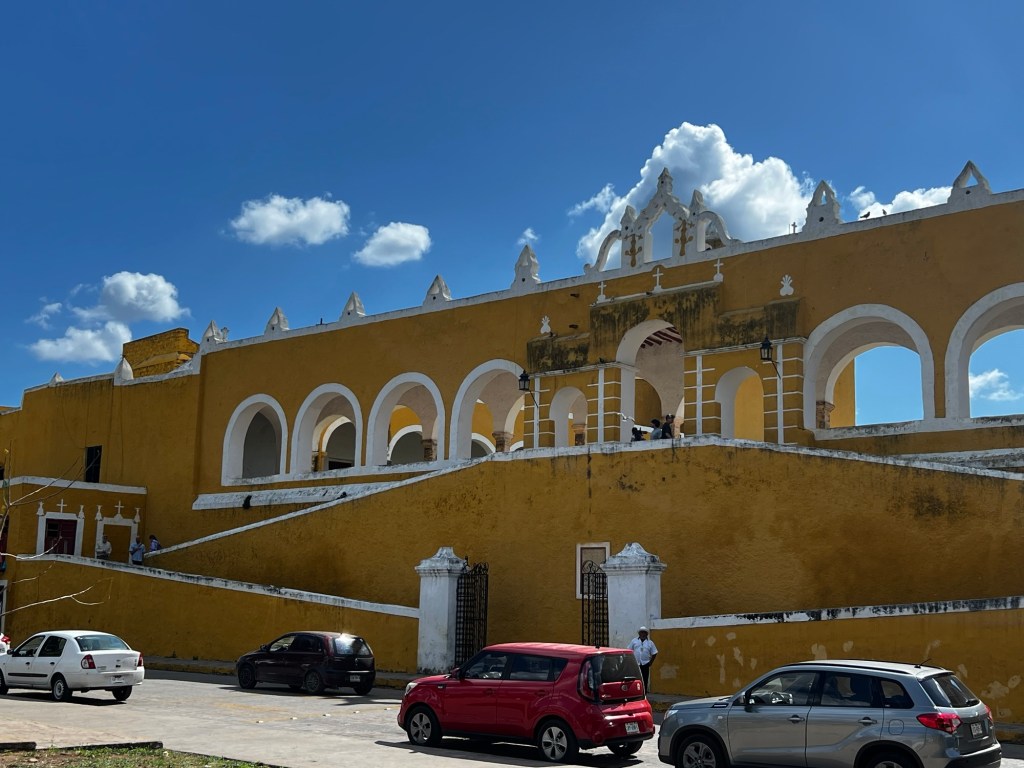
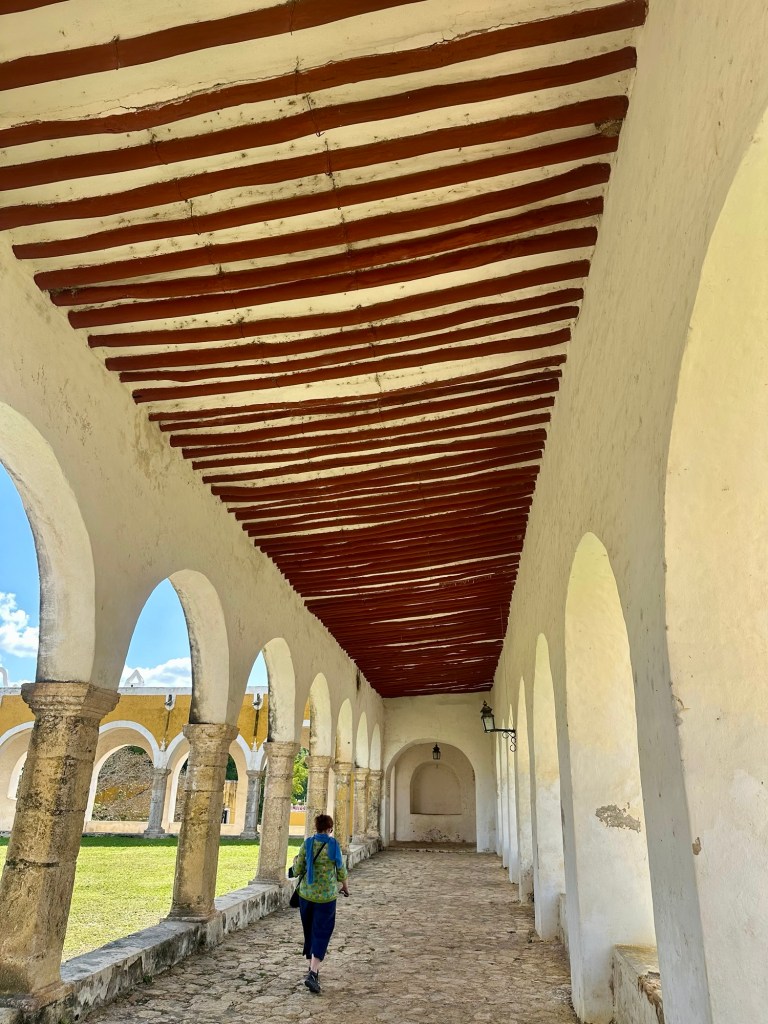
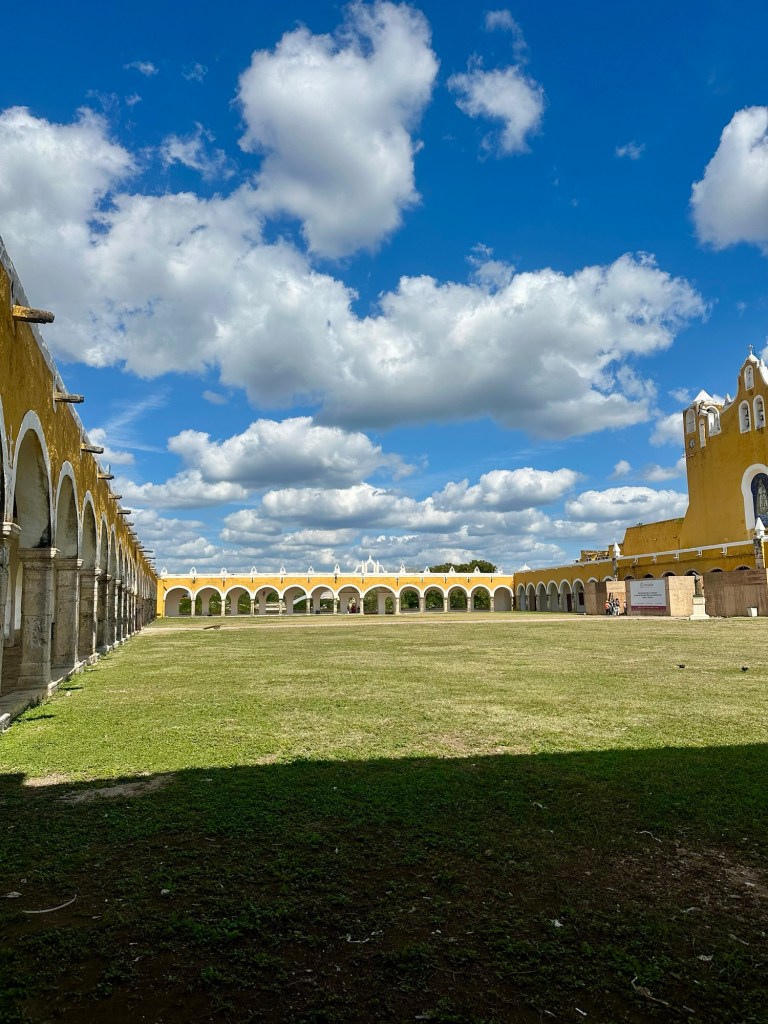
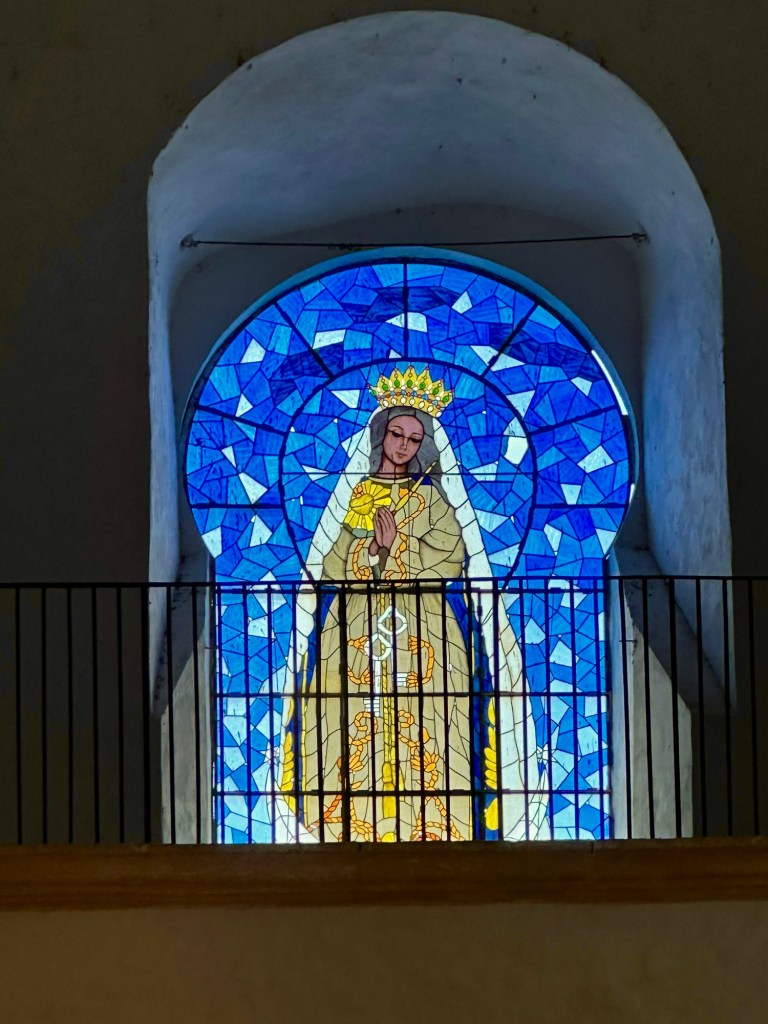
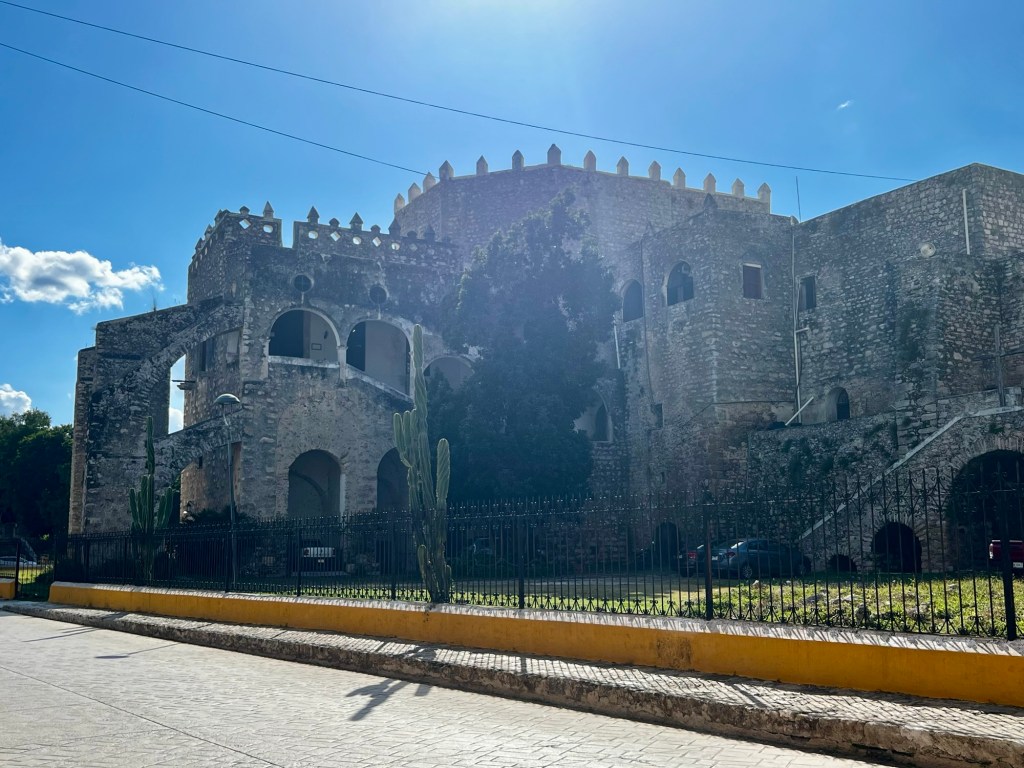
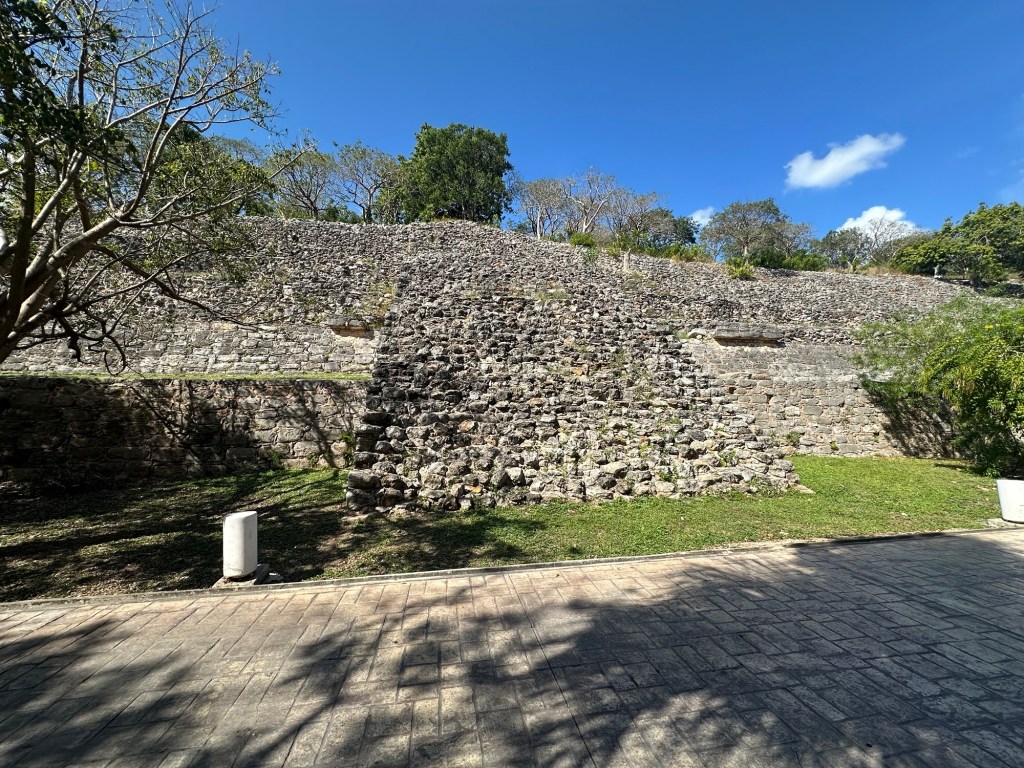
In pre-colonial times Izamel was the religious centre of the Mayan culture and home to some significant temples/ pyramids. You will doubtless be surprised to hear that the Spaniards turned up, knocked down the largest temple and built a large church / convent on top of it … The convent of Saint Anthony of Padua. They did leave several large Mayan pyramids largely intact, one called Kinich Kakmo remains about 400 metres north of the convent. We spent most of Wednesday exploring these areas on foot.

Images of the convent:

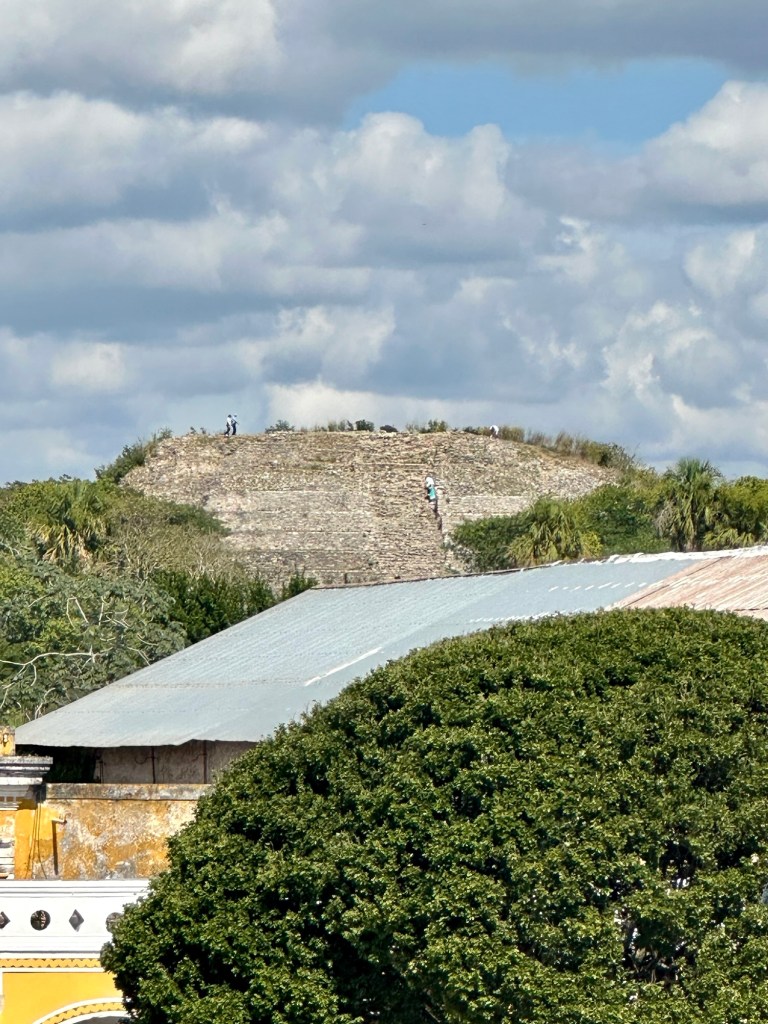
Kinich Kakmo seen from the Convent

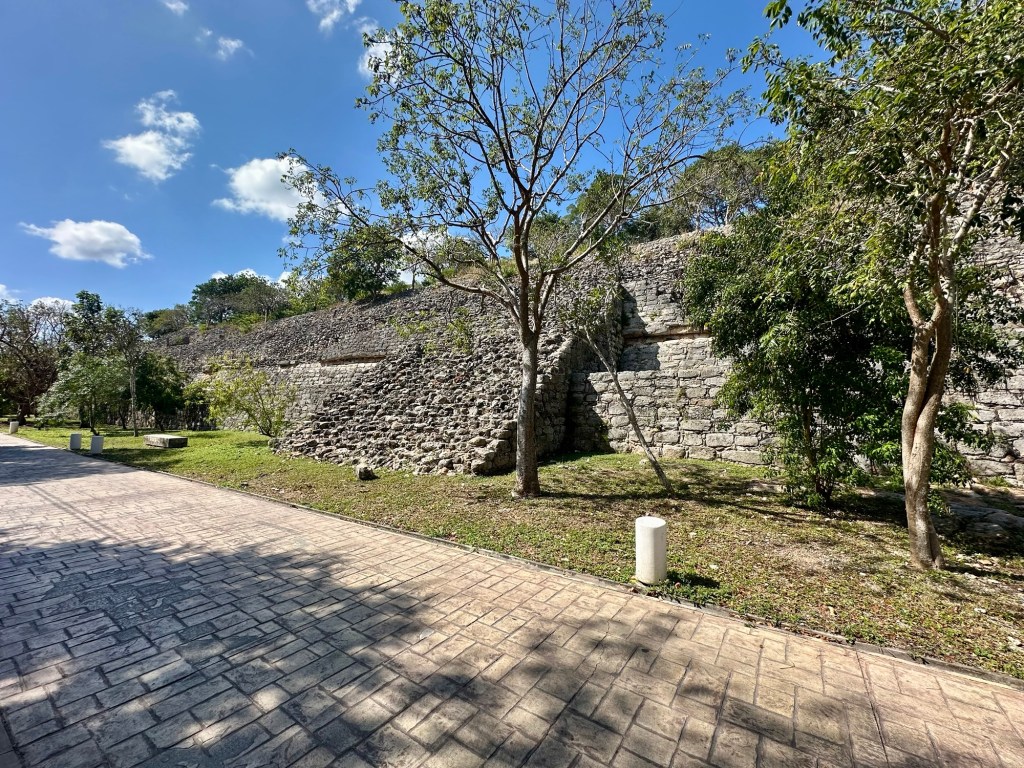
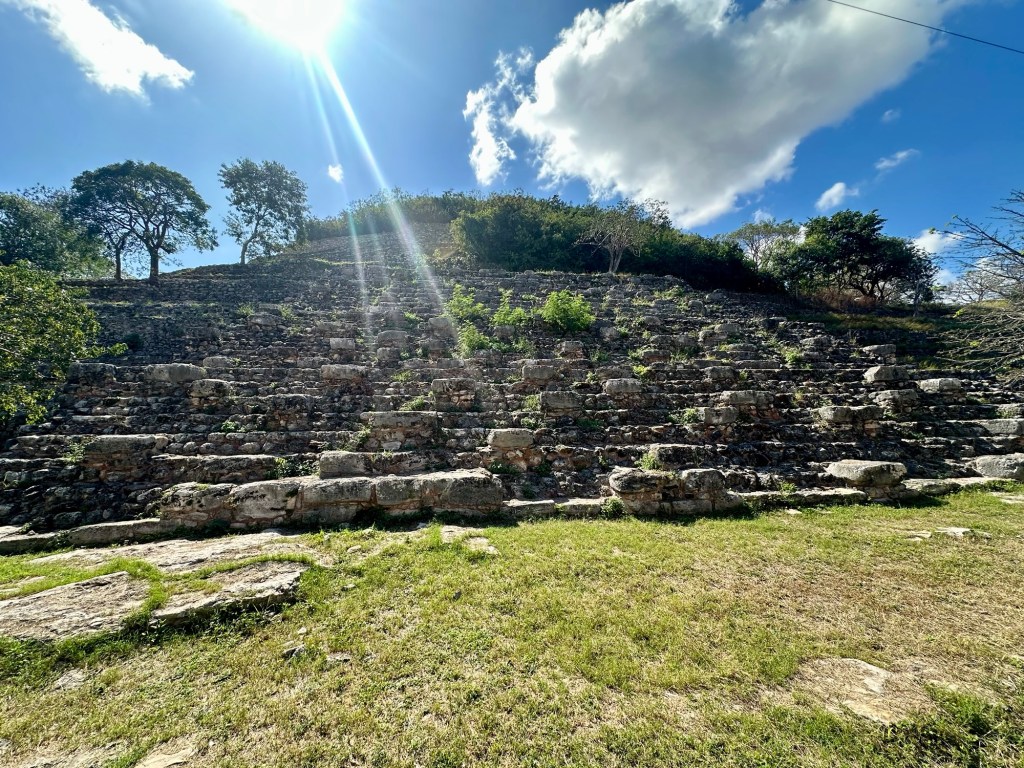
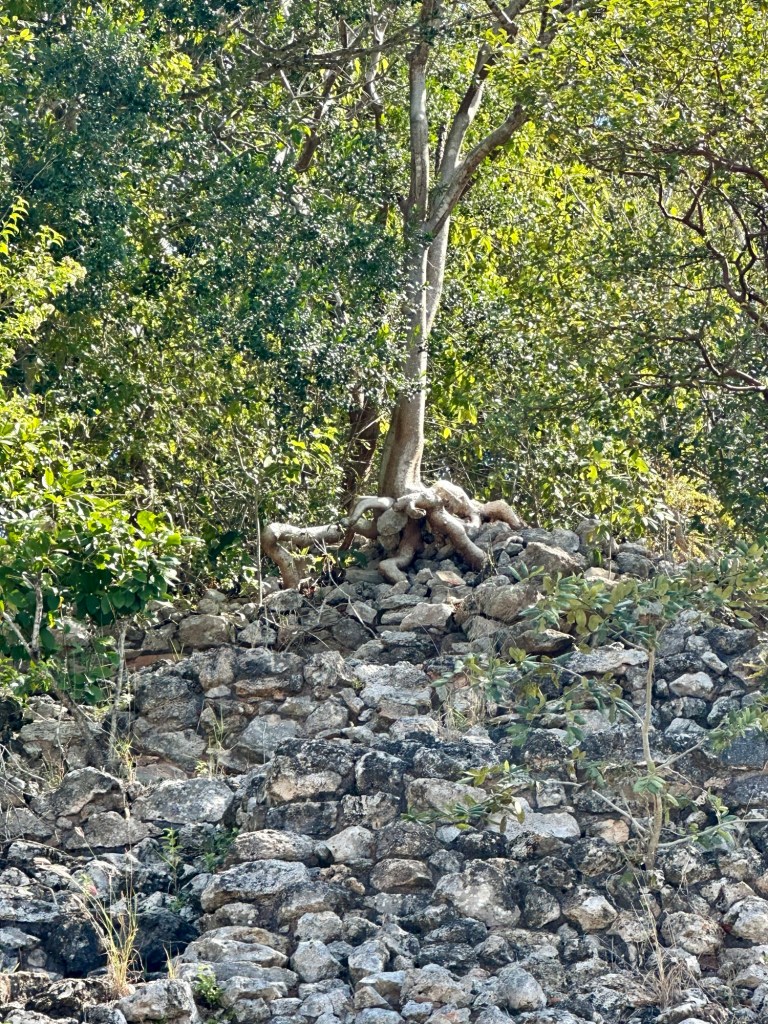
Kinich Kakmo is large, around 300 m x 300m at the base. It isn’t restored, and the vegetation growing on it is obviously having a negative impact on the structure.

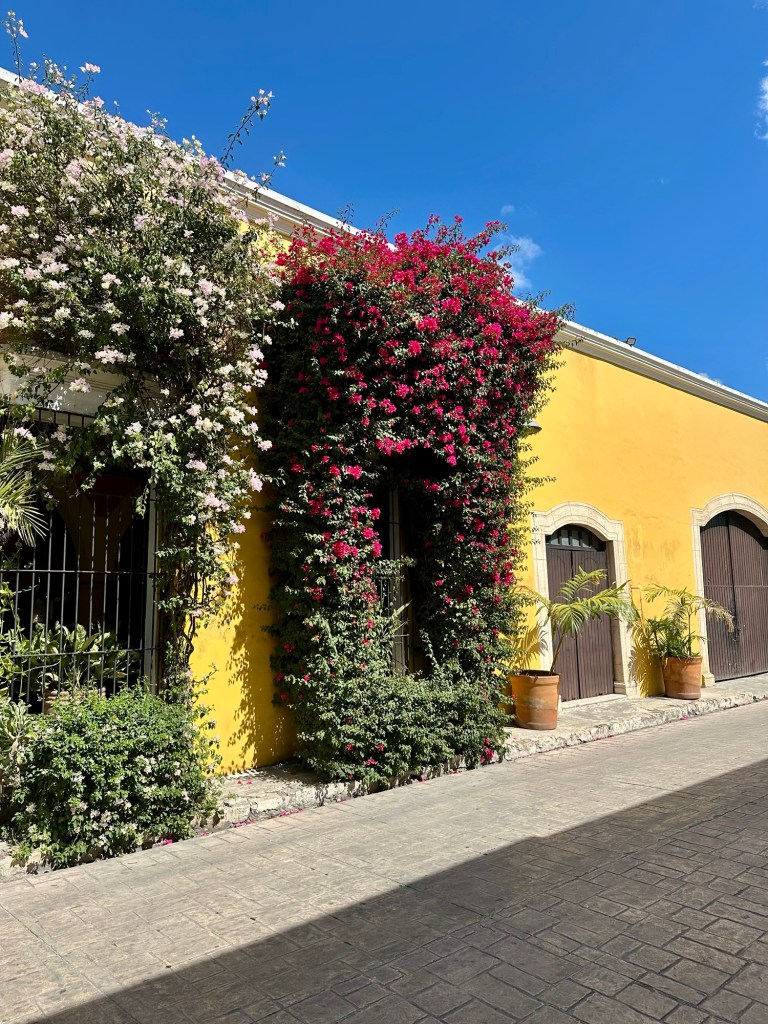
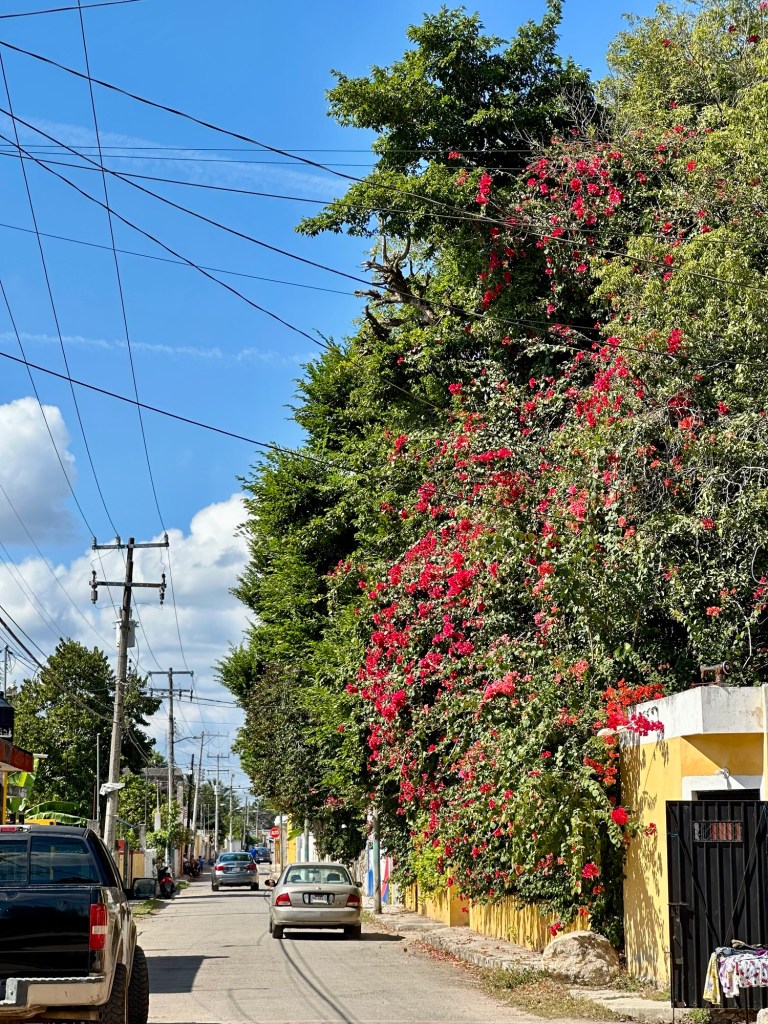
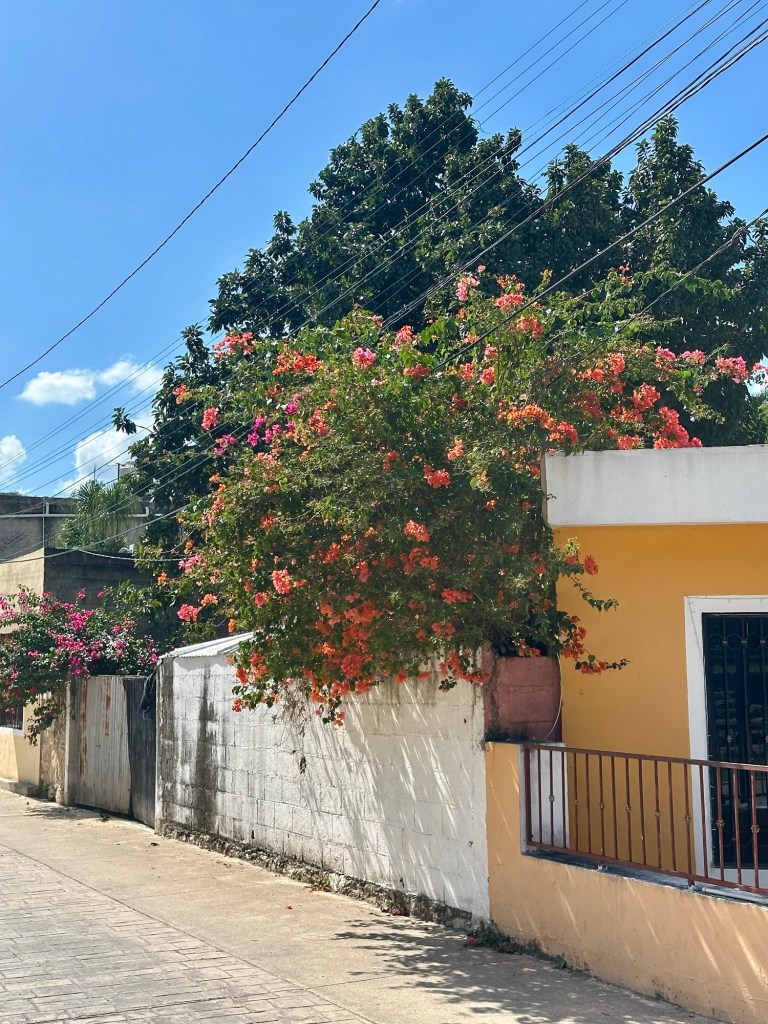
Strolling around Izamel was quiet and pleasant- an insight into Mexican country town life. A nice feature was the predominance of Bougainvillea in full bloom everywhere.

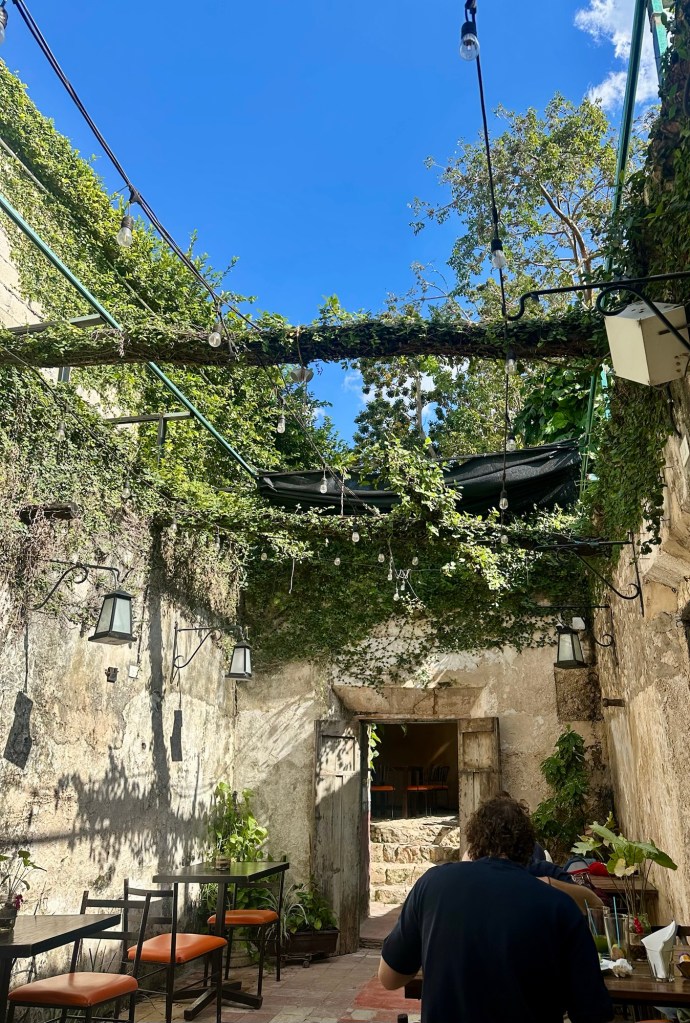
The day warmed up, so we retreated to the courtyard of a local restaurant off the town square for some more Yucatan cuisine.

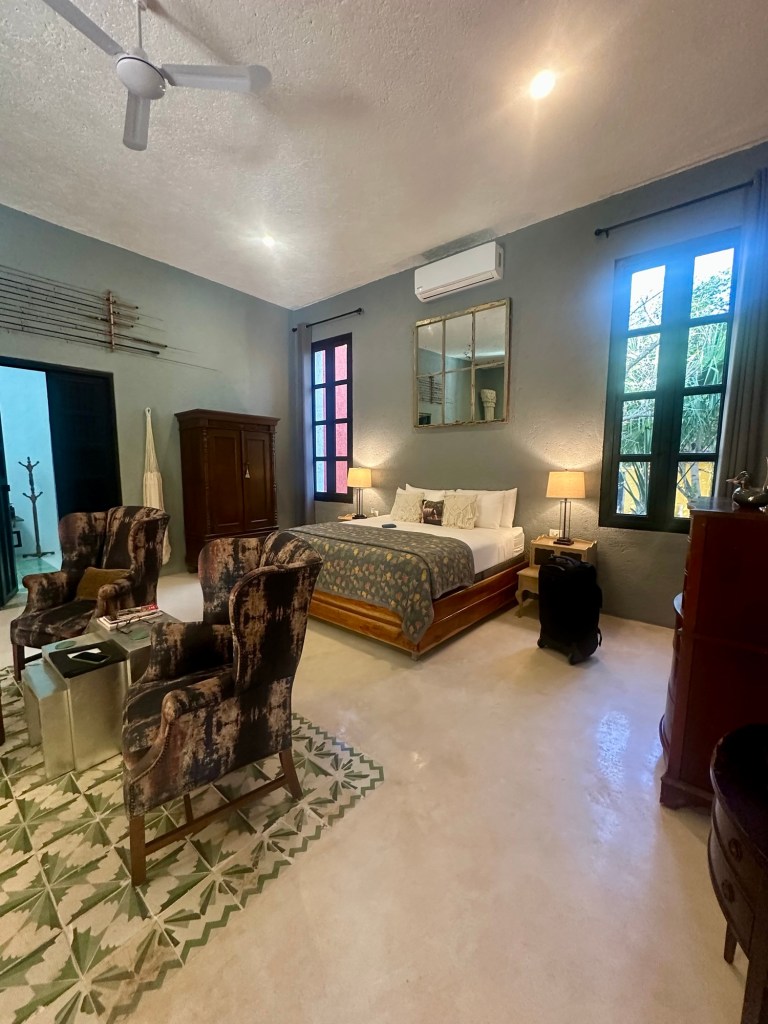
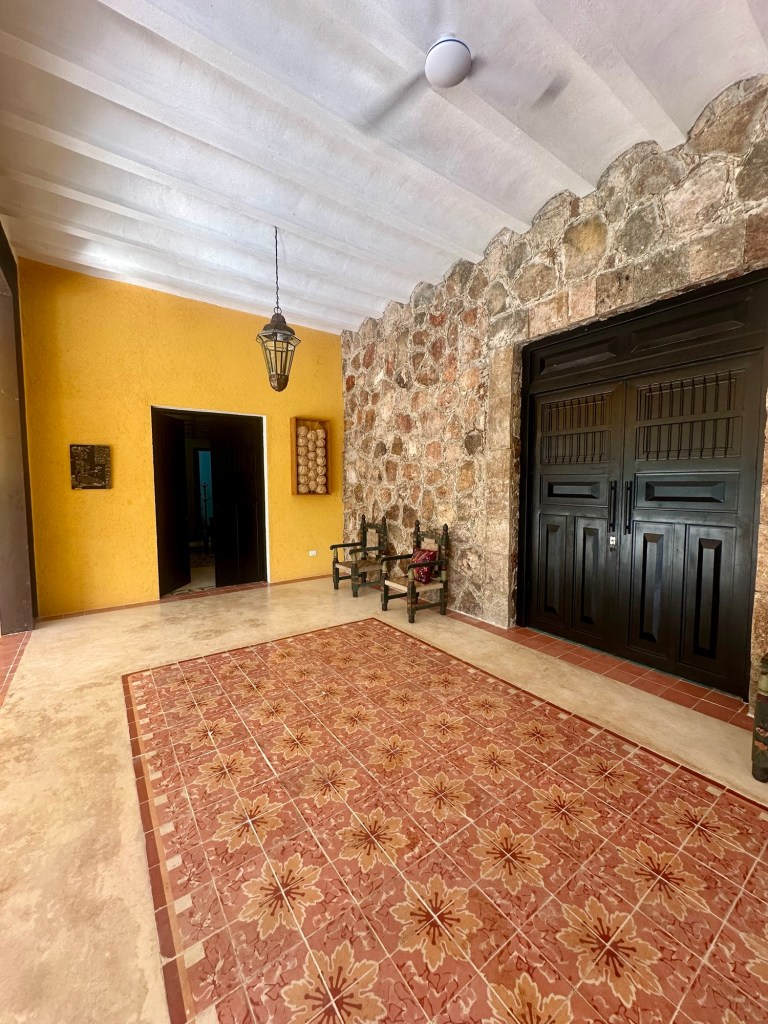
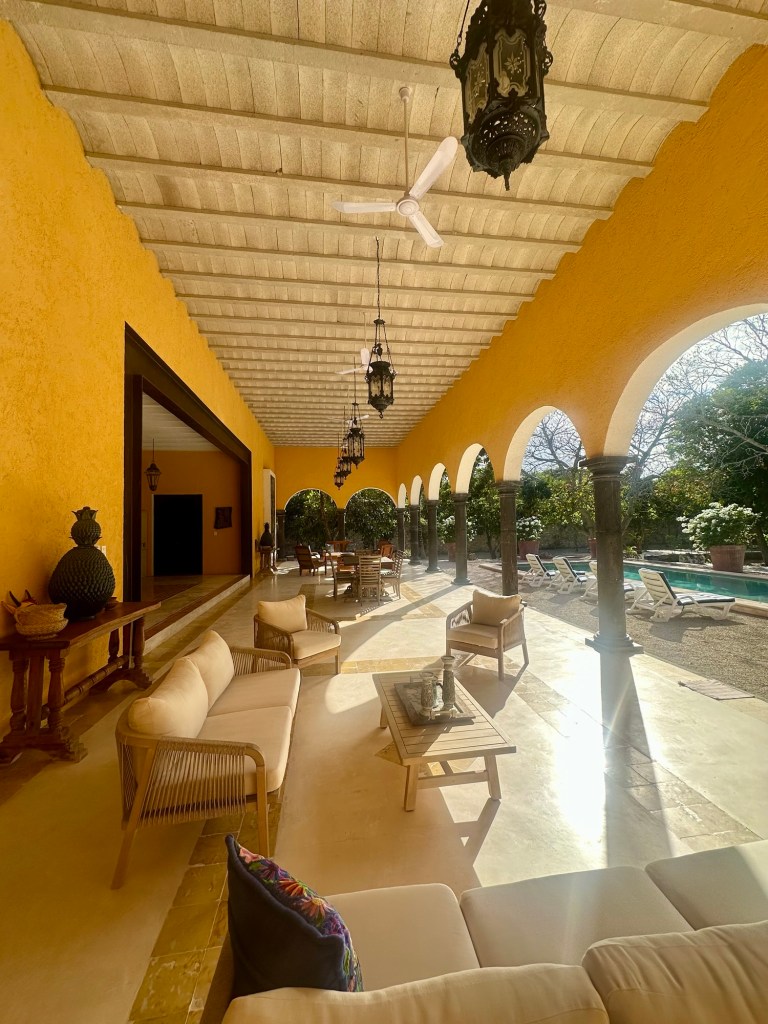
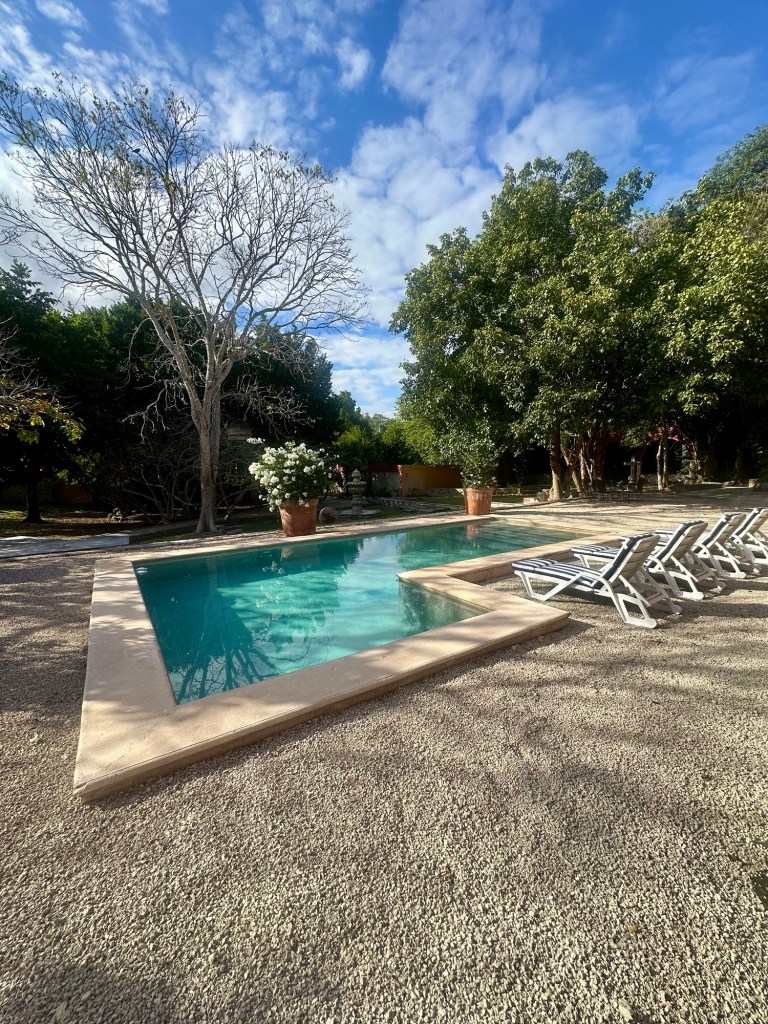
After lunch we walked back to our accommodation which is in a lovely Hacienda on the outskirts of town. It was hot, so we spent the latter part of the afternoon in the pool.

Next up : more pyramids! … and Valladolid

Oaxaca (Monte Albán) ➡️ Campeche

15-17 January 2016

Wednesday night dinner- Mexcalitas and Wood-fired Pizza 😋

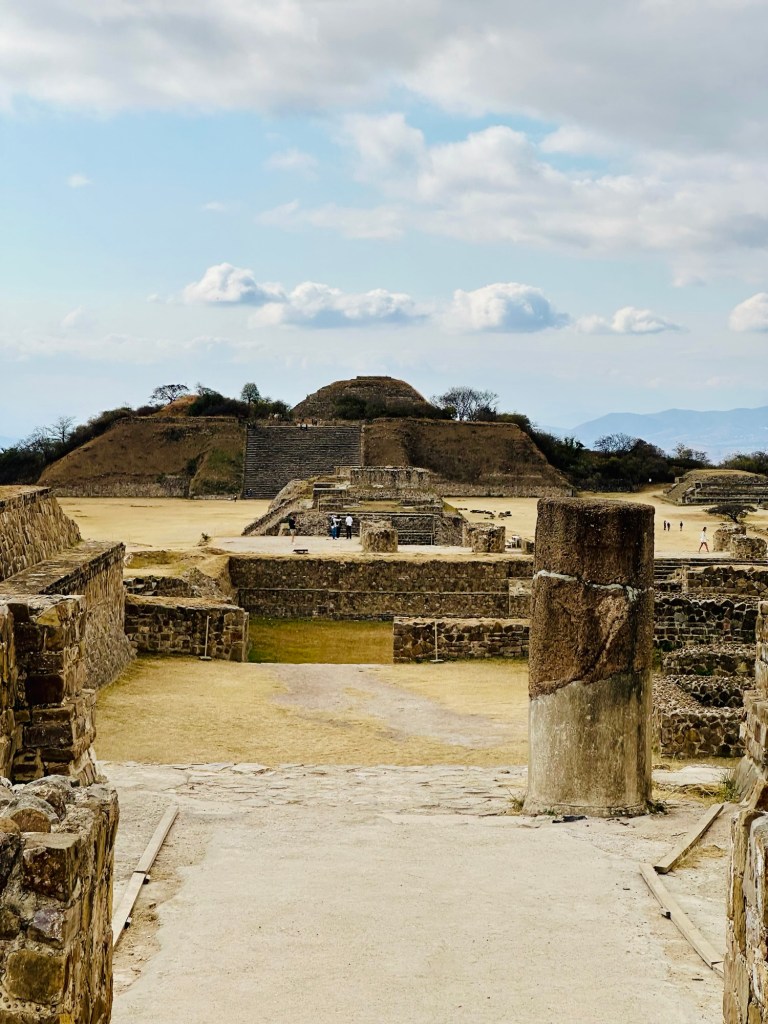
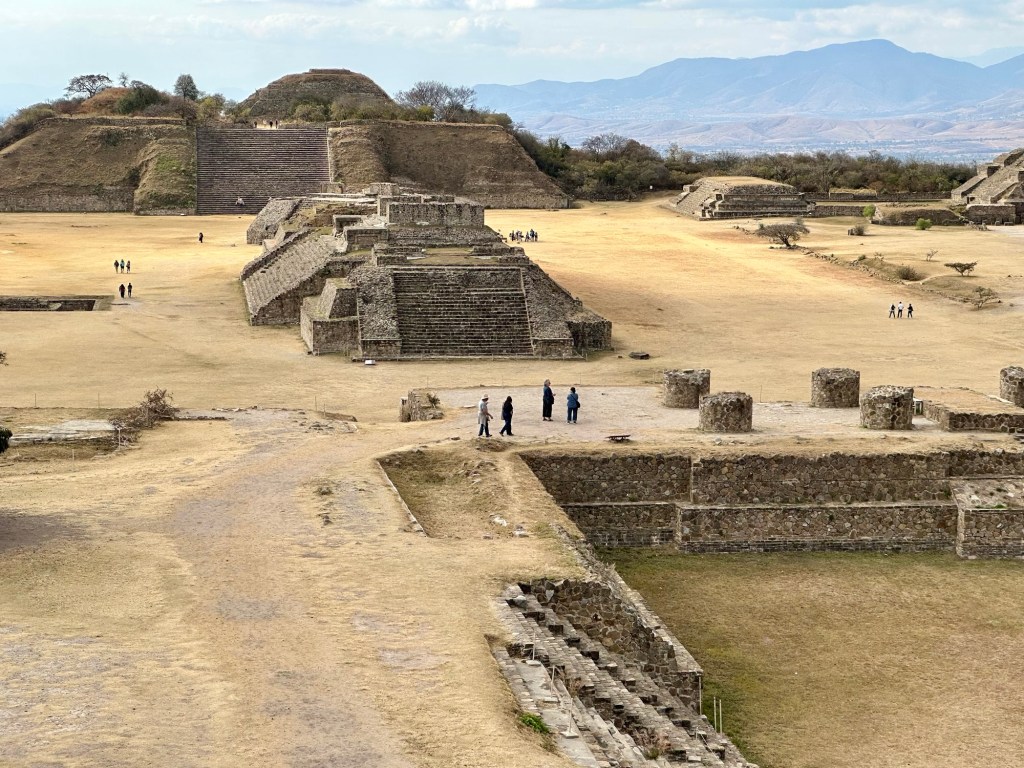
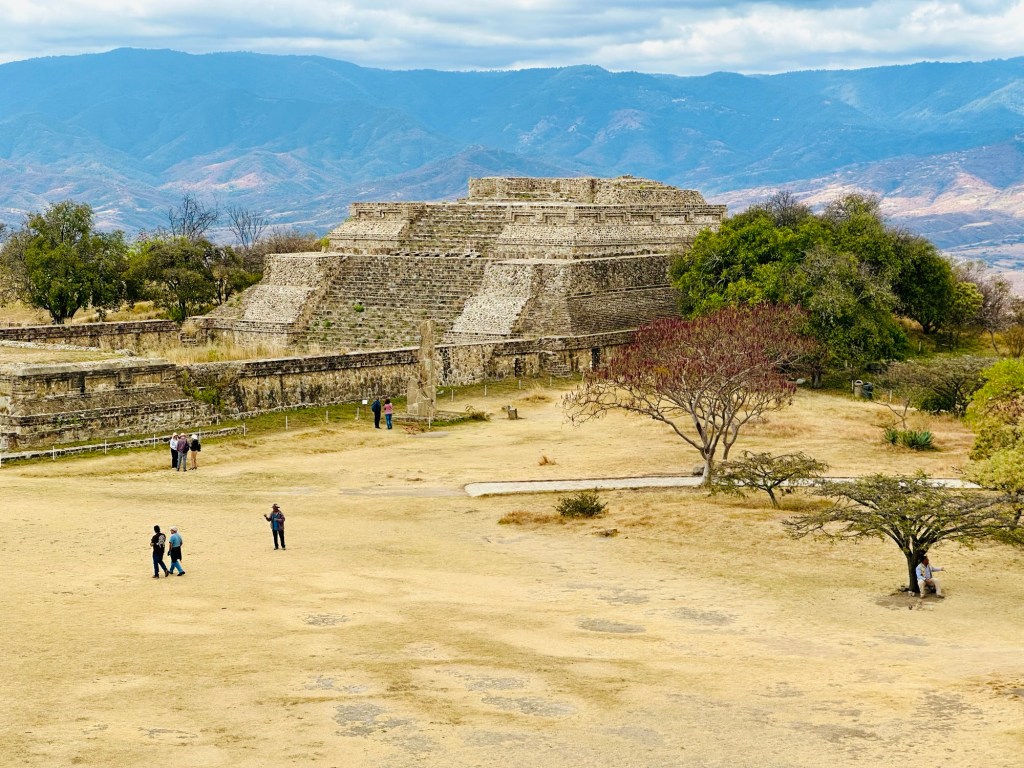
We were up early on Thursday morning to join a guided excursion to Monte Alban, the central site of the Zapotec civilisation that dominated the Oaxaca region from around 500 BCE. The Zapotec people still live in the region and their indigenous language is still commonly spoken in and around Oaxaca.

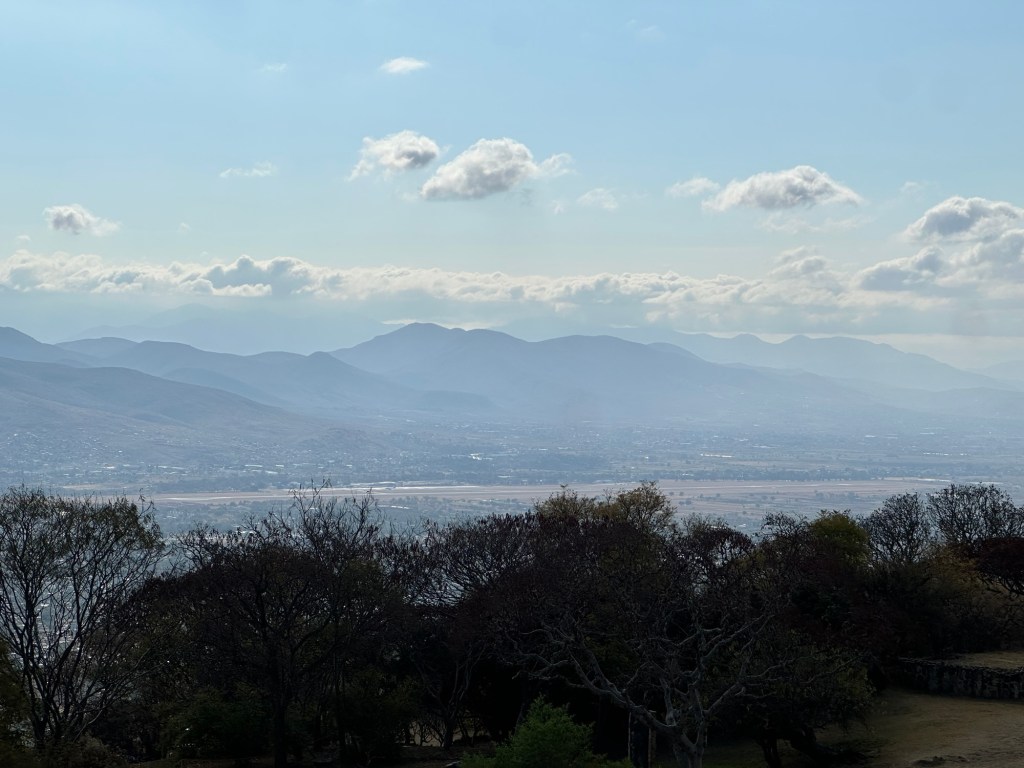
Looking down at part of Oaxaca city from Monte Alban

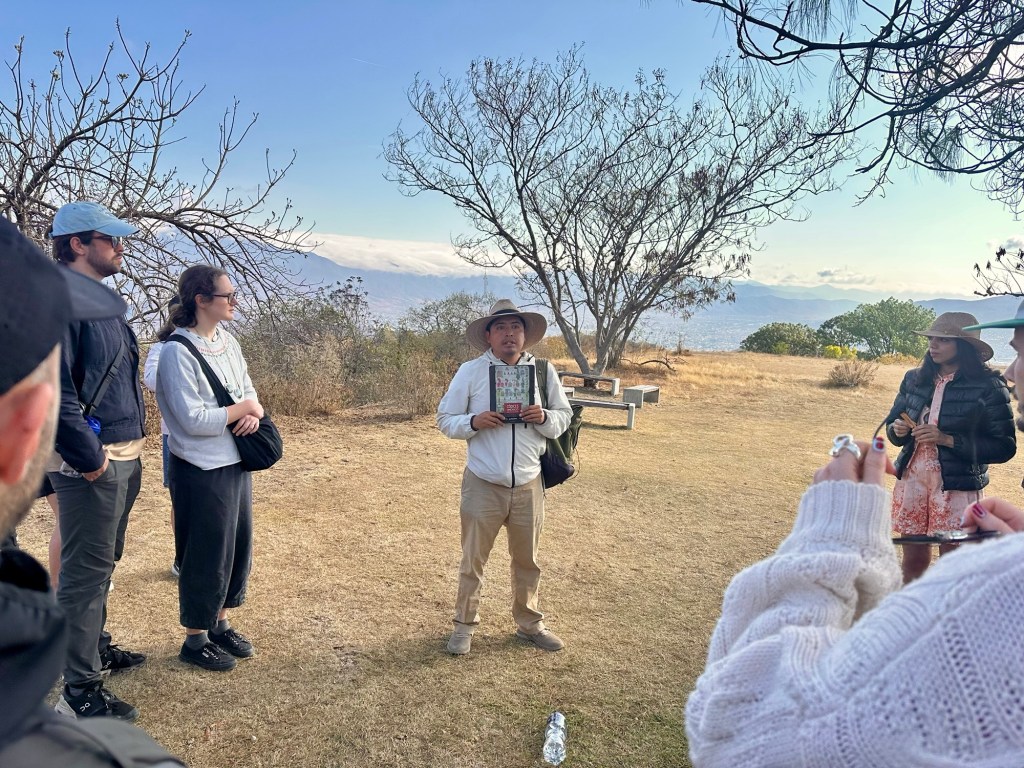
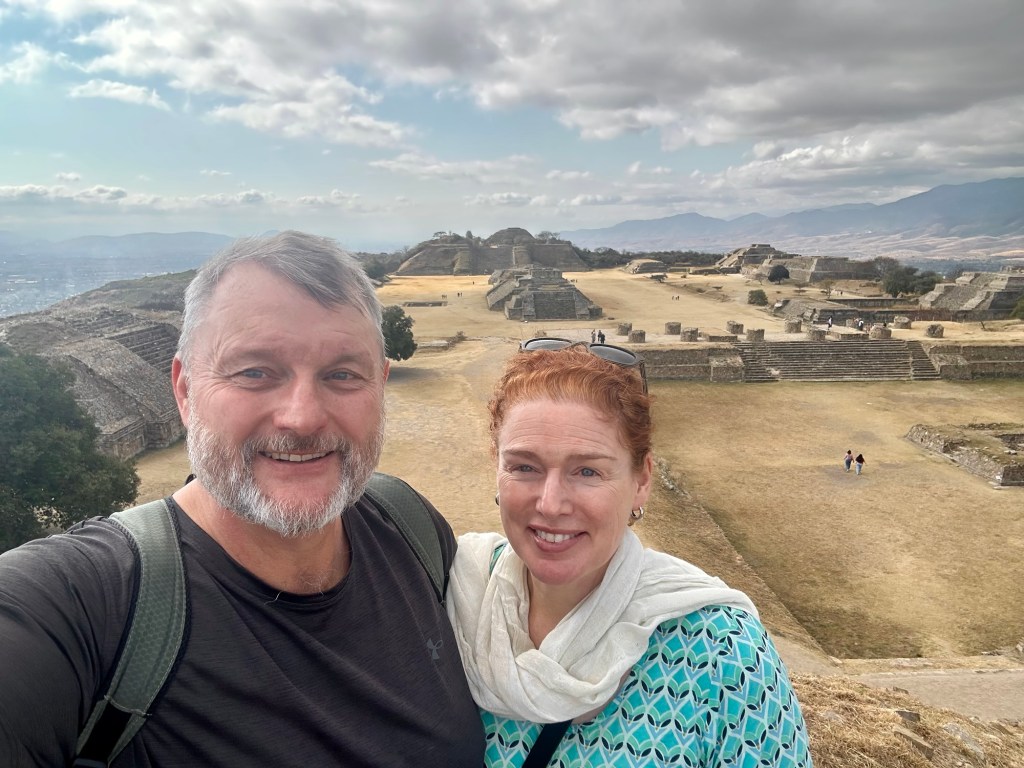
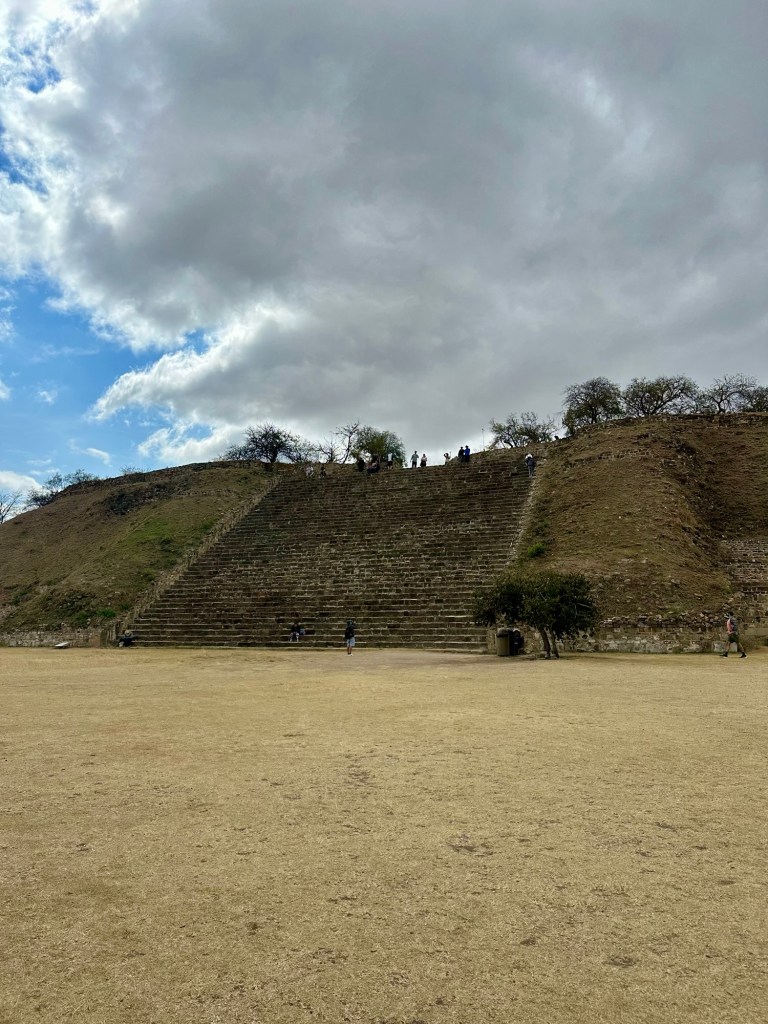
The archeological site is on top of a 1,900-ish metre high mountain just to the West – South West of the city. The Zapotec people levelled the top of the hill and built a series of religious and political sites at the top over the centuries they occupied the place. Our guide, Miguel, was a local with training in anthropology and linguistics. Essentially his ancestors were the people who were part of the place.

Miguel doing his thing

The story of the Zapotec empire was the same , yet different, yet the same as that we had heard at Templo Mayor and Teotihuacan- but just as interesting. The rise and fall of empire, politics, trade and religion.

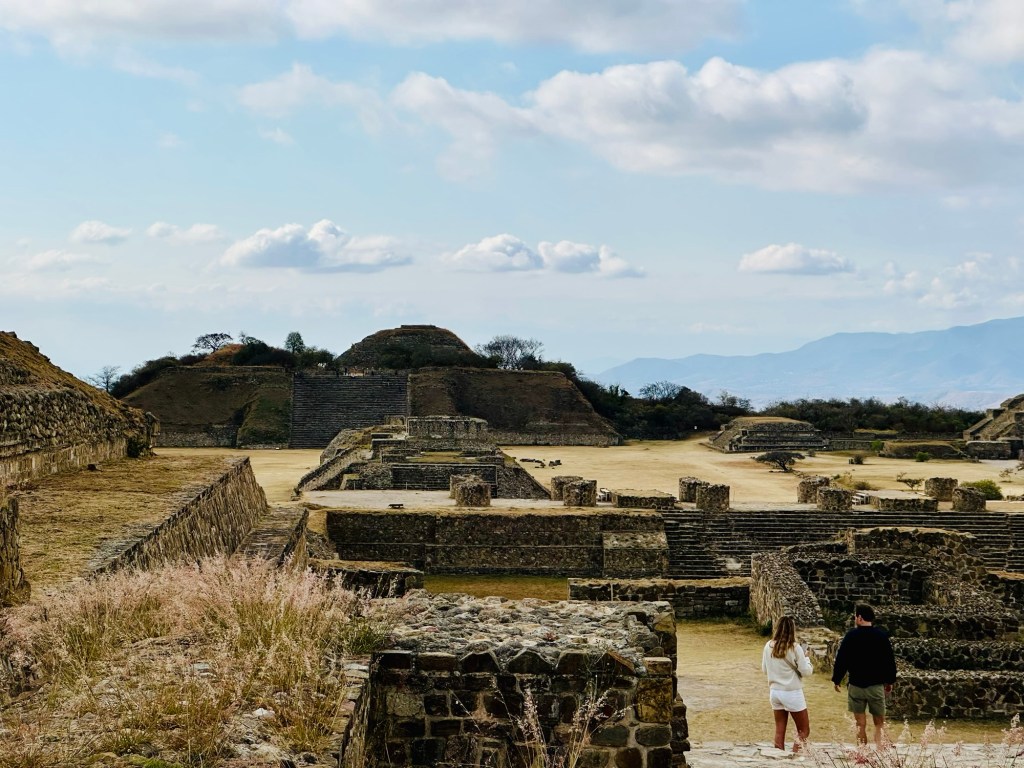
The site itself is super impressive – being perched atop the steep mountain gave it a distinctive ‘feel’.

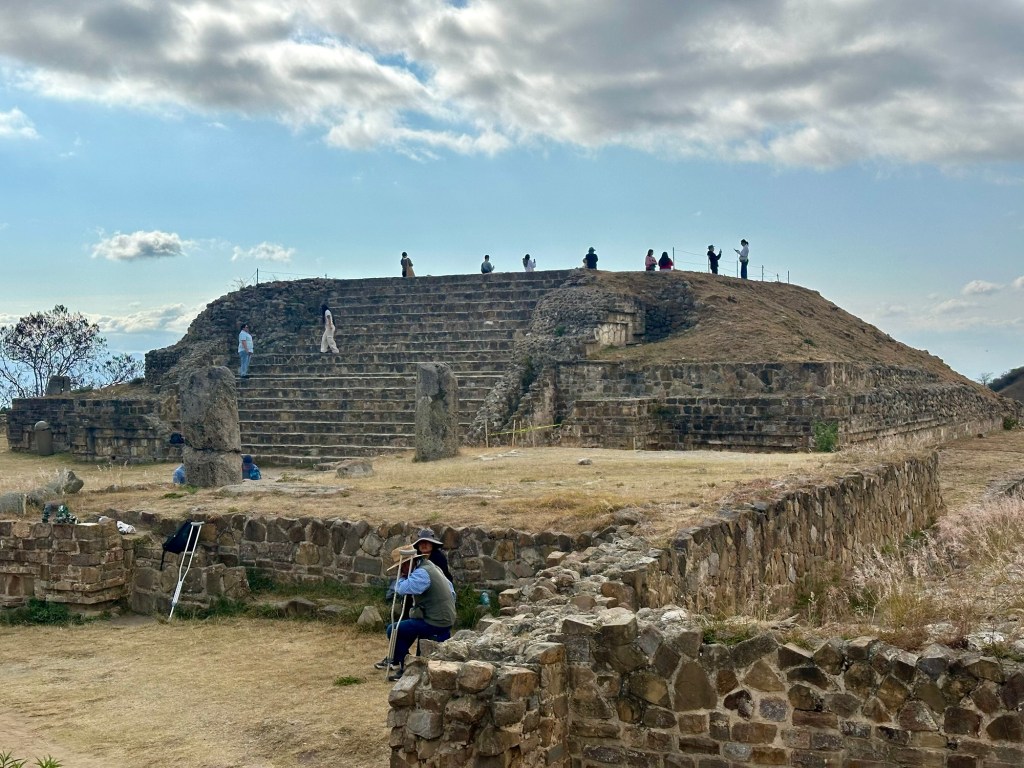
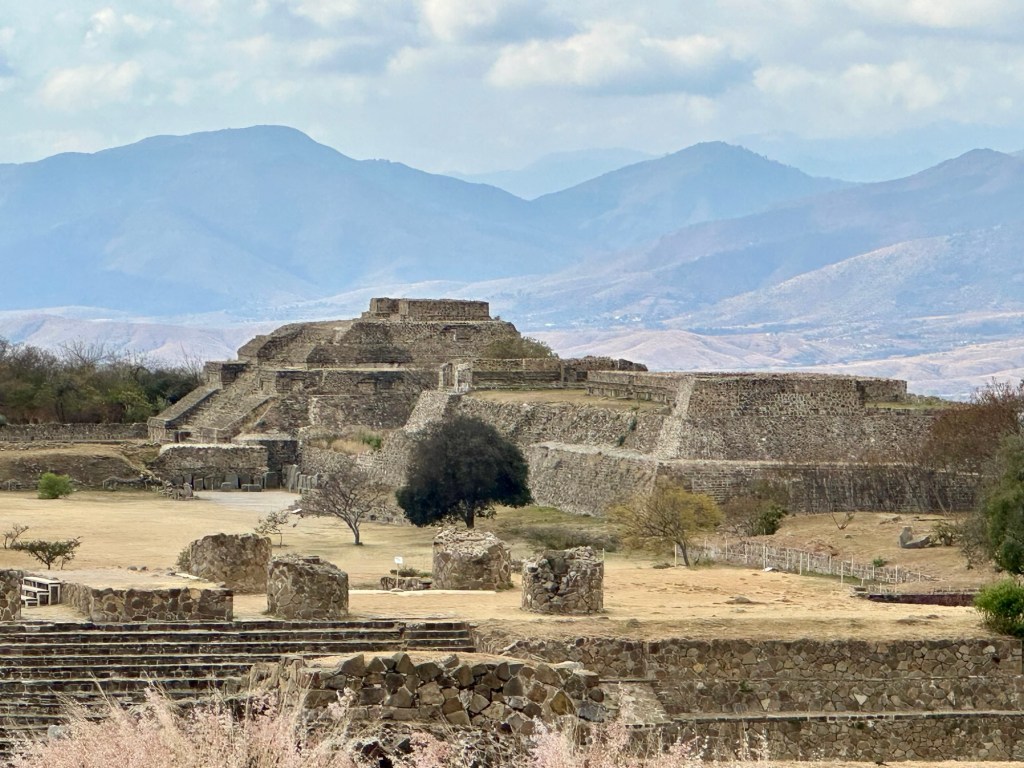
A gallery of Monte Alban:

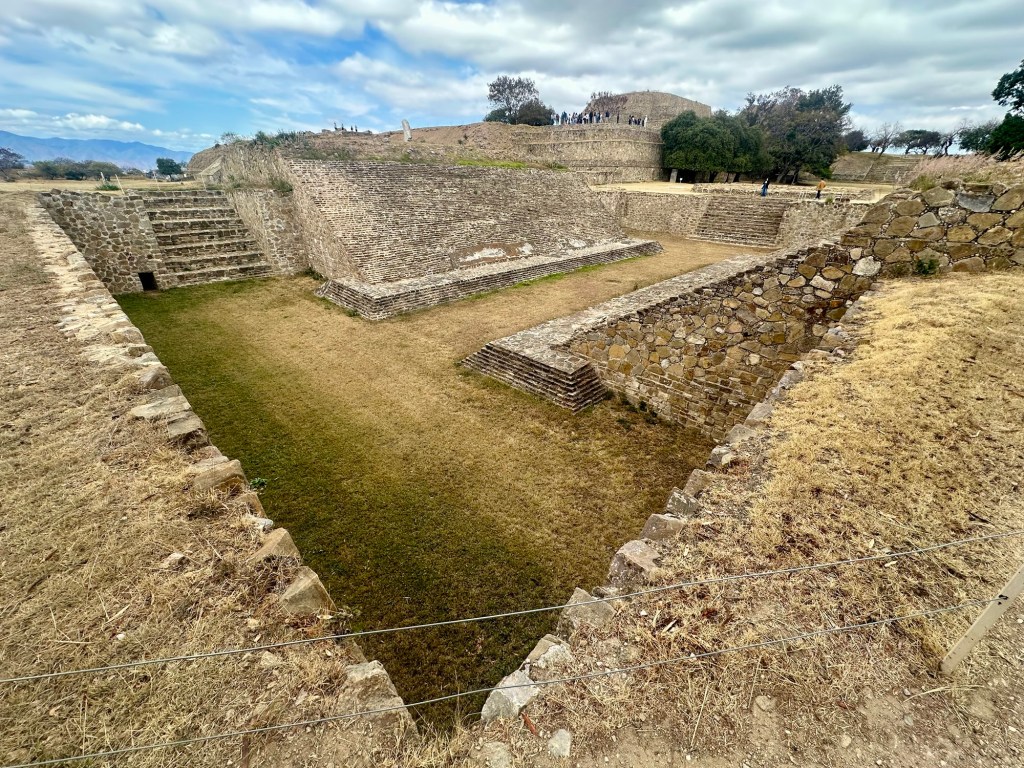
The site also offers a good look at three examples of the ancient Meso-American ‘ball game’,described here:

https://en.wikipedia.org/wiki/Mesoamerican_ballgame

The ‘ball court’

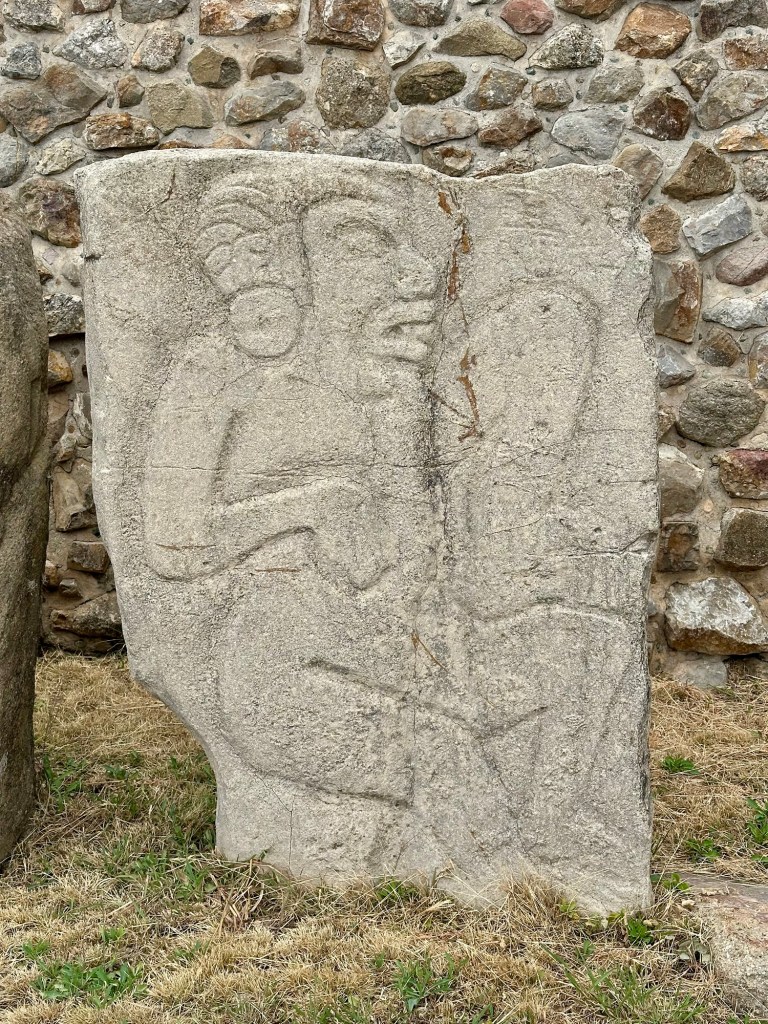
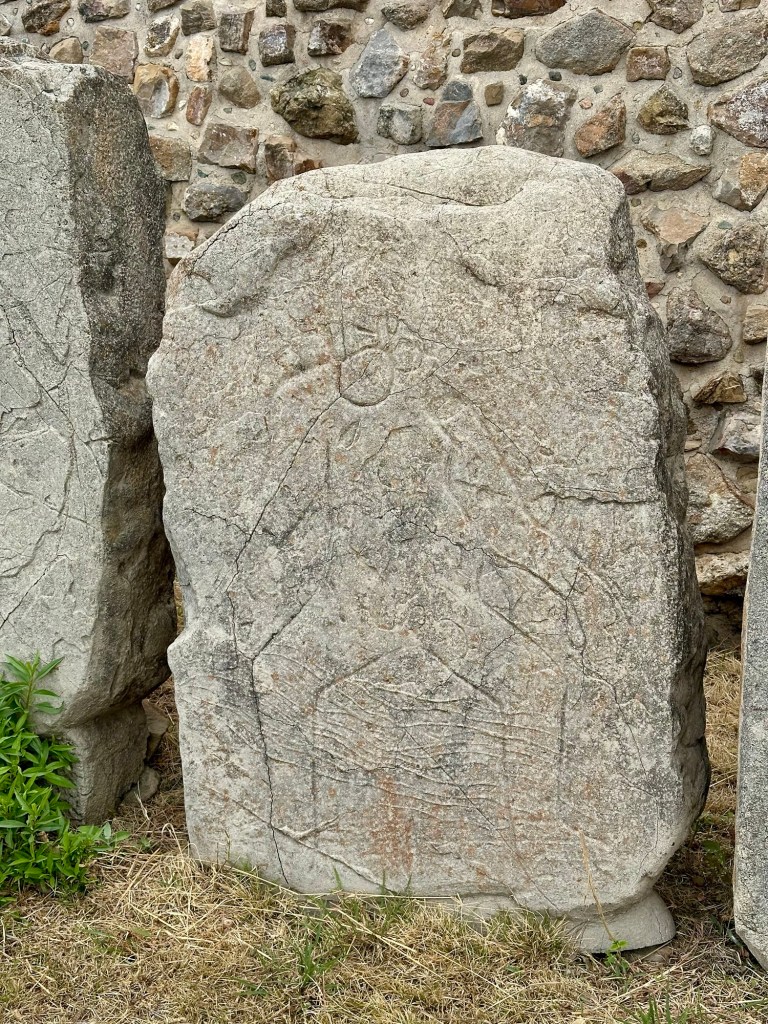
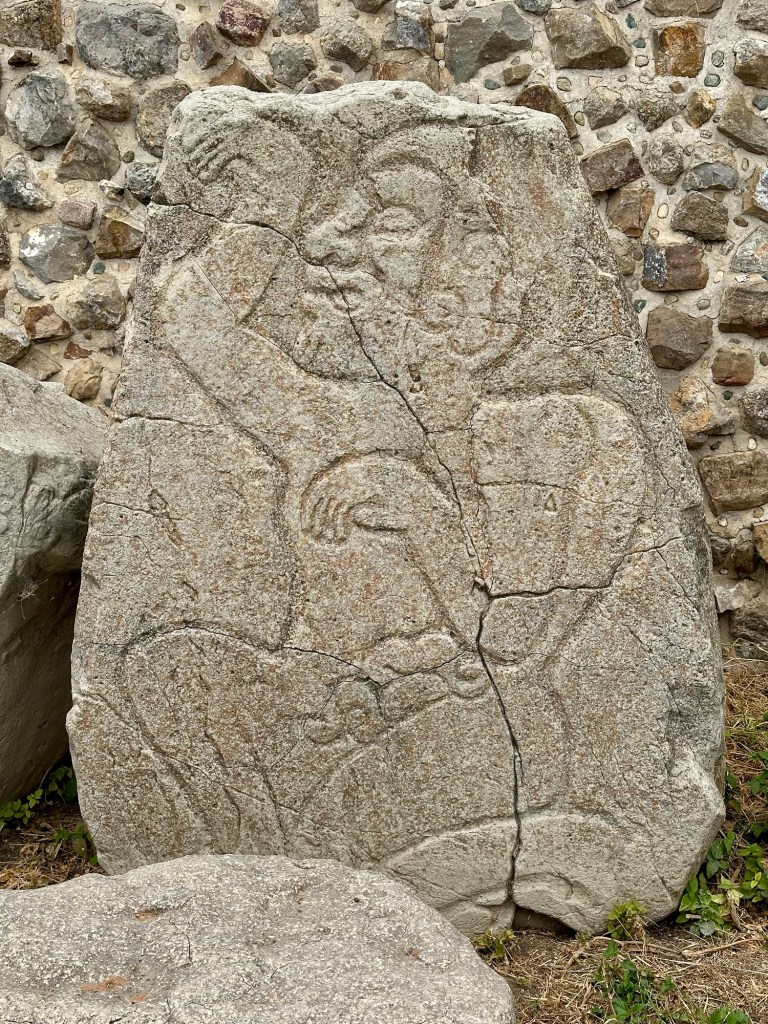
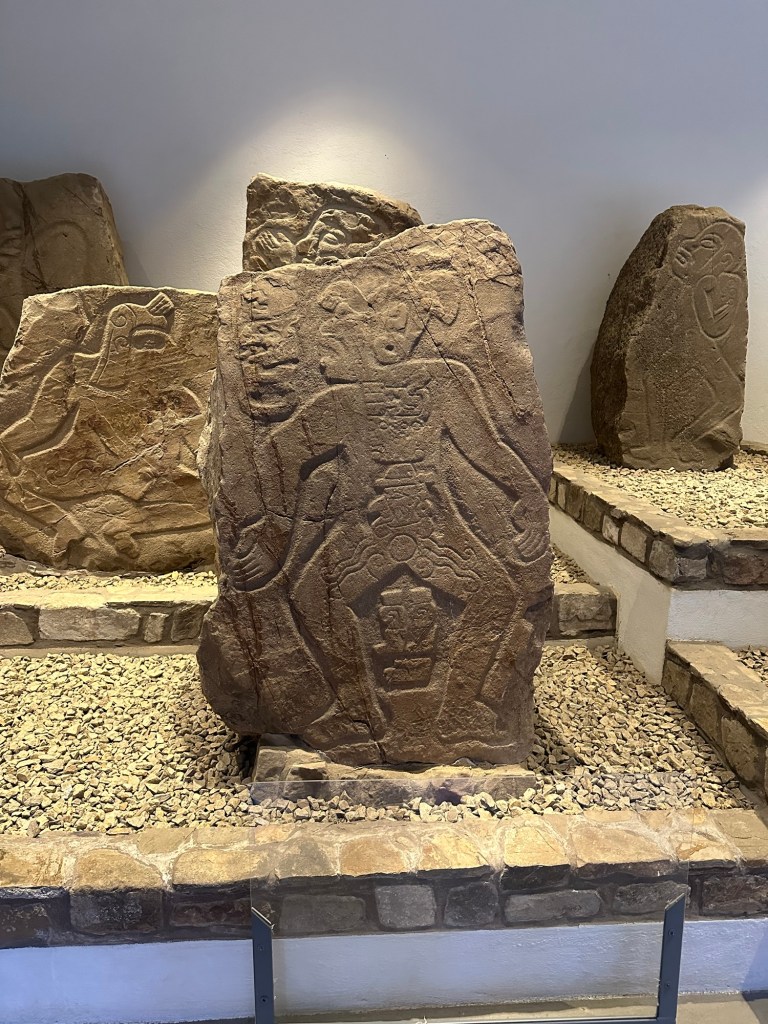
Also, an interesting discovery was the fact that the Zapotec empire practiced practical ‘information operations’ ( aka propaganda). The main ceremonial entrance to the complex had a series of stone carvings flanking the entrance. This was the entrance that ‘diplomats’ from other groups , supplicants or other rulers might enter through. These stone carvings essentially depicted ‘rulers’ or political elites being castrated, disemboweled or both. You can imagine the chilling effect it may have had:

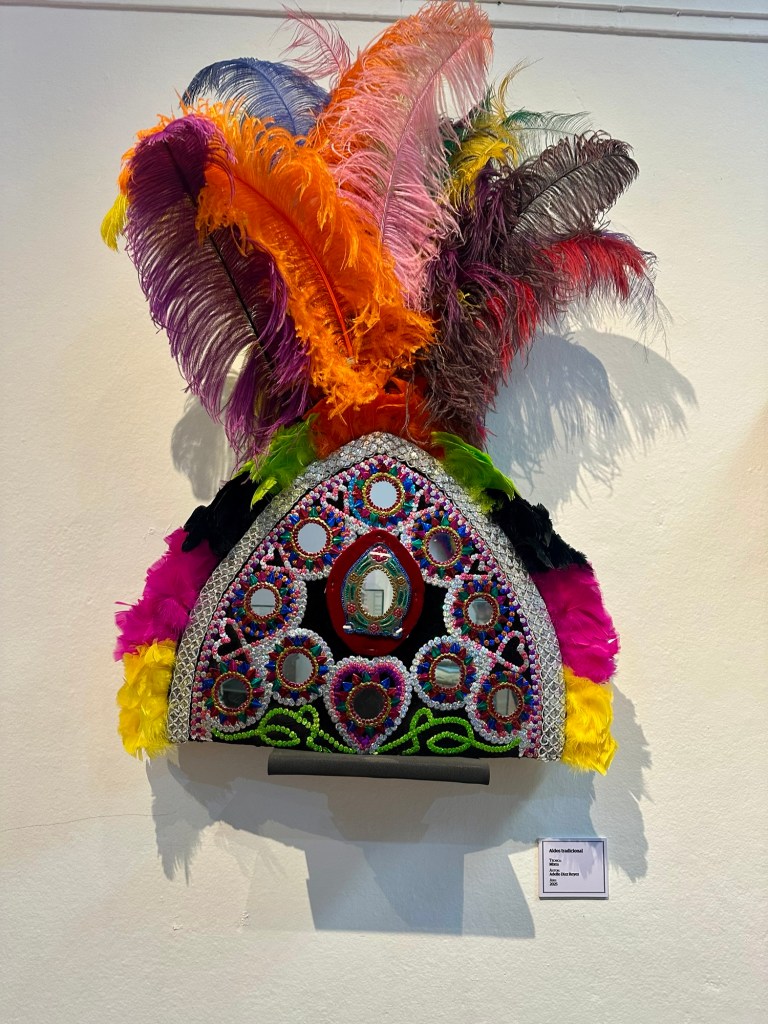
There was a small museum / gallery near the entrance/ exit. It was here that Ness saw the hat she plans to wear when she returns to work after this trip:

Ness’ new work hat … now to find some music to compliment it

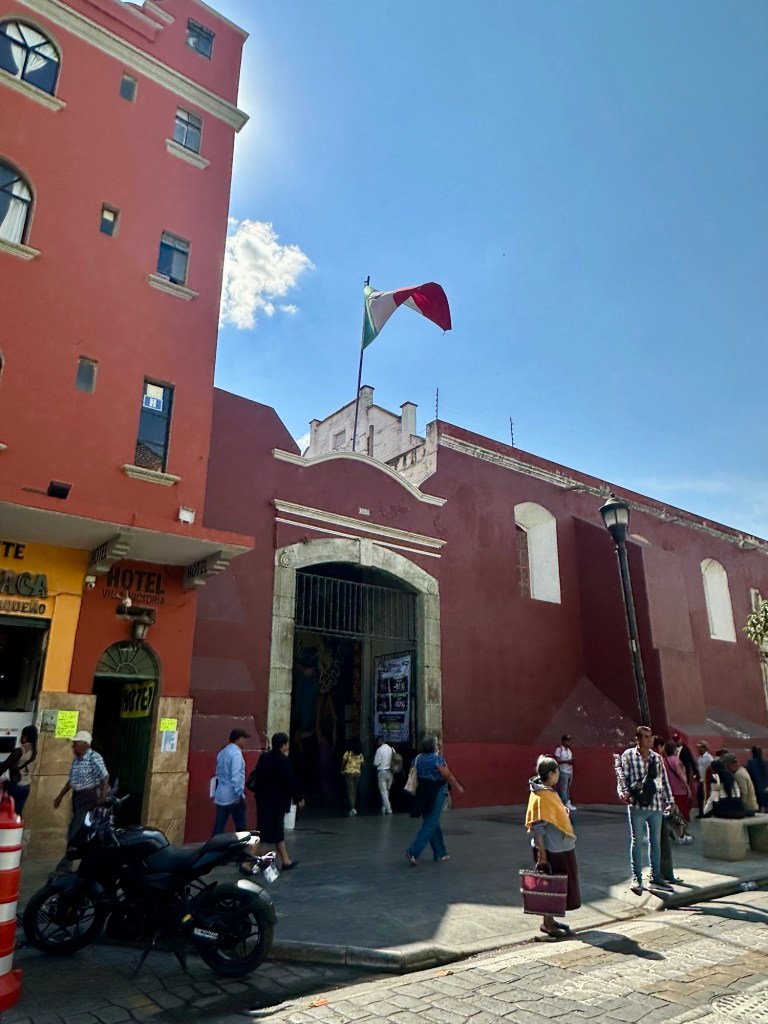
We returned to Oaxaca around midday and wandered through Centro to the ‘20 November Market’ .

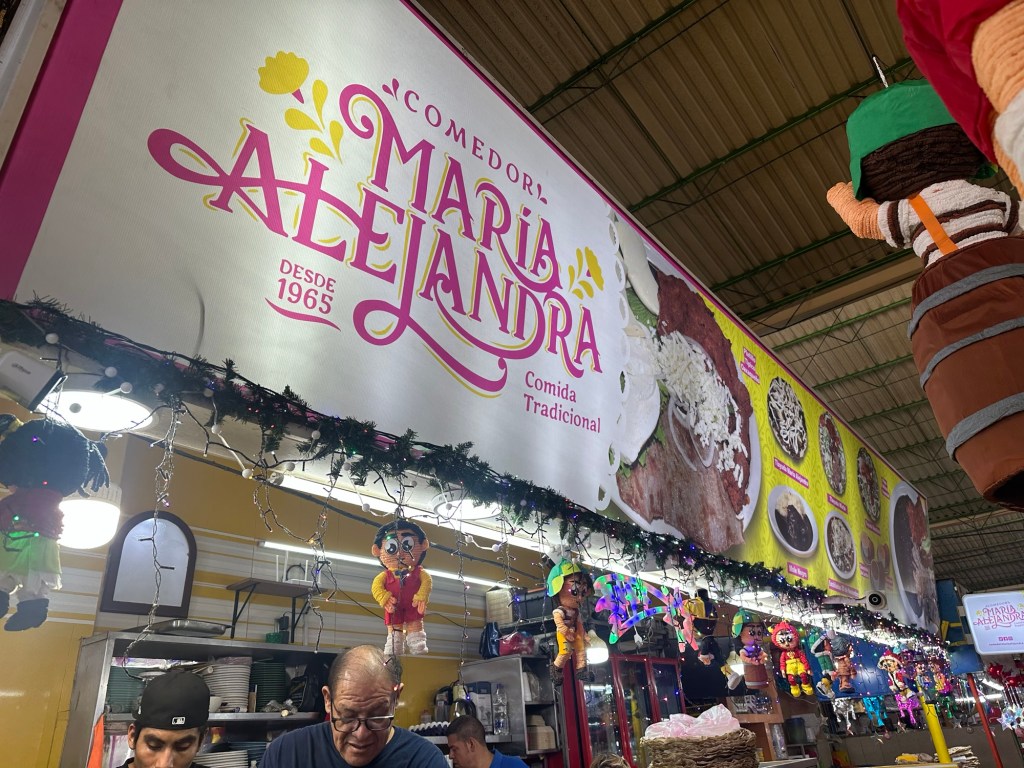
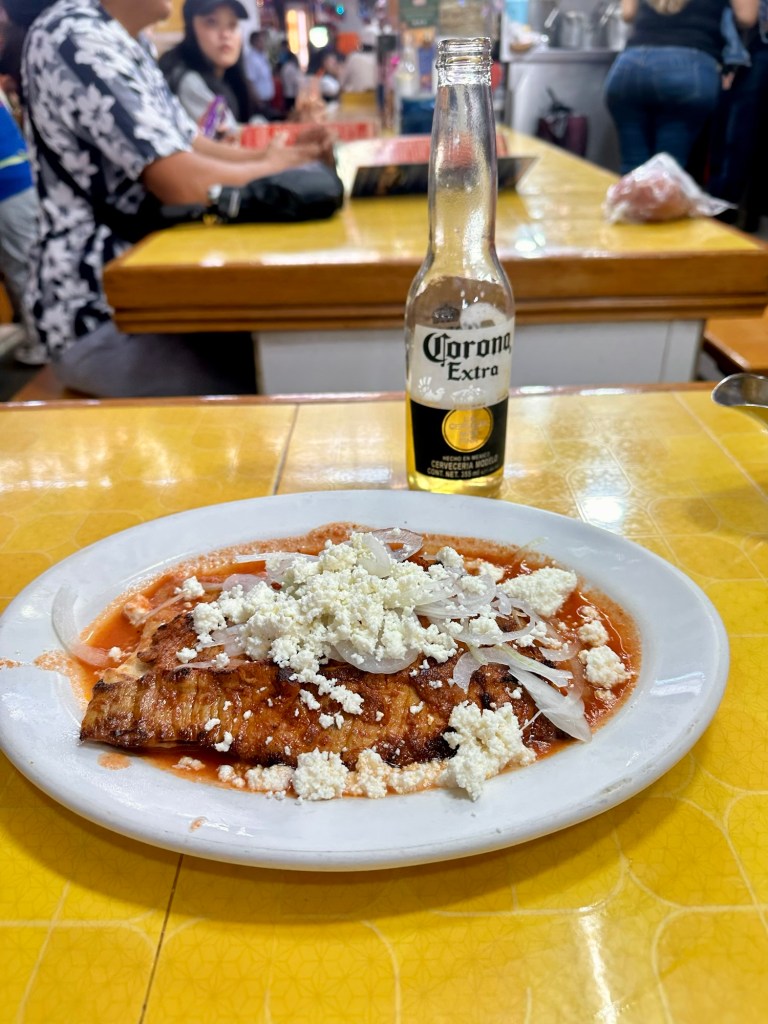
We grabbed a tasty lunch at a local place in the market that had been recommended by Cesar, our guide in Costa Rica:

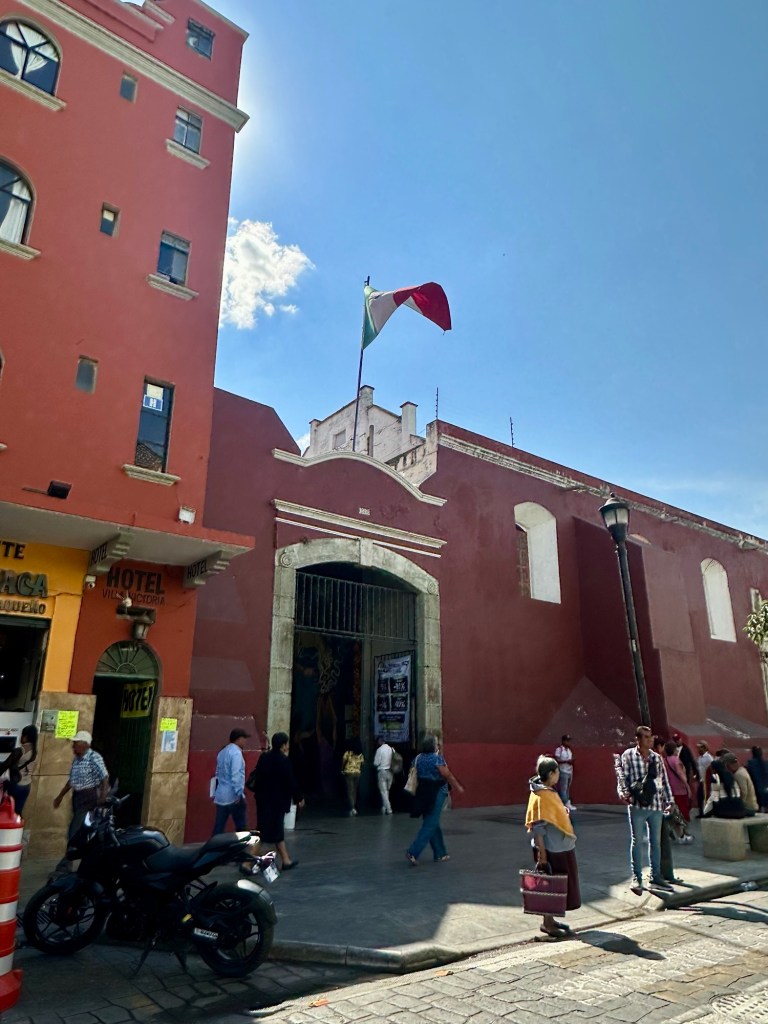
The market entrance

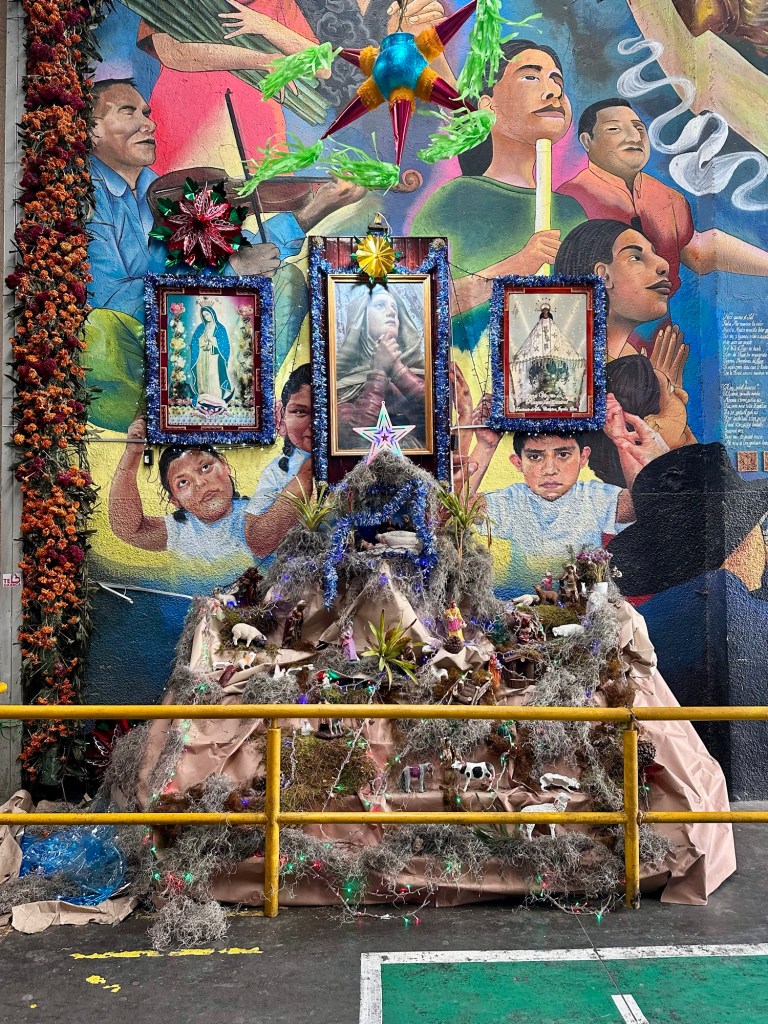
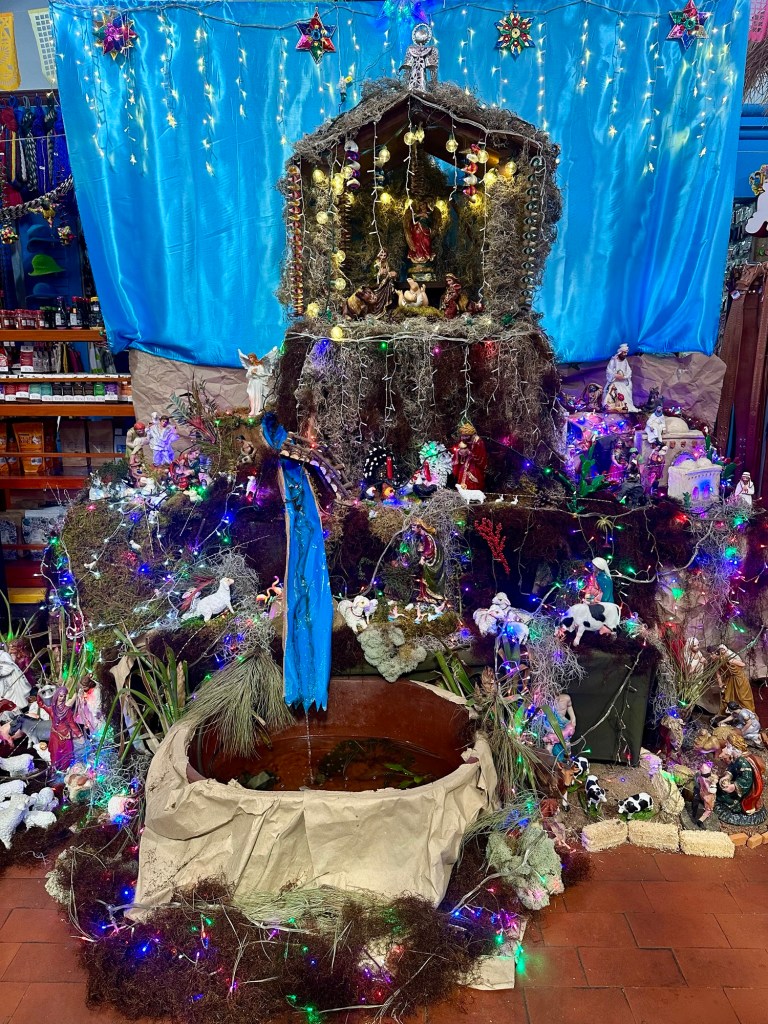
The market foyer also featured another ‘blinged up’ nativity scene. Check out the ‘happy’ kids with the Jesus disco:

The image doesn’t quite catch the flashy LED lighting

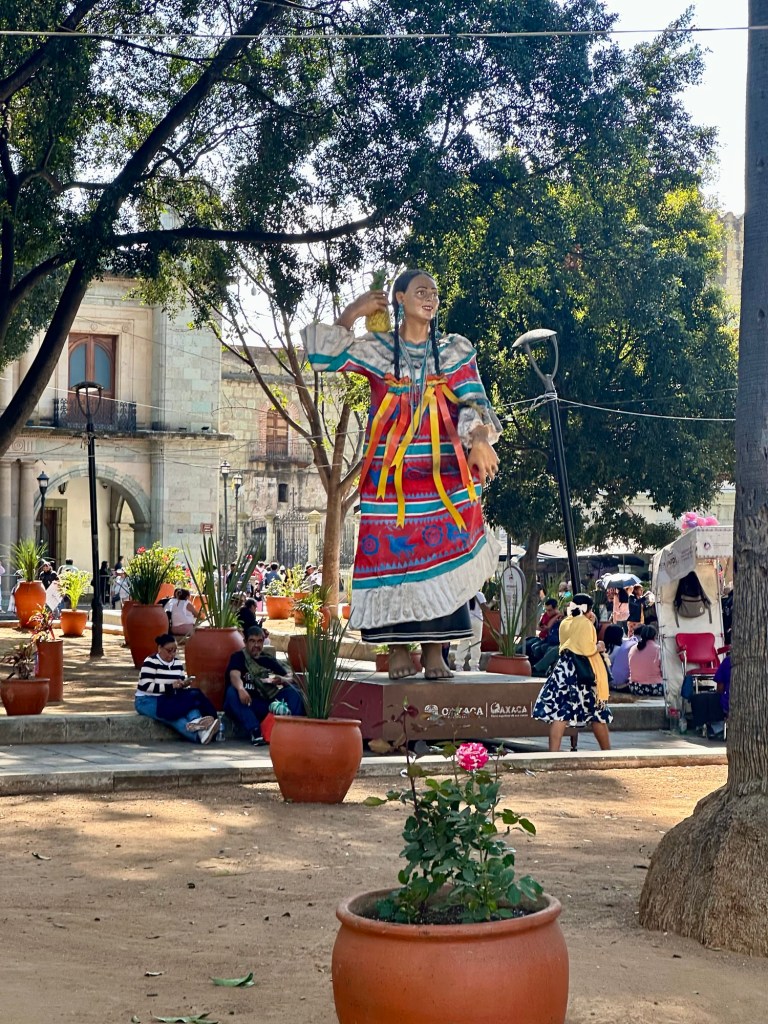
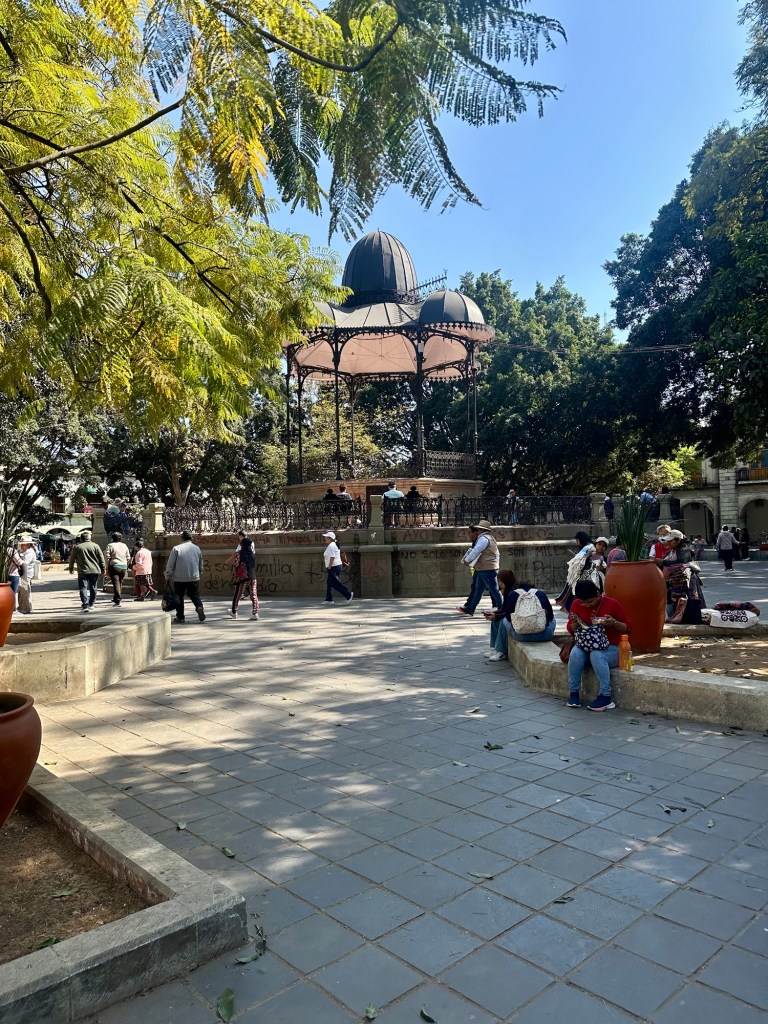
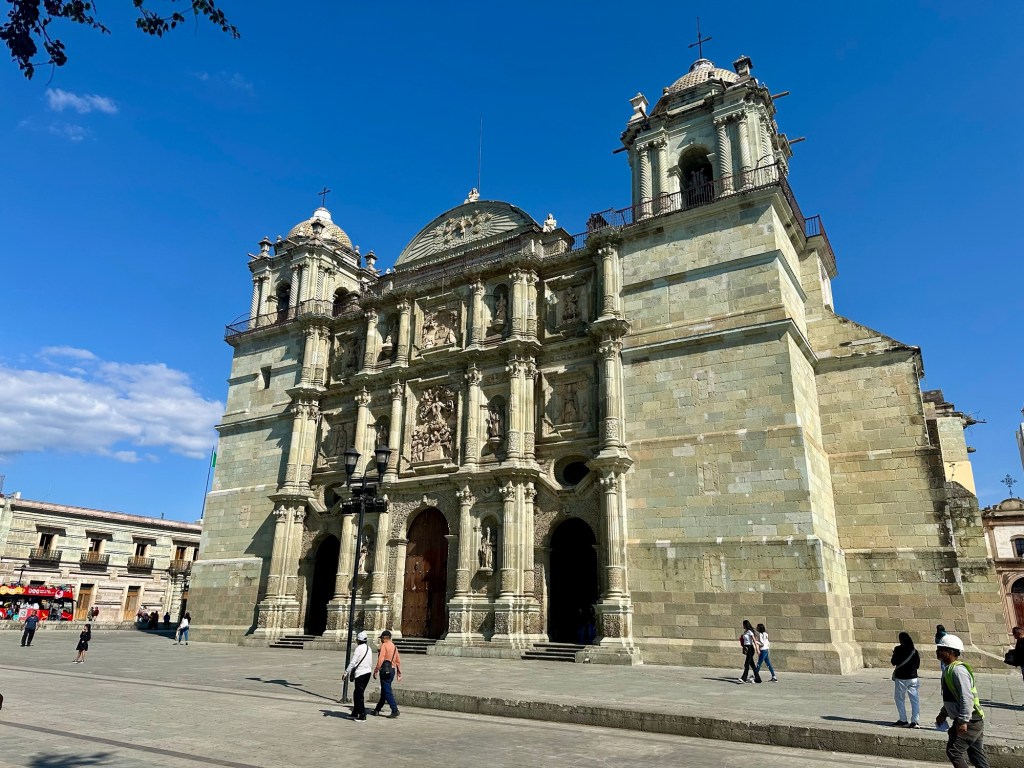
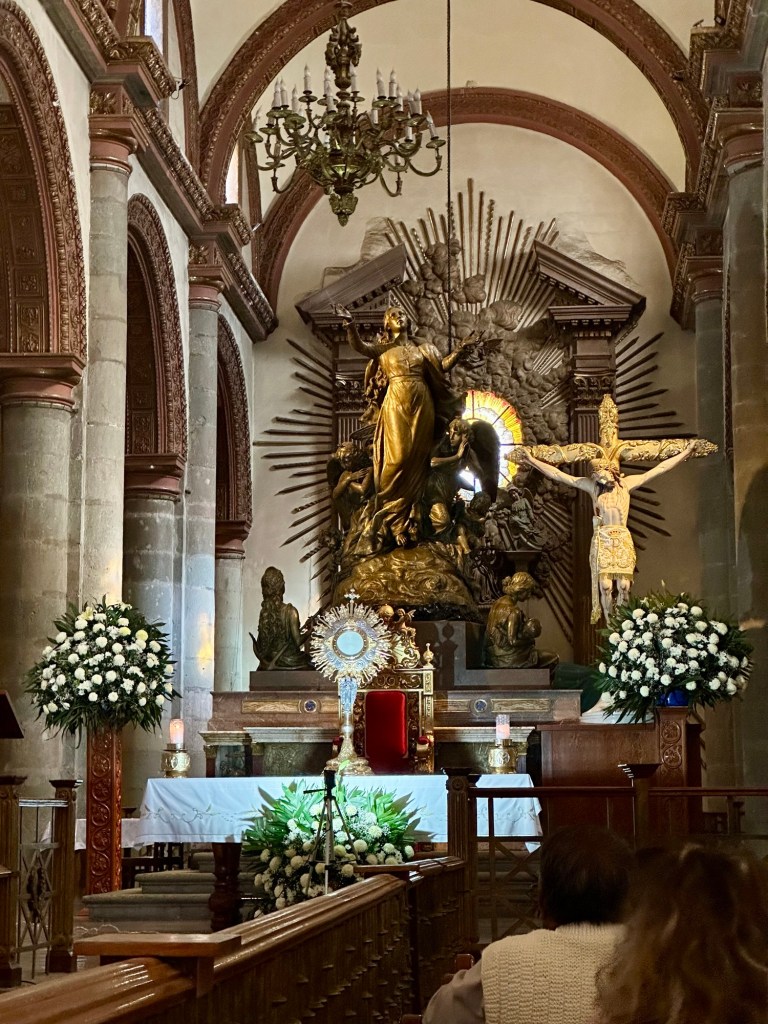
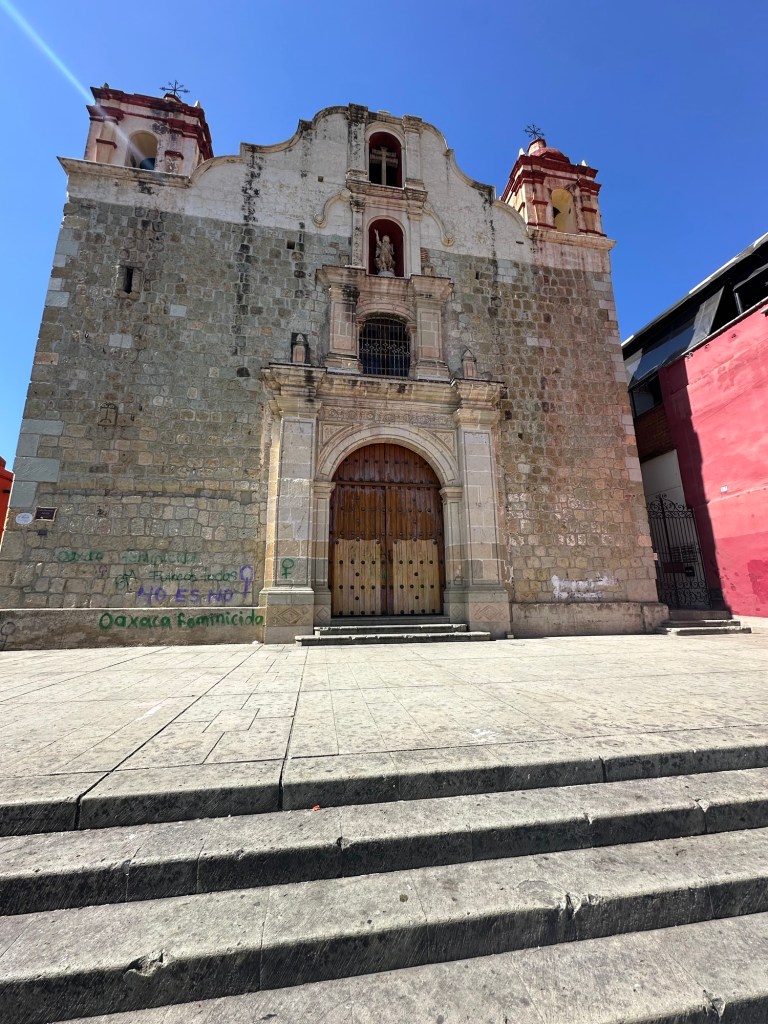
The rest of the afternoon was spent gently strolling around, people watching in the Zocalo, and looking at yet another Cathedral.

Friday 16th – to Campeche

Another early start (groan – aren’t we meant to be on holiday 🤔?) to head to the airport for our flight to Campeche via Mexico City. Ordinarily we may have considered the day- long drive through the rest of Oaxaca state and Chiapas state to Campeche, but security advice was / is that part of that route can be a bit dodgy. And since this is a holiday and not a deployment, discretion suggested alternative means.

A slight problem arose in that there are no direct flights Oaxaca to Campeche. Then our flight booking via Mexico City was changed so we had a four hour layover on Terminal 2…. So a day of taxis, planes and waiting. One bonus, on the flight up to Mexico City we got an even better view of Popocatepetl and Itza than on the flight up from Costa Rica week earlier.

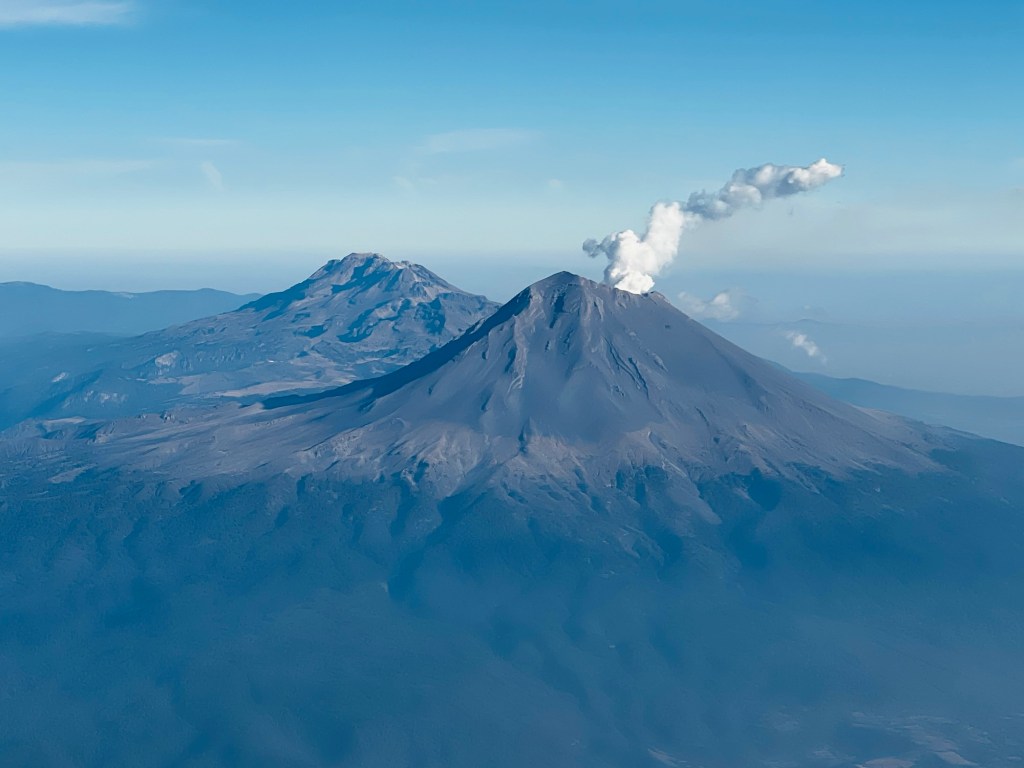
Popocatepetl living up to its name of ‘the smoking mountain’

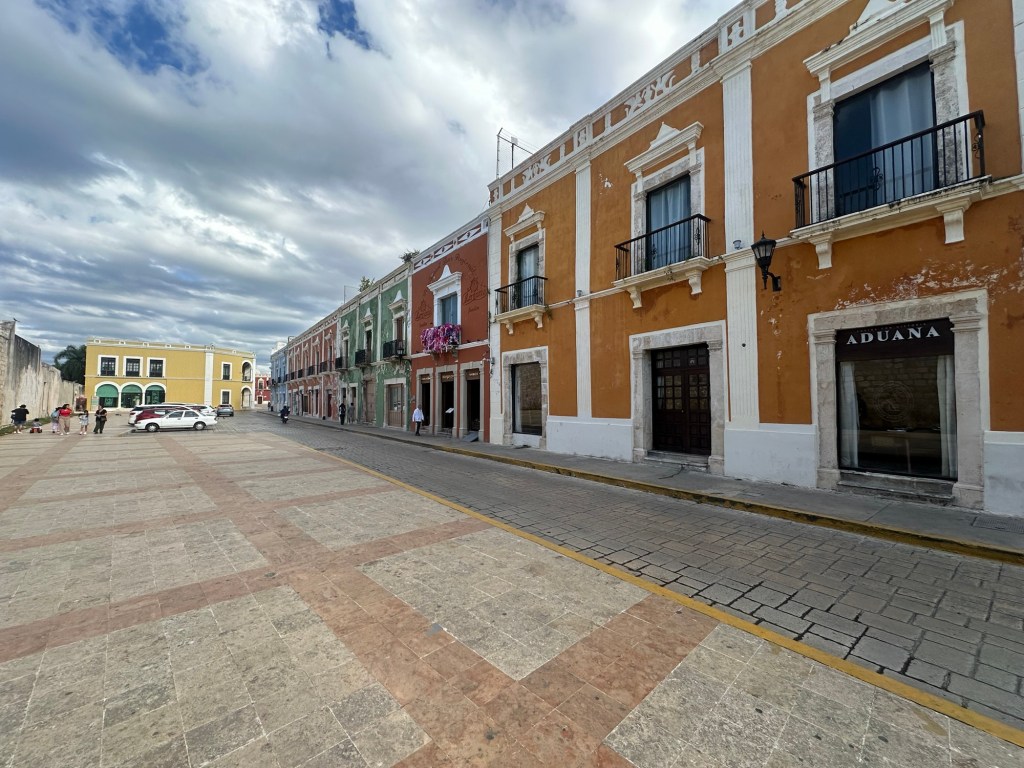
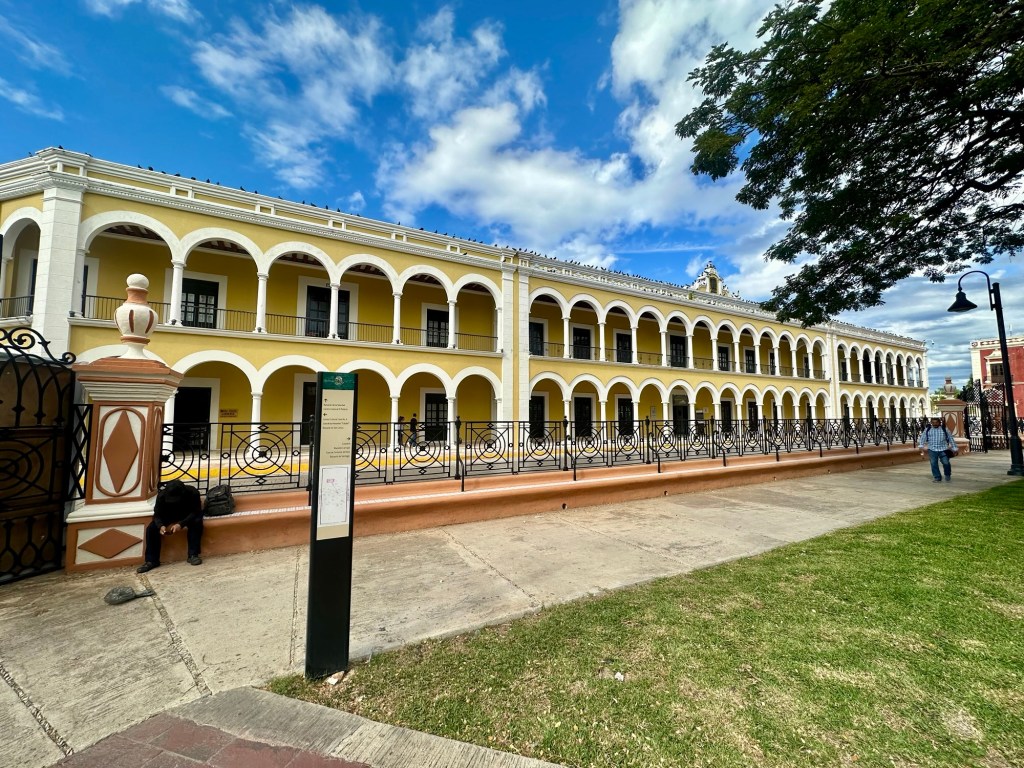
We arrived in Campeche around 1445 and after a speedy one hour wait for a cab ( which we ended up sharing with a lovely couple from Oregon) we arrived at our digs within the old walled city.

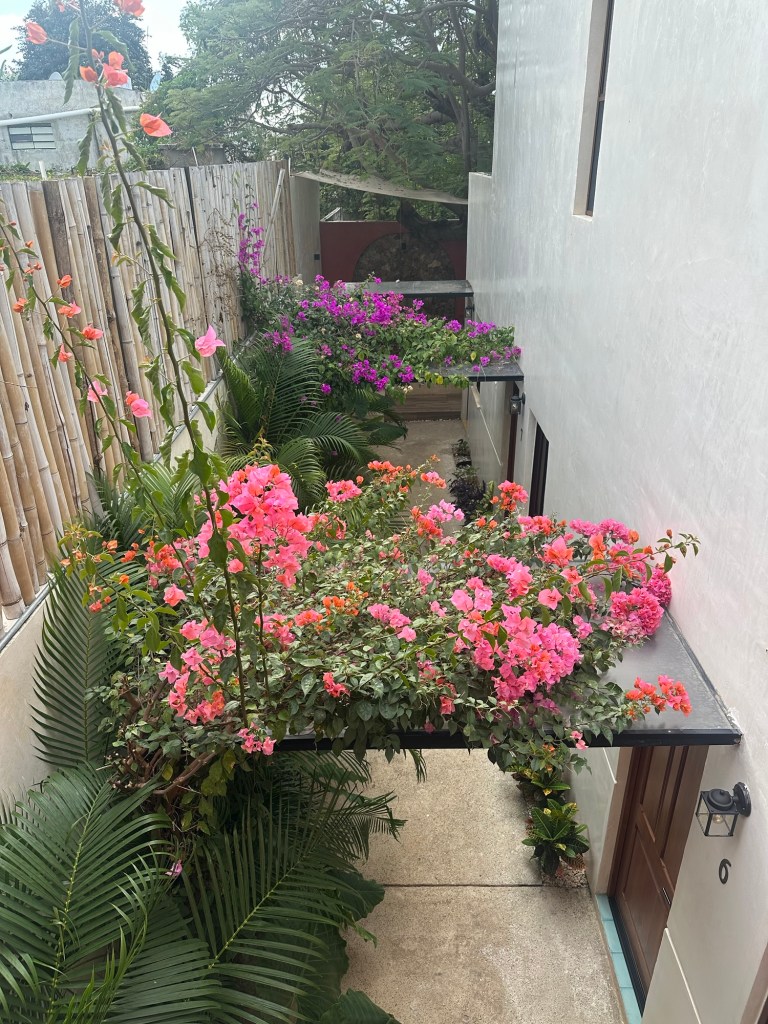
Stunning Bougainvilleas just outside our room

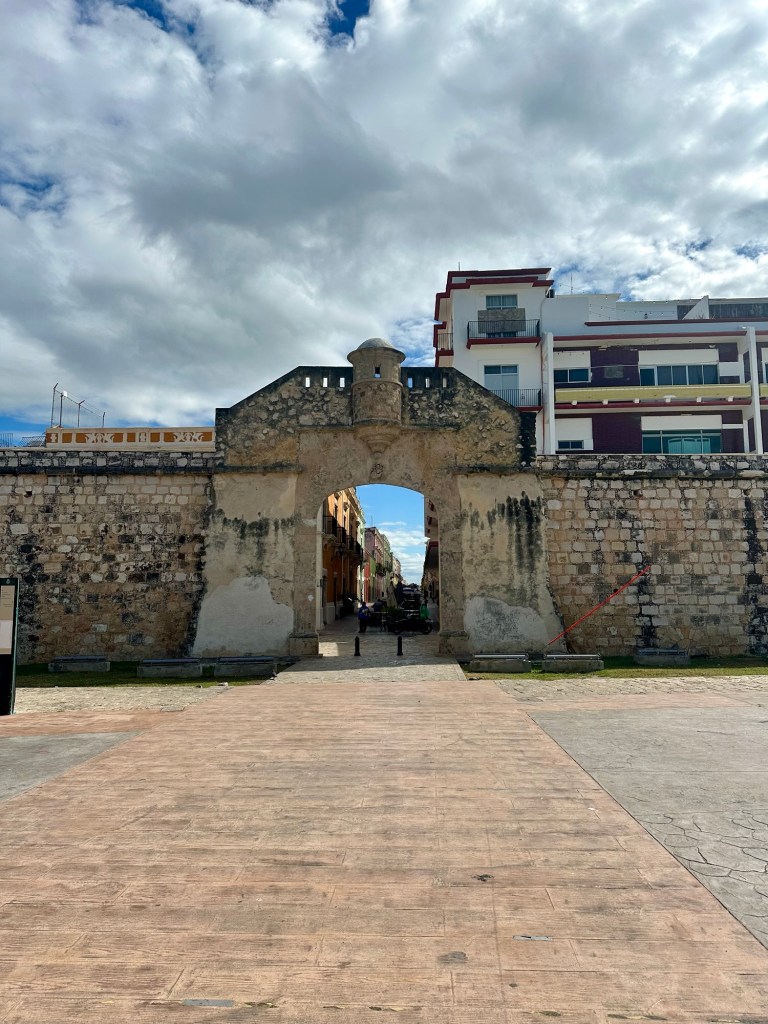
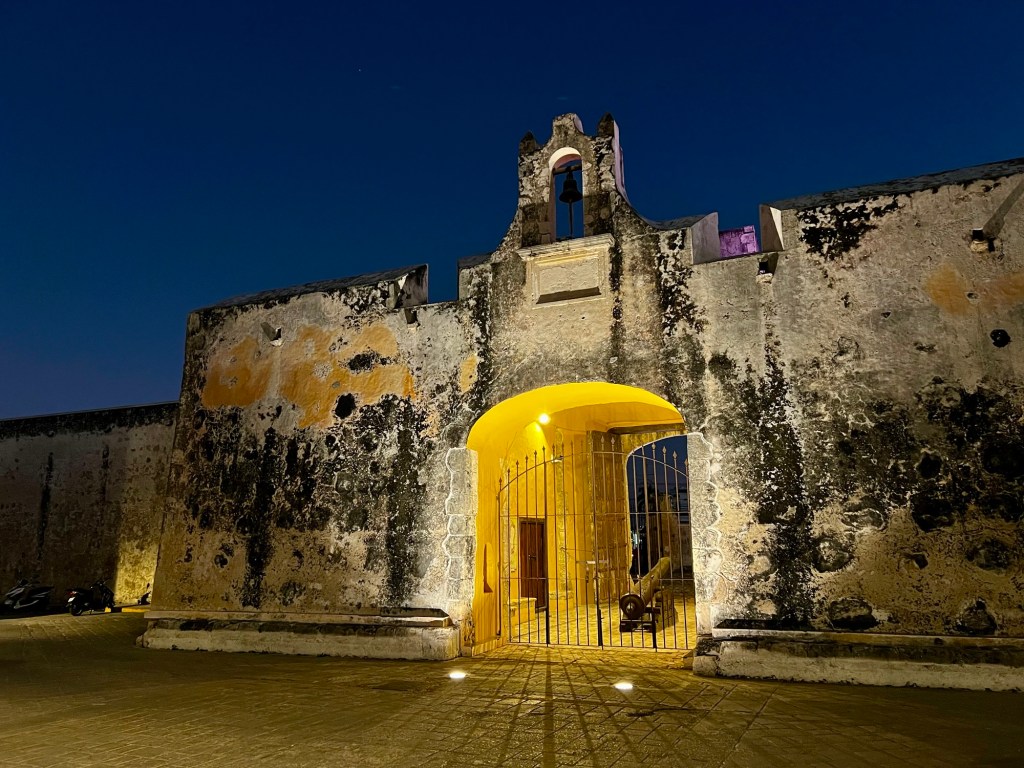
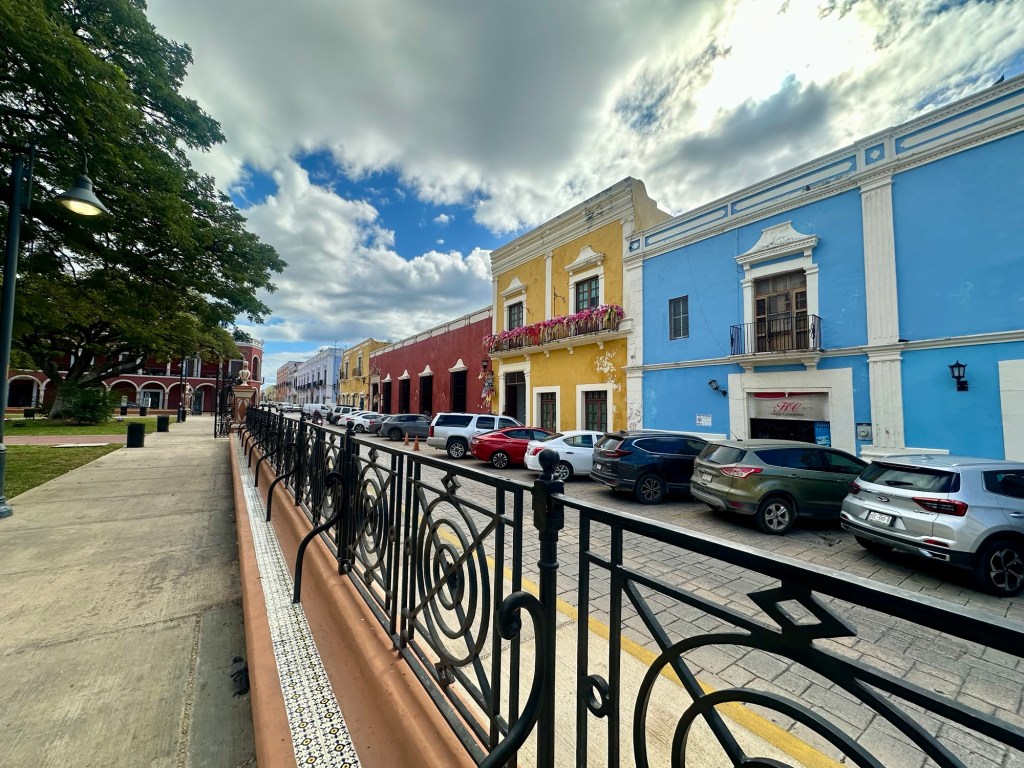
Campeche is on the coast of the Gulf of Mexico. In the colonial era it was a major port – and attracted major interest from privateers. Hence it became a walled city, just like you see in the old ‘pirate’ movies. There were essentially two gates in and out : the ‘land gate’ and the ‘sea gate’. Our accommodation is set within that old walled city.

The ‘sea’ gate
The ‘land’ gate
The pirates’ avenue of approach
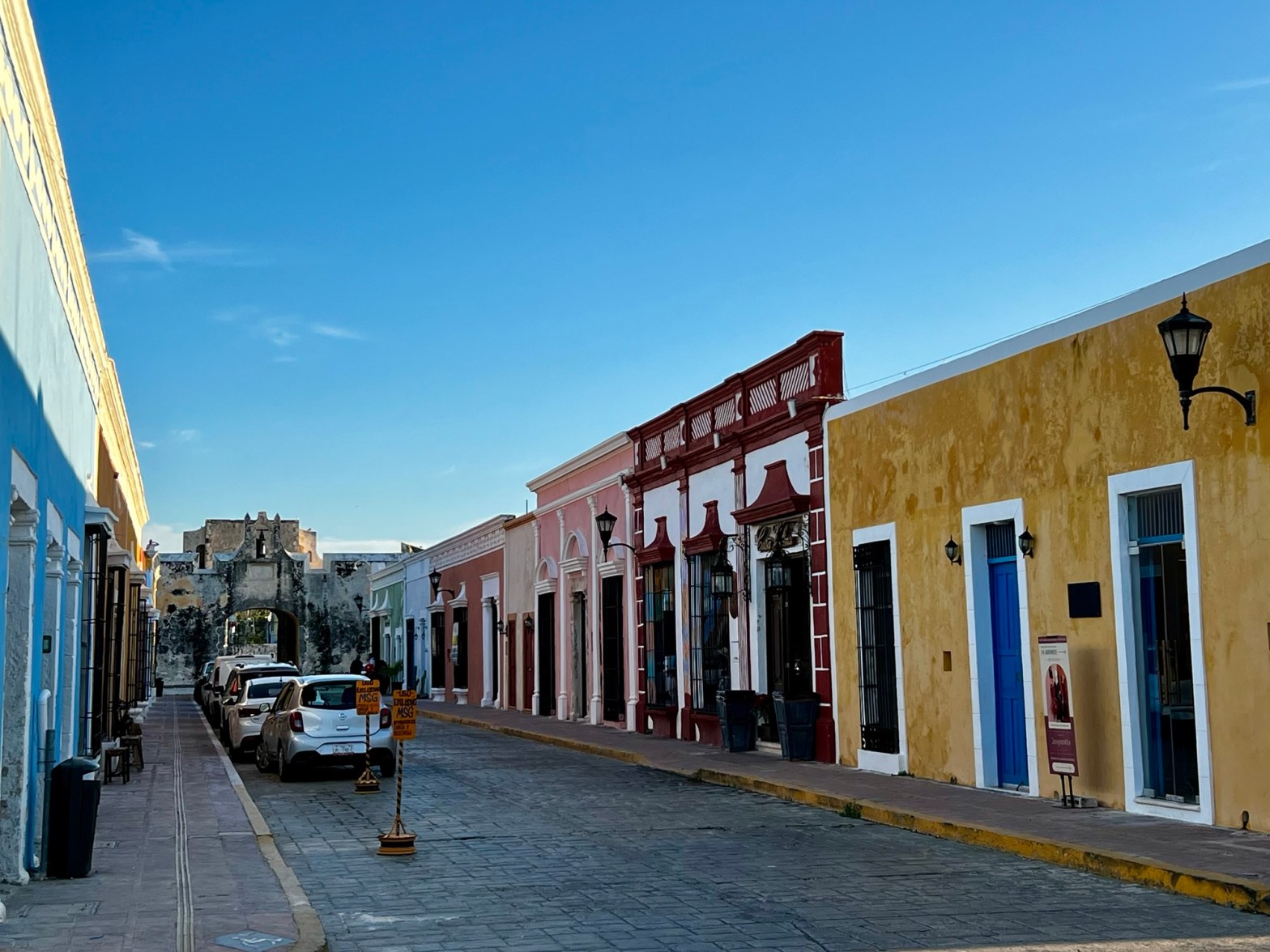
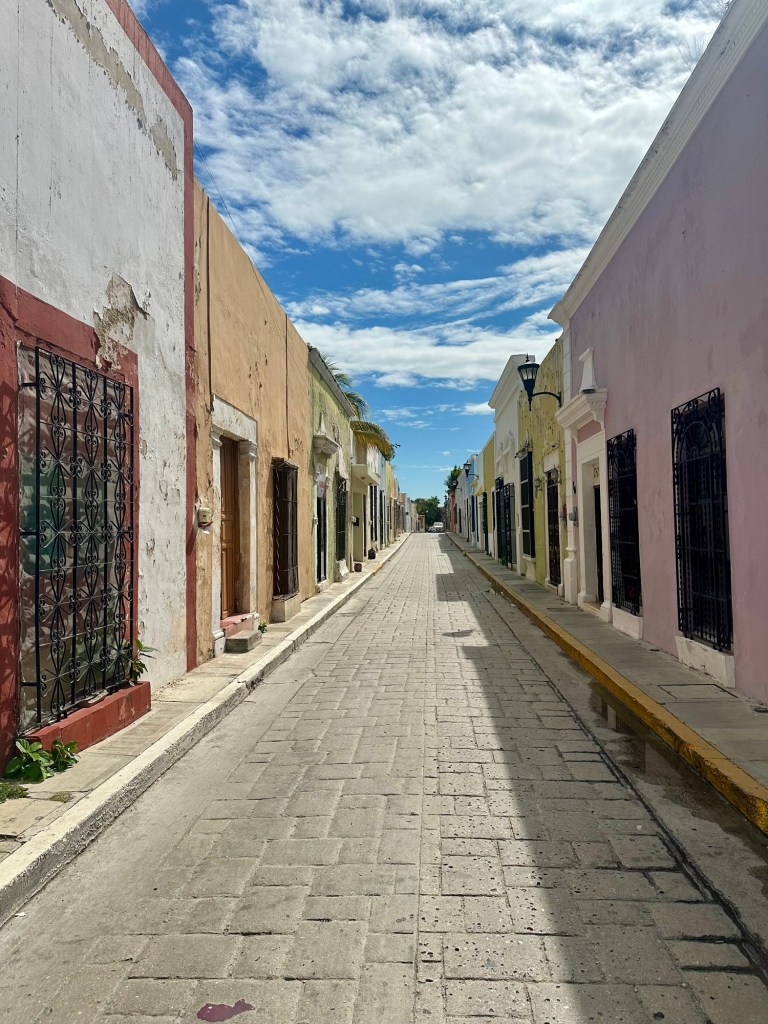
‘Our’ street

Saturday 17th

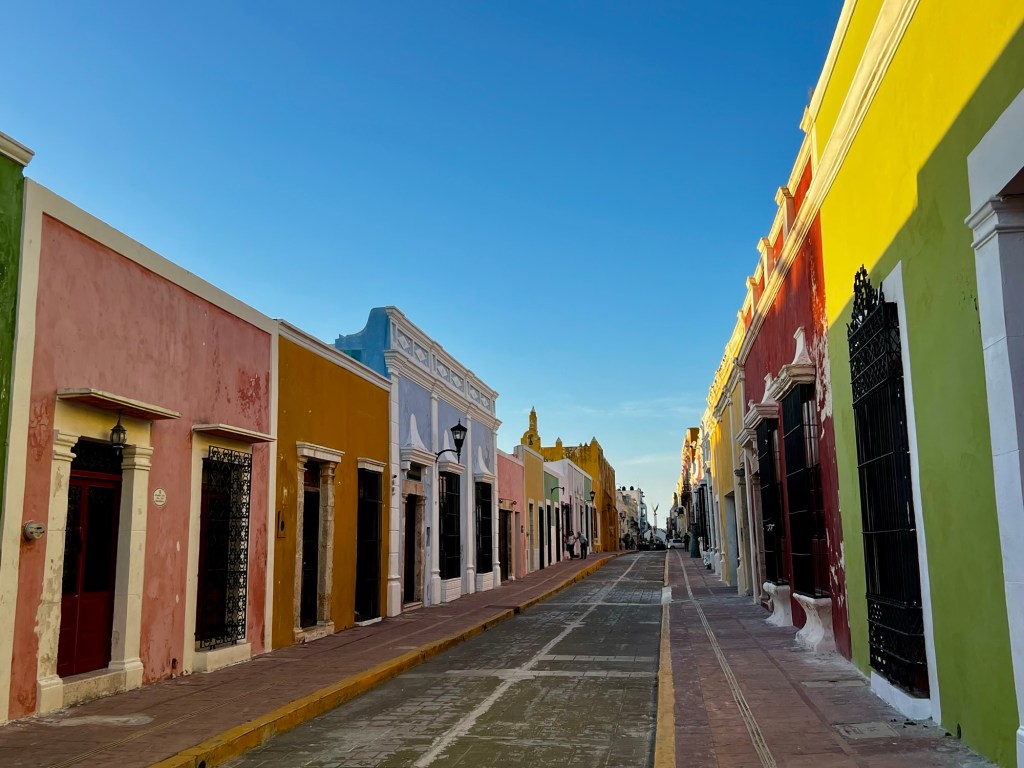
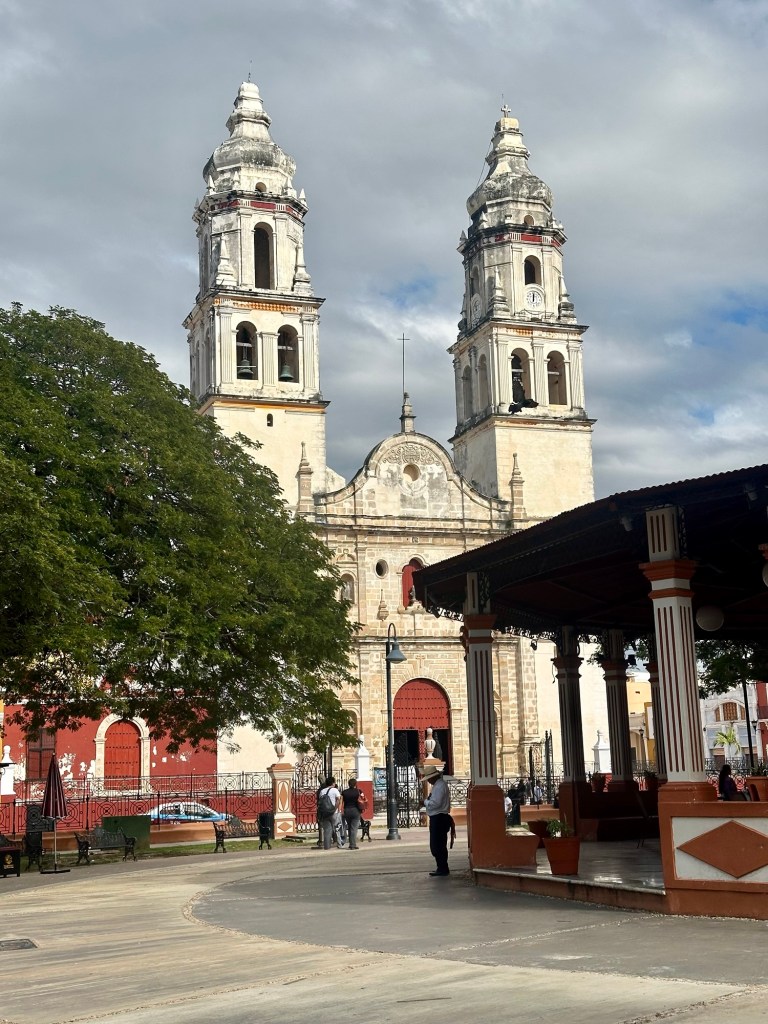
After a delightful sleep in we spent the day wandering around the old walled city of Campeche. The area is UNESCO heritage listed, and it is easy to see why.

And it wouldn’t be a Spanish colonial city without another cathedral:

Surprising!

Tomorrow: deeper into the Yucatan Peninsula! (And more Pyramids…)

Puebla ➡️ Oaxaca

13-14 January 2026

Tuesday morning we were off to the Puebla Central Bus station, where we caught the ADO ‘premier’ class bus to Oaxaca.

Looking back on the road to Oaxaca

The five-ish hour journey was comfortable enough – the seats were a bit better than your average international premium economy class seat. The thing which was not ‘premium’ was the onboard lavatory, as Mark found out to his disgust at approximately the four hour interval. 🤢

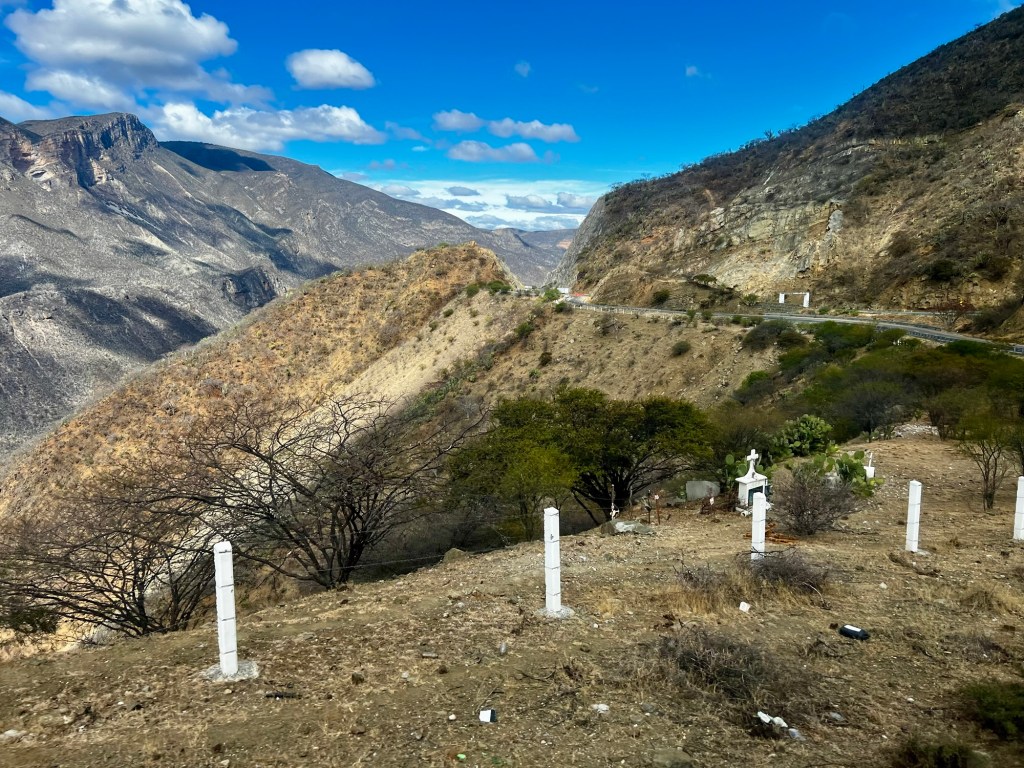
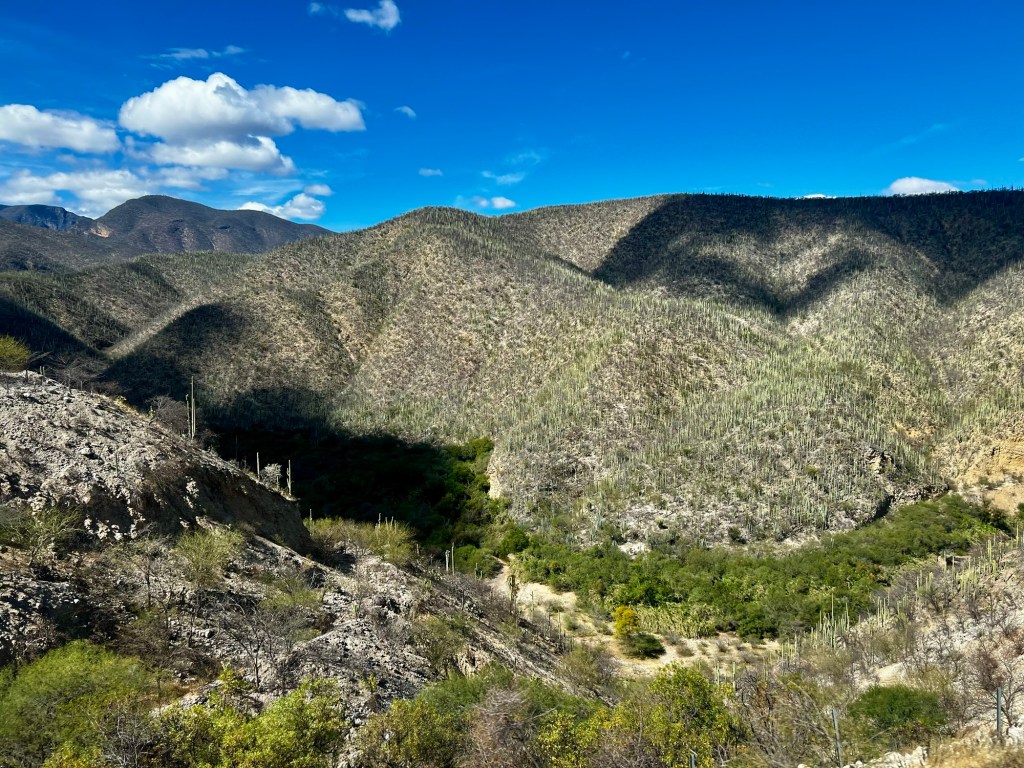
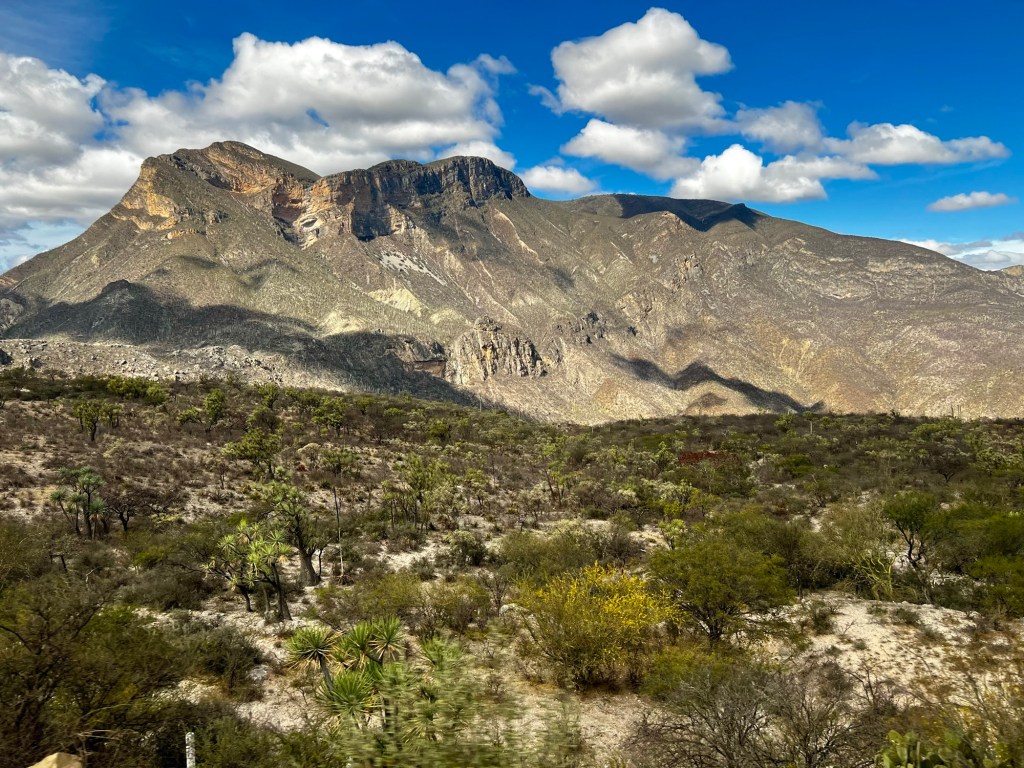
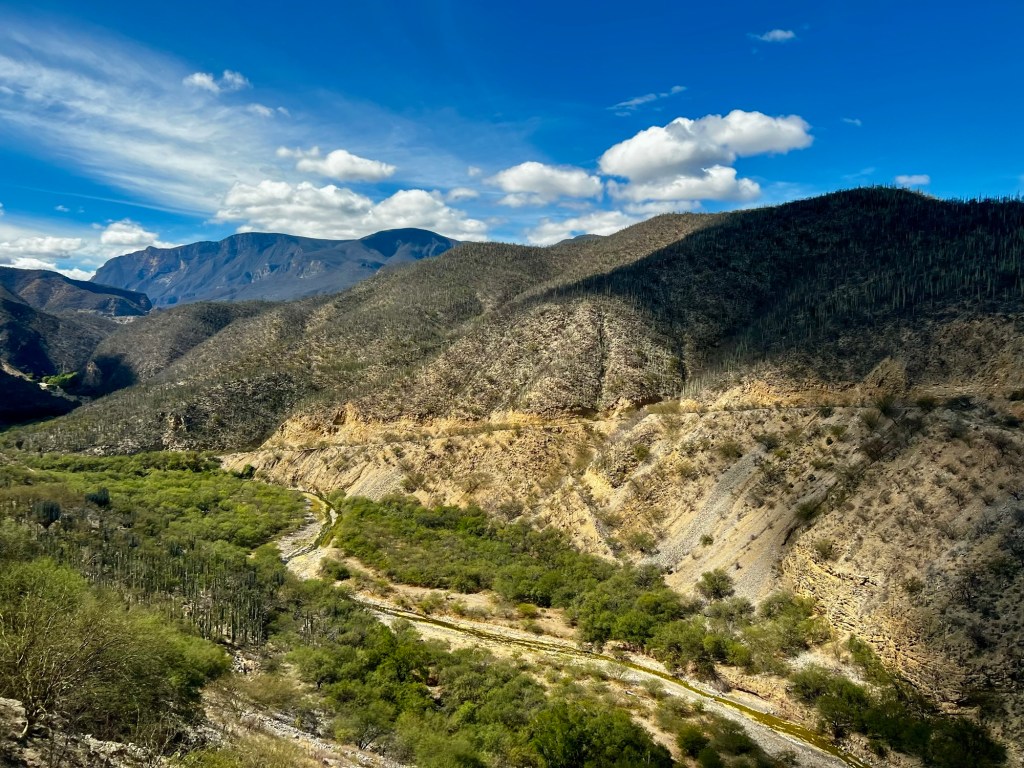
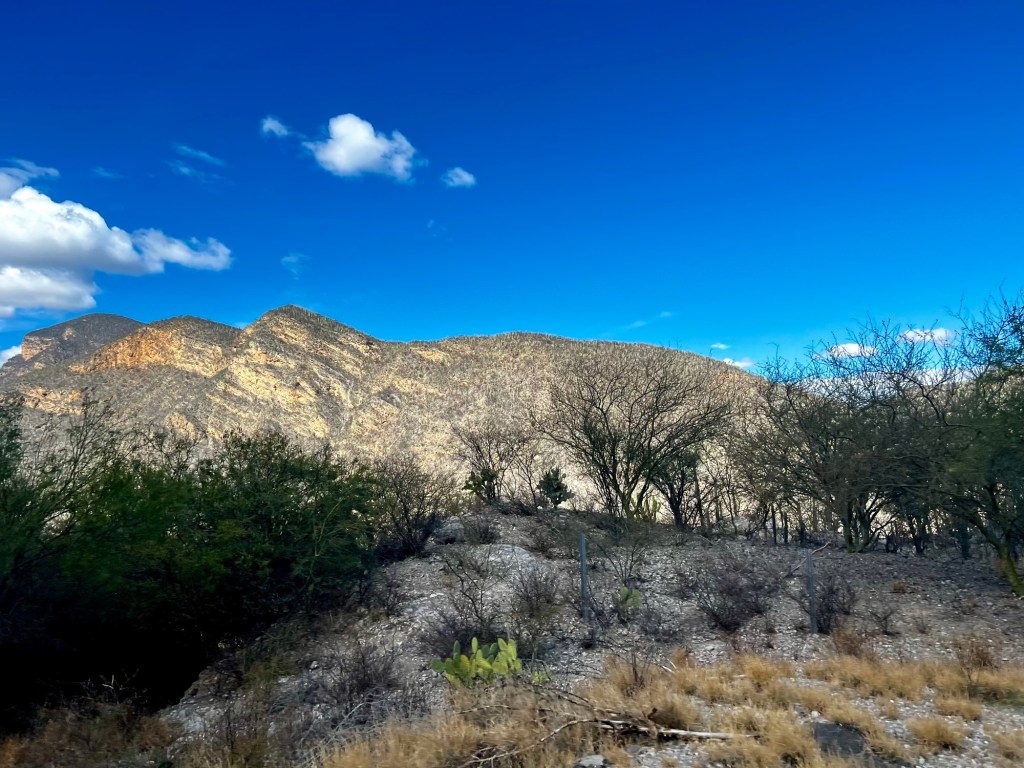
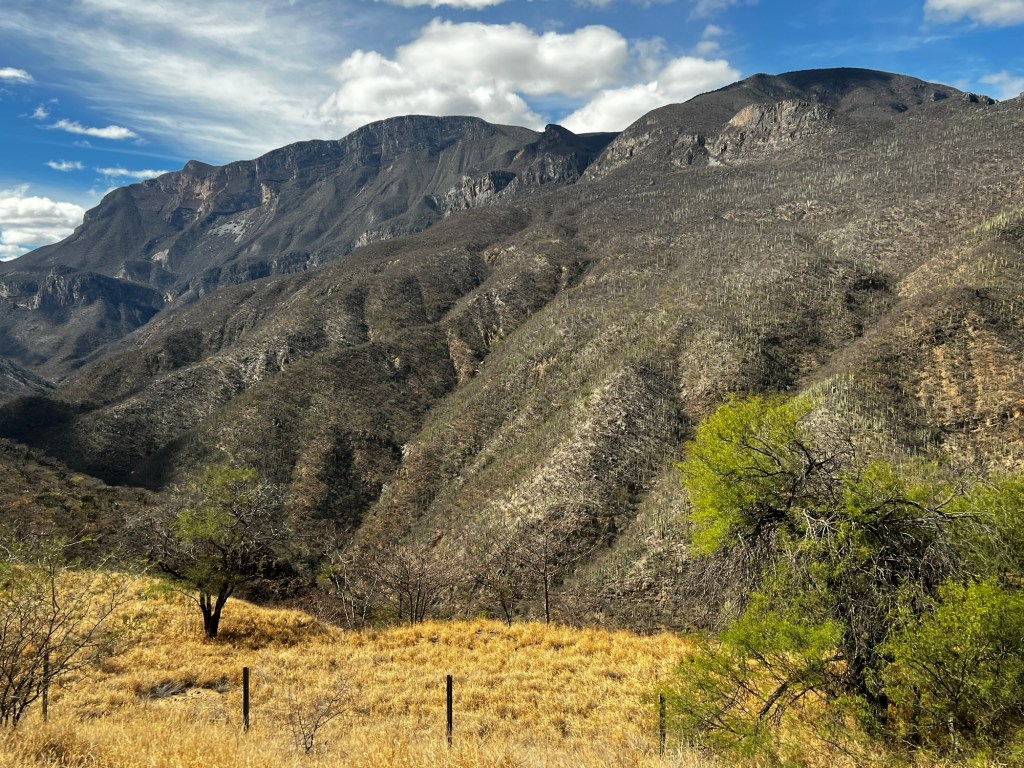
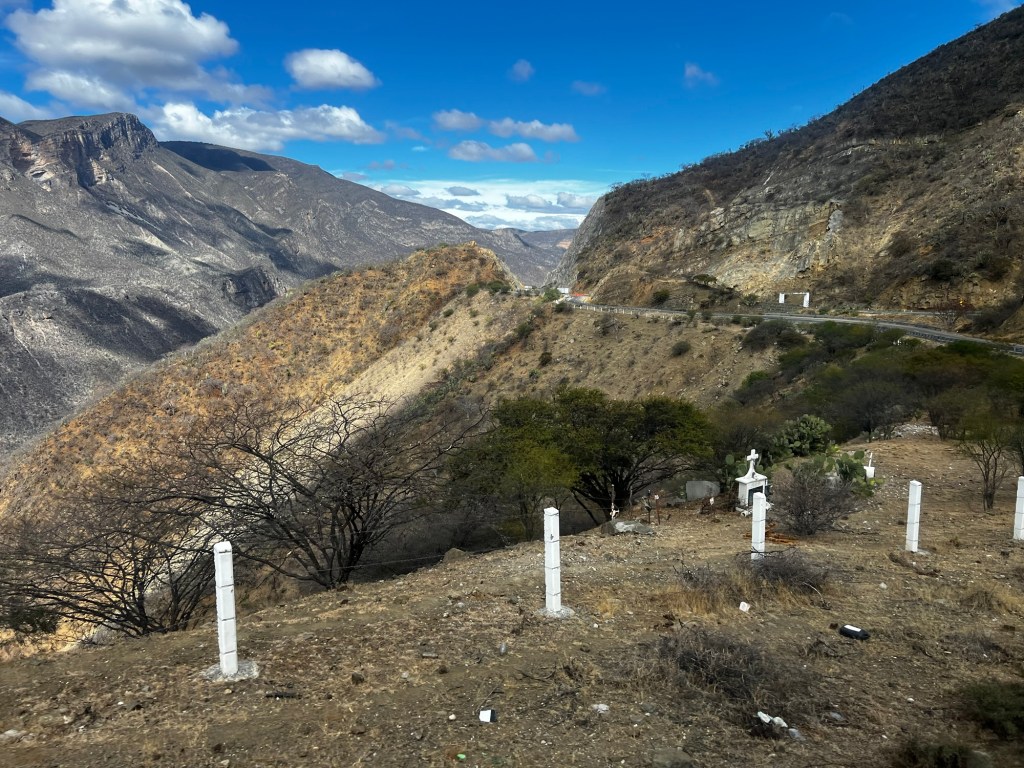
The scenery was fascinating- with the road climbing up and over several ranges and the valleys in between. Some of the passes were over 2,500 metres, making for some great views.

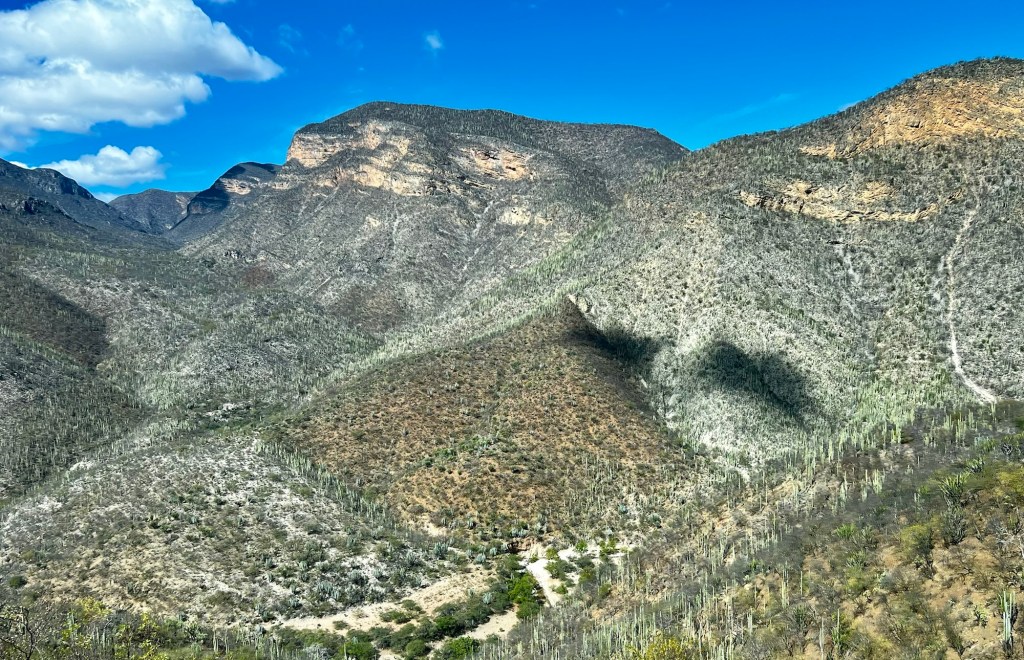
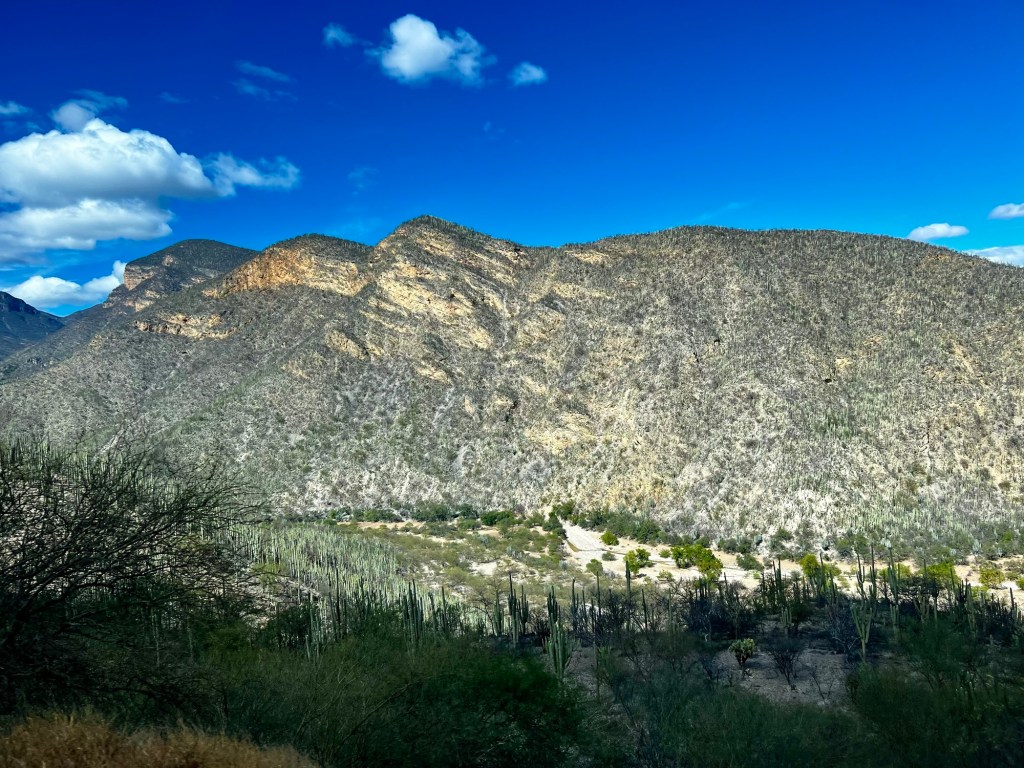
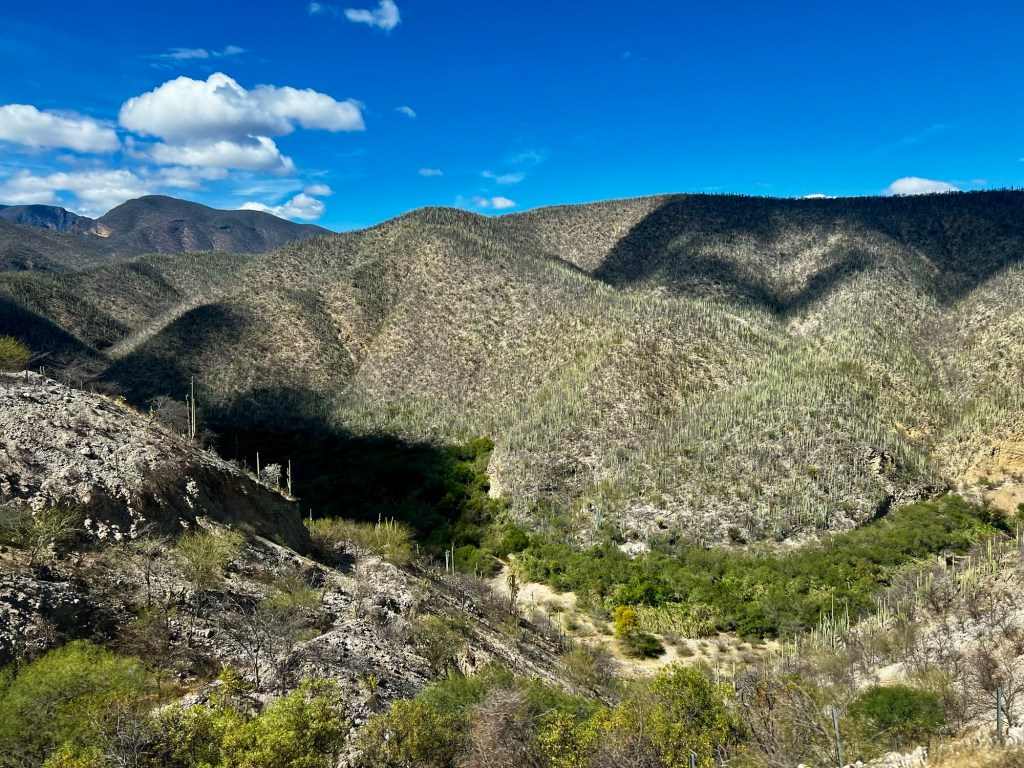
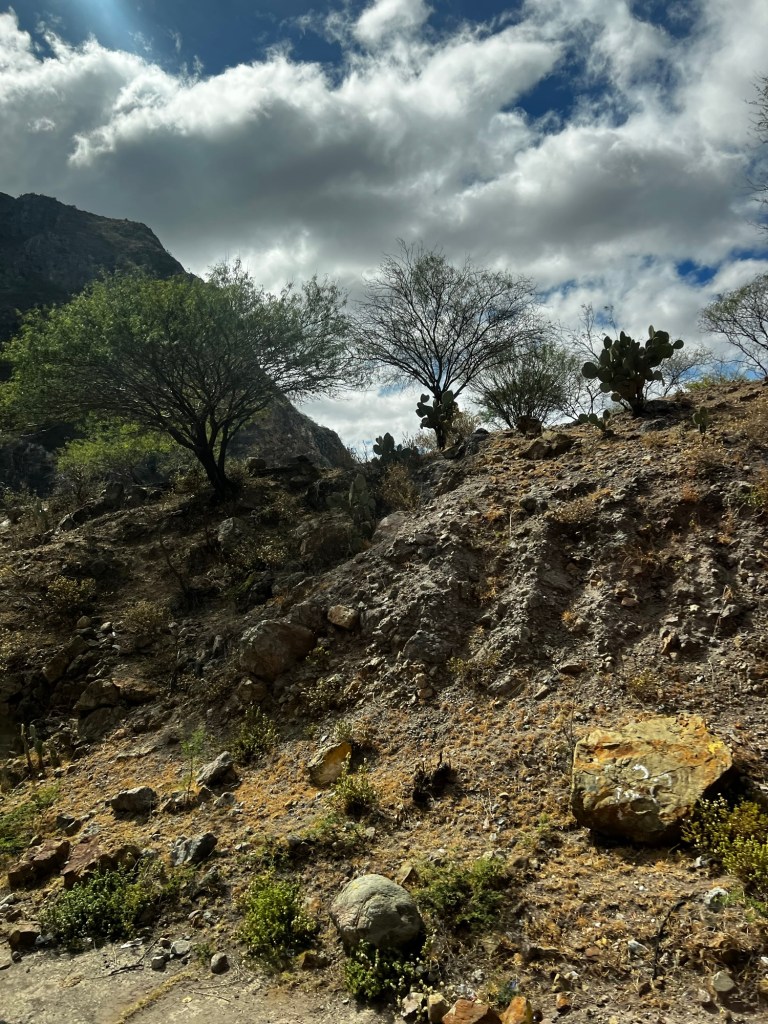
A large portion of the ranges were covered in really high cactus ‘forests’ , a strikingly unfamiliar landscape to Australian eyes. Some of the scenery (the green ‘whiskers’ in some of the photos are the cacti);

A late afternoon arrival and a quick cab ride from the Oaxaca bus station saw us into our hotel in the historic central district of Oaxaca.

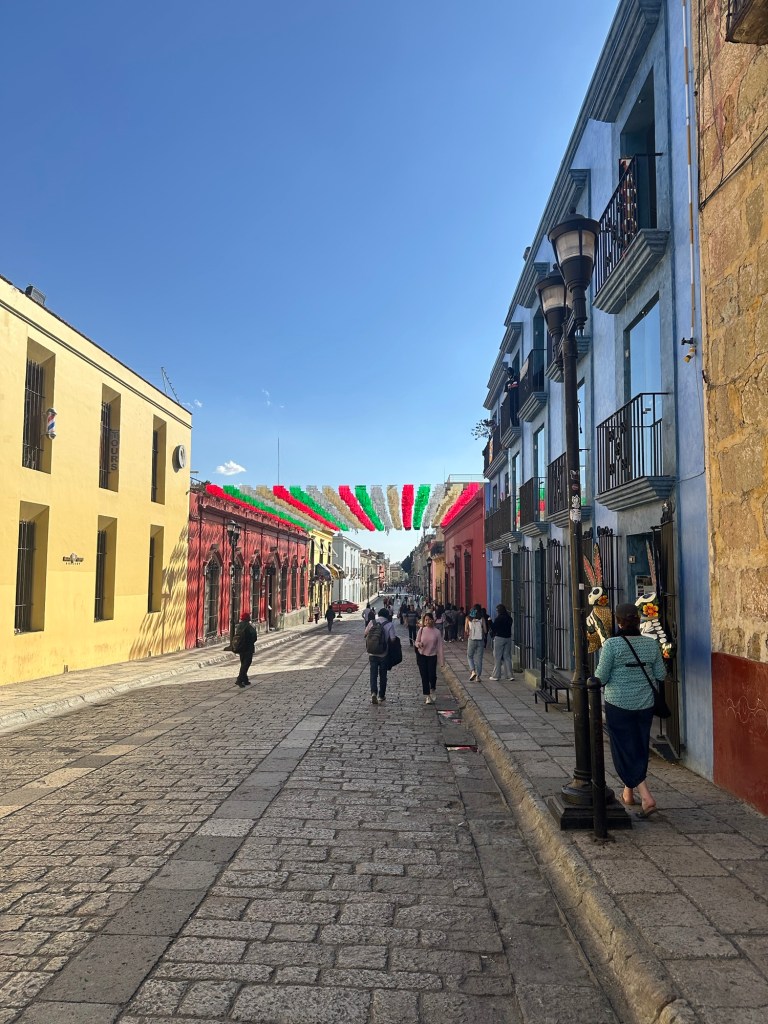
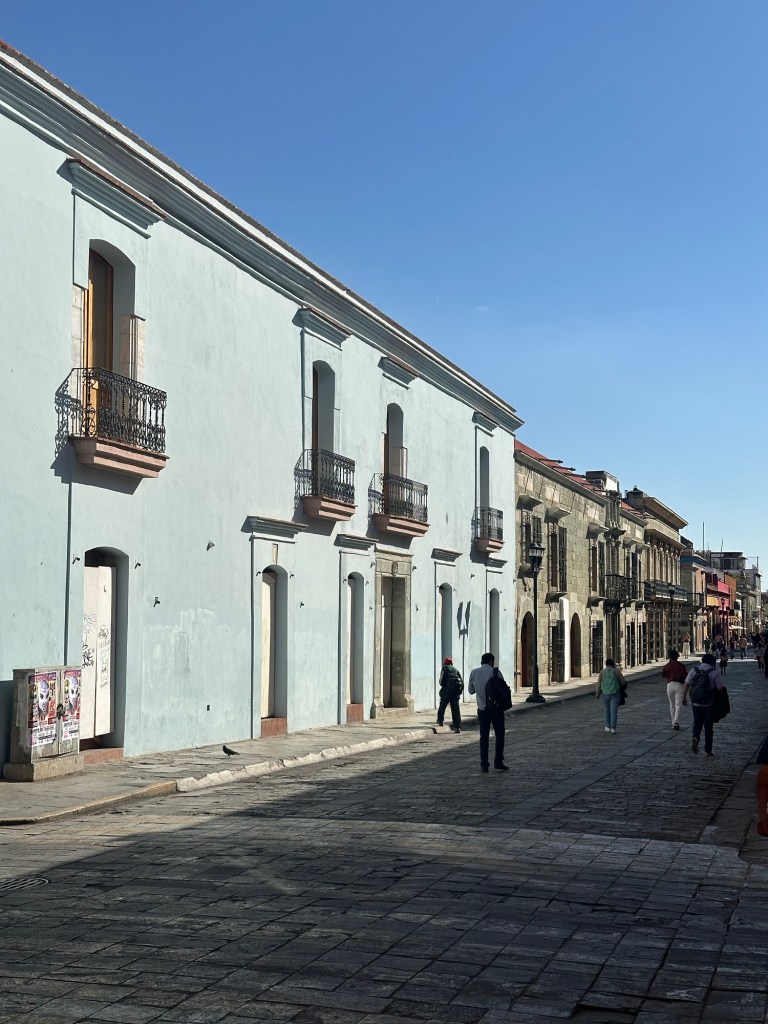
If the streetscape of central Puebla was an improvement on Mexico City, central Oaxaca takes it up another notch. Set in a deep valley surrounded by high hills / mountains, central Oaxaca has a lot of charm.

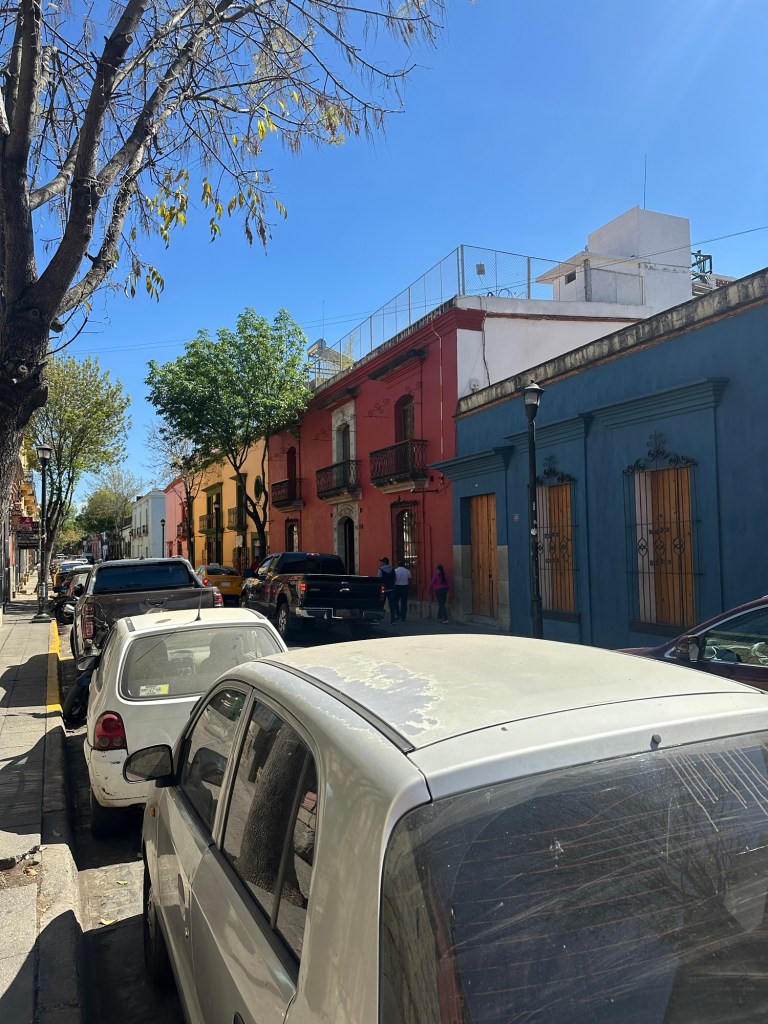
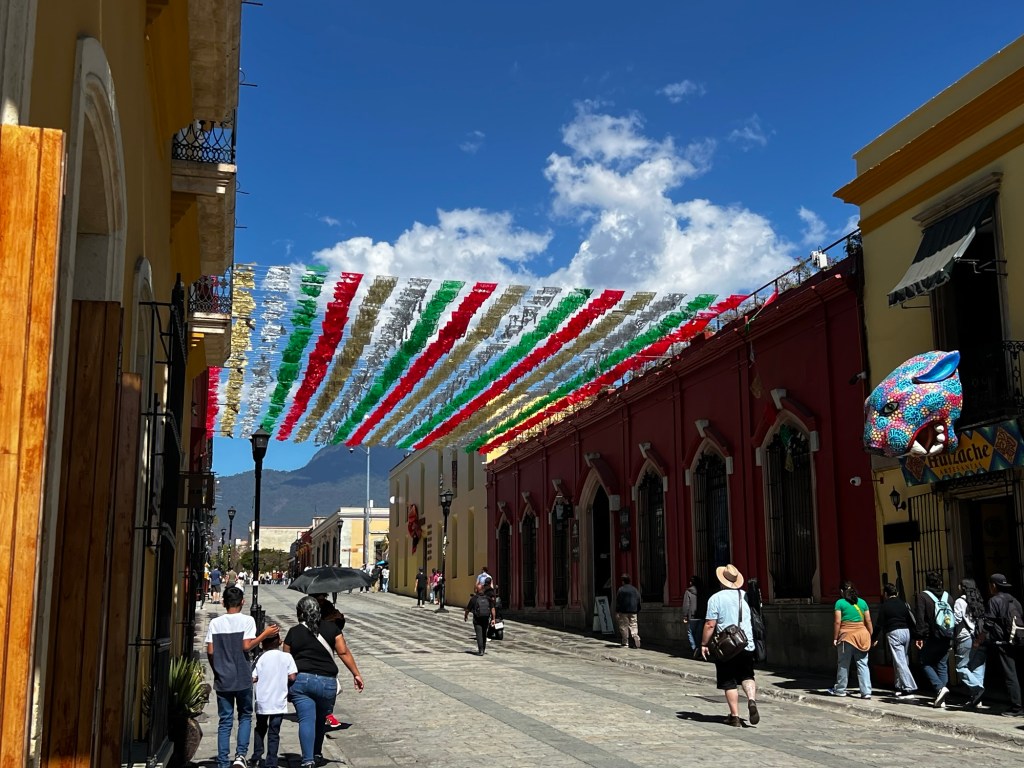
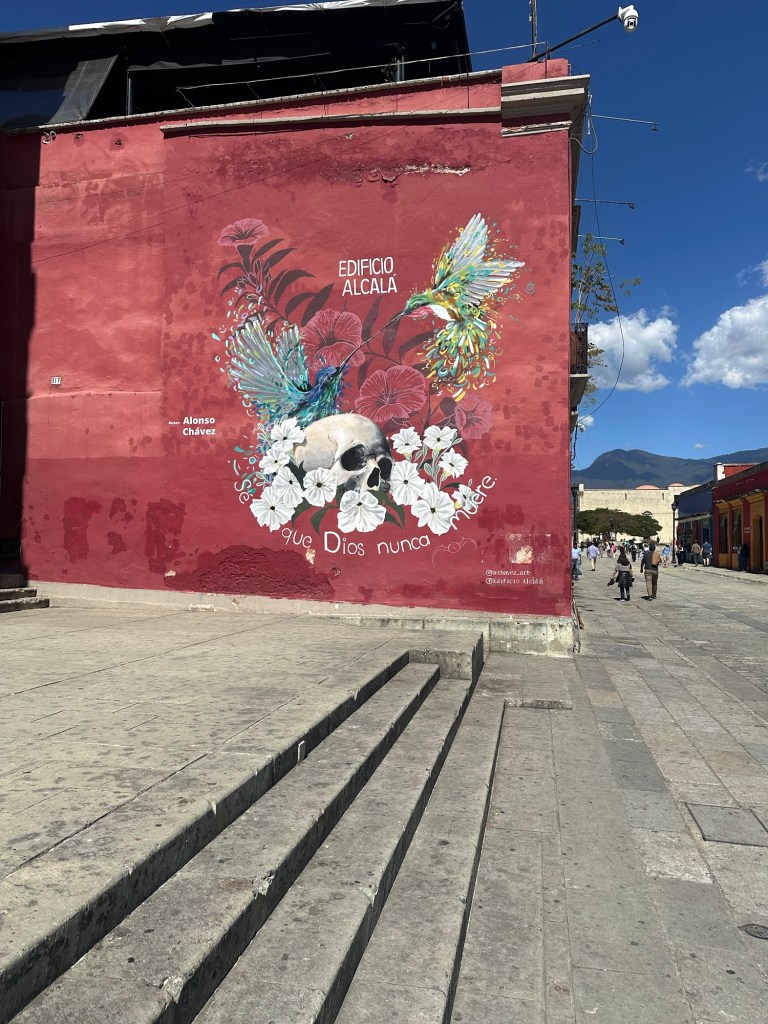
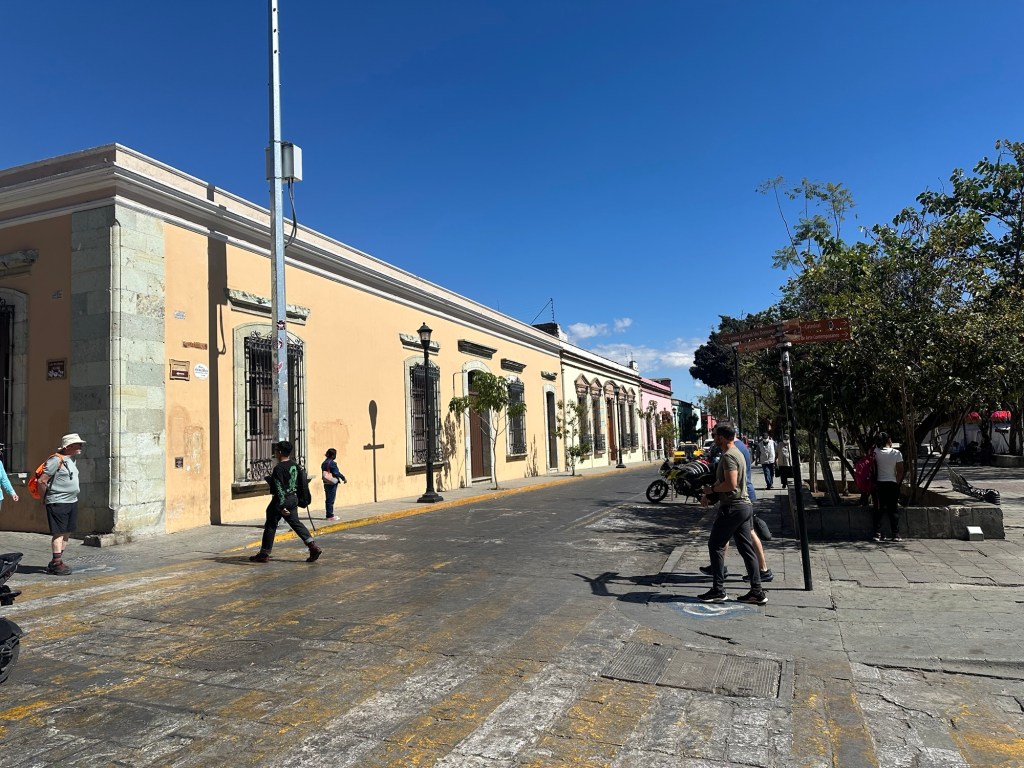
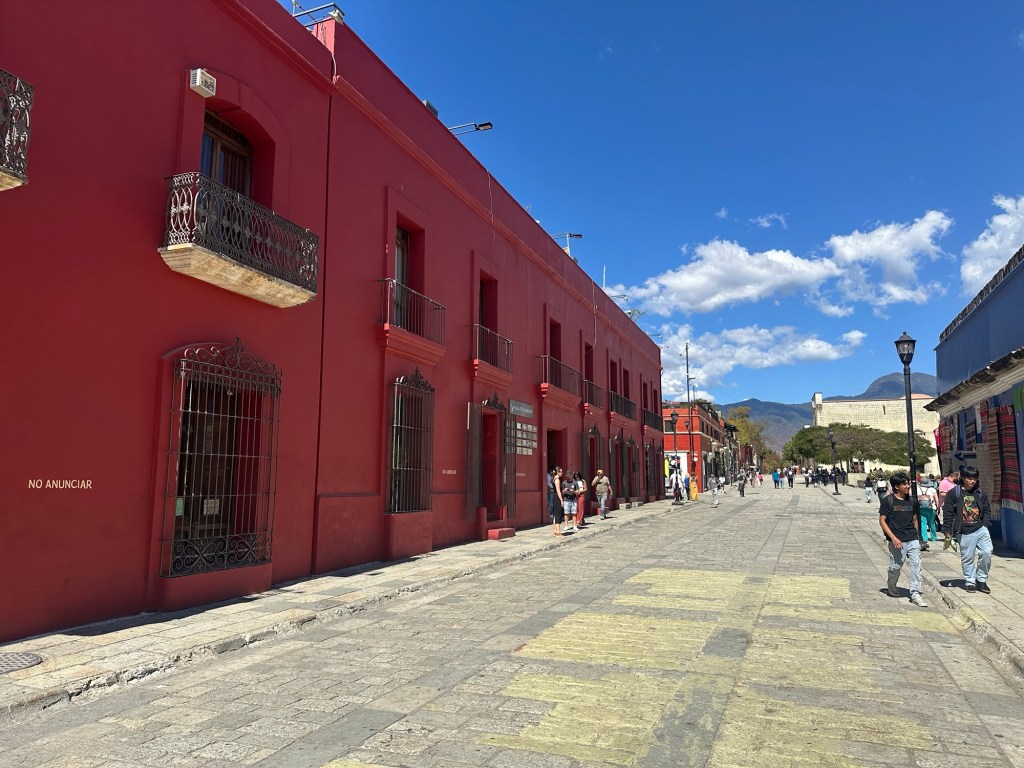
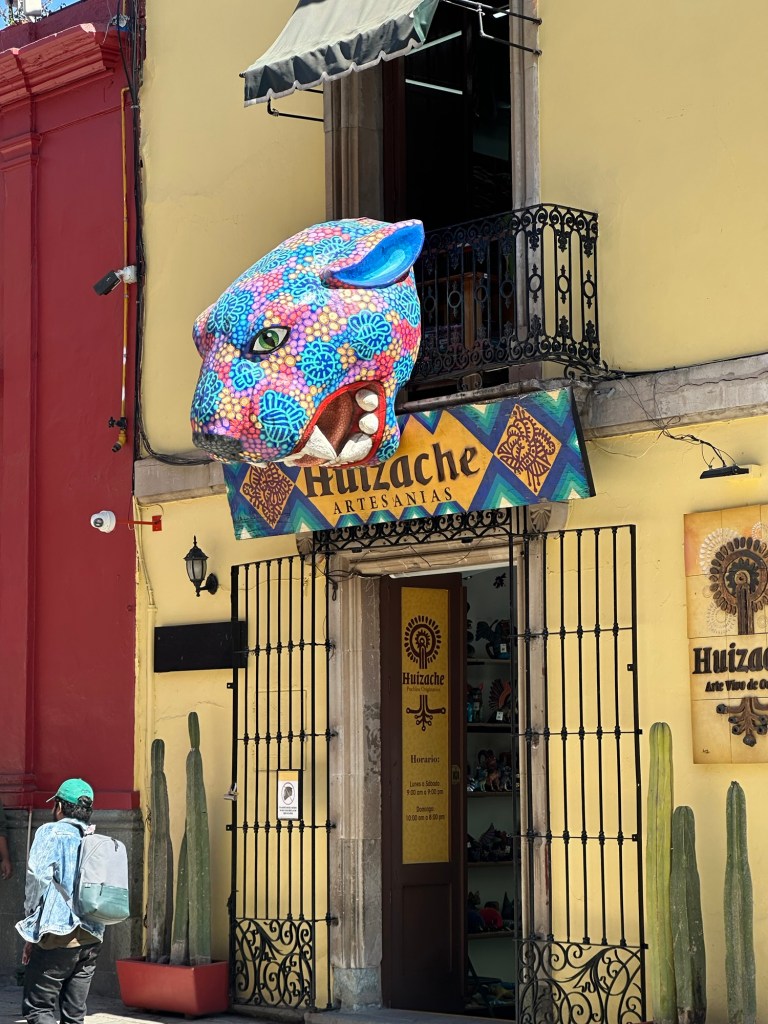
Some street scenes:

Long a centre of civilisation from the early days of Mesopotamia- American development, several groups called the region home. The Zapotec people were perhaps the most predominant and influential for much of the area’s history, but others including Aztecs and Mixtecs got a look in. The legacy of these groups is still present today with around a dozen indigenous languages still be spoken in the region/ state today. Alongside all of these languages, Oaxaca maintains a distinctive and proud cultural identity- and cuisine. And, like most of Mexico, has a strong overlay of adapted’ Catholicism. In one store we saw the ‘Xmas disco Oaxaca nativity’:

Baby Jesus meets disco

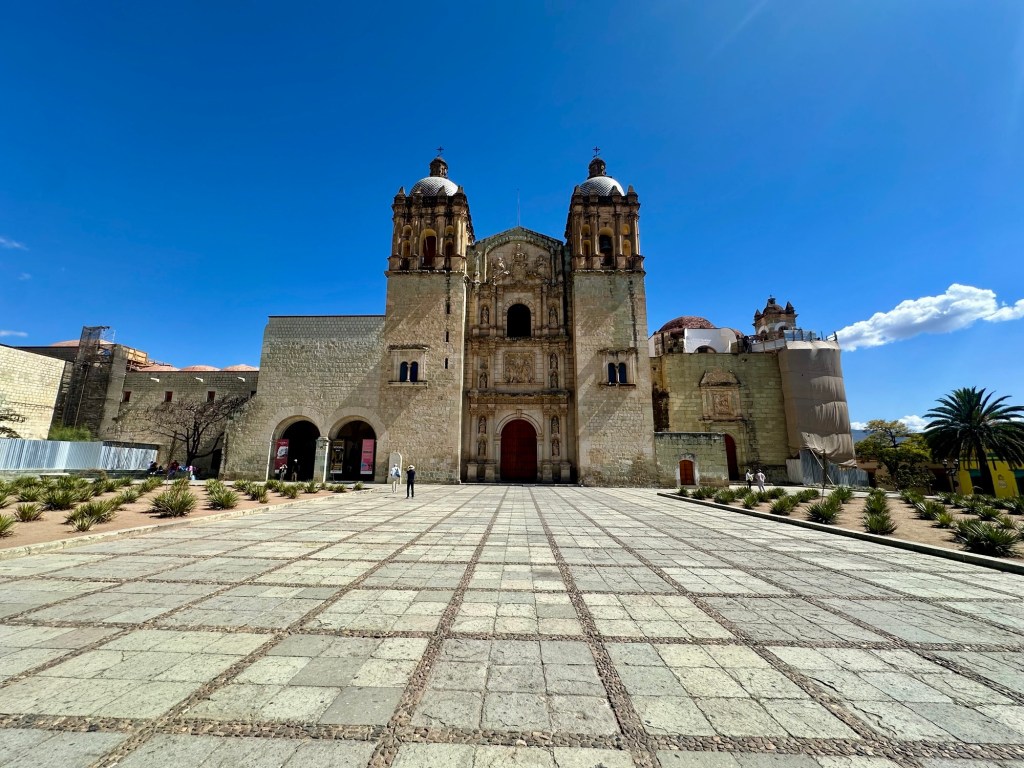
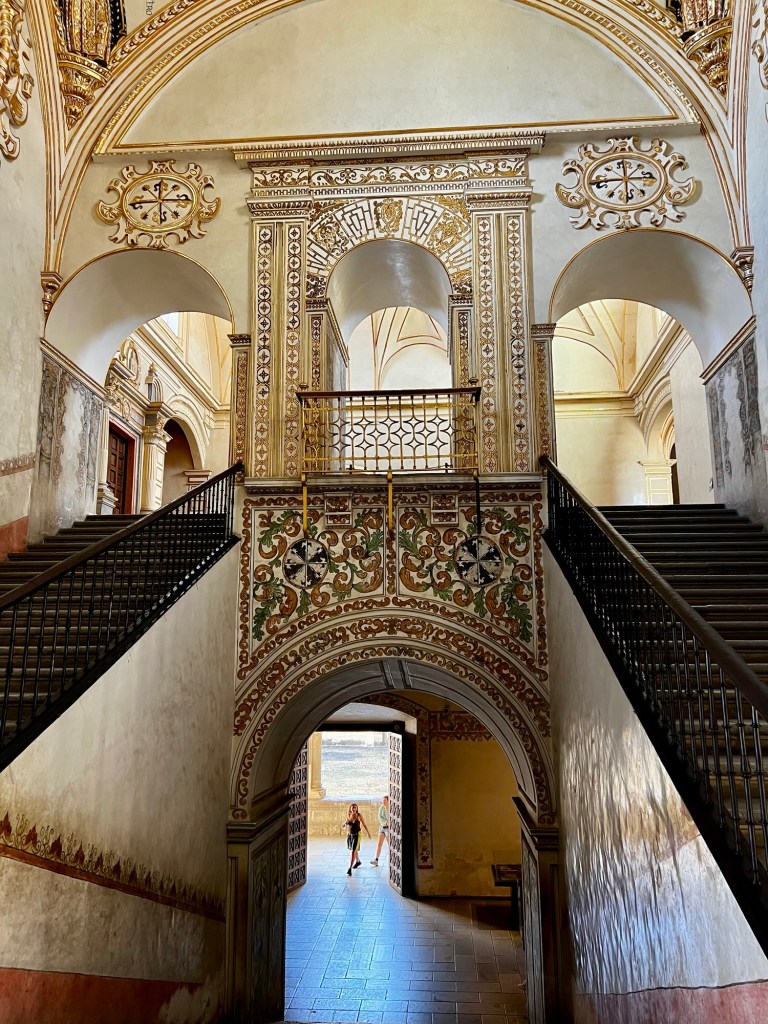
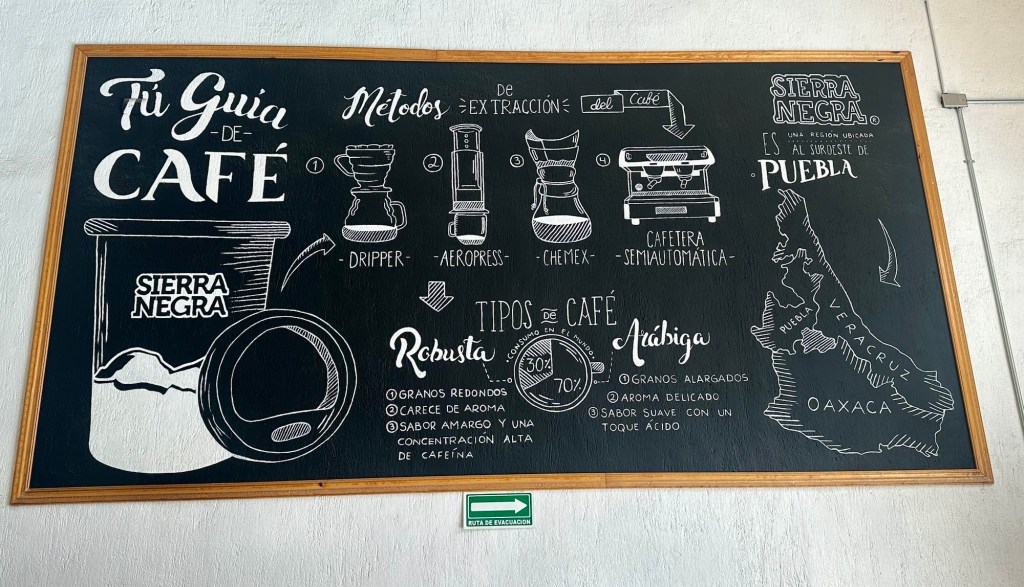
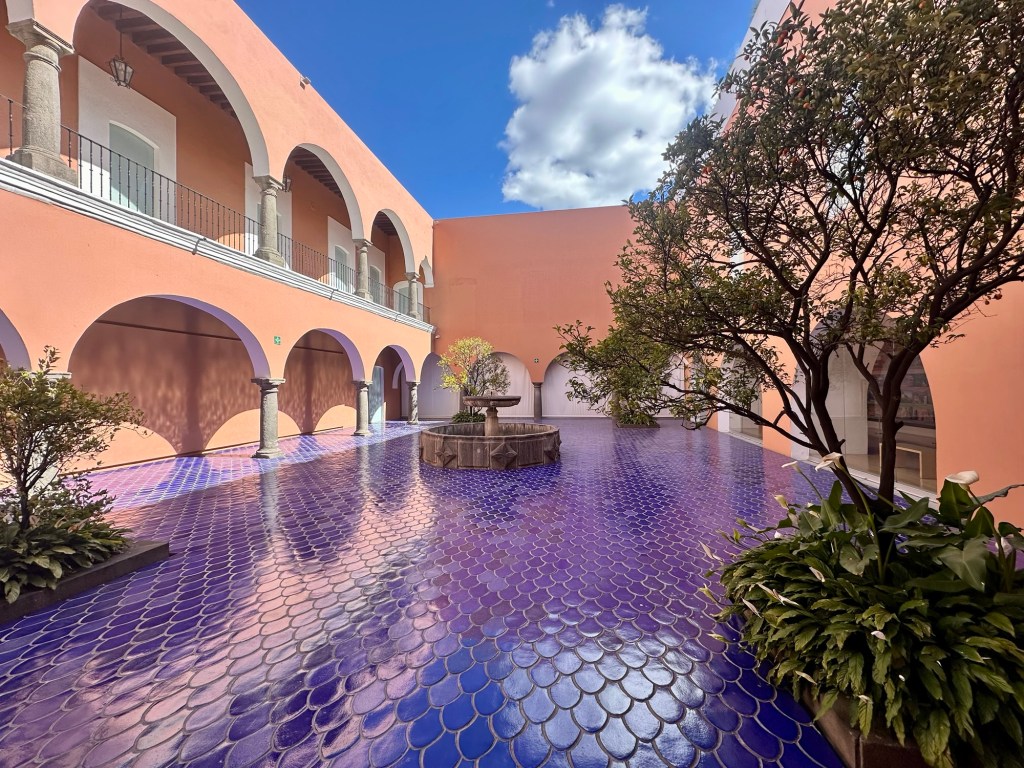
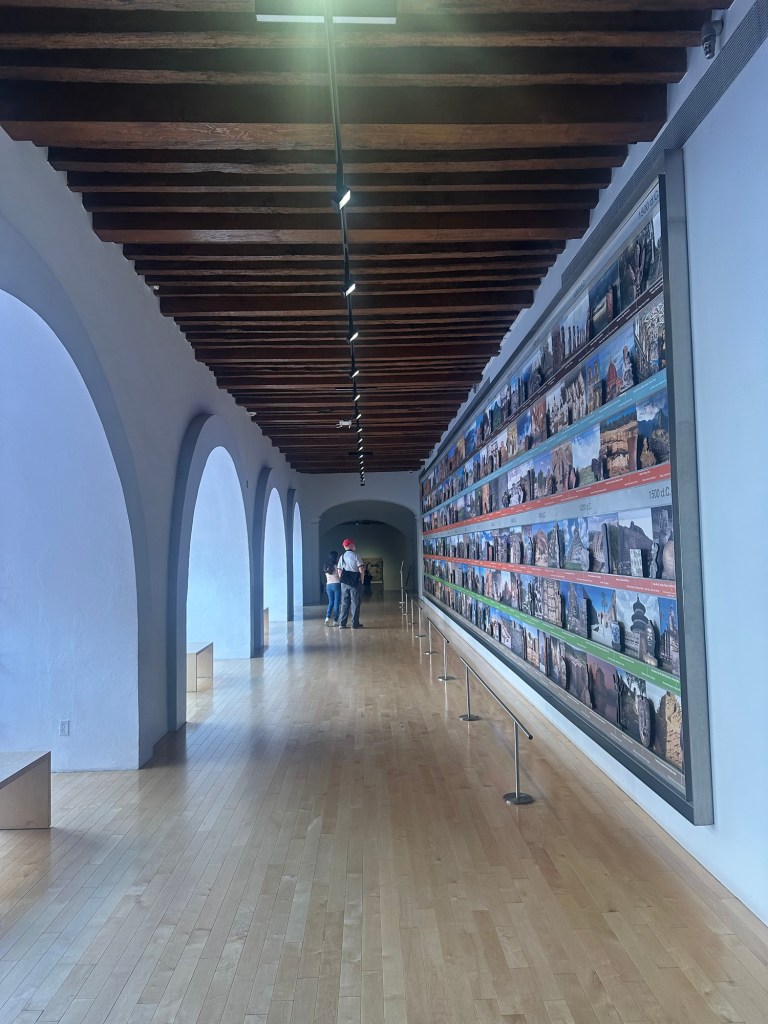
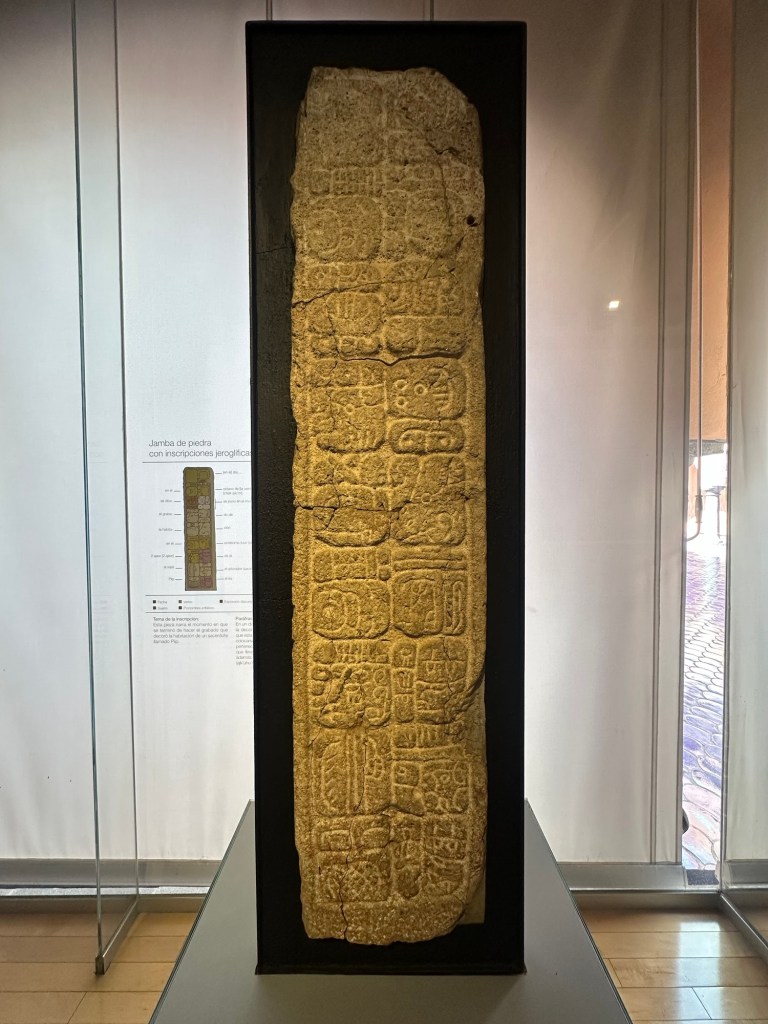
We spent Wednesday wandering around central Oaxaca, including time in yet another fabulous museum, the Museum of Cultures of Oaxaca, Santo Domingo.

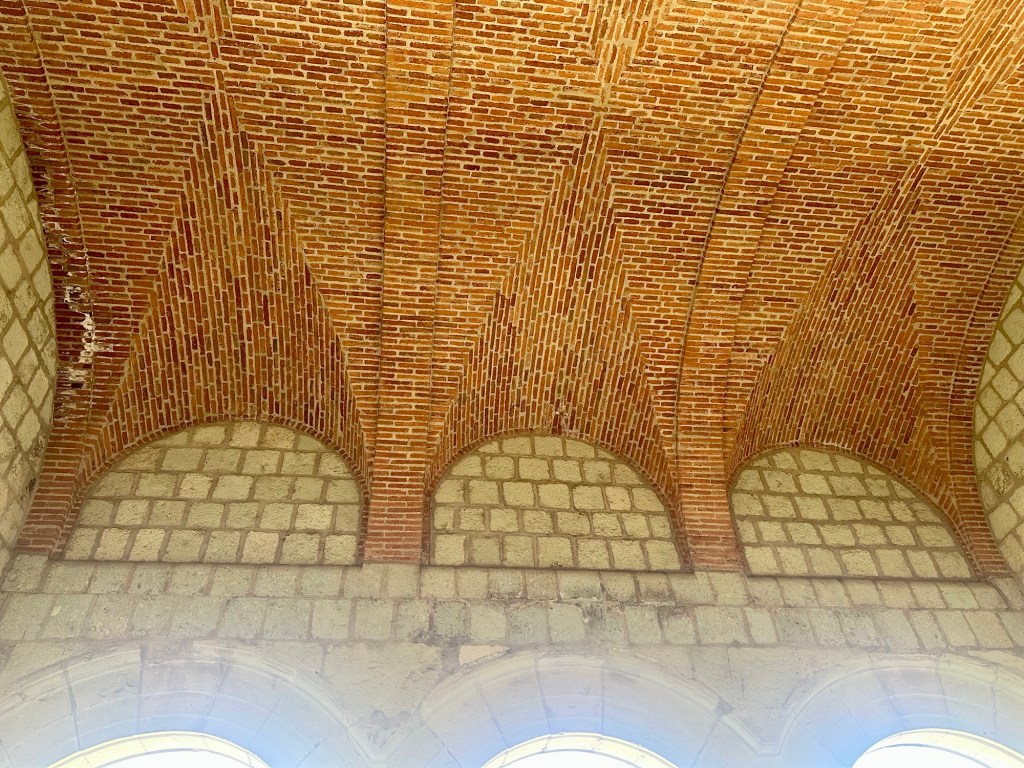
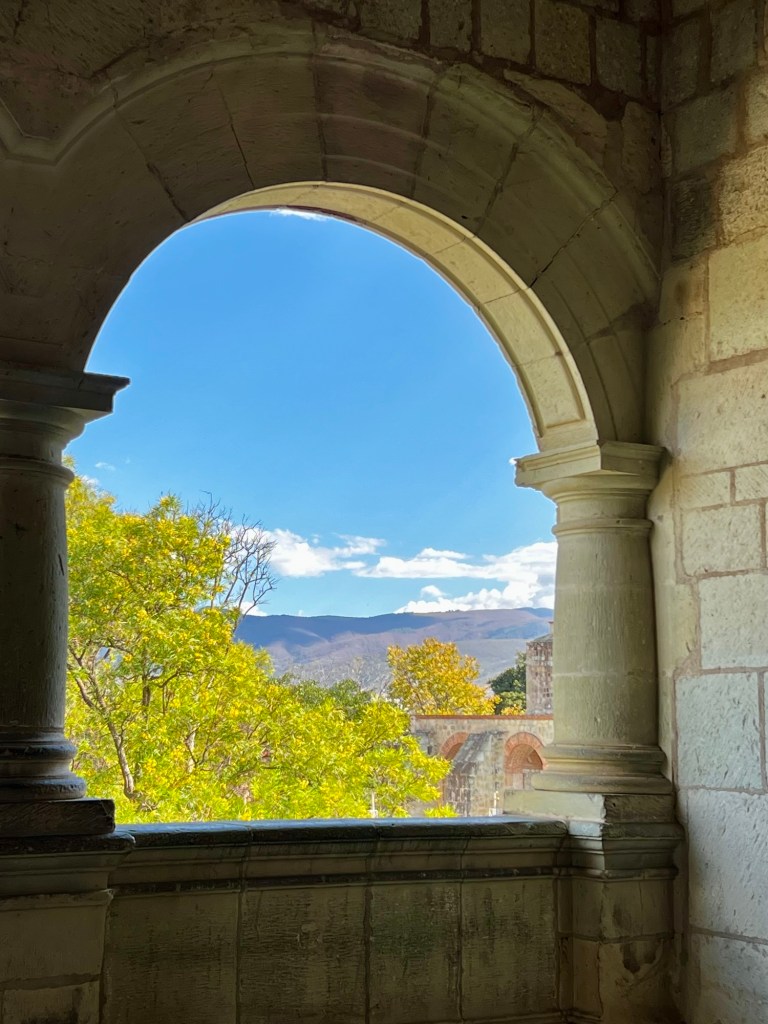
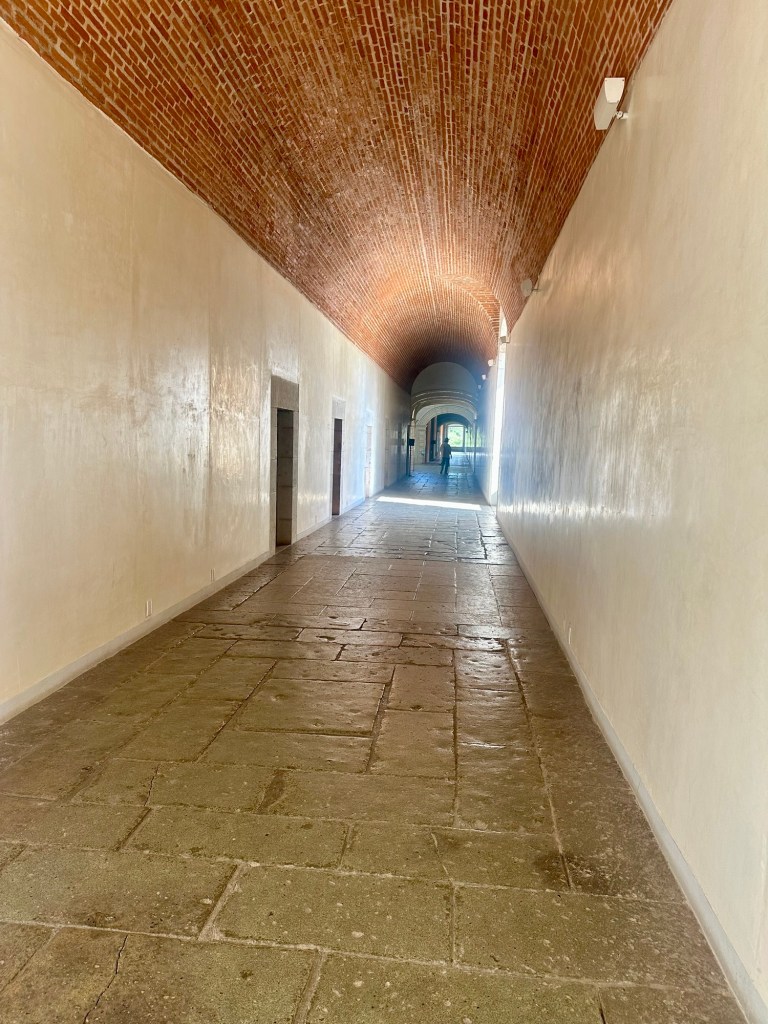
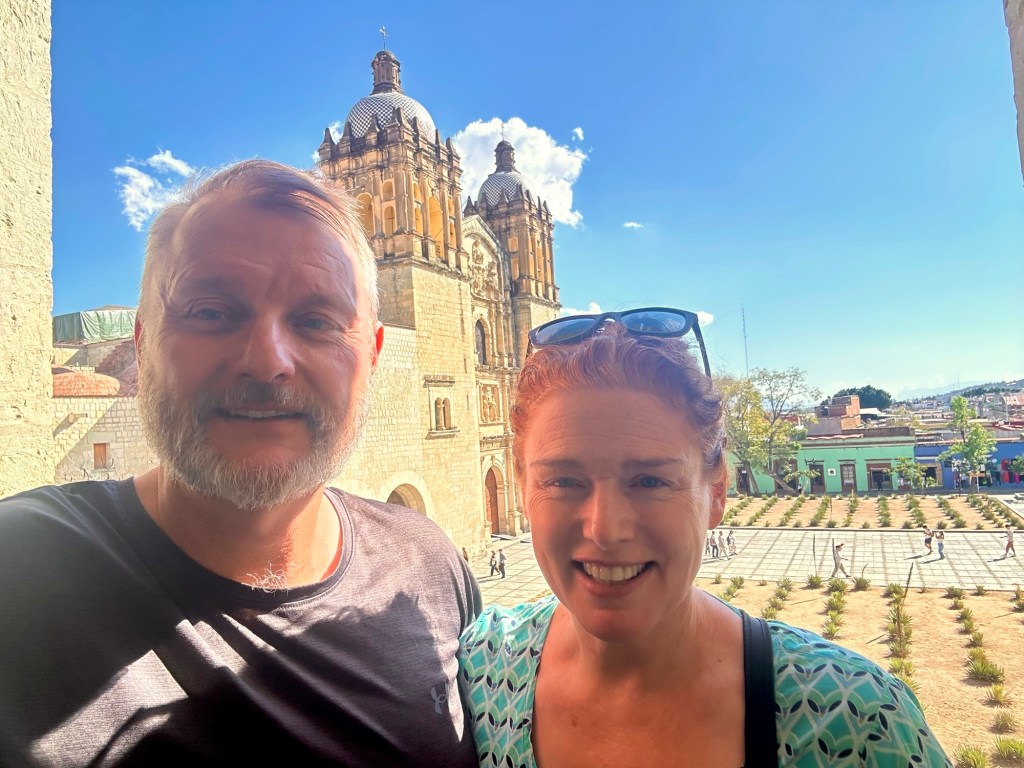
The Museum is located in an old ( large) Benedictine convent dating from the late 16th / early 17th centuries. In parts, especially looking out do e of the upper floor arches to the hills beyond in brought back memories of the Alhambra in Grenada.

The entrance plaza

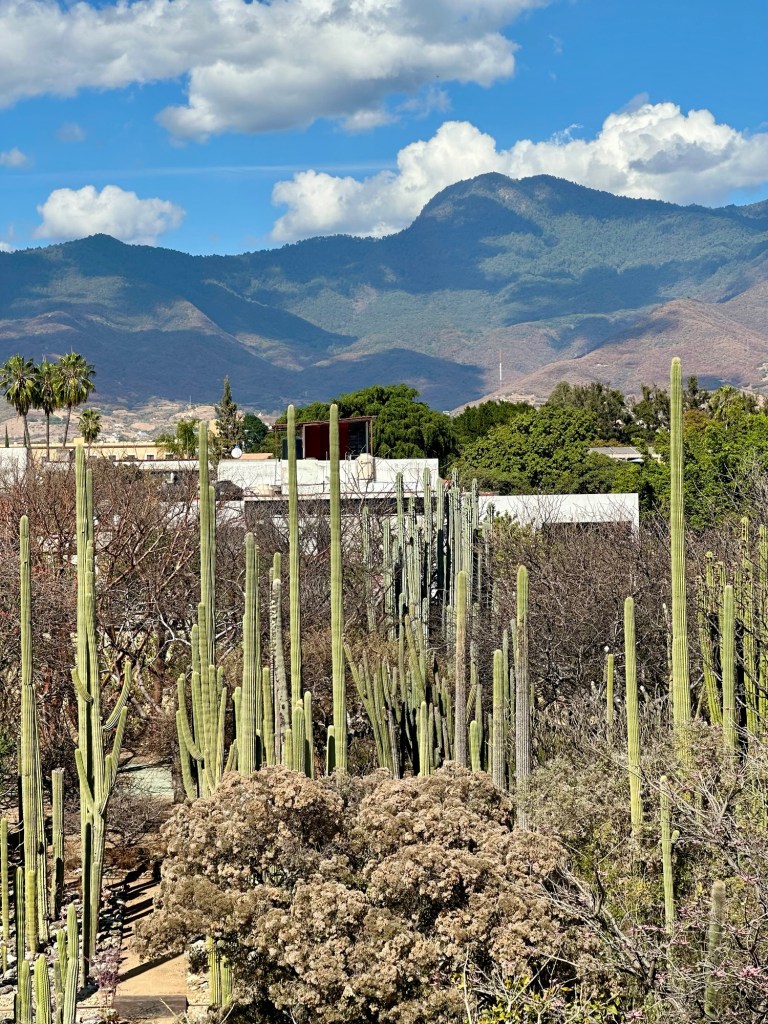
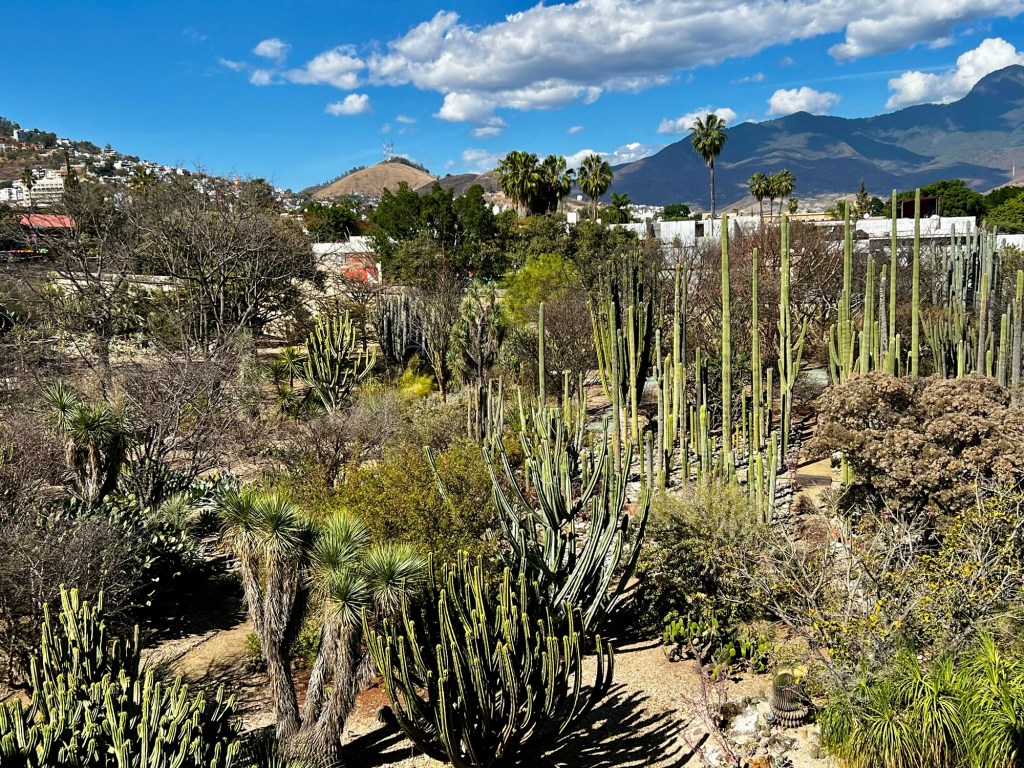
There was also a very cool cloistered garden with various cacti and other arid plants on the south side of the site:

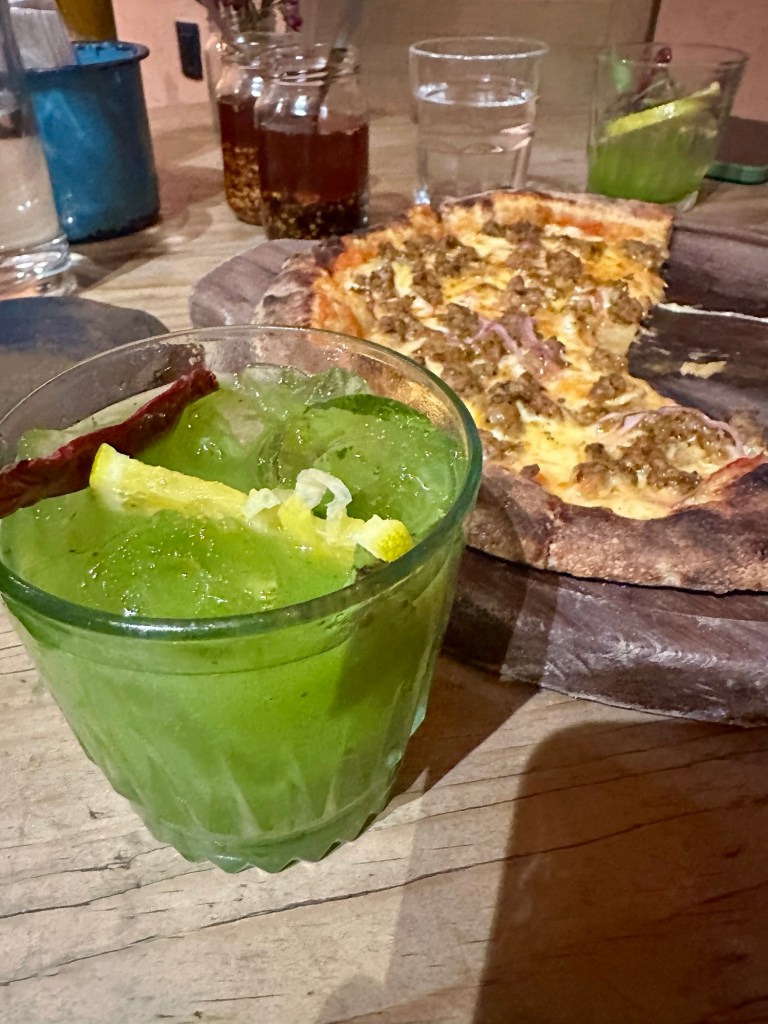
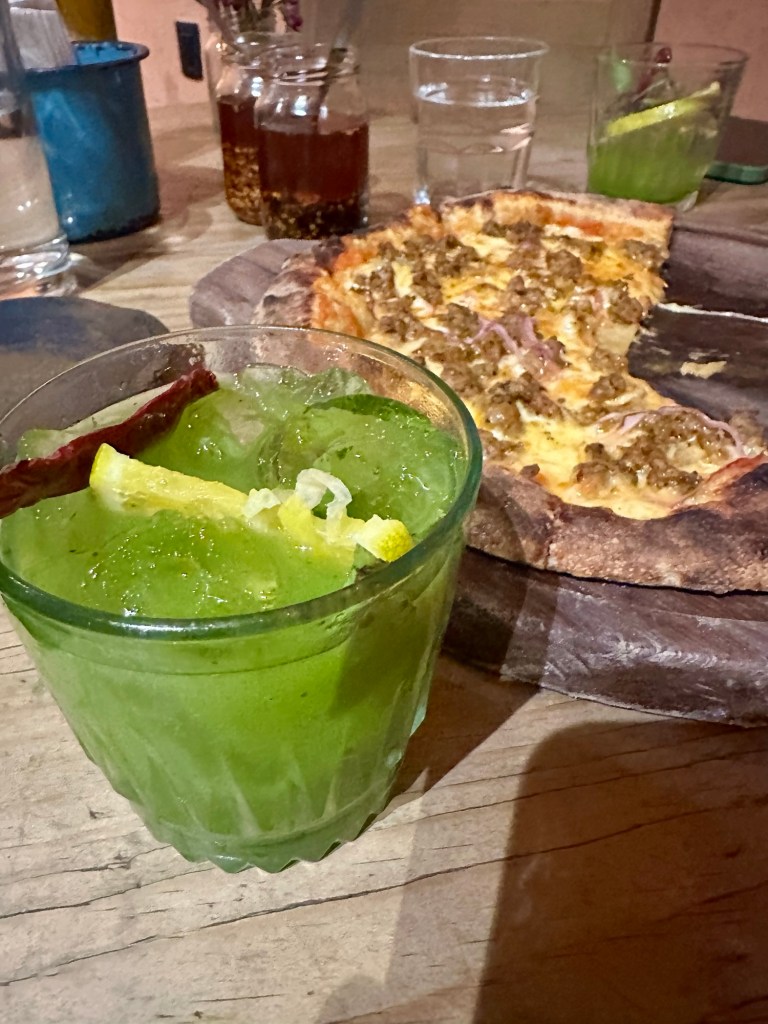
In a rare break from mole, enchiladas and beans we had an excellent pizza accompanied by a Mezcalita cocktail ( like a Margarita, but made with Mezcal) finished off with dried chilli, lime and blitzed coriander (aka known as cilantro here).

Tomorrow: more pyramids!

Mexico City – Cacaxtla- Puebla

Sunday 11 – Tuesday 13 January 2026

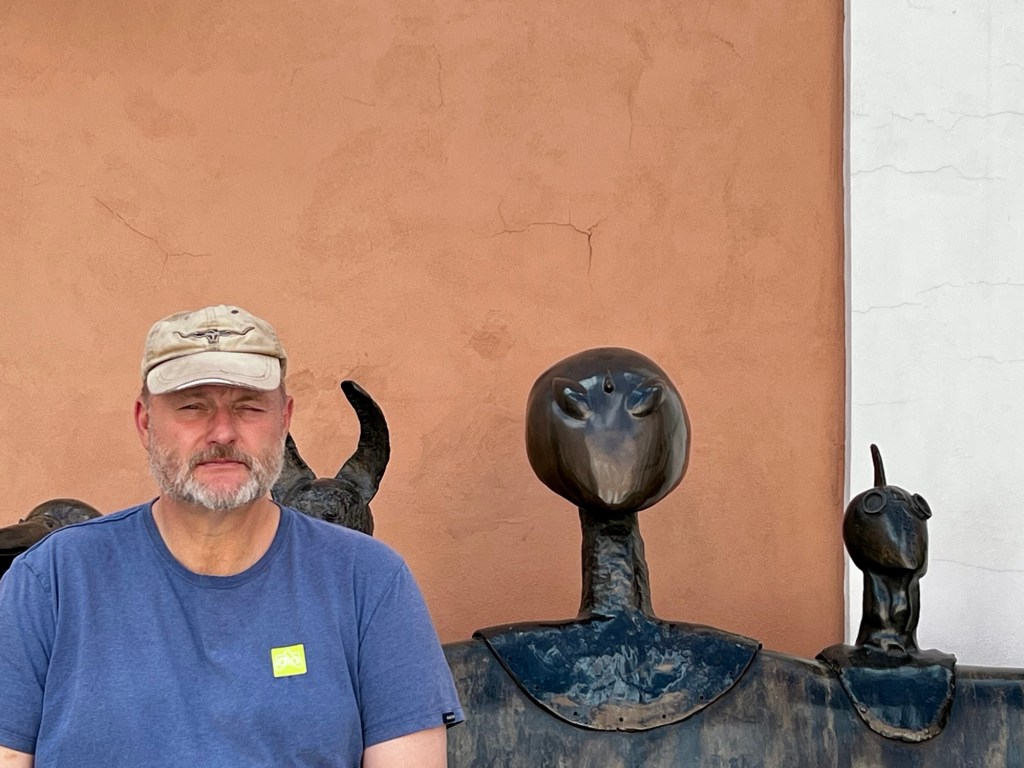
Smiling on the inside…

We had arranged a private transfer with an English speaking driver from Mexico City to Puebla. We planned a stop to check out the archeological site at Cacaxtla enroute. Turns out our driver, David, had less English ability than Mark has in Spanish… good thing Ness’ Spanish is ok.

Even though it was Sunday and the traffic was relatively light it still took well over an hour on a freeway to get clear of the metropolitan area. We did mention how big Mexico City is!

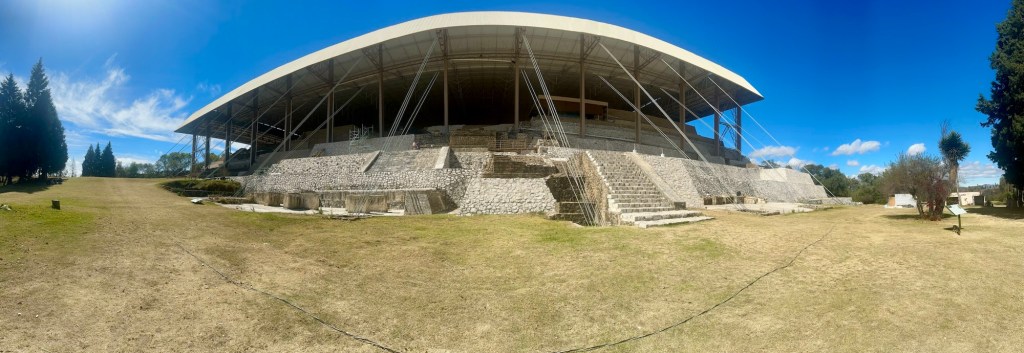
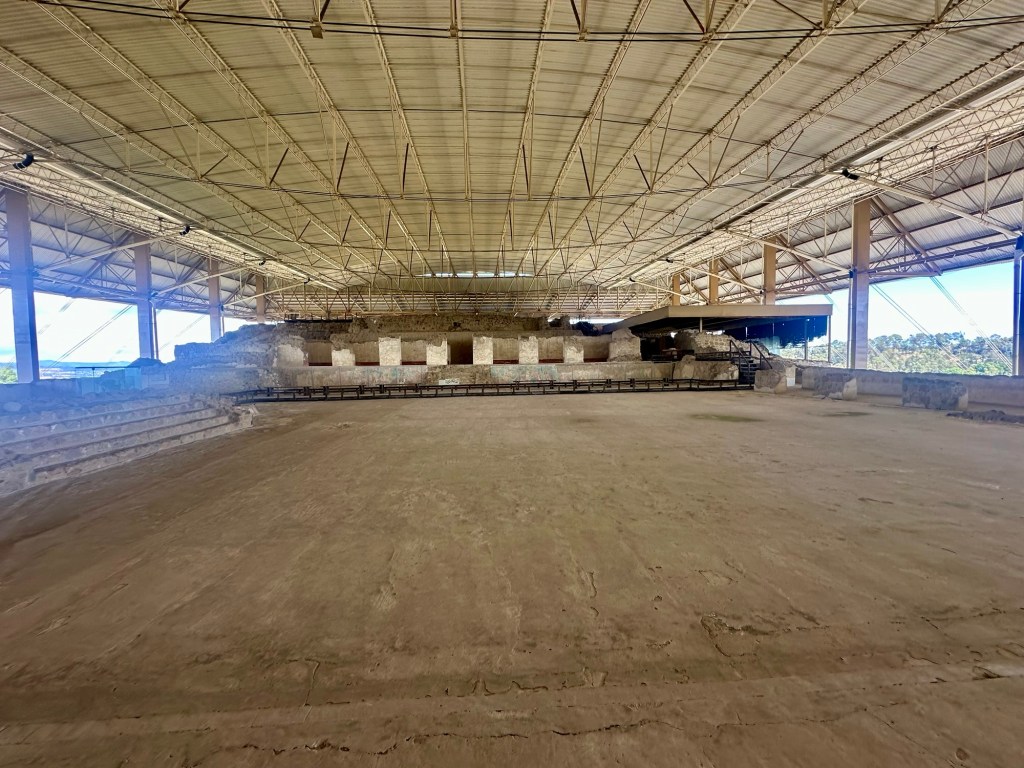
Panorama of the main part of the Cacaxtla archaeological site

After around two hours we were at Cacaxtla. Just like Teotihuacan this site had a troop of dogs and puppies who seem to live onsite.

Cacaxtla

This site consists of several Meso-American pyramids, two little ones as ‘gate keepers’ to the site and one massive one around 50 metres high. The large one has a roof over it to protect the site and archaeological excavations.

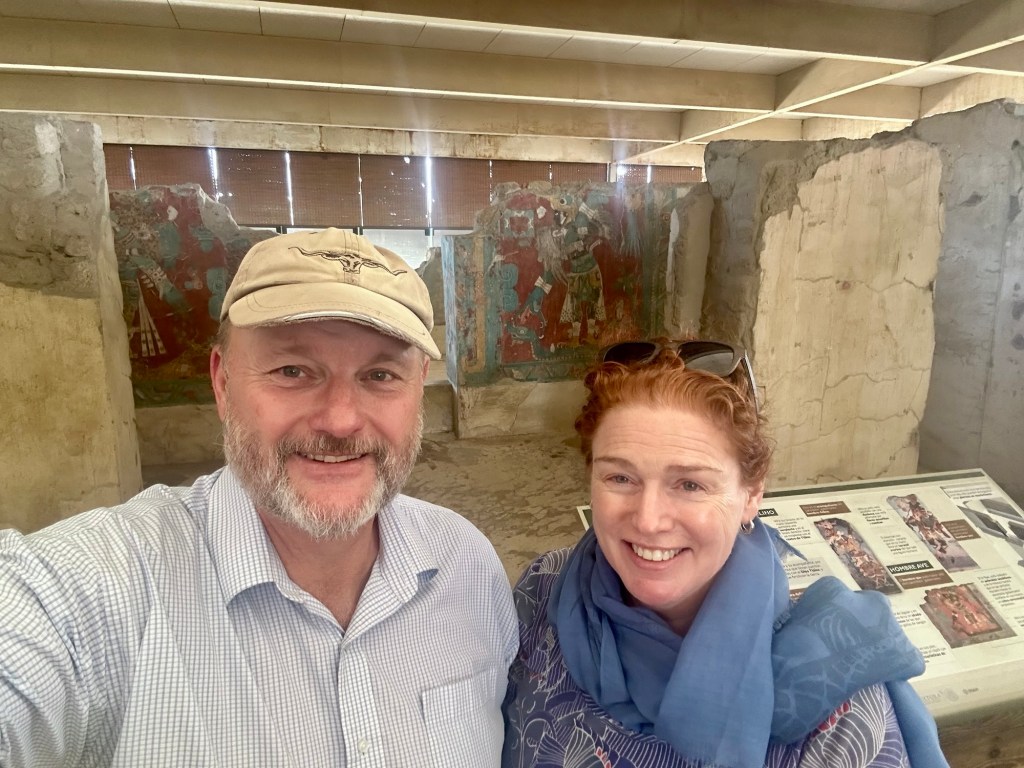
Obligatory selfie

The Cacaxtla complex is one of several that dominate the north western end of the large and fertile valley where Puebla lies. Just to the north and west is the national park where the twin volcanos Popocatépetl and Iztaccíhual are. To the east north east lies the La Mentira volcano.

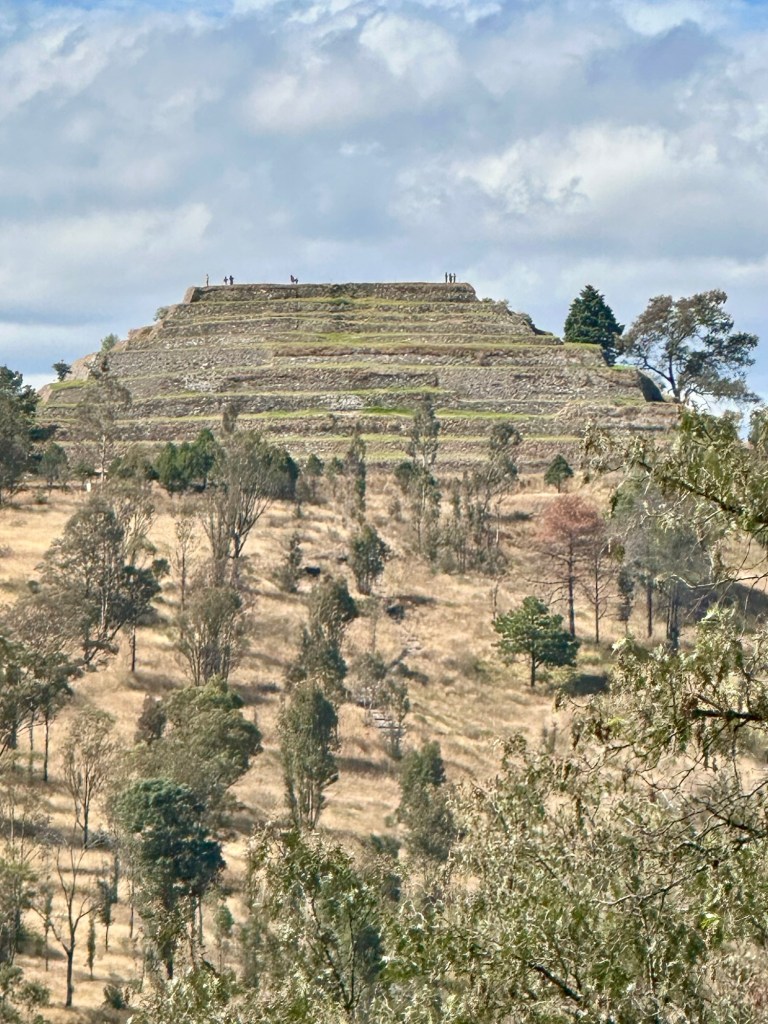
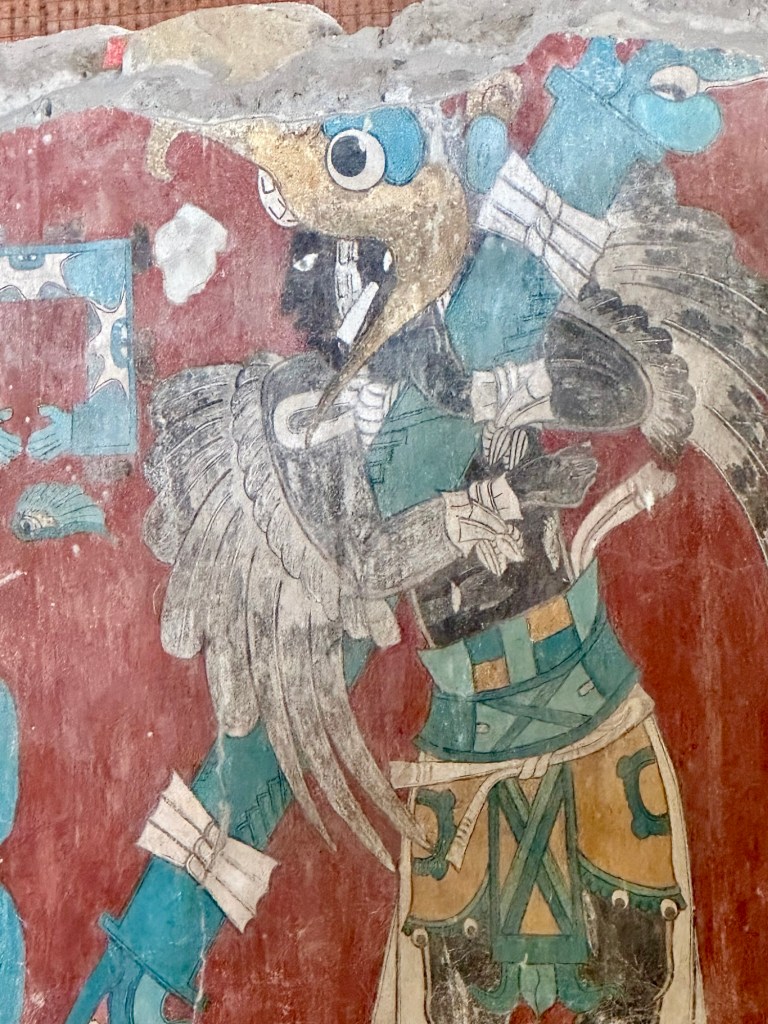
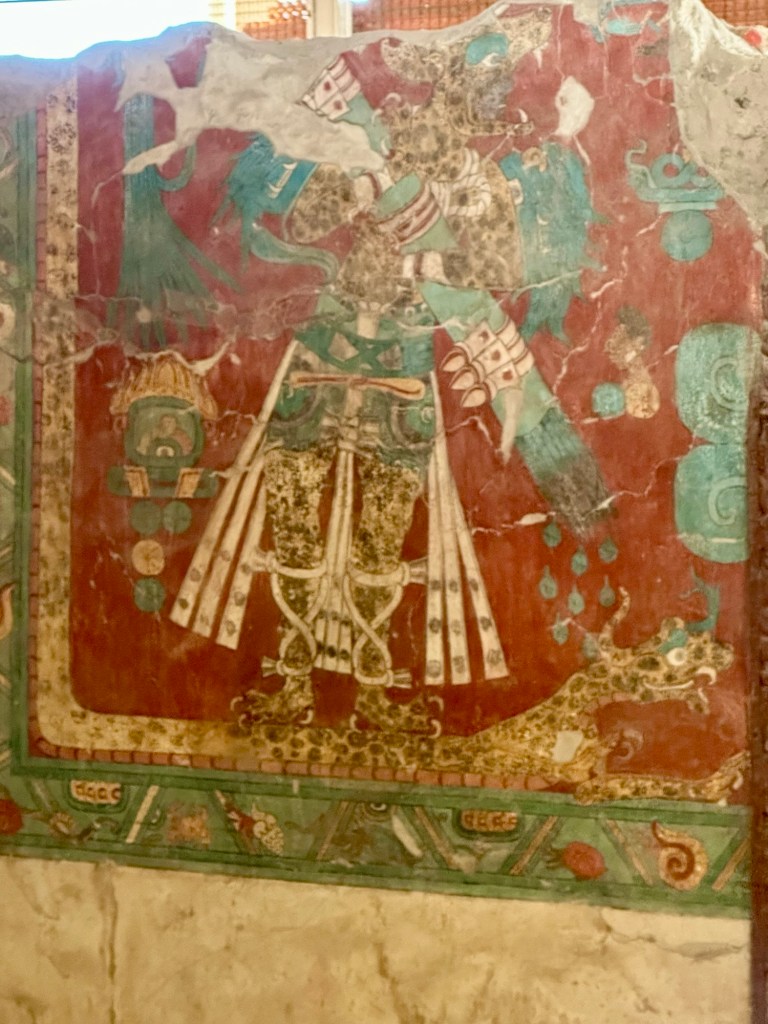
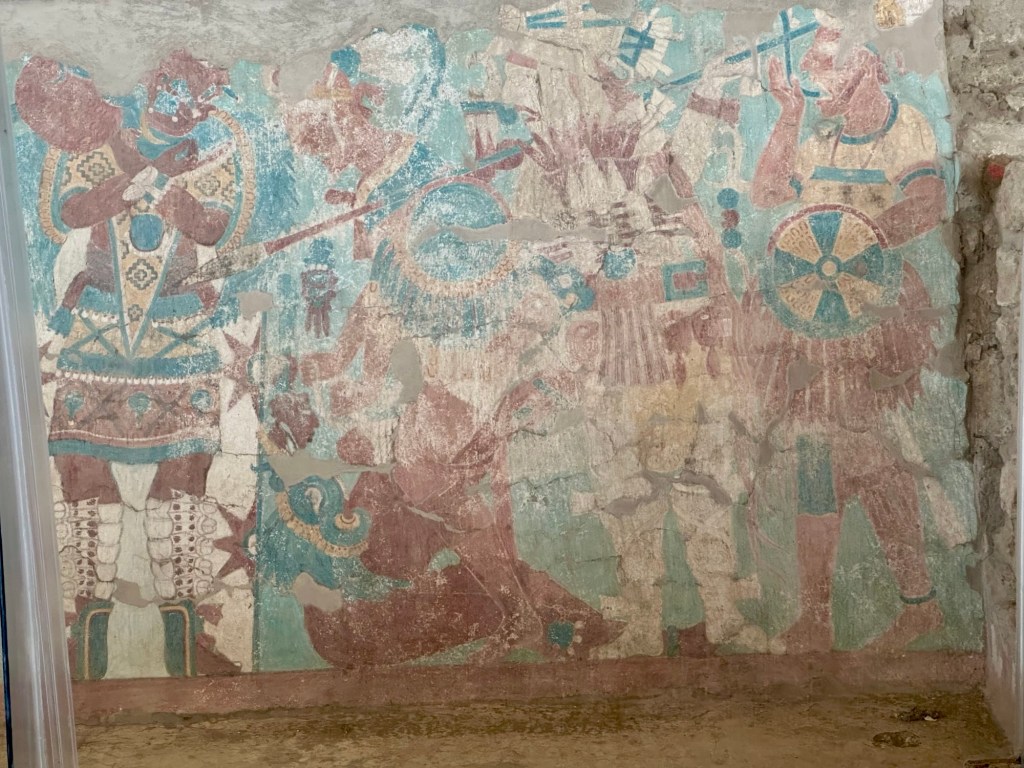
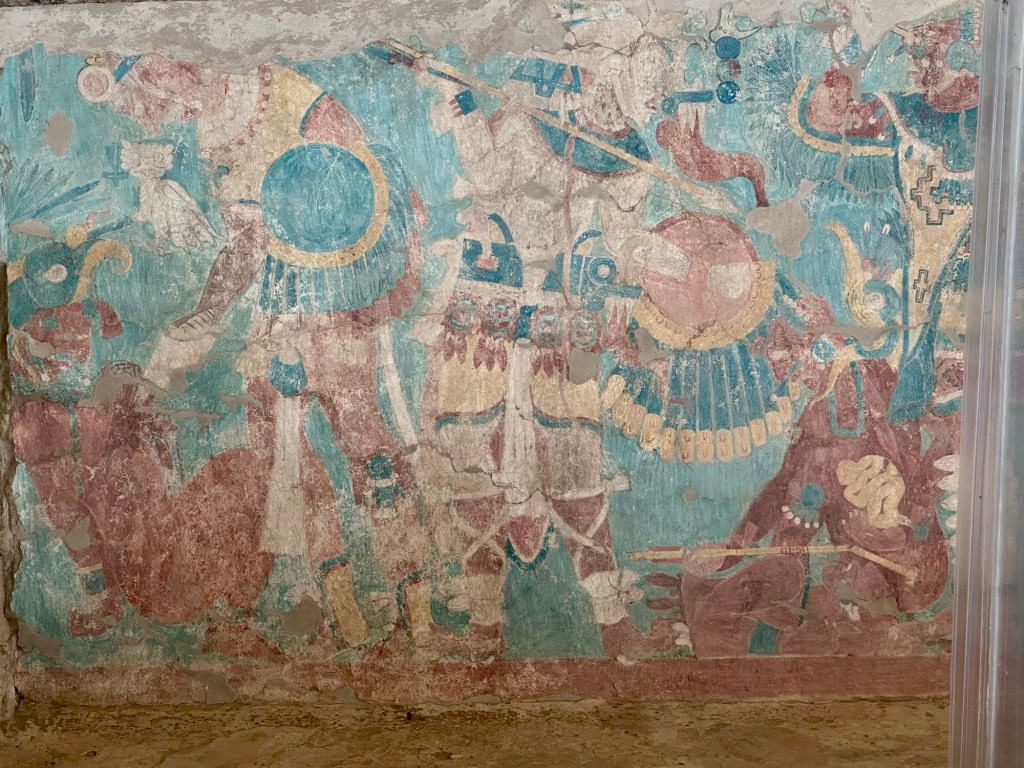
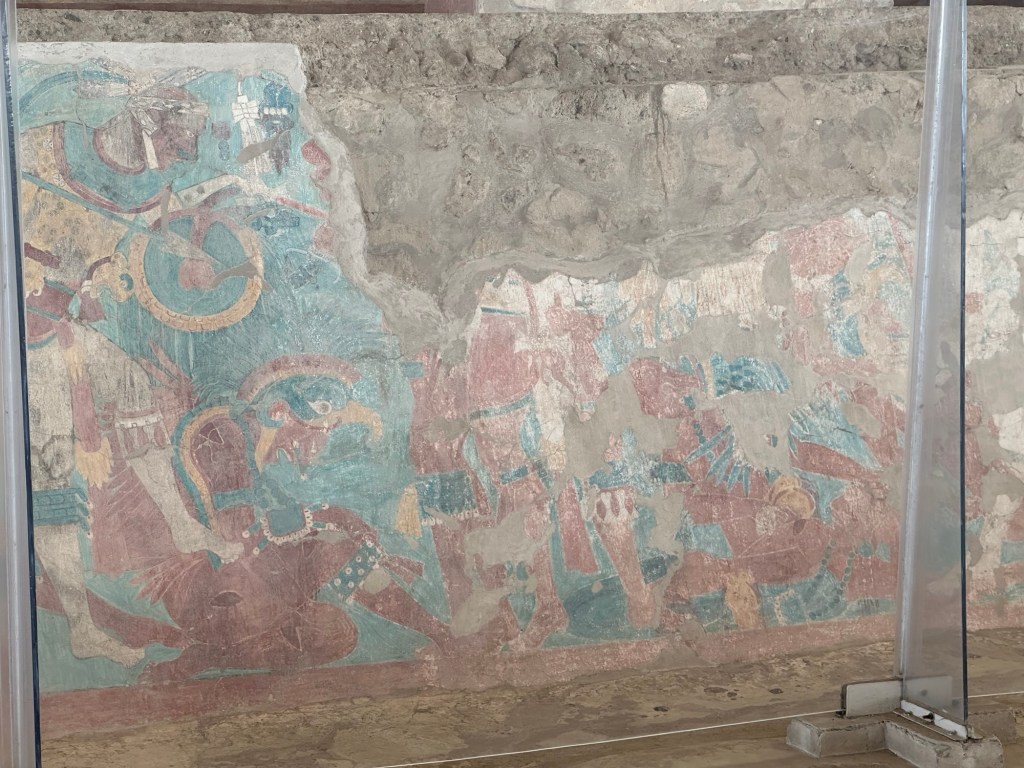
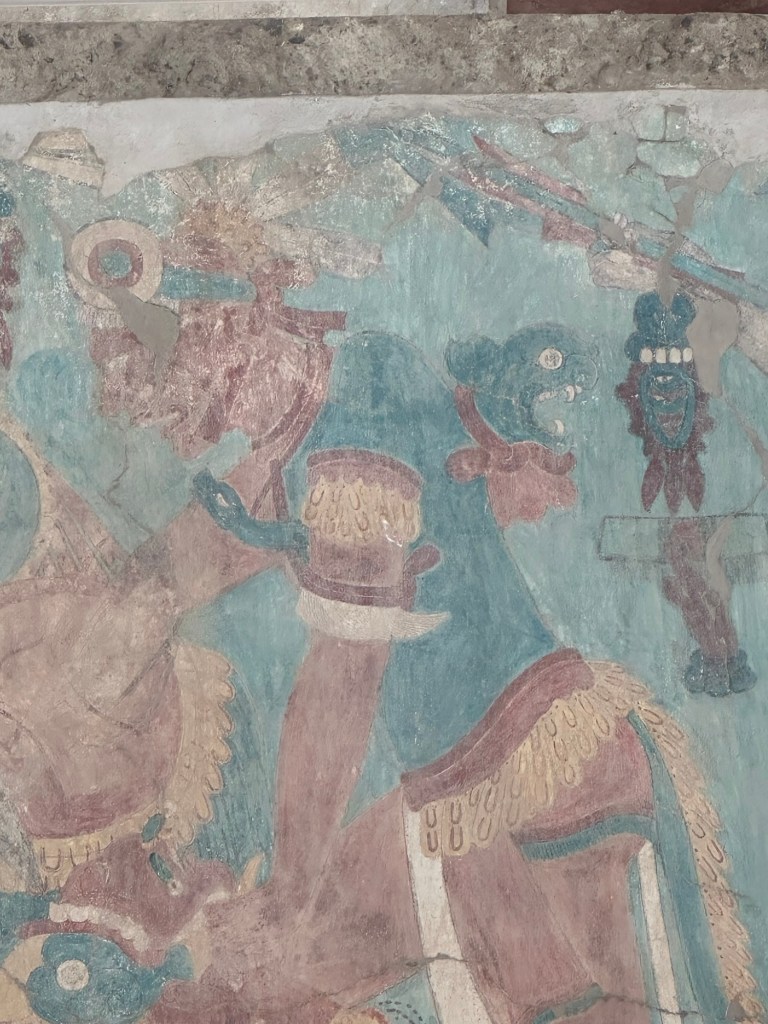
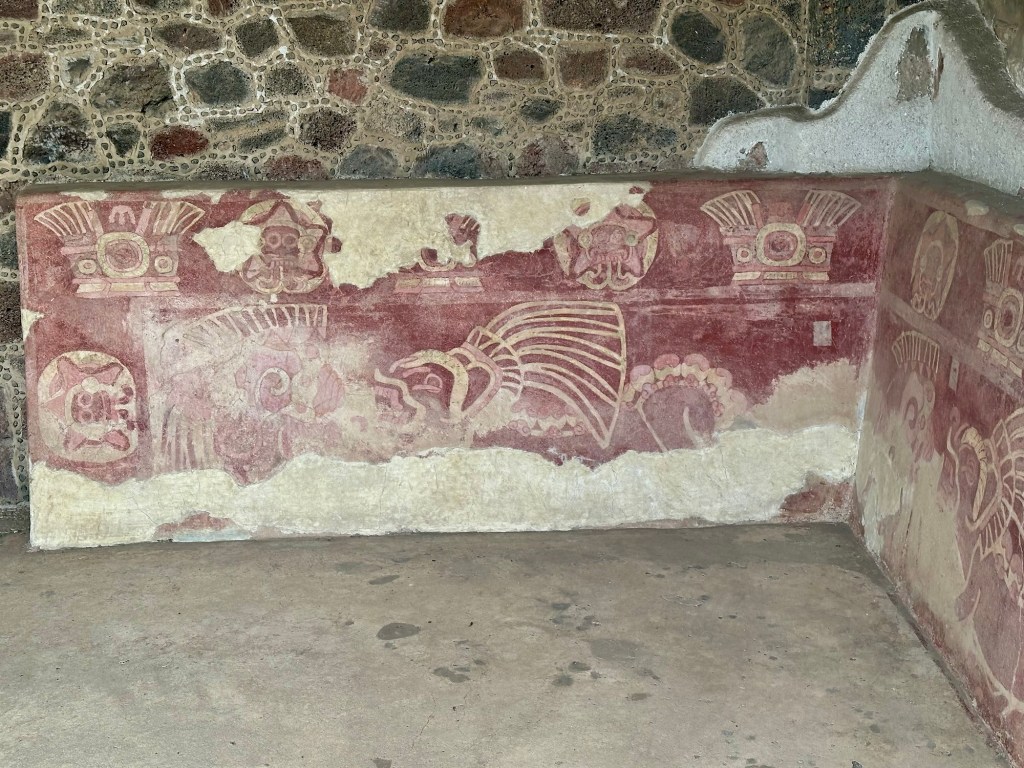
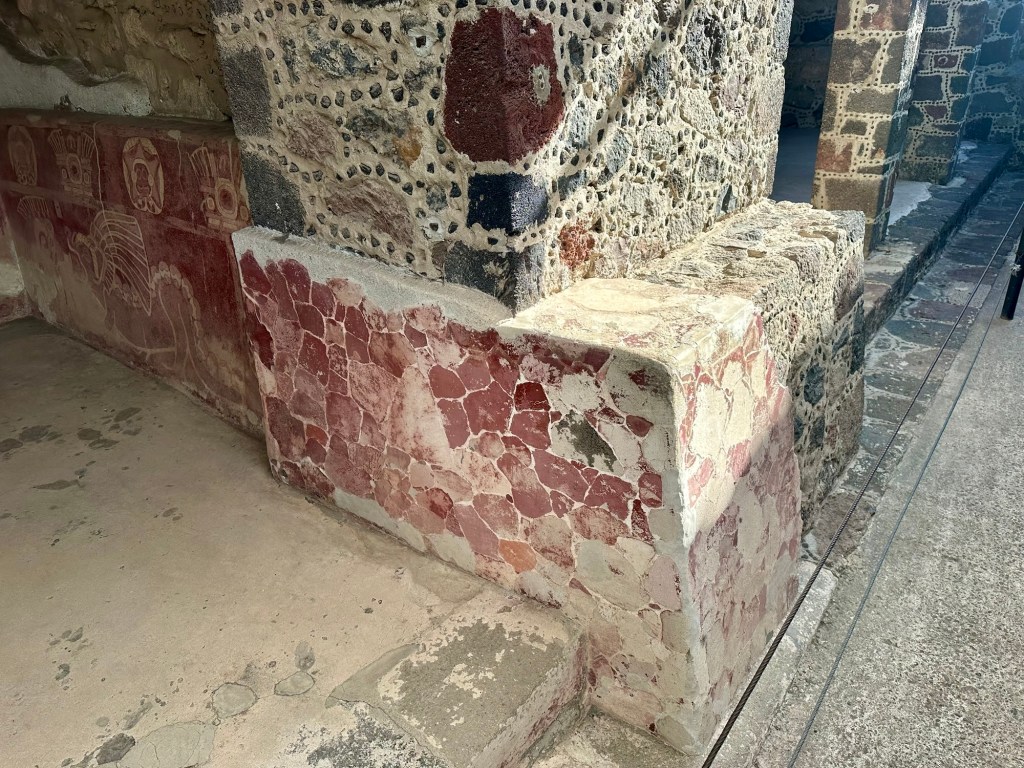
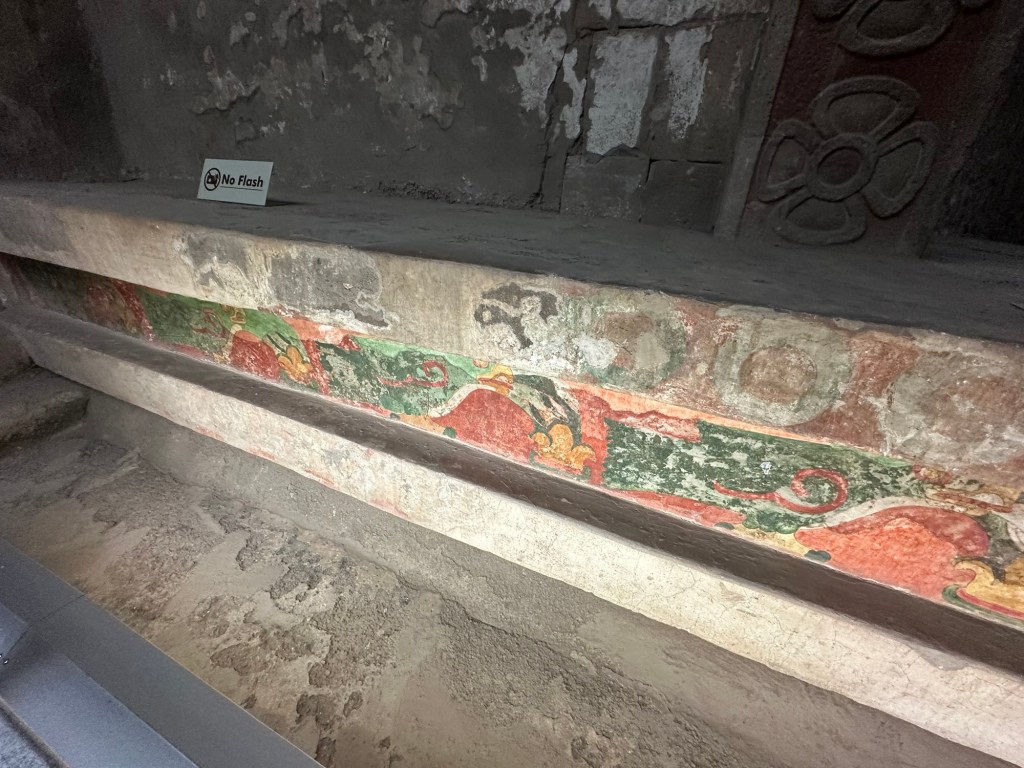
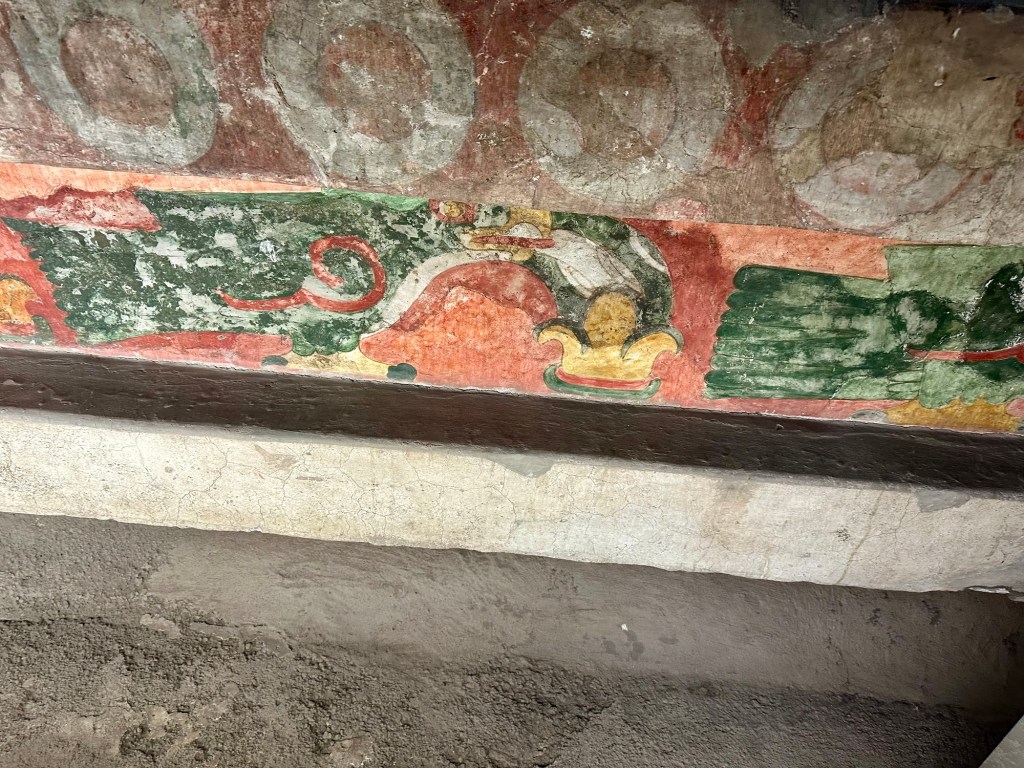
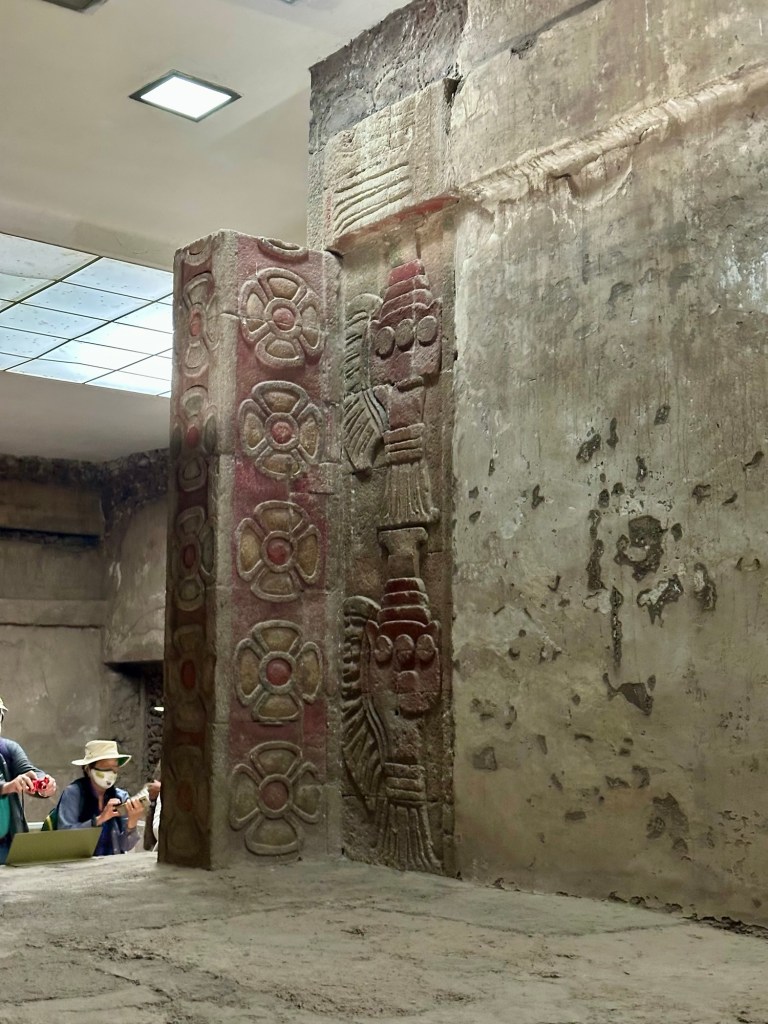
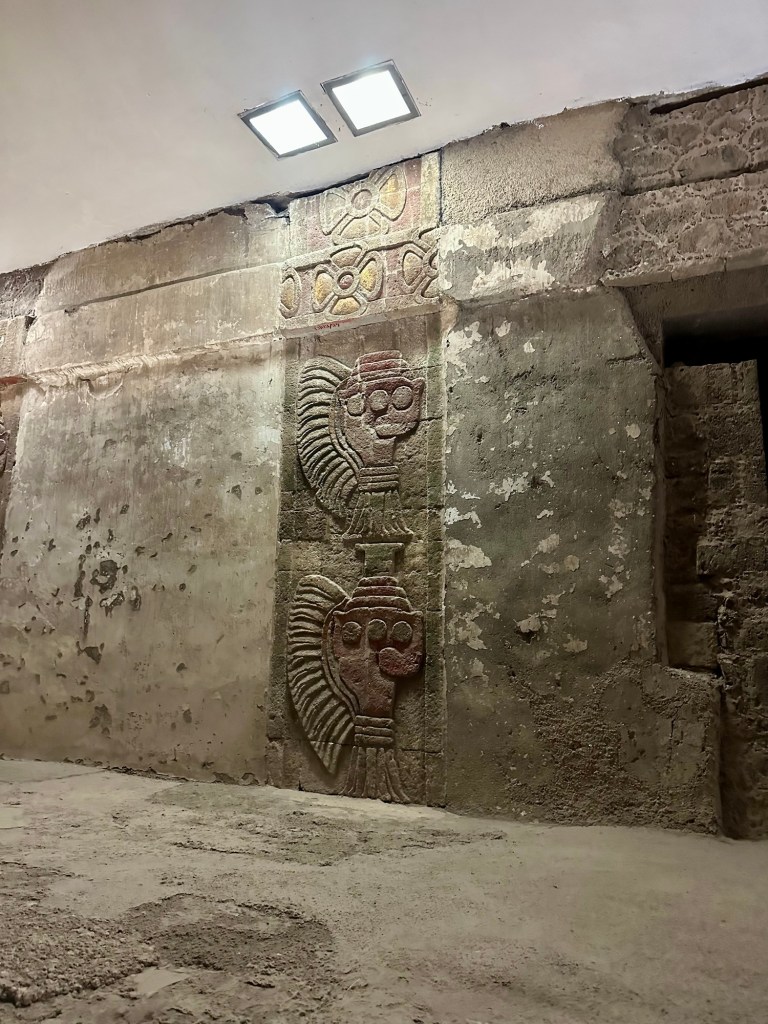
The site at Cacaxtla is known for its very well preserved wall murals. A sister temple is a few kilometres away to the west:

The pyramid temple to the west

Gallery of the site:

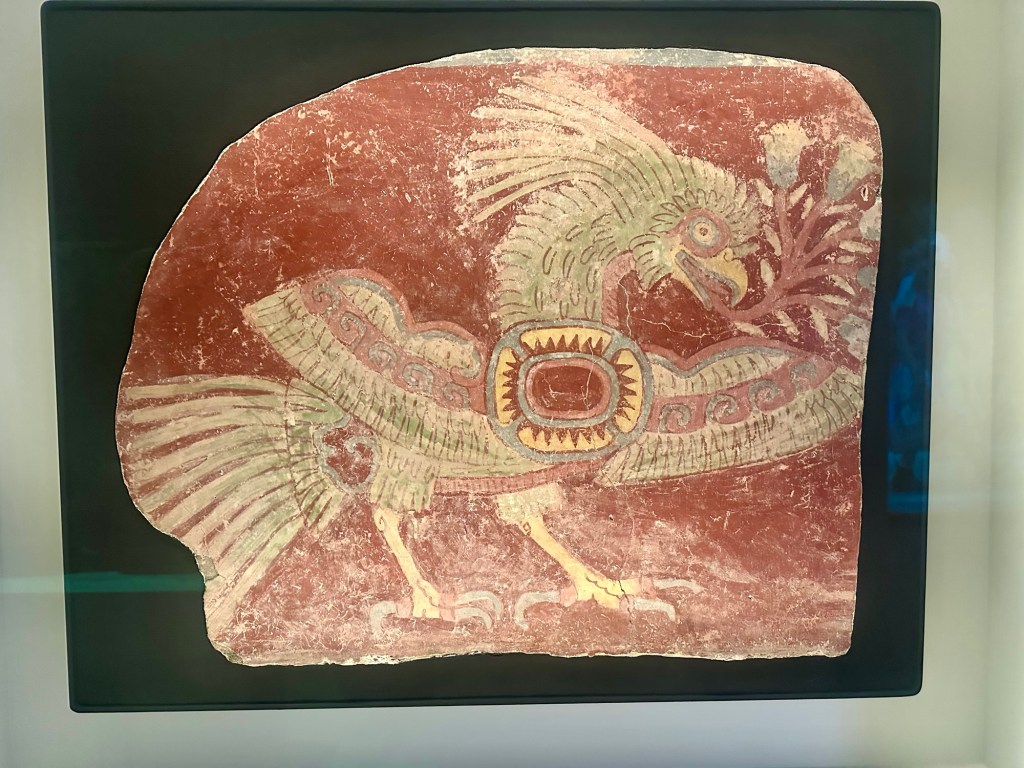
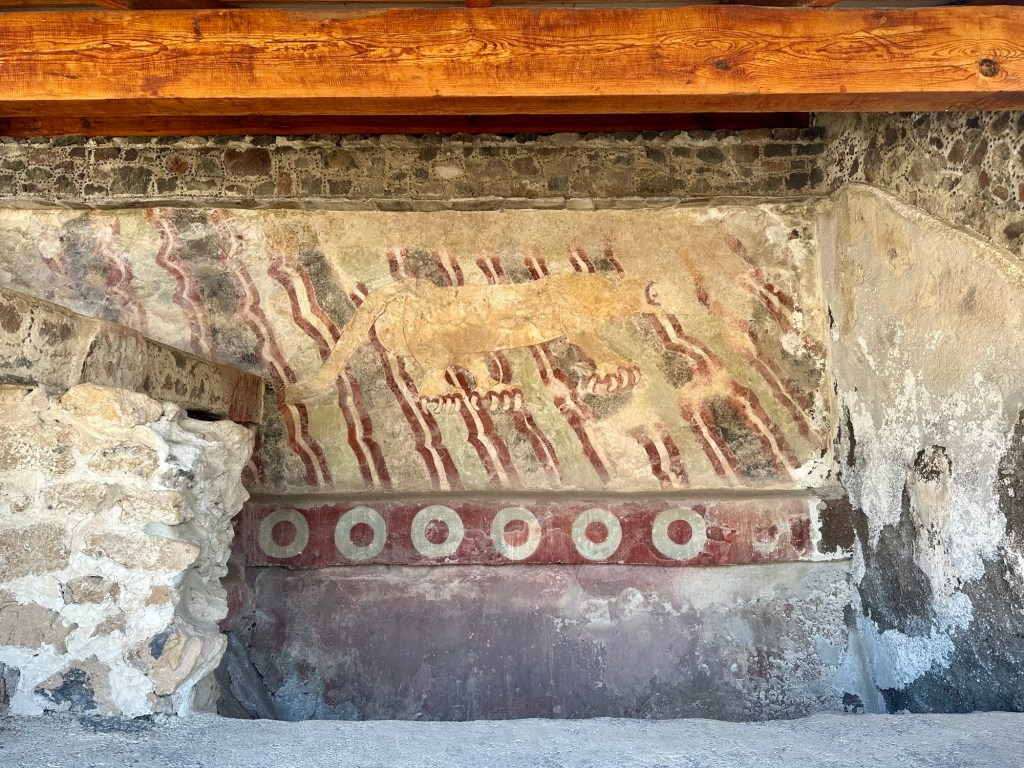
Real standouts were the pictures of the bird god and the cat ( mountain lion / puma) god – symbology of heaven and earth respectively.

Bird god
Cat god

There was also an extensive mural with some quite gory detail of a battle scene:

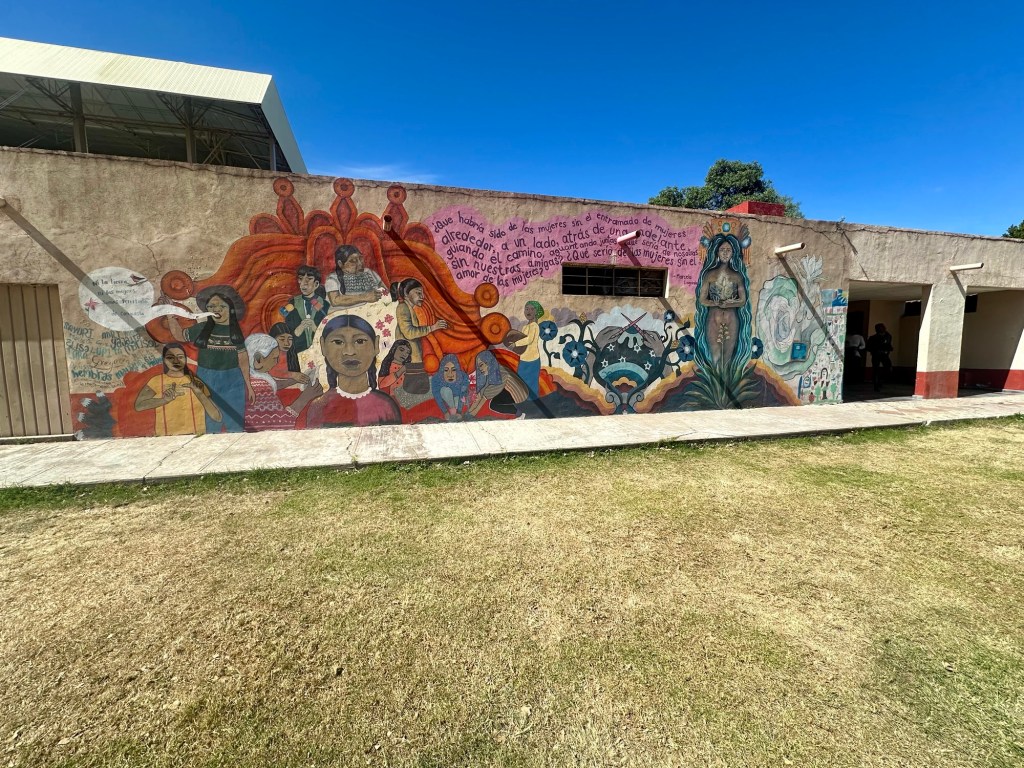
The tradition of murals in Mexican life continues today – a trend from the colonial times when indigenous peoples were often illiterate and murals were a way of conveying ideas to the masses in a way they could see and contemplate. A contemporary mural was painted on the side of one of the modern buildings at the site:

Murals abound in the bits of Mexico we have seen so far

Puebla

We arrived in Puebla in time for a late lunch. Our accommodation was adjacent to the historic centre of town. It was situated in an old colonial era building that had been turned into a lovely boutique hotel:

After dropping our bags in the room we grabbed lunch in a lovely courtyard, then walked into ‘Centro’.

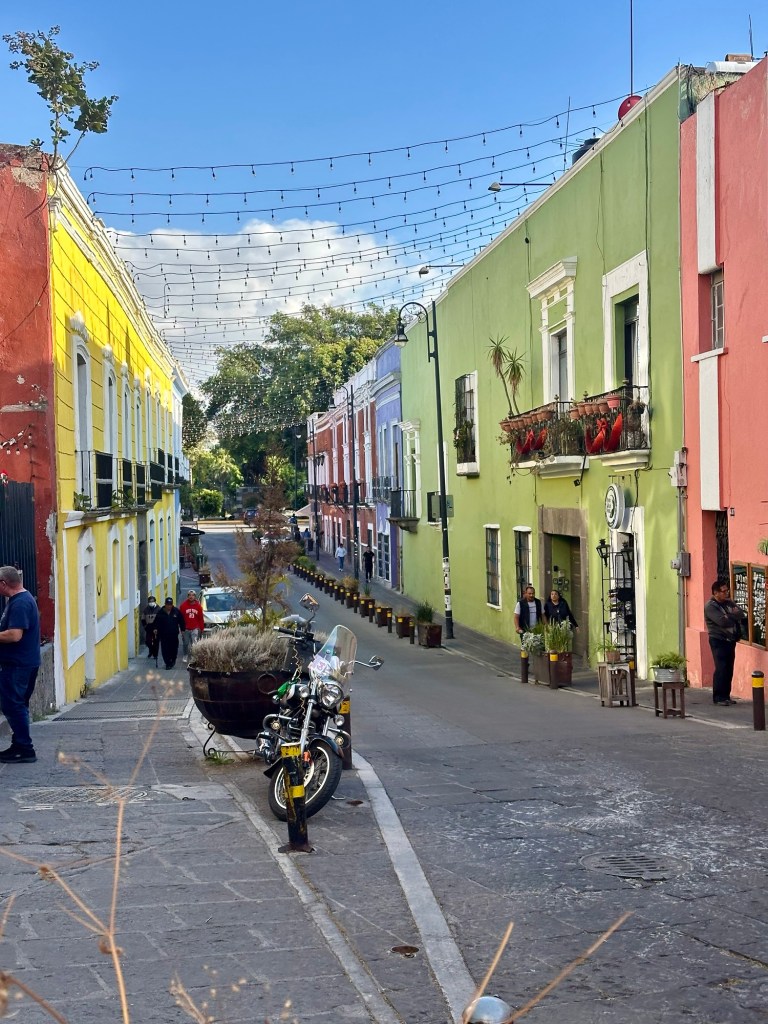
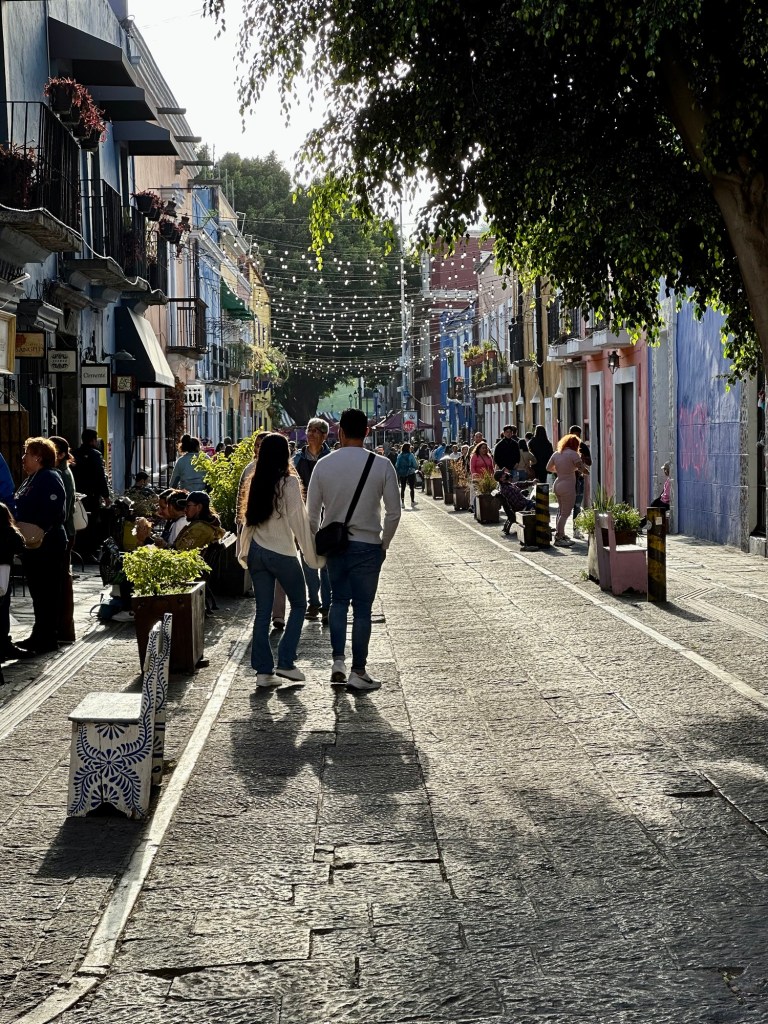
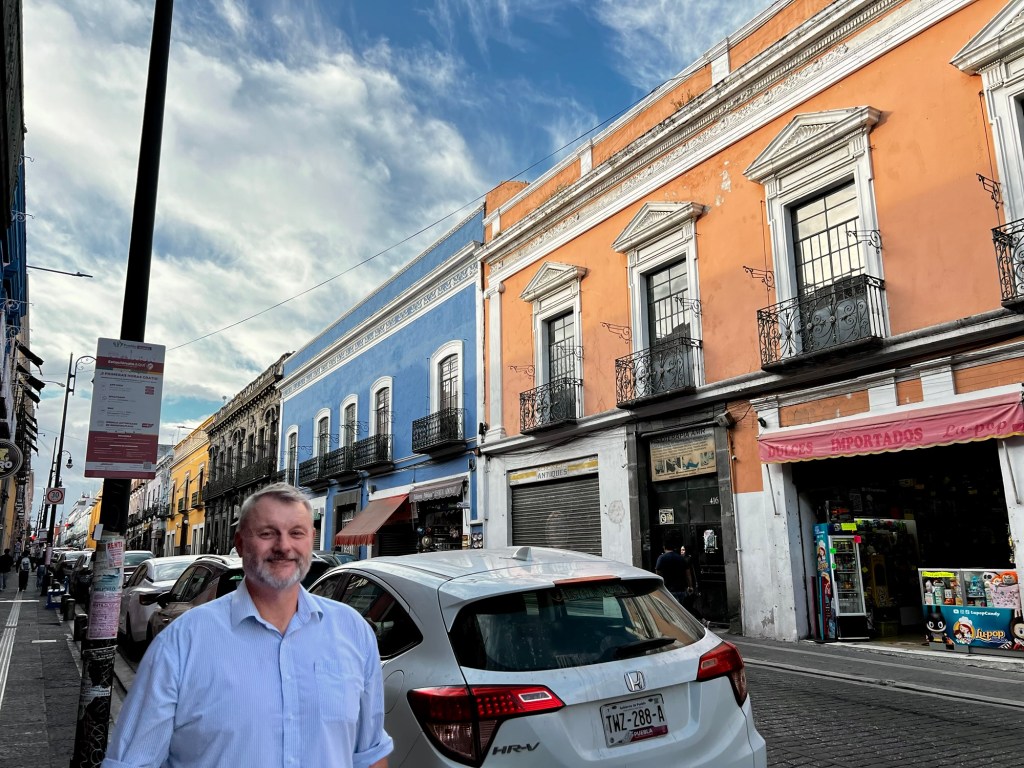
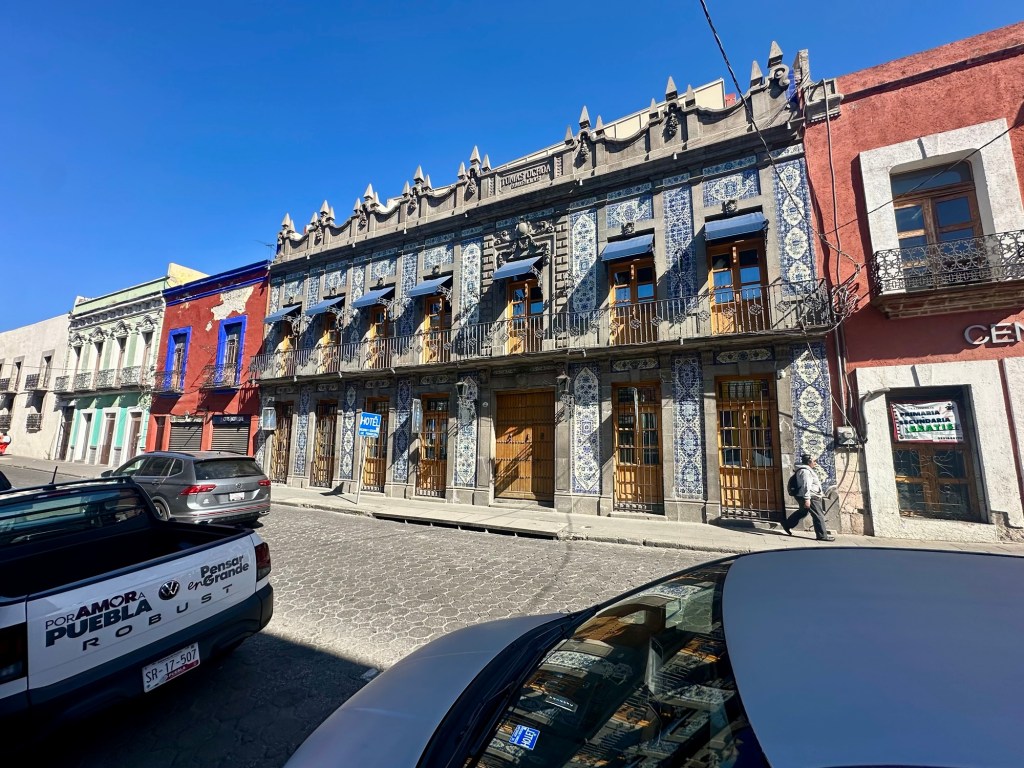
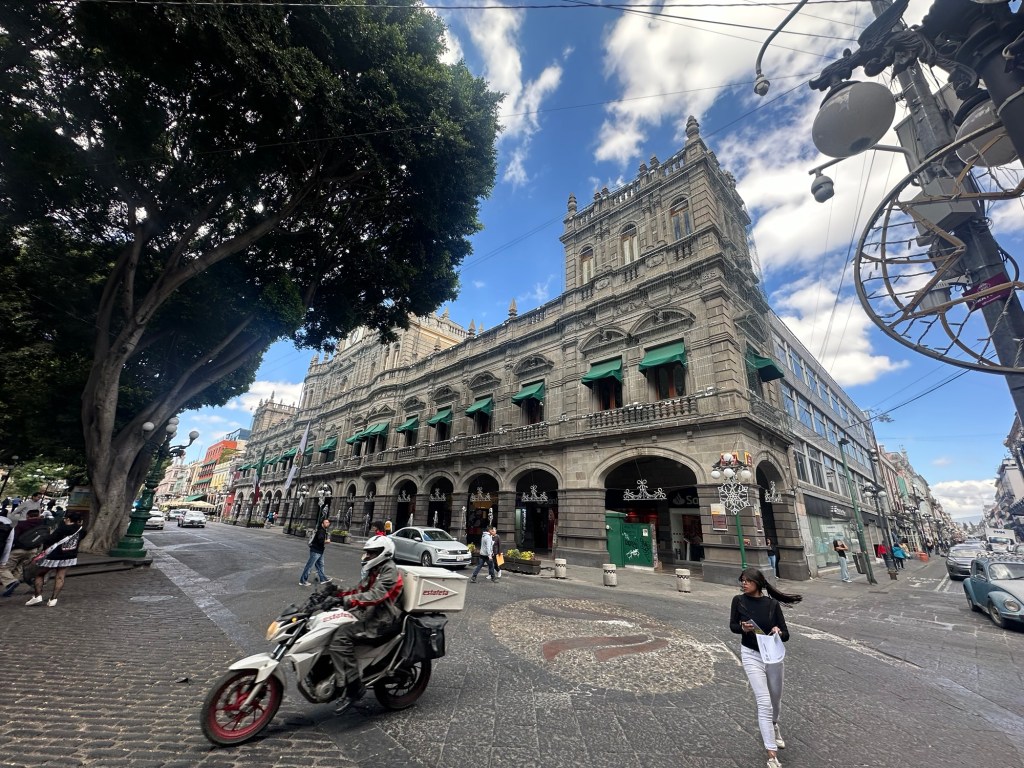
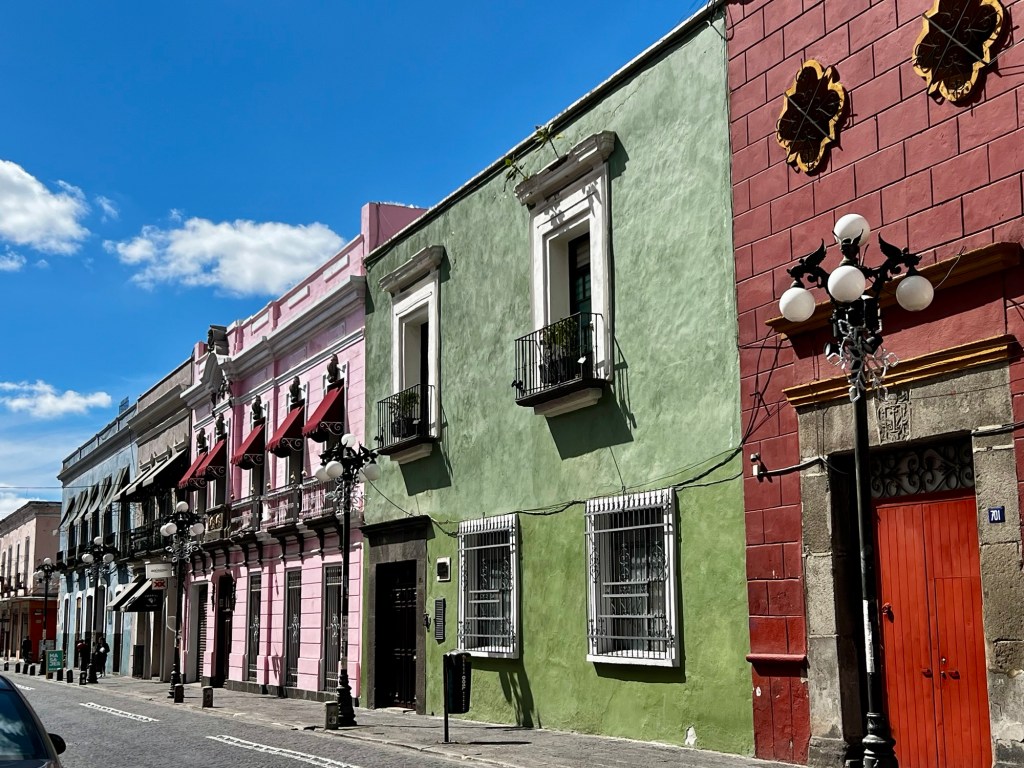
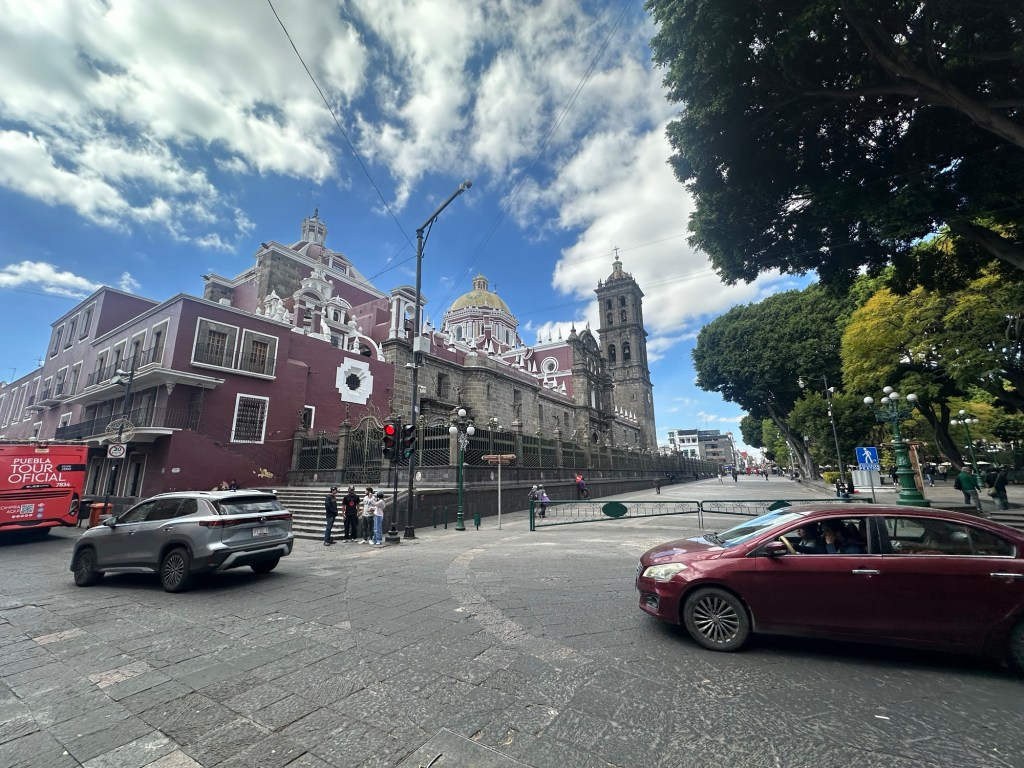
First observation was that Puebla is a lot cleaner than Mexico City. Next was that Pueblans are obviously proud of their heritage – the colonial street scape is really well maintained. The few ‘modern’ fast food franchises we walked past in town had no obvious branding or signage. You really would not know they were there until you looked in their shopfronts as you walked past. The net effect of this heritage restriction was that you really could sense what the place was like hundreds of years ago (if one ignored the cars).

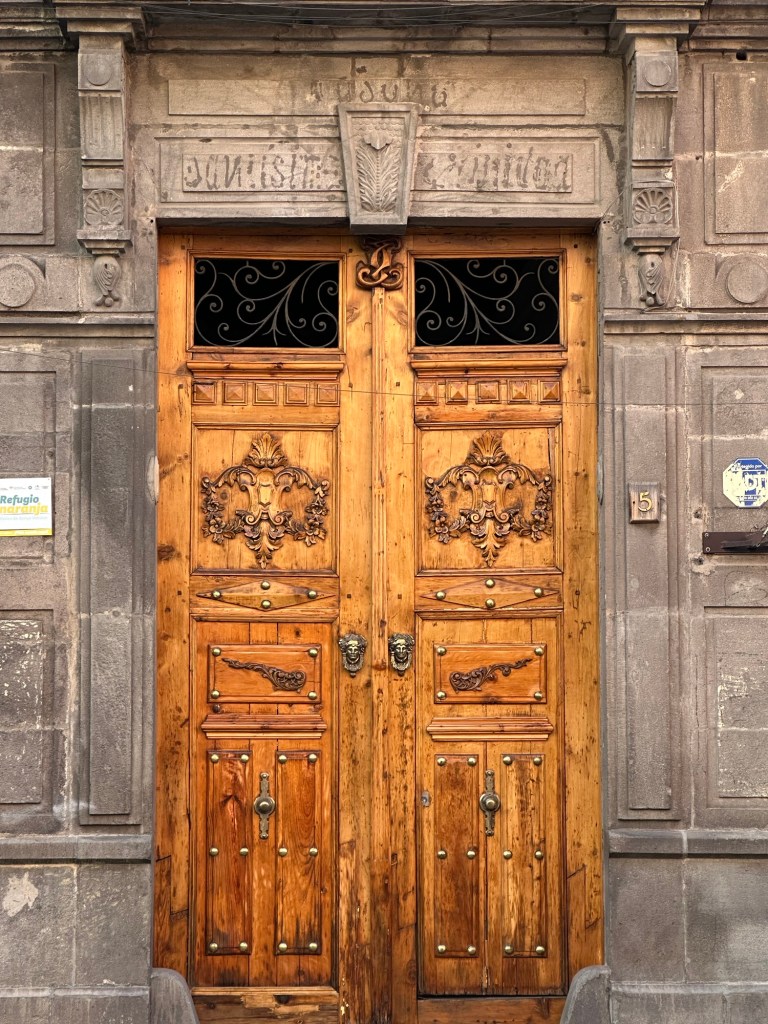
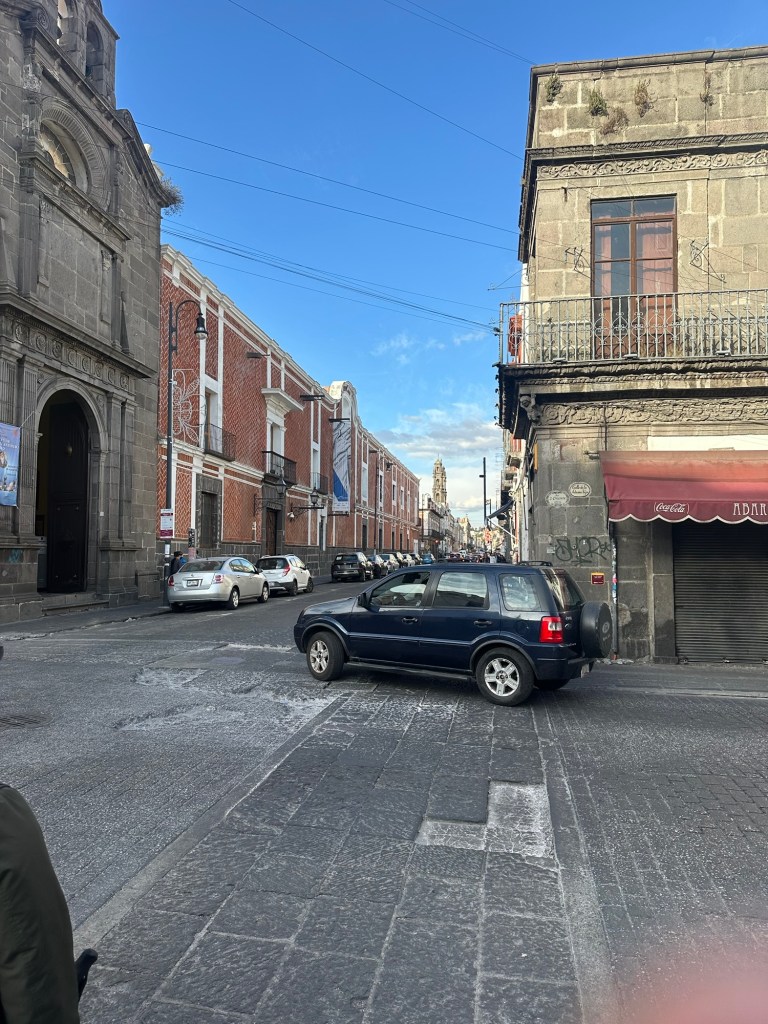
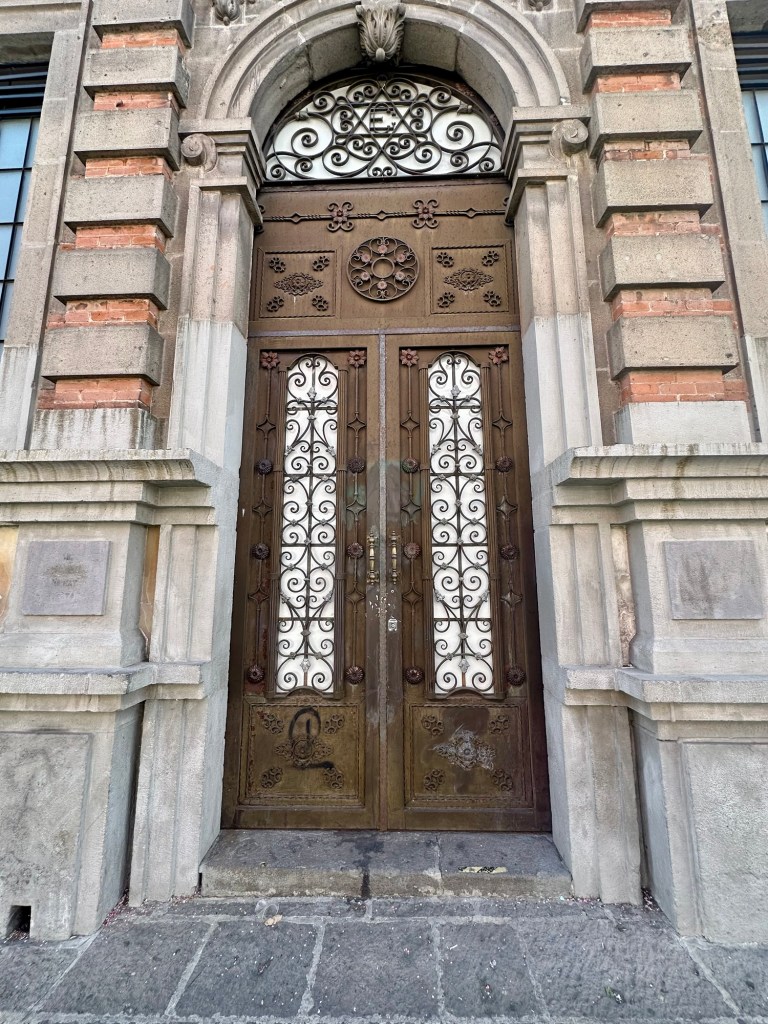
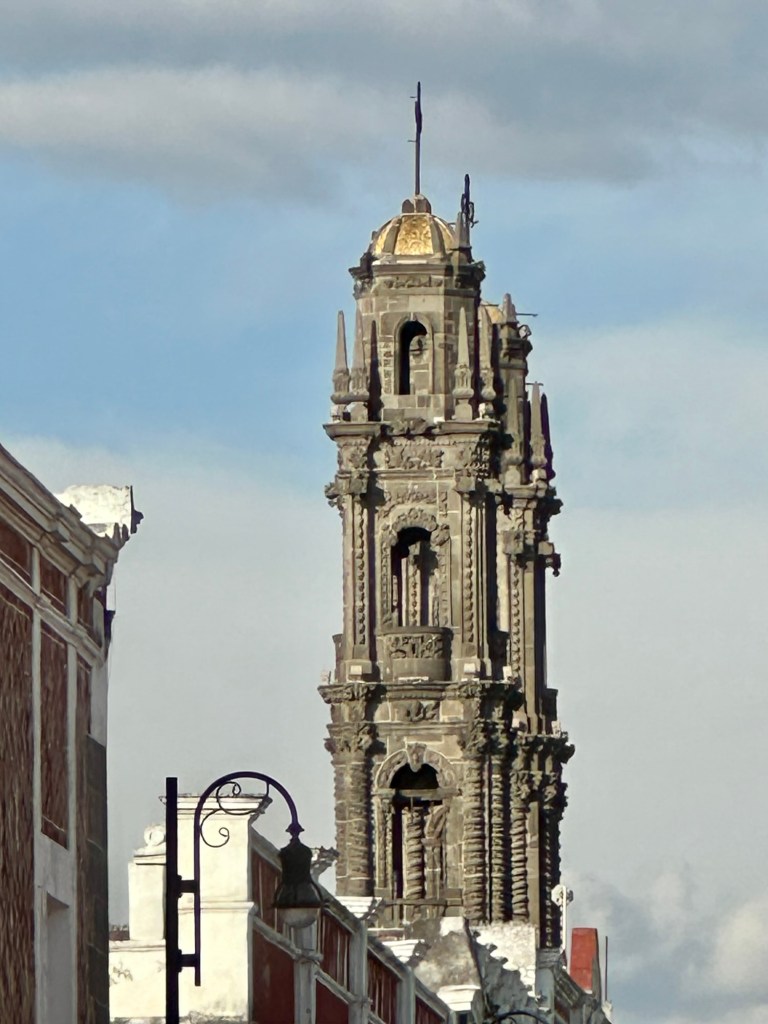
Some Puebla streetscapes:

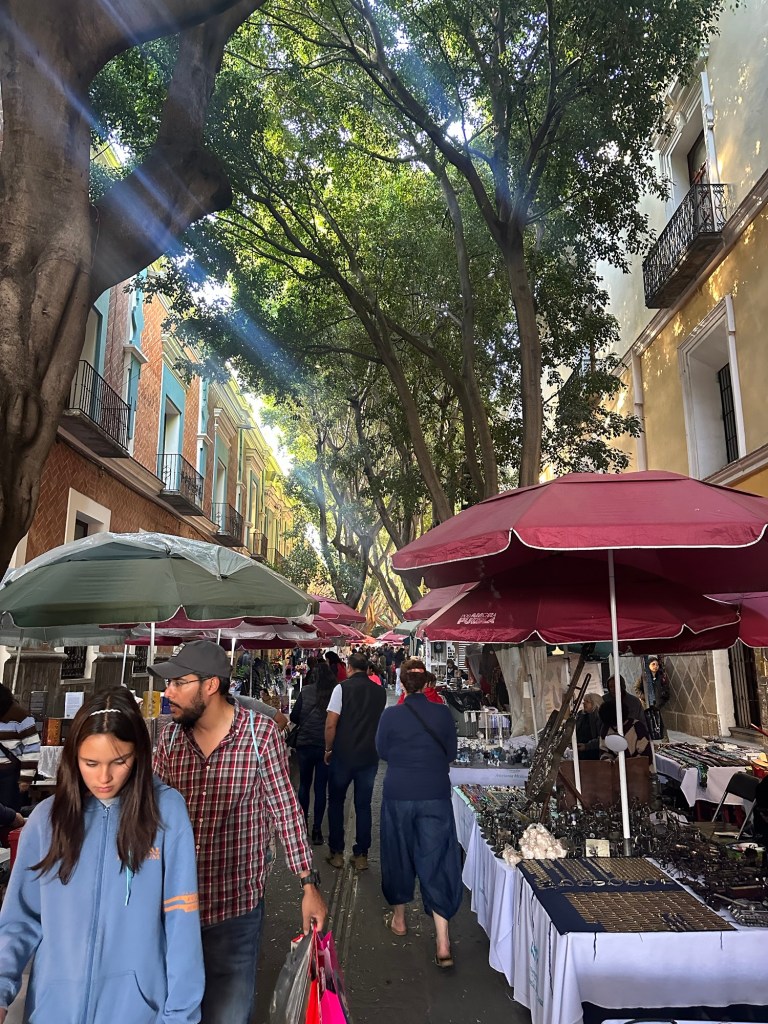
It was Sunday afternoon and the streets were full of families walking around. The historic centre is built on a grid with a few small plazas interspersed every now and then. Some of the streets were narrow pedestrian malls with some tree cover. Many of these had pop-up markets selling all sorts of stuff to the locals. Interestingly, there were very few obvious tourists- it really seemed to be a local affair. It had a good vibe and we spent a few hours soaking it up.

One of the pop-up markets

We had dinner on Sunday night in the hotel’s restaurant, which is noted as a good exponent of Pueblano cuisine. It was good, we tried four different types of the local specialty of ‘Mole’ . We decided we liked the ‘green one’ the best. It was washed down with a very lightly oaked Mexican Chardonnay from Baja California, which was more than Ok.

Monday 12th

Up early as there was insistent jack hammering from around 0600 somewhere quite nearby. 😩

We walked back into town to a coffee shop which we saw had been recommended on Google Maps reviews. It was a good one – and we were able to have our first Flat White since leaving Australia on December 23.☕️😊

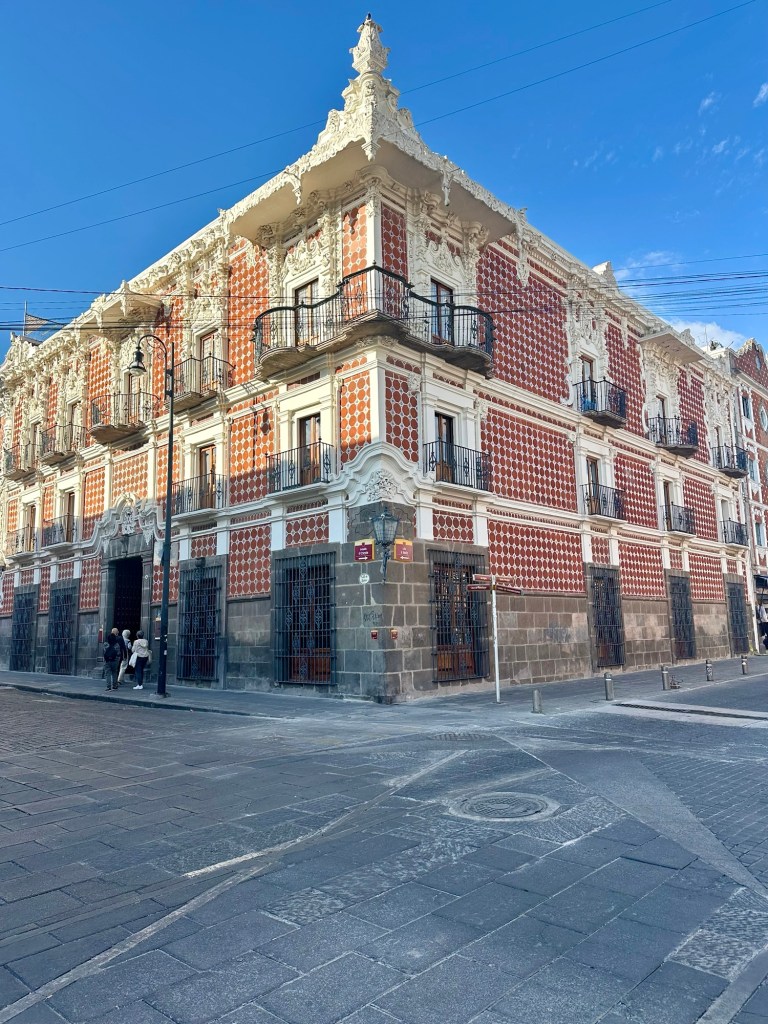
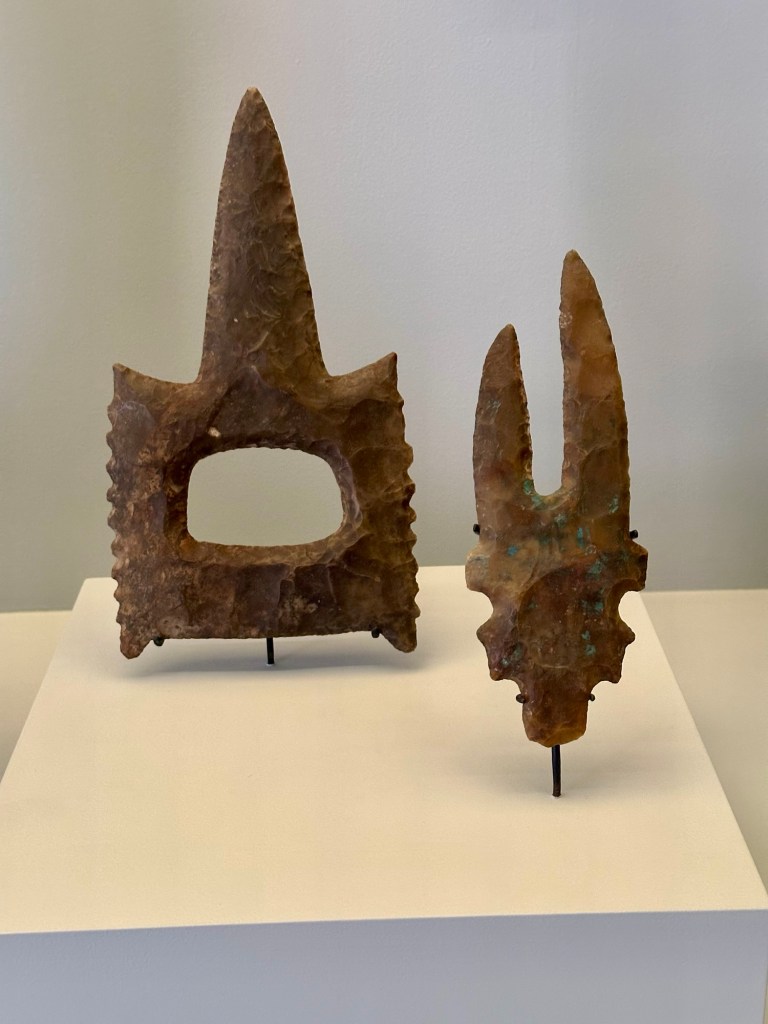
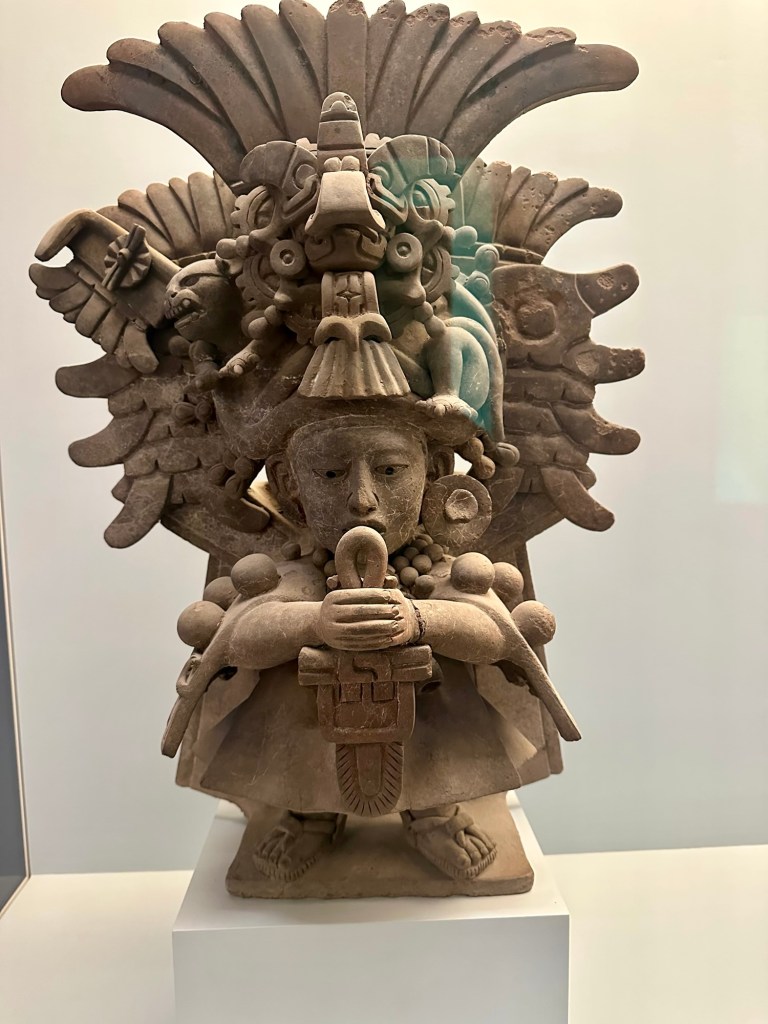
After some more coffee we resumed Sunday’s exploration. A highlight was a small-ish museum in a stylishly renovated building , the Museo Amparo.

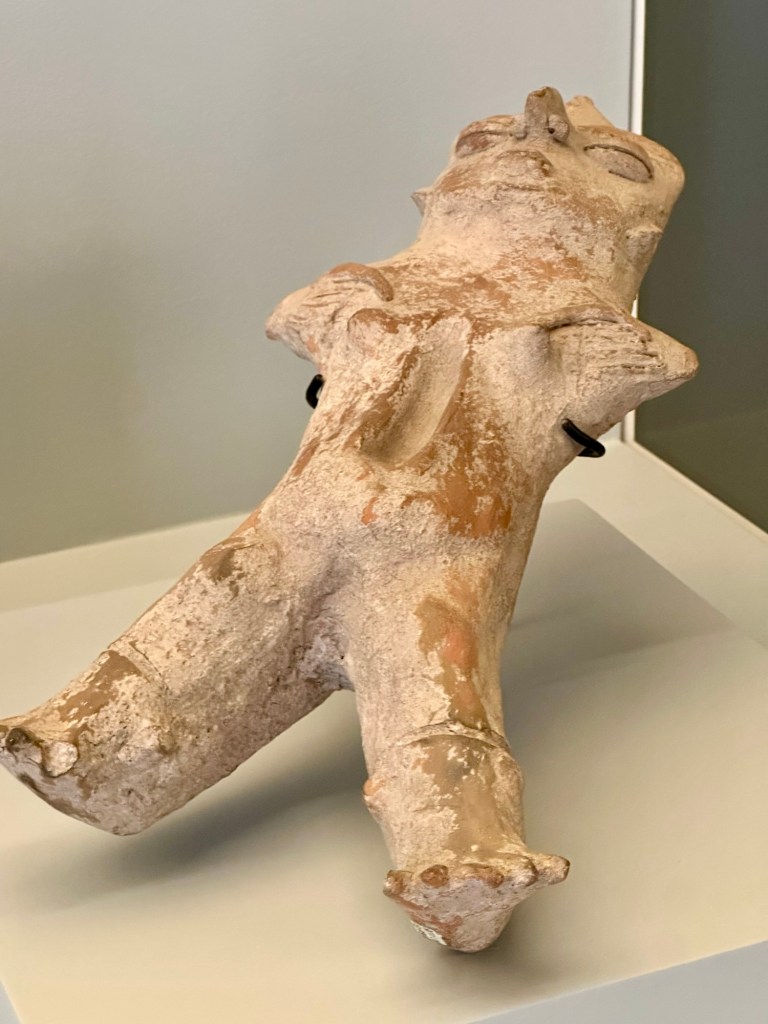
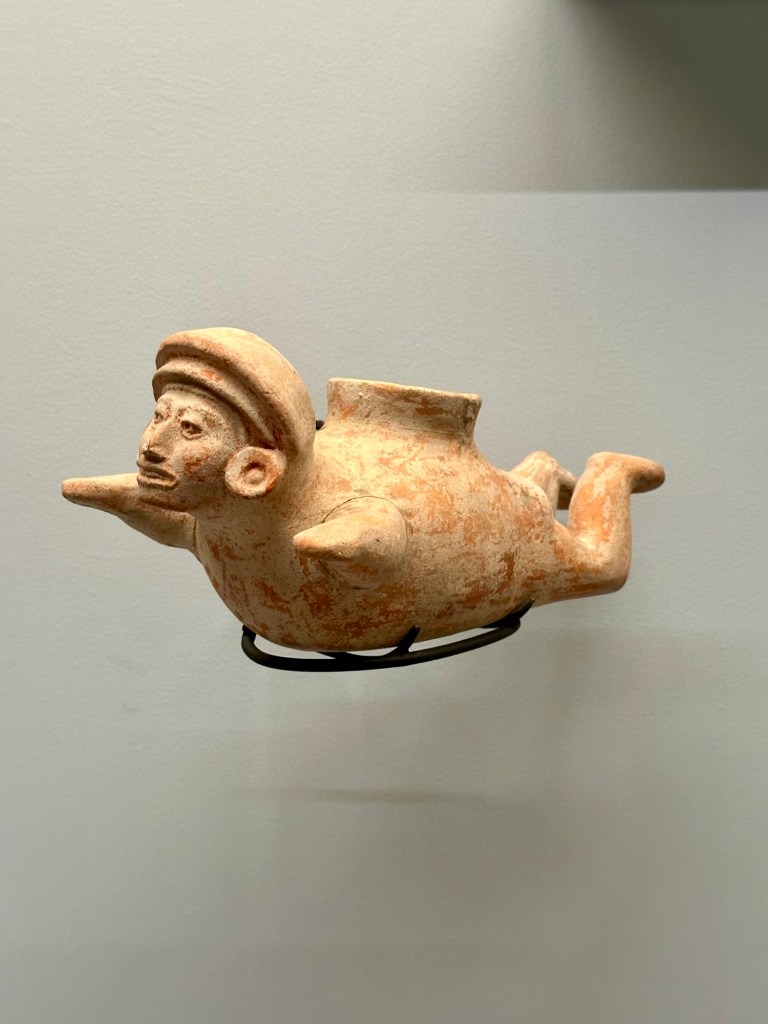
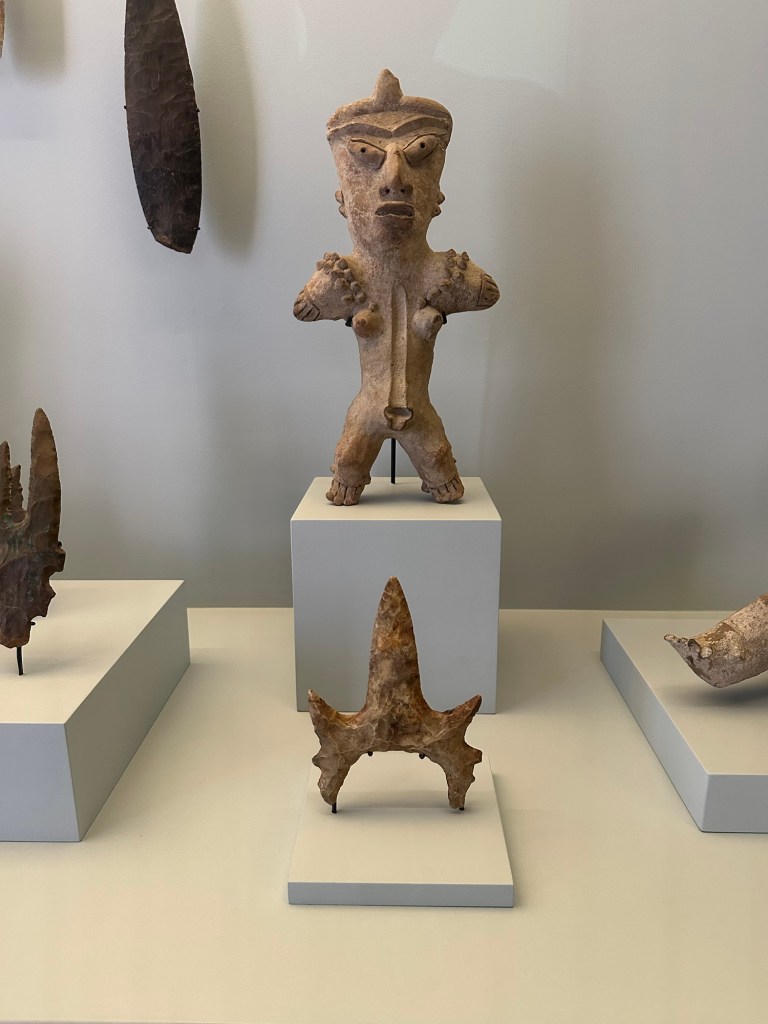
Also at the museum we found evidence in the form of a 1,000 year old sculpture that Mayan Special Forces were into Free-fall insertion methods:

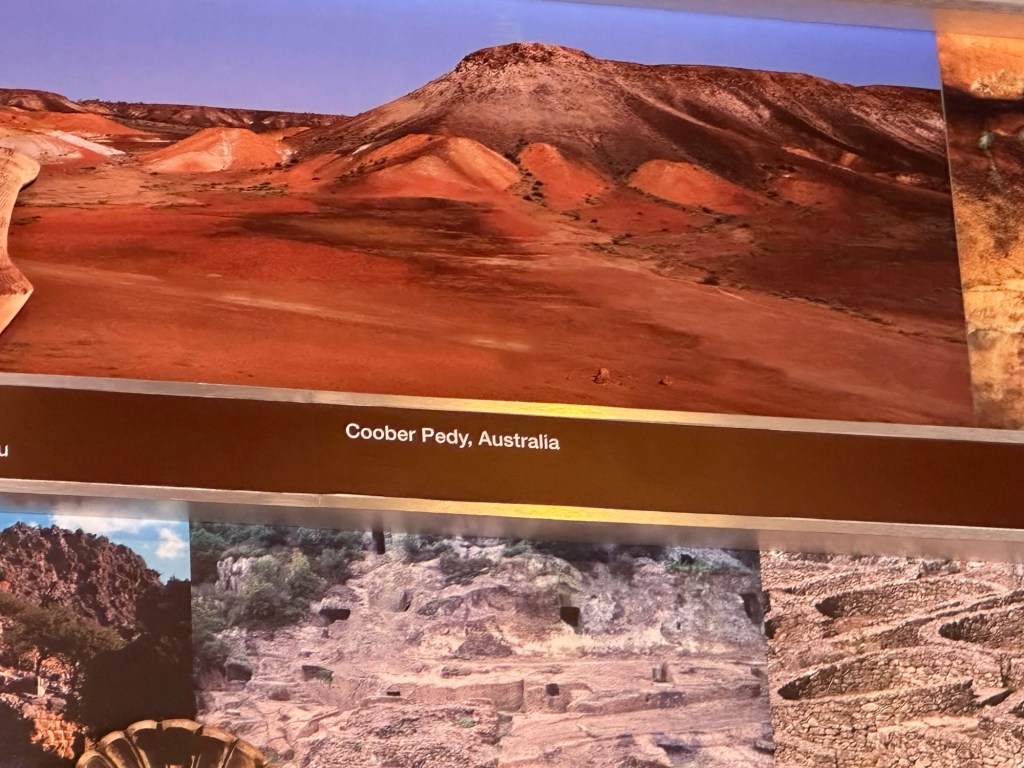
And , in the last place you might expect to find such an image , they had a photo of the Breakaways, just north of Coober Pedy, South Australia. 🤷‍♂️:

Mark lived in Coober Pedy as a kid – but didn’t expect to see it in a museum in central Mexico

The afternoon was spent wandering around and sitting in the central plaza park watching Pueblan life go by.

After an early night we were up on early on Tuesday to head to the bus station. Next stop: Oaxaca ( pronounced wah-ha-ka).

Mexico City and Teotihuacan

Friday 9 – Saturday 10 January

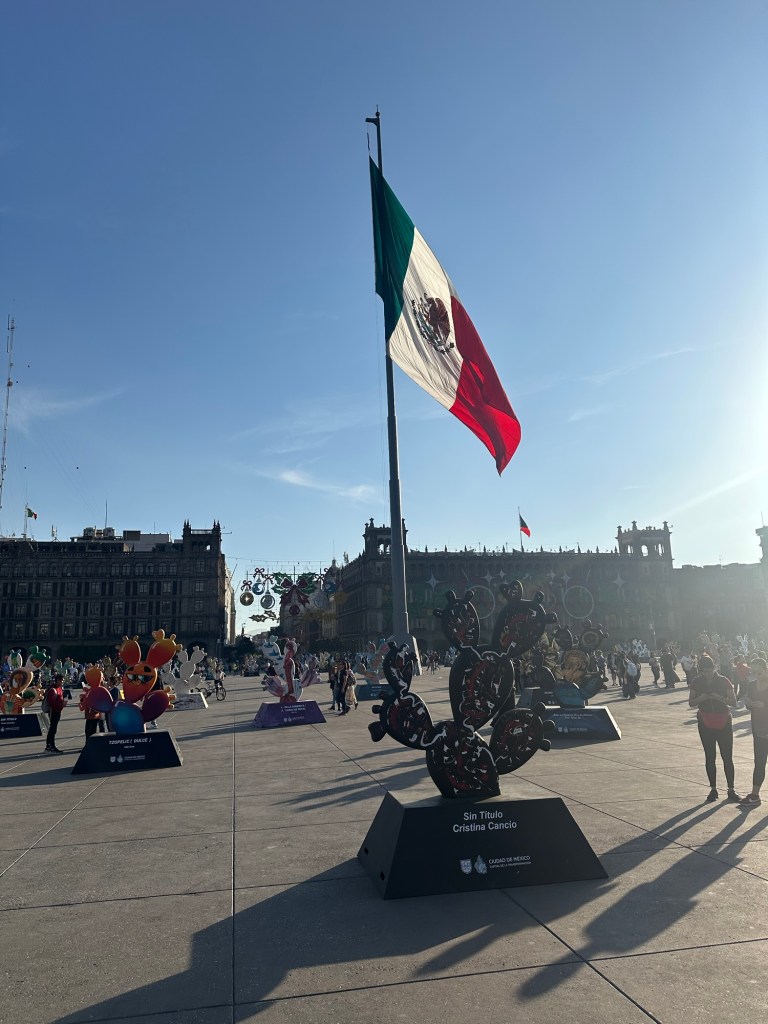
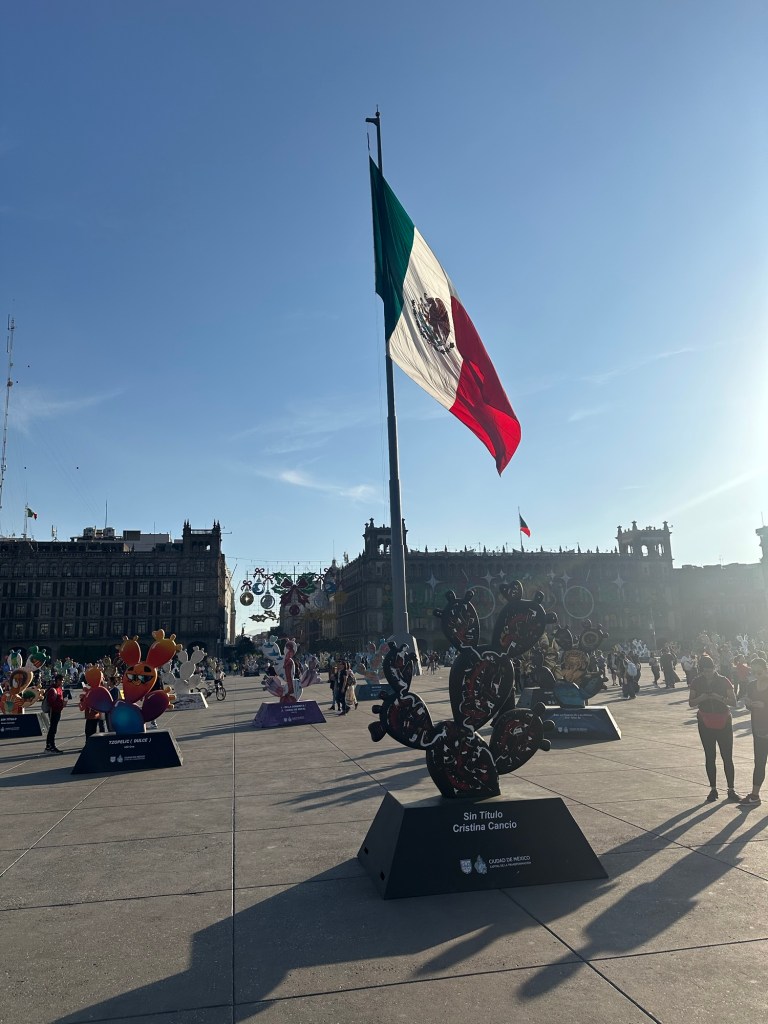
Constitutional Square, Mexico City, aka ‘Zocalo’

The first thing we realised about Mexico City is that we hadn’t even begun to appreciate its size. Population wise, 11 million people live in the core and another 18 million or so in the greater metropolitan area. That’s more people in one city than on the entire continent where we live…

We also failed to understand that two full days would only be scratching the surface of all the things to do in the area… so we scratched away.

Just some of the 29 million are down there….

Our hotel was right in the heart of the city – an area known as ‘centro’ , for obvious reasons. We were 100m from the Plaza de la Constitución, more commonly known as the ‘Zocalo’ by the locals (pronounced ‘Zok-a-low’). We thought that zocalo must mean square, but no, there is a story. Apparently ‘Zocalo’ means pedestal. When Mexico became independent in 1821 after an 11 year war with Spain, the new president wanted to erect a large column in the plaza. A pedestal was first constructed to place the column on, but for various reasons the column was never built. So the pedestal remained for decades and the locals just began referring to the place as the ‘Zocalo’ rather than Plaza de la Constitución. The zocalo is long gone ( a large flagpole with a 50 x 50 metre Mexican flag stands there now) , but the name remains.

The Zocalo

Our hotel offered a free walking tour – we went half expecting it to be a bit lame, under the old adage ‘you get what you pay for’. Wrong. We set out at 0930 on Friday morning and were done some 12,000 steps later at around 1330. It turned out to be a comprehensive tour of the centro area.

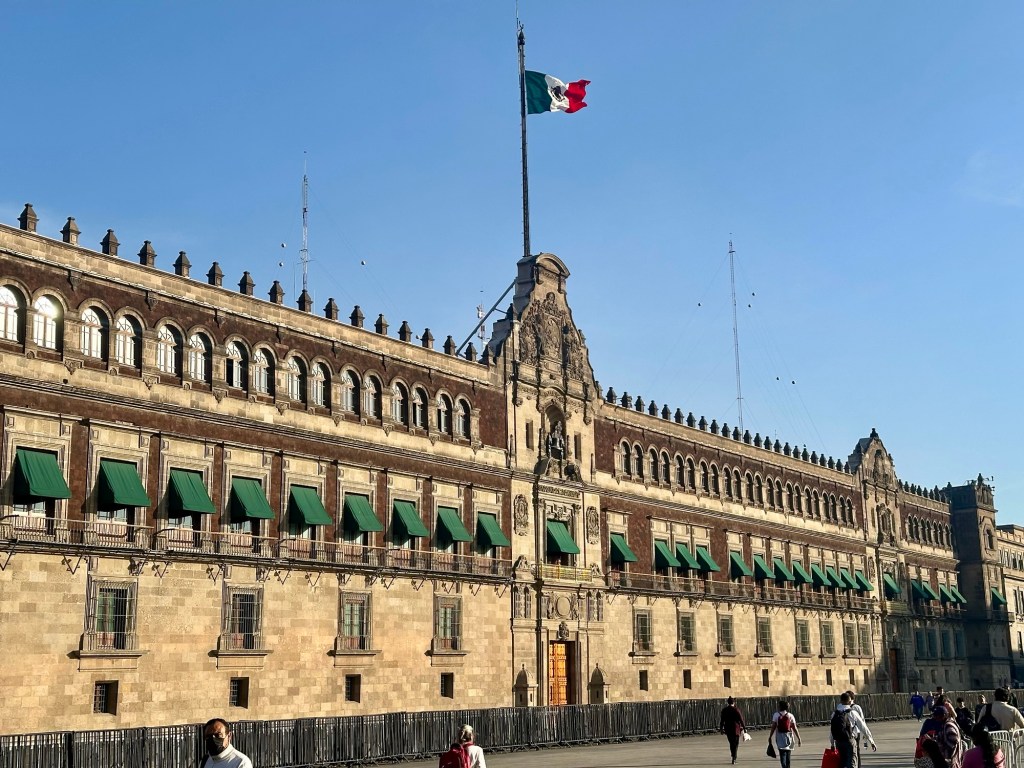
We started off with a walk through Plaza de la Constitución. The plaza is surrounded by the Presidential Palace, the Cathedral, Government offices and, on the west side hotels and jewellery stores.

The Presidential Palace – note the gold balcony on the first floor above the central wooden door

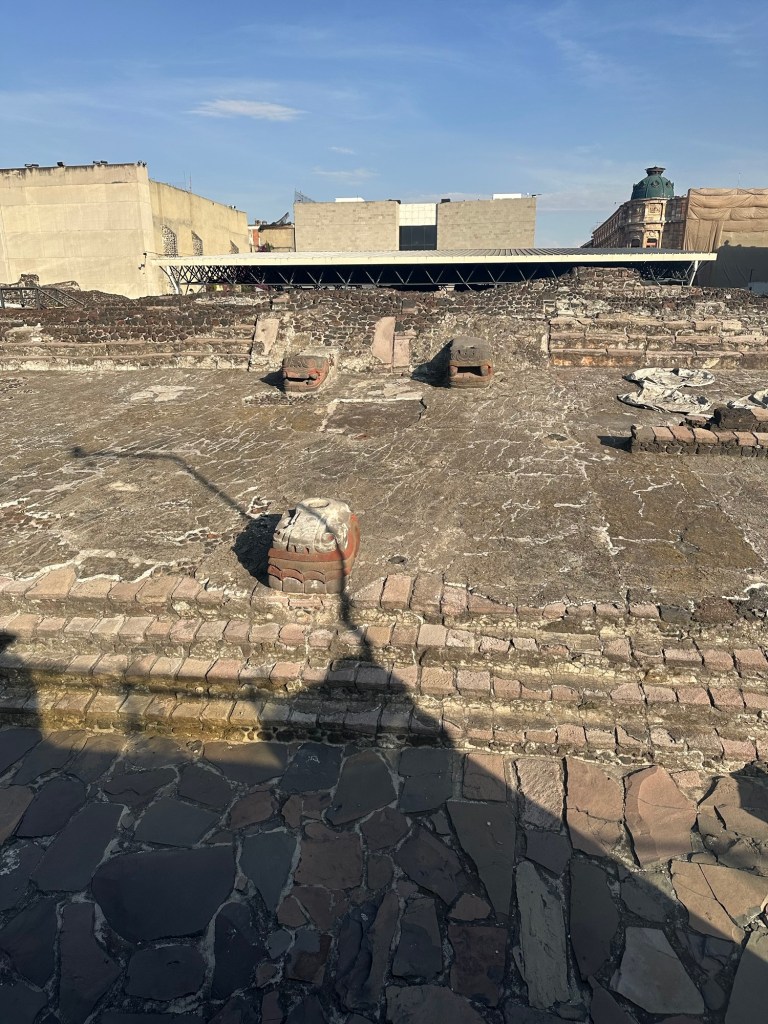
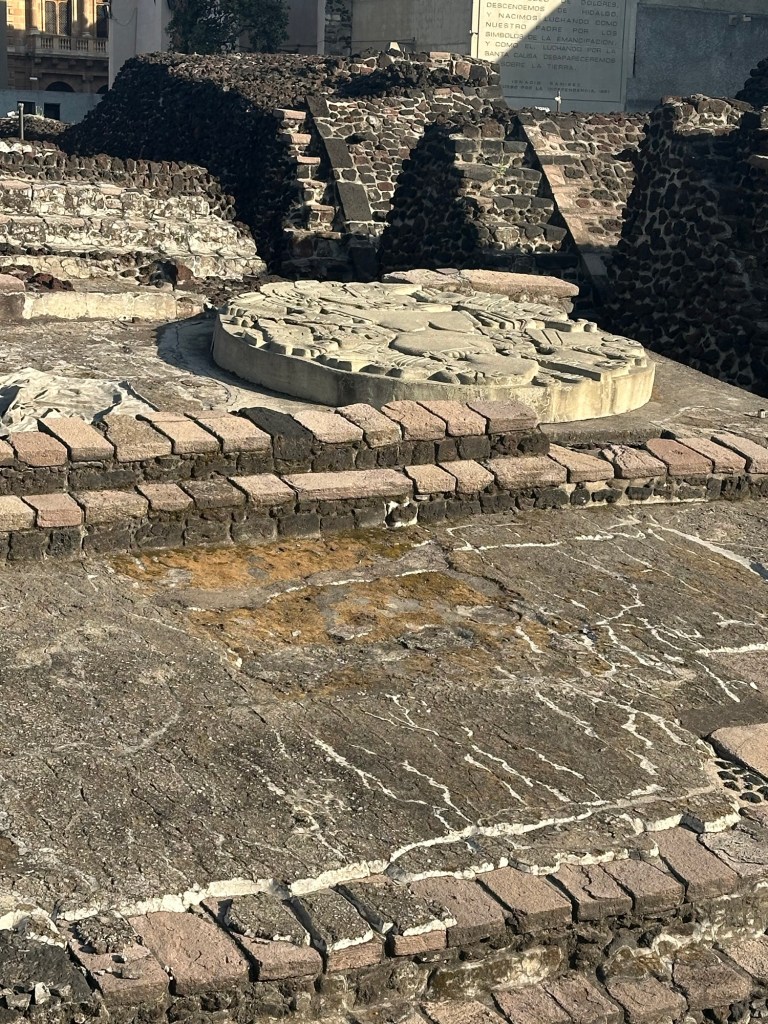
At the North East corner of the Zocalo is a significant archaeological site – now known as the Templo Mayor Museum, its original name was Tenochtitlan, and it was the site of the city the Aztecs created from around 1325 AD on a swampy island in a shallow lake. This was when their wandering / migration from around northern New Mexico/ Southern Utah ended.

The site of Templo Mayor today, which was the main temple at the centre of Tenochtitlan. It, like most of Tenochtitlan, lies buried under contemporary Mexico City

Fun fact: while most people think the Aztecs built Tenochtitlan, the people at the site called themselves Mexica (pronounced Meh-chi- ka)… which gives you a sense of where the Spanish got the word for ‘Mexico’ from.

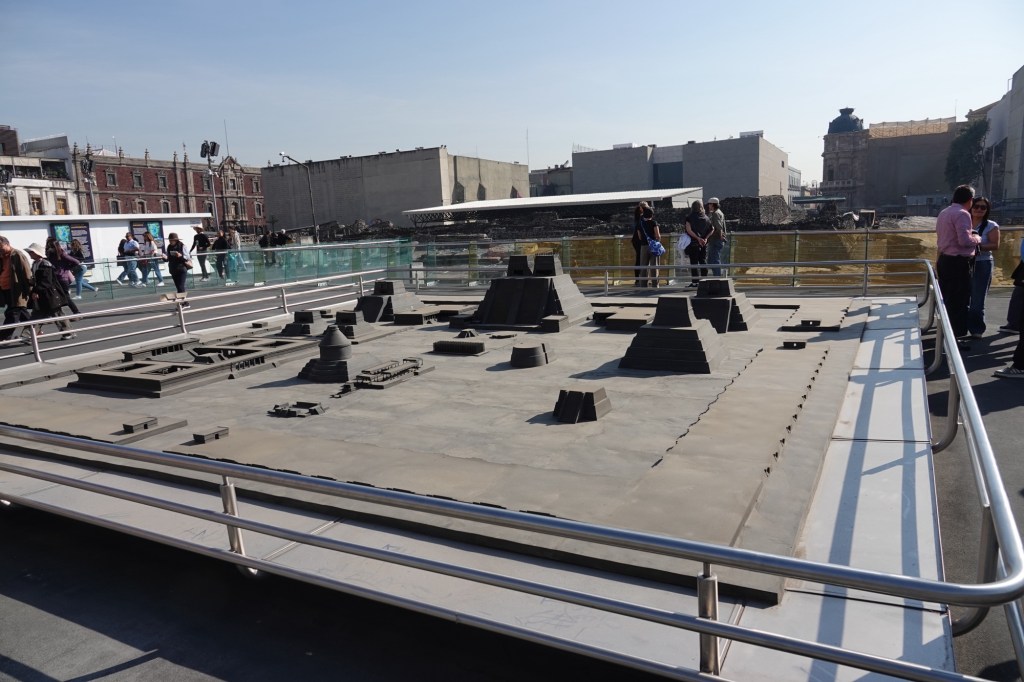
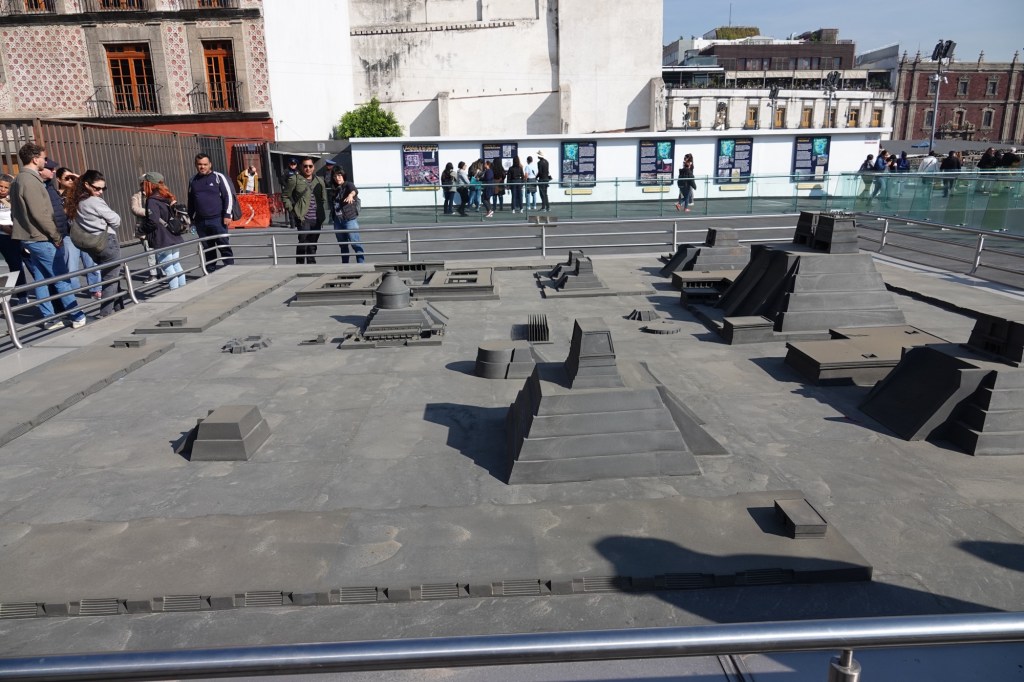
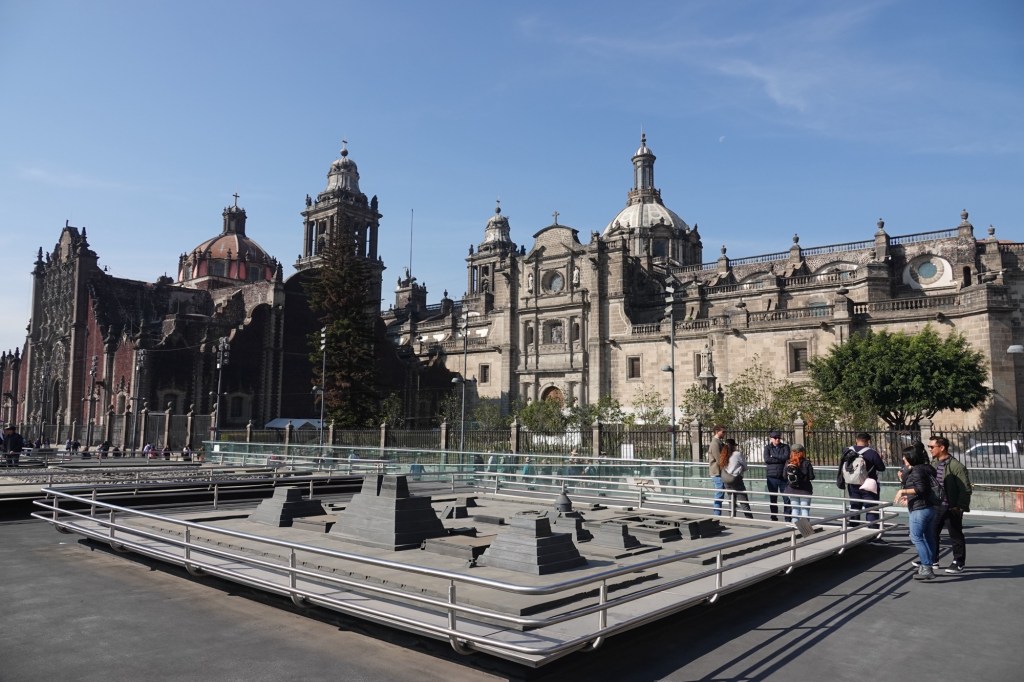
A model on the site showing what the centre of Tenochtitlan looked like when the Spanish turned up in 1521.
A side on view of the same model

The Mexica were a fun lot who practiced human sacrifice to placate the Sun God. They were also in constant warfare with their neighbours, being highly successful for a few centuries until an even bigger bunch of arseholes turned up in the form of the Conquistadors.

A replica of the stone were the enviscerated and decapitated bodies of human sacrifices would land after being kicked off the top of the stairs at the top of the Temple after being killed
An example of an obsidian knife used by priests to open up the abdomen of a sacrifice prior to ripping out their beating heart. A truly caring religious practice. The statue behind is a Mexica ‘how to’ manual

The Conquistadors arrived in Tenochtitlan in 1521. While only a few hundred in number, they found plenty of willing assistants in defeating the Mexicas from all the other groups in the region who were heartily sick of them, their warfare and using captives as sacrifices. Tenochtitlan fell to the Spanish after a siege where the other locals told the Conquistadors how to turn off the aqueduct supplying water to the city.

The Spanish promptly started to act like even bigger arseholes. They effectively enslaved the Mexicas and other Indigenous peoples and stole all their gold and silver. Several hundred years before the Poms came up with their own version of ‘terra nullius’ in Australia, the Spanish applied it in Meso-America.

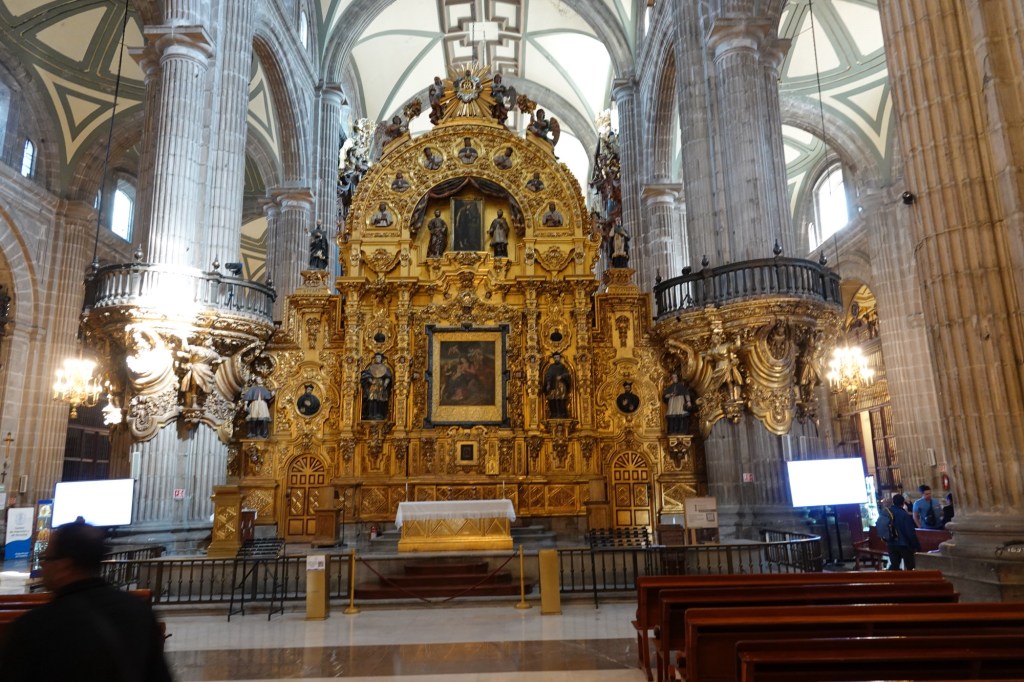
One of the first things the Spanish did was to tear down the central temple in Tenochtitlan and use the material to build a very large cathedral. Which still stands today, albeit it is sinking and tilting at a high rate… because it was built on the site of a swamp , just as Tenochtitlan was. This sinking/ tilting feature of Colonial buildings in Mexico City is evident throughout the central city region.

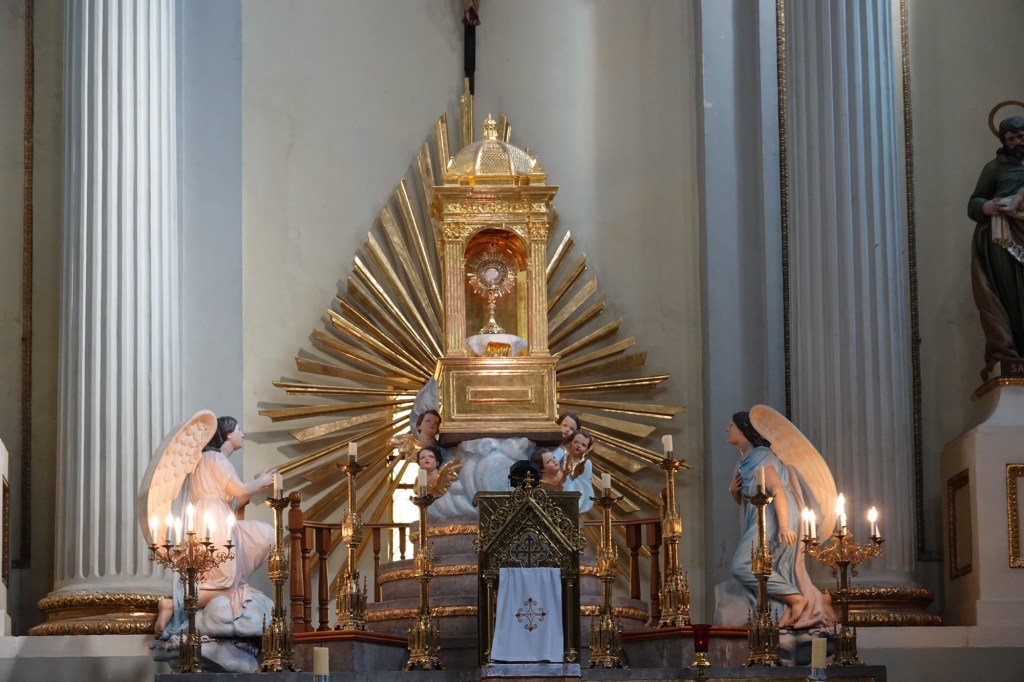
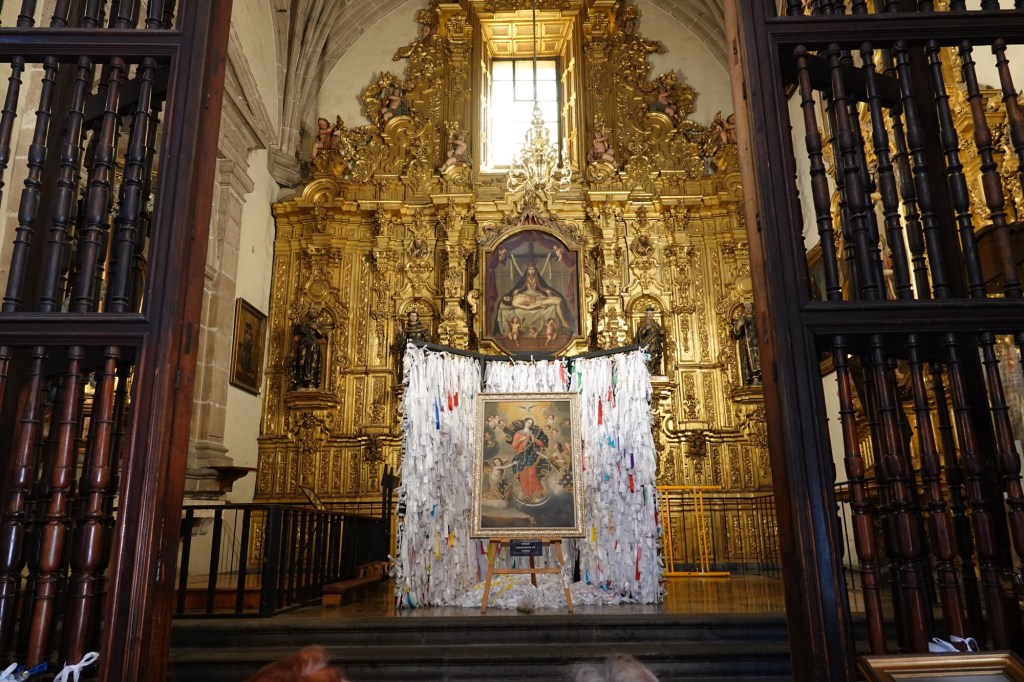
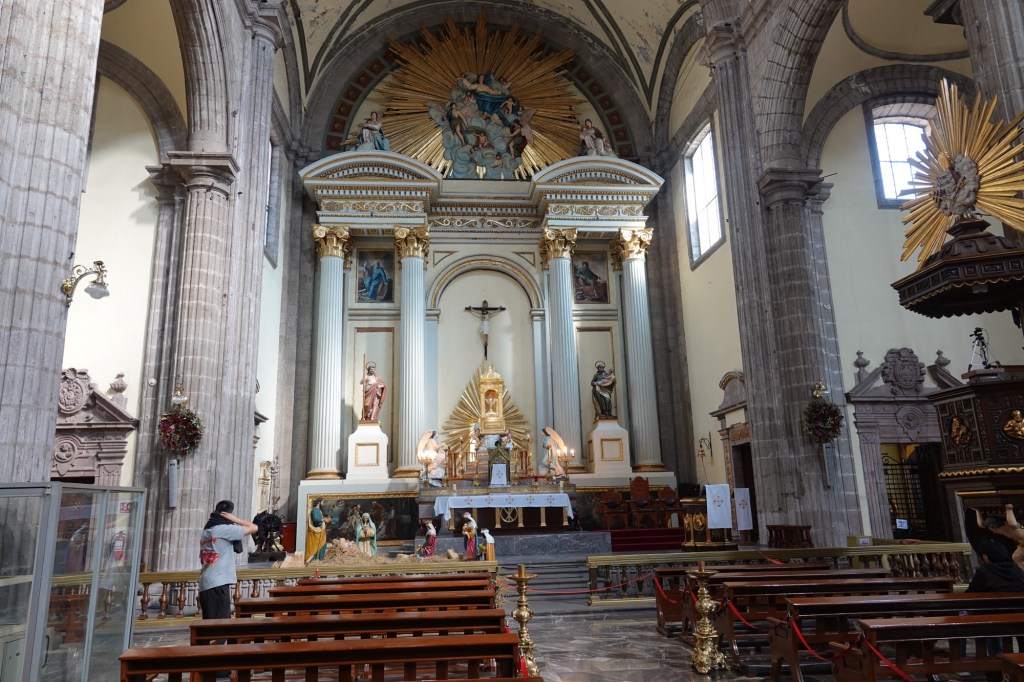
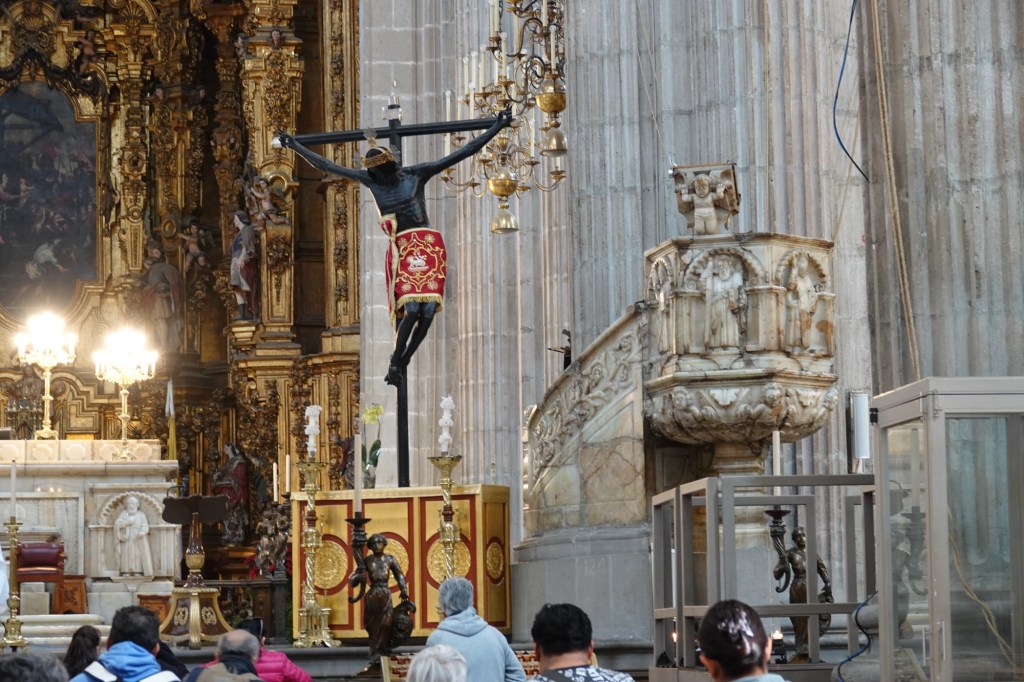
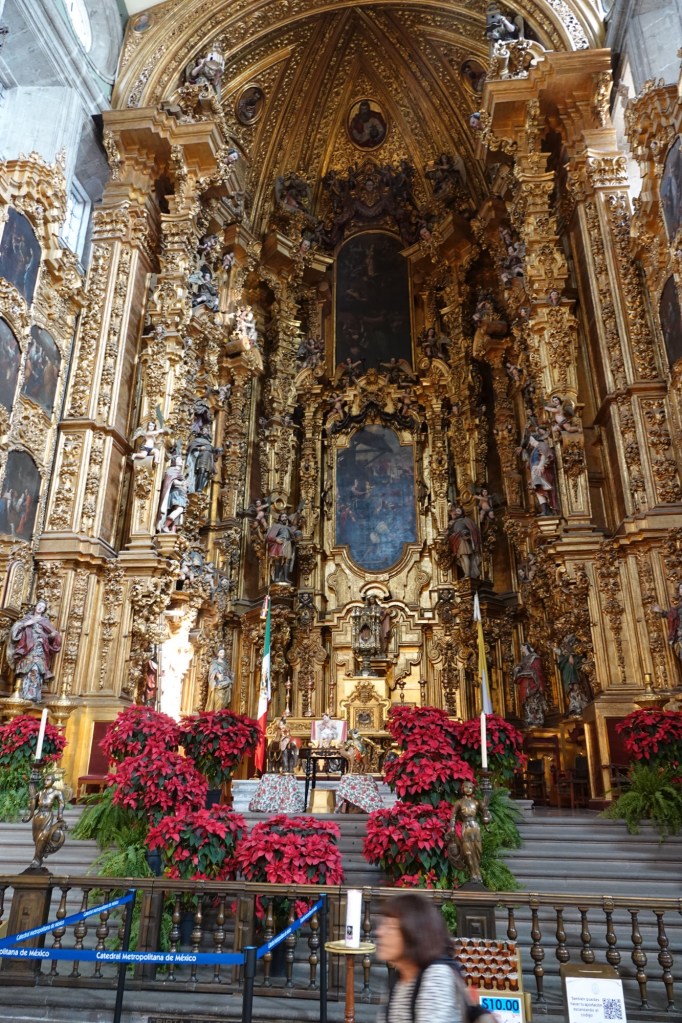
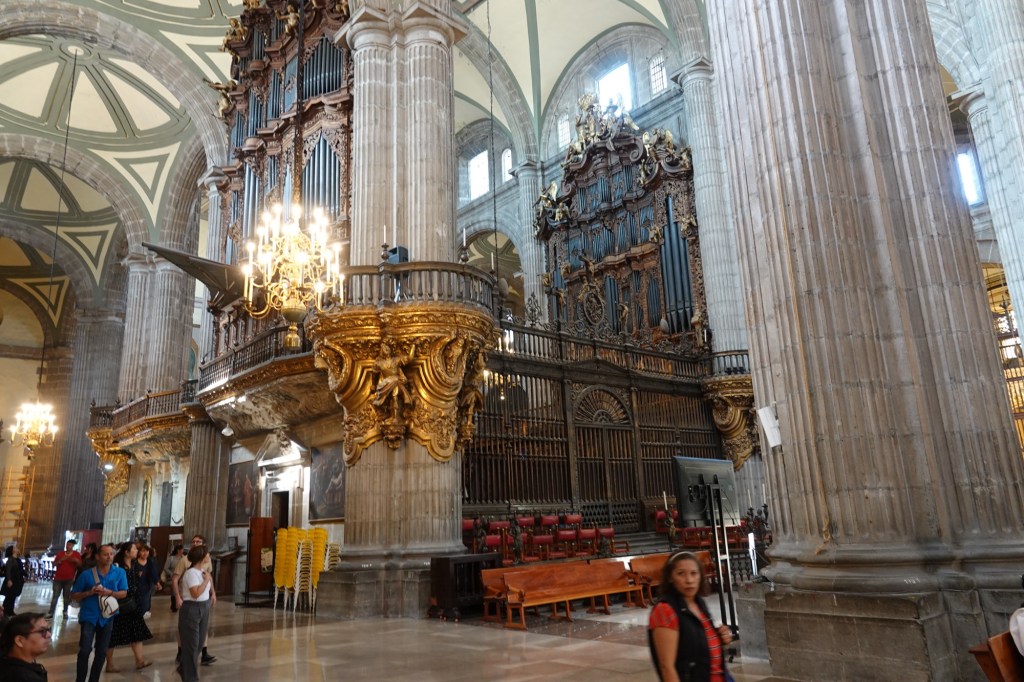
The cathedral itself is ‘grand’ – certainly on a par with those we saw in Grenada or Seville. Although we think the Mesquita in Cordoba remains the most interesting Spanish cathedral we have seen.

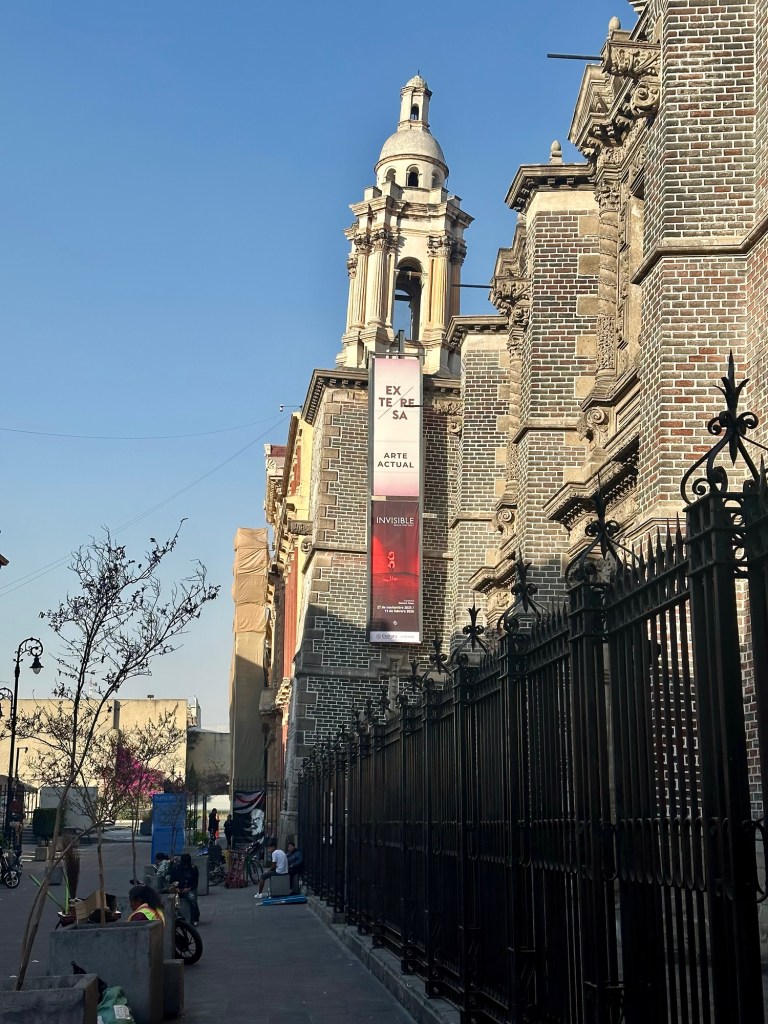
Images of Spanish Catholicism expression in architecture follow:

The angle leaning back off the vertical of the facade of this building near the Templo Mayor Museum illustrates the tilting / sinking problem in central Mexico City

The rest of the walking tour explored many different aspects of Mexico’s history.

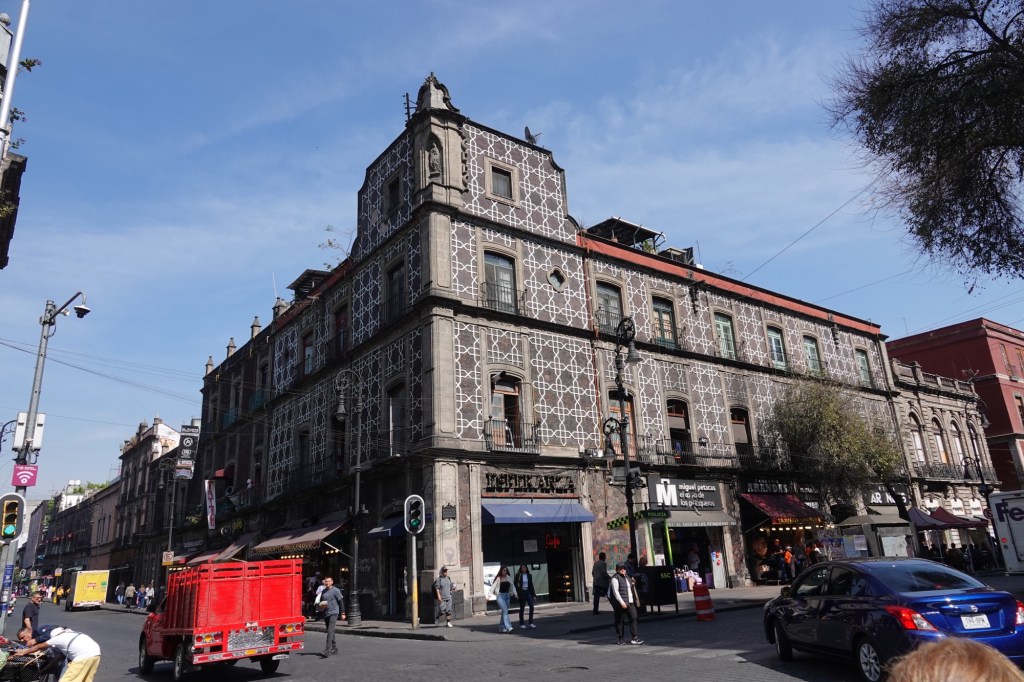
The Centro district has a lot of streets named after various revolutionary events and people in Mexico’s relatively rich history of revolutionary events and people.

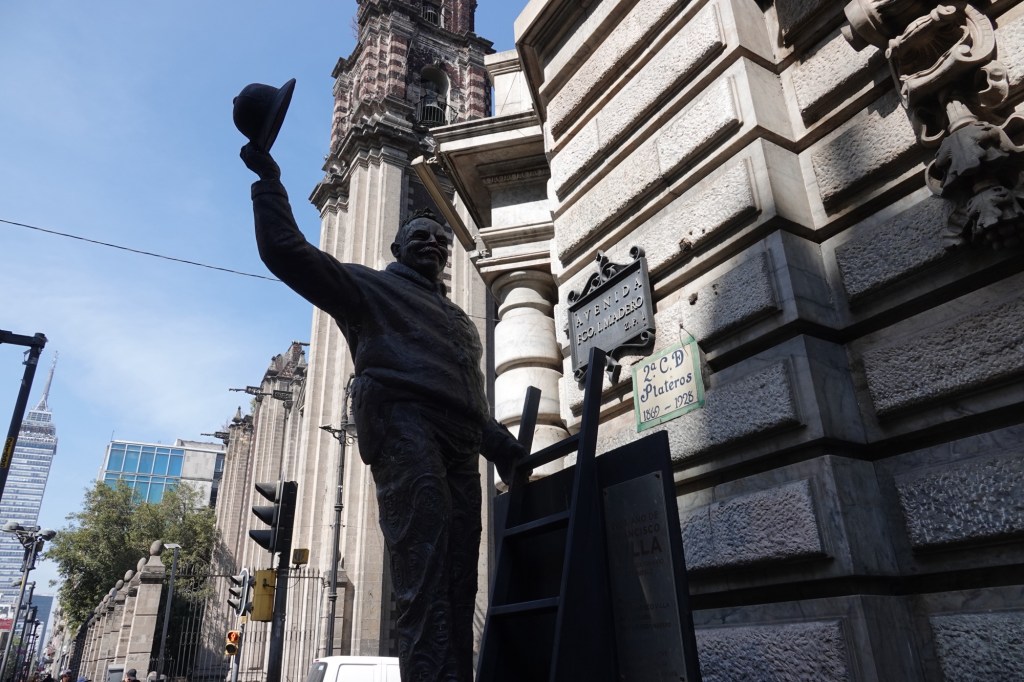
Statue of Pancho Villa at the corner where he rallied folks in support of president
Francisco Ignacio Madero González , killed in a Coup de Etat in February 1913

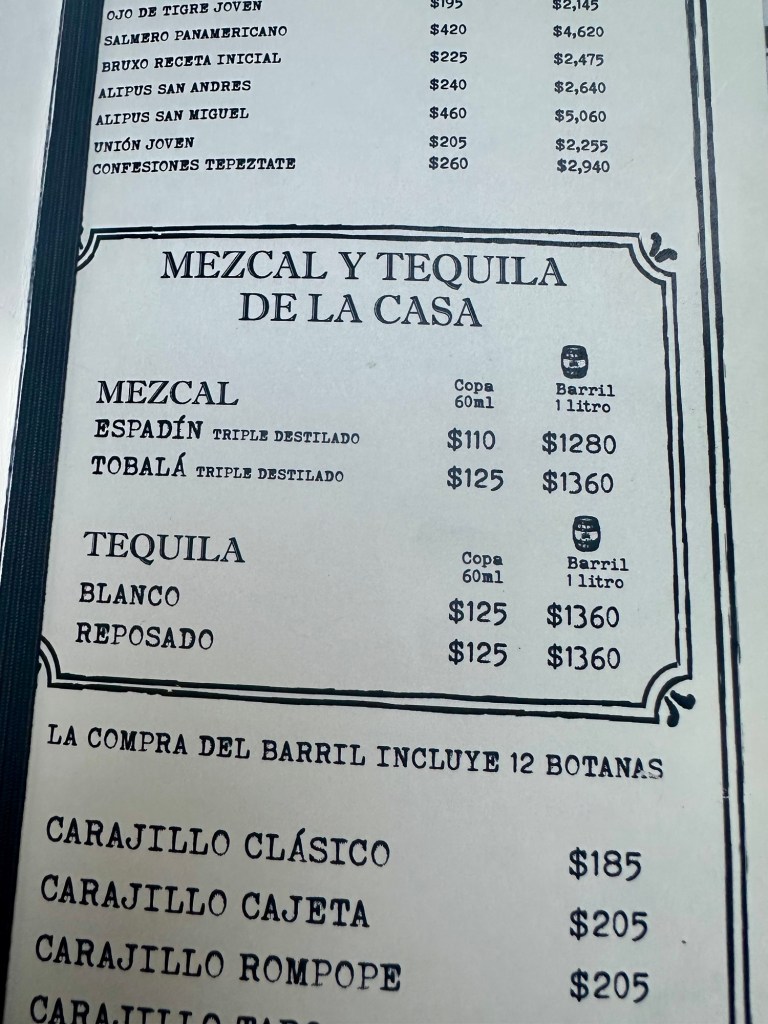
We went out for drinks and dinner that night to a local ‘tapas’ style restaurant in the courtyard of a historic colonial house. Here we discovered just how many different tequilas there are in Mexico.

A list ( on the left) of just some of the tequila available
For those who have a real hankering for a lot of hard liquor- Mezcal and Tequila available by the litre barrel

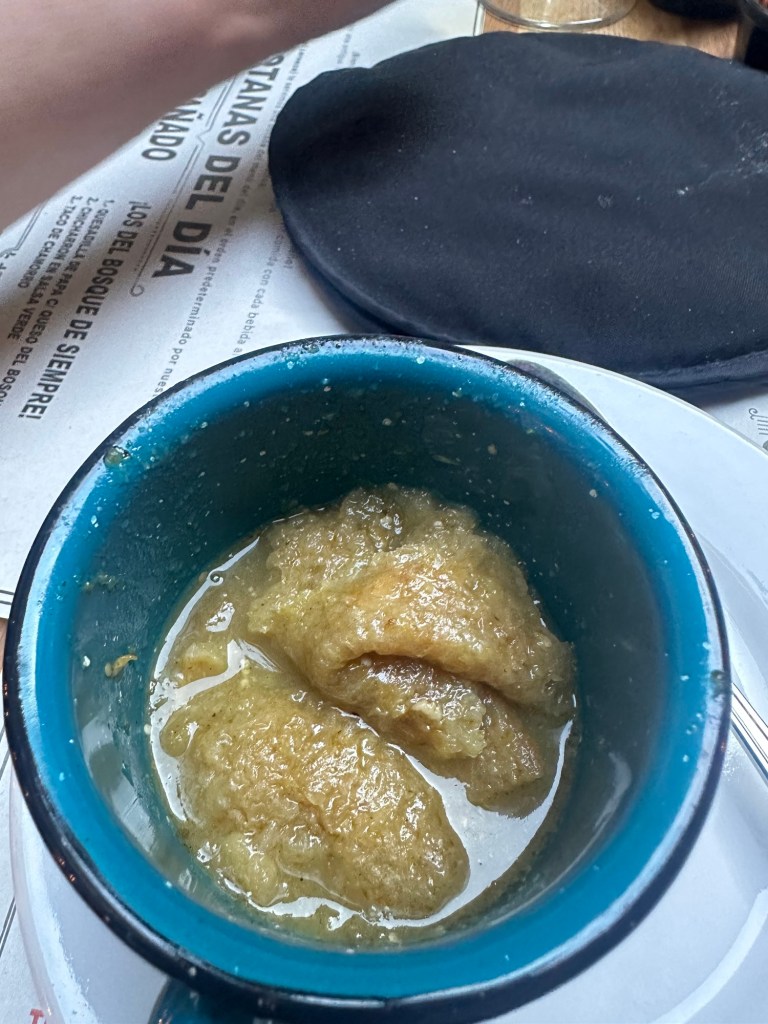
We also discovered Mexico City’s version of Vegemite- something we reckon you could only love if you grew up with it – Chicharrón en Salsa Verde. AKA pork crackling stewed in a spicy green sauce. Picture follows:

Oh, the texture!🤢
Mark one Margarita in…

Teotihuacan

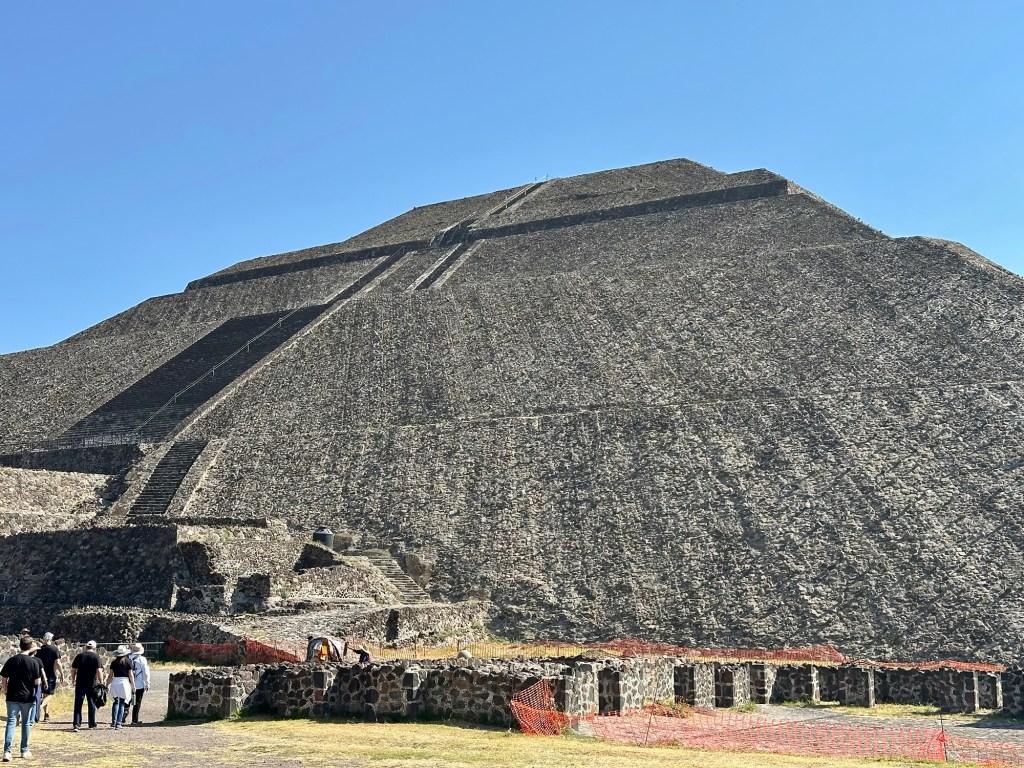
We were up early for our pick up for a day trip out to Teotihuacan. This is a significant archaeological site to the near north east of Mexico City that was occupied from around 100BC to around 500 AD. It was essentially abandoned then due to internal conflict caused by environmental degradation. Essentially they had ran out of water and wood. The subsequent fight led to the place being burnt down and the loss of many records. This means not a lot is known about the people who lived here, or where they went , as the place was dormant long before the colonial era. Indeed, when the Aztec’s wandered through some 800 years later they thought many of the pyramids lining the 5km long central plaza were tombs. This is why they called to that stretch ‘The avenue of the dead’ – a name that remains today. In time the site was lost to history, until when attempting to dynamite a ‘hill’ to construct a railway in the 19th century the Temple of the Sun pyramid was rediscovered.

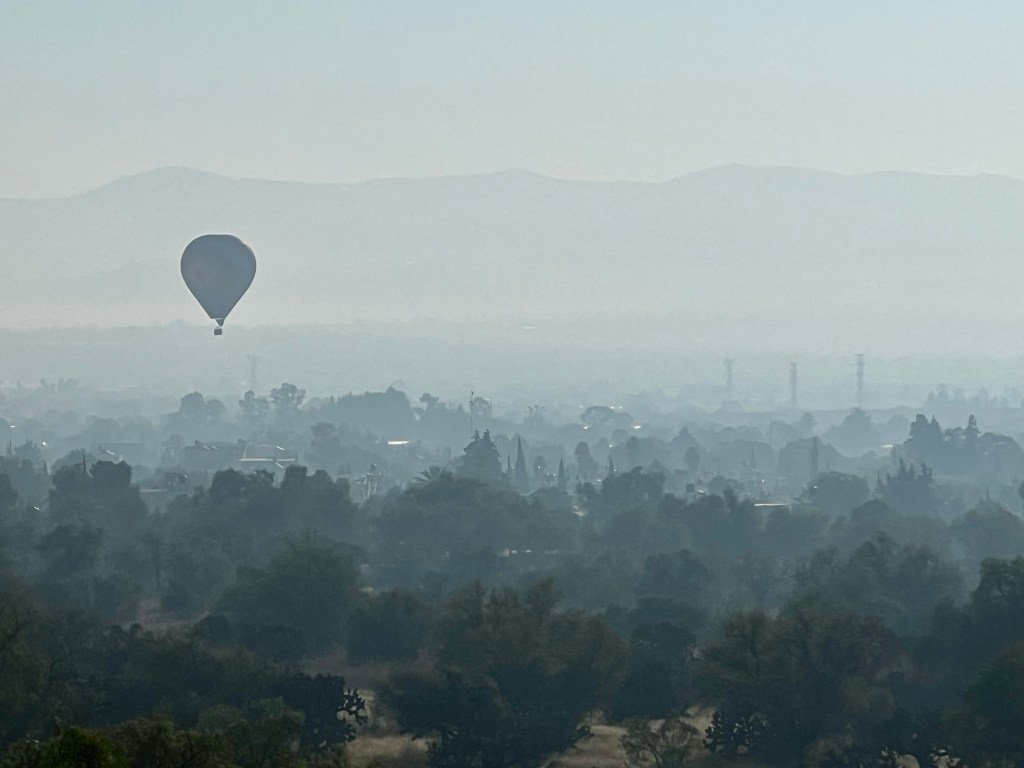
Balloon photographed from the top of the Temple of the Moon
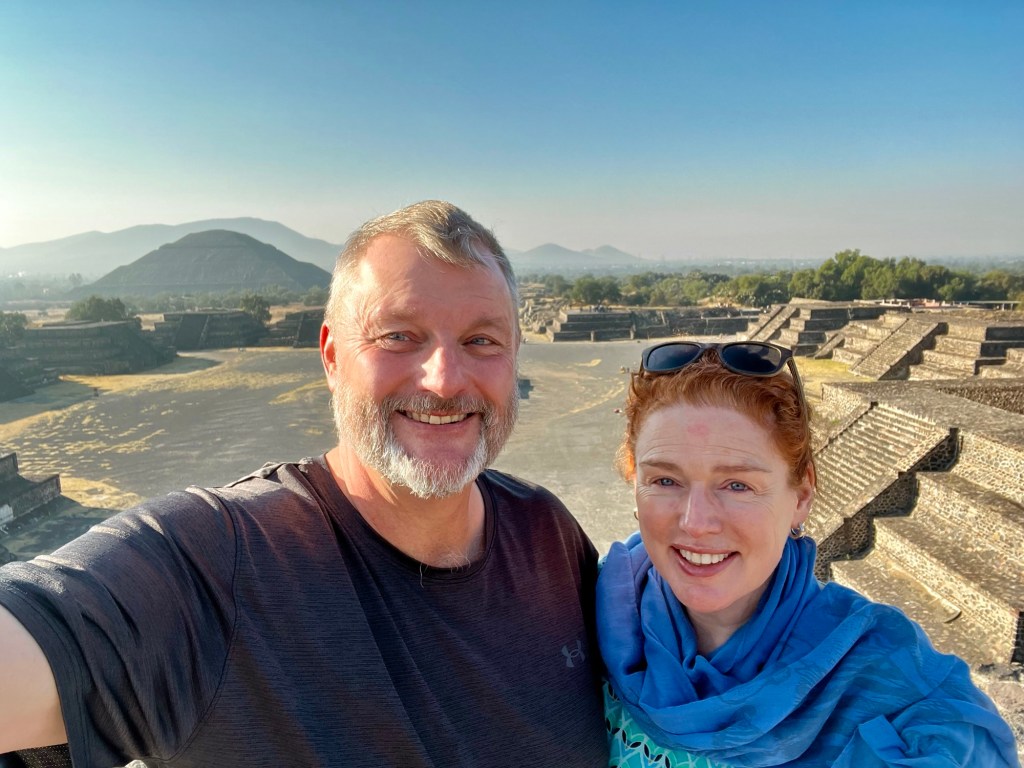
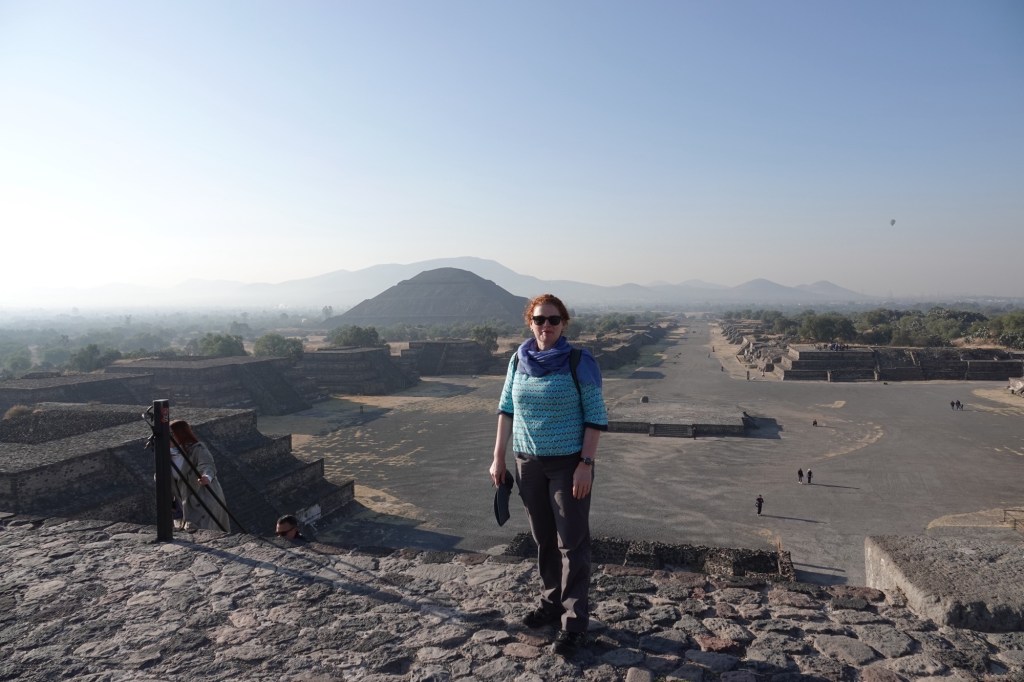
On the Temple of the Moon, avenue of the Dead behind us, Temple of the Sun visible over Mark’s right shoulder

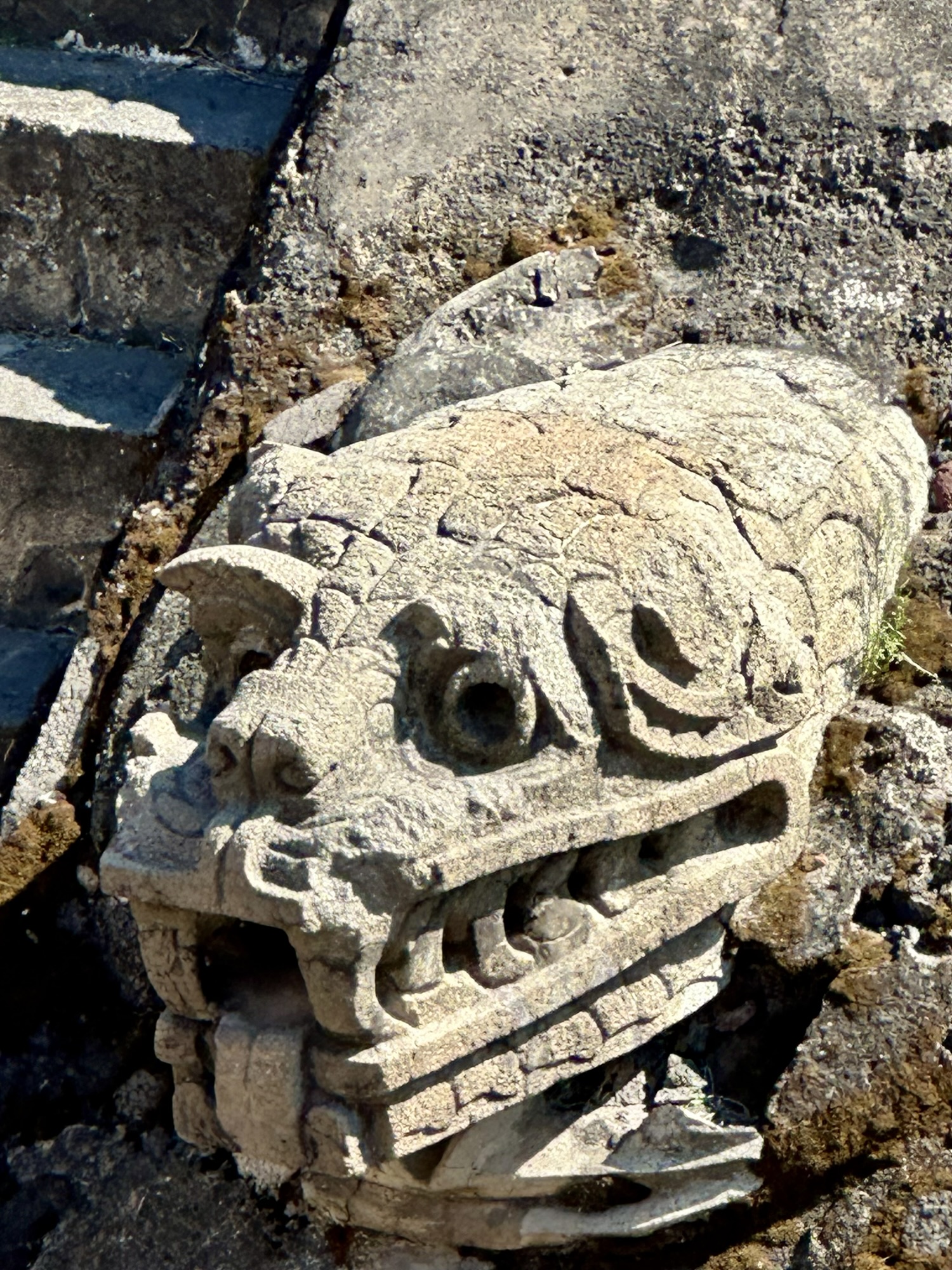
In its heyday Teotihuacan covered an area of 22 x 22 km and was home to an estimated 200,000 people . Three large pyramidal temples – that of the Moon, Sun and Feather Serpent are present. These names are necessarily what the Teotihuacan’s called them – we simply don’t know , they are names given by modern anthropologists and archaeologists. The temples line up with the pattern seen in Orion’s Belt. These Temple of the Sun had a column sit at the peak that was used to determine the equinox and set the calendar.

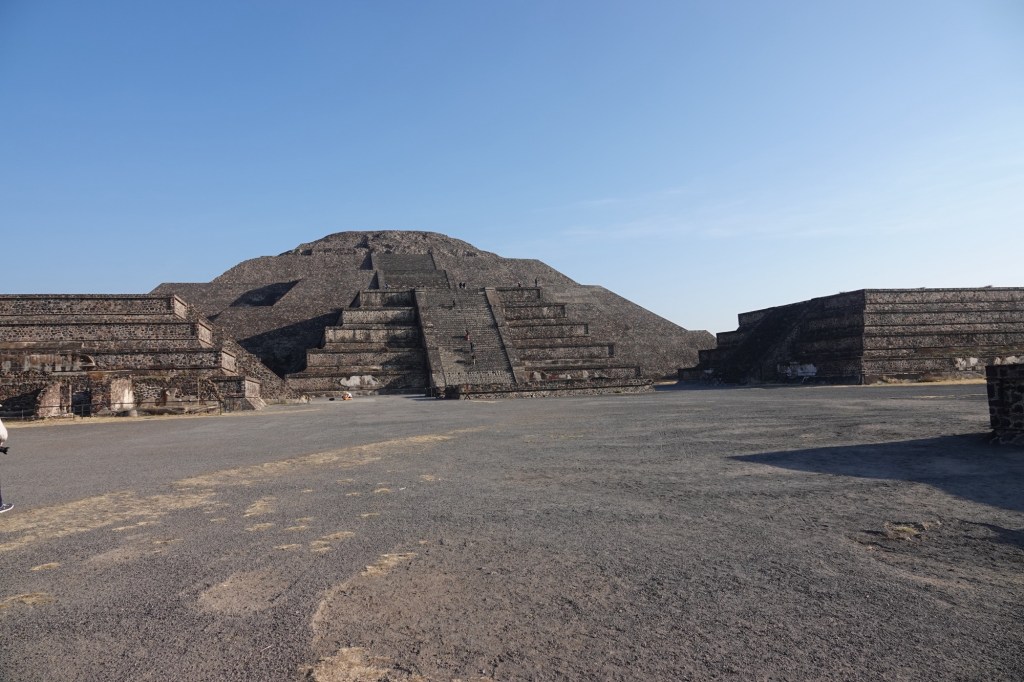
Temple of the Moon
Ness atop the Temple of the Moon, Avenue of the Dead and Temple of the Sun visible
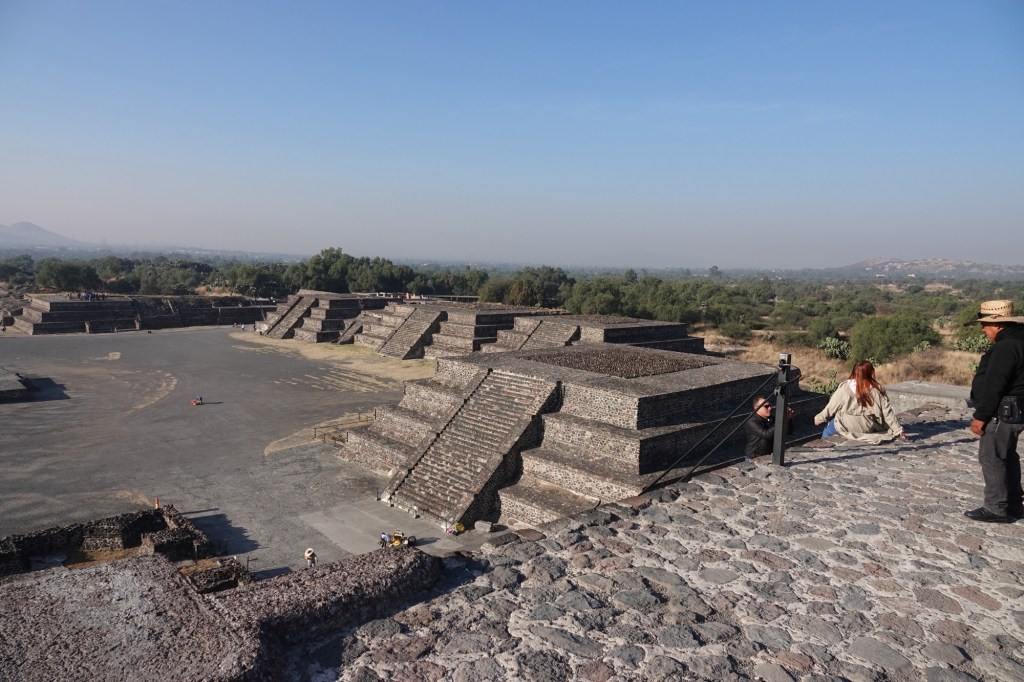
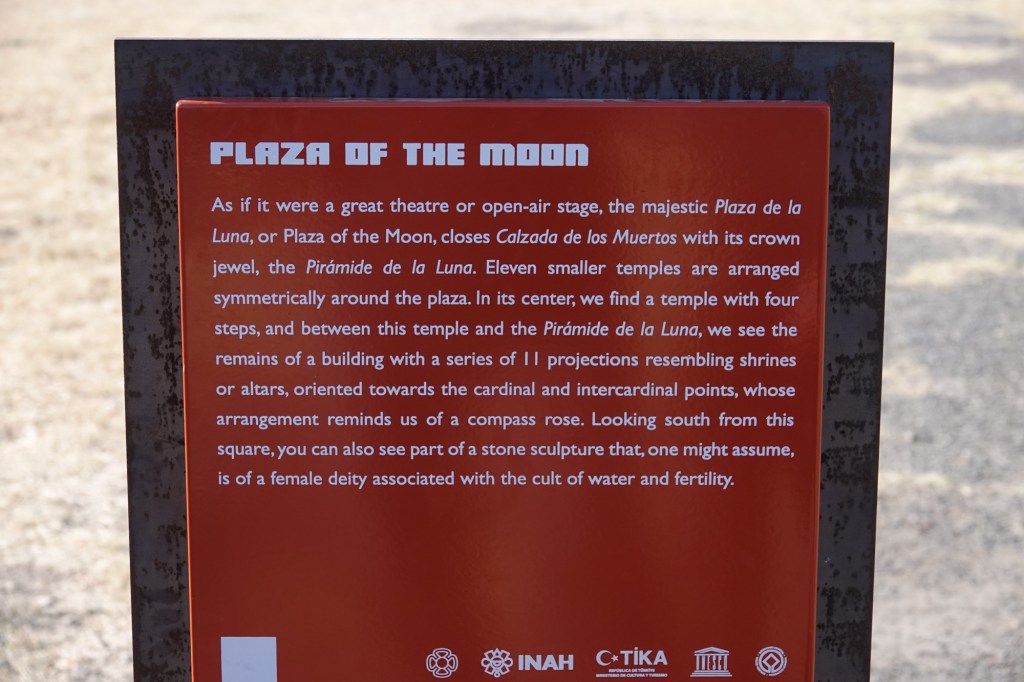
Looking down onto the central plaza from the Temple of the Moon
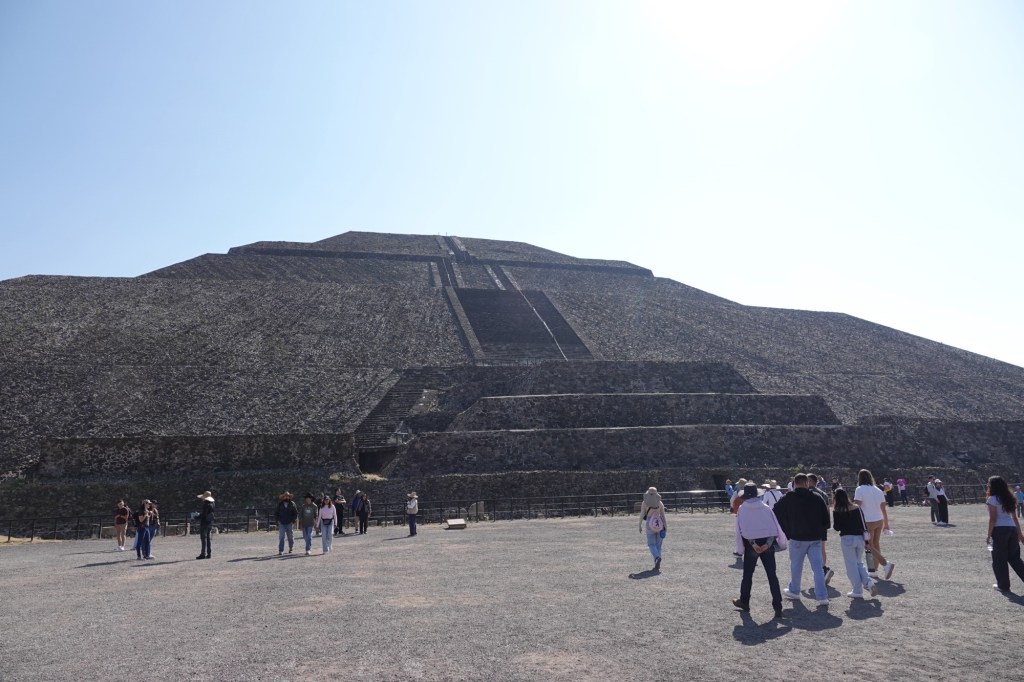
Temple of the Sun

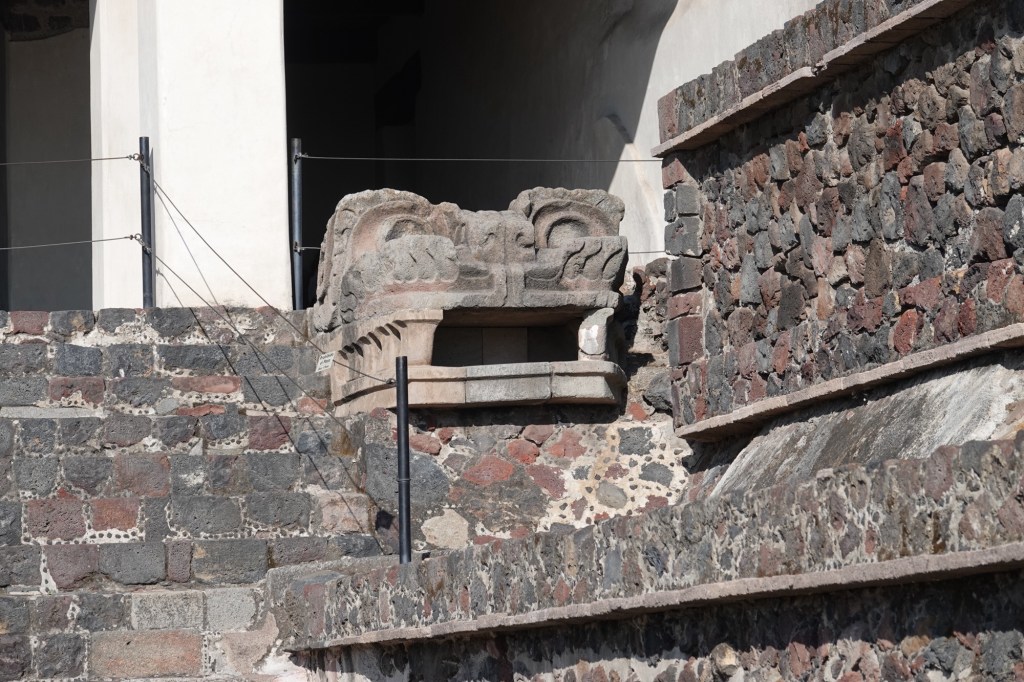
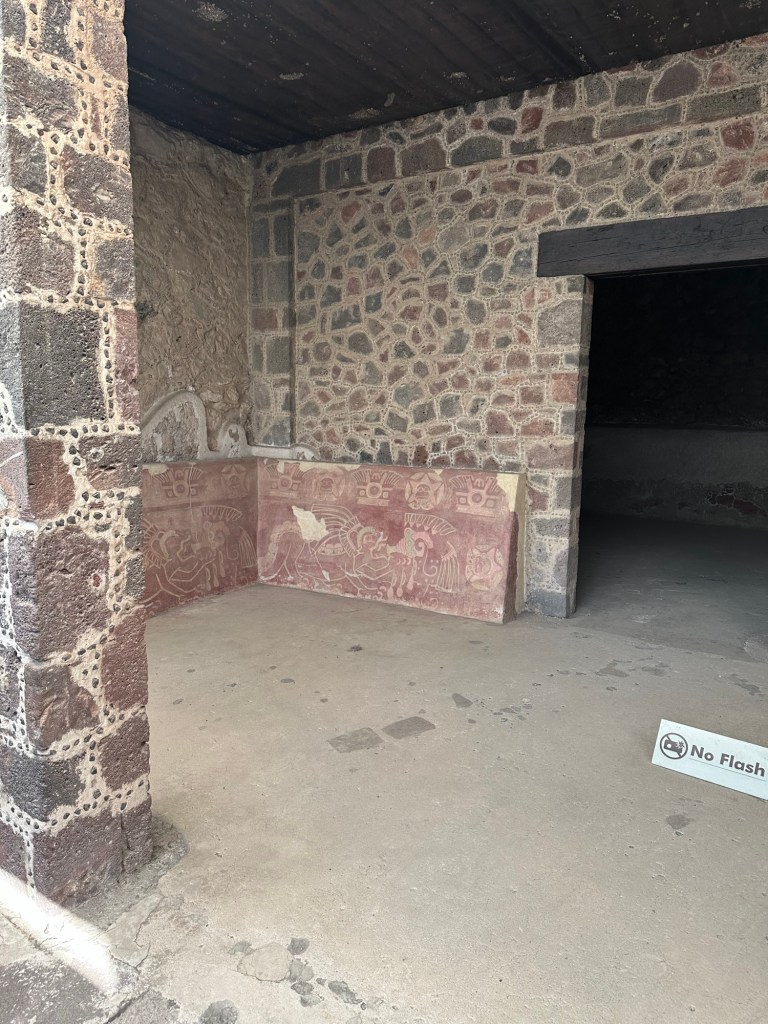
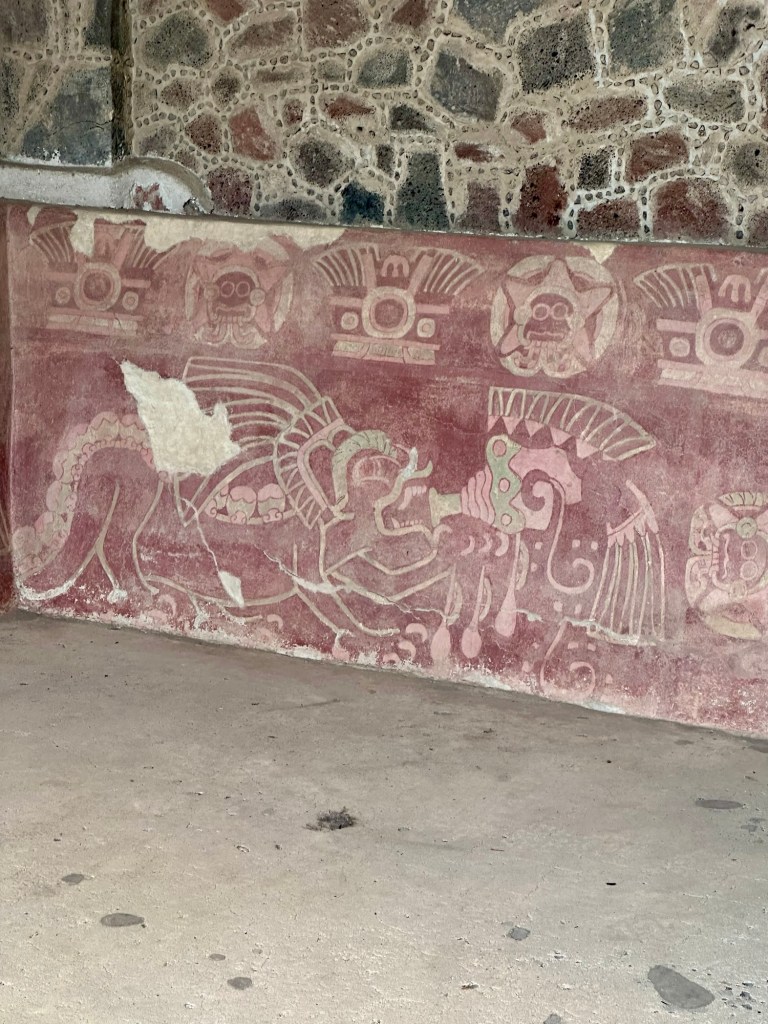
Gallery of images from Teotihuacan:

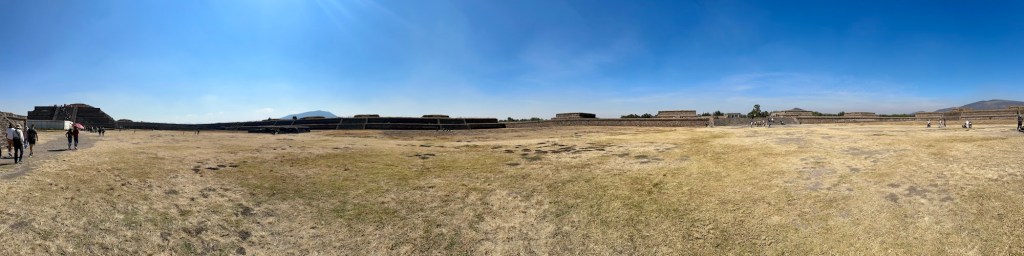
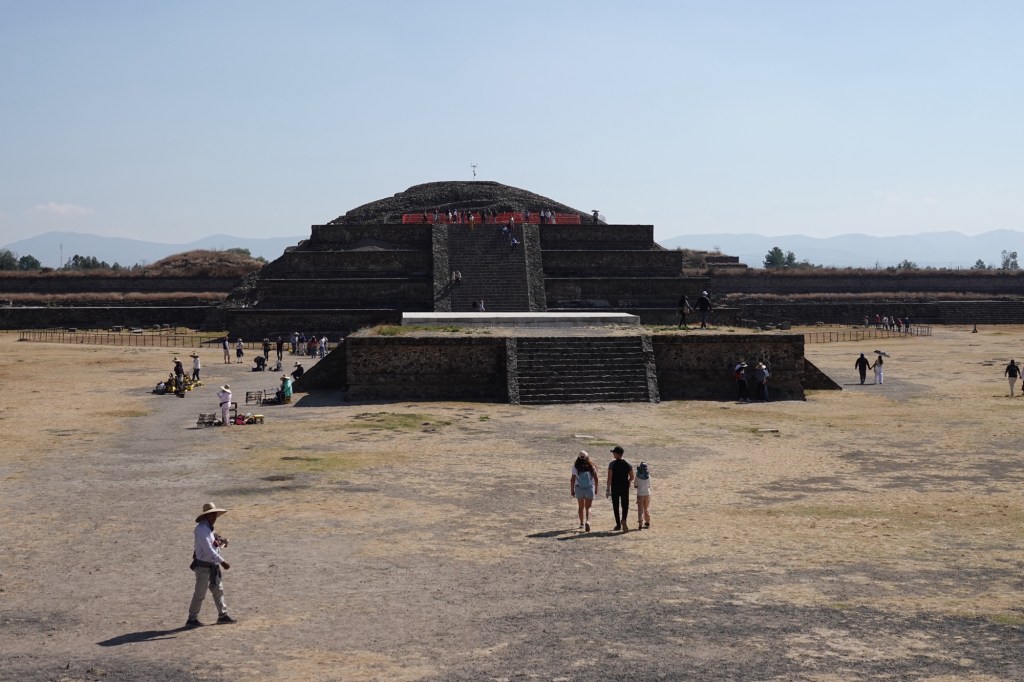
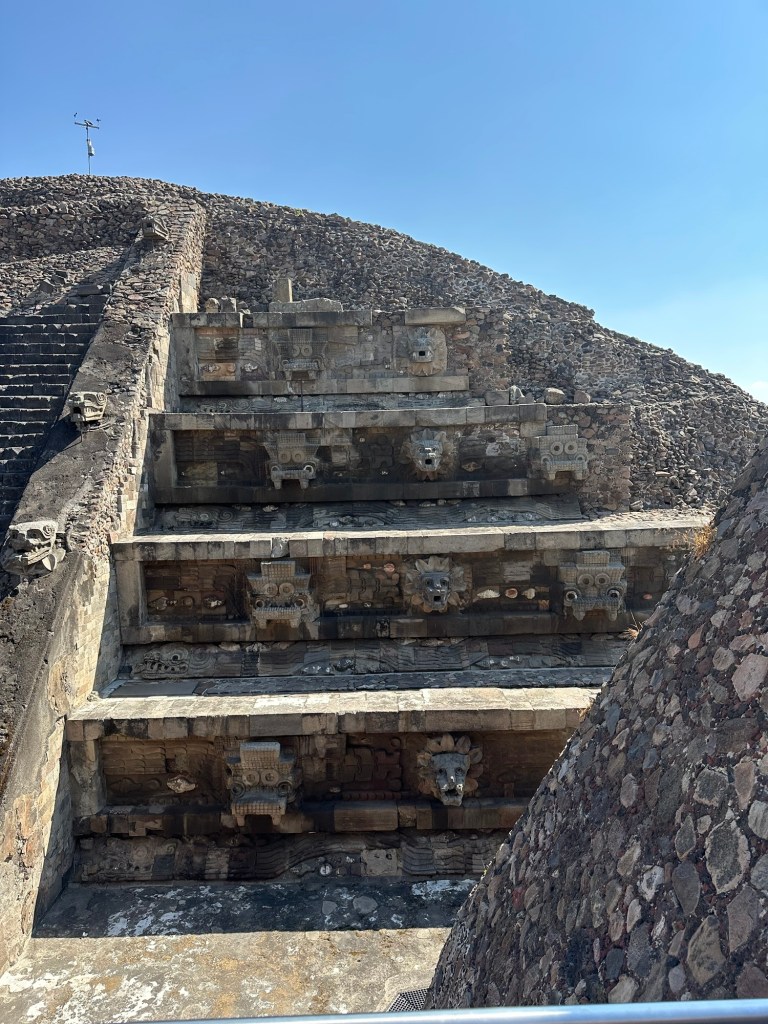
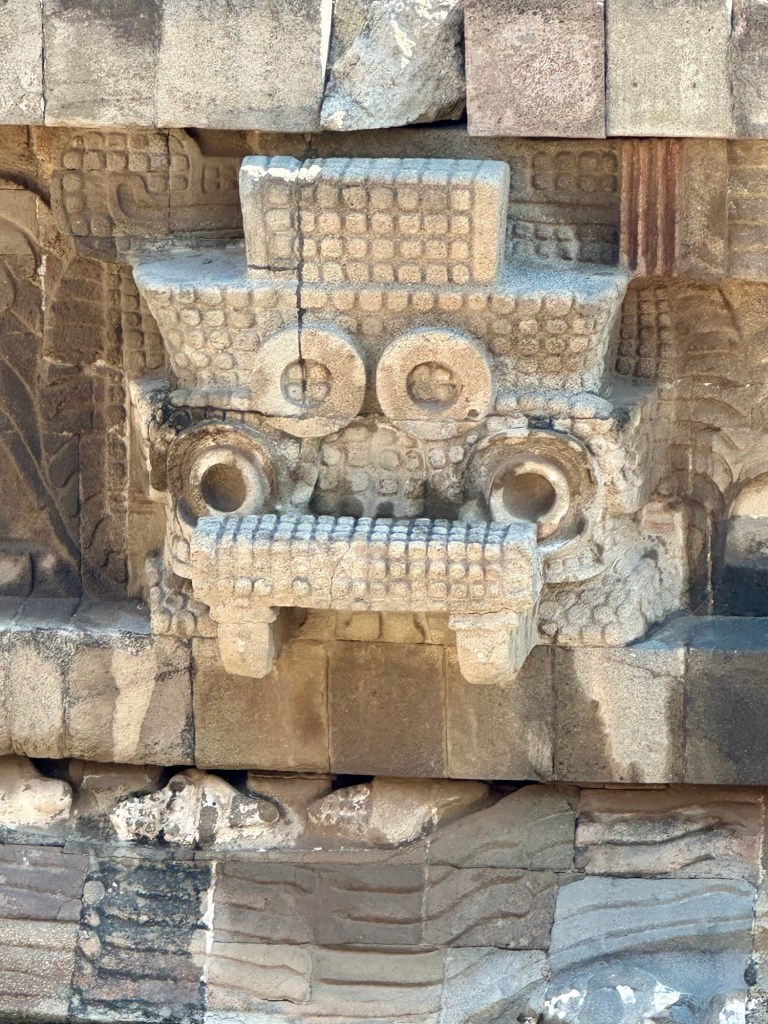
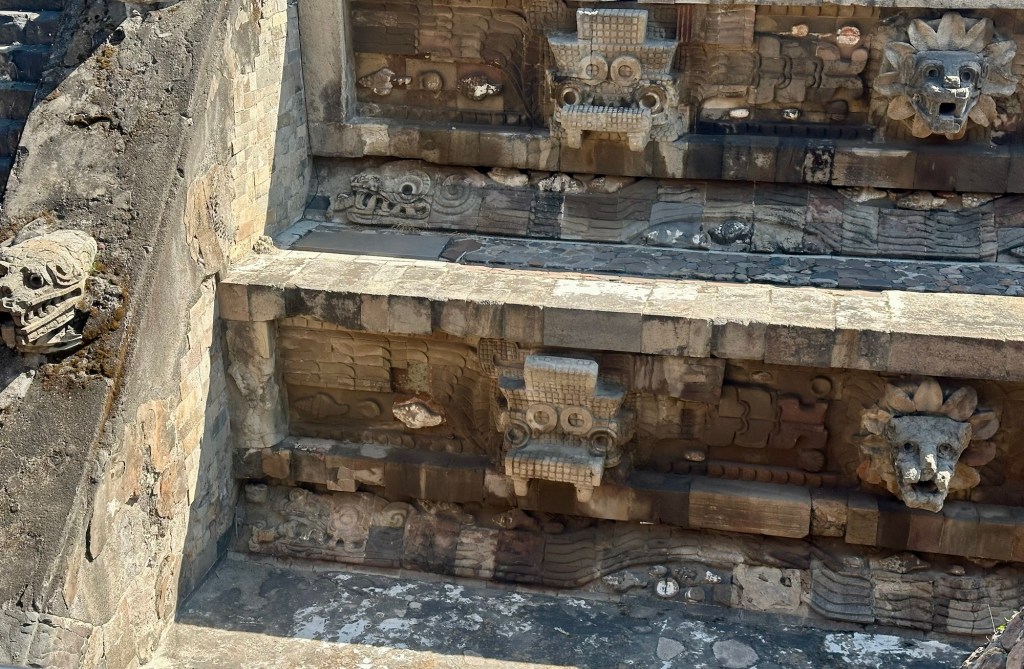
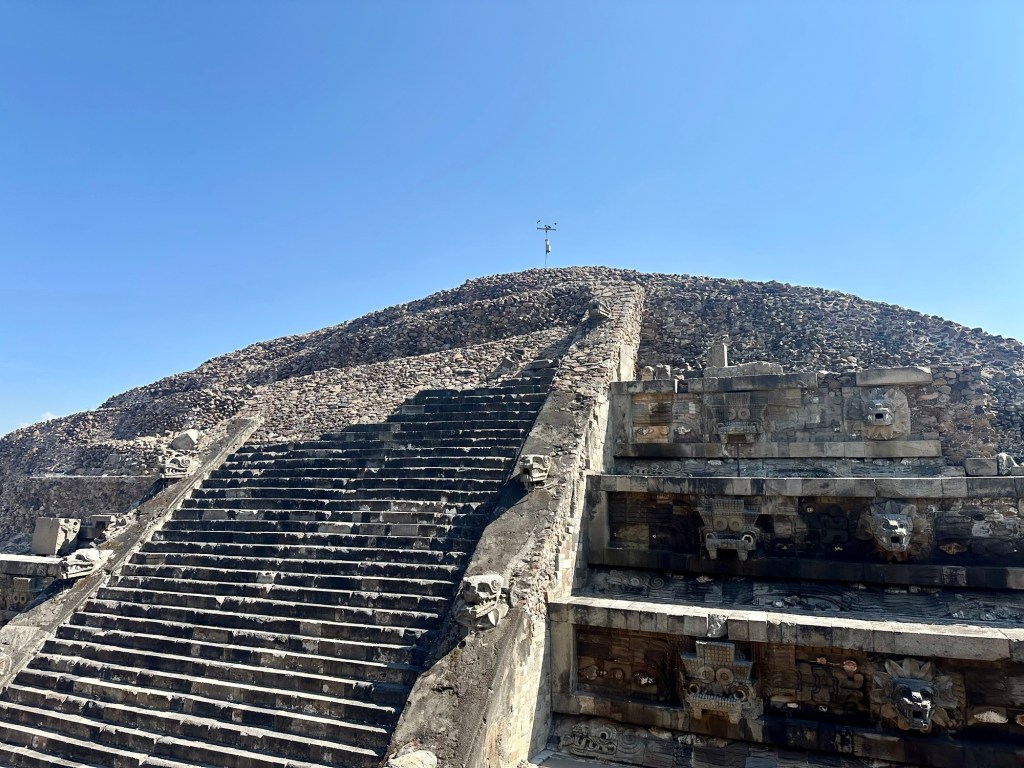
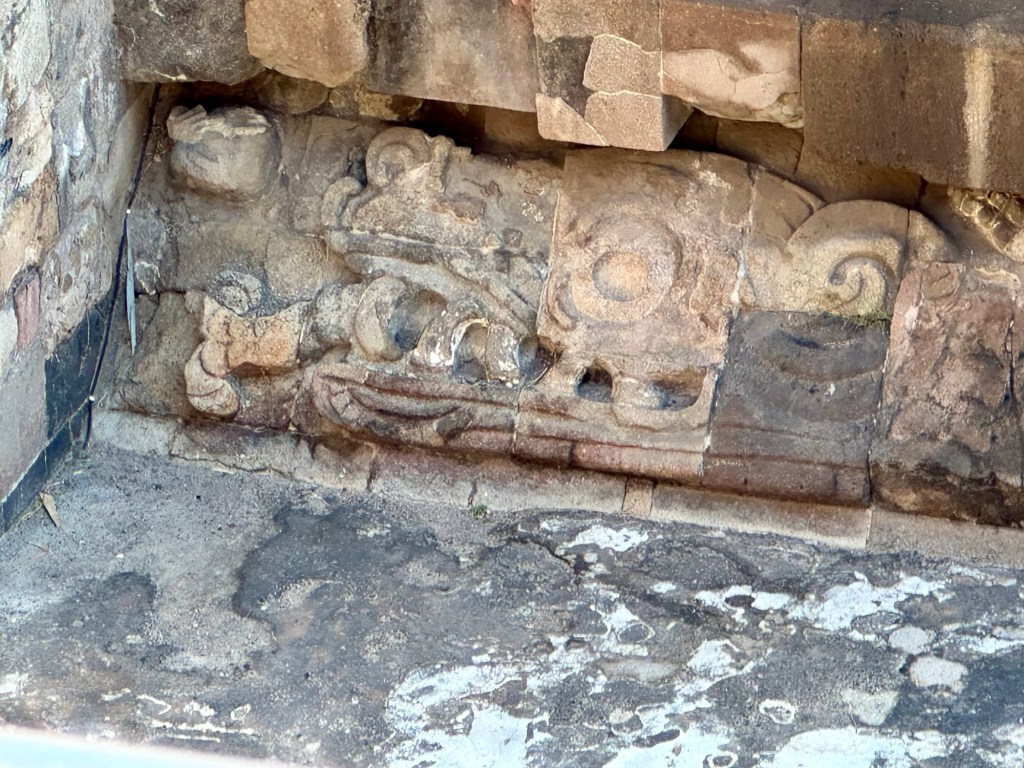
The last Pyramid towards the end of the Avenue of the Dead is that of the Feathered Serpent. It is set in a large courtyard that often filled with water during the wet to act as a reservoir during the dry season, as access to water was increasingly problematic. It was also the last pyramid built at the site.

Panorama of the courtyard at the Pyramid of the Feather Serpent

Gallery of images of the Pyramid of the Feather Serpent:

Teotihuacan was fascinating in that it suggests that we as a species still haven’t learned from the past: that no matter how mighty your works or political purpose, you cannot live as a society in a way that consumes your environment.

Costa Rica to Mexico

Thursday 8 January 2026

A gentle start to our last morning in Costa Rica as our flight to Mexico wasn’t until 1320. It was just as well, as the walls at the Radisson were wafer thin and we were often awakened by noise all night from the corridor and adjacent rooms.

A quick ride to the airport, with Victor our friendly Uber driver enthusiastically interrogating us in Spanish about our trip while also showing us picture of his family. All while dodging traffic. Safely at the airport, we had an exceptional quick check in and run through security and immigration- in stark contrast to our arrival on Christmas Day.

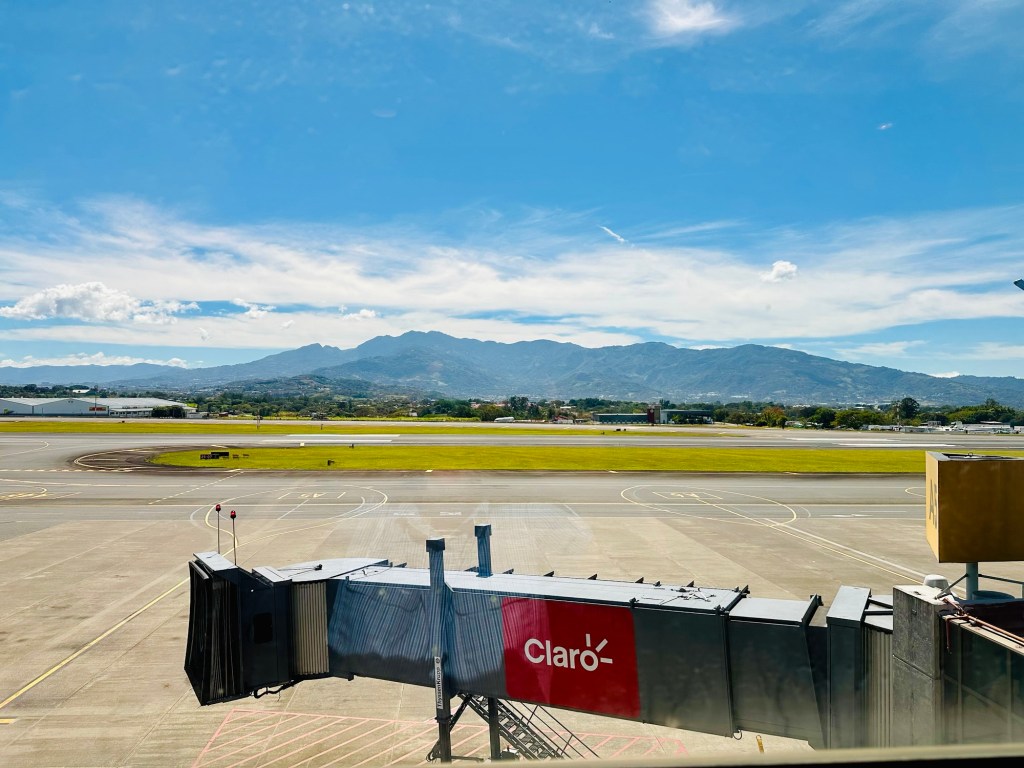
View of the distant ranges forming part of the Central Valley of Costa Rica from the departure lounge

Our Aero Mexico flight departed right on time and we had great views as we flew up the Pacific side of the Central American isthmus past Nicaragua, El Salvador and Guatemala. These were all once part of the very short- lived nation ( along with Costa Rica and Honduras) known as the ‘Federal Republic of Central America’ (1823-1841). The republic was formed after these areas won their independence from Spain and Mexico. Until all of the constituencies decided ‘yeah – nah’ a few years later and went their own way.

What really stood out was the extent of settlement and the number of volcanoes. A fascinating landscape fringed by the long Pacific Coast along our flight path.

Soon enough … well, after nearly two hours, we were over Mexico.

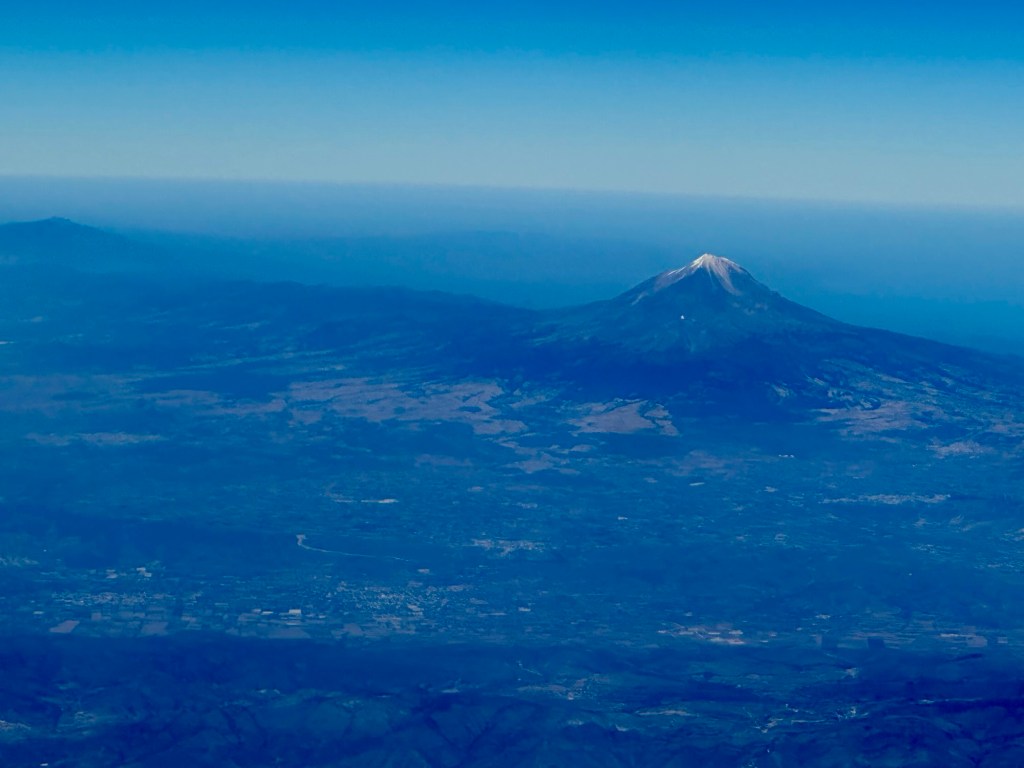
As we headed up past Oaxaca (more to come about that later in this trip ) we saw Pico de Orizaba, the highest peak in Mexico at 5,636 metres. It is a volcano and its indigenous name is Citlaltépetl. Apparently it’s not a terribly technical climb- more of a very solid stomp up and back . It looked better in real life than the distant photo suggests.

The ice-crowned (volcano) Pico de Orizaba / Citlaltépetl

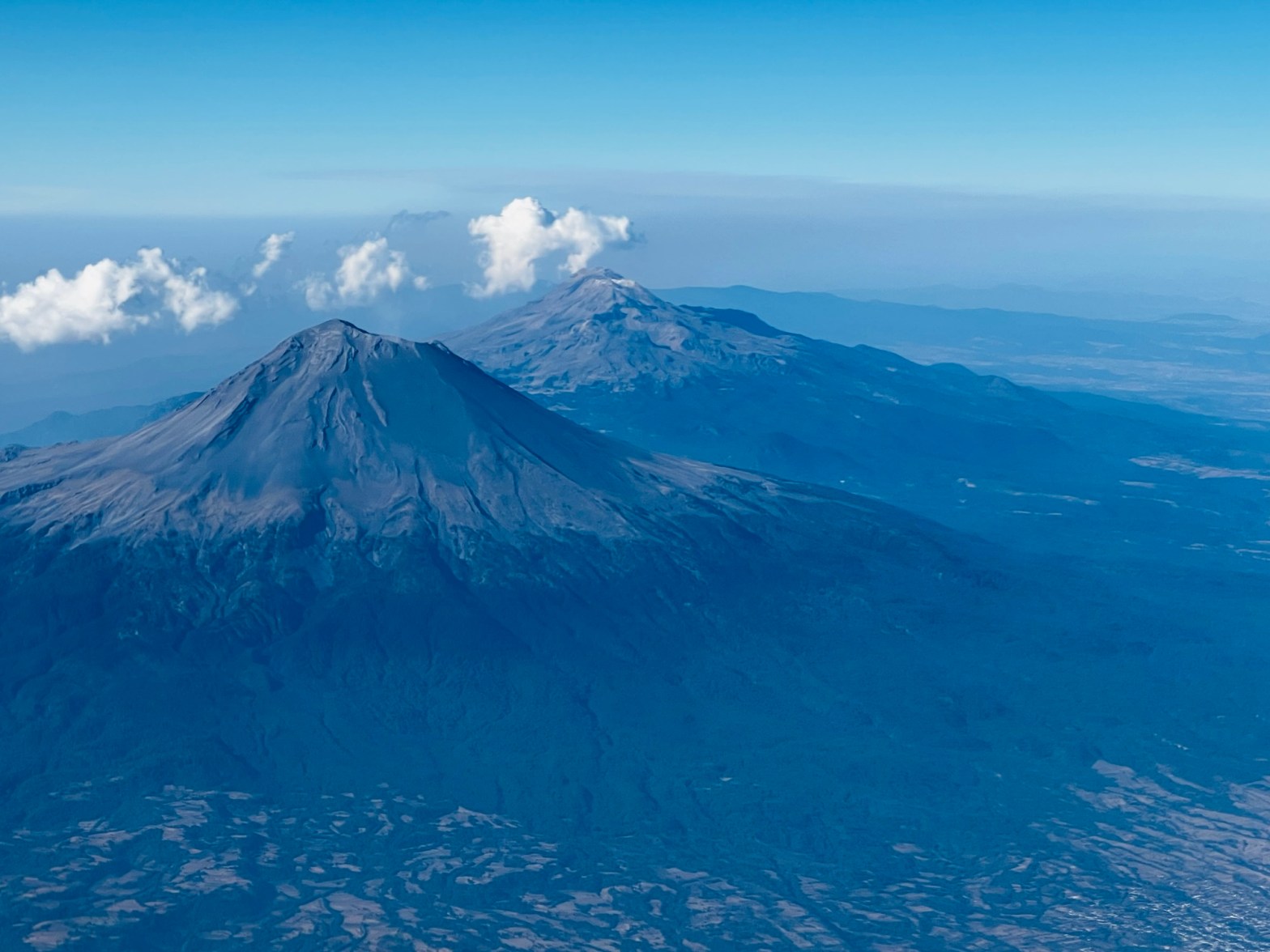
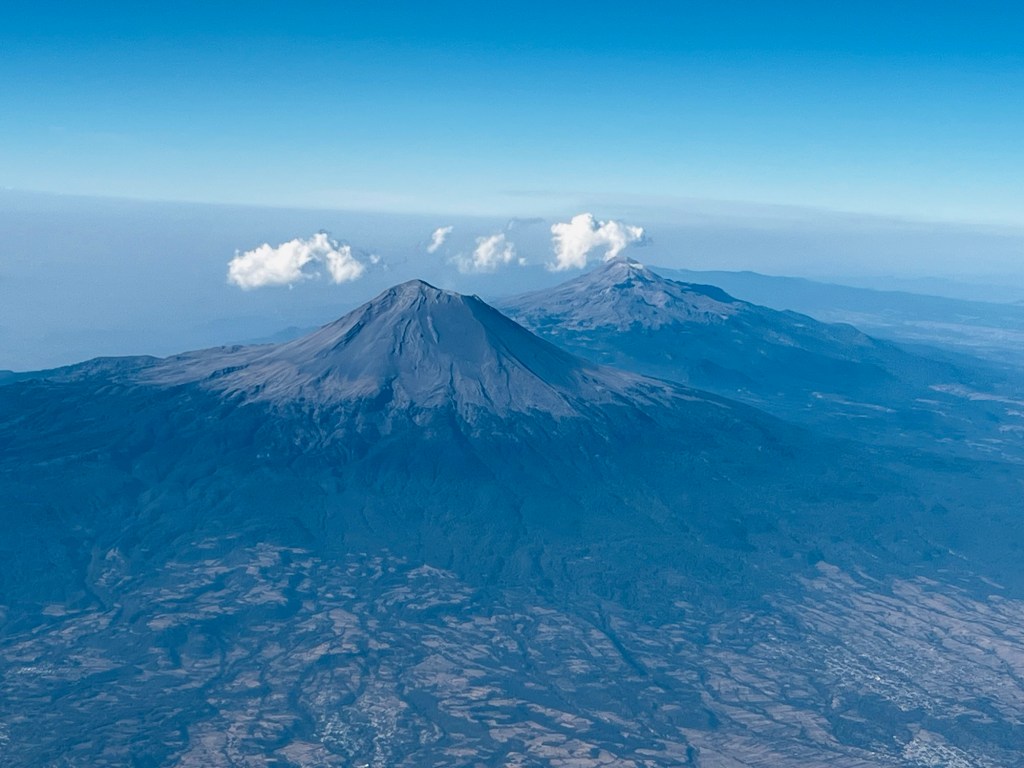
A little while later we flew past the twin volcanos of Popocatépetl, standing at 5,452 metres (active) and Iztaccíhuatl slightly lower at 5,230 metres ( and dormant)

Popocatépetl (left) and Iztaccíhuatl (right)

Seeing Popocatépetl brought closure to Mark after his grade two school project (1972) about the volcano…

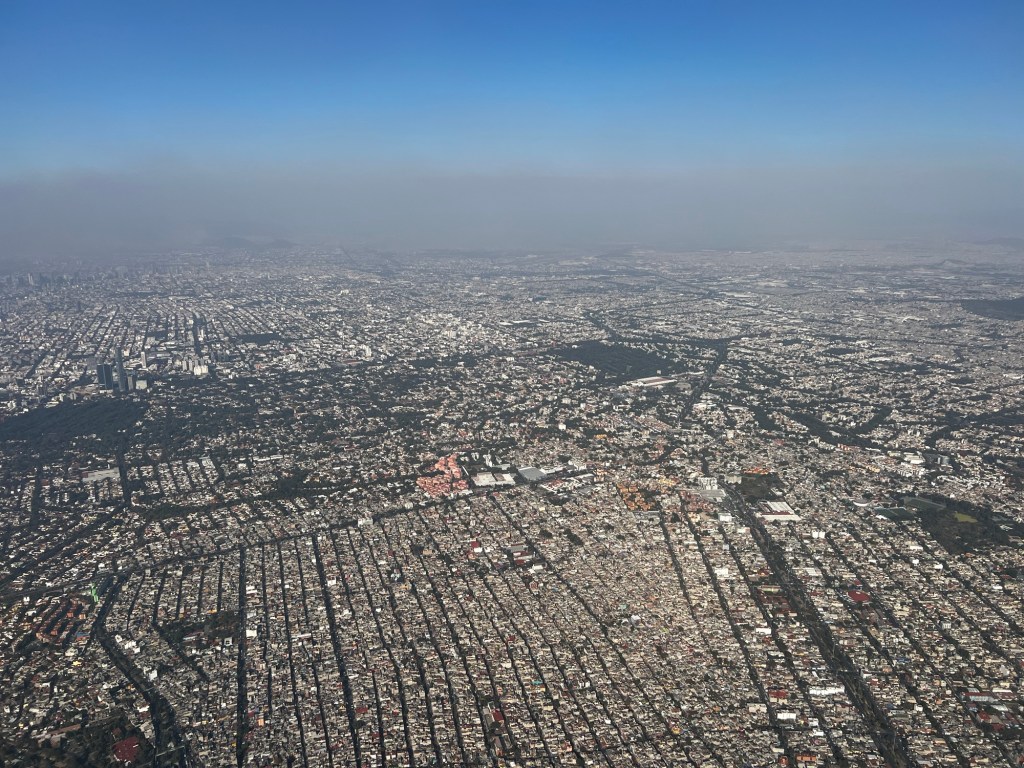
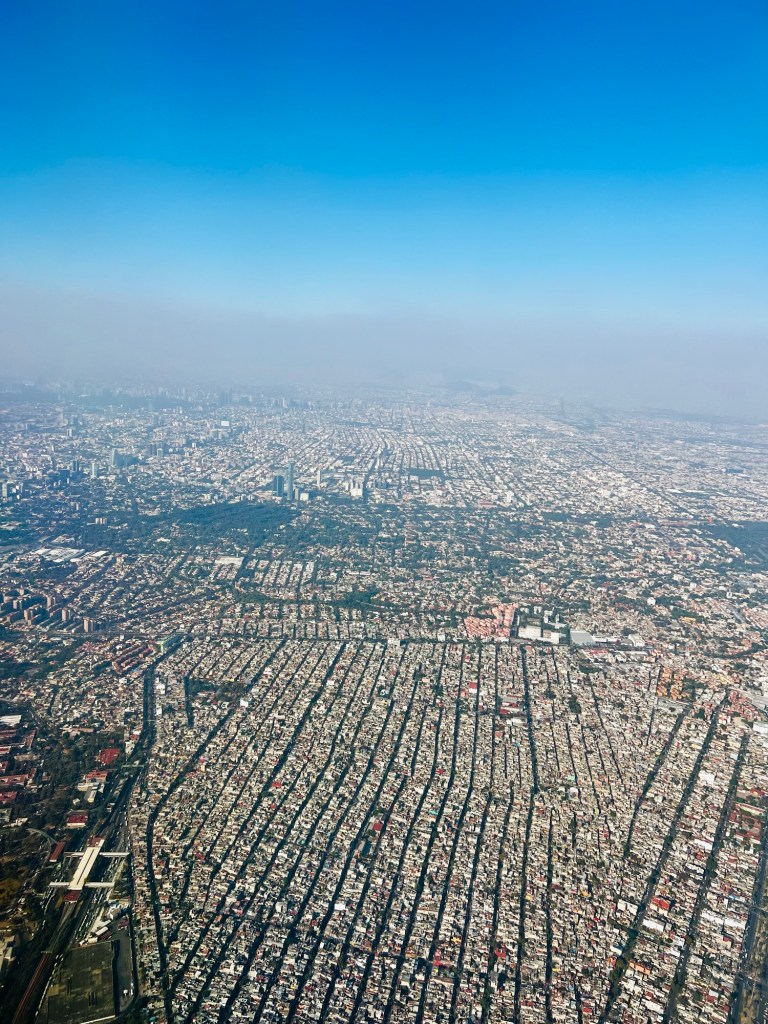
Soon after we began our descent into Mexico City. The smog was noticeable!

The outskirts of Mexico City … and smog

A really smooth run again through the airport on arrival, followed by a short-ish 30 minute drive to our hotel. We are staying in the ‘Zocalo’ or central plaza part of the city centre.

Last days in Costa Rica- Monday 5th – Wednesday 7th

Manuel Antonio – San Jose

Monday morning in Manuel Antonio was hotter and steamier than even Sunday was. So a lazy morning, a short stroll to lunch with a view and an afternoon lazing around the pool and swimming. Plus a small amount of travel planning for the Yucatan Peninsula leg of our Mexico trip excursion, in the latter part of the trip. All followed by dinner at a local charcoal grill place with most of the group. Where we did find out that you can actually have too much barbecued squid 🤔.

Goodbye the Pacific Coast!

Tuesday was the penultimate day of our G- Adventures/ National Geographic tour. The main event was simply the drive back to San Jose.

We were gifted a rare late start of noon, so a sleep – in and leisurely breakfast was appreciated. The trip back to San Jose was in two parts – north again back up the Pacific Coast, then North East across the ranges into the central valleys and onto San Jose.

The drive was interesting, but uneventful. A particularly interesting part was seeing ‘Barrio Mexico’ on the way into central San Jose – we didn’t take any photos out of respect for the people who make their homes there. Nonetheless, it is always thought provoking to consider how lucky and well off we are in Australia compared to some other people in other places. The barrio was reminiscent of the architecture in the Cape Flats, Soweto or outer Maputo.

The tour ended upon arrival back at the hotel and check in. We had the proverbial ‘fond farewell’ with our great guide Cesar , who had another hour’s journey to get back to his home in the central valleys.

Most of the group were departing on Wednesday, while we were staying until Thursday as that was when the best flight to Mexico City was available. The group had a few farewell drinks in the bar and then bid each other goodbye at breakfast on Wednesday morning.

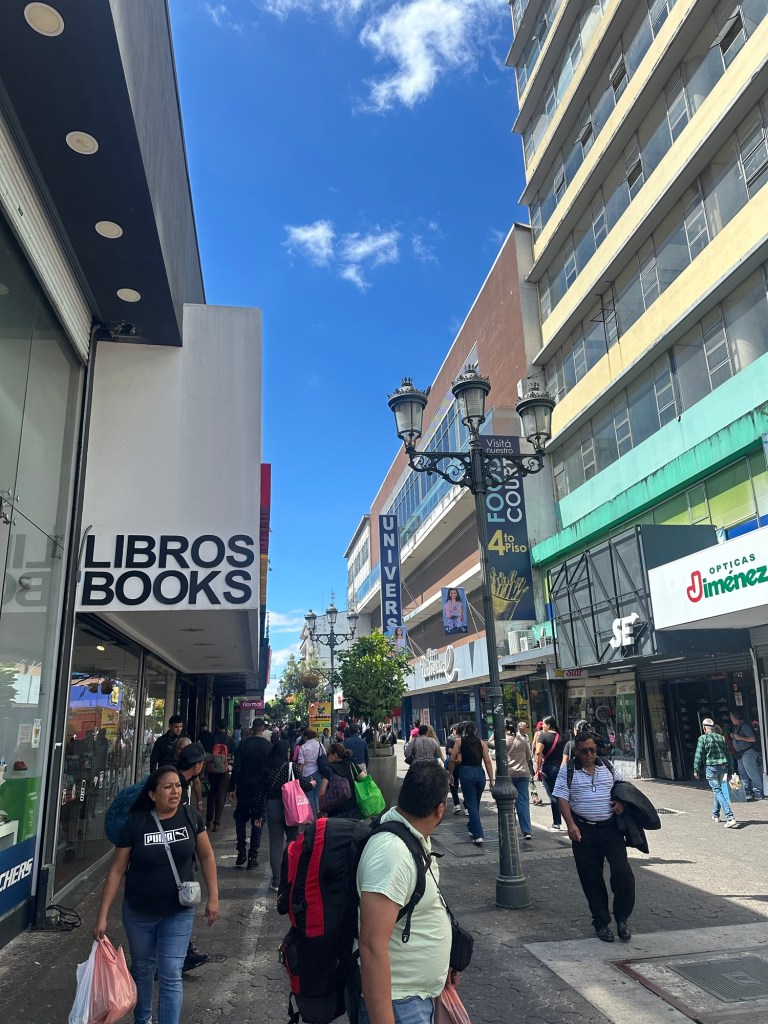
We spent Wednesday checking out downtown central San Jose. The town itself isn’t the flashiest looking place – it has a slightly ‘worn’ look that reminded Mark of downtown Maputo in 1999. That said, there were also all the usual ‘Western’ branded stores and junk food takeaway outlets.

A typical shot of the small pedestrian mall that cuts across downtown San Jose

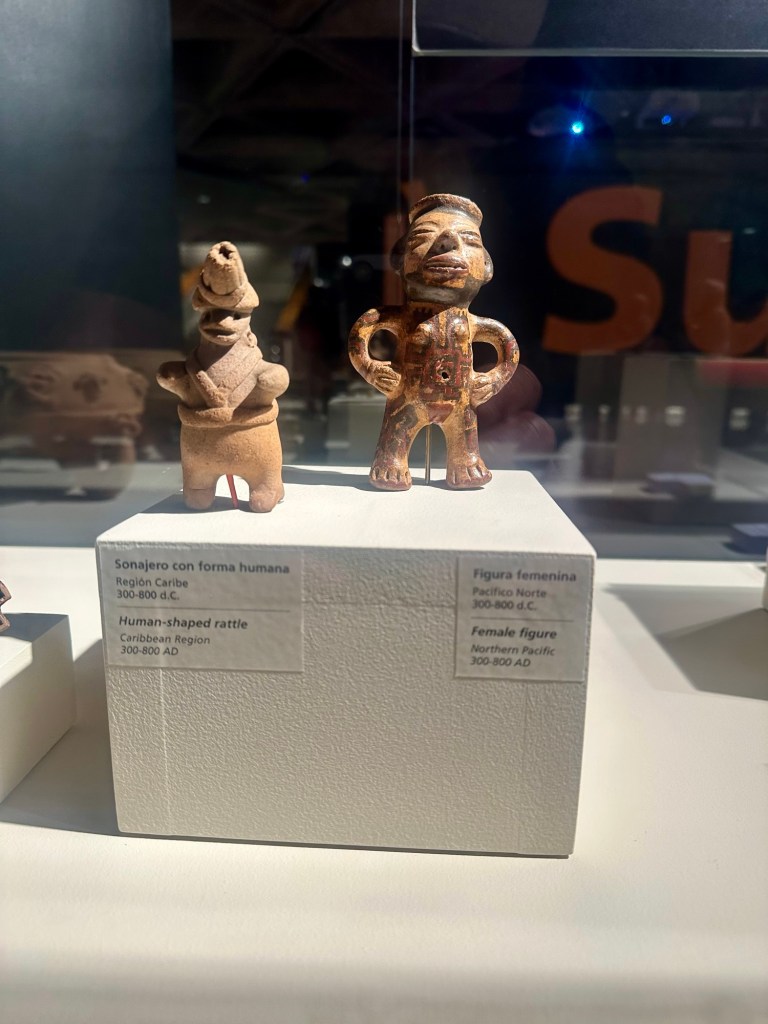
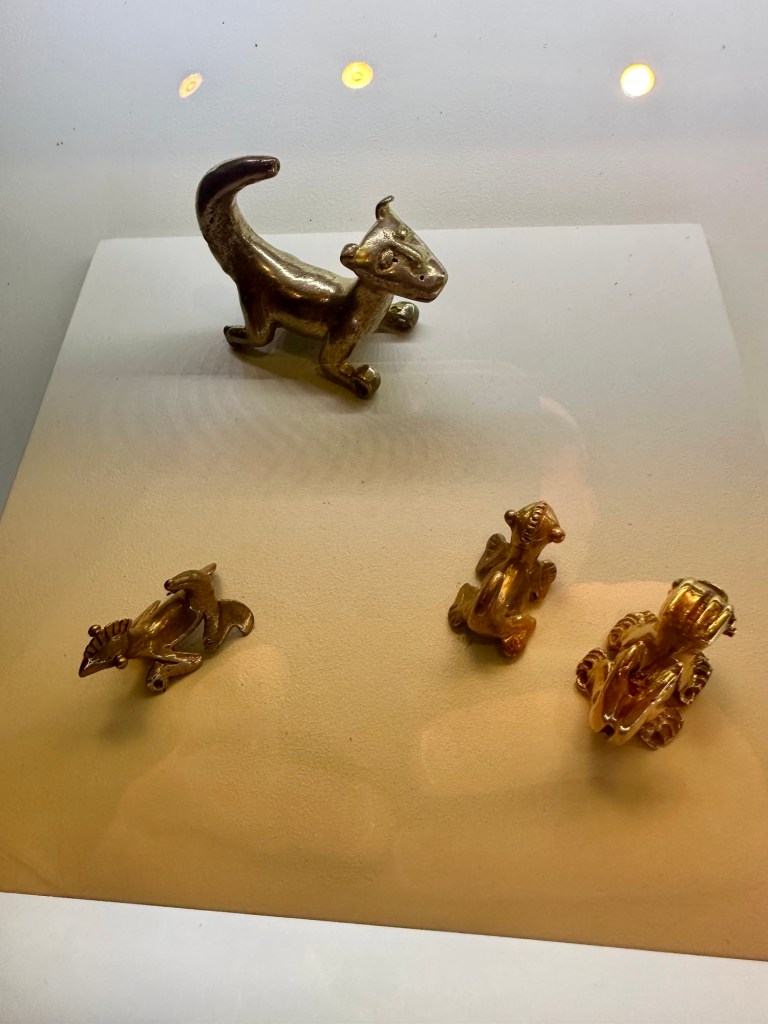
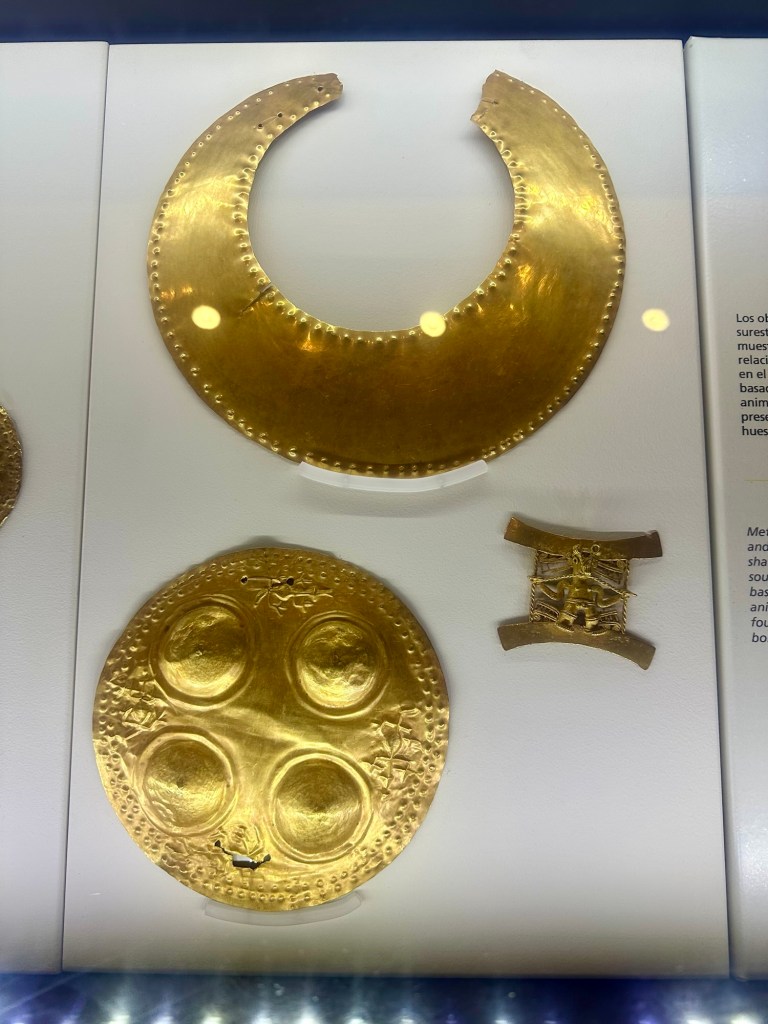
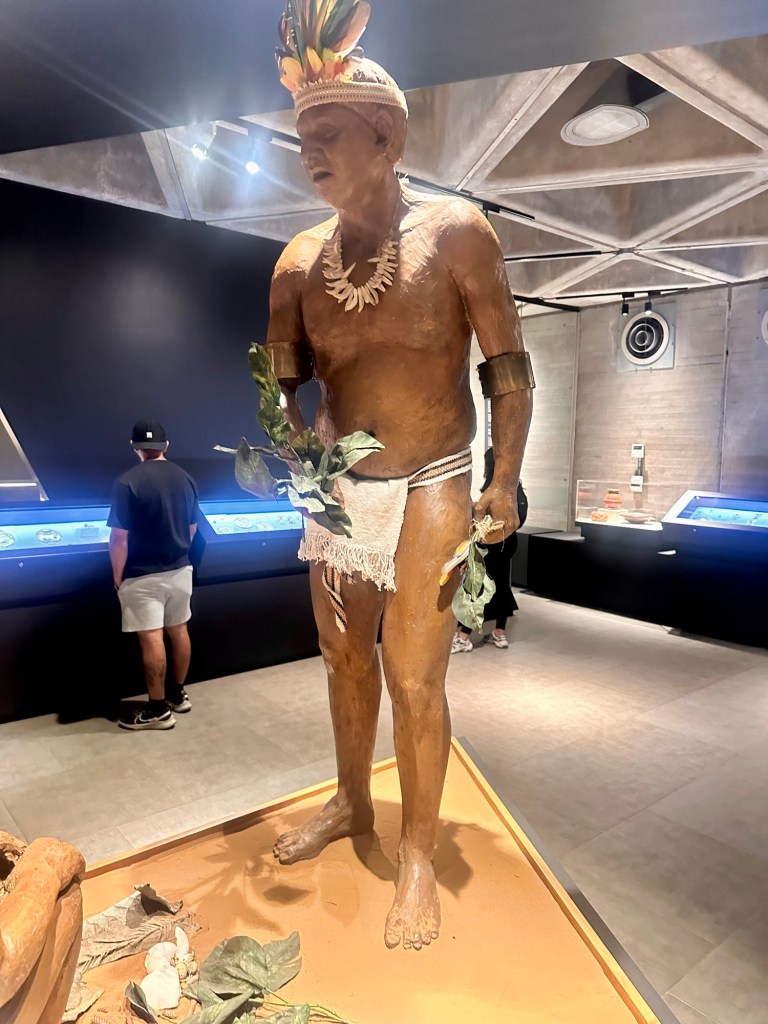
In the morning we went to the ‘pre-Colombian Gold Museum’. This covered more than just the use of gold in Costa Rica and Central America prior to the arrival of the Spanish. There was a whole lot of interesting material about art more broadly, housing , culture, music and indigenous life and language. Unfortunately most of the displays were behind glass panels, making photography a challenge.

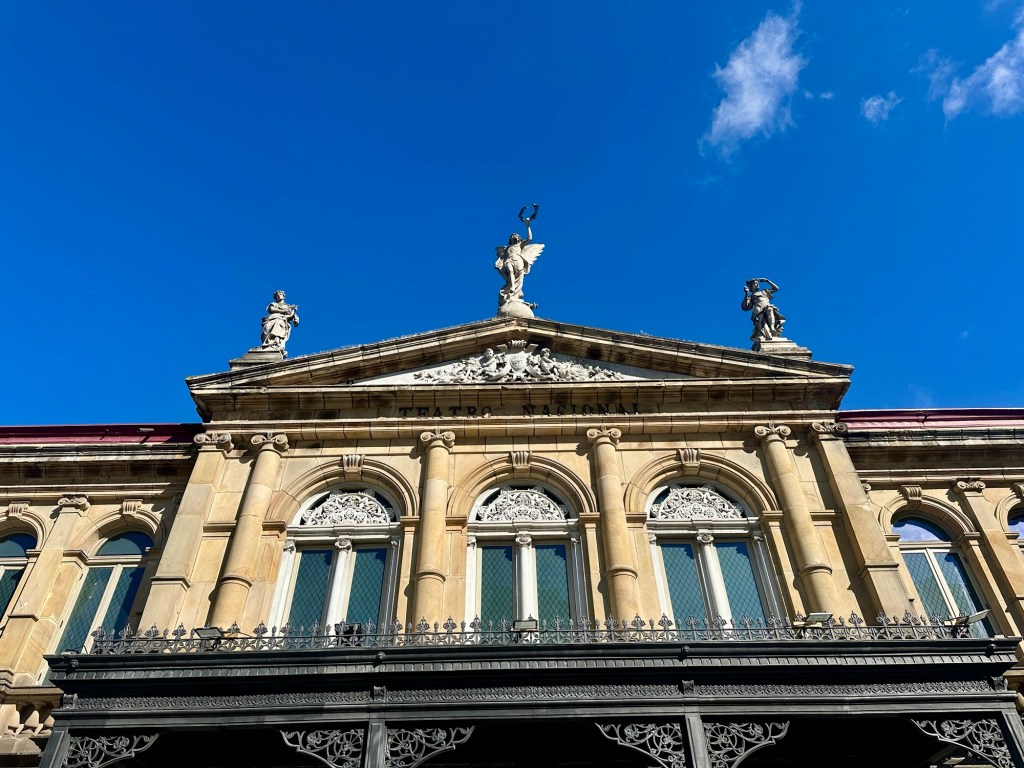
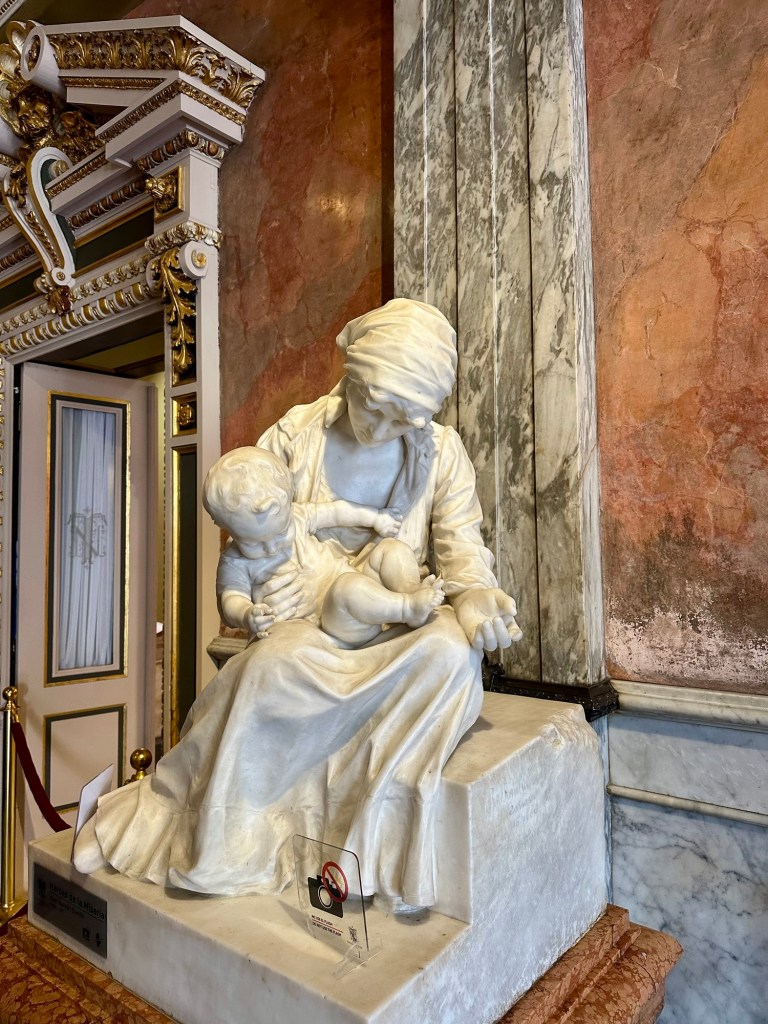
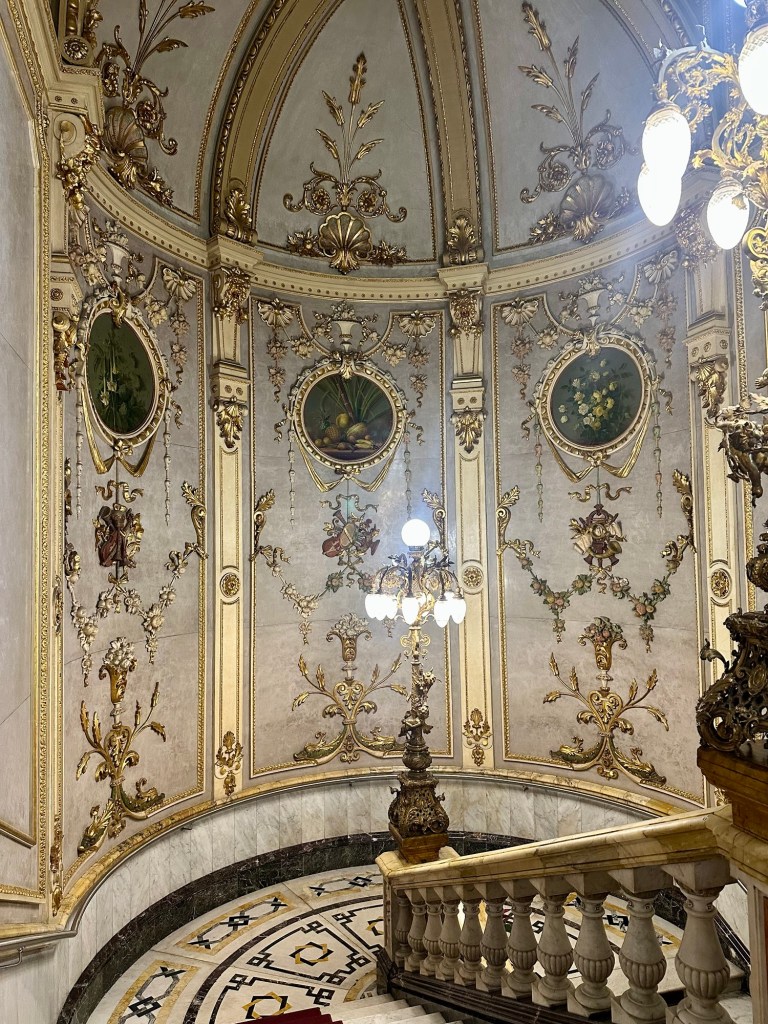
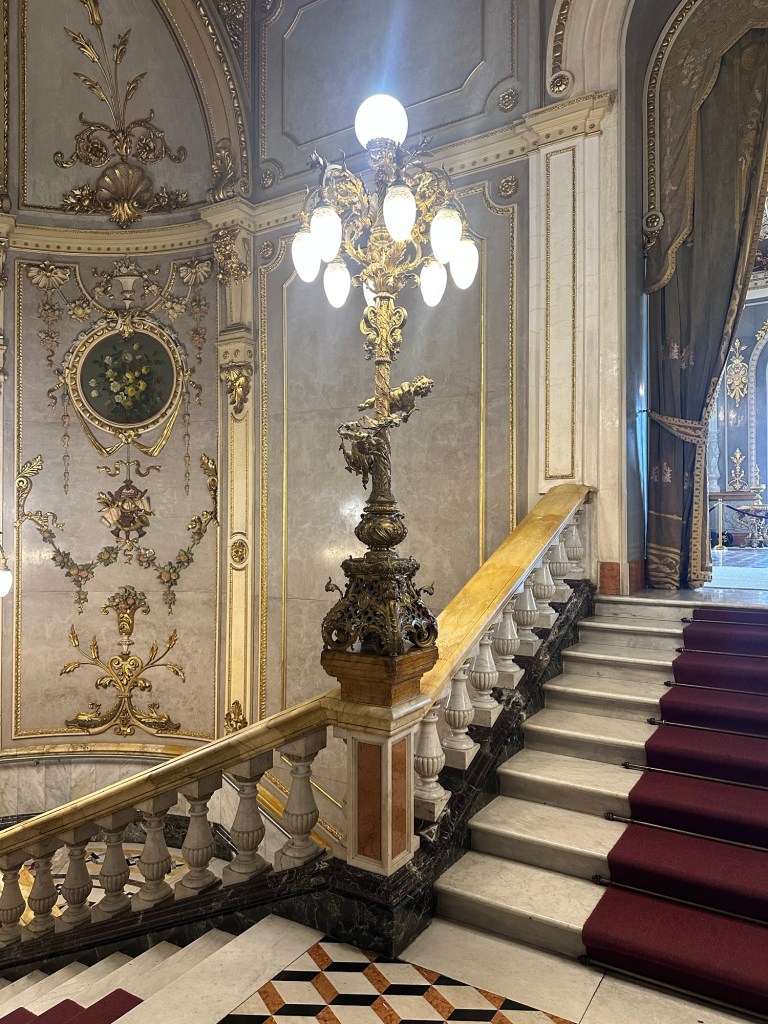
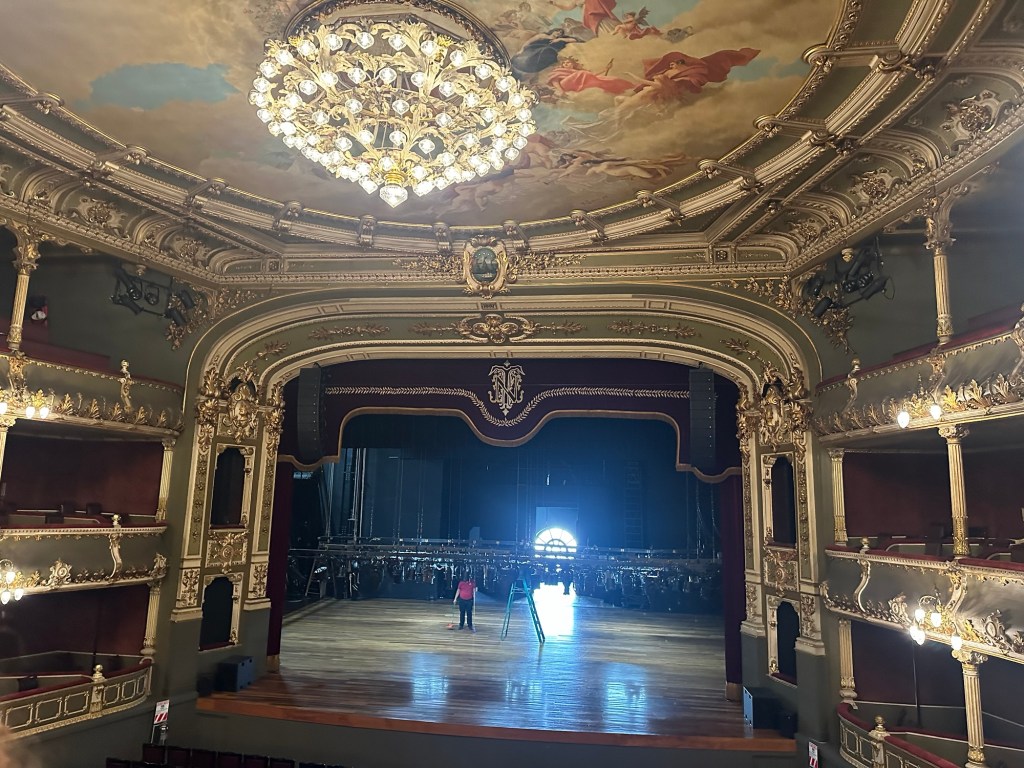
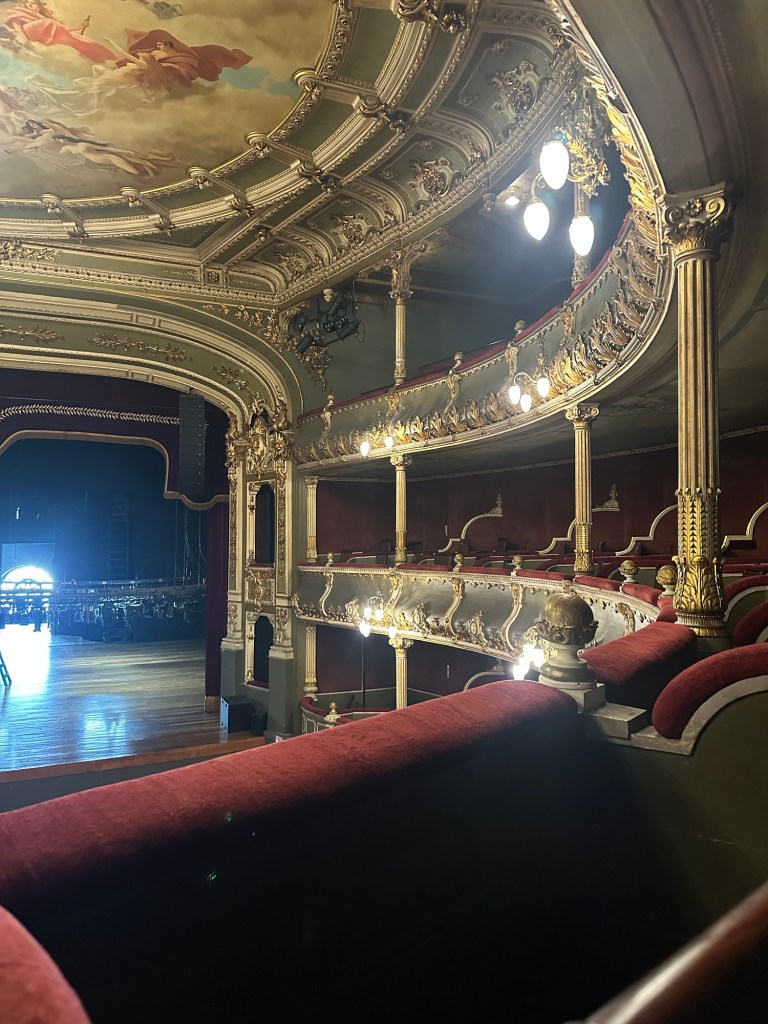
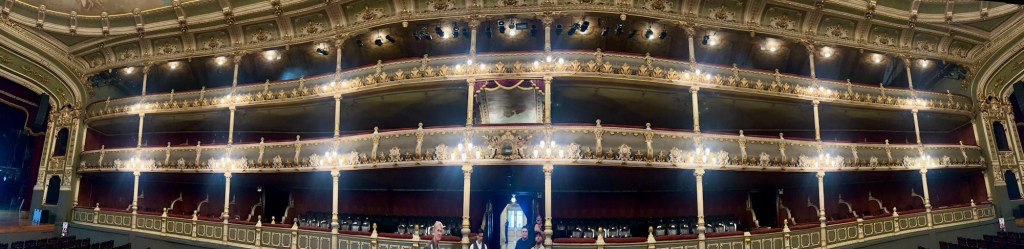
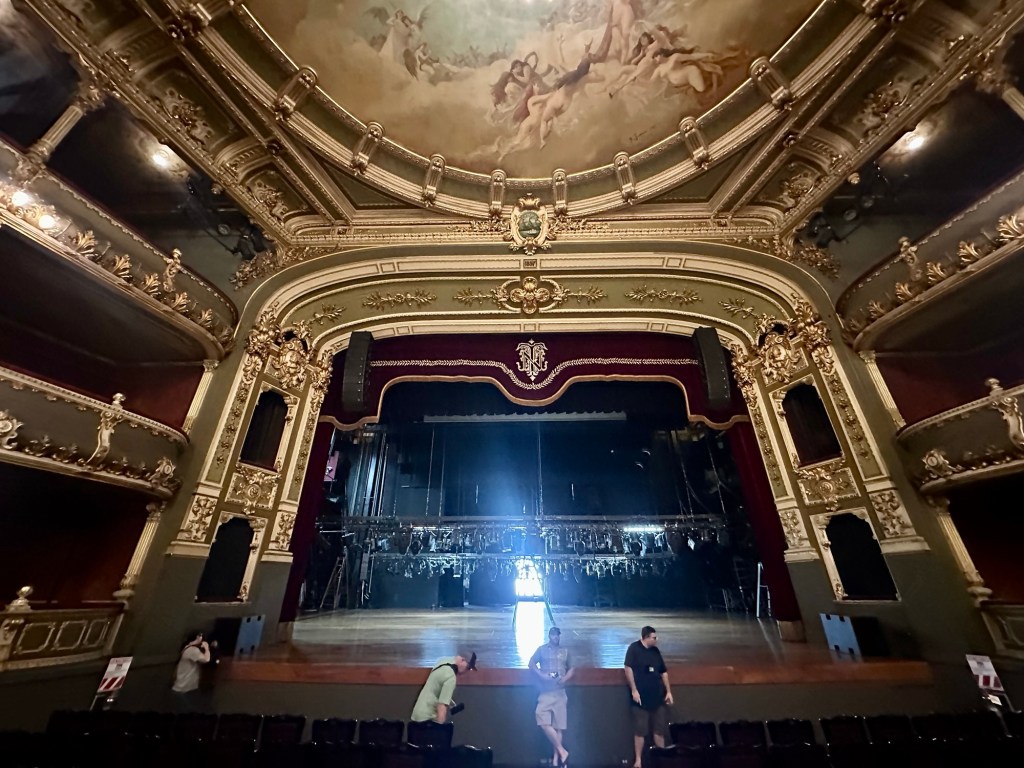
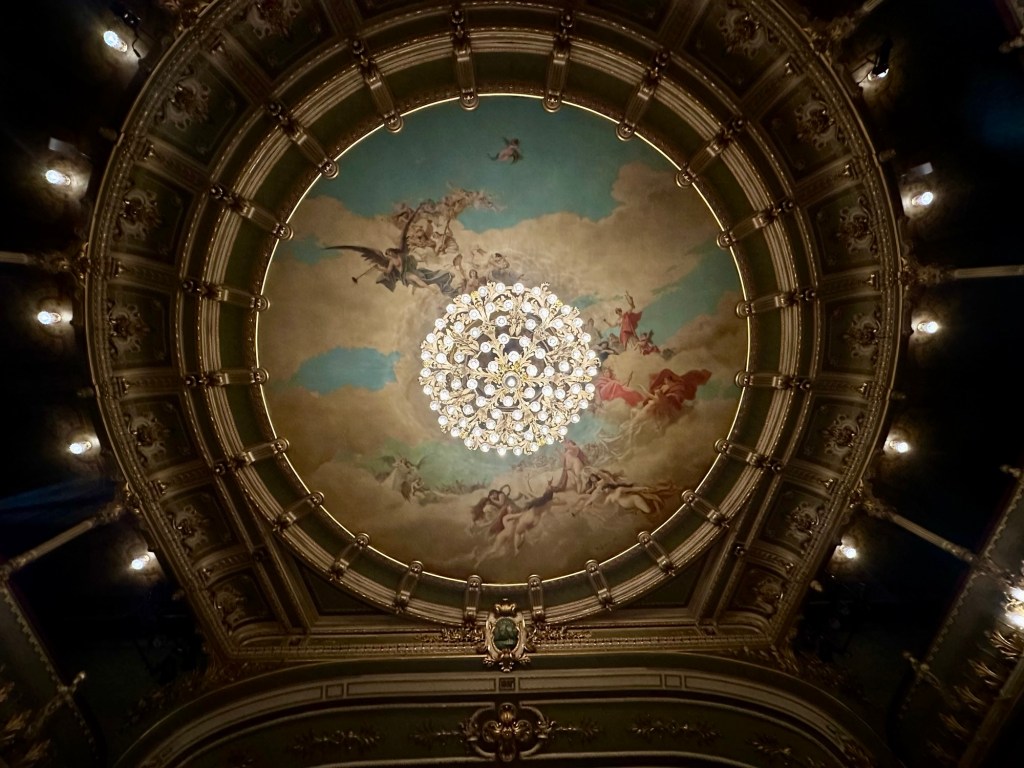
After the museum we went for a stroll around downtown before heading to the National Theatre ( or ‘Teatro Nacional’) which opened in 1897. This is essentially an over the top place built at the direction of the 19th Century Coffee Oligarchs to bring a bit of ‘culture’ to San Jose . It was interesting, but served perhaps to highlight some of the inequalities in Costa Rican society at the time .

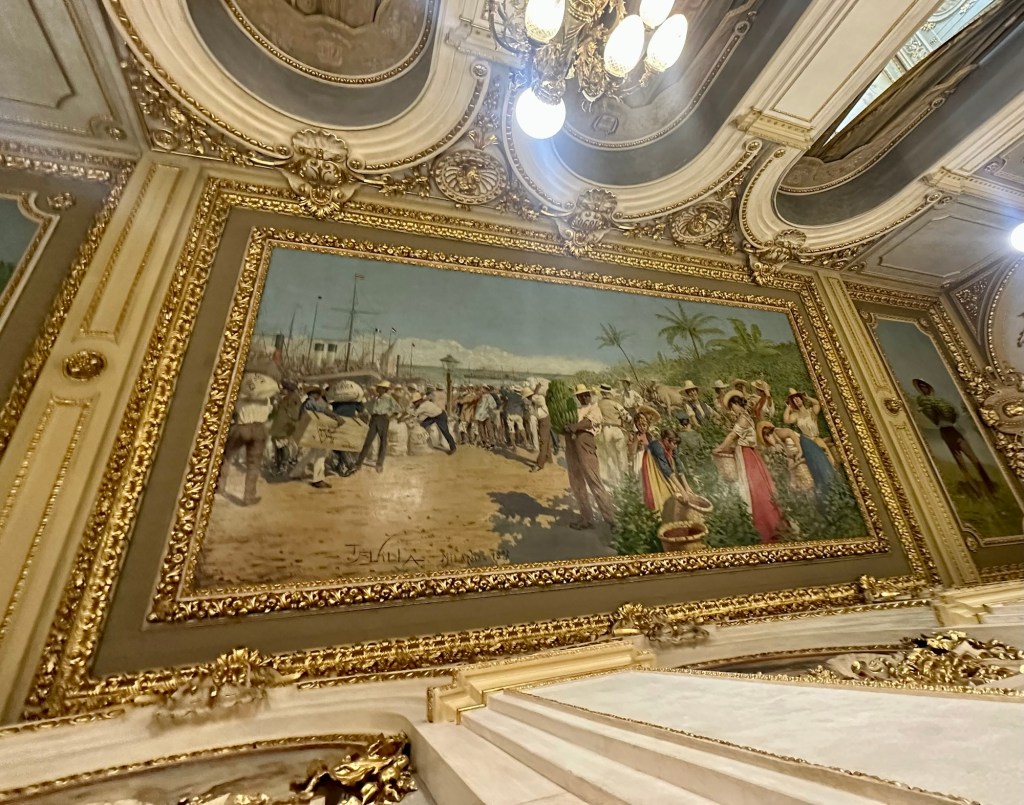
There is an interesting story about the last panel photo artwork. It’s actually on the ceiling of the upstairs lobby. It was done on commission by an artist in Milan on the basis of a description sent in a letter from the Oligarchy. It supposedly depicts life on the coast in Limon Province on the Central Caribbean coast. There are a few interesting inaccuracies and misunderstandings/ misinformation presented which were pointed out by our guide :

  • White women didn’t pick coffee as depicted in the painting
  • Coffee isn’t a low grounded bush
  • They don’t and can’t actually grow coffee on the coast in Limon Province
  • There is an electric street light depicted. Limon wasn’t electrified until the late 20th century
  • The dude holding the bananas in the centre of the painting is holding them upside down – something that apparently you can’t do as they all fall off

Apart from that , a great, accurate depiction of life in 1890s Costa Rica. Or not.

Another ‘fun fact’ learned on the tour – our guide suggested that San Jose was the third city in the world to be electrified… the first two perhaps seem more obvious ( New York City and Paris).

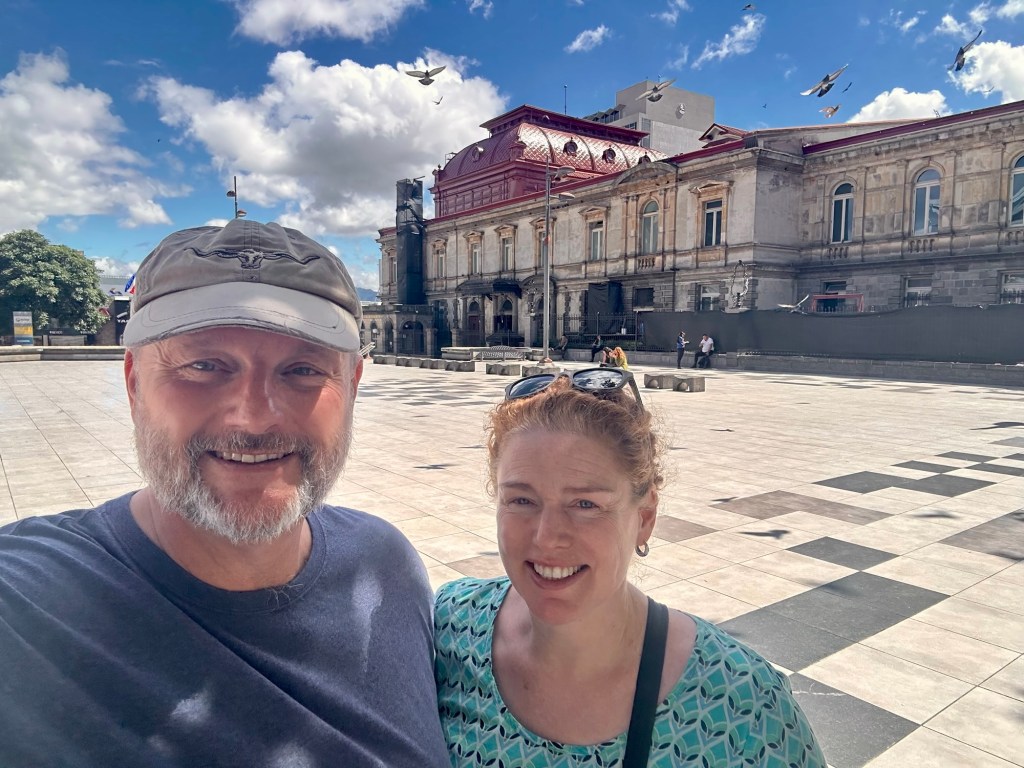
After the tour we grabbed a lovely lunch at the Theatre cafe , checked out the central plaza and grabbed an Uber ‘home’

Obligatory Central Plaza Selfie

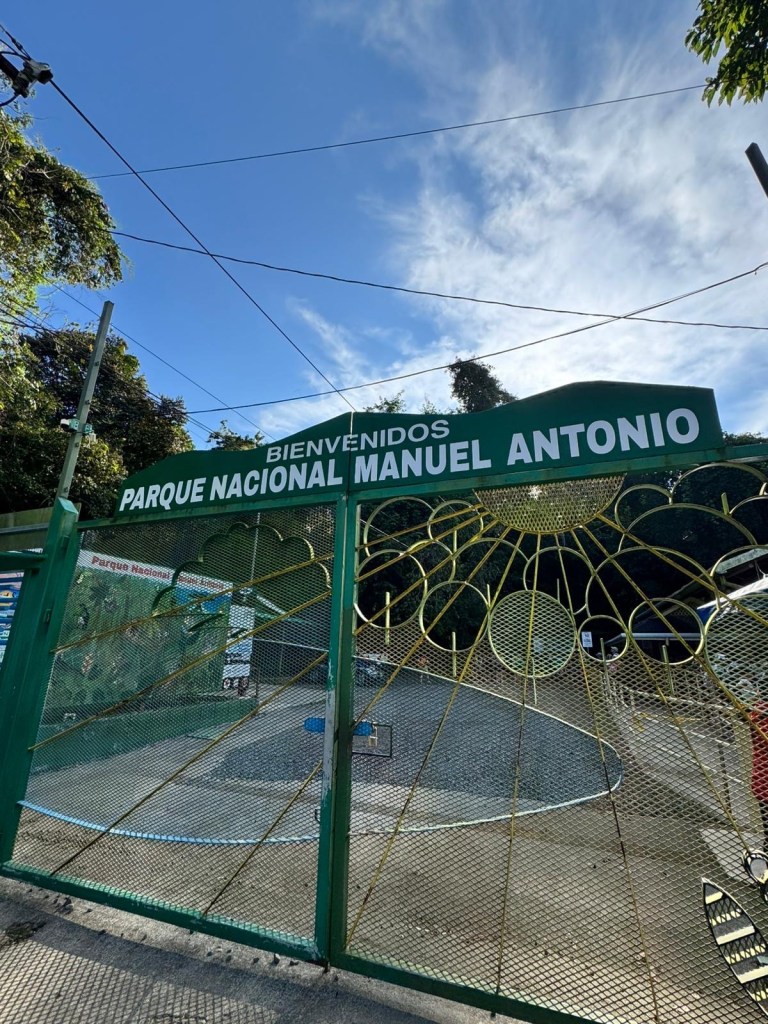
Manuel Antonio National Park

Sunday 4th January 2026

Sunday morning dawned hot and steamy. Darwin build-up level hot and steamy. Perhaps we shouldn’t have been surprised as we are at sea level at approximately nine degrees north.

The main activity for today was to be a guided walk in the National Park. Us and 6,000 of our closest friends. While the smallest national park in Costa Rica, Manuel Antonio is apparently the 2nd most visited park in Latin America after Machu Pichu in Peru. And it seemed like they were all visiting with us on Sunday.

On the way we saw a new Costa Rican parking technique. The idea is to reduce the width of car parks…

After about a forty minute queue to get in we were met by our guide , Diego. Like every one of our guides in this trip he was passionate about the environment and extremely well prepared/ informed about it.

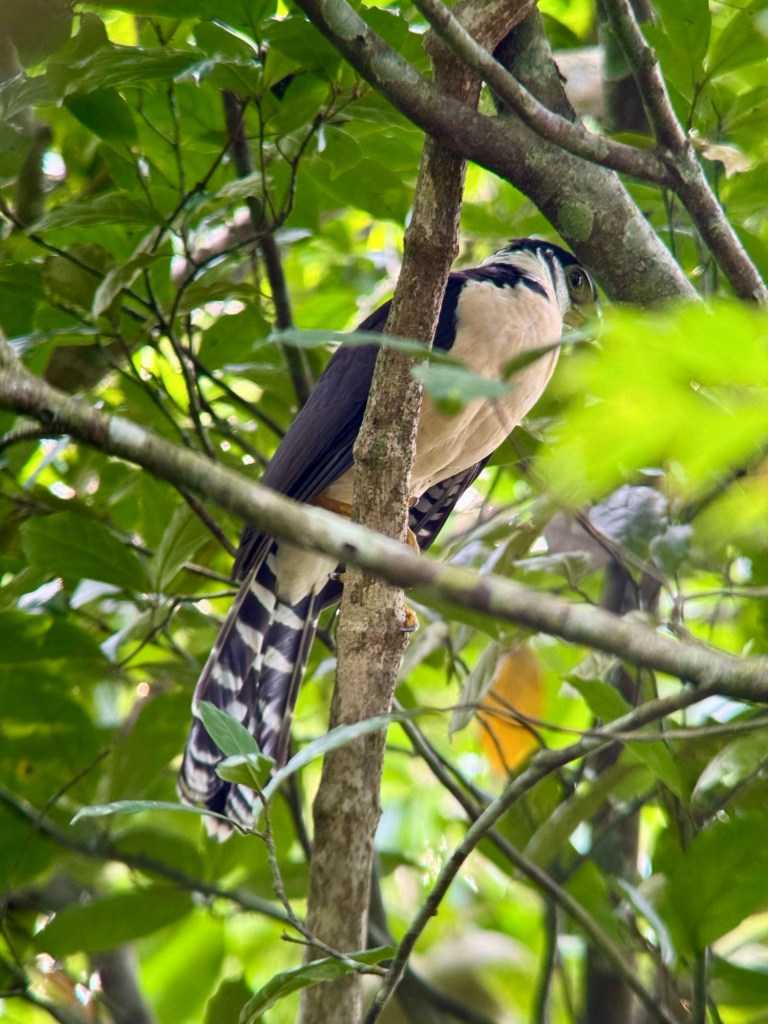
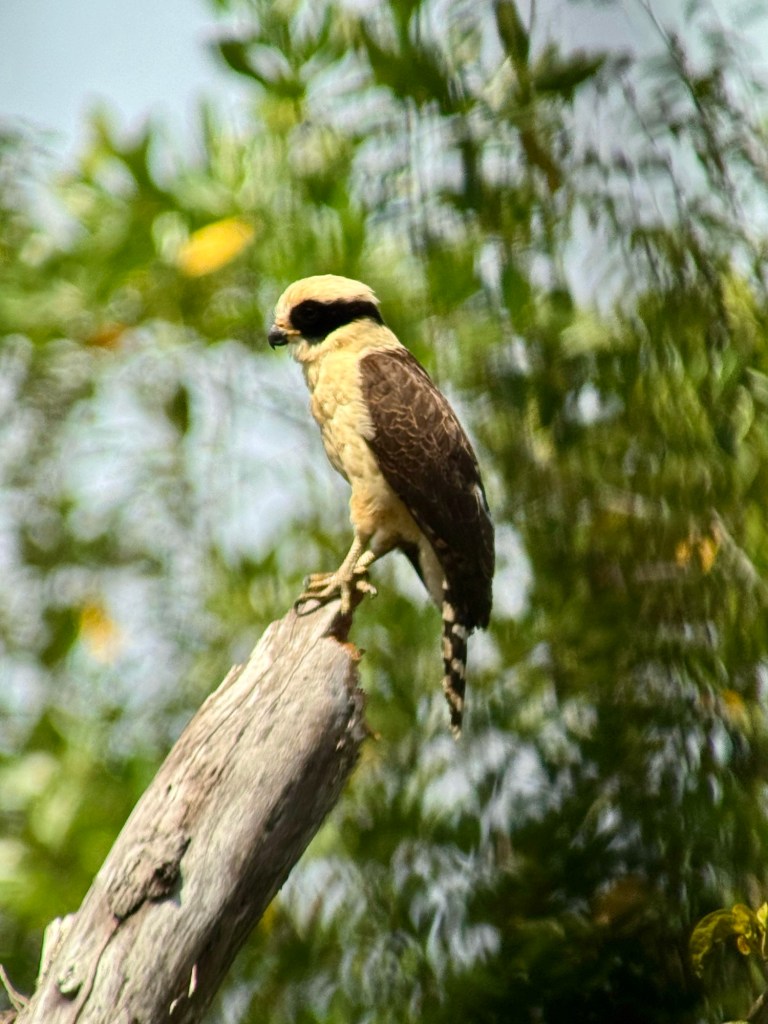
We, and sixty million others, walked along a path with our guide spotting things and pointing them out. Whilst definitely not a ‘wilderness’ experience there were , surprisingly, some cool things spotted, including a couple of rare birds of prey:

A Collared Forest Falcon doing a bit of a dance
Another (still) shot of the Collared Falcon
A Laughing Falcon- they actually make a very loud laughing kinda sound
Laughing Falcon

A video of the three- toed tree sloth we saw, it had a baby on its chest ( hard to make out):

Looks a bit ET like …

Then we saw a bunch of other stuff:

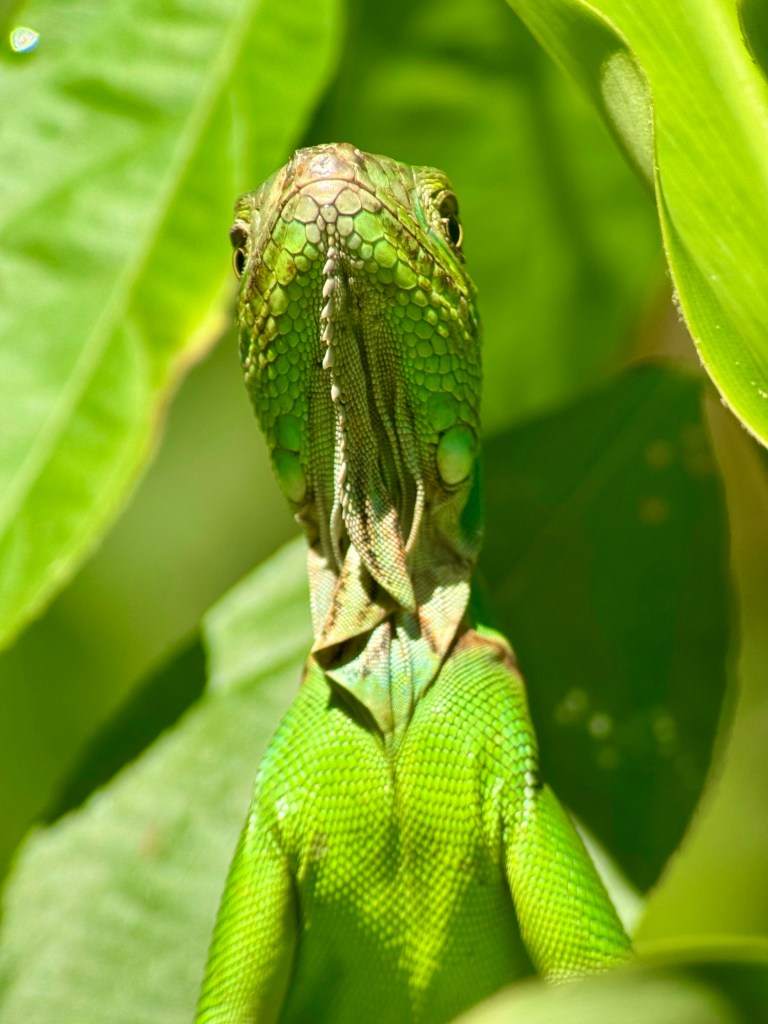
Green Iguana
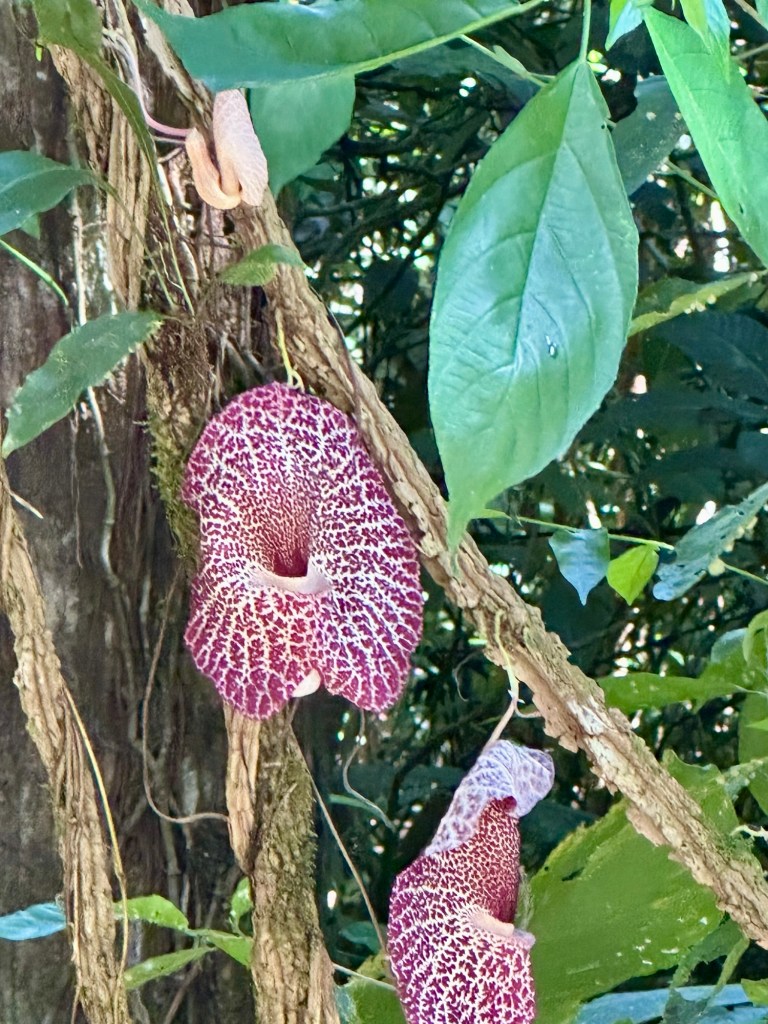
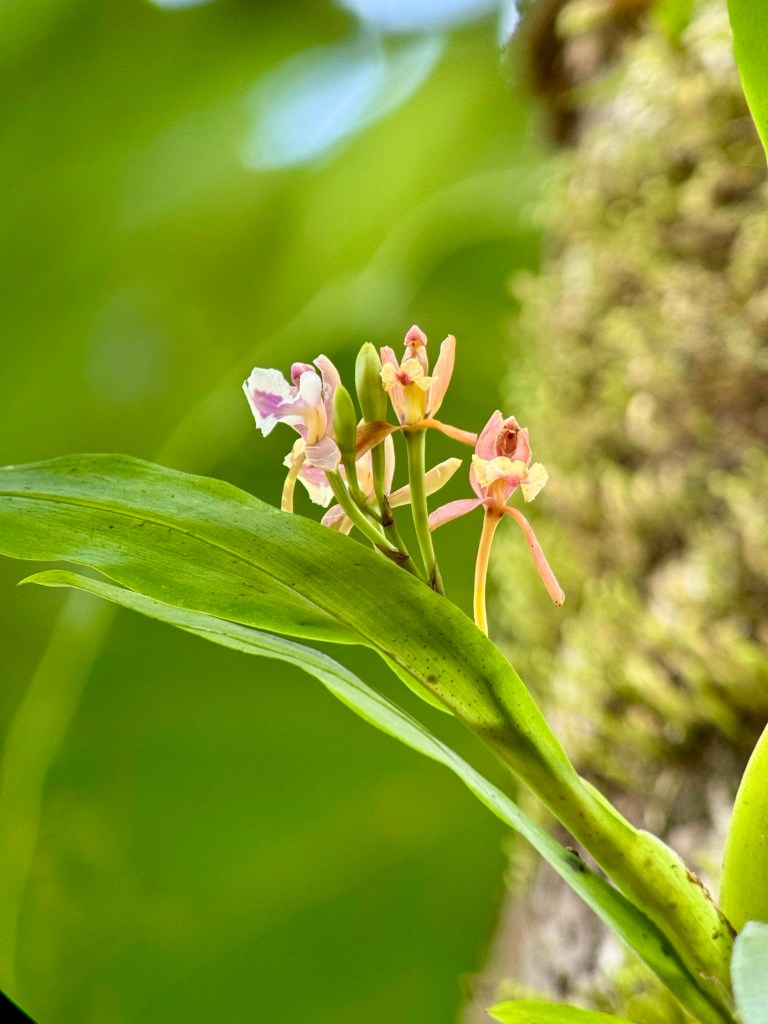
Orchid
Golden Guava tree – also known as the ‘Golden Shower’ tree because… never mind.
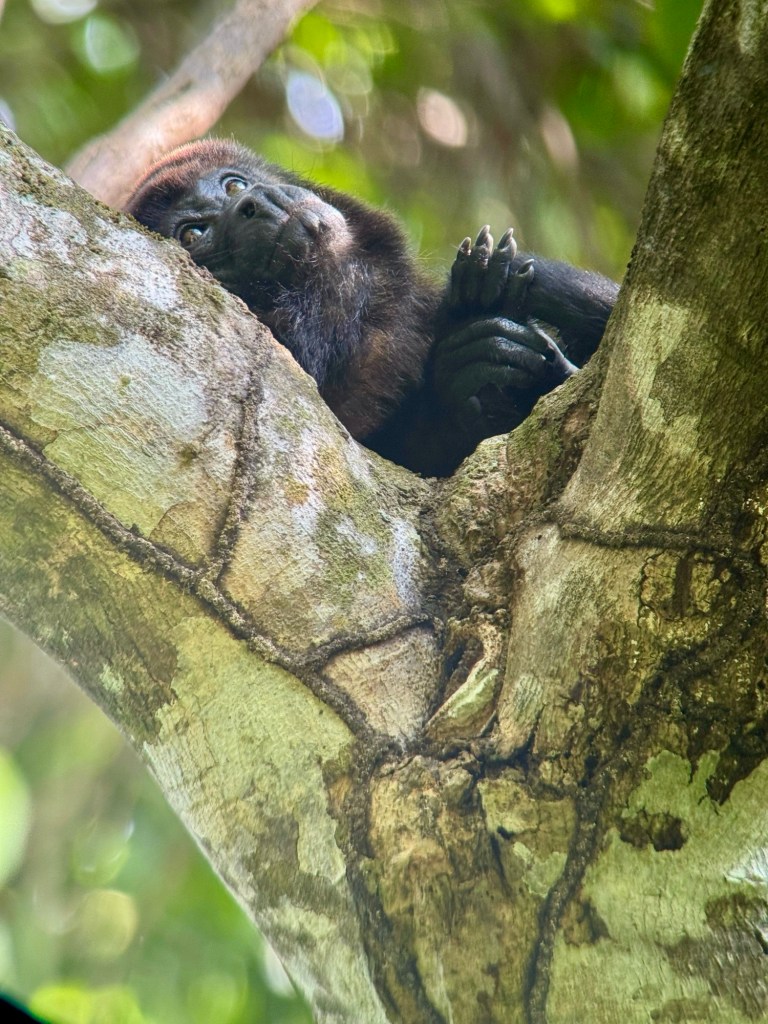
A Howler Monkey video
The same Howler Monkey
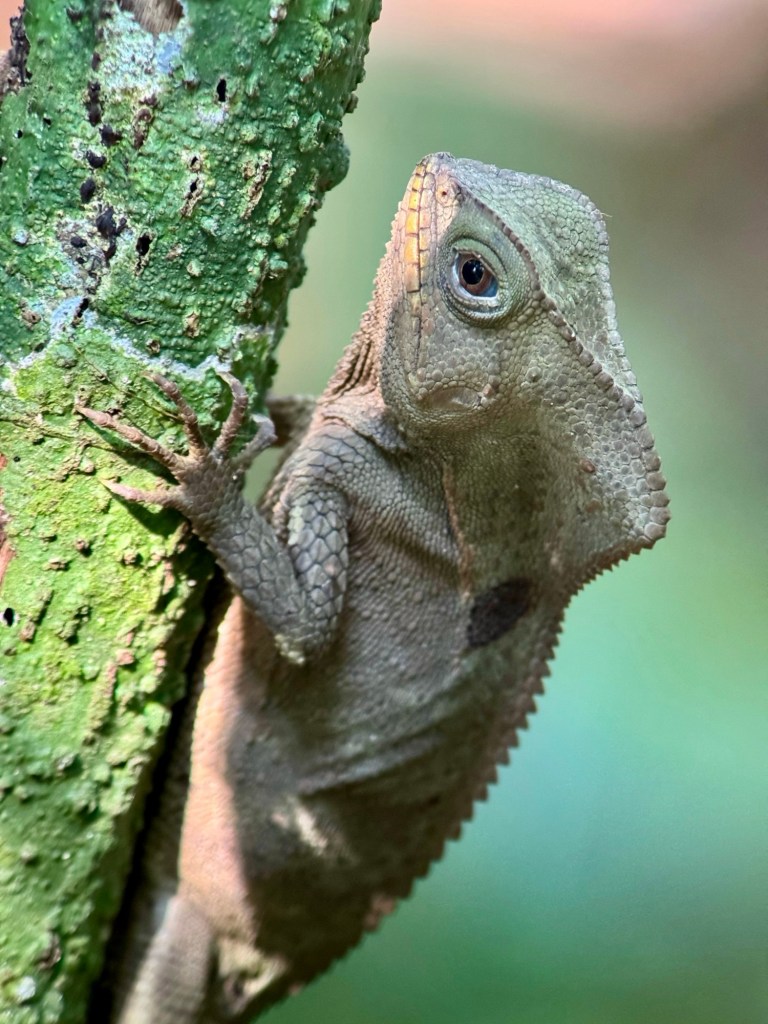
A Helmet-head Basilisk
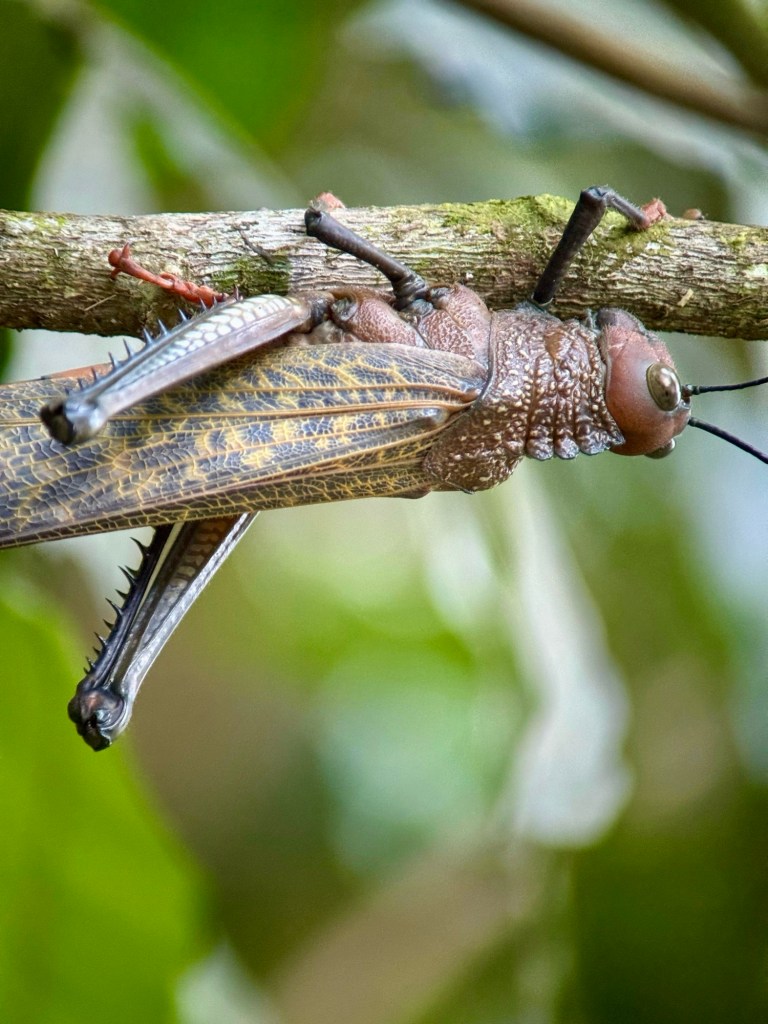
An exceptionally large grasshopper
A difficult image of the digitally challenged two toed sloth – a totally different and unrelated species to the three- toed variety
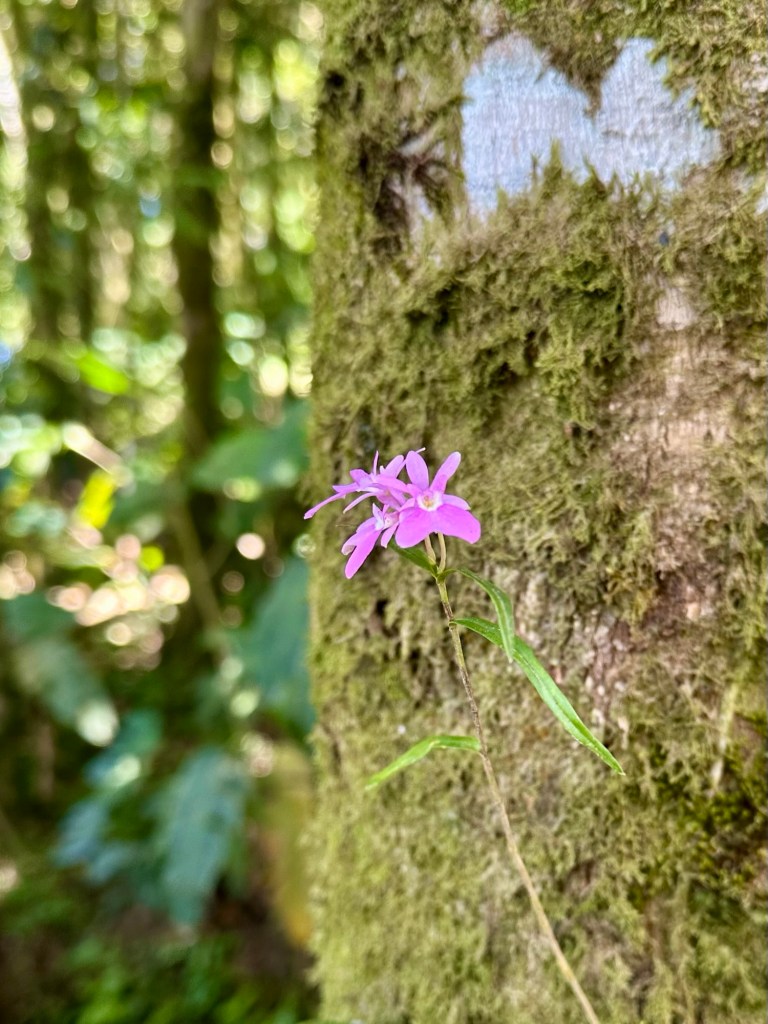
More orchids

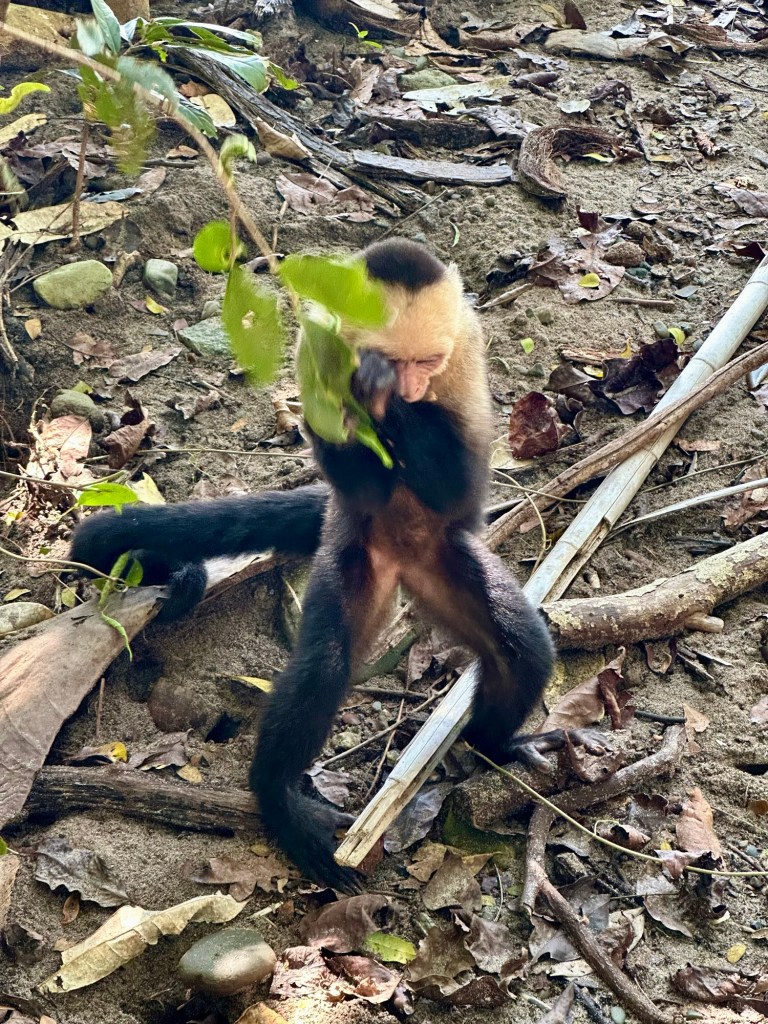
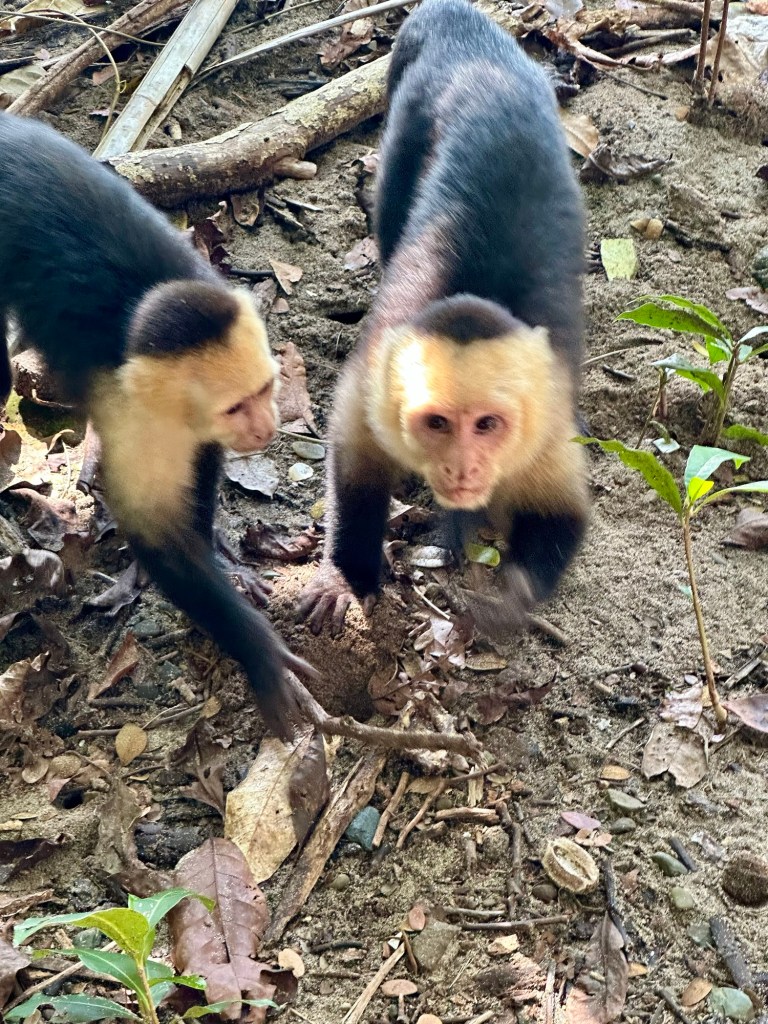
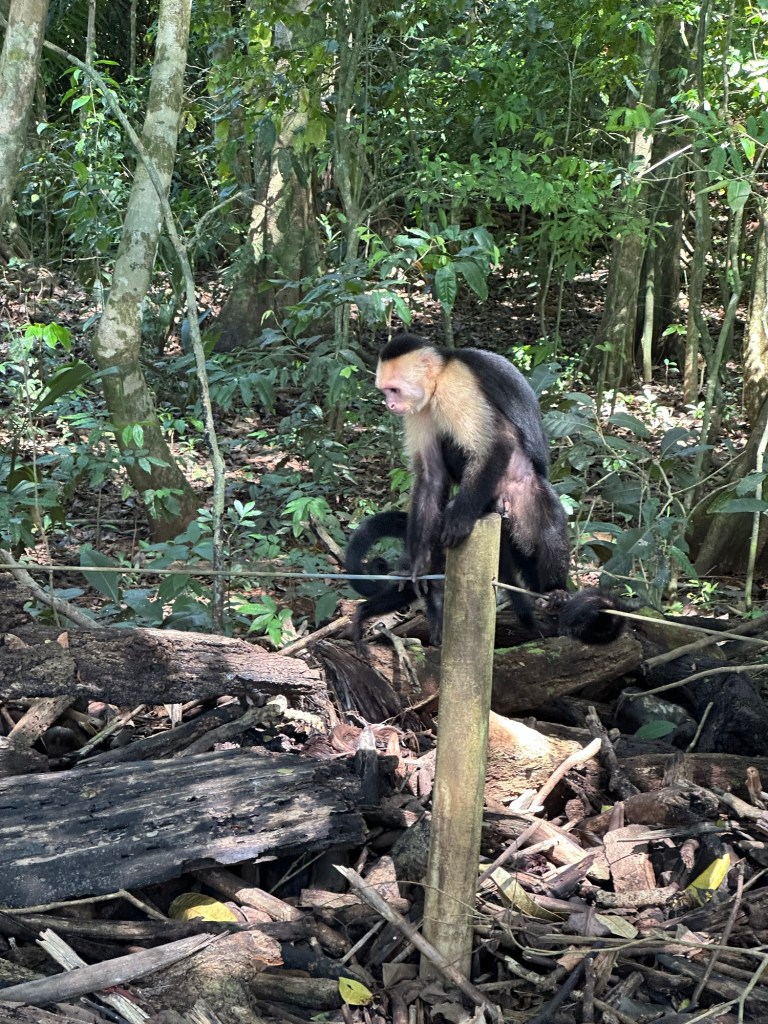
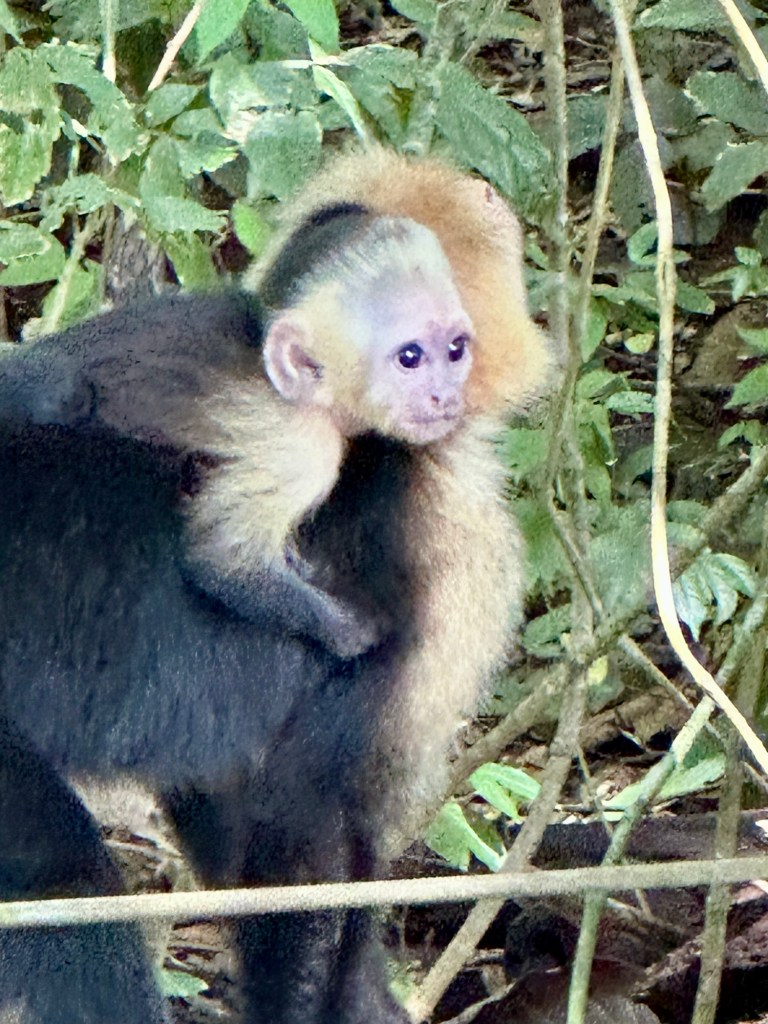
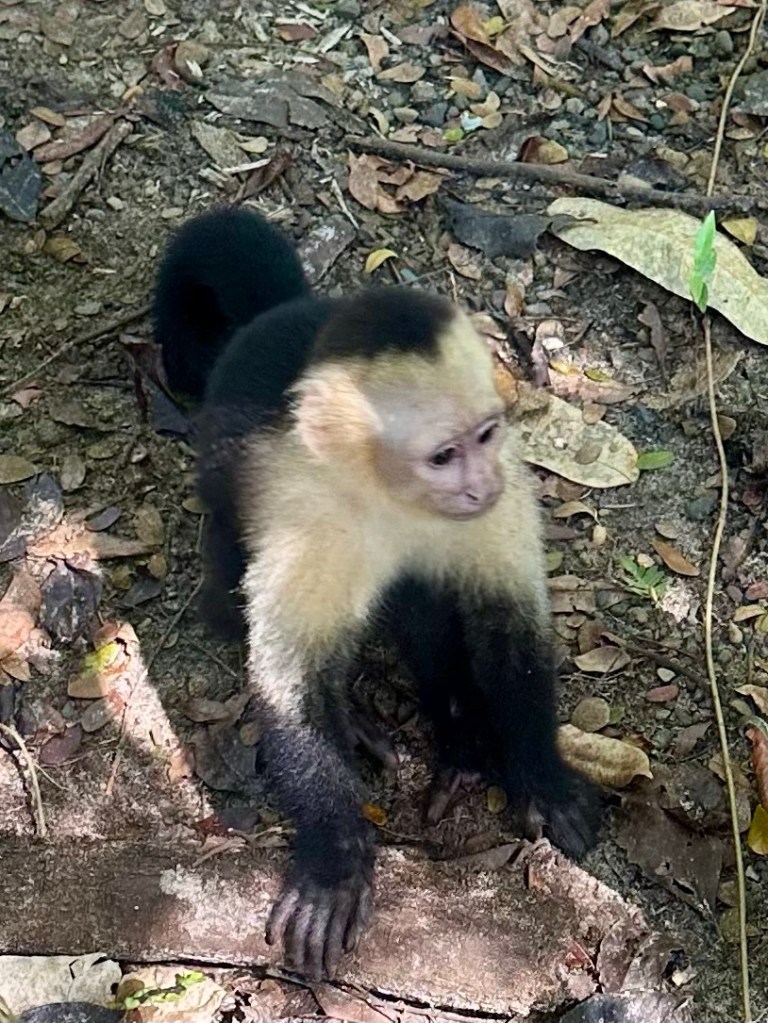
At the end of the path Diego popped smoke and left us for another crowded lap . There were troops of Capuchin monkeys up to no good, you had to keep an eye on your stuff at all times, amusing vid of monkey see , monkey do:

Monkey business

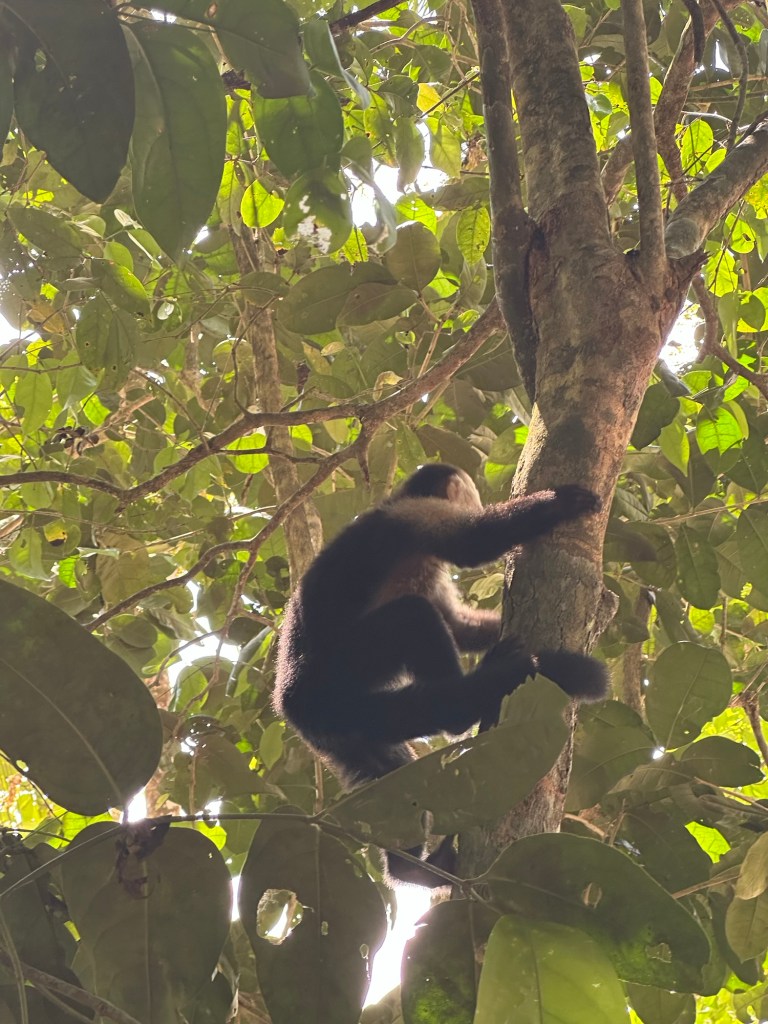
A Capuchin monkey gallery:

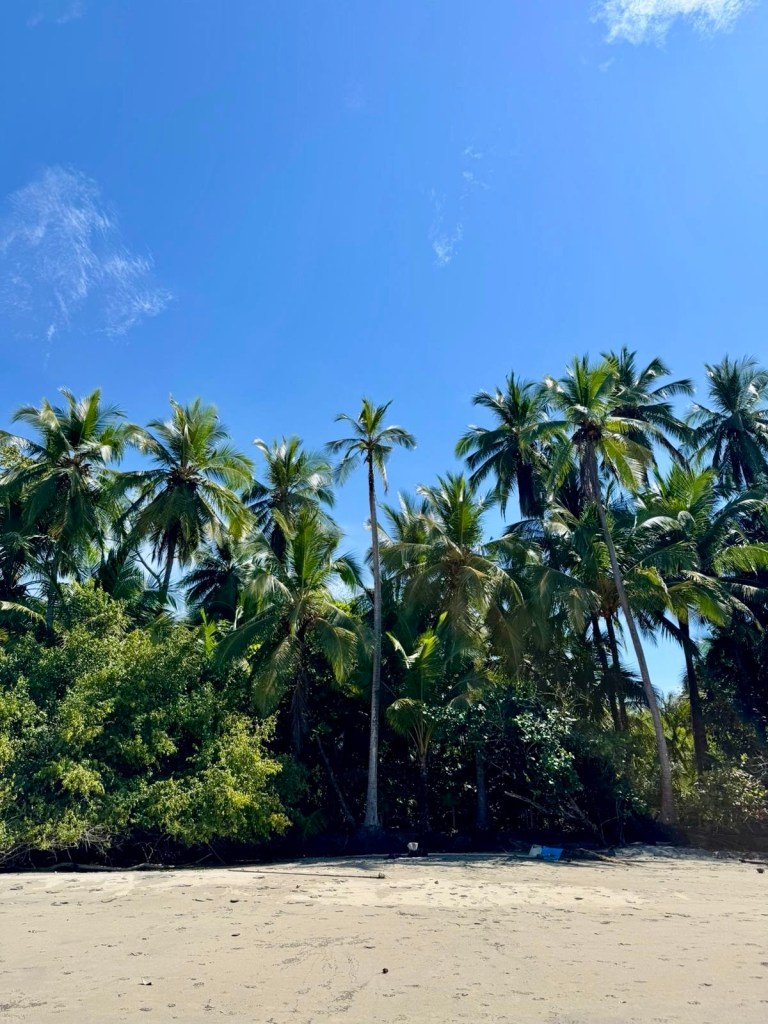
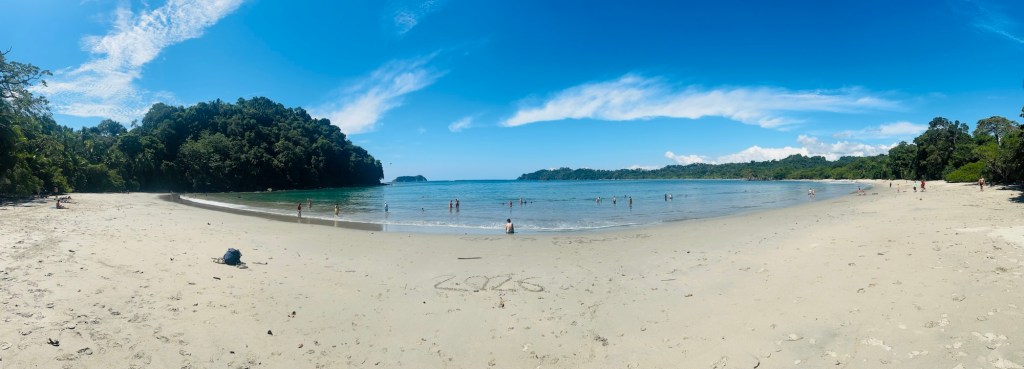
Then we spent some time swimming at the National Park Beach:

And Playa Espadilla:

Panorama shot

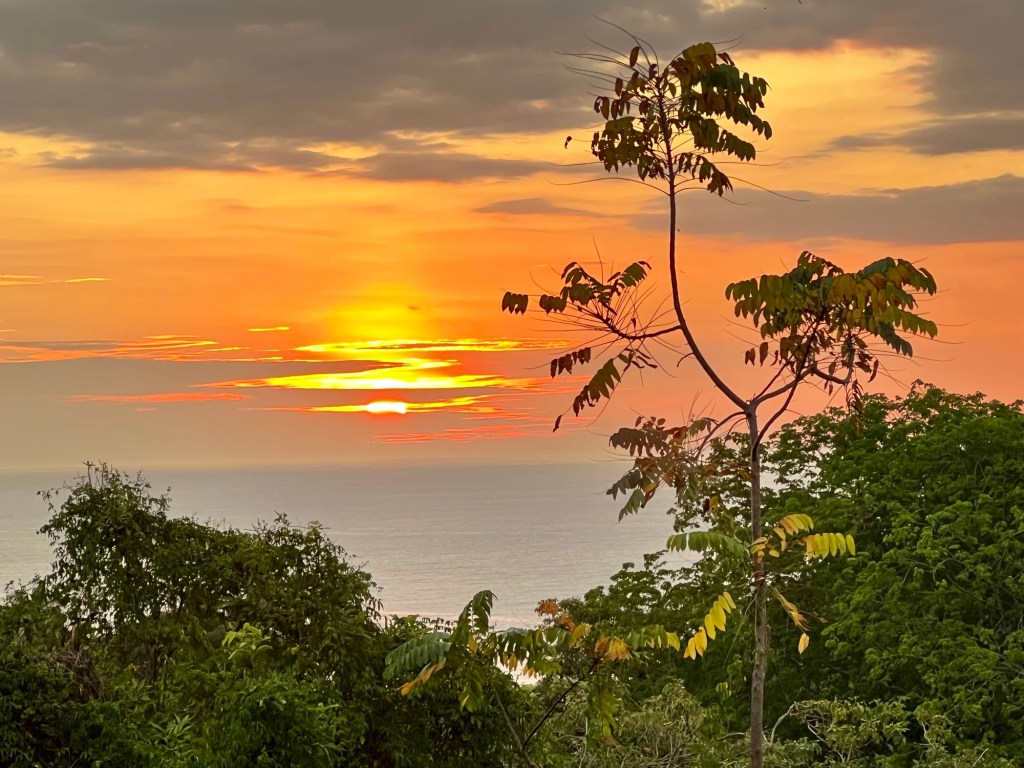
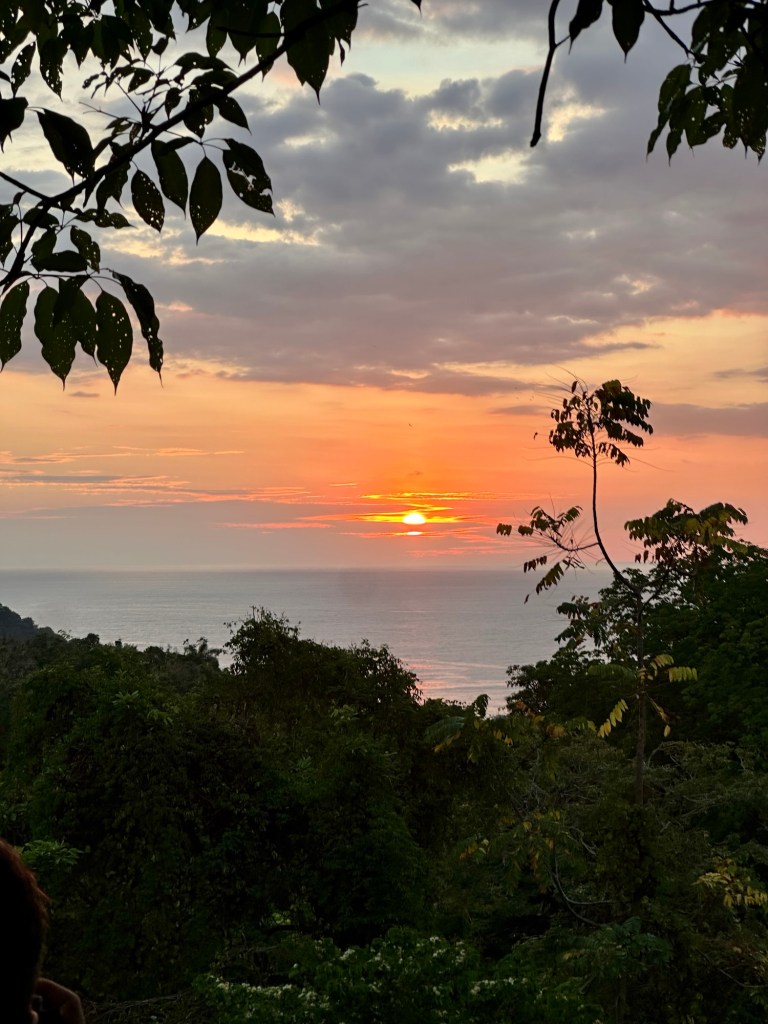
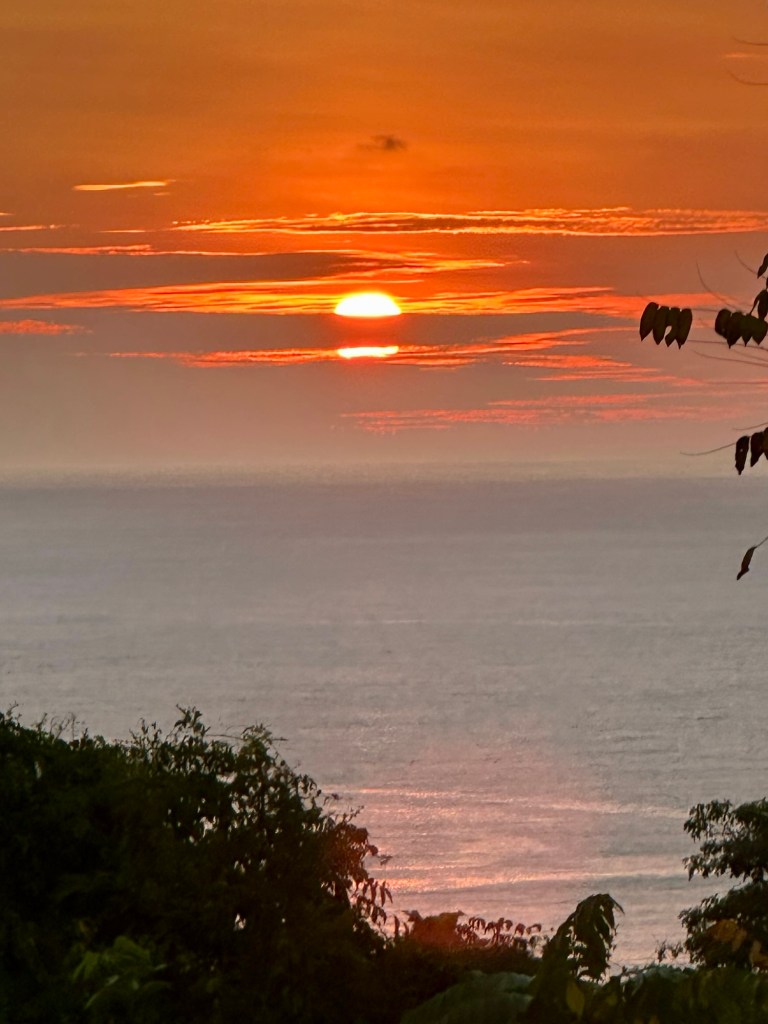
The afternoon was spent keeping cool in the hotel pool. This was followed by dinner out with the group and another spectacular sunset over the Pacific.

Another Nessie sunset special

Monte Verde and the Pacific Coast

Friday 2 January- Saturday 3 January 2026

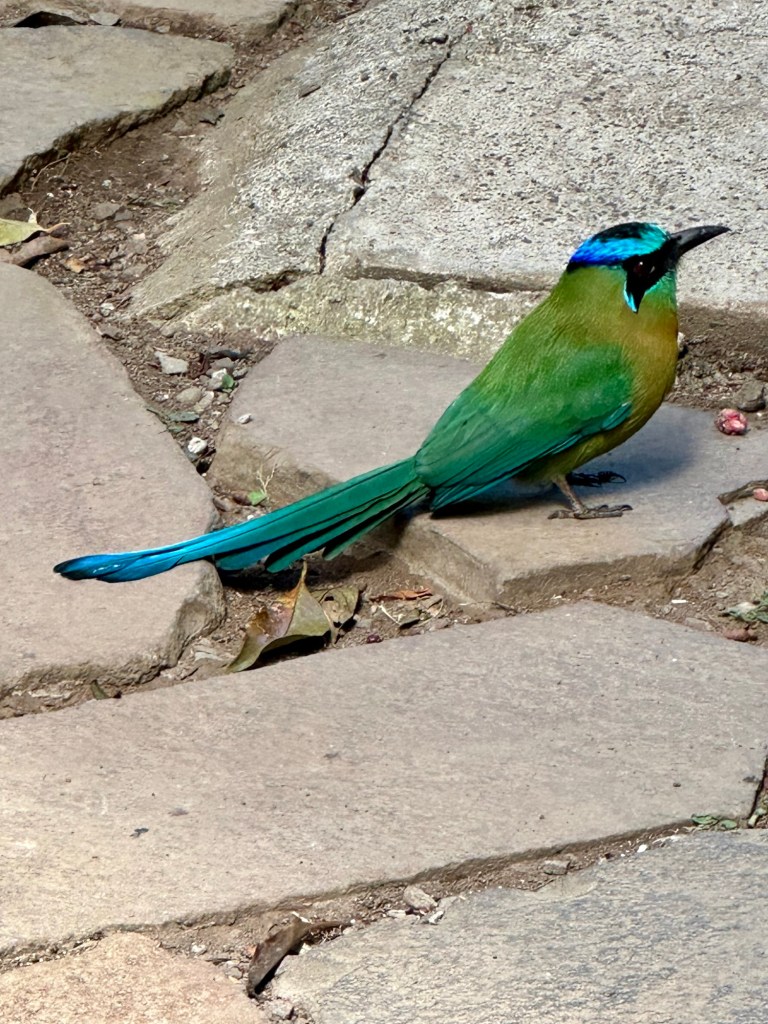
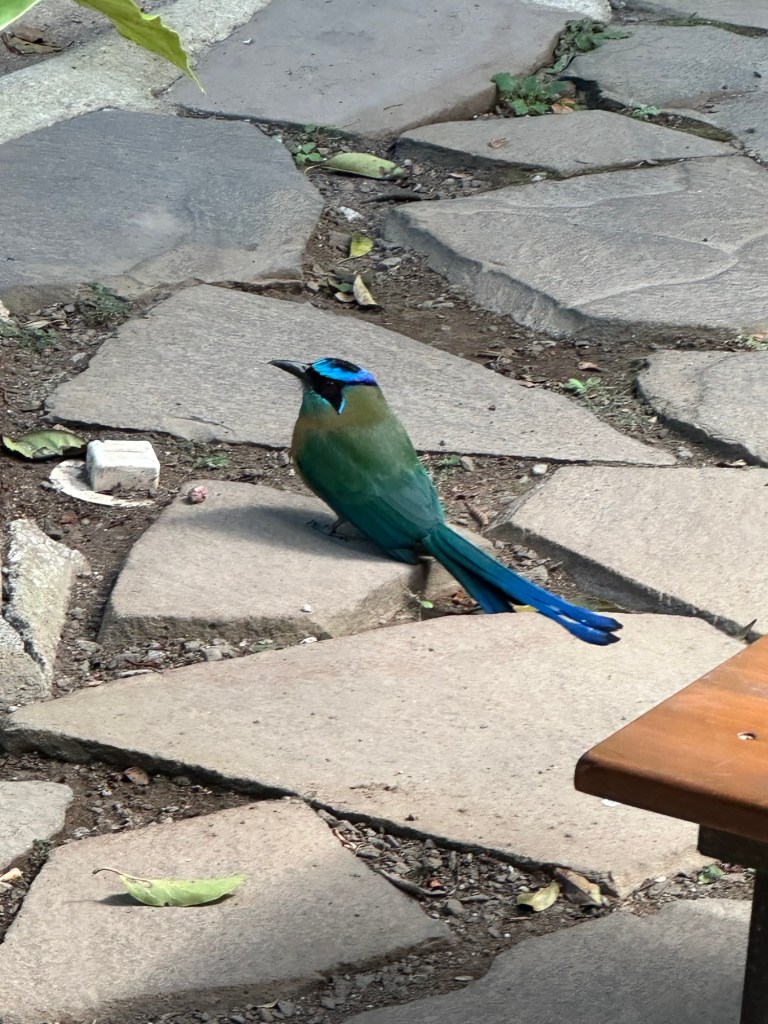
A ‘mot mot’, so called because that is the sound in makes. Quite a few species in Costa Rica have onomatopoeic names

After a night of soft soaking rain we woke up to a bright clear morning it just the odd bit of ‘cat’s hair’ rain drifting across the forest.

Friday morning saw a visit to the Monte Verde Institute, a charitable organisation that supports research into, and regeneration of, the cloud forest. It also hosts groups from various US colleges to support field work. Orlando gave us a great talk about cloud forests and their work, using the case of the three – wattled bellbird as an example. File photo of this extraordinary bird follows ( we didn’t see any – they live high up in the forest canopy and are very hard to spot).

The male three wattled bellbird. Until around six years of age they don’t look like this – juveniles just look like the females
The female three wattled bellbird

The males select a ‘bald’ perch in the forest and put on a display to attract the females. It’s quite a thing to see ( they carry on like chicken dinners). After mating that’s there responsibility for the species done and they look for another partner, leaving the female bird to attend to all that tiring stuff like nest building, sitting on eggs(s) and raising young. Unlike Australian bell birds these ones have a truly rough sounding call. Loud, but not really melodious.

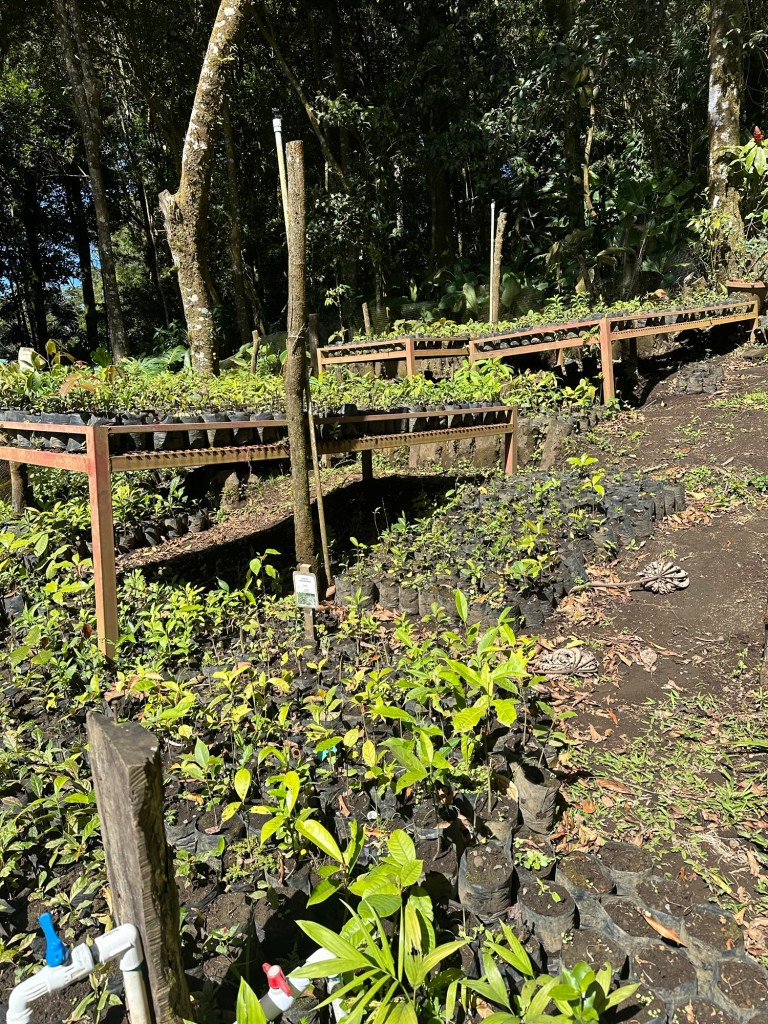
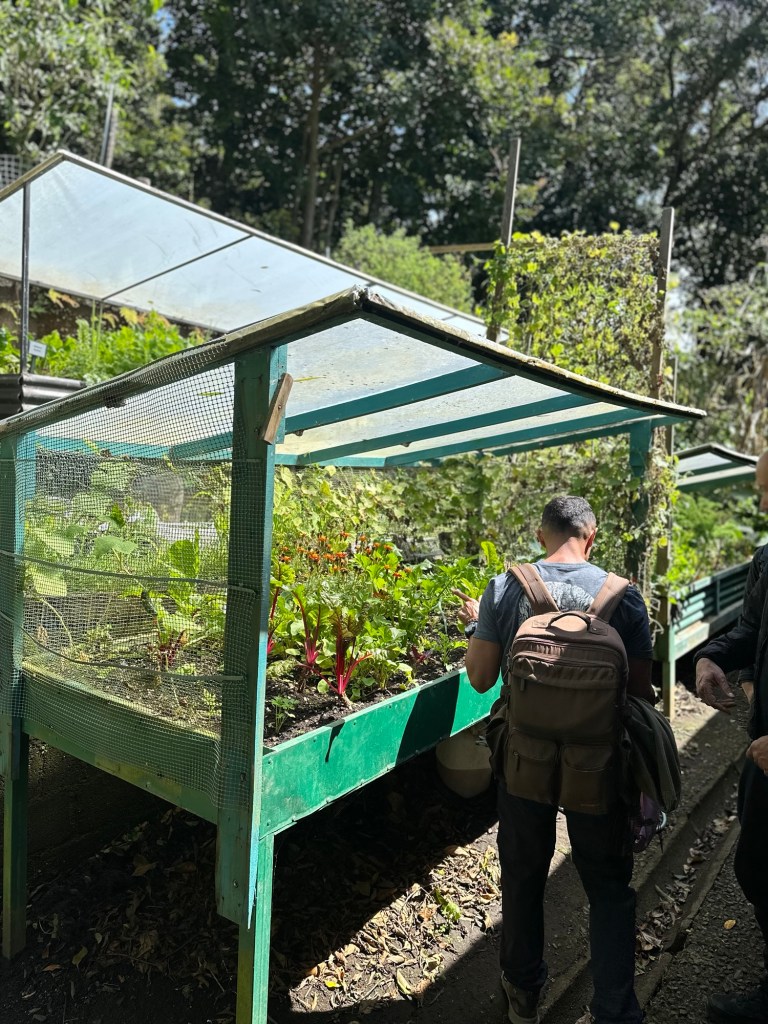
After our talk we ‘volunteered’ to assist in the work of the Institute with the regeneration of the forest. In our cases this consisted of packing soil ( with a certain technique) into sheaths for the propagation of rainforest plants from seeds collected by the Institute. This was followed by an amazingly good lunch prepared from food grown on site by the Institute.

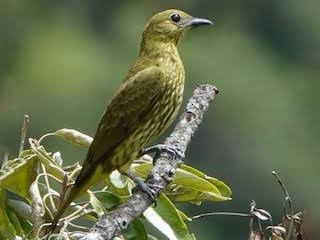
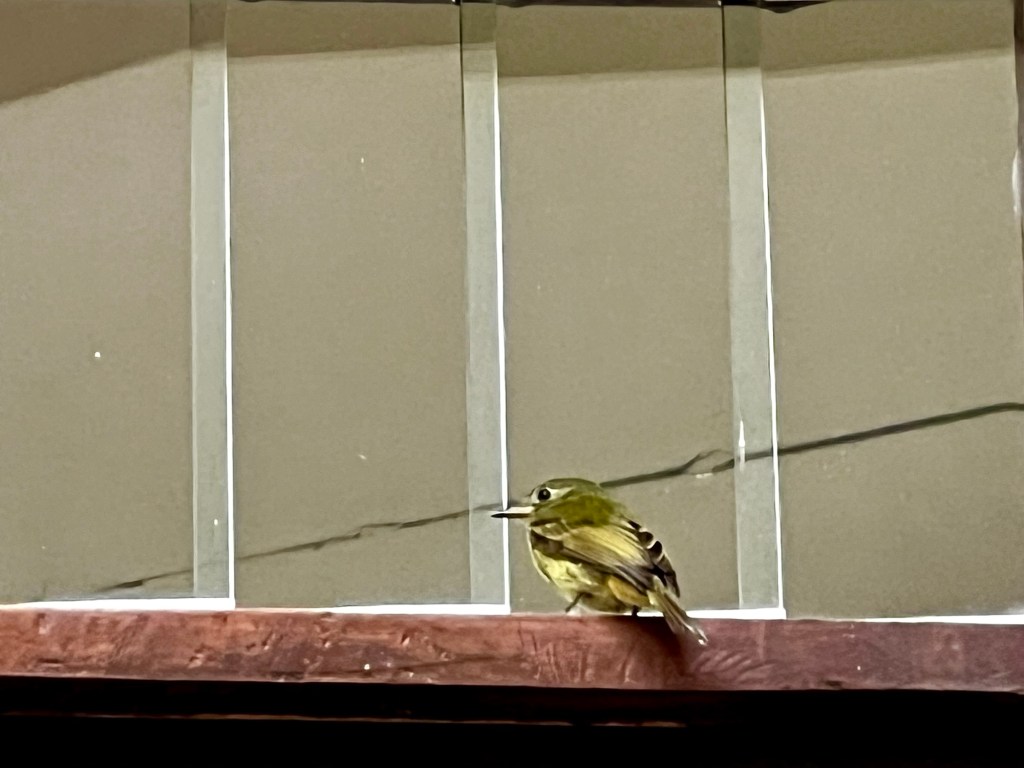
A Yellowish Flycatcher seen at the Institute ( yes, the names can also be quite literal)

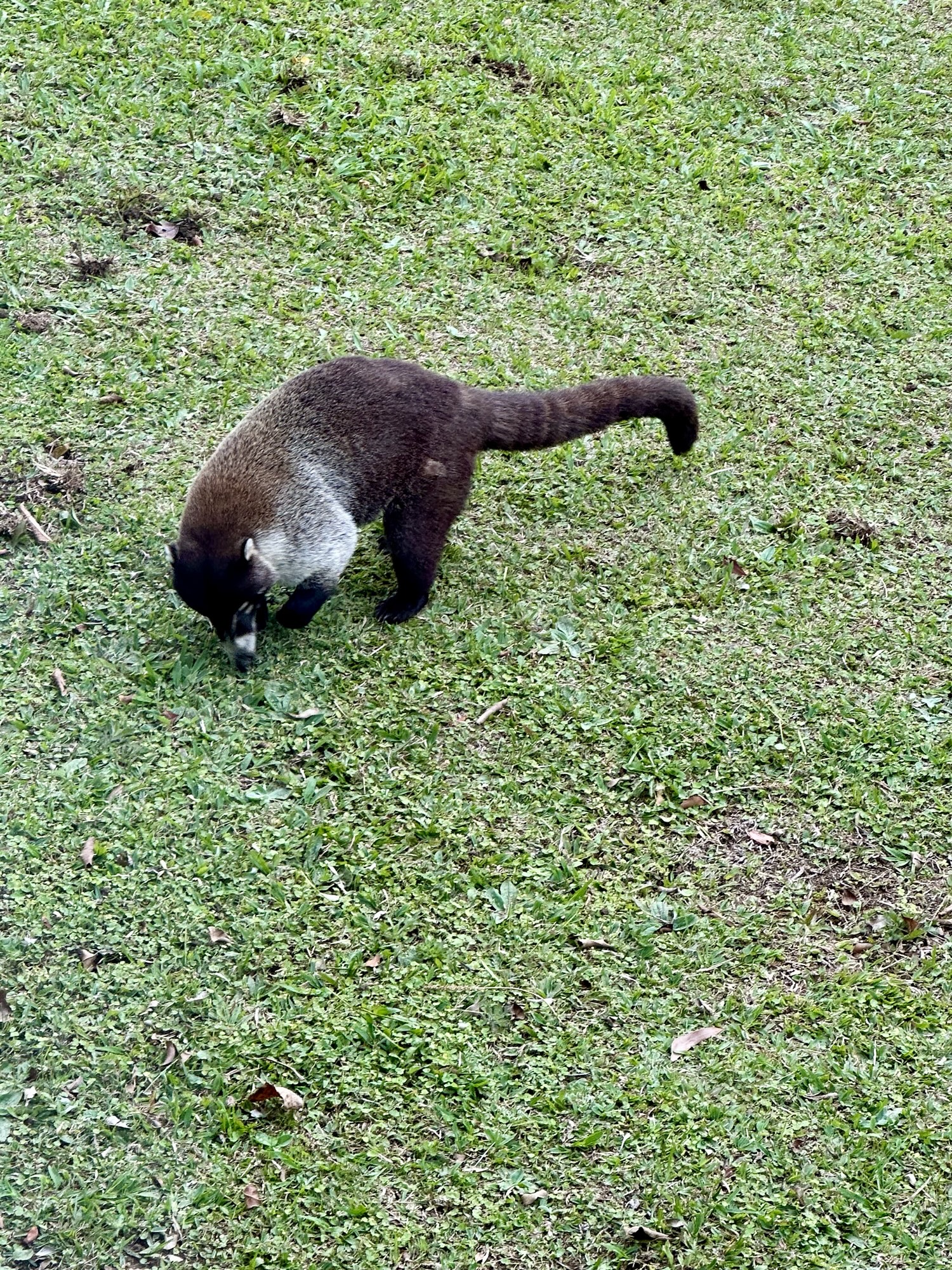
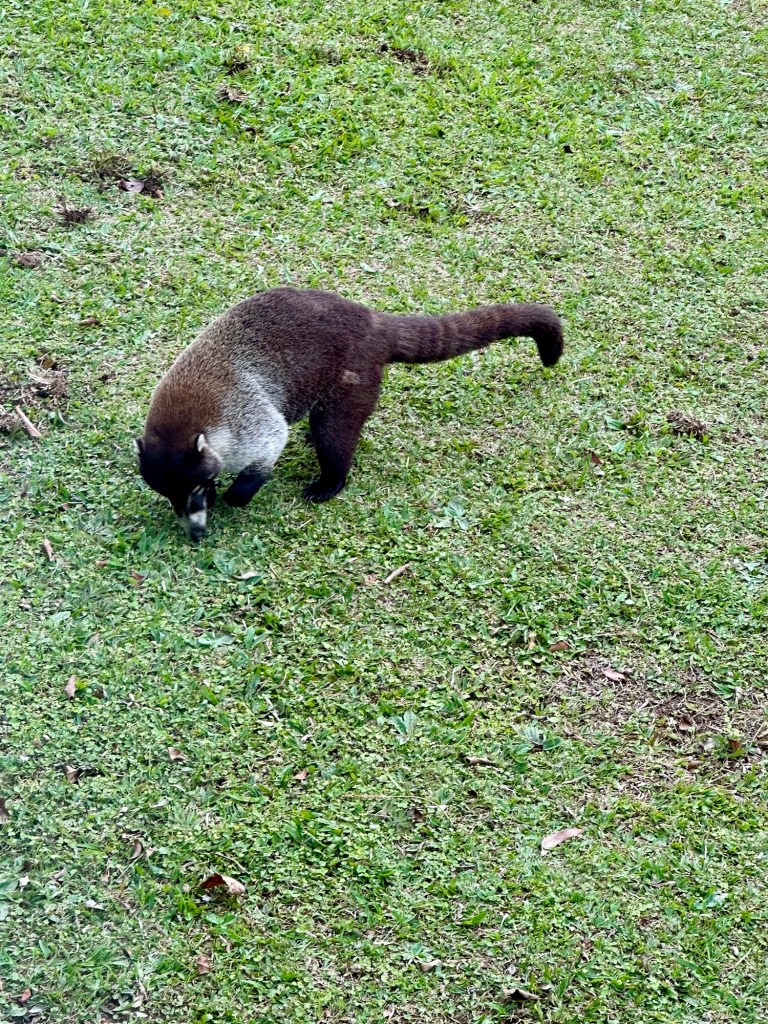
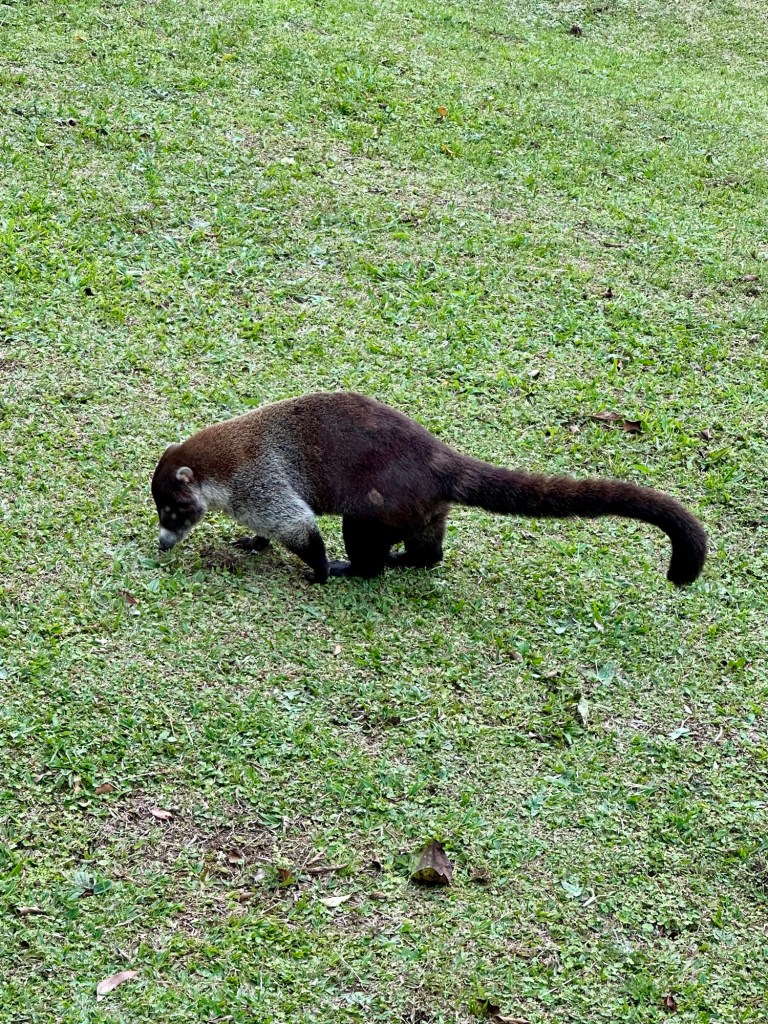
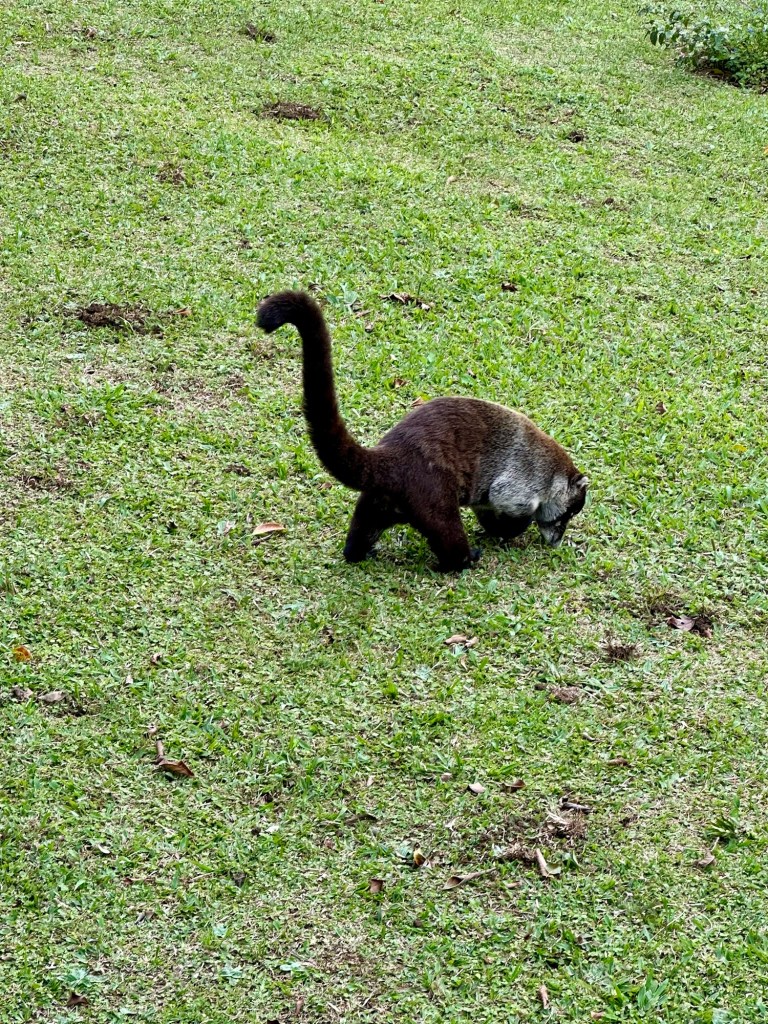
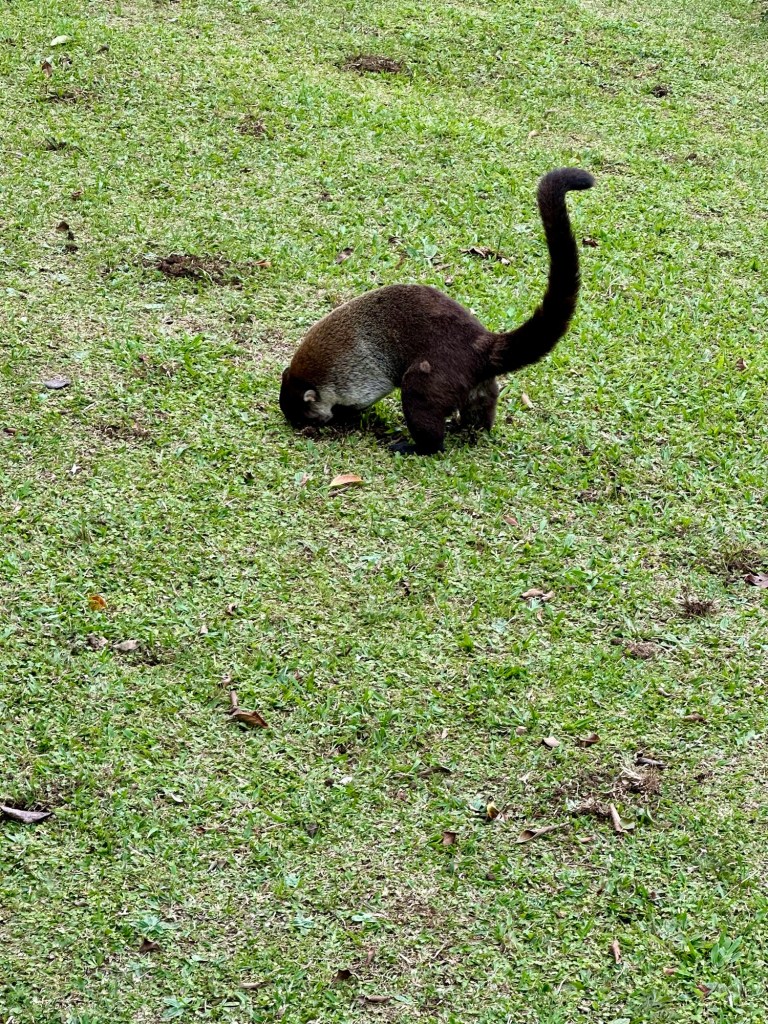
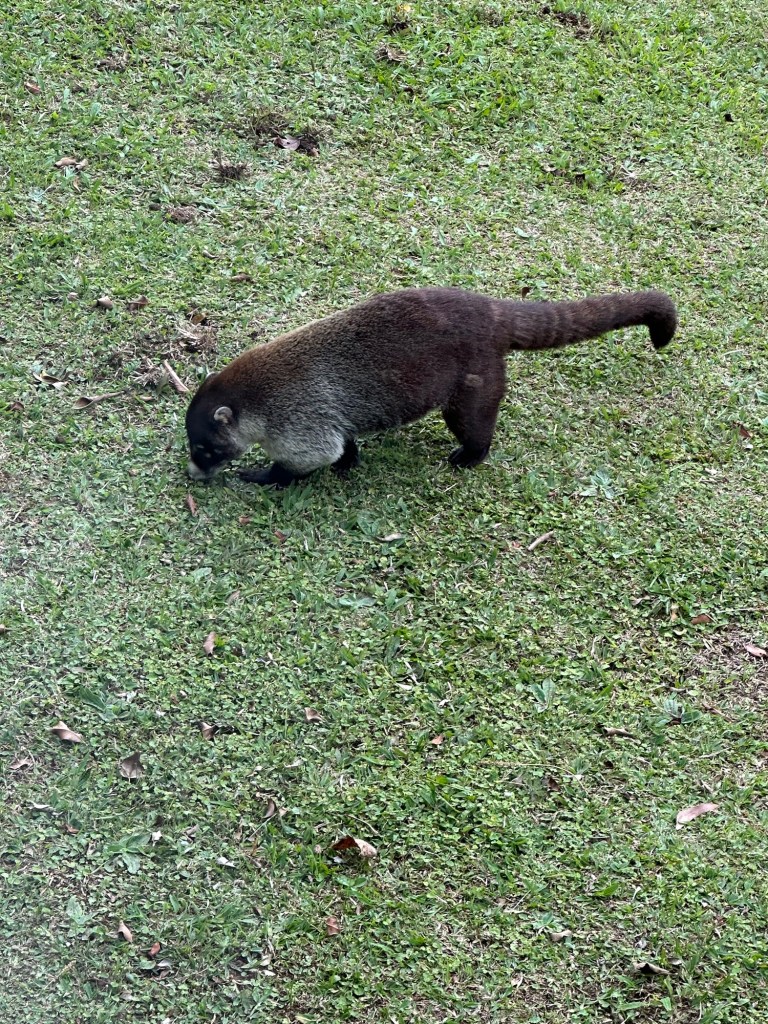
We went back to our hotel for the afternoon before going on a guided night walk in the Cloud Forest. A highlight of the afternoon was watching a Coati going about it’s business on the lawn outside our room:

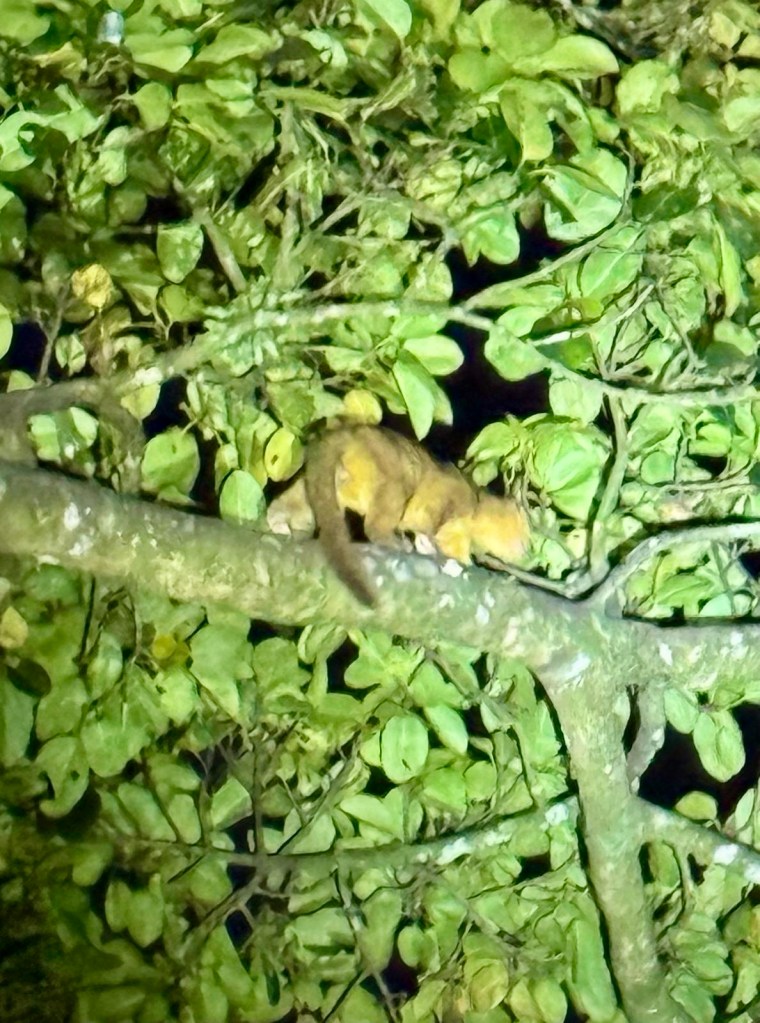
The rain held off for the night walk – and a lovely new full moon was illuminating bits of the night where the forest wasn’t giving 100% canopy cover. The walk went for two hours- it kicked off with a spotting of a Kinkajous, one of Costa Rica’s most seen nocturnal animals, a member of the cat family, it also bears a slight resemblance to a Australia’s ring tail possum when seen from a distance.

A Kinkajous
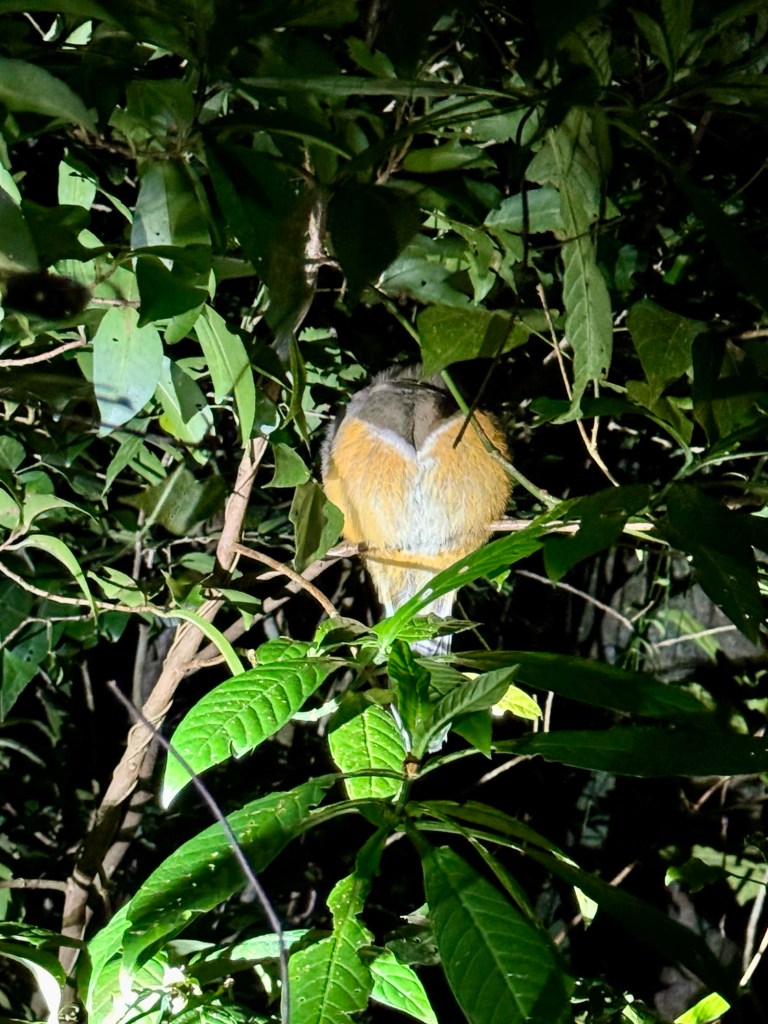
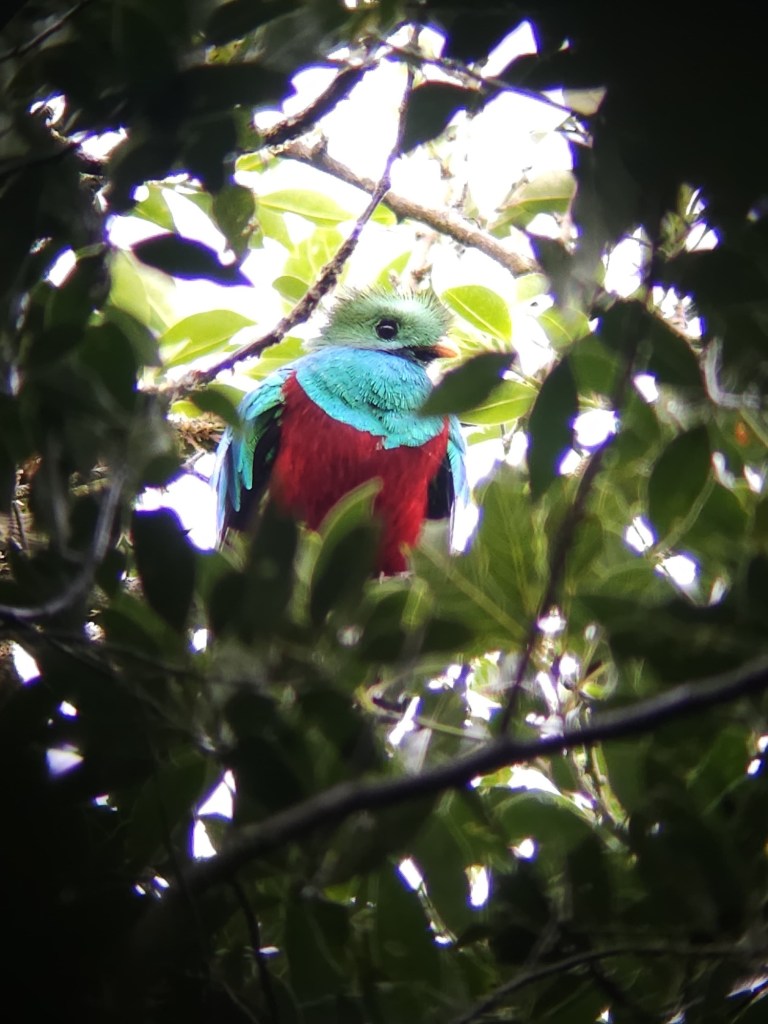
A ‘headless’ possibly Orange Bellied Trogon ( its head was under its wings as it was sleeping…) . The trogon is a close relation of the highly elusive Quetzal, which, unfortunately, we did not see in our time up in Monte Verde.
A Quetzalcoatl- that no one in our group saw. H/T to the random Swedish Woman Stephen stole it from …

Other things we saw on the night walk:

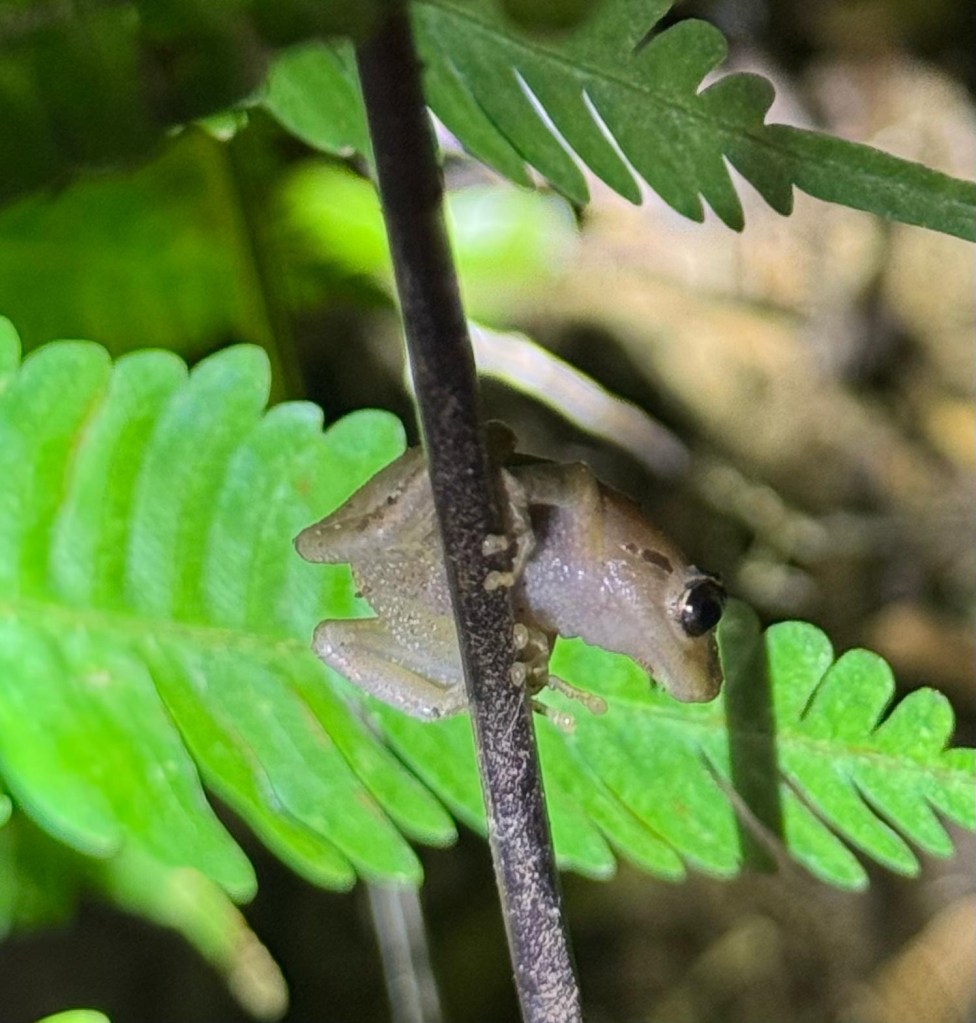
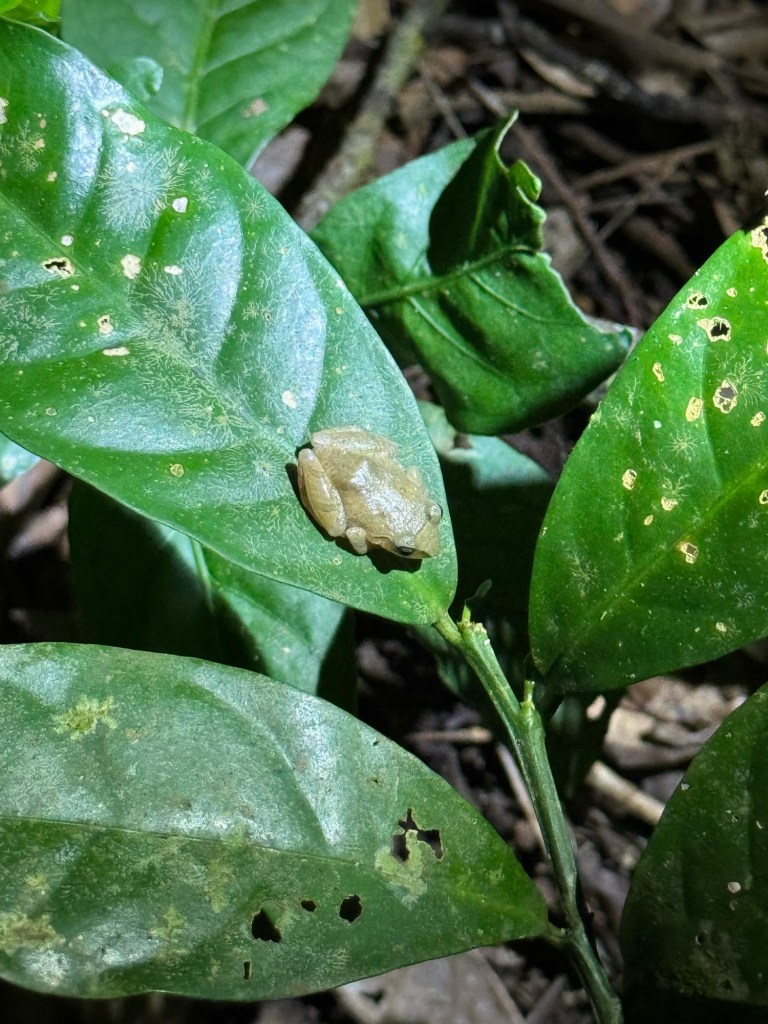
A rain frog. These are about the size of an Australian 10 cent piece of- fully grown.
Another rain frog
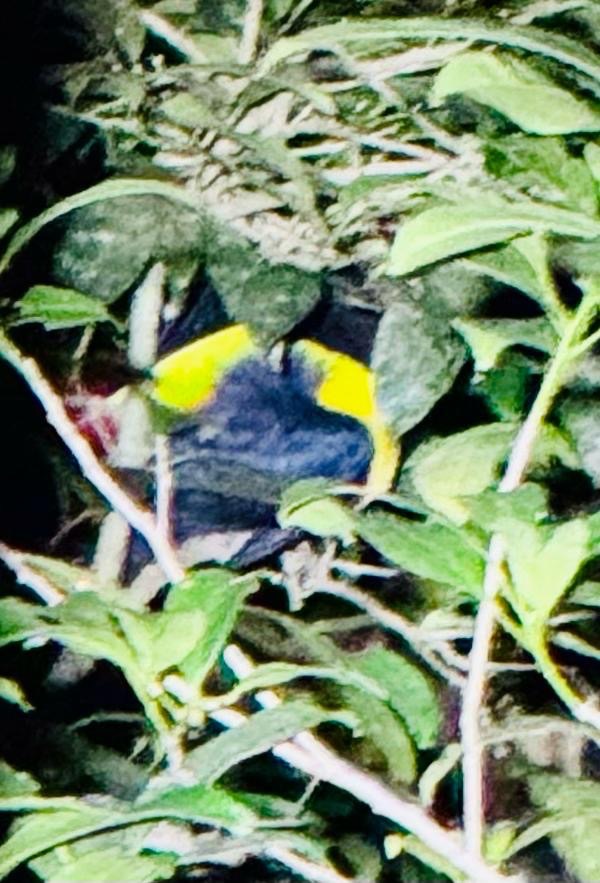
The back end of a Toucan
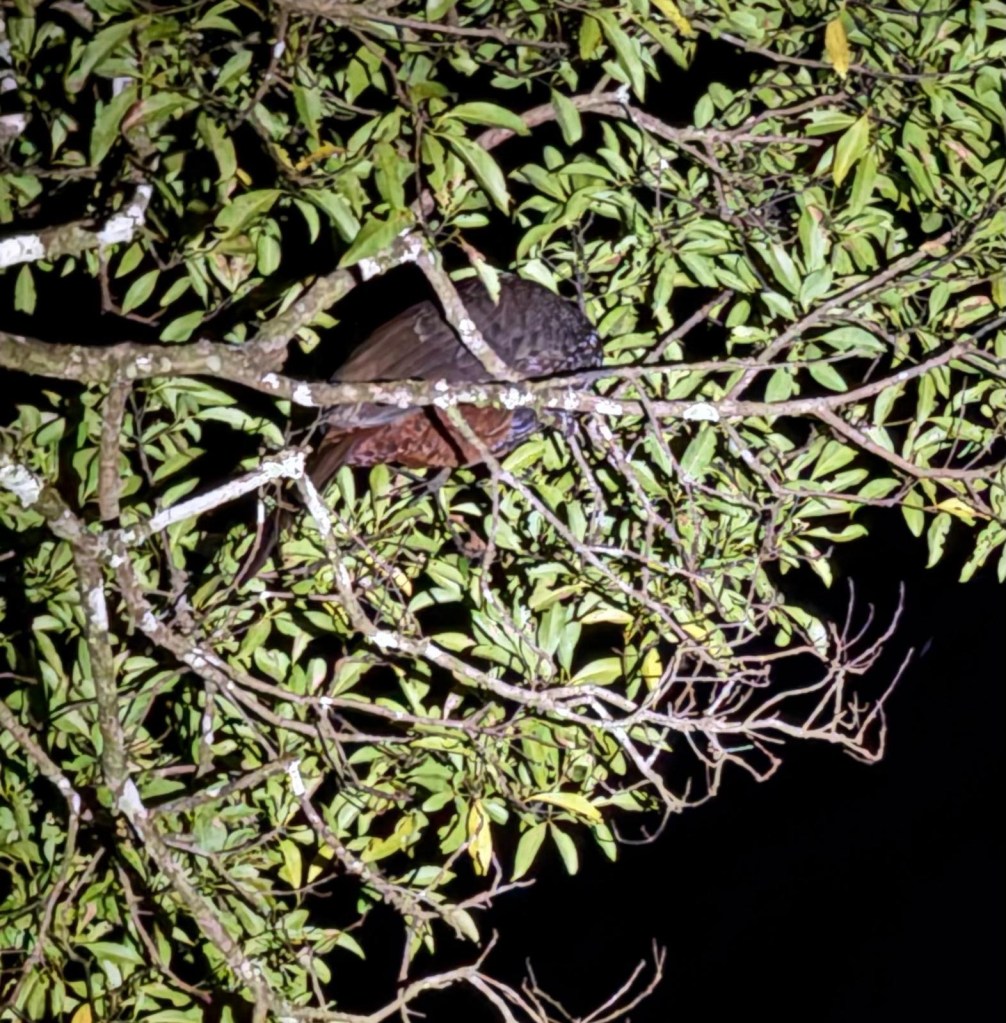
A large bird that’s a relative of the Turkey
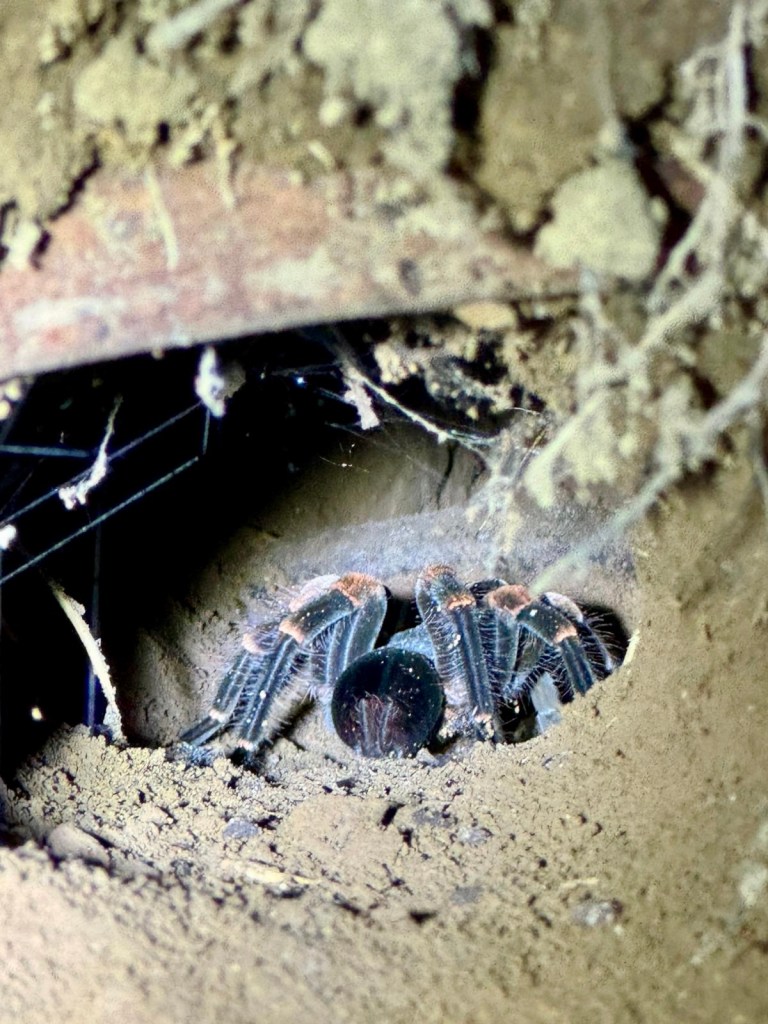
The back end of an orange kneed tarantula
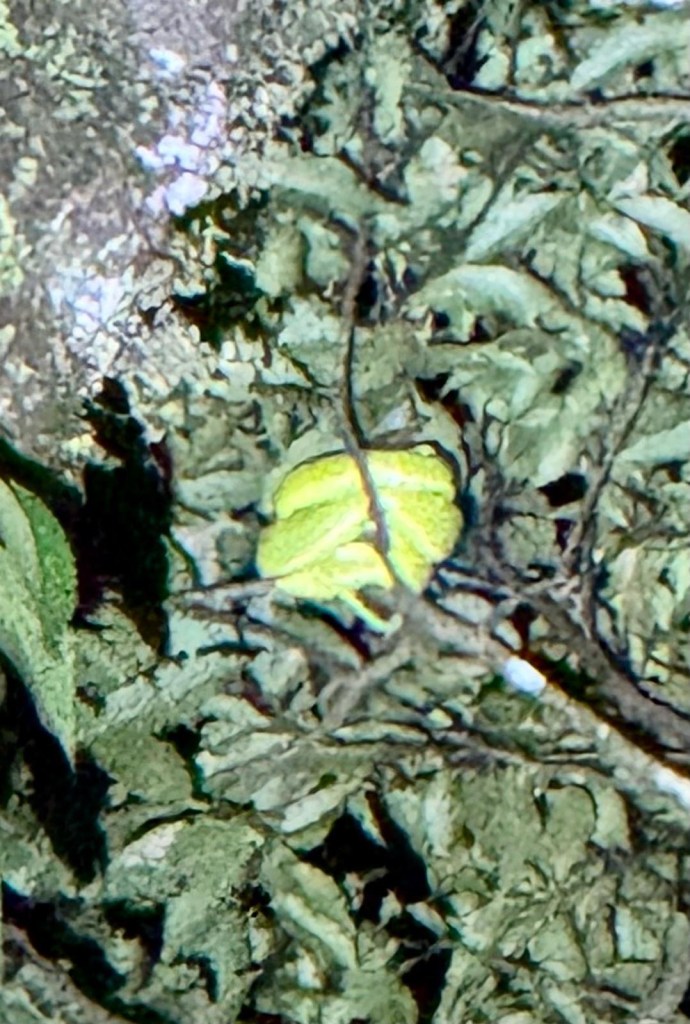
A side-striped green palm pit viper- highly venomous

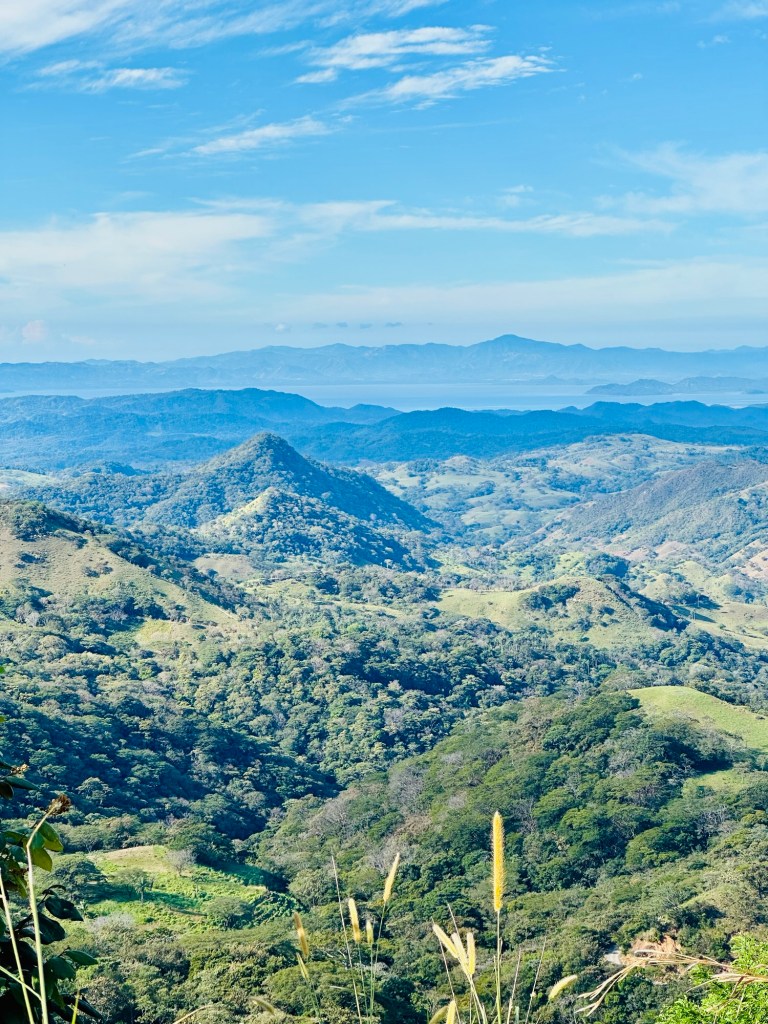
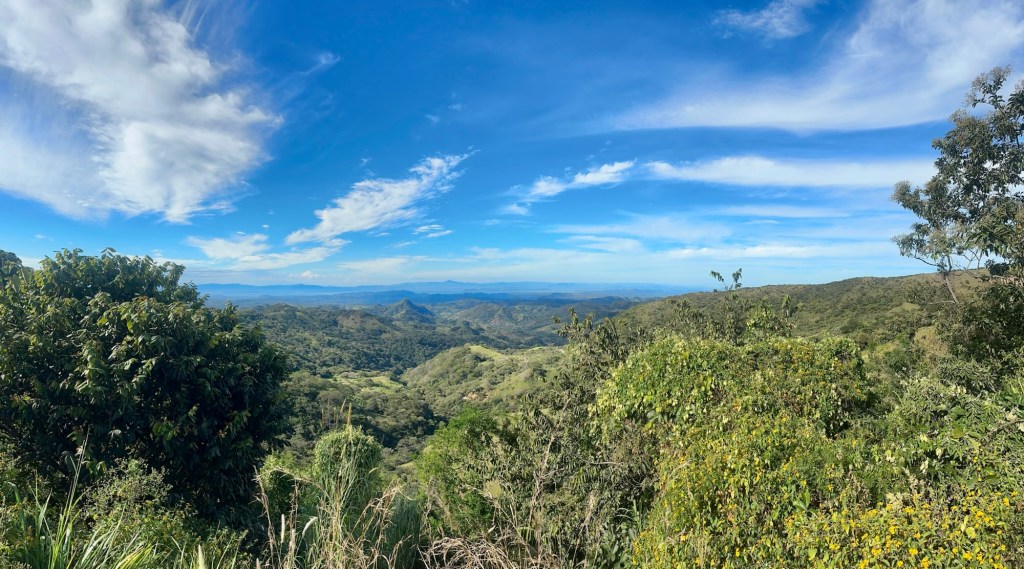
The next day we were up bright and early for the trip over the continental divide and down to the Pacific side of the country and south to Quepos and Manuel Antonio. The Pacific side of the divide is much drier than the Caribbean side and it really showed quite quickly. There were some god views as we headed down the range:

There is a gulf on the coast in the distance
Blue skies in the Pacific side of the divide

There was a lot of traffic on the coast road as it’s a very popular area for folks from San Jose to hit the coast and it was the weekend.

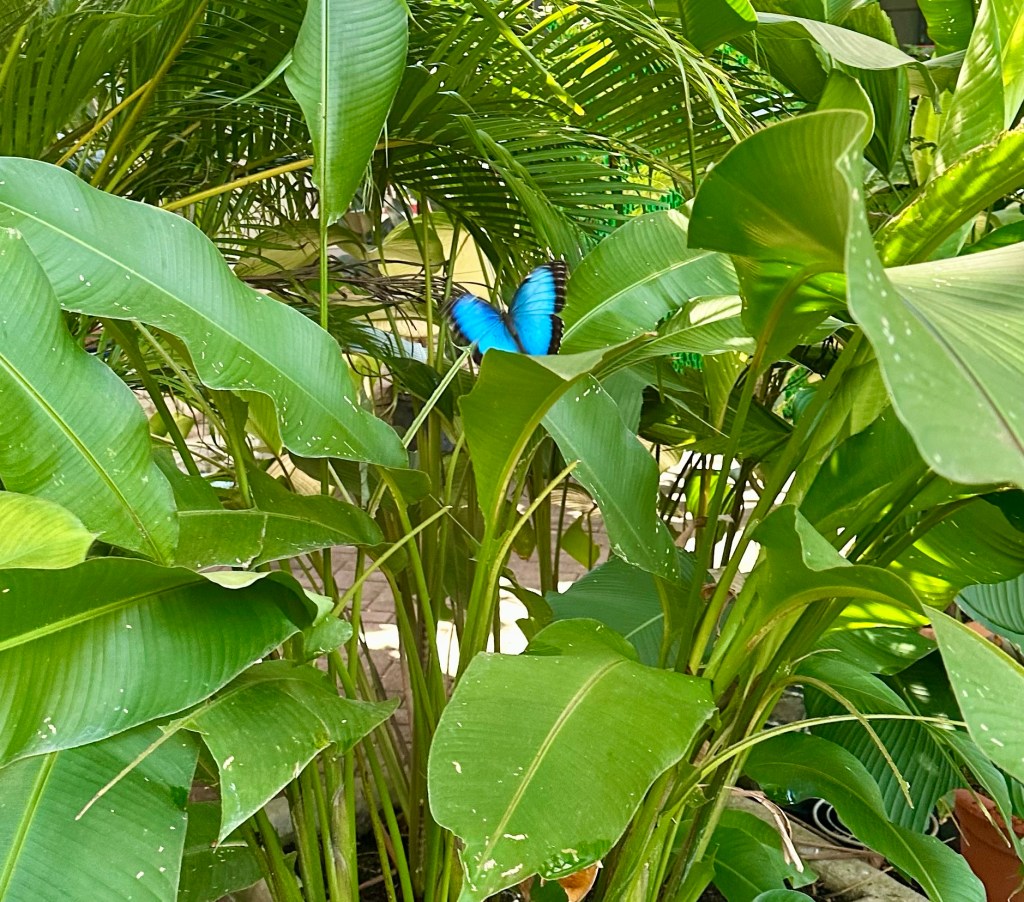
Along the way we saw some amazing butterflies in a butterfly house at a truck stop of all places ( very hard to photograph as they don’t sit still).

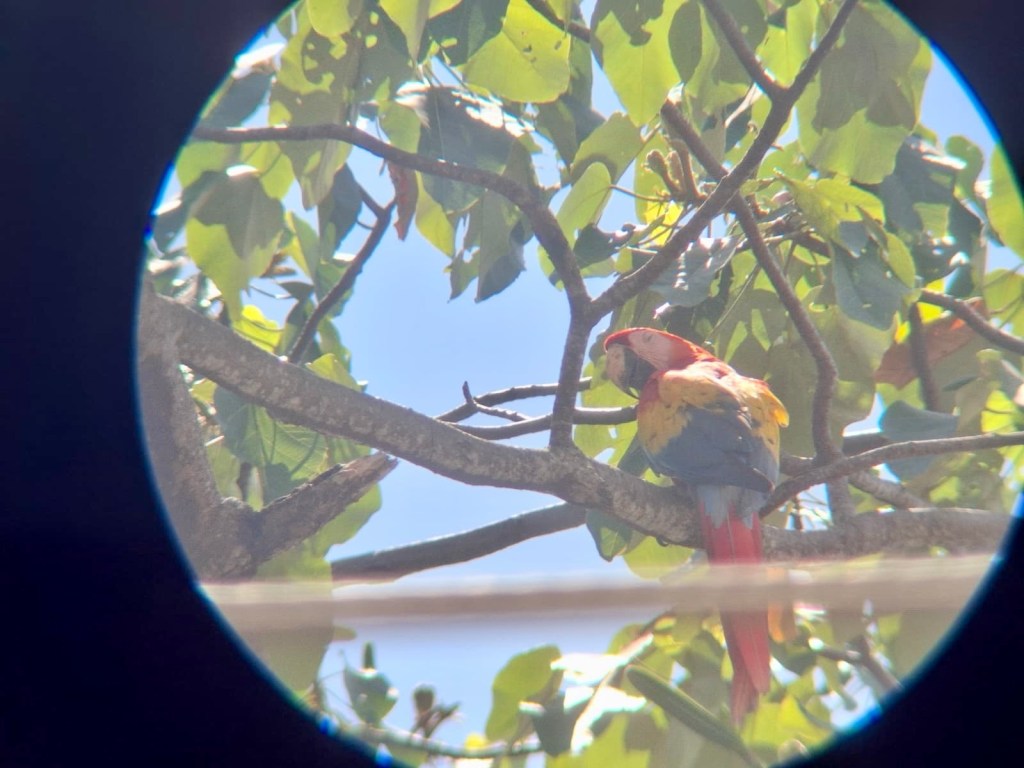
We also saw a group of Scarlet McCaws along the road side and we able to photograph one through Cesar’s telescope:

A Scarlet McCaw

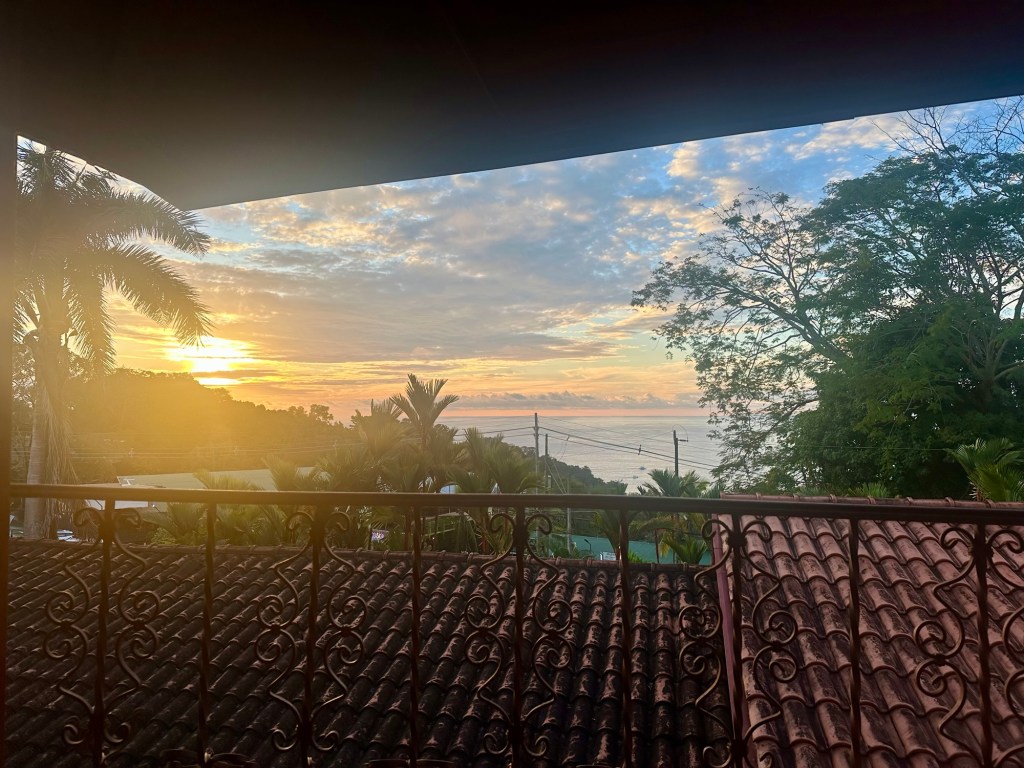
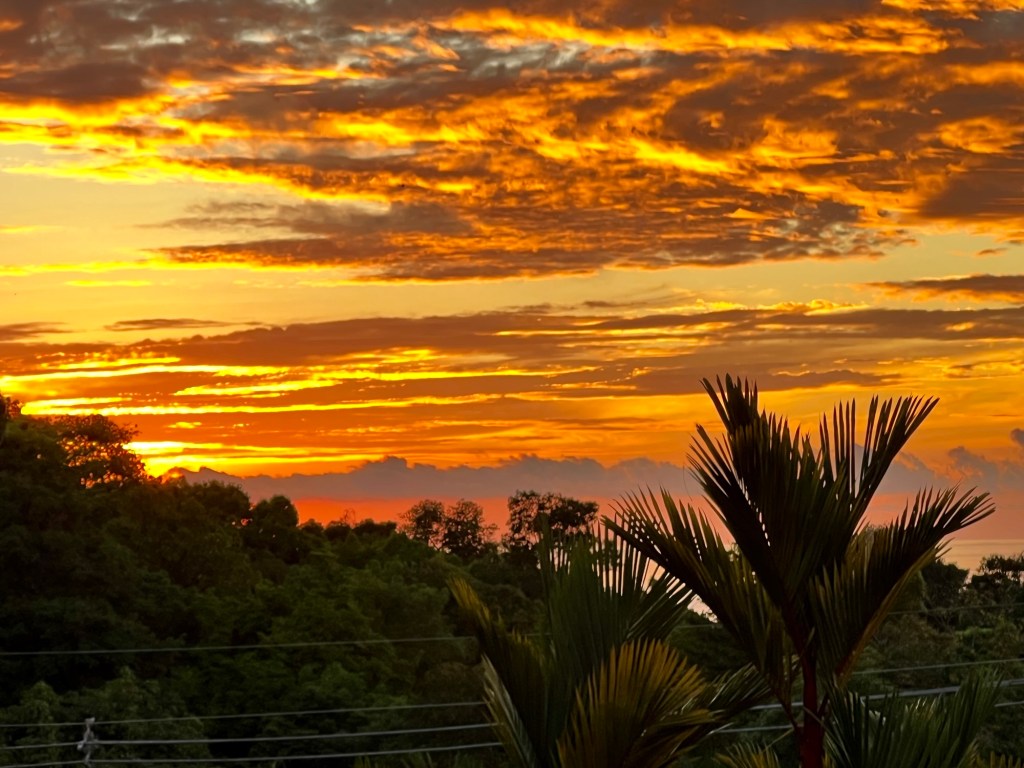
Manuel Antonio is a popular sea side location with Costa Ricans, set along precipitous hills along the coast. We enjoyed a sunset G&T on our room’s balcony prior to dinner at a local seafood restaurant.

Balcony sunset shot #1
Balcony sunset shot #2

Monte Verde Cloud Forest

Jueves, 1 Enero 2027

A quiet dinner with the group on NYE, the only real excitement being the hour long fight to get a taxi back to the hotel. It was a taxi or a 4km hike in the rain over a very dark mountain, so taxi was the preferred mode. We managed to fit all 8 of us in the one taxi….its a closer group now…

An Agouti having its breakfast, seen enroute to our breakfast

Up at six for breakfast and an early departure for a guided walk in the Cloud Forest. The cloud forest can best be considered like a rainforest… but cloudier. The main source of the ‘cloud’ is very moist air coming from the Caribbean side of the country rising up the dividing range. The result is a near permanent mist like effect. Adding to the ‘wetness’ there is a cold front over Costa Rica and the ranges today, so on the Caribbean side of the divide (where our walk was) we also had a fair bit of just good old fashioned rain.

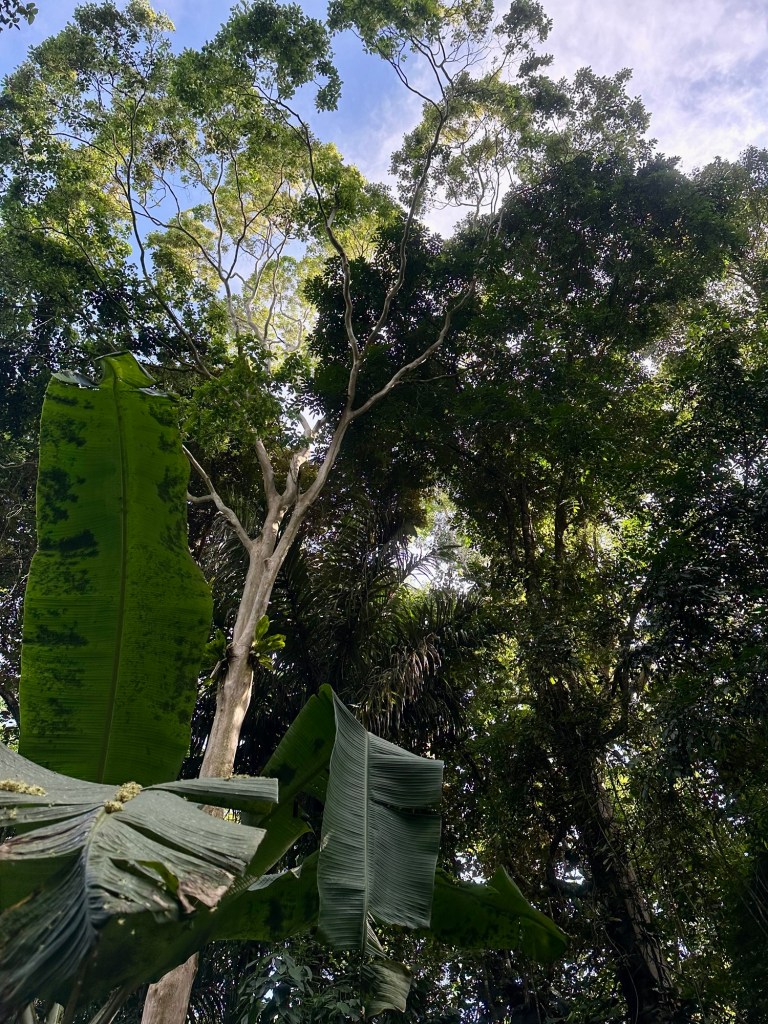
The Cloud Forest, as expected, had an impressive amount of flora and fauna. The bit we were in is essentially a regrowth that’s between 40-50 years old. An impressive amount of regrowth/ regeneration. Flora photos follow:

To give you an idea of the scale of the forest, this image of us gives a good perspective:

It’s a big forest!

We also saw a few spiders:

A female orange-kneed tarantula
A tiny ‘sling shot’ spider in the centre of its web. You can’t quite make it out from the photo but the web is kind of a funnel shape .When the spider detects movement it releases the back end of the web from a tether and it flies forward, hopefully trapping prey.
Nothing like buckets of rain to bring out the fashion items….

After the went back to the hotel on the (drier) Pacific side of the range the contrast in weather was quite stark:

Blue skies on the Pacific side

La Fortuna to Monte Verde

Wednesday, 31 December 2025

Up at a reasonable hour for a 0815 departure. Plan was to drive for 45 minutes or so, transfer to a boat for an hour’s journey along Lake Arenal, then transfer to another minibus for another 90 minute drive to Monte Verde.

On the way to the lake we saw a troop of Howler monkeys in the tree tops and a yellow throated Toucan – a bird which turned out to be a decent size. Well , bigger than you would think from the Froot Loops advertisements anyway.

Howler Monkey (H/T Stephen for this image)

And a video Mark managed to shoot on the I-phone :

Howler Monkey eating

Apparently (?) Howler monkeys are the second loudest mammals on earth. Their howling is to both scare predators away and alert others to danger. And before you ask , apparently ( according to Google) the loudest mammal on earth is the Sperm Whale, whose echo location ‘clicks’ can hit 230 dB. As a point of comparison the average jet engine generates 150 dB of sound and the Howler Monkey 140 dB. Howlers can be heard up to around 5 km away.

The yellow Toucan:

H/T Sergio for this one

Our driver had one job – to get us to the correct place on the lake to hop on the boat. He failed. We arrived at a boat pier to some consternation from the resident boat pier people – we were in the wrong spot. A 45 minute wait followed until a boat ( the boat ? – who knows? 🤷‍♂️) arrived and we boarded.

The wrong boat pickup spot
Some nice flowering tree at the wrong boat pickup spot

The boat trip down the lake was slow and somewhat soporific. Lake Arenal was begun in the 1960s as a hydroelectric project, but took some three decades to finish. It supplies the majority of the power to the central valleys of Costa Rica. Utilising the standard Australian unit of measurement for water bodies it is 1.5 times the size of Sydney Harbour. The lake is surrounded by a mix of rainforest, farms and holiday homes.

View from the lake

Monte Verde lies roughly astride the continental divide range between the (wet) Caribbean side of the country and the (much drier) Pacific side of the country. It sits at an altitude ranging from 1300 to 1500 metres and supports a true ‘cloud forest’- more on that over the next few days.

The view from our room in Monte Verde looking towards the Pacific. In other parts of the grounds you can see the Pacific in the distance

Monte Verde’s modern history is interesting. It was founded by Quakers from the USA in the 1950s, as their pacifist agenda did not sit well with the US’ engagement in the Korean War. Twelve Quaker families from Alabama moved here and started dairy farming. Which then led to a hugely successful cheese factory, which then branched out into all other sorts of dairy products such as yogurt, sour cream ( Costa Ricans go nuts for sour cream, which they call ‘Natilla’, putting it on everything) and ice cream.

The Quakers cleared a lot of forest for dairy cattle, but at the same time preserved a fair bit of cloud forest to keep the water sources essential for cheese making clean.

In time they realised that the nature part of the land was full of promise for tourism when many birders / twitchers started coming to the area. The decision was made to get out of the cheese and dairy business and move into tourism development. They made a killing selling the cheese business ( it’s still running today but under different ownership) and the rest, as they say is history.

The ‘vibe’ along the Monte Verde area is kind of reminiscent of either Mount Tambourine or Maleny / Montville in Queensland. But with Coatis, Toucans, Armadillos and Quetzals, among other things.

We are heading into town tonight to check out the New Year’s ‘fun’. Some quaint customs that we have been told Ticos ( what Costa Ricans call themselves) practice on NYE include:

  • Wearing yellow underwear for luck
  • Ensuring you have money in your wallet- this means you will be prosperous throughout the new year
  • Taking your luggage for a walk around the block – this ensures you will travel in the coming year
  • Eating a grape on each of the twelve ‘strokes’ of midnight – this will ensure good luck. This last one apparently is a legacy of the Spanish colonial era.

Who the heck has yellow underwear? 🤔🤷‍♂️