Uxmal
Up early on Sunday to head to Uxmal (pronounced ‘Oosh – Mal’), a Mayan archeological site deep in the jungle of the central Yucatan.
Miguel, our driver picked us up promptly at 0600 and we left Campeche via the north along the esplanade and then onto quite a good dual highway.
A key thing about Uxmal is that it had essentially been abandoned by the Mayan a few centuries at least before the Spanish arrived. A key reason appears to have been a lack of water to support the size of the city it had become. This relative lack of water persisted, which is why the Spanish didn’t settle in the area… and do their usual trick of tearing down the temples and building a cathedral on top…
We arrived at Uxmal around 0745 , paid a confusing array of different entry fees and state and regional taxes and were underway by 0800. We also acquired an English speaking guide , Gamma. The good thing about being there so early was we missed the heat of the day and the majority of the tourist buses that start to flow in from around 10 – 10:30.
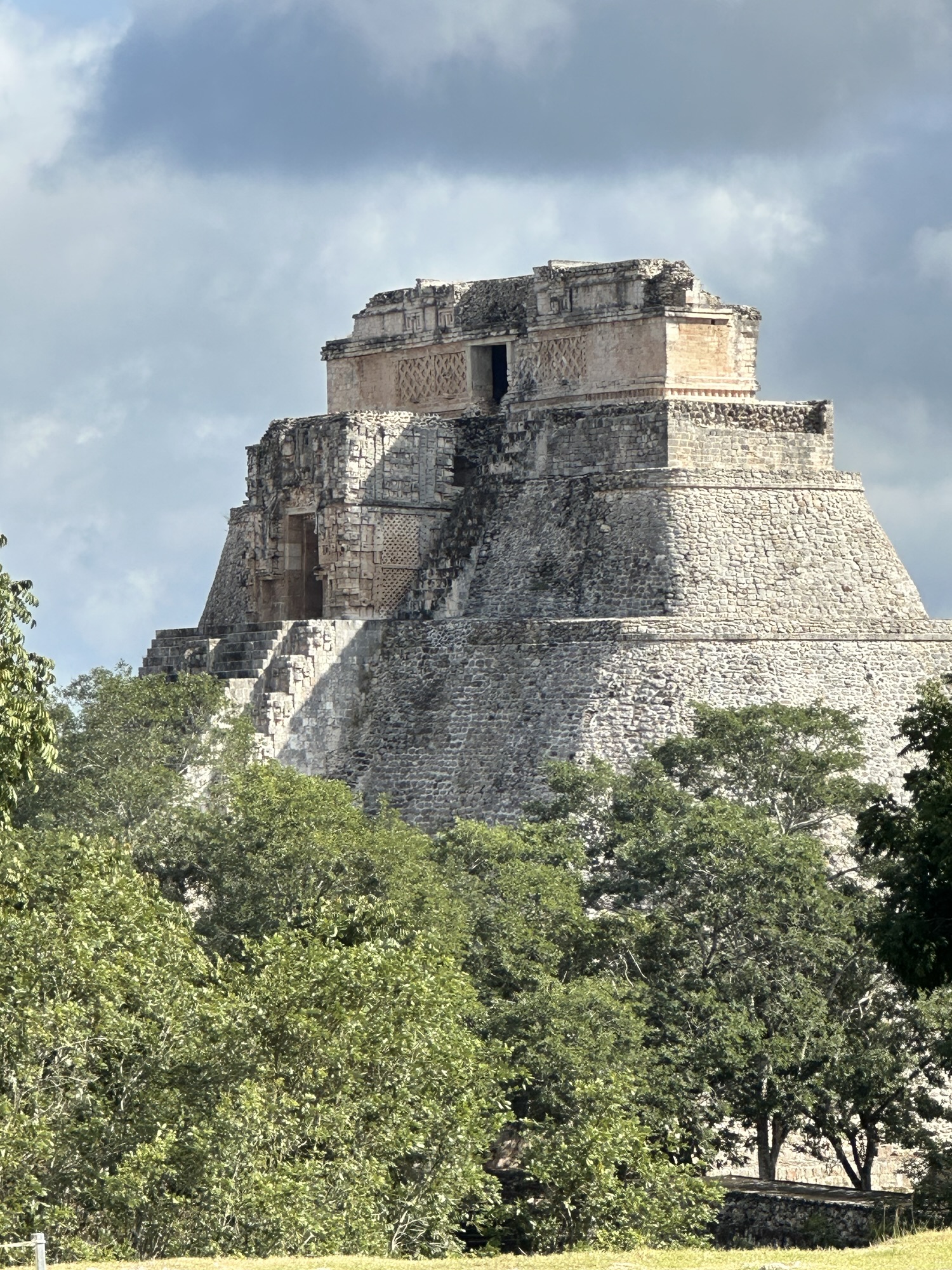
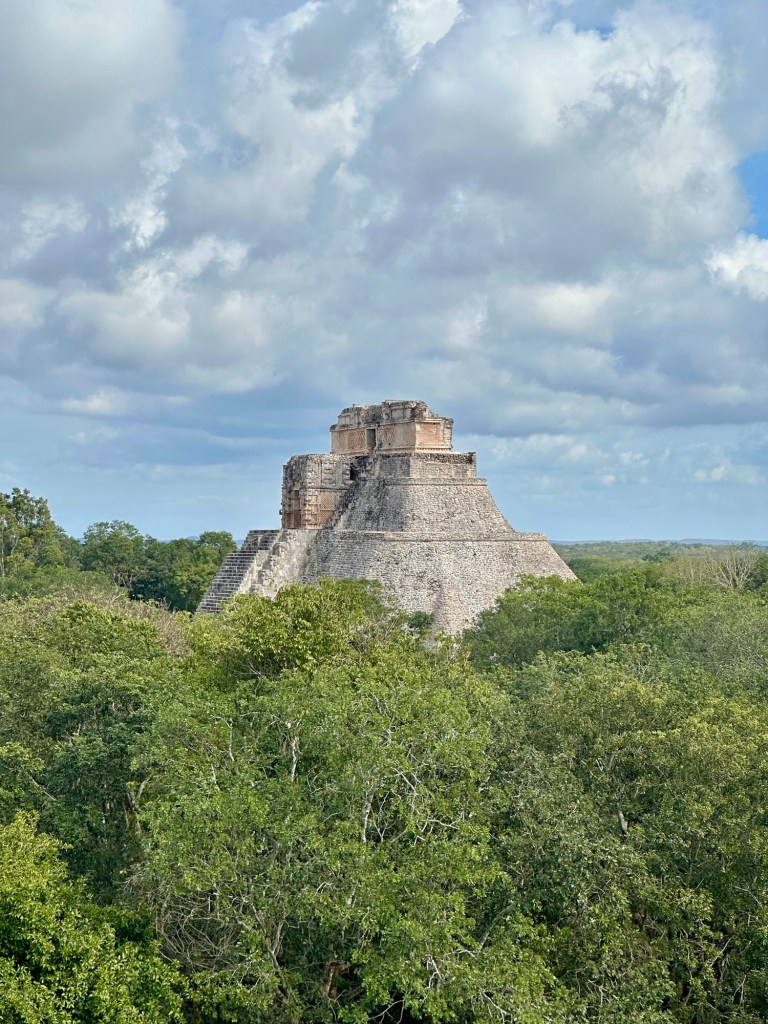
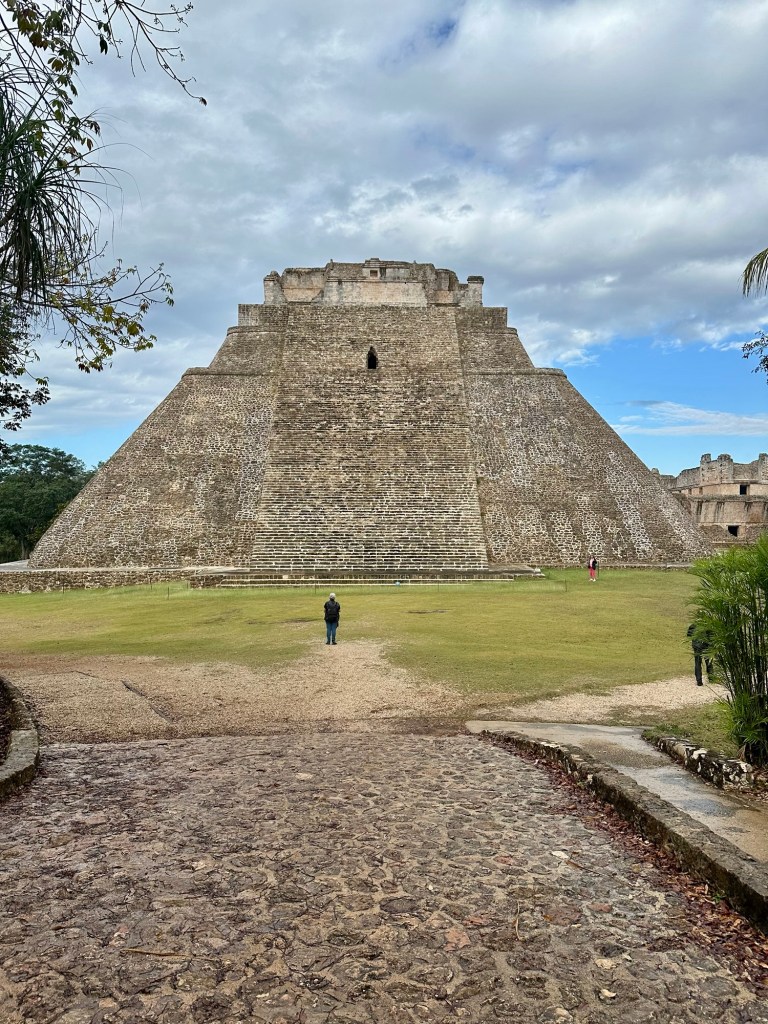
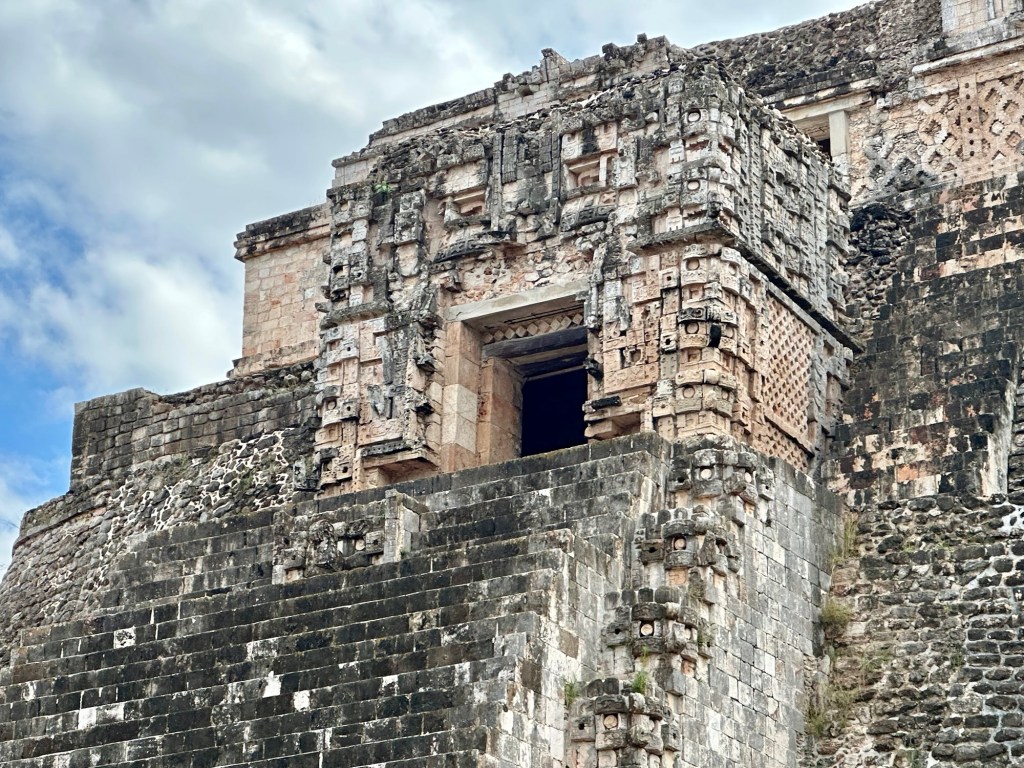
The first major thing you come across is the Magician’s Pyramid. This one is a bit different that the ones we saw previously in that it’s edges are rounded rather than square- so it is a kind of ellipsis shaped. You approach it from the ‘rear’, which is quite impressive, but the true grandeur of the thing emerges on the other side.
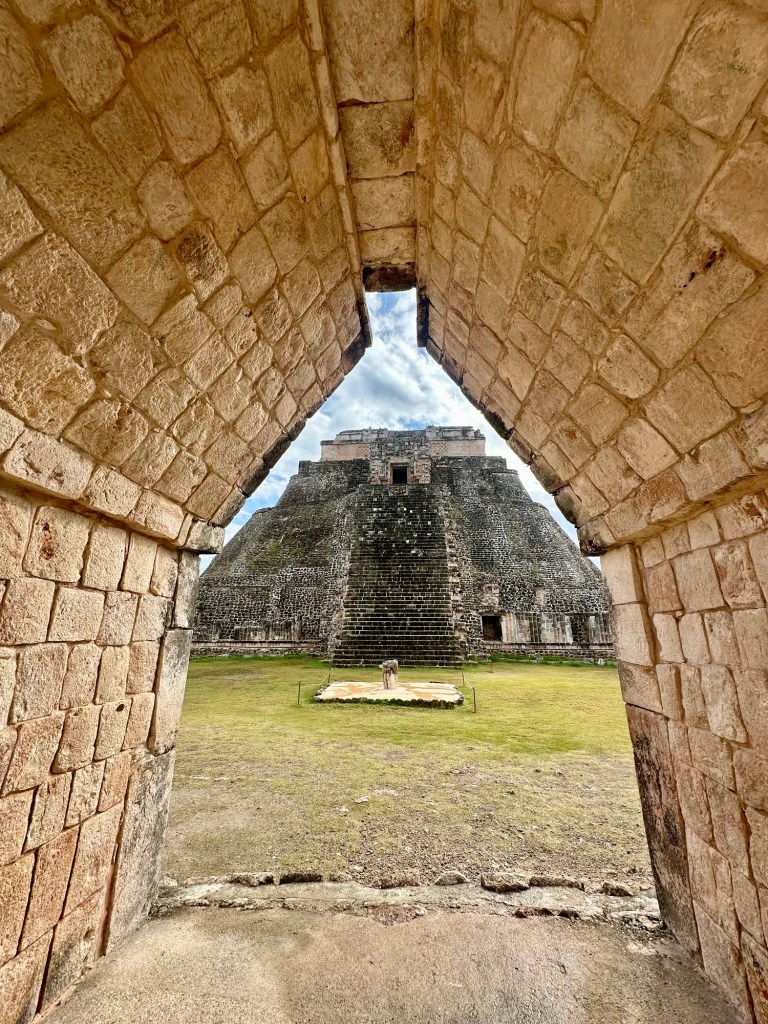
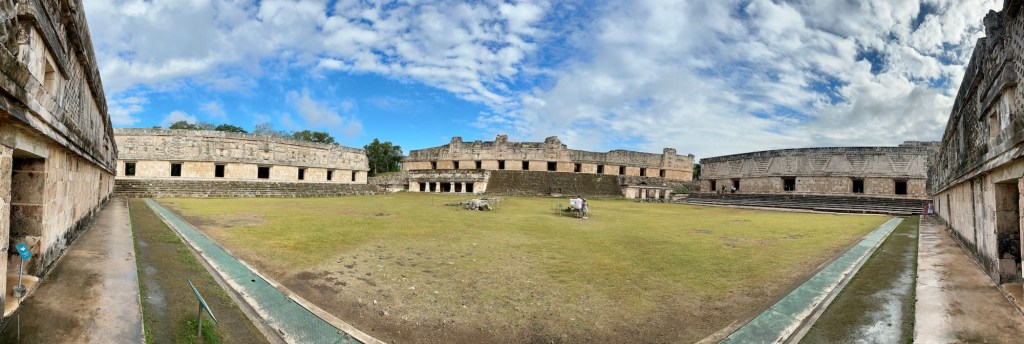
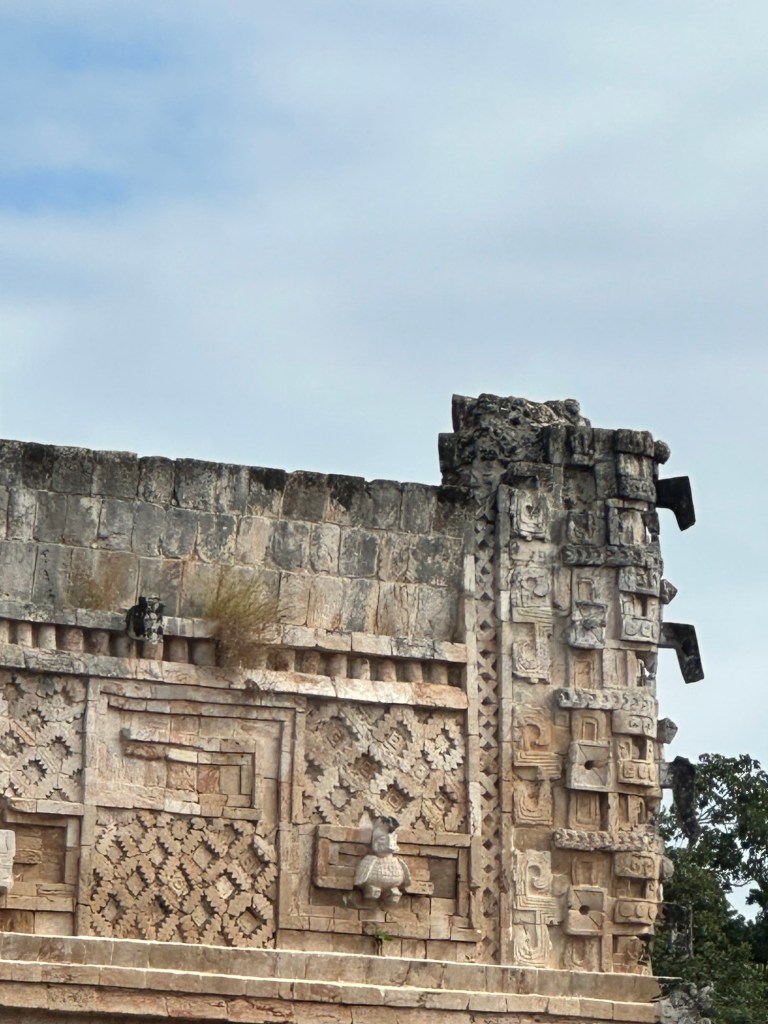
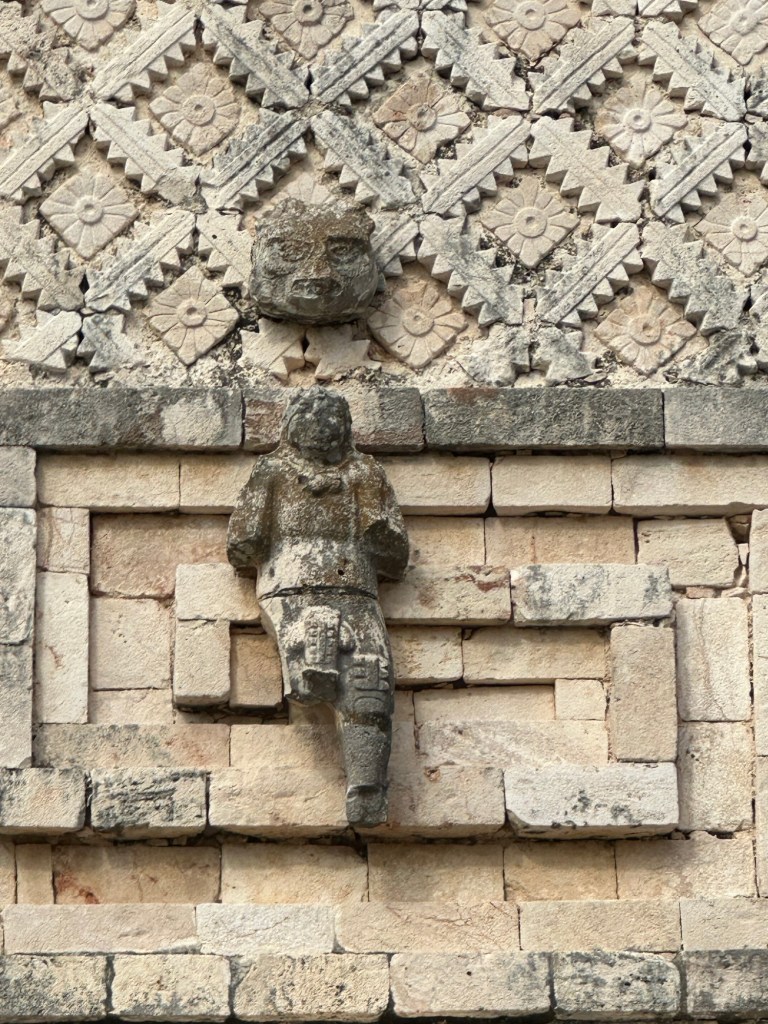
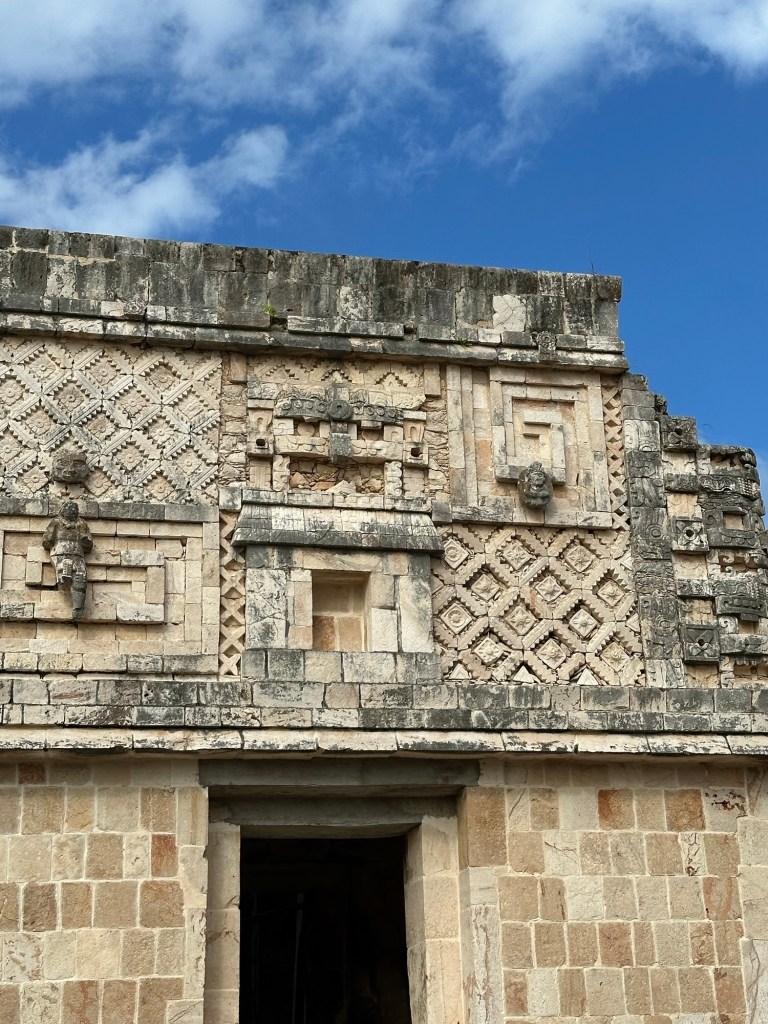
Just behind the Magician’s Pyramid is an area the Spanish labelled ‘The Nunnery’ as it reminded them of the cloisters in a convent. Archaeological research tells us today that it was a centre of government and administration for the city. The quadrangle is surrounded by various buildings which are laden with features and carvings of religious and political significance
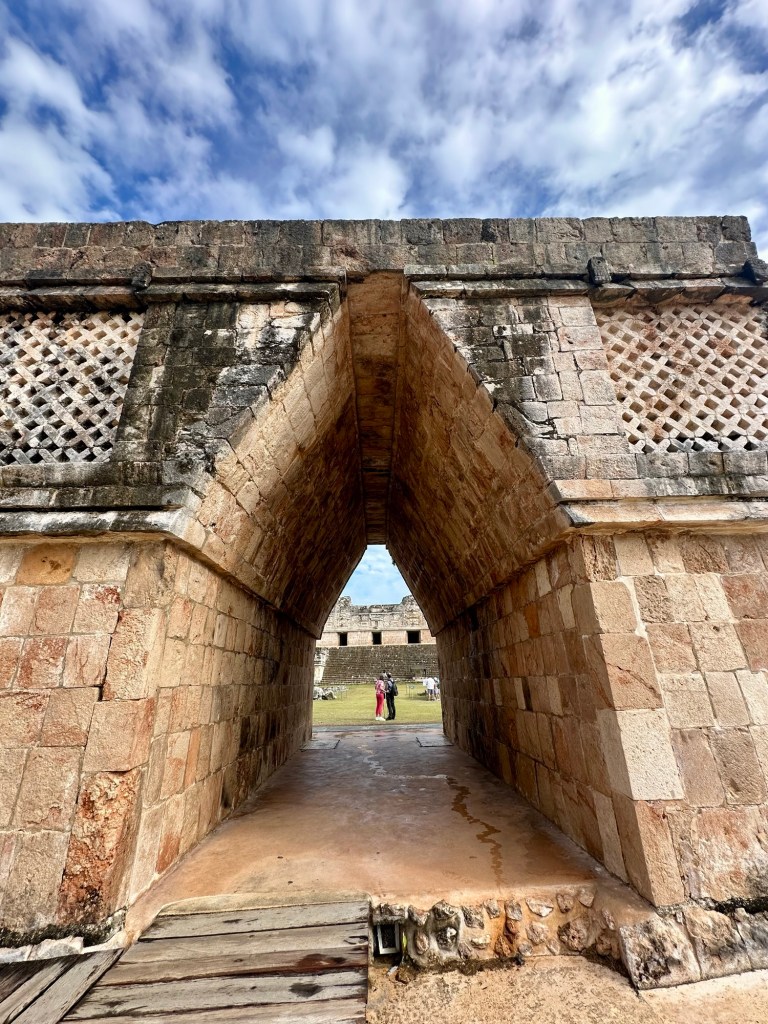
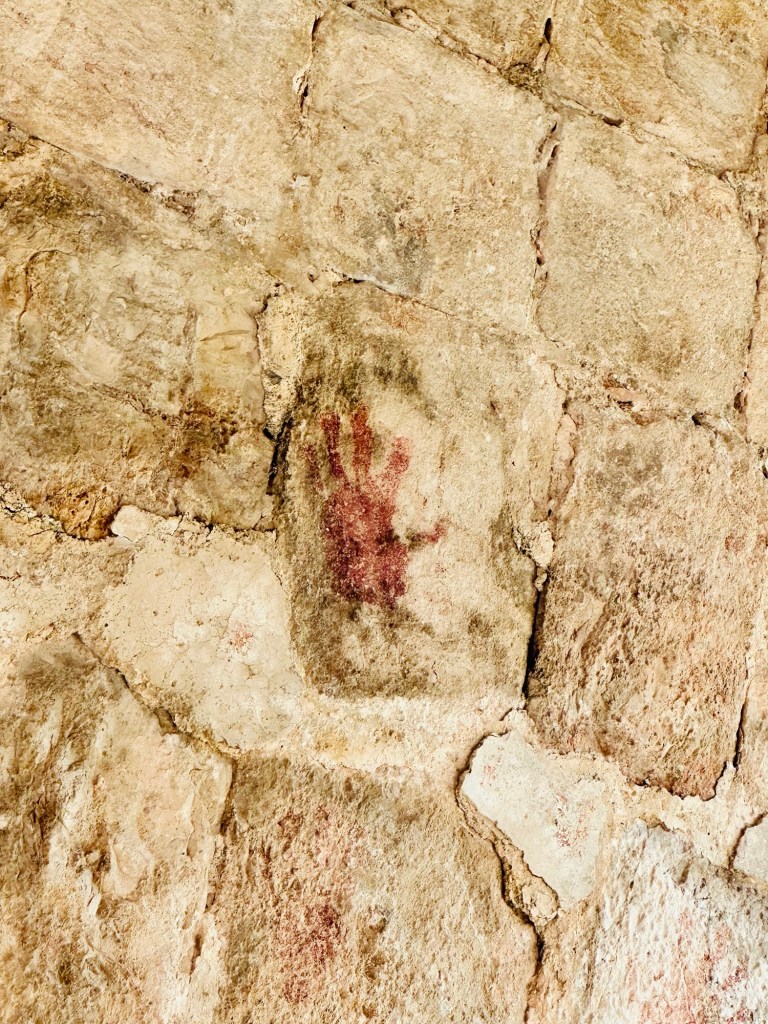
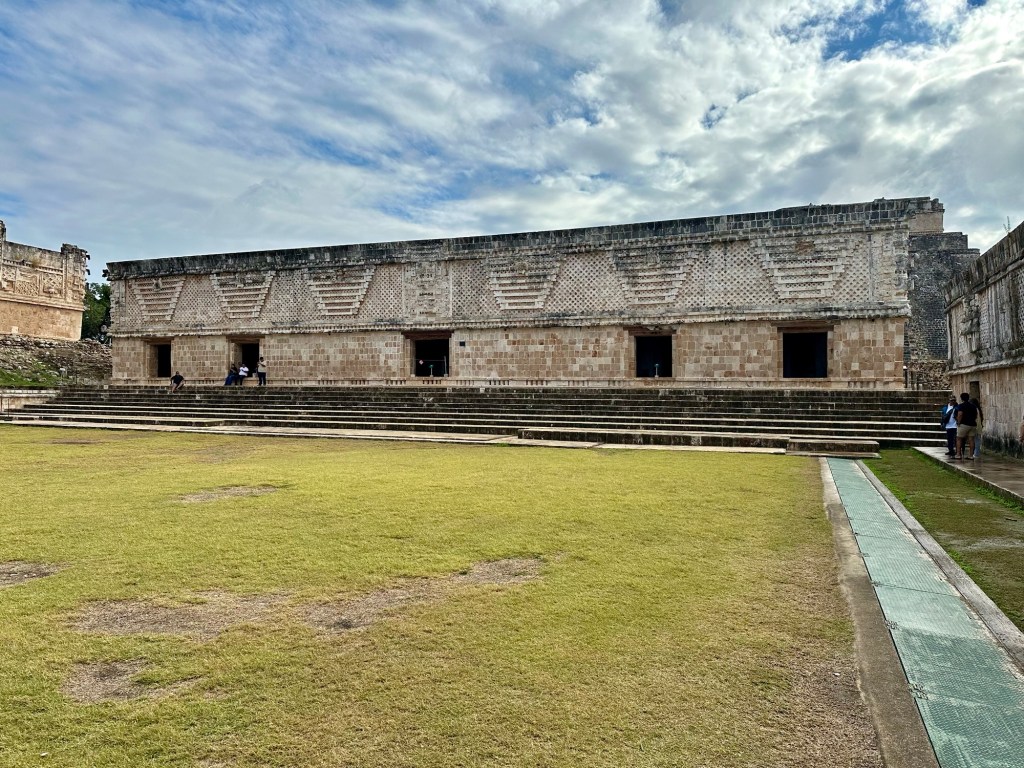
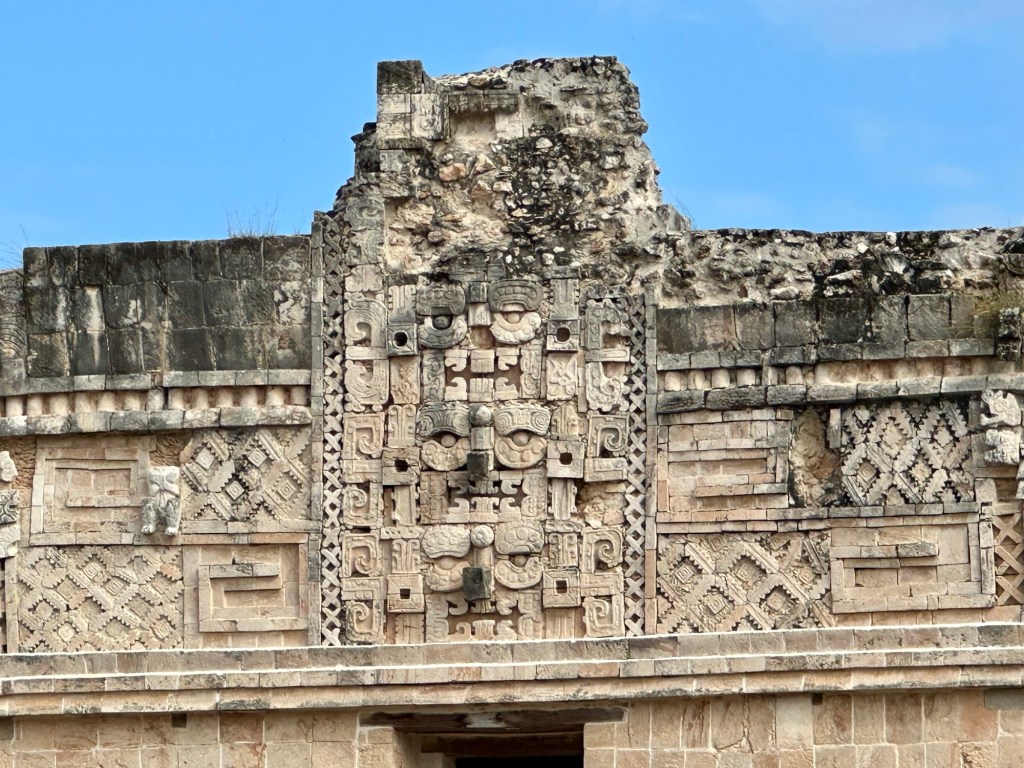
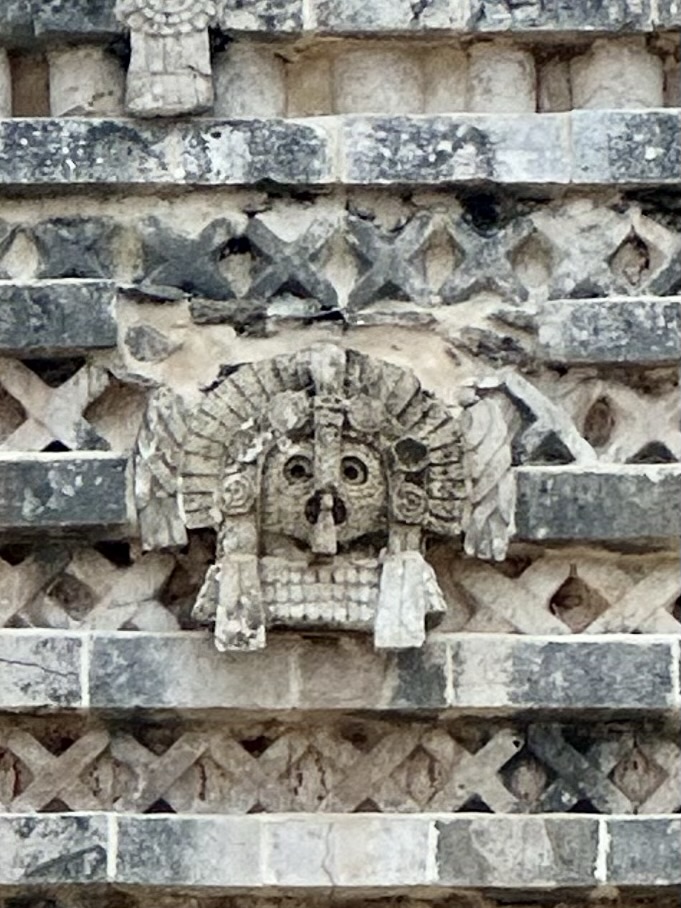
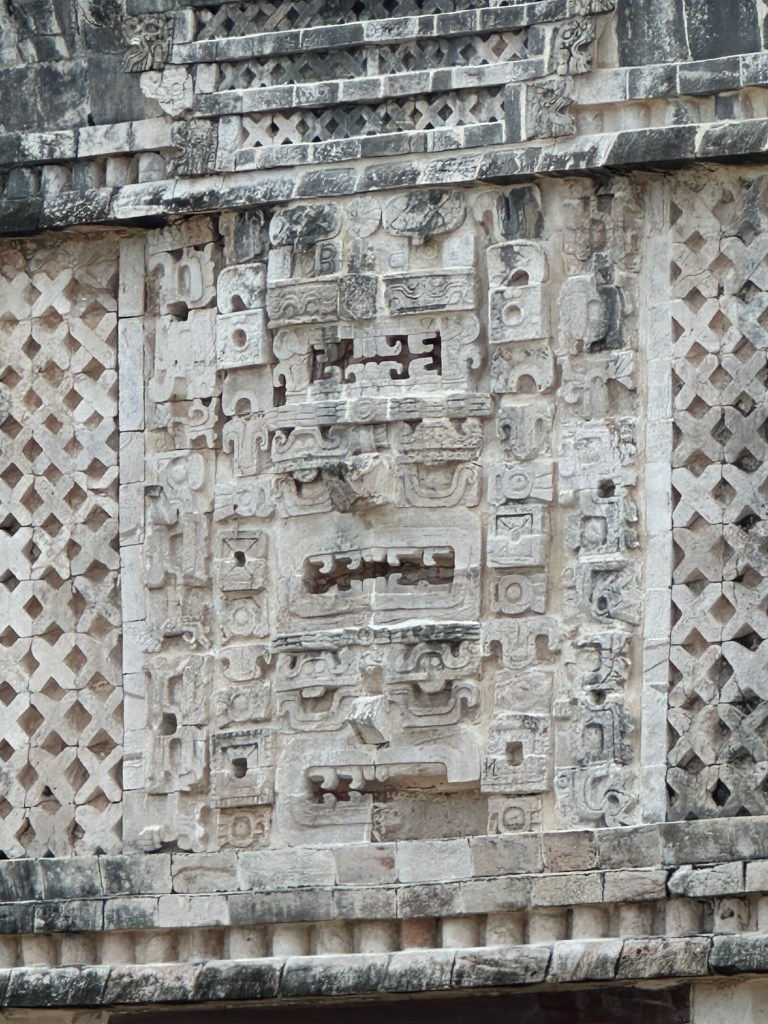
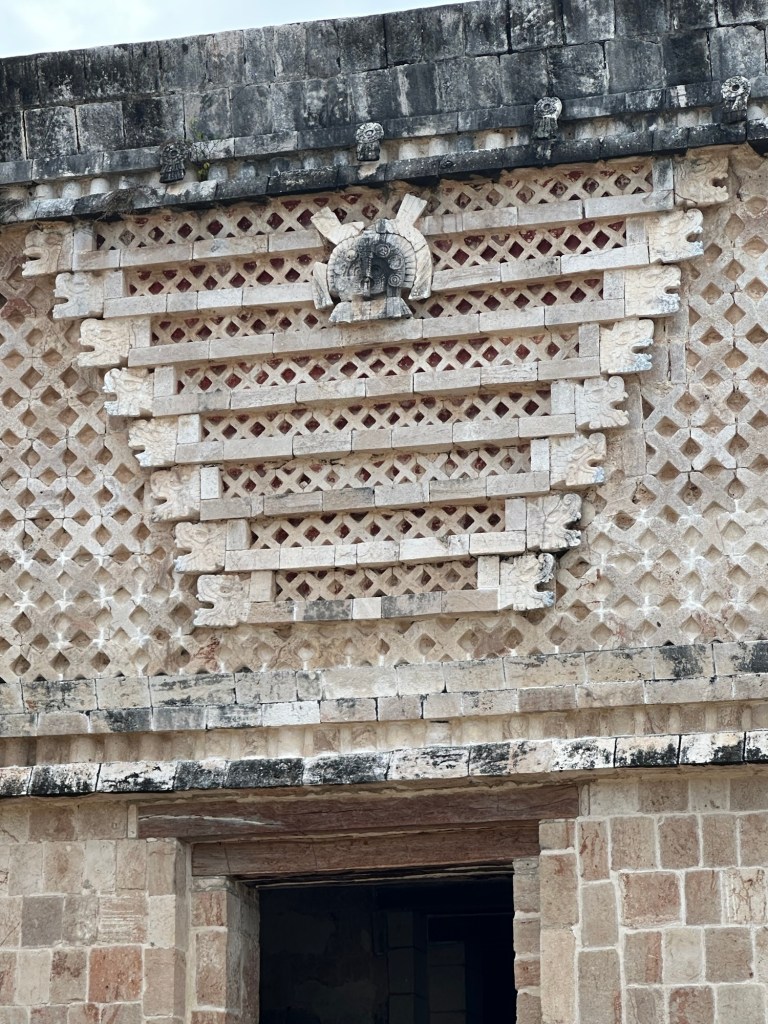
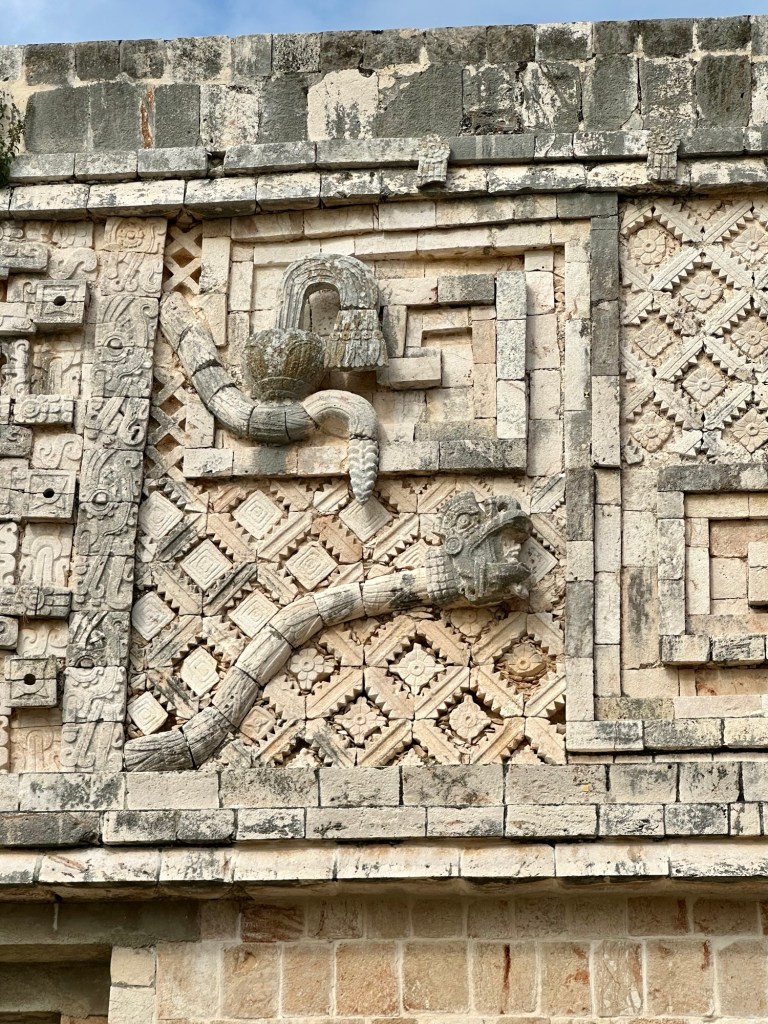
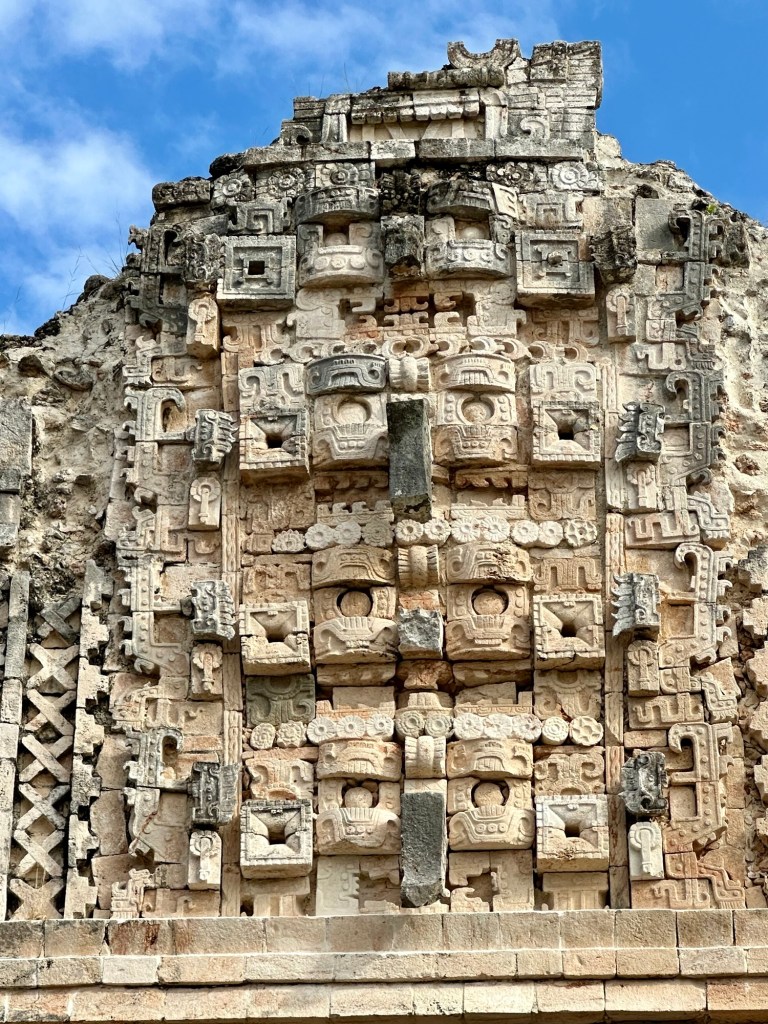
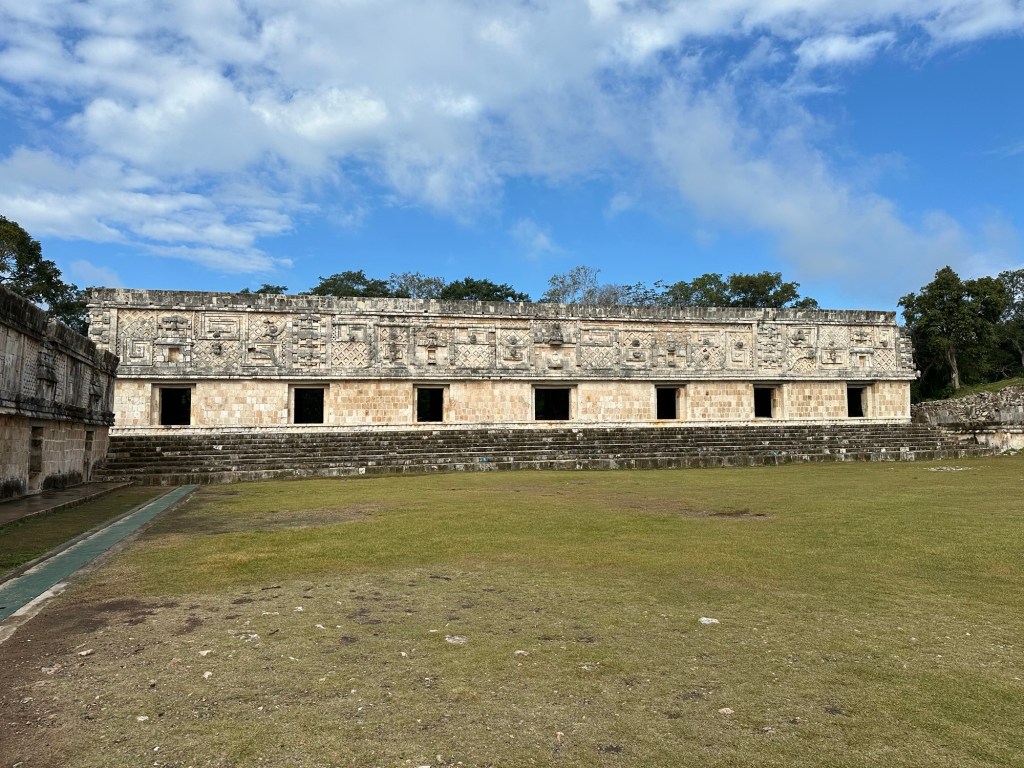
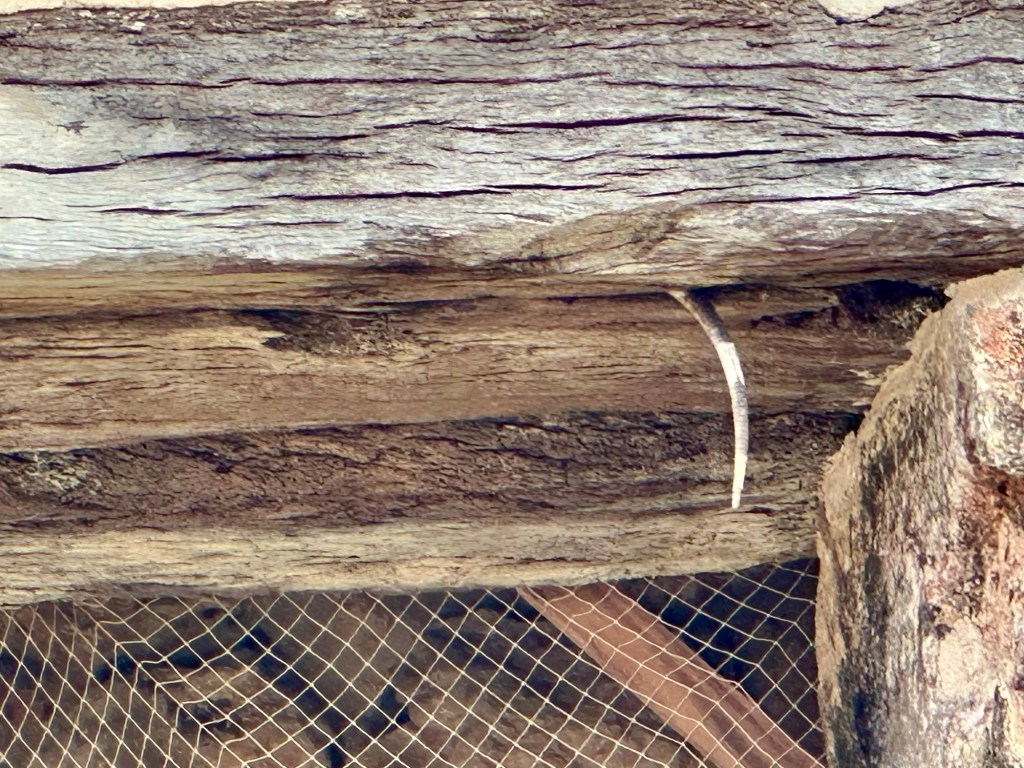
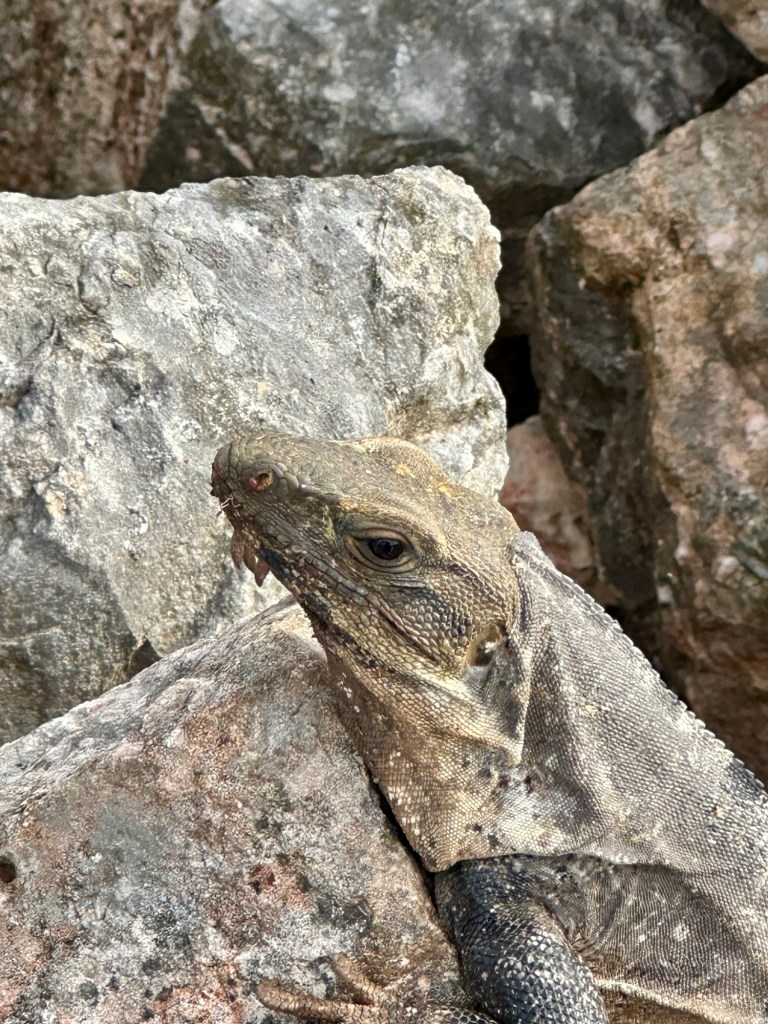
The nunnery also had resident iguanas- one a little more shy than the other:
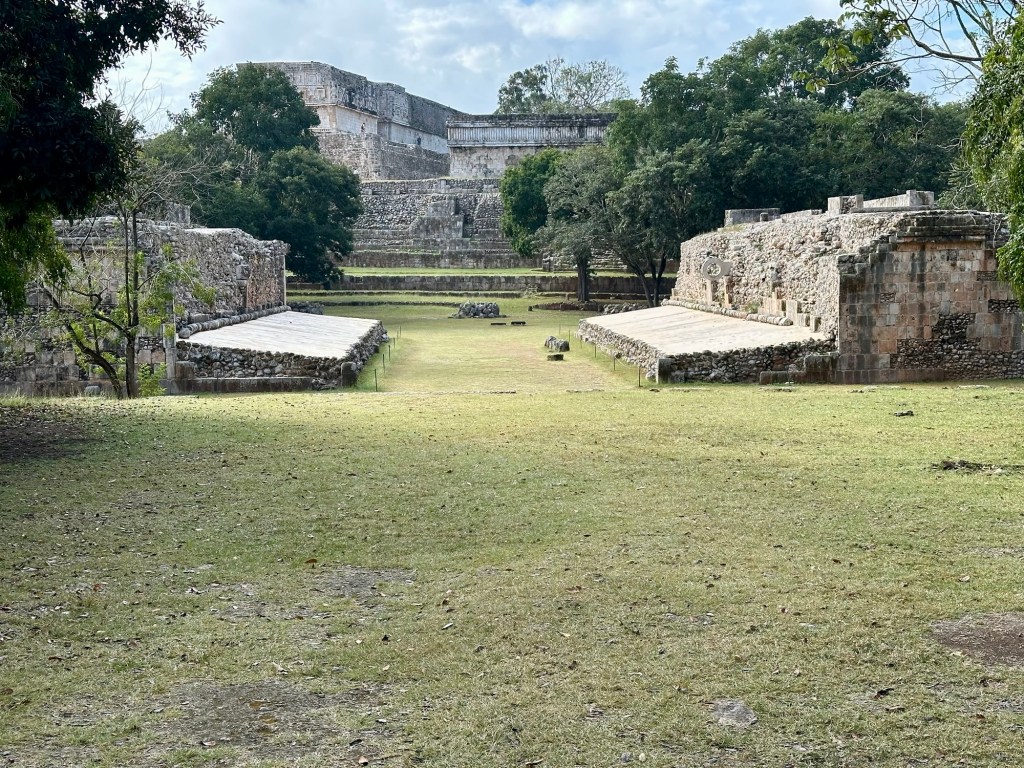
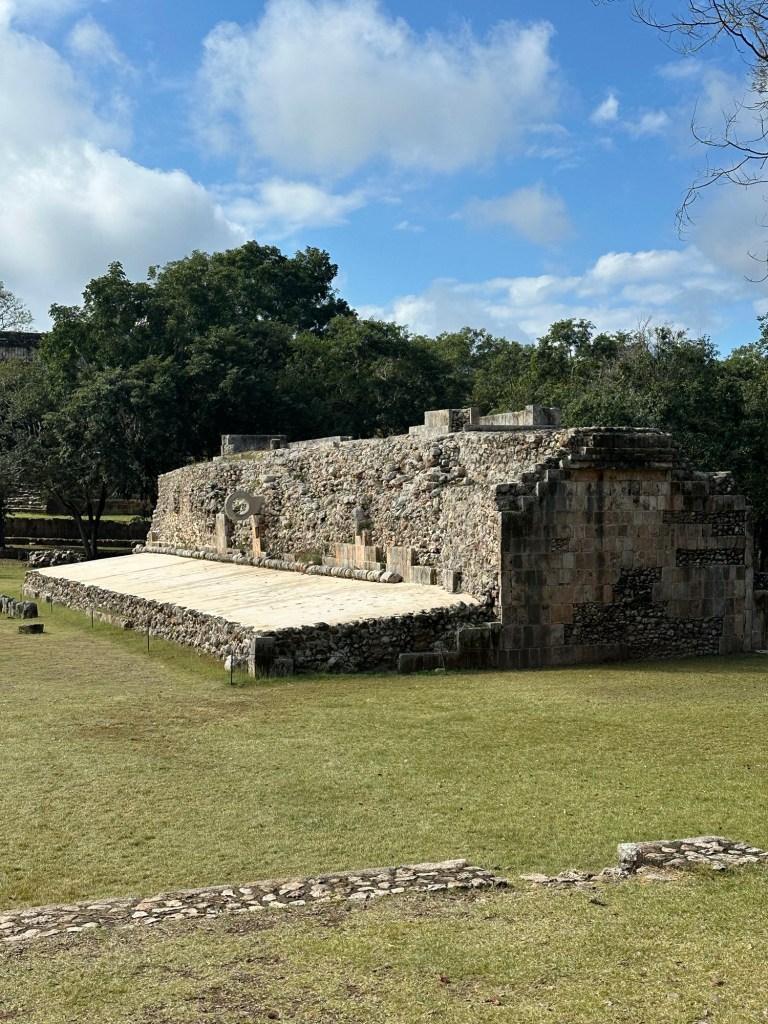
After the nunnery we went past a ‘ball court’ – another version of the Meso-American ball game we have seen at other sites with the Teotihuacans, Aztecs, Mexcicas and Zapotec cultures.
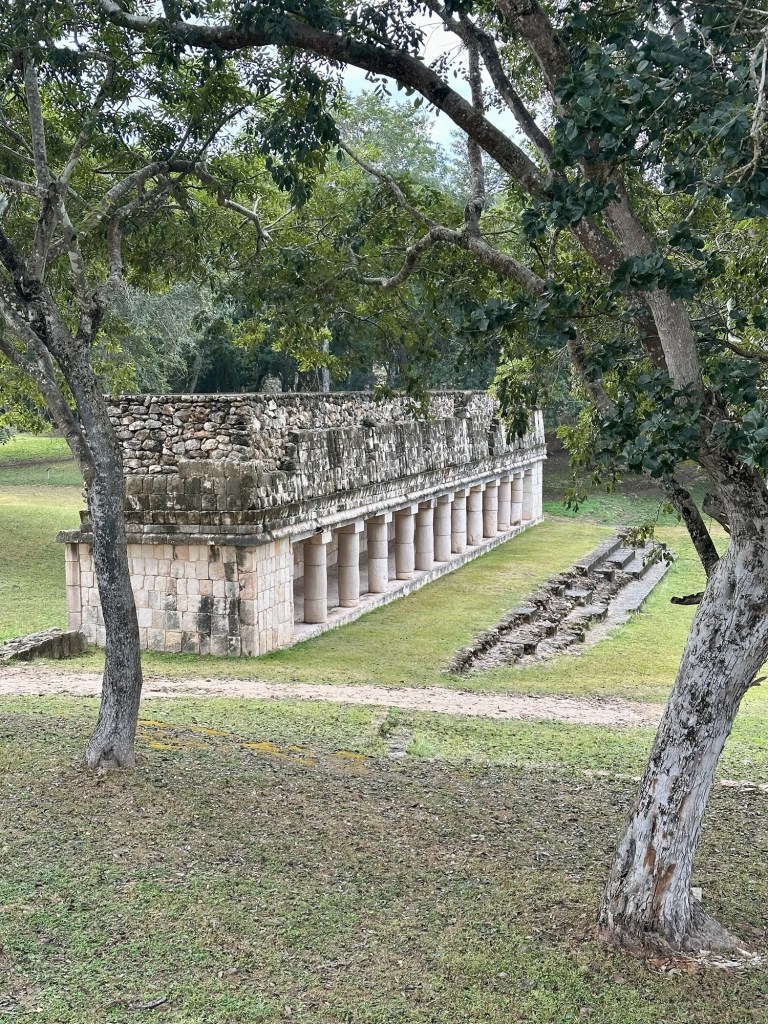
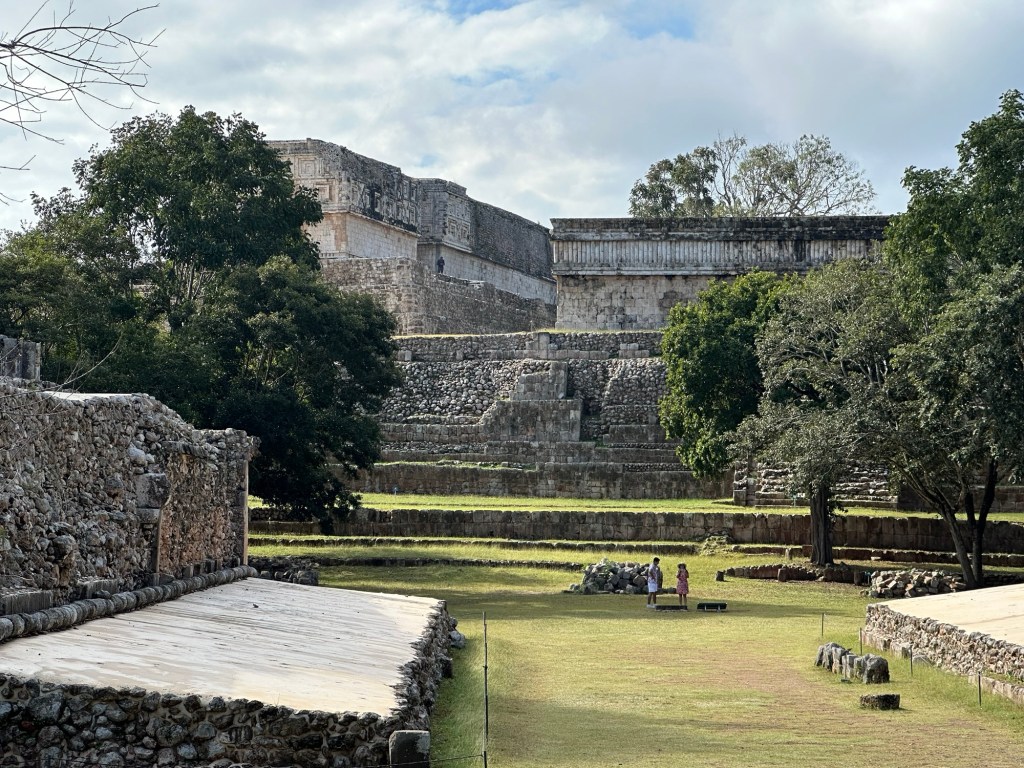
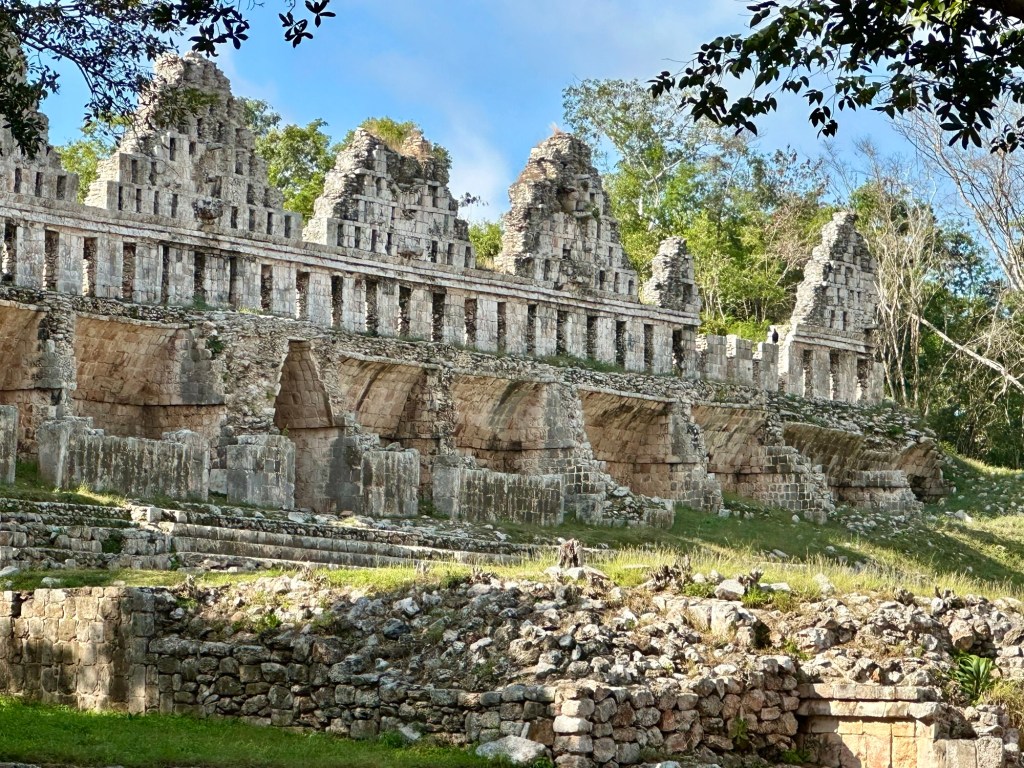
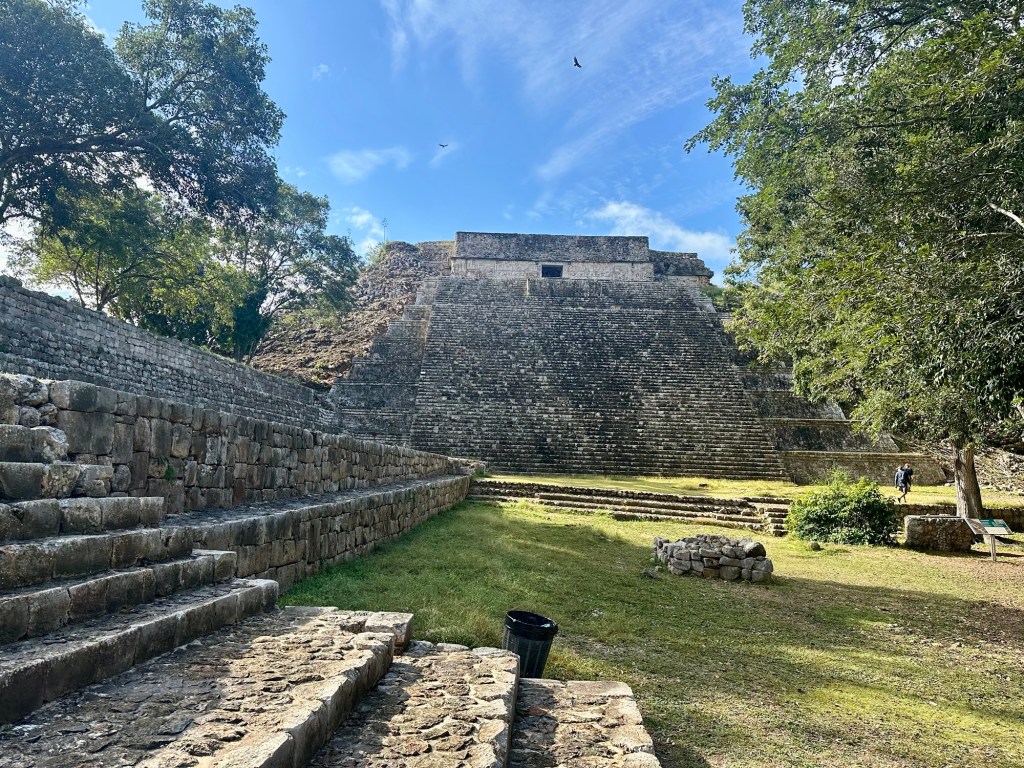
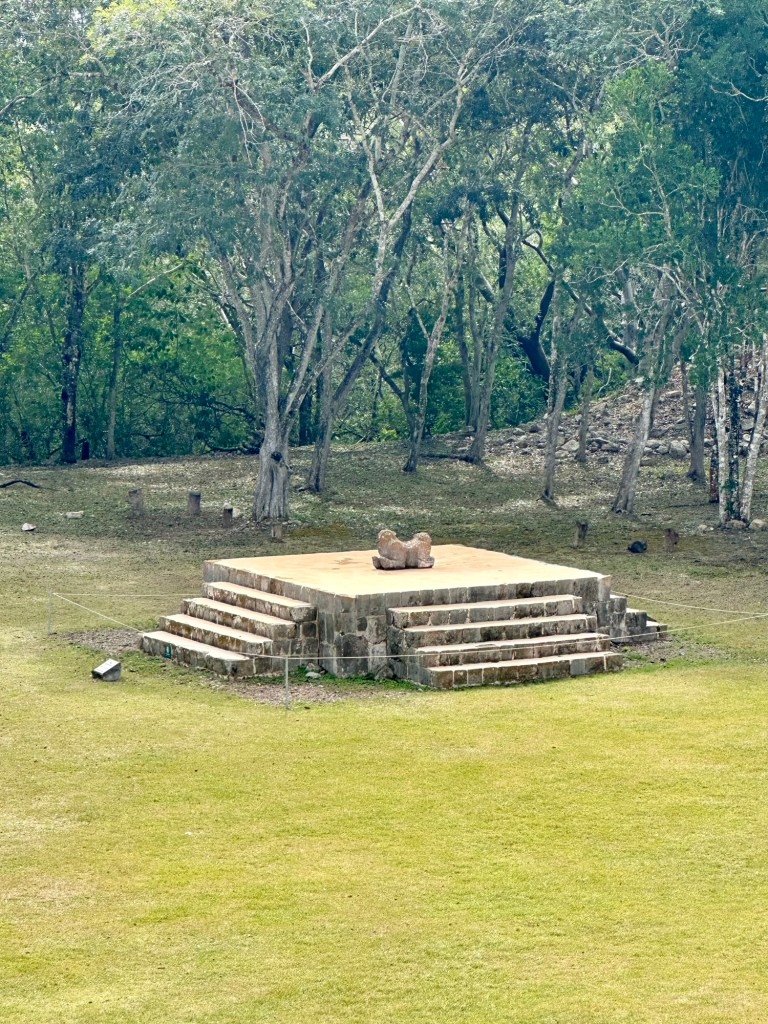
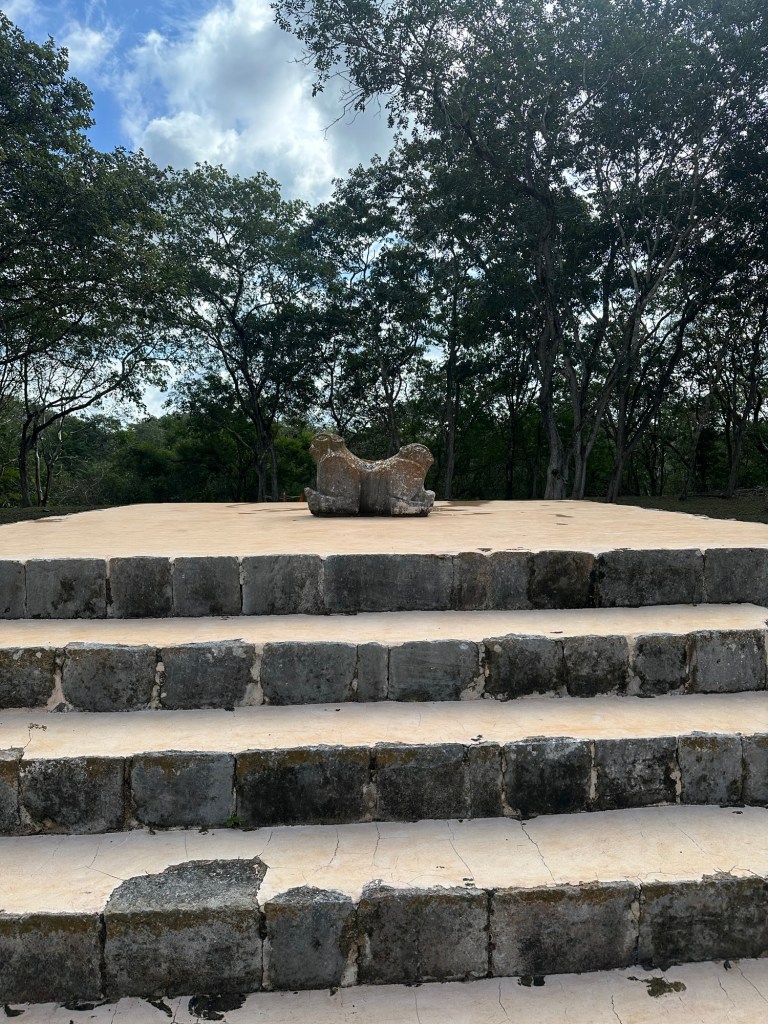
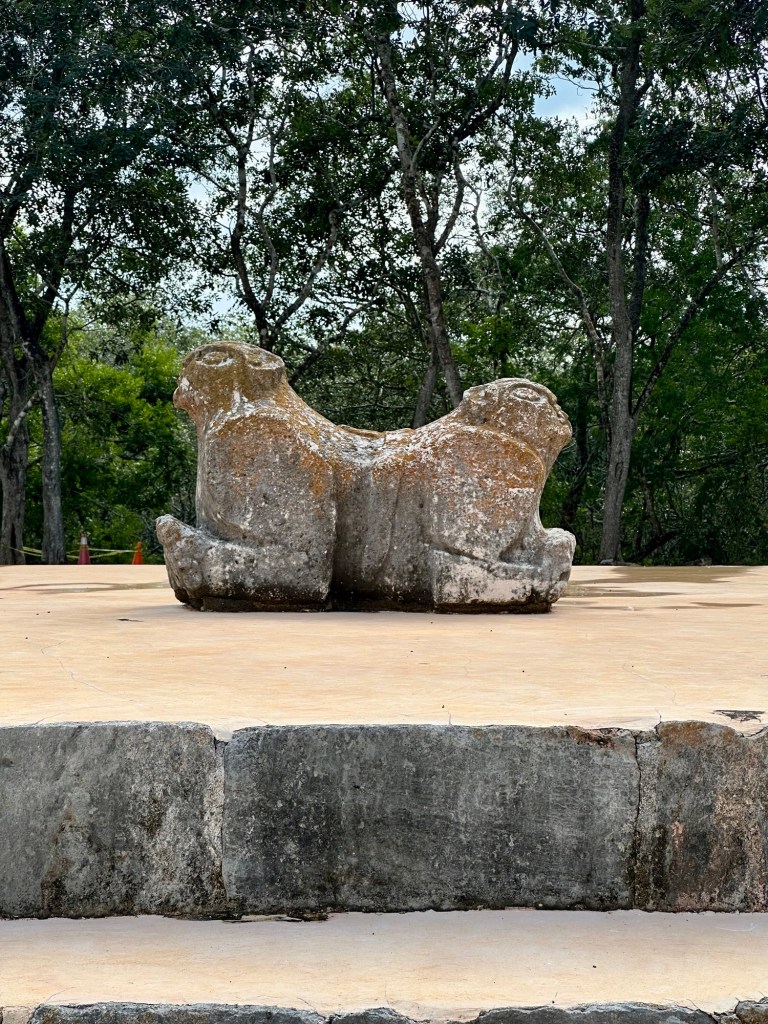
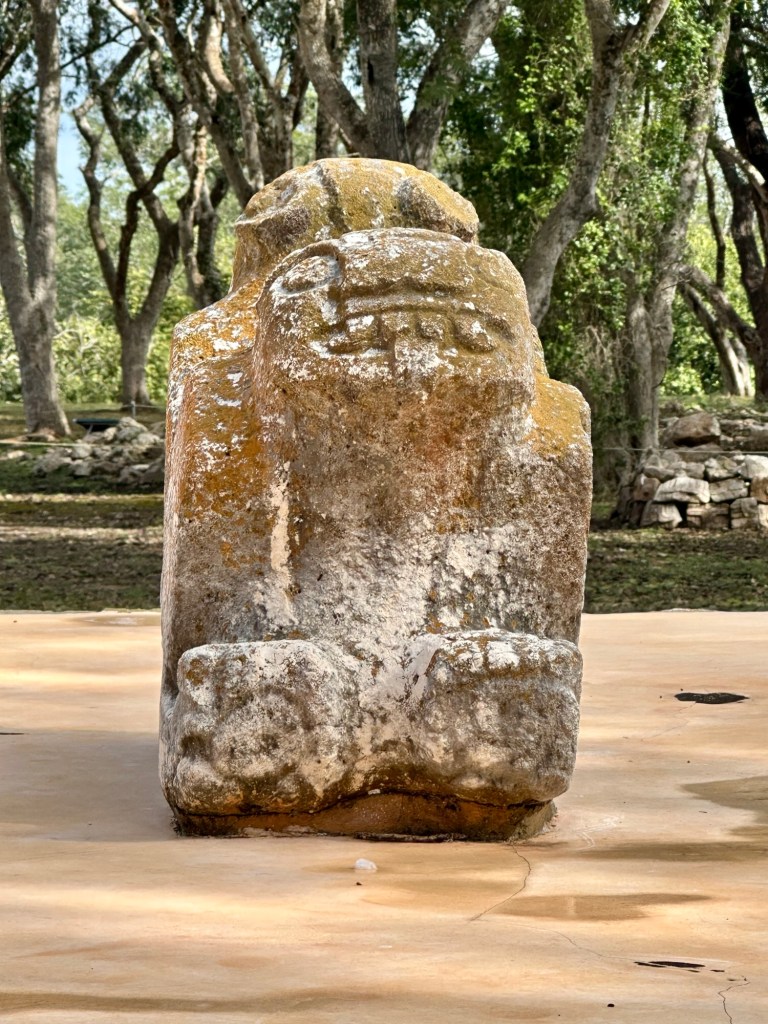
It was then onto the area around the ‘Governor’s Palace’ . This area also contained the partially excavated / restored remains of the ‘Great Pyramid’ and, adjacent, the ‘double headed Jaguar throne’ where the ruler would sit and adjudicate on matters.
The Double Headed Jaguar Throne:
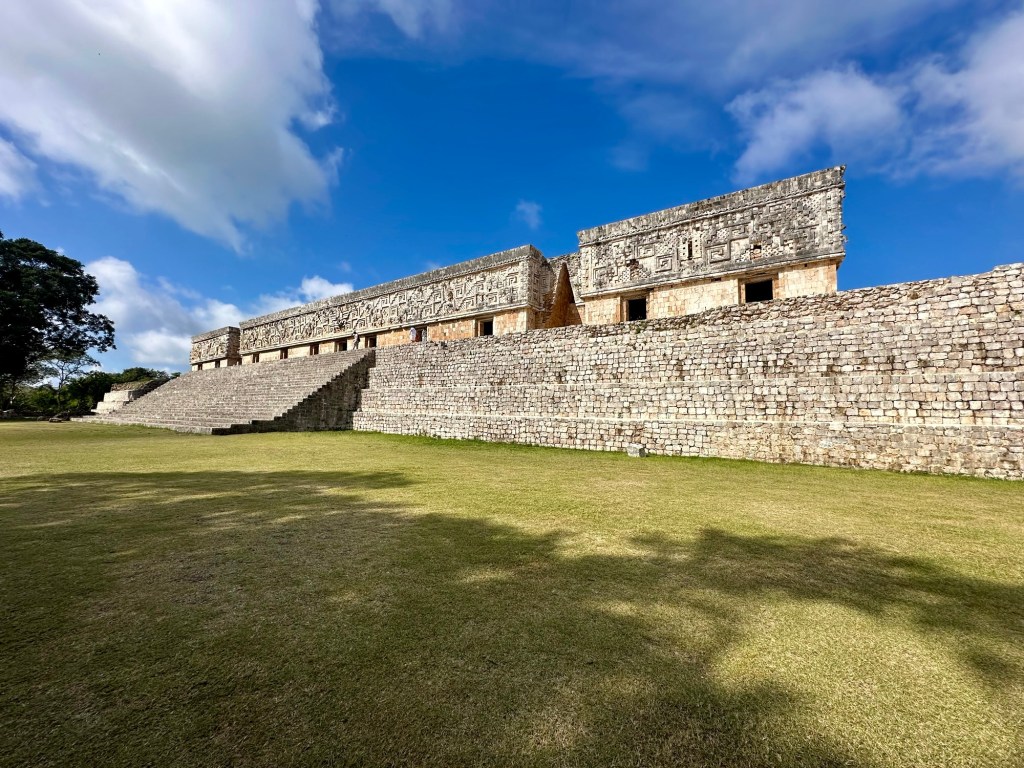
Some views from atop the first platform of the Governor’s palace:
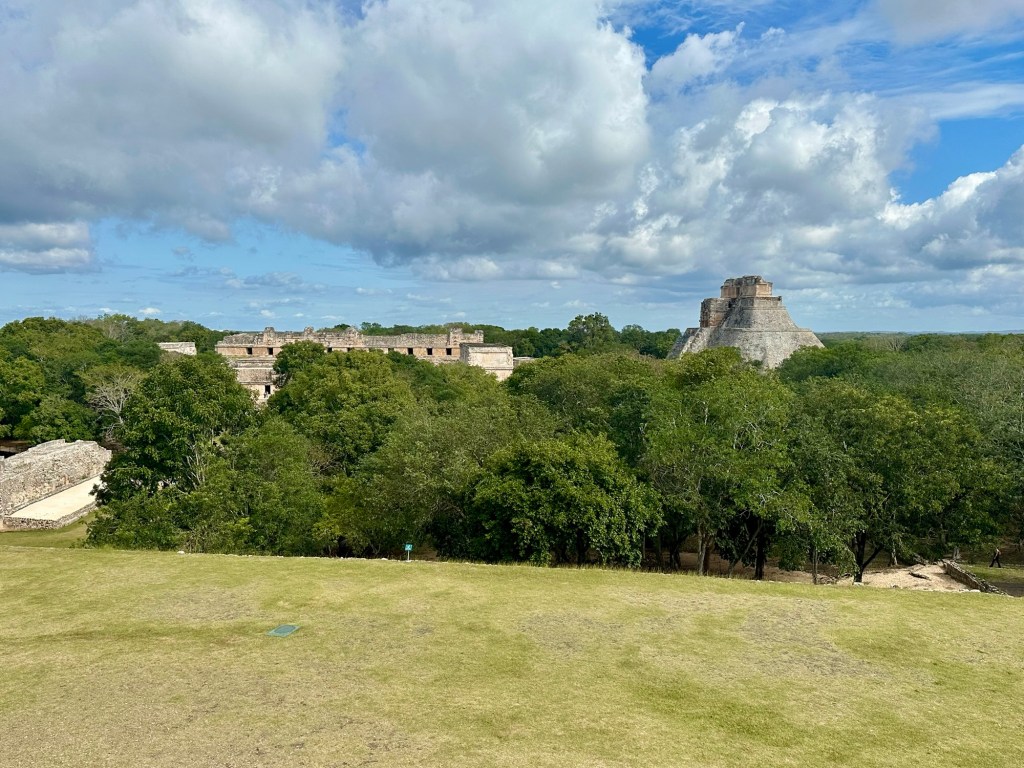
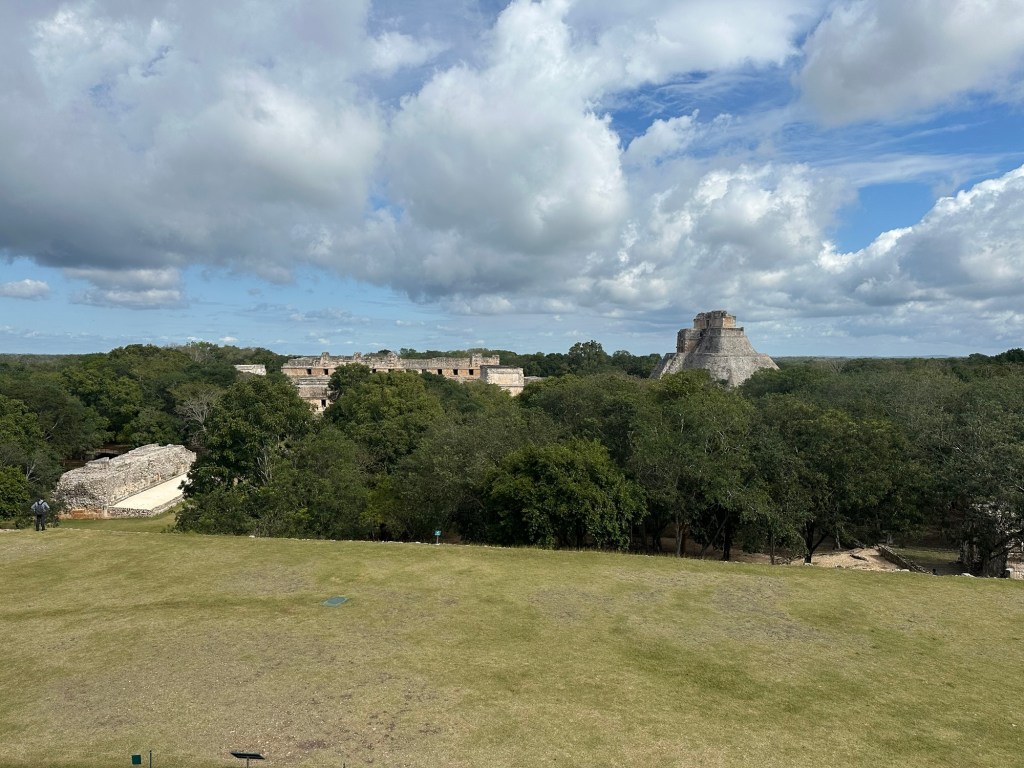
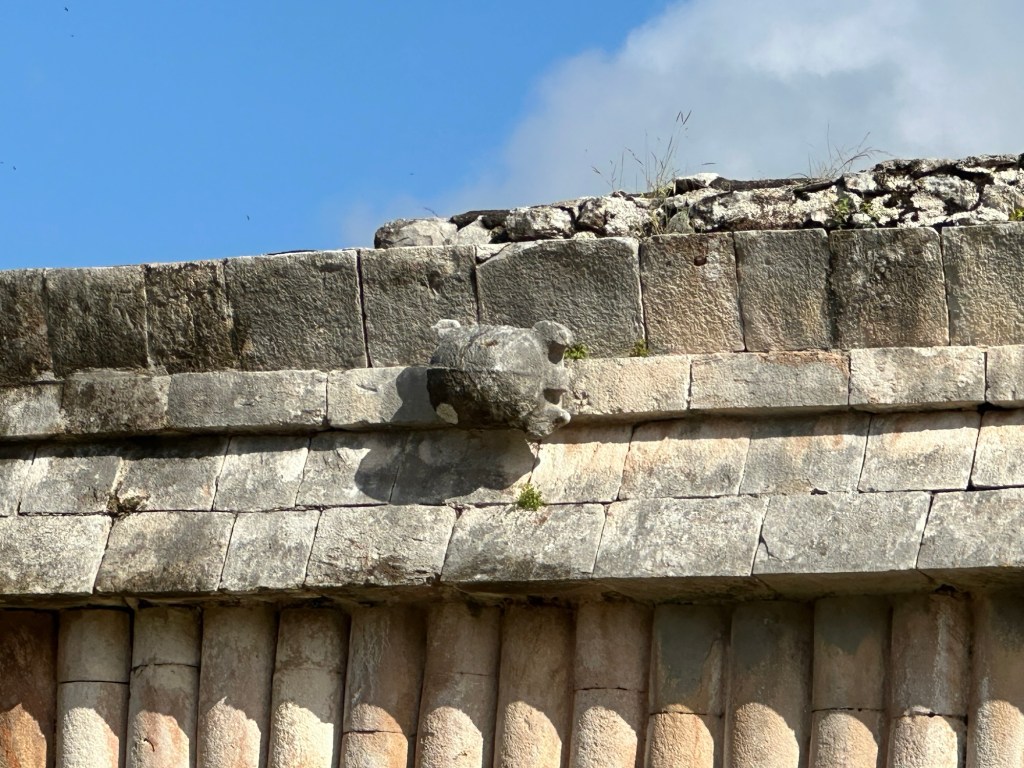
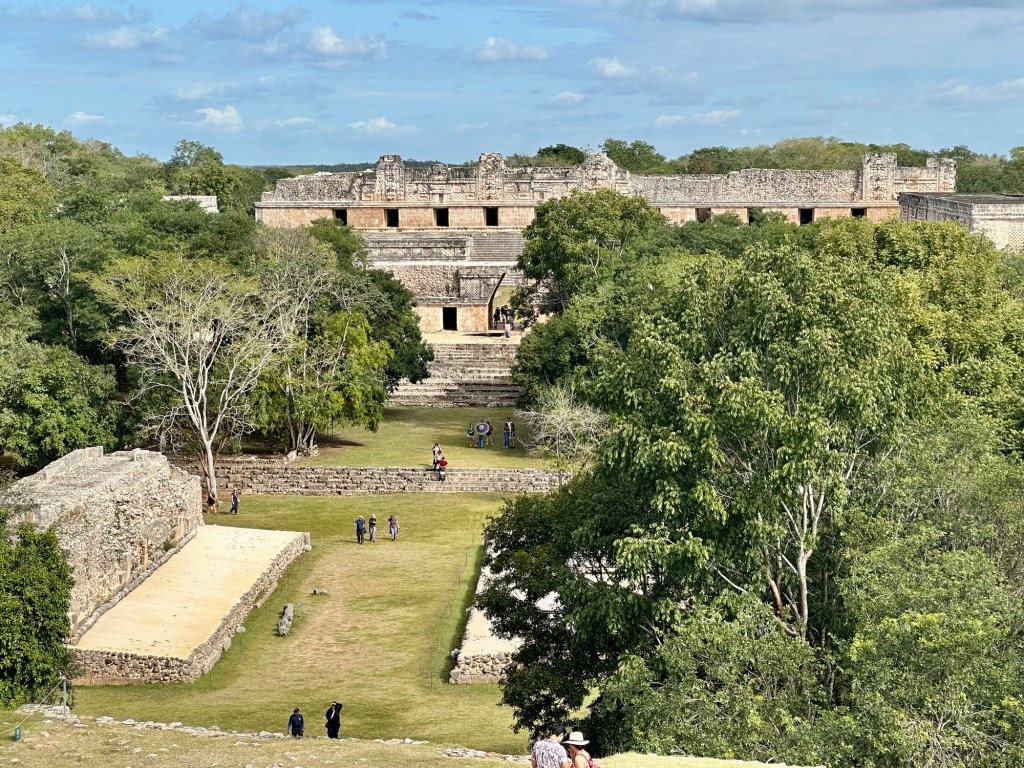
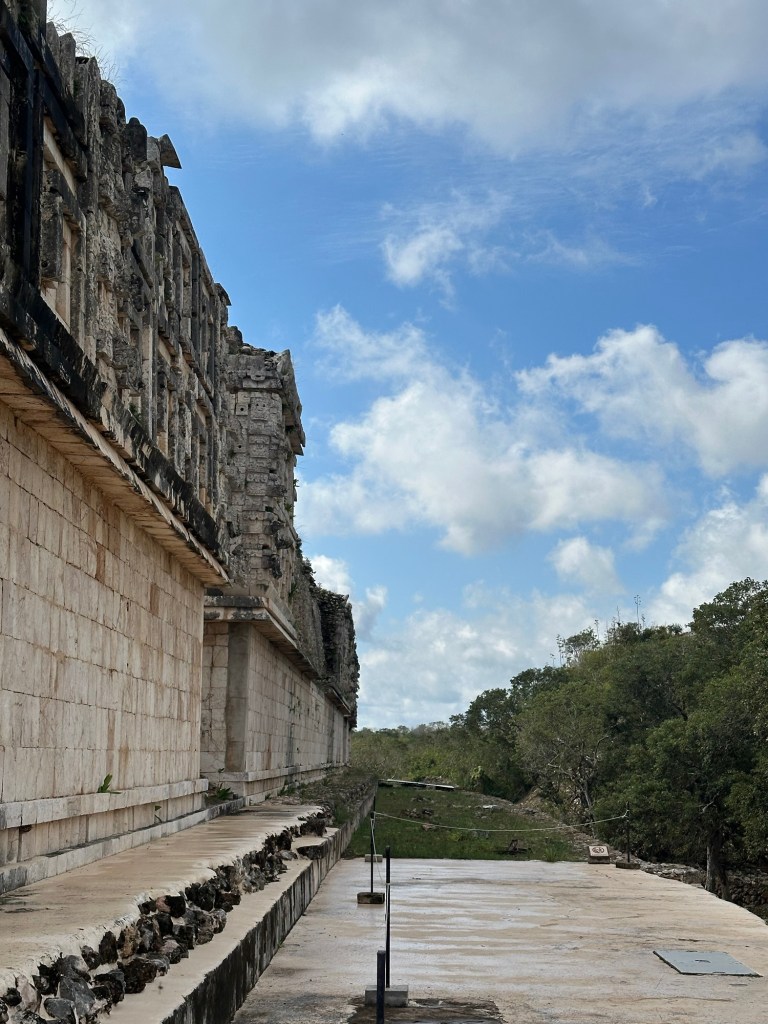
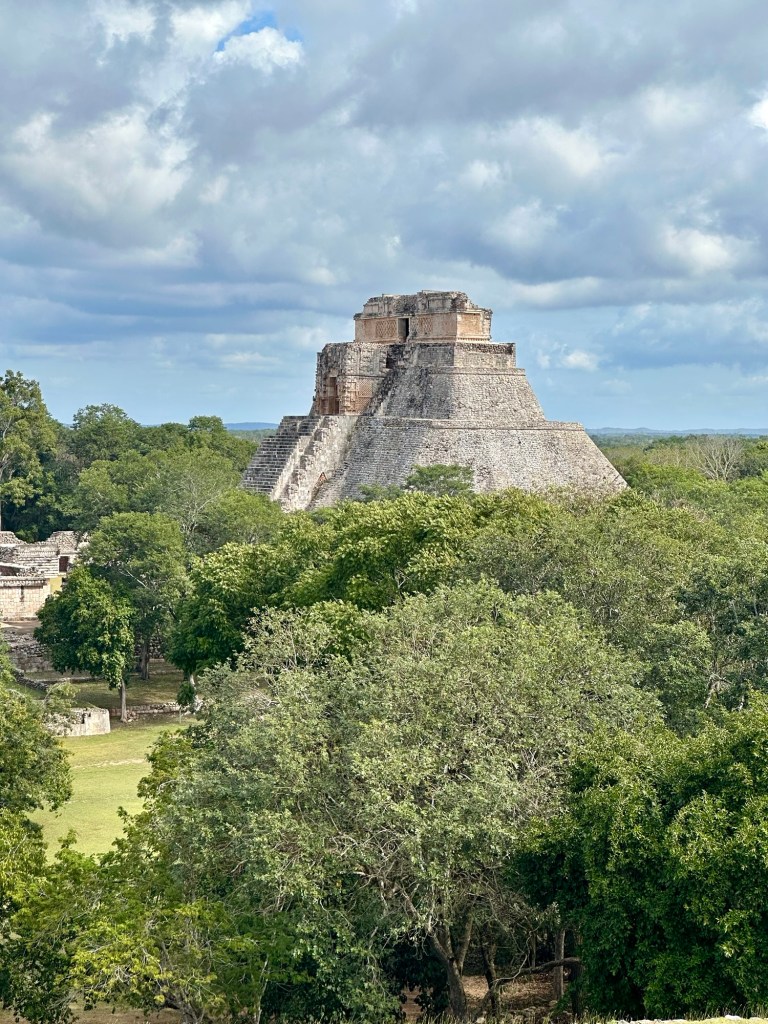
By now we had exhausted the interest of our guide who had wandered off in search of other prey… er … tourists. It was also getting hot and sticky and the proverbial bus loads of tourists were now pouring into the site. We stepped out the front door and Miguel was there with air-conditioned goodness to whisk us to Mérida.
The drive to Mérida took an uneventful hour or so. Turns out the scenery in the Yucatan isn’t much chop – the place is almost entirely flat , a metre or two above sea level. It is essentially a large limestone plain covered with a lot of scrub. In parts it is reminiscent of driving along the coastal plain north of Maputo, Mozambique- with fewer waterways.
Mérida
Mérida is the state capital of Yucatan state and apparently has a population of near 1.8 million people. We stayed in the central district, an older and more ‘historic’ area , so we didn’t get to meet all 1.8 million of the locals.
Mérida downtown was pleasant. But we didn’t do a great deal other than some gentle strolling around and sampling some Yucatan cuisine, as Ness was feeling a little crook – having caught whatever bug Mark had in Oaxaca.
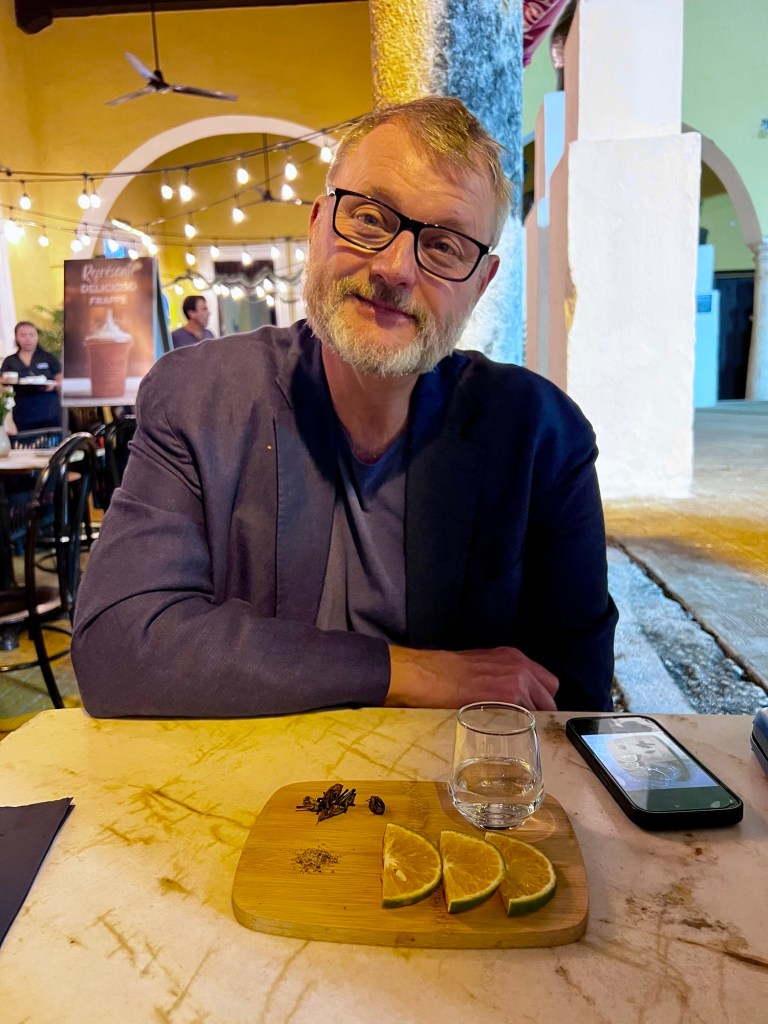
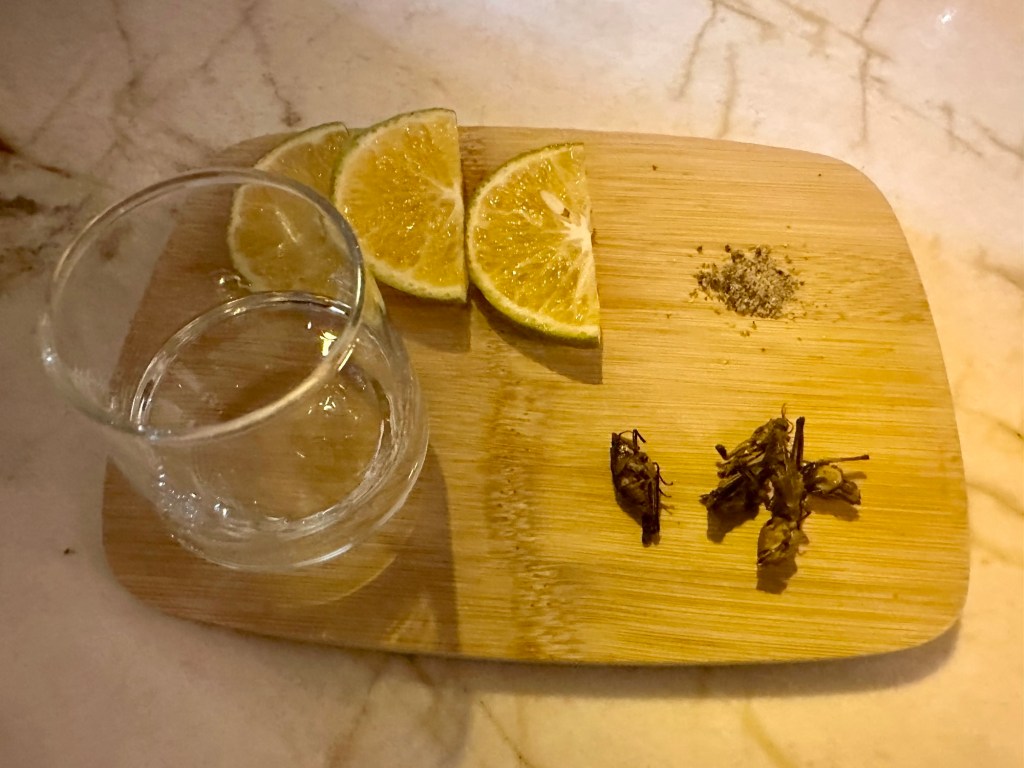
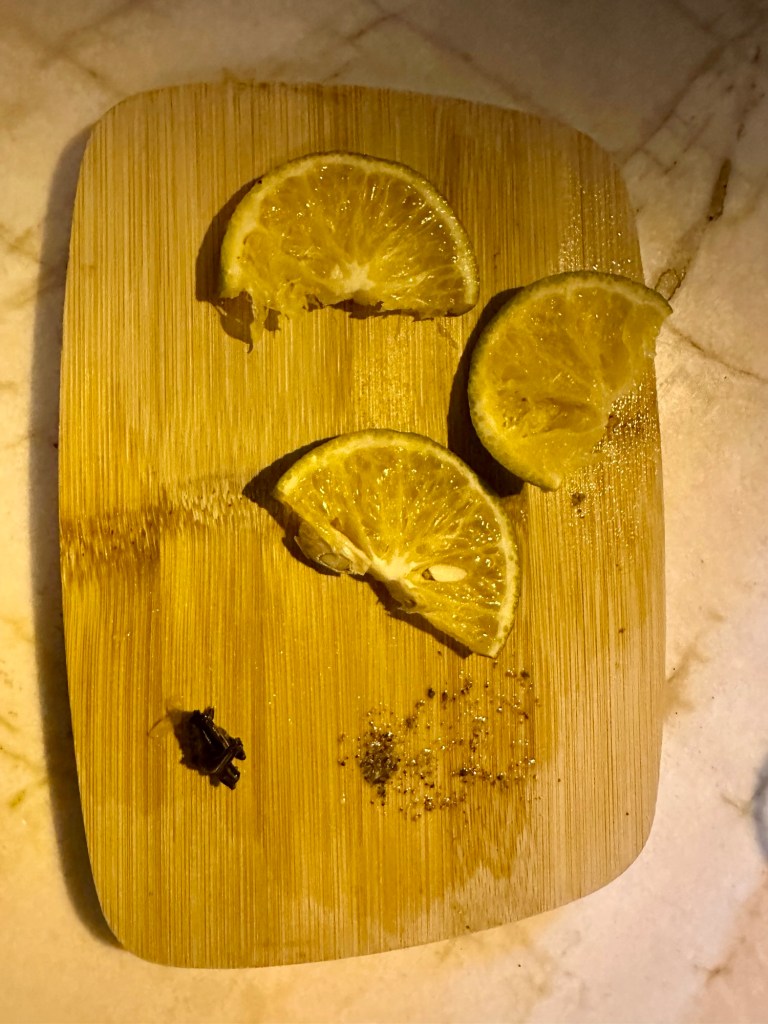
At dinner on Monday night we had some Mezcal with the local “trimmings” – including Chapulines. That’s grasshoppers to the rest of us:

Izamel
A gentle start on Tuesday morning as the drive from Mérida to Izamel only takes about an hour or so.
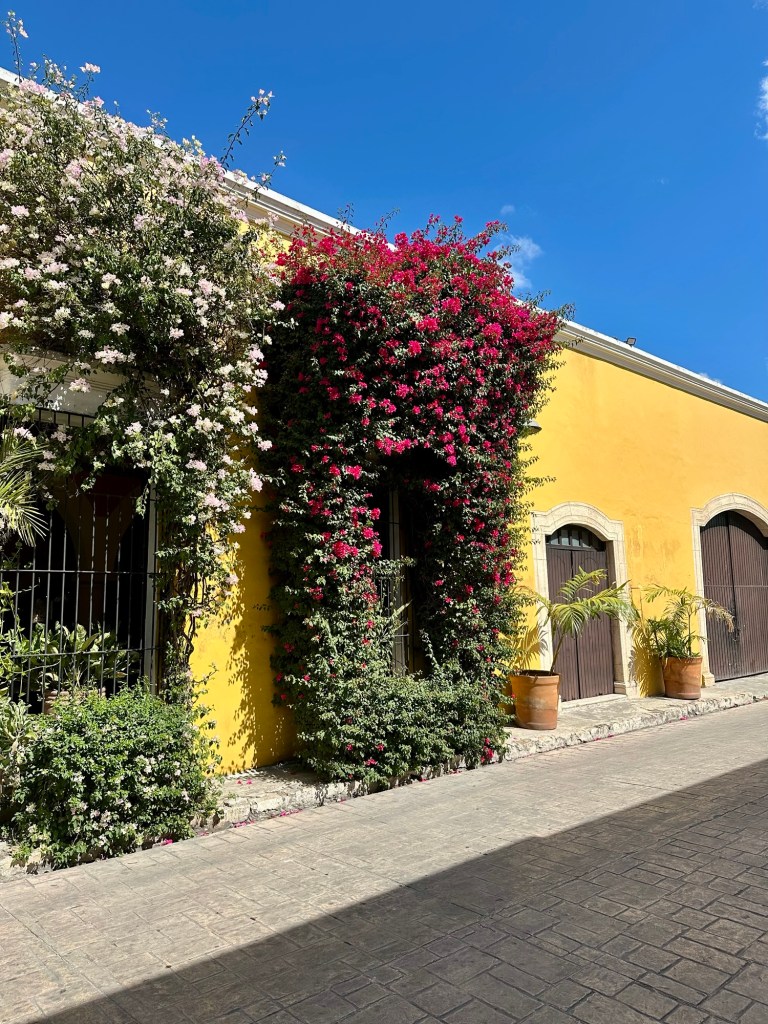
Izamel is also known as La Ciuadad Amarilla, or ‘The yellow city’ . This is an accurate name , as it seems like at least 95 % of the buildings are painted yellow.
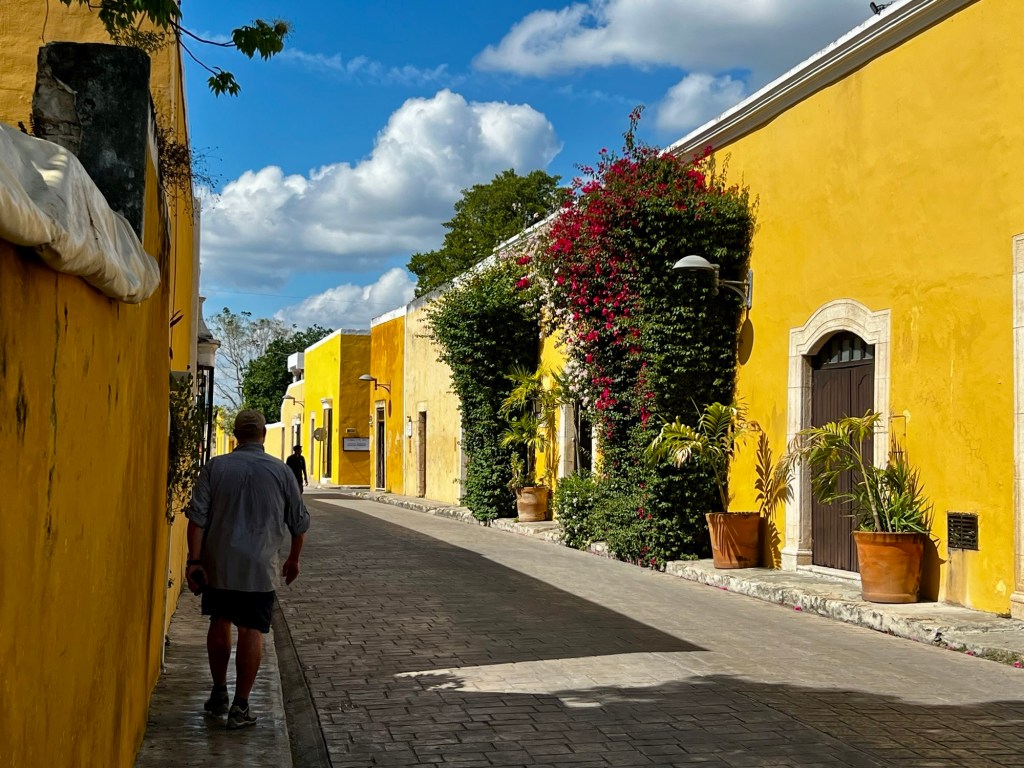
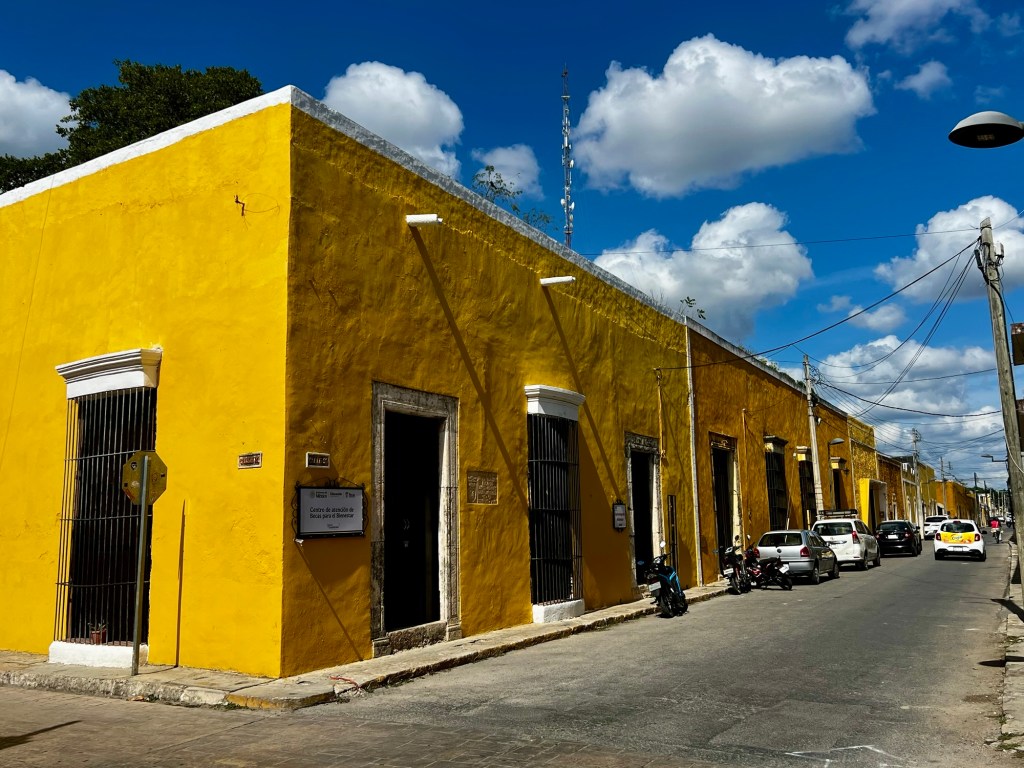
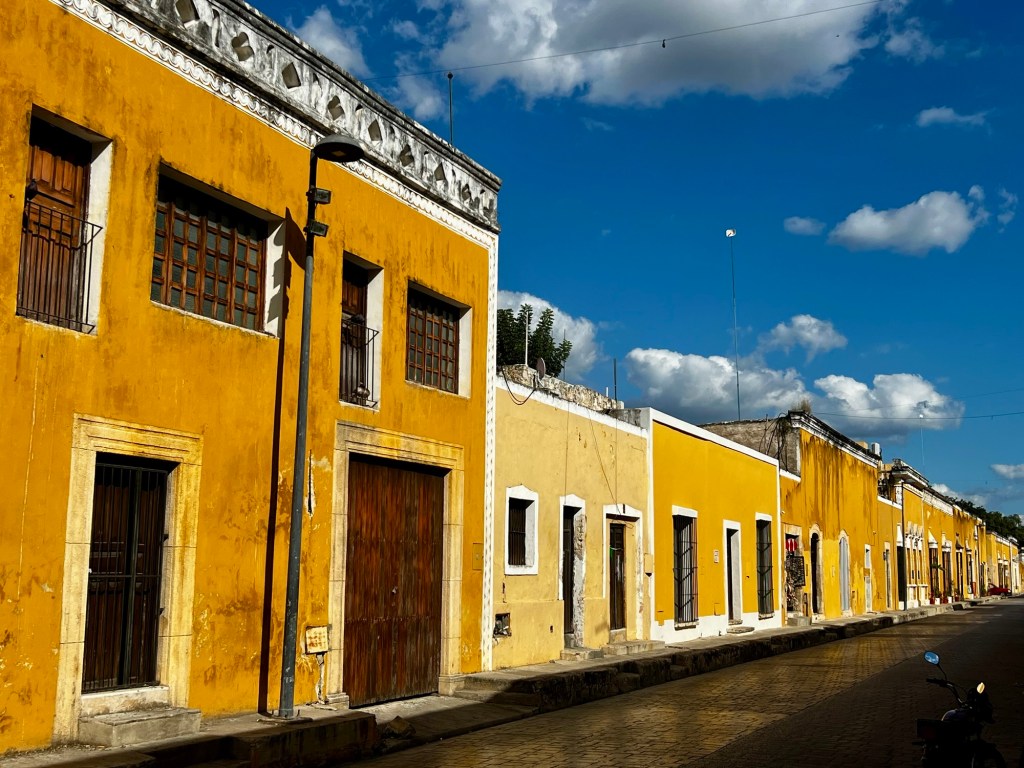
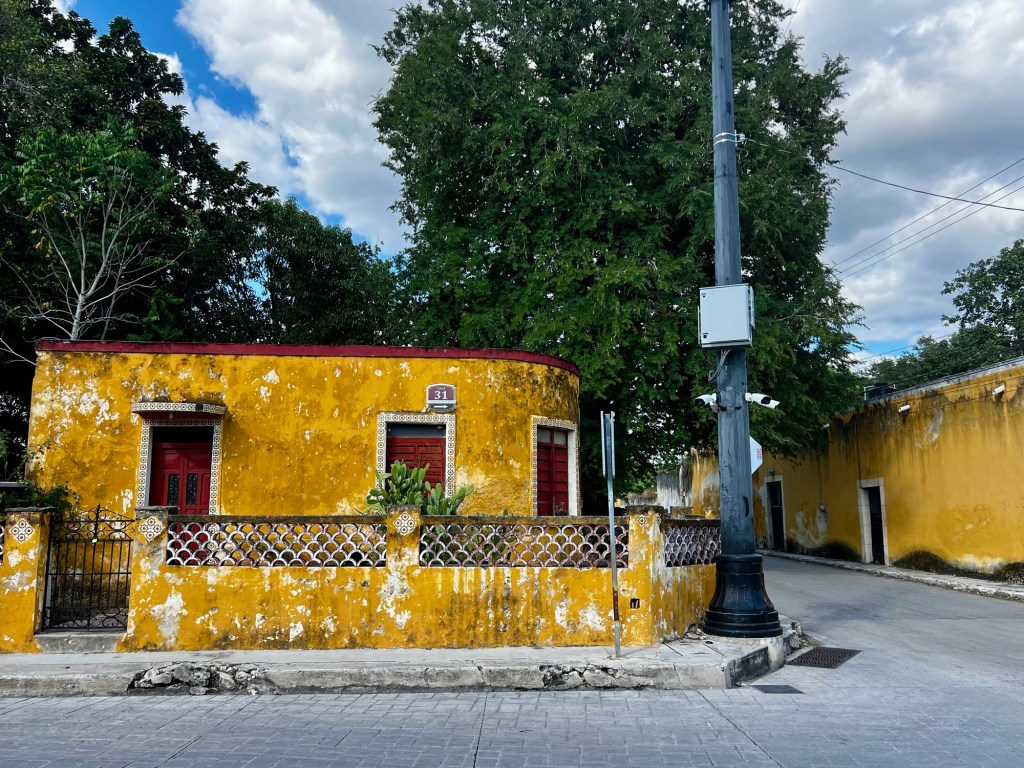
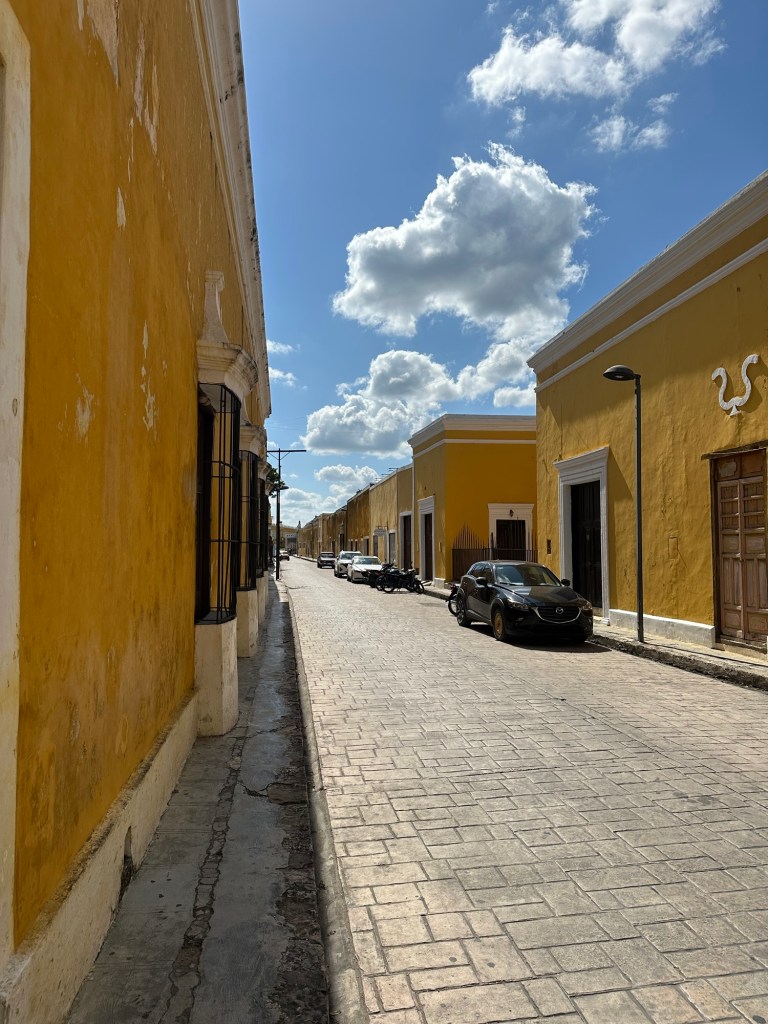
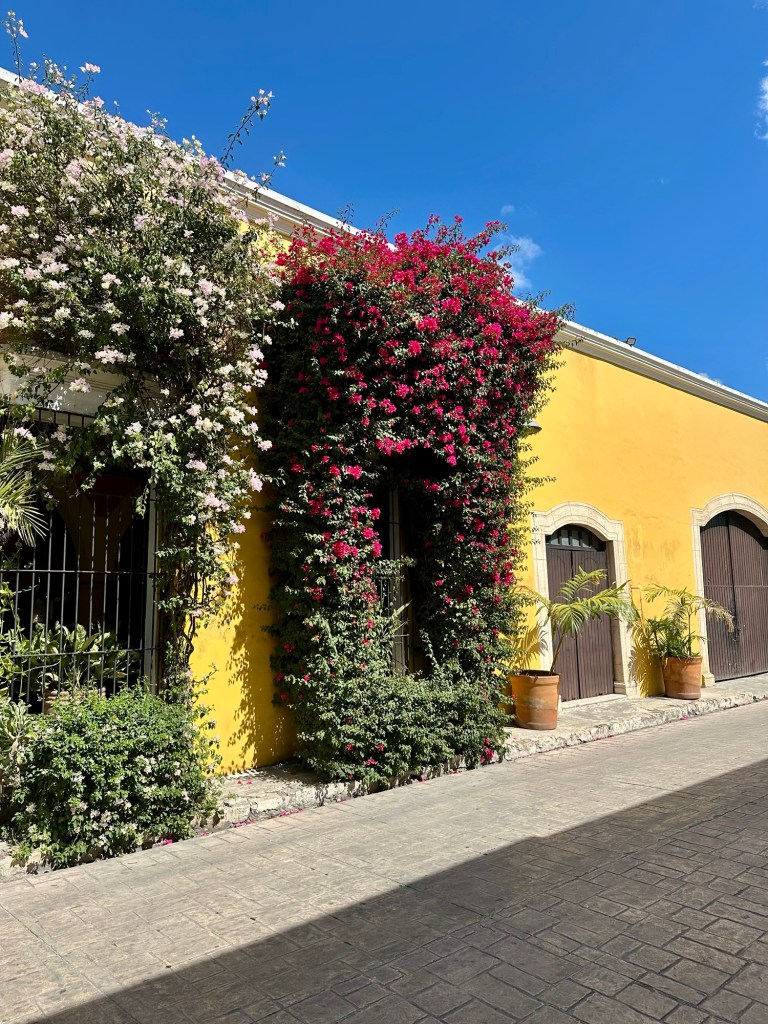
Located to the east of Merida, it is more of a large country town than a city.
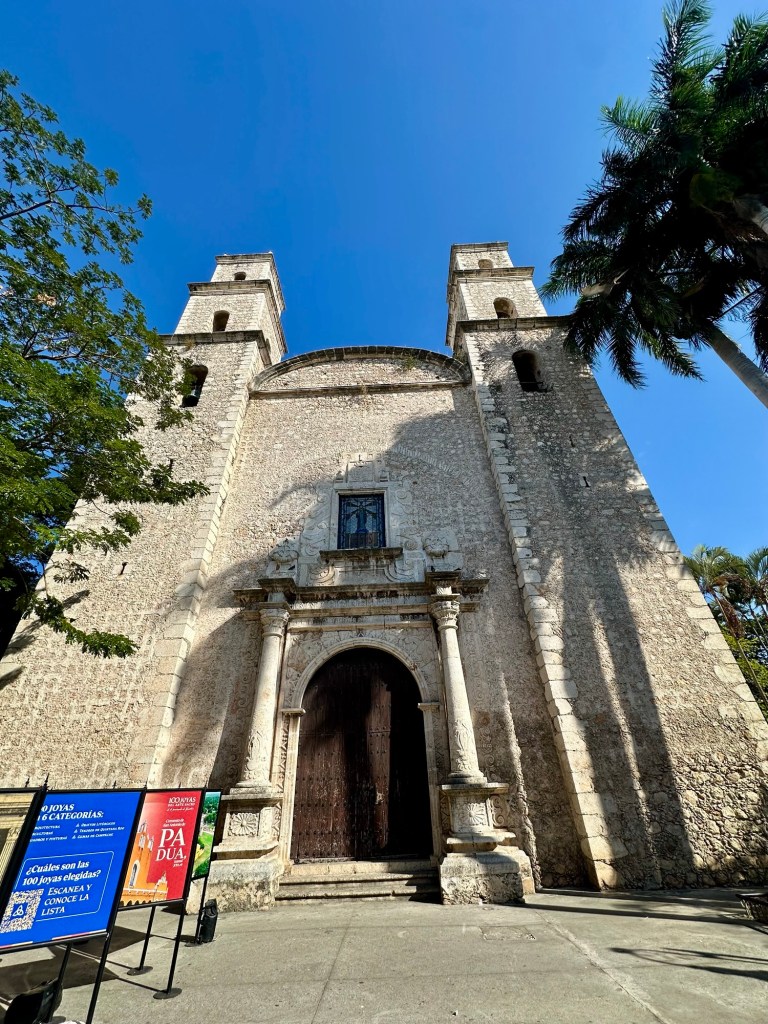
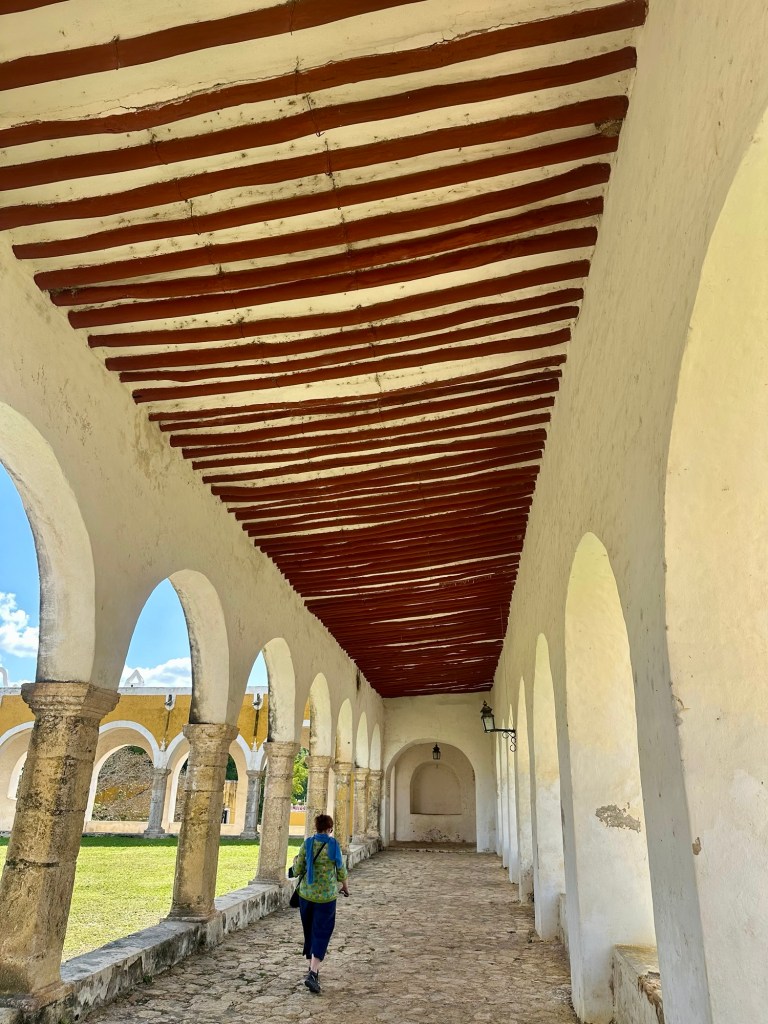
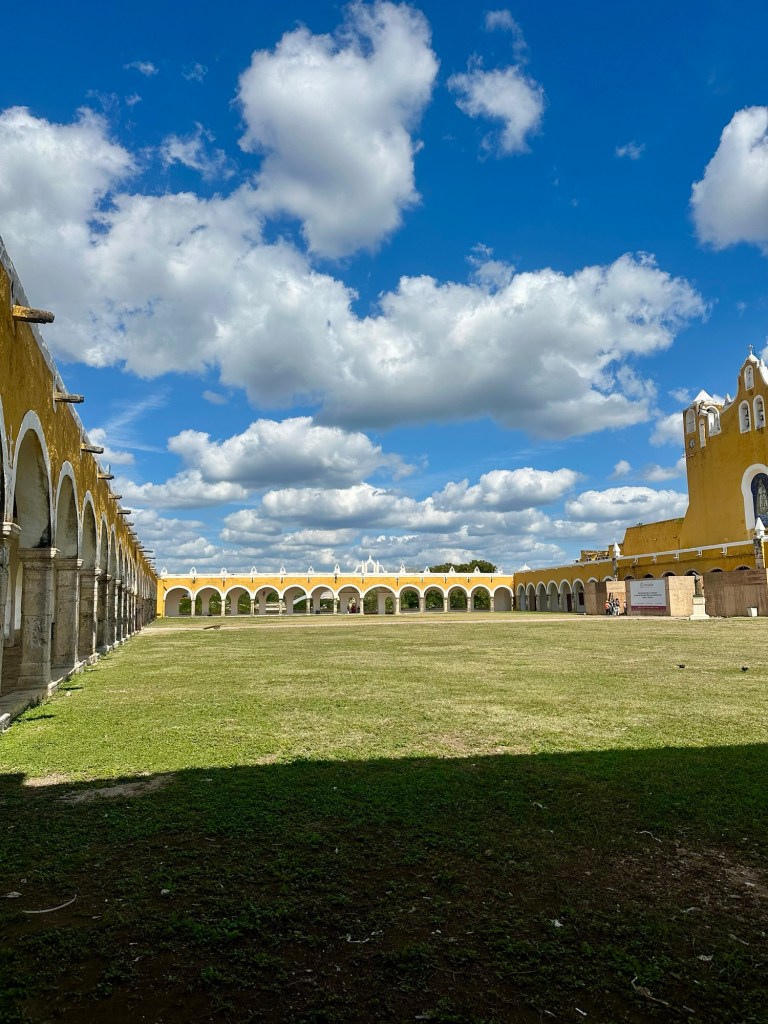
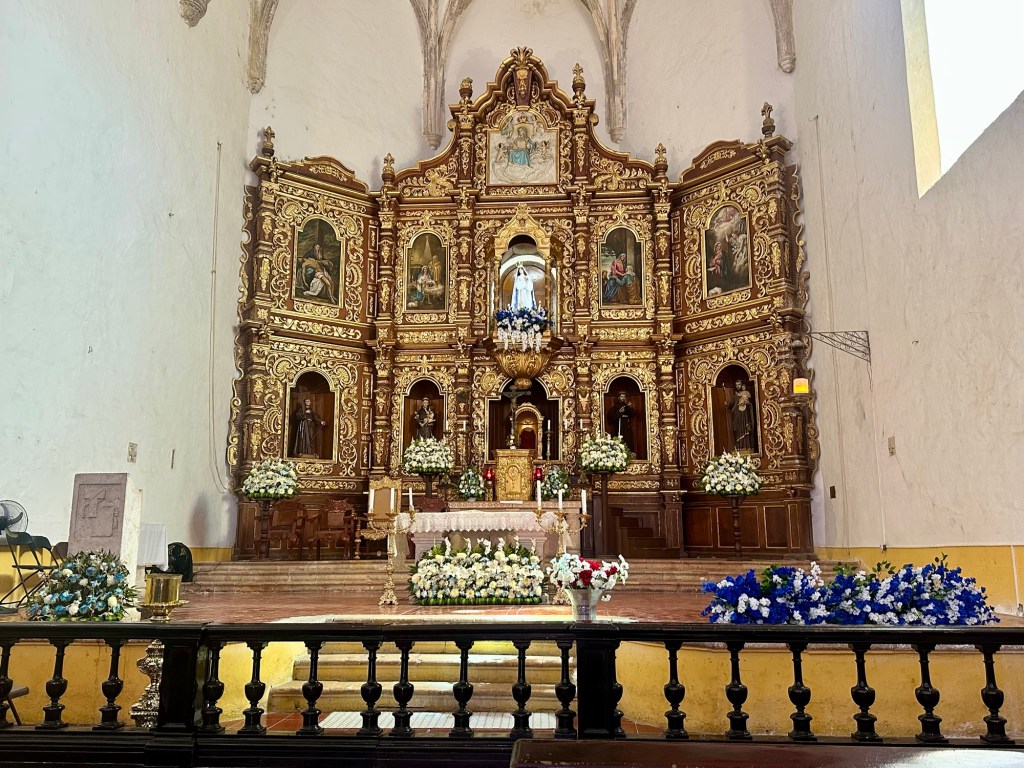
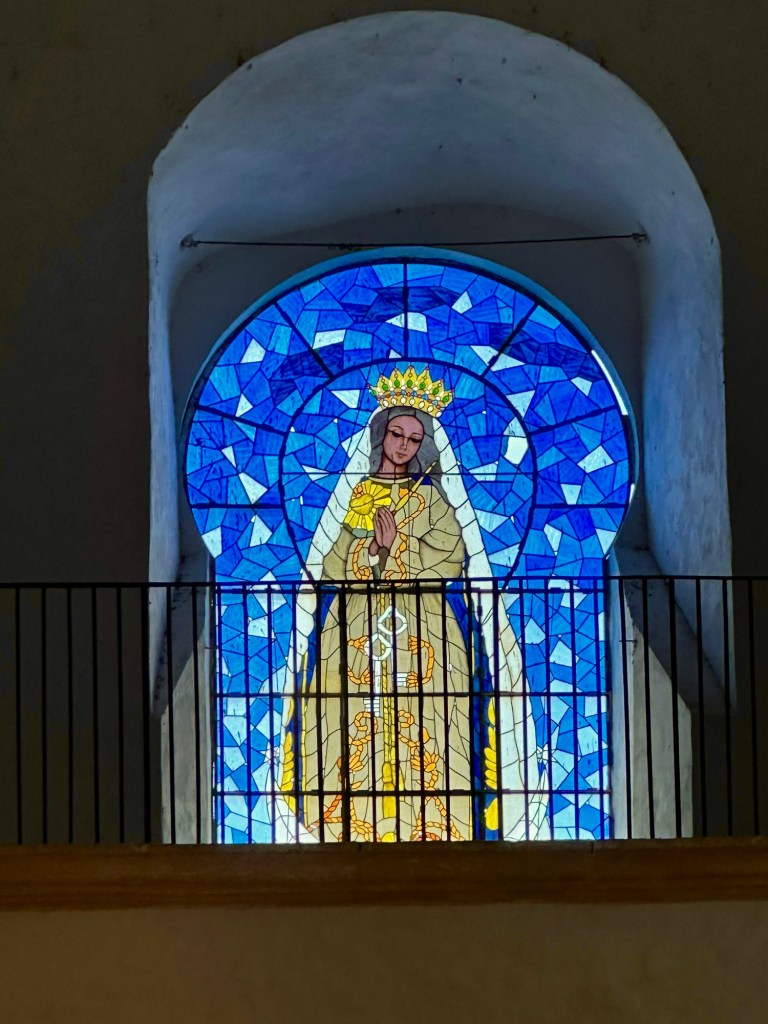
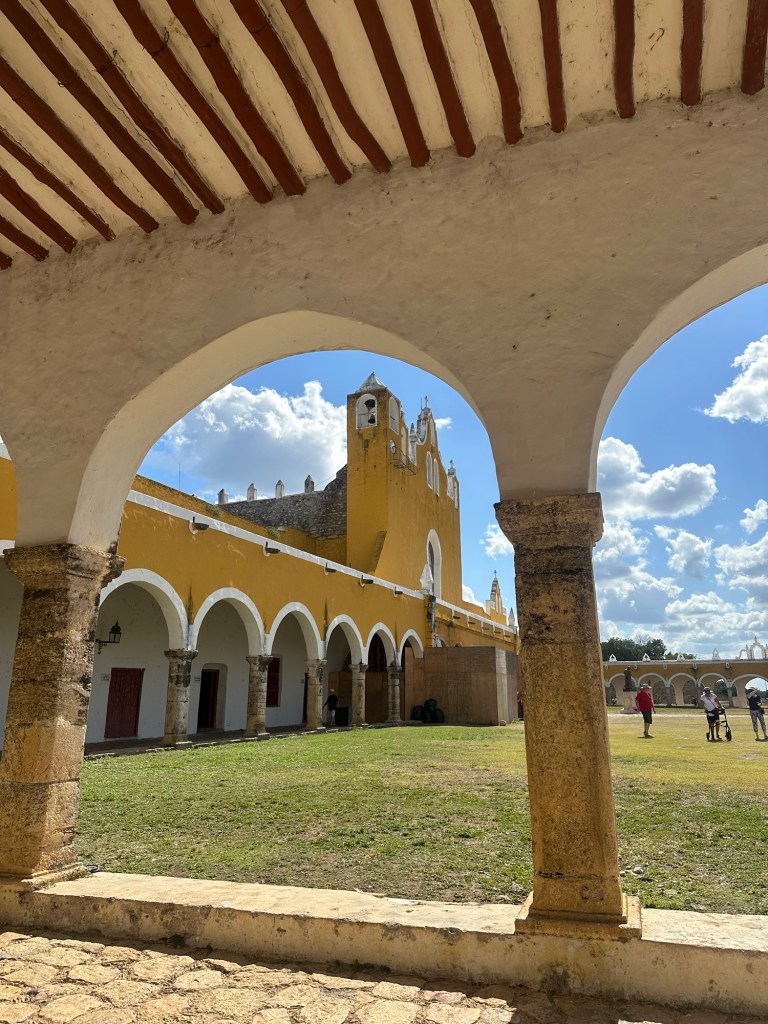
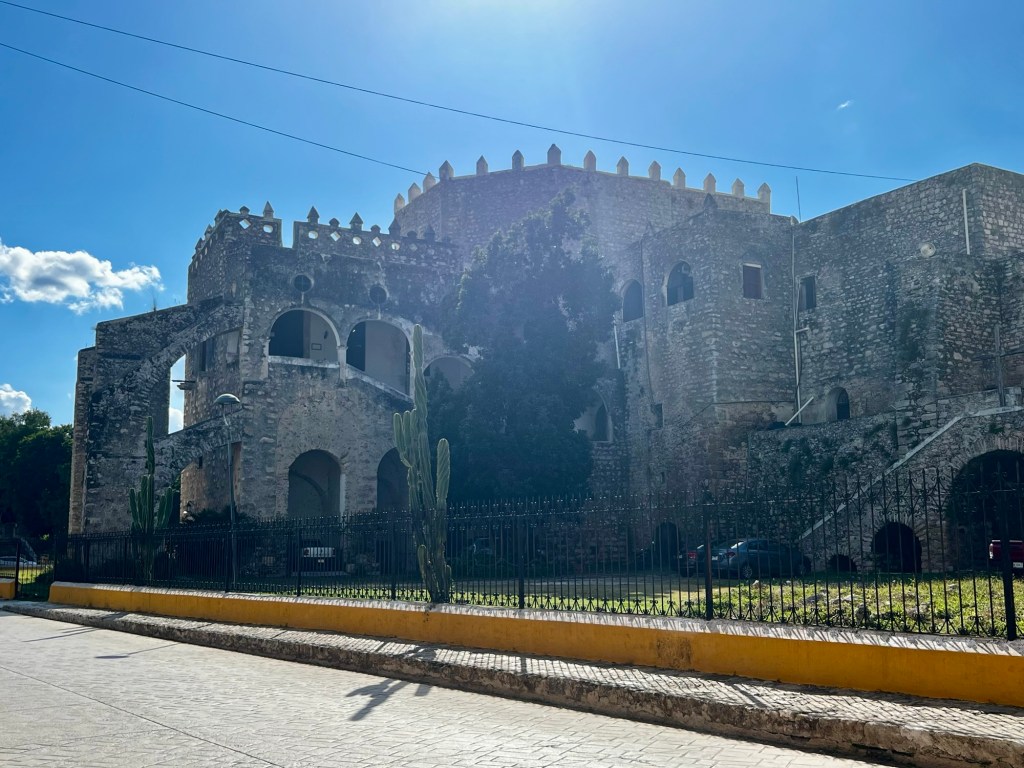
In pre-colonial times Izamel was the religious centre of the Mayan culture and home to some significant temples/ pyramids. You will doubtless be surprised to hear that the Spaniards turned up, knocked down the largest temple and built a large church / convent on top of it … The convent of Saint Anthony of Padua. They did leave several large Mayan pyramids largely intact, one called Kinich Kakmo remains about 400 metres north of the convent. We spent most of Wednesday exploring these areas on foot.
Images of the convent:
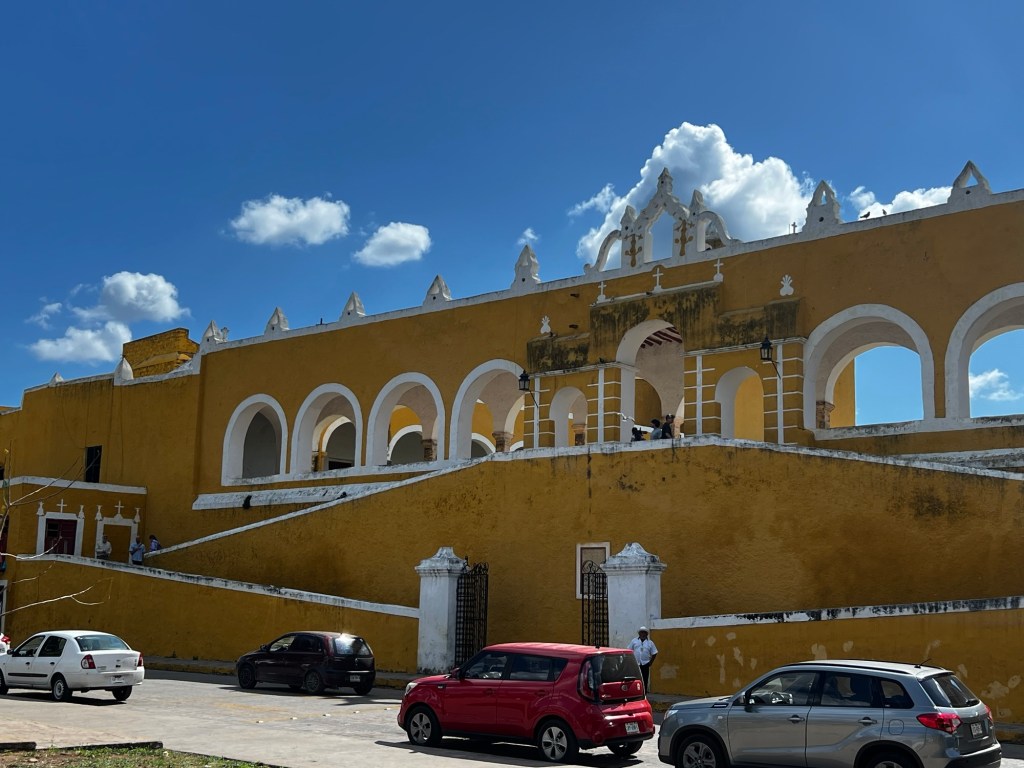
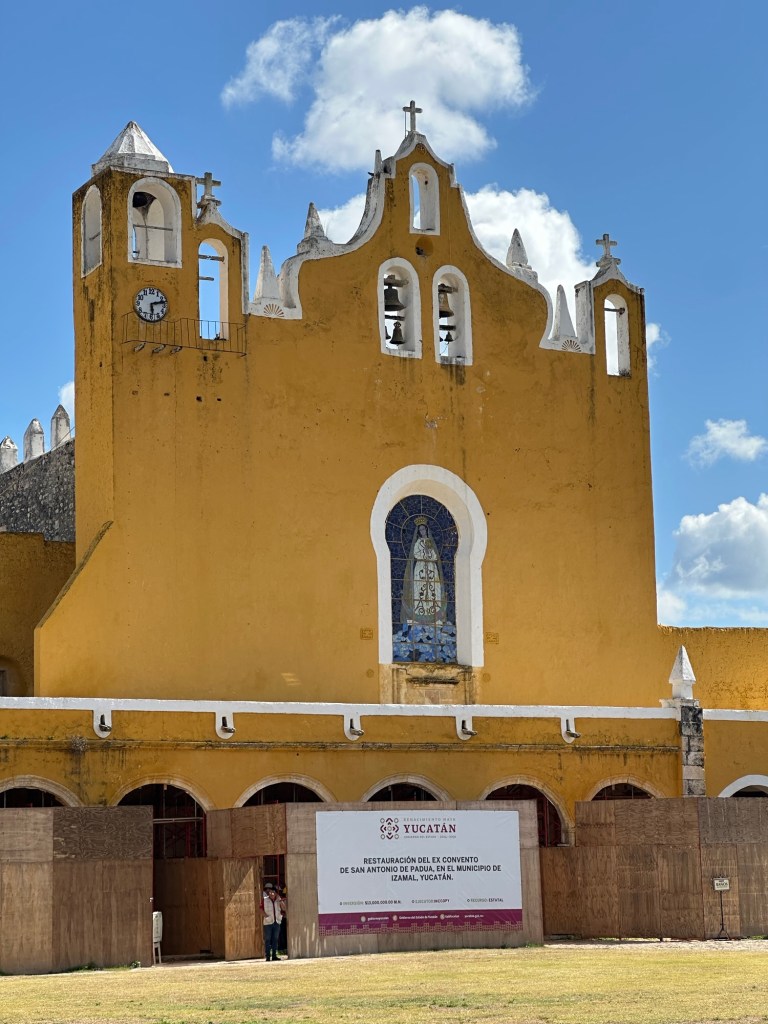
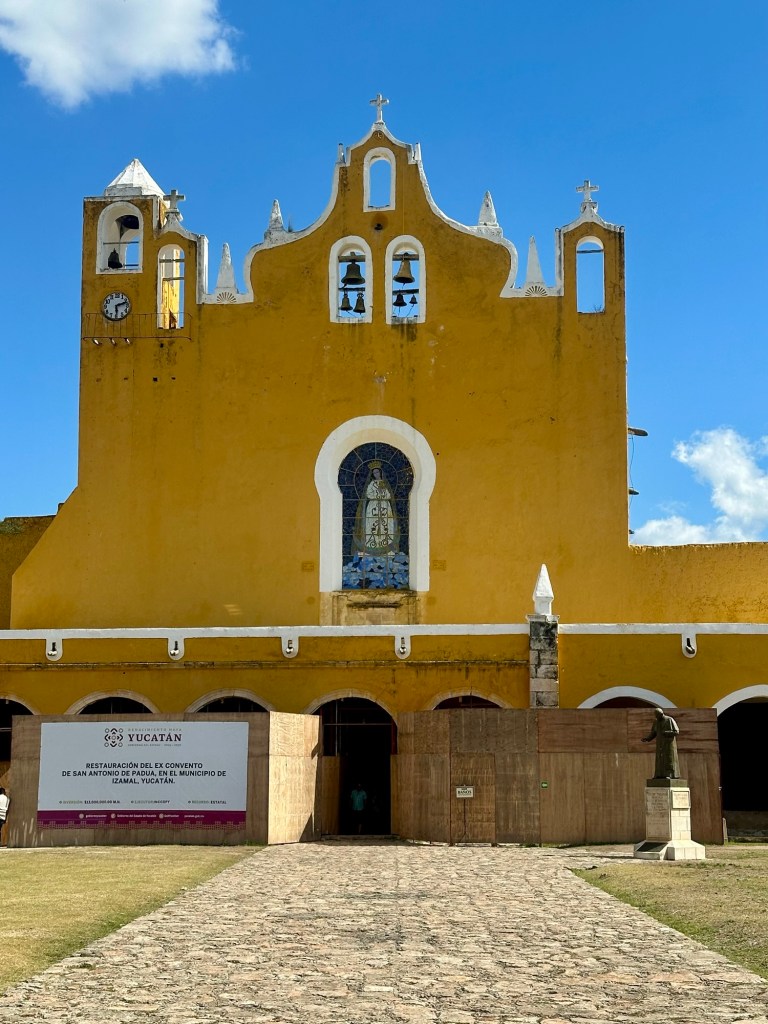
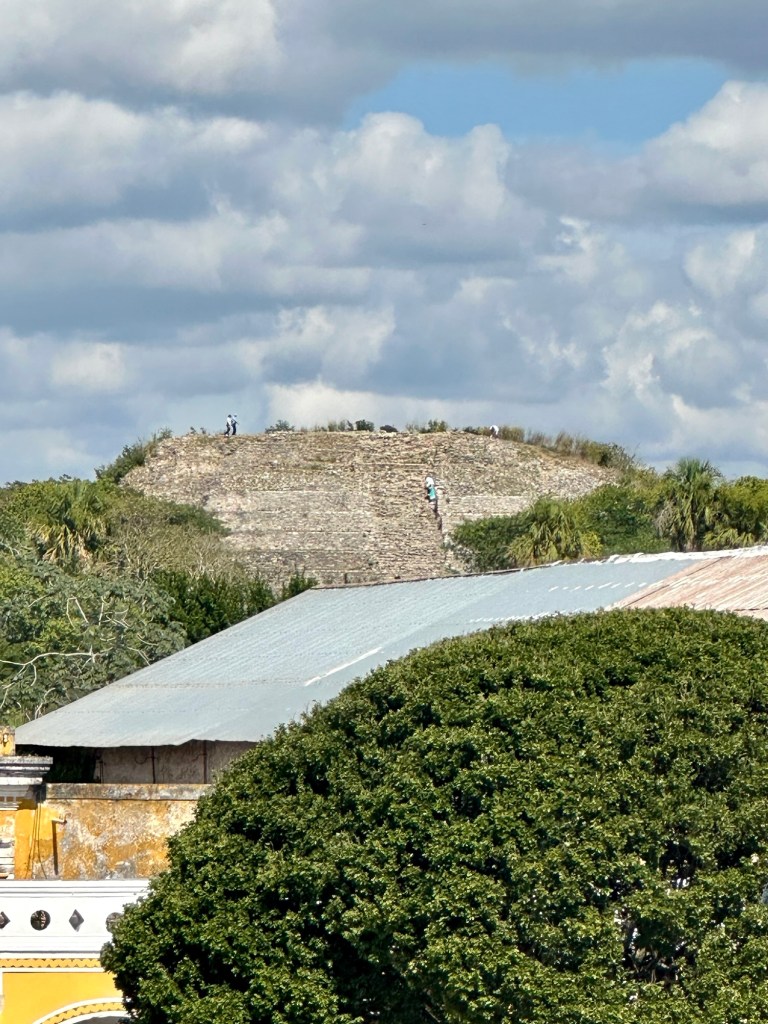
Kinich Kakmo is large, around 300 m x 300m at the base. It isn’t restored, and the vegetation growing on it is obviously having a negative impact on the structure.
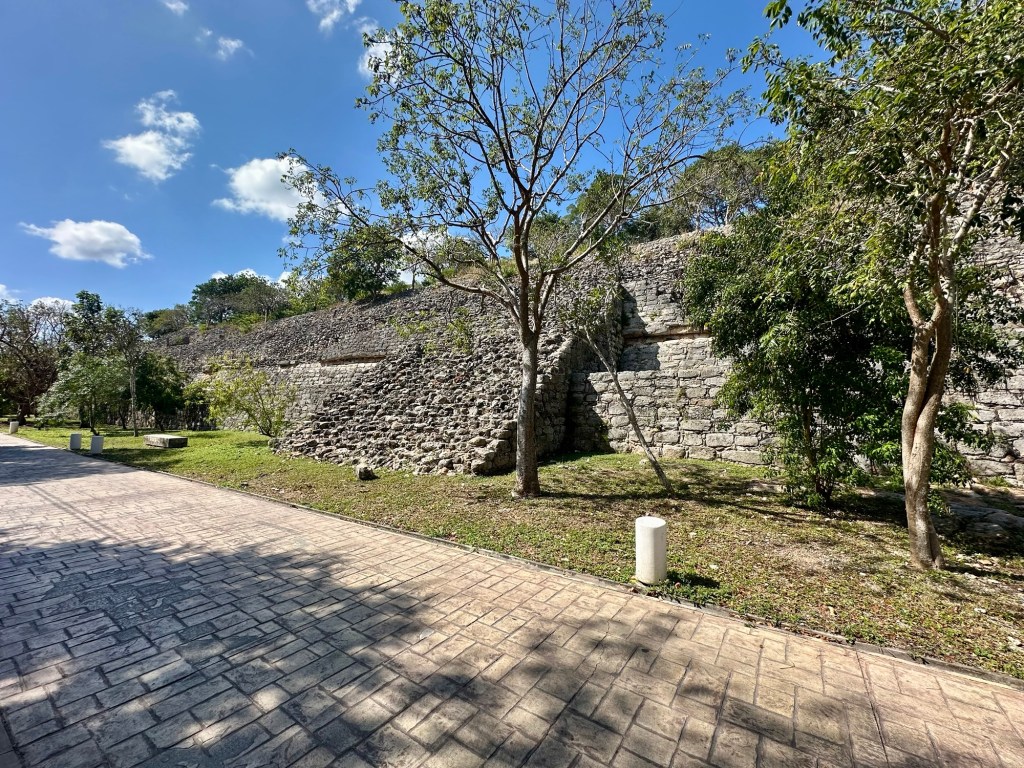
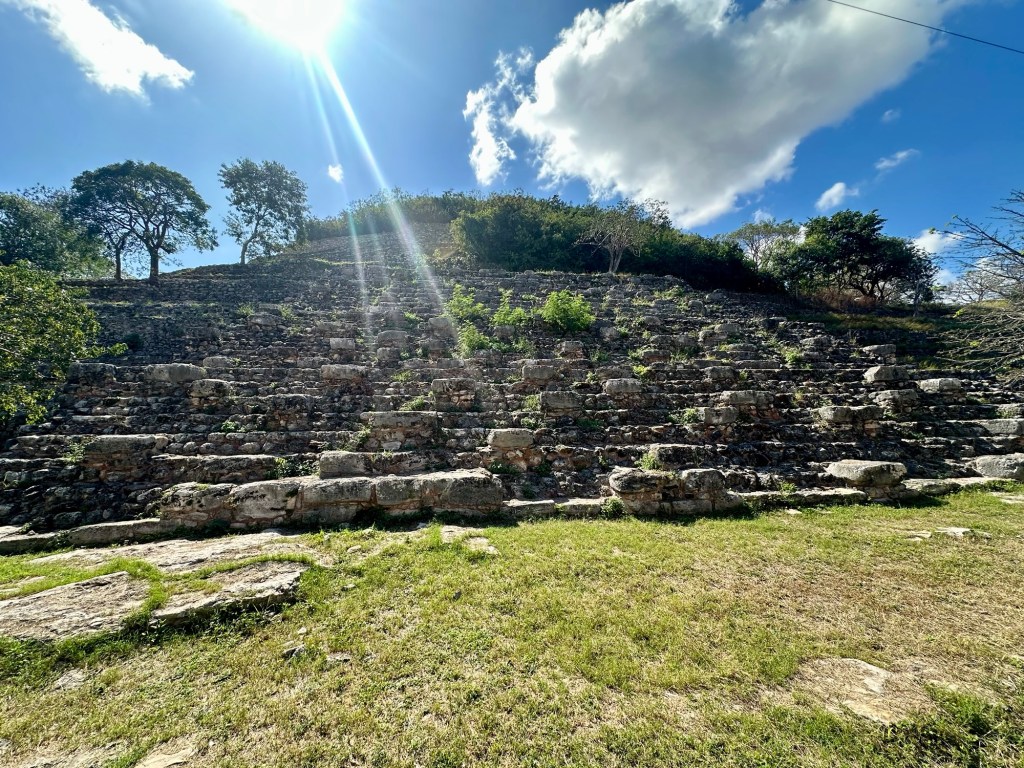
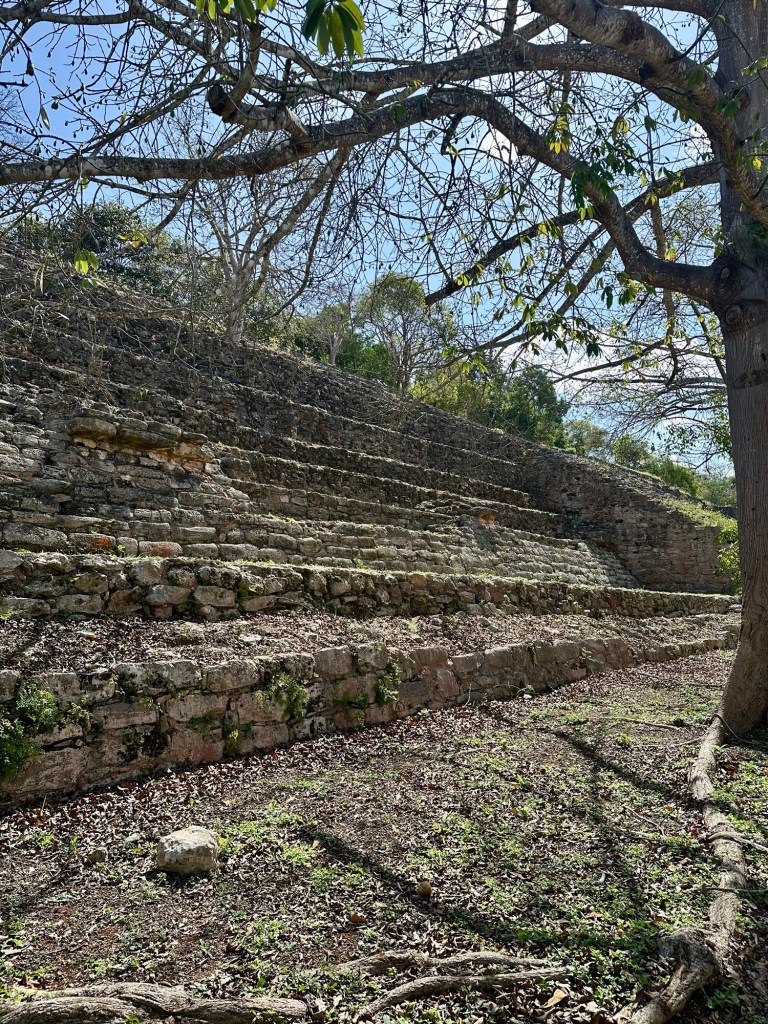
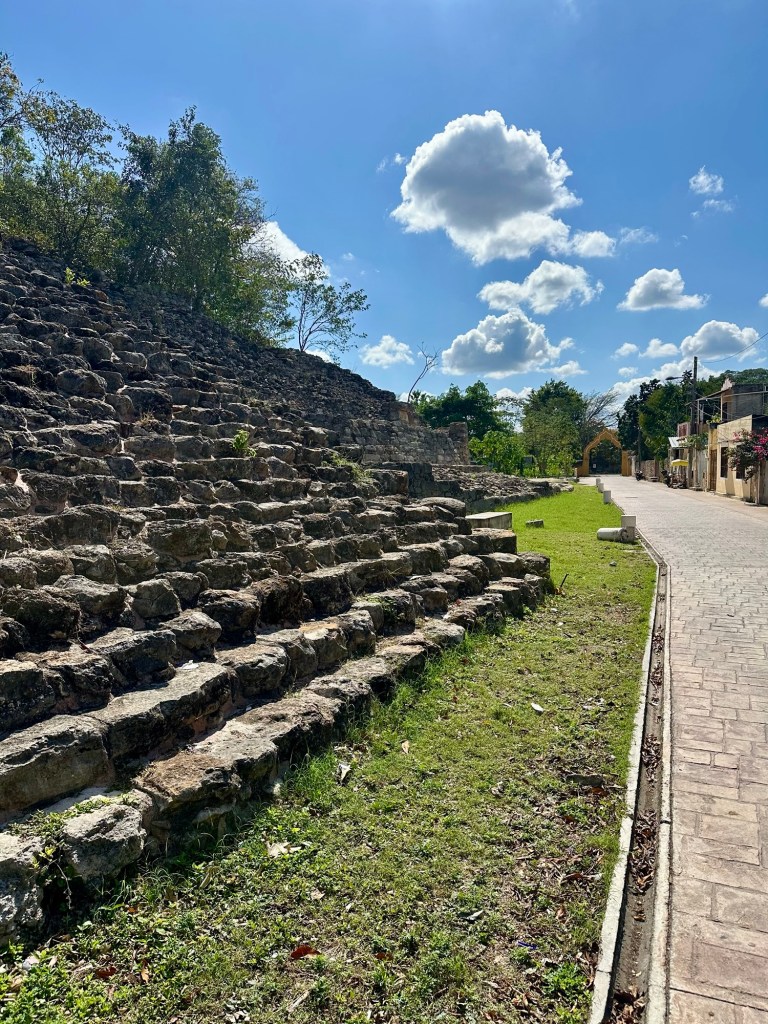
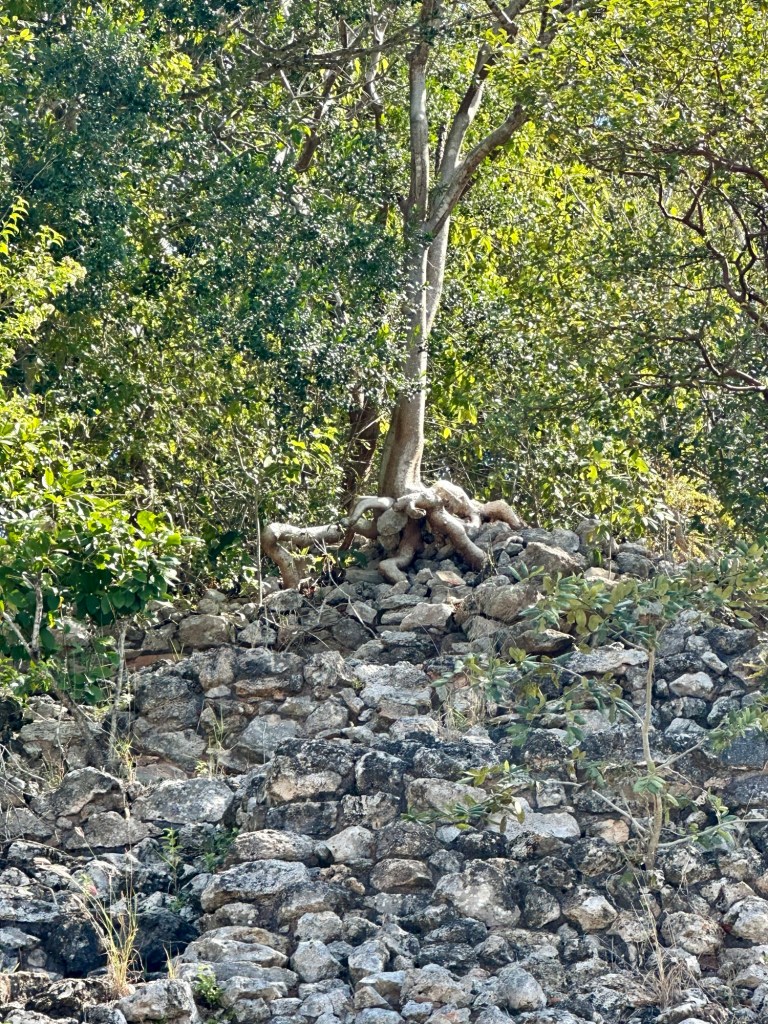
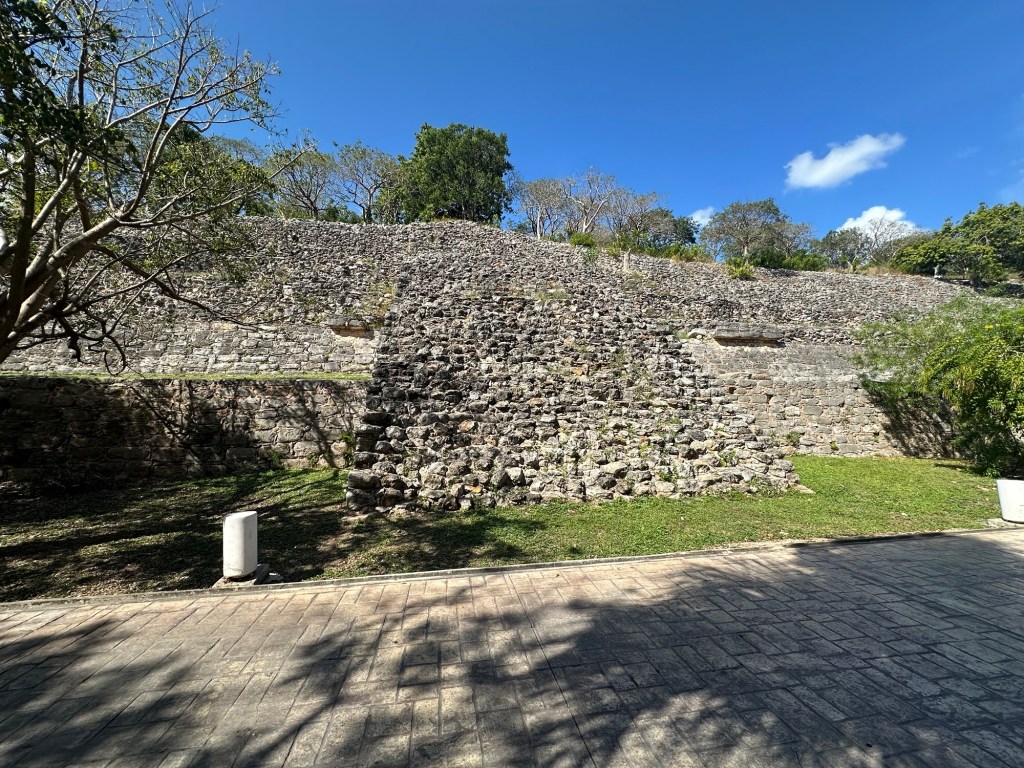
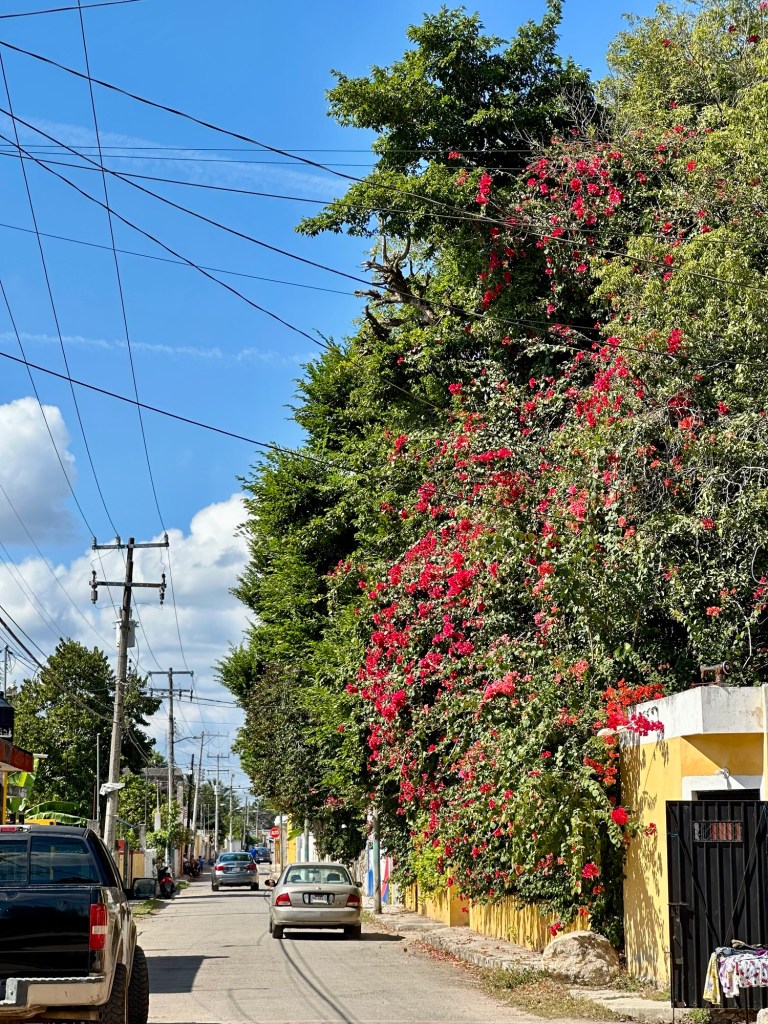
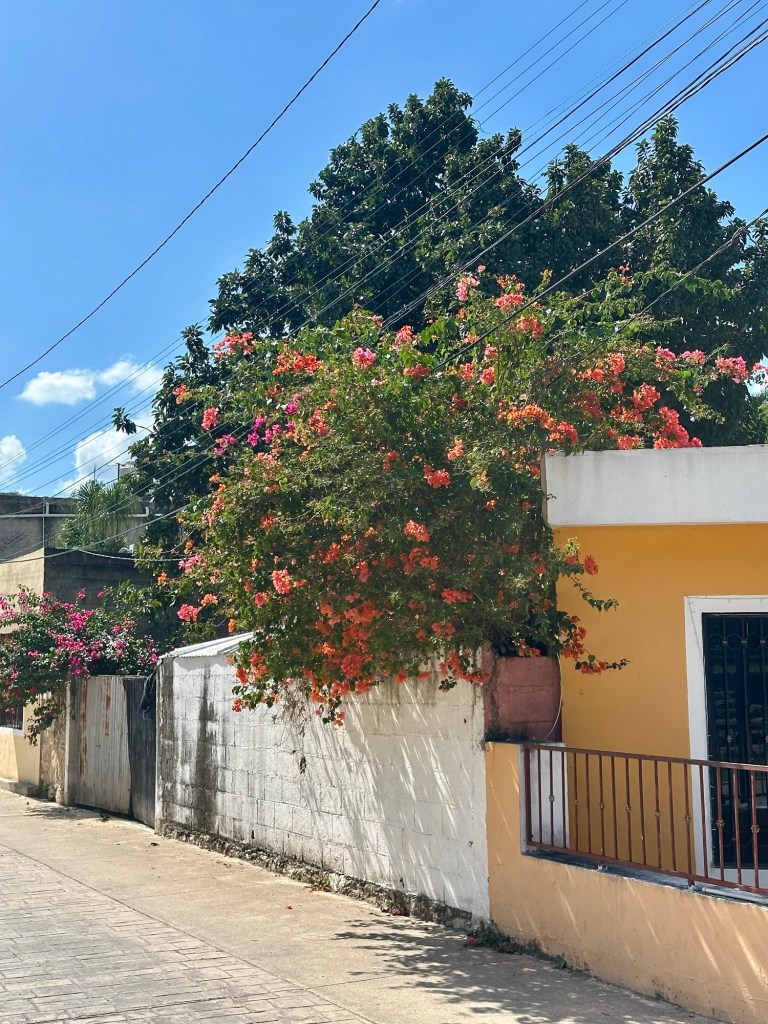
Strolling around Izamel was quiet and pleasant- an insight into Mexican country town life. A nice feature was the predominance of Bougainvillea in full bloom everywhere.
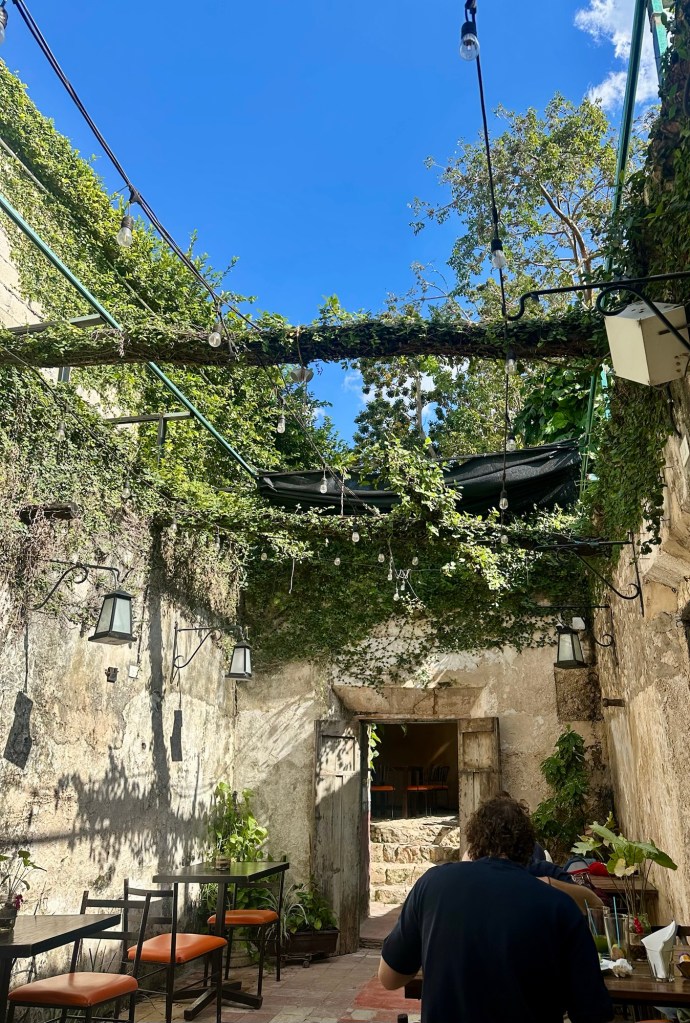
The day warmed up, so we retreated to the courtyard of a local restaurant off the town square for some more Yucatan cuisine.
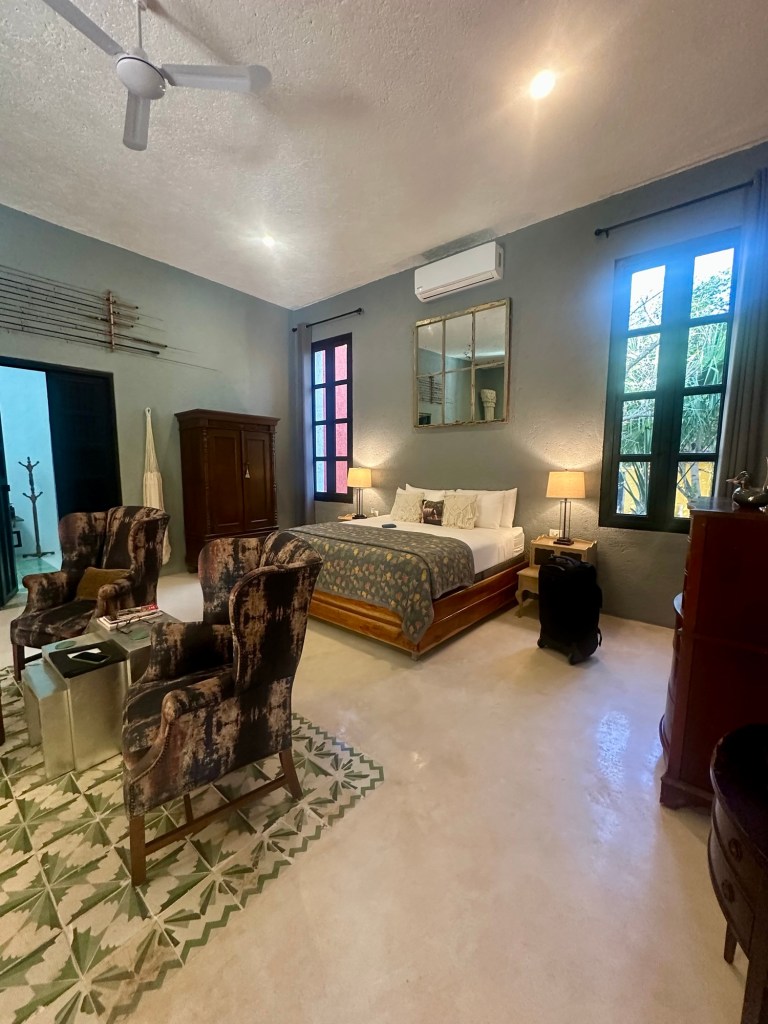
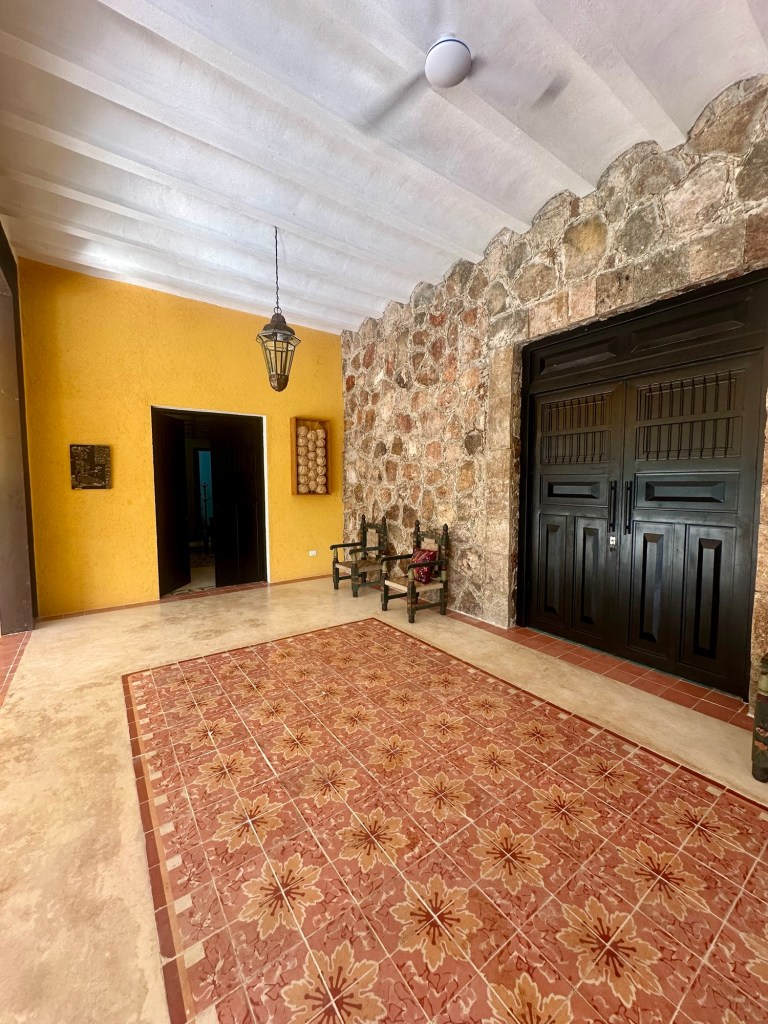
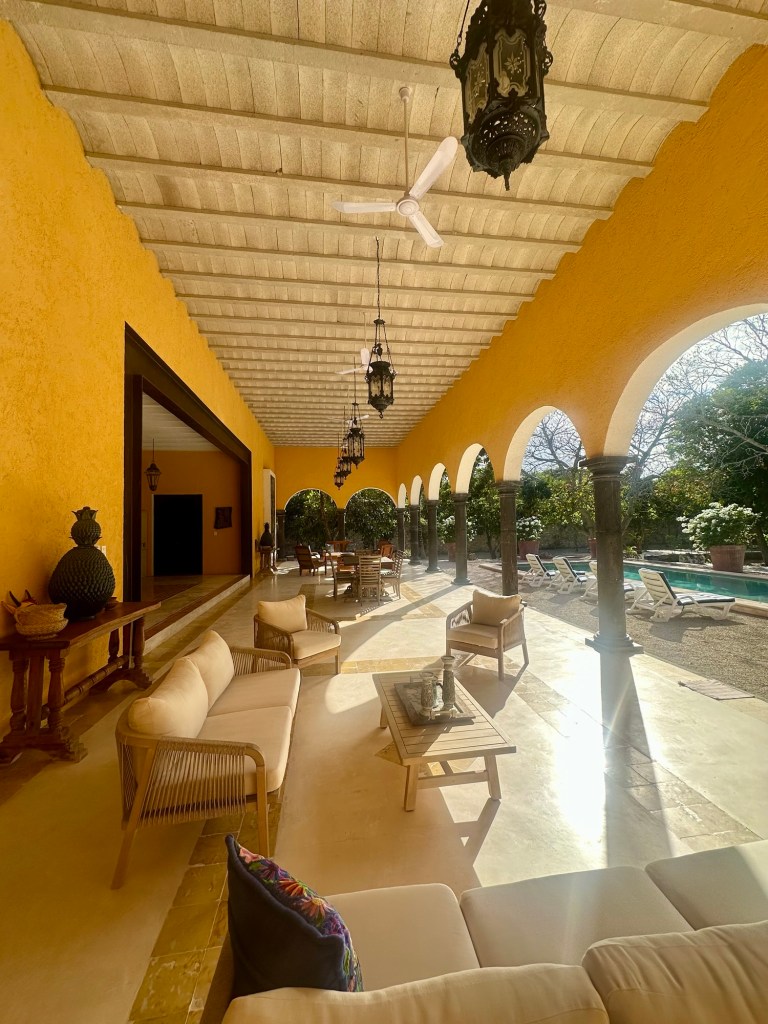
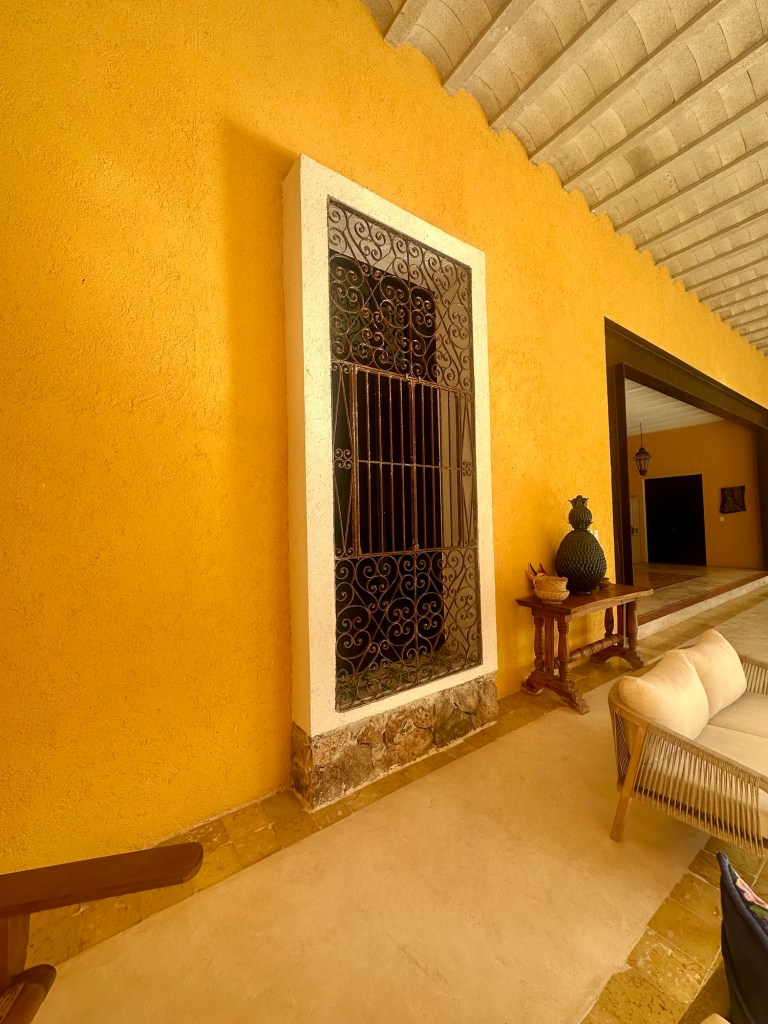
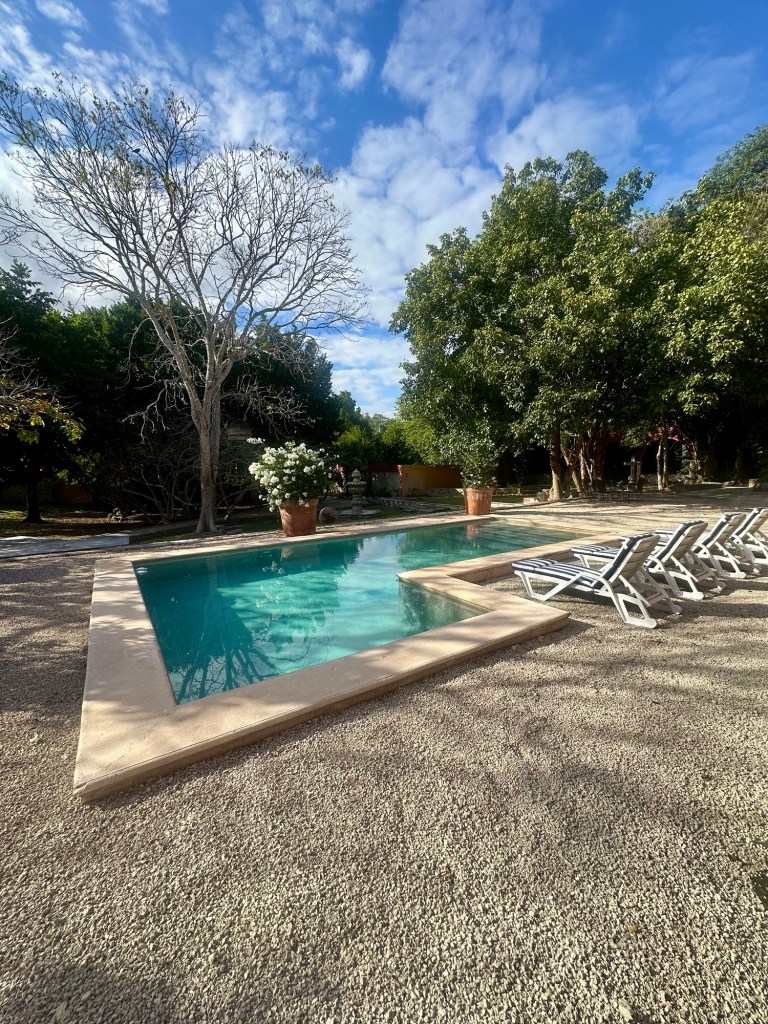
After lunch we walked back to our accommodation which is in a lovely Hacienda on the outskirts of town. It was hot, so we spent the latter part of the afternoon in the pool.
Next up : more pyramids! … and Valladolid

 Ness’ and Mark’s Wandering