Friday 9 – Saturday 10 January
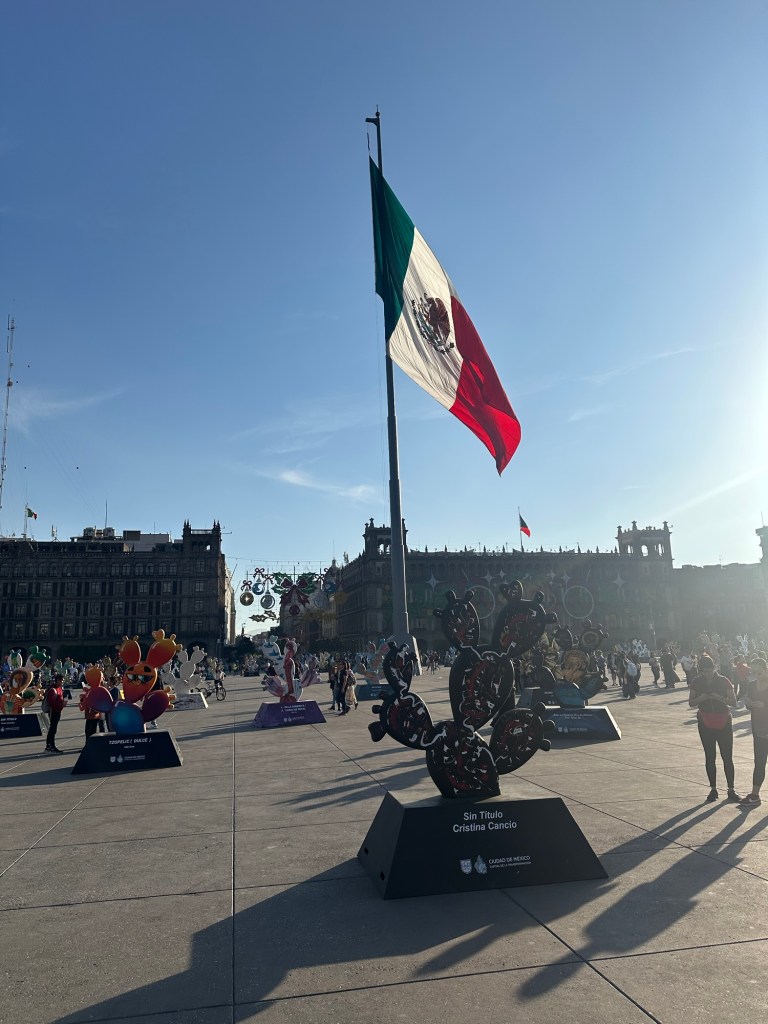
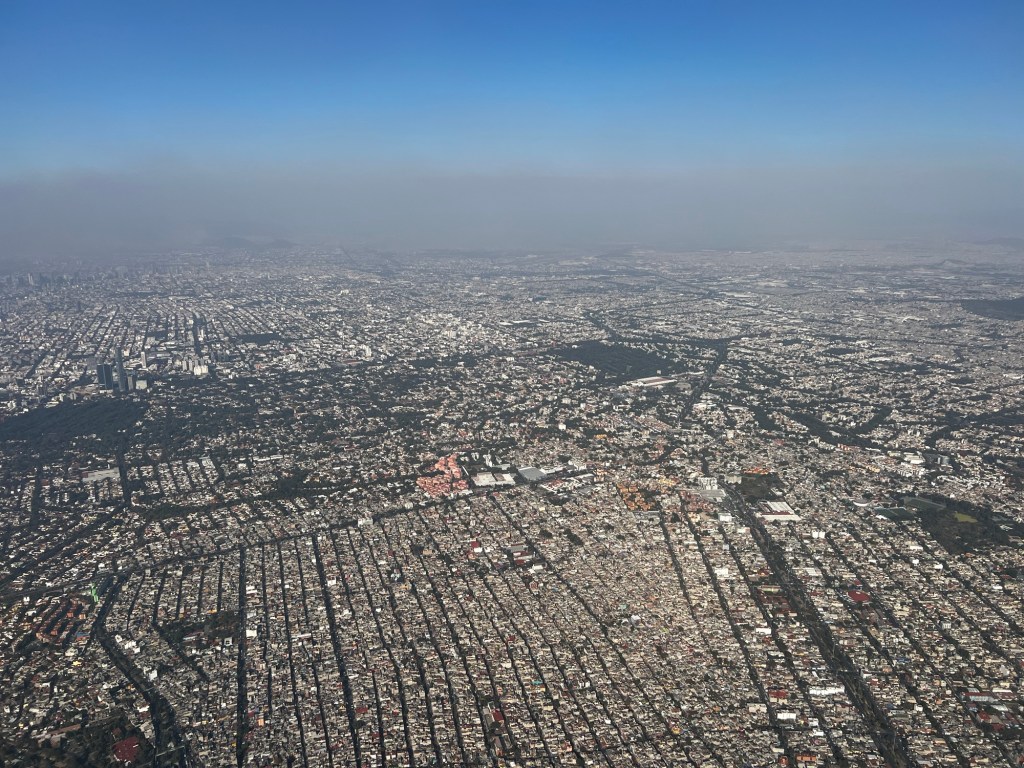
The first thing we realised about Mexico City is that we hadn’t even begun to appreciate its size. Population wise, 11 million people live in the core and another 18 million or so in the greater metropolitan area. That’s more people in one city than on the entire continent where we live…
We also failed to understand that two full days would only be scratching the surface of all the things to do in the area… so we scratched away.
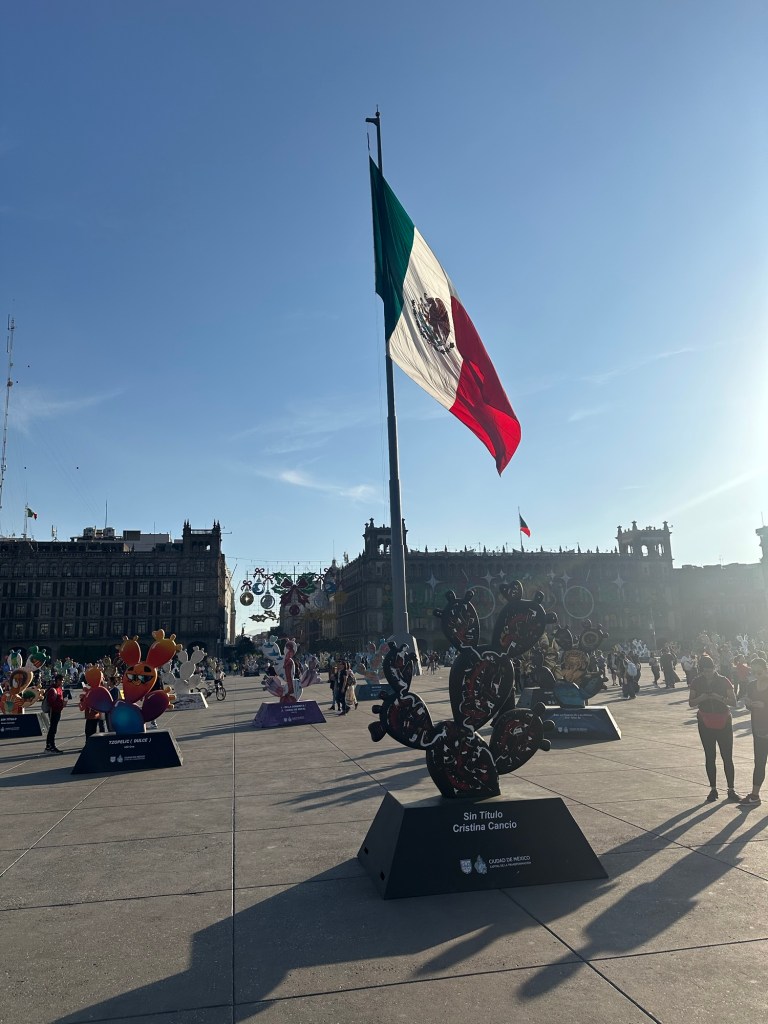
Our hotel was right in the heart of the city – an area known as ‘centro’ , for obvious reasons. We were 100m from the Plaza de la Constitución, more commonly known as the ‘Zocalo’ by the locals (pronounced ‘Zok-a-low’). We thought that zocalo must mean square, but no, there is a story. Apparently ‘Zocalo’ means pedestal. When Mexico became independent in 1821 after an 11 year war with Spain, the new president wanted to erect a large column in the plaza. A pedestal was first constructed to place the column on, but for various reasons the column was never built. So the pedestal remained for decades and the locals just began referring to the place as the ‘Zocalo’ rather than Plaza de la Constitución. The zocalo is long gone ( a large flagpole with a 50 x 50 metre Mexican flag stands there now) , but the name remains.
Our hotel offered a free walking tour – we went half expecting it to be a bit lame, under the old adage ‘you get what you pay for’. Wrong. We set out at 0930 on Friday morning and were done some 12,000 steps later at around 1330. It turned out to be a comprehensive tour of the centro area.
We started off with a walk through Plaza de la Constitución. The plaza is surrounded by the Presidential Palace, the Cathedral, Government offices and, on the west side hotels and jewellery stores.
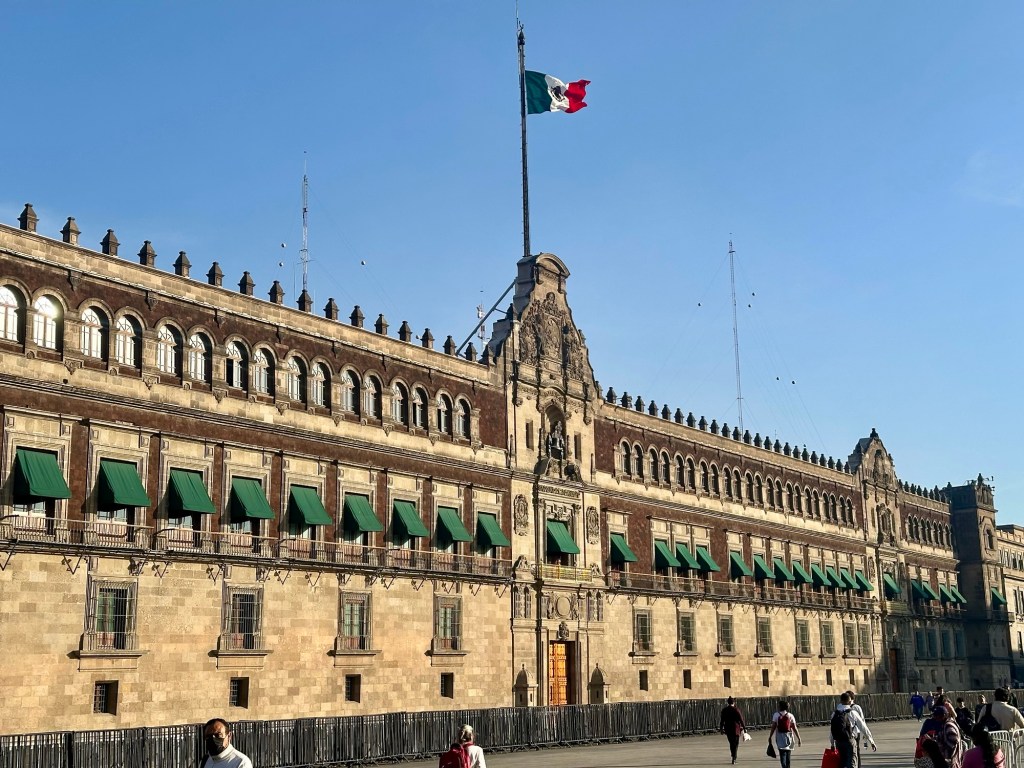
At the North East corner of the Zocalo is a significant archaeological site – now known as the Templo Mayor Museum, its original name was Tenochtitlan, and it was the site of the city the Aztecs created from around 1325 AD on a swampy island in a shallow lake. This was when their wandering / migration from around northern New Mexico/ Southern Utah ended.
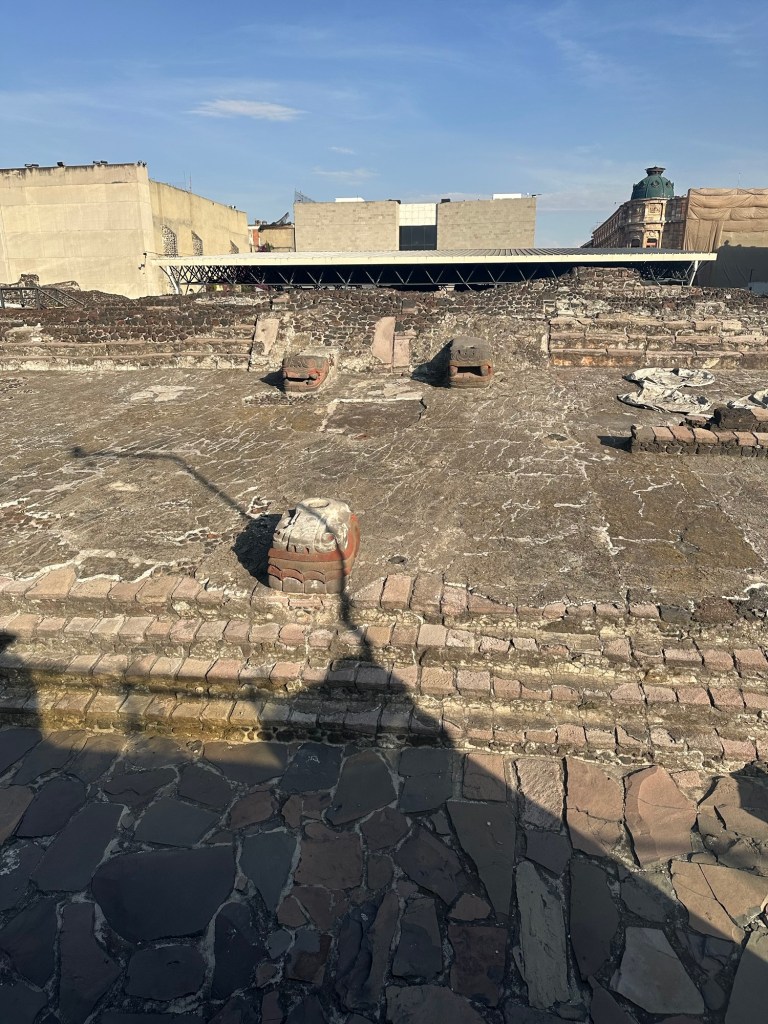
Fun fact: while most people think the Aztecs built Tenochtitlan, the people at the site called themselves Mexica (pronounced Meh-chi- ka)… which gives you a sense of where the Spanish got the word for ‘Mexico’ from.
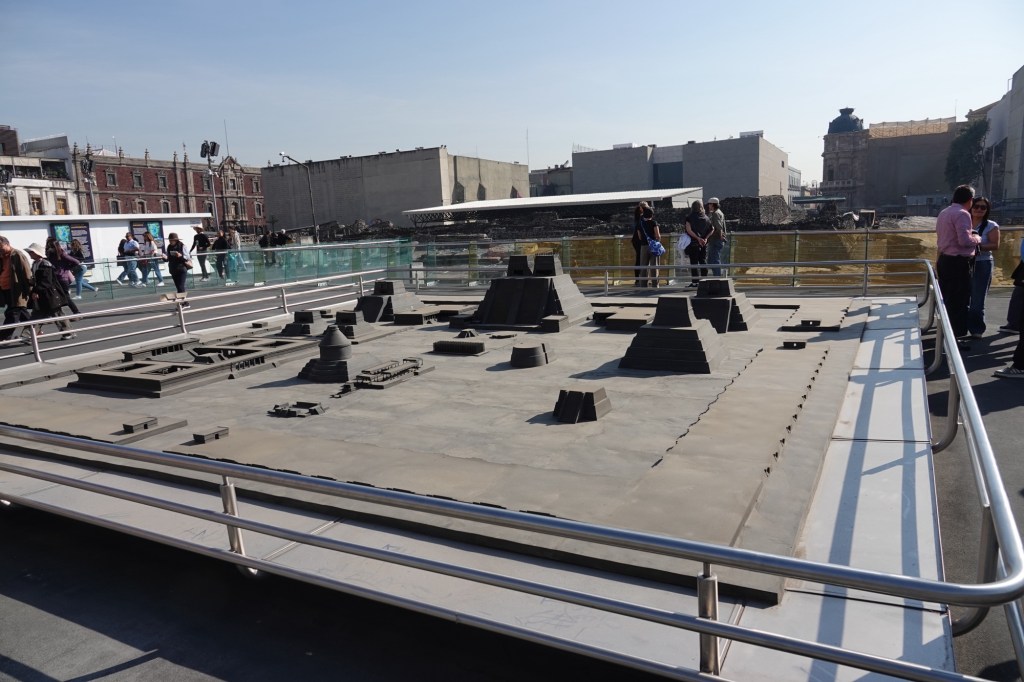
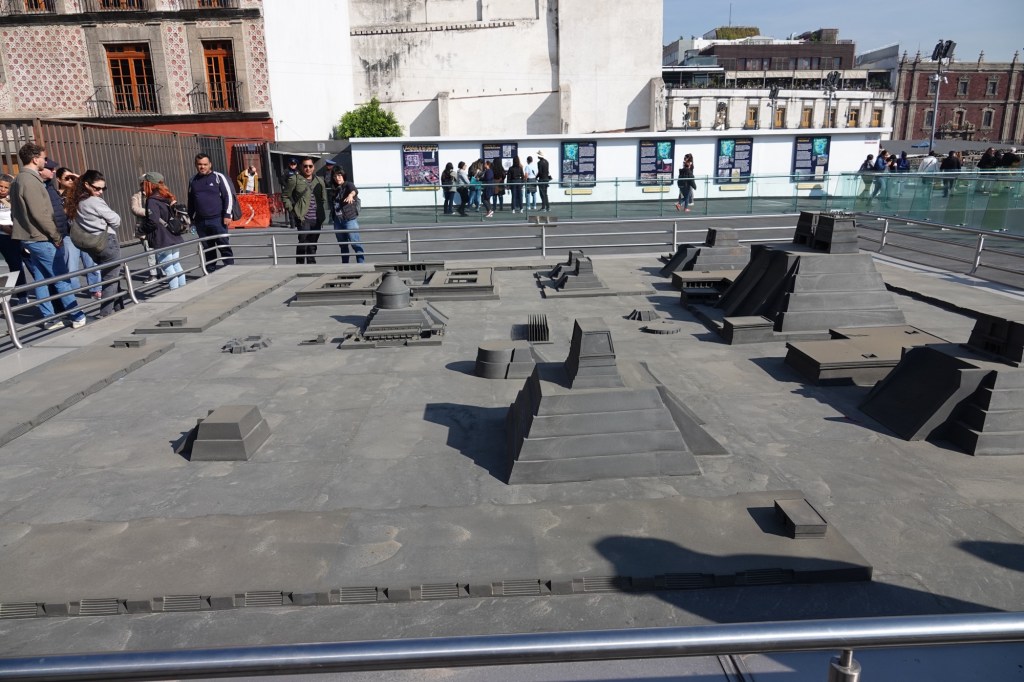
The Mexica were a fun lot who practiced human sacrifice to placate the Sun God. They were also in constant warfare with their neighbours, being highly successful for a few centuries until an even bigger bunch of arseholes turned up in the form of the Conquistadors.
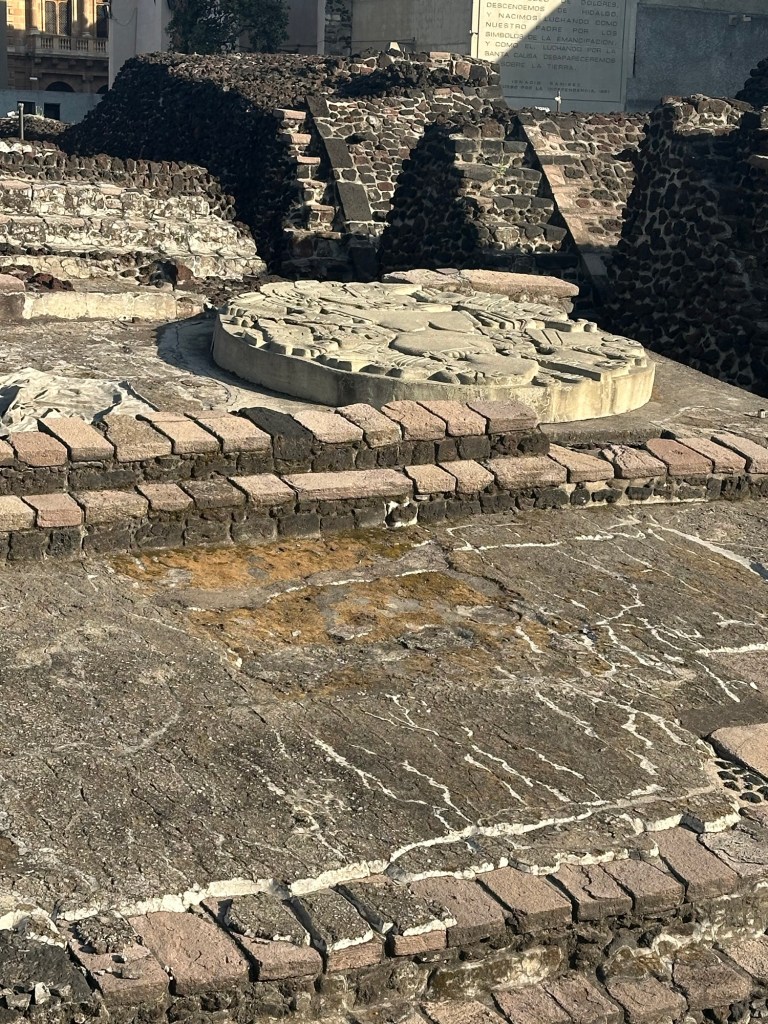
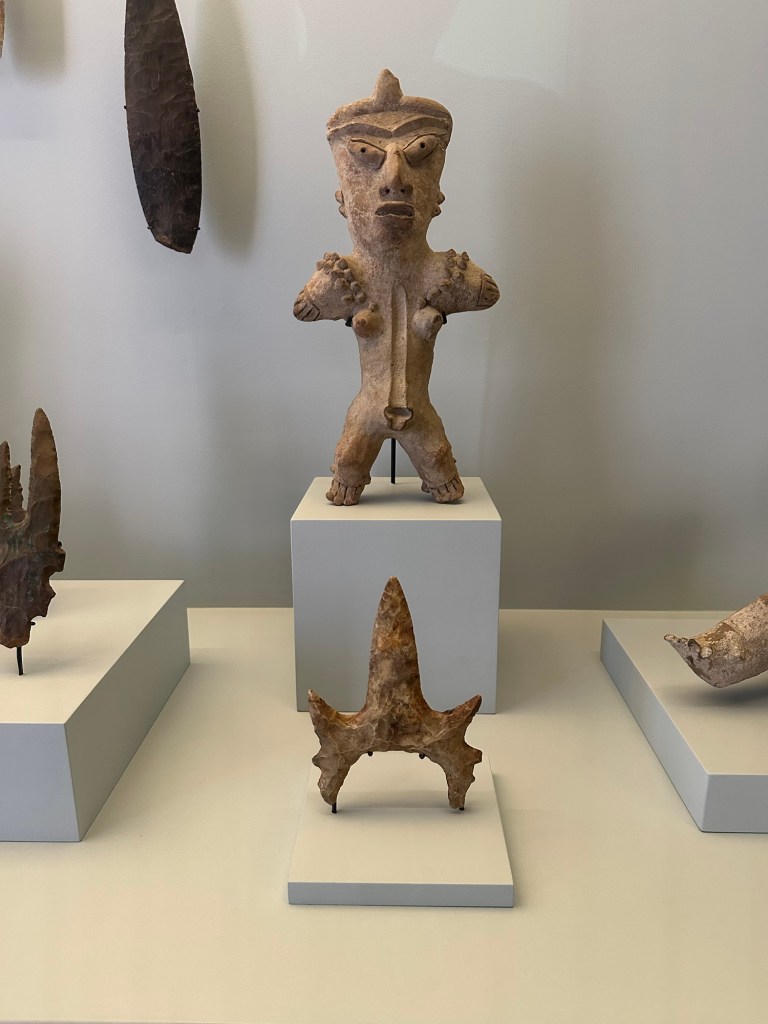
The Conquistadors arrived in Tenochtitlan in 1521. While only a few hundred in number, they found plenty of willing assistants in defeating the Mexicas from all the other groups in the region who were heartily sick of them, their warfare and using captives as sacrifices. Tenochtitlan fell to the Spanish after a siege where the other locals told the Conquistadors how to turn off the aqueduct supplying water to the city.
The Spanish promptly started to act like even bigger arseholes. They effectively enslaved the Mexicas and other Indigenous peoples and stole all their gold and silver. Several hundred years before the Poms came up with their own version of ‘terra nullius’ in Australia, the Spanish applied it in Meso-America.
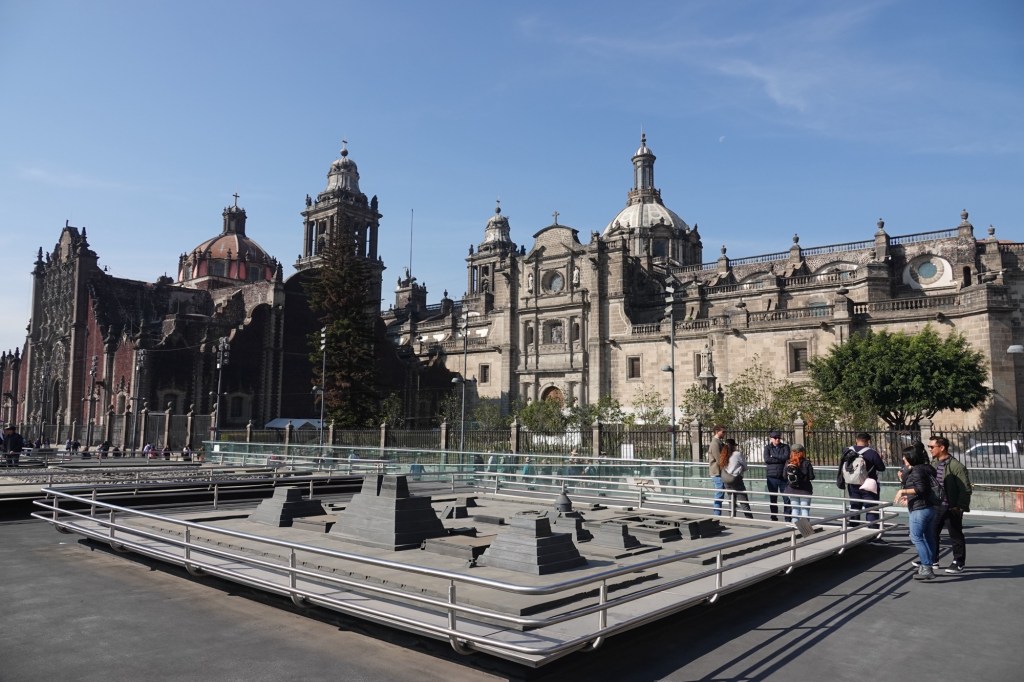
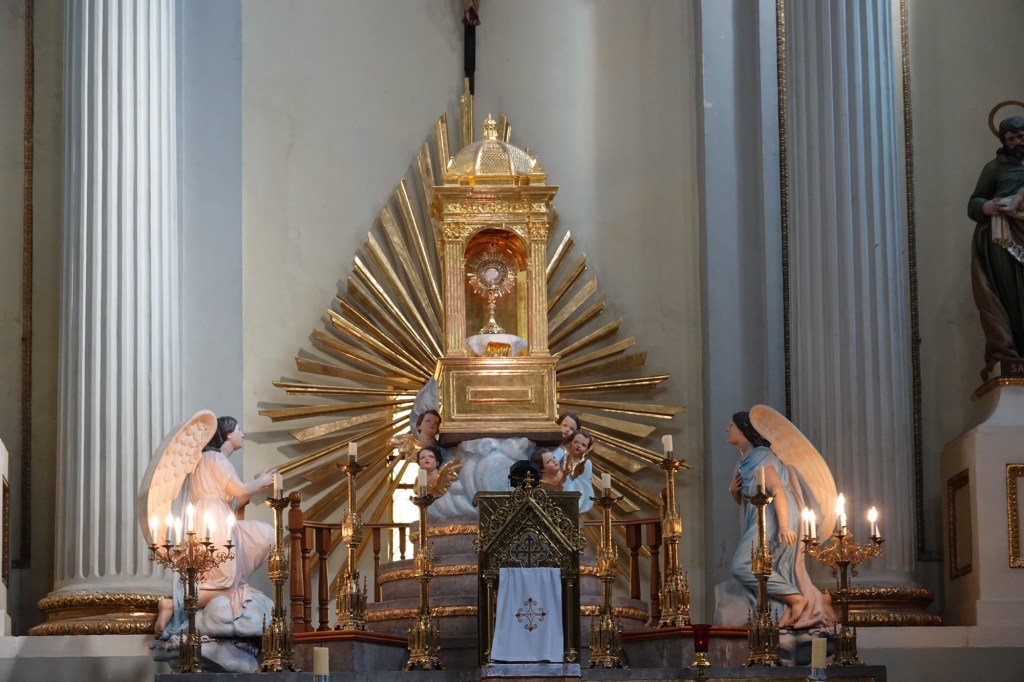
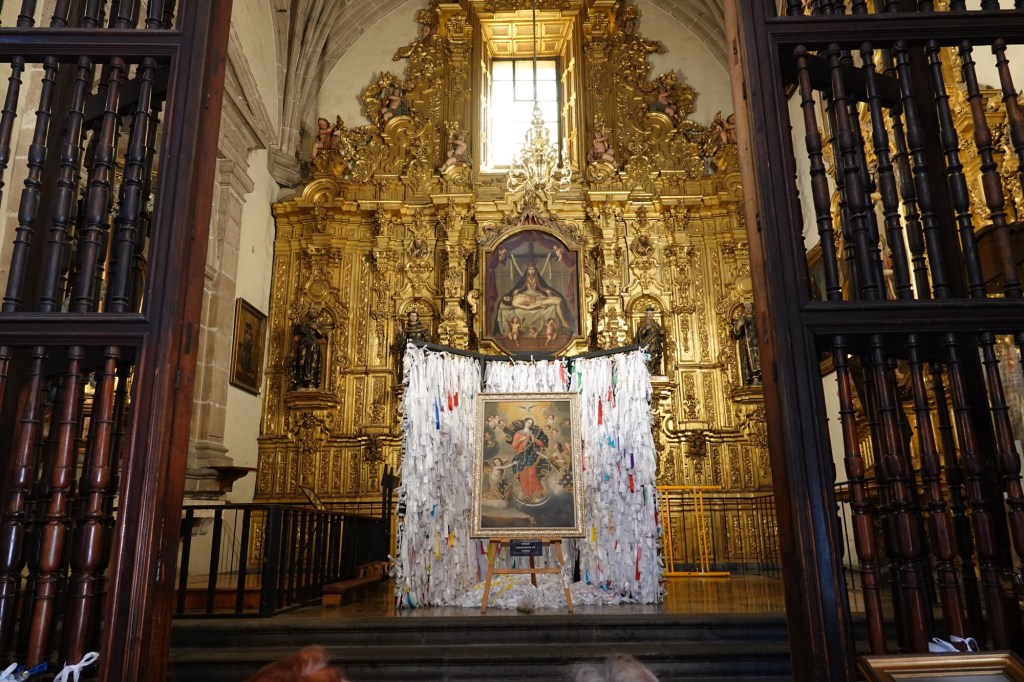
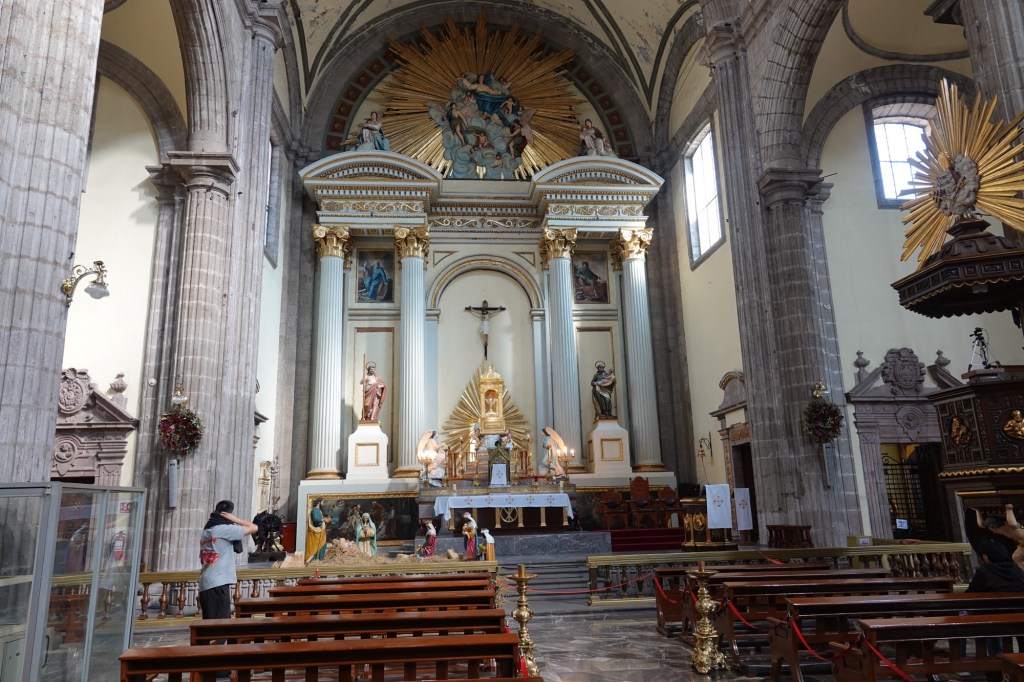
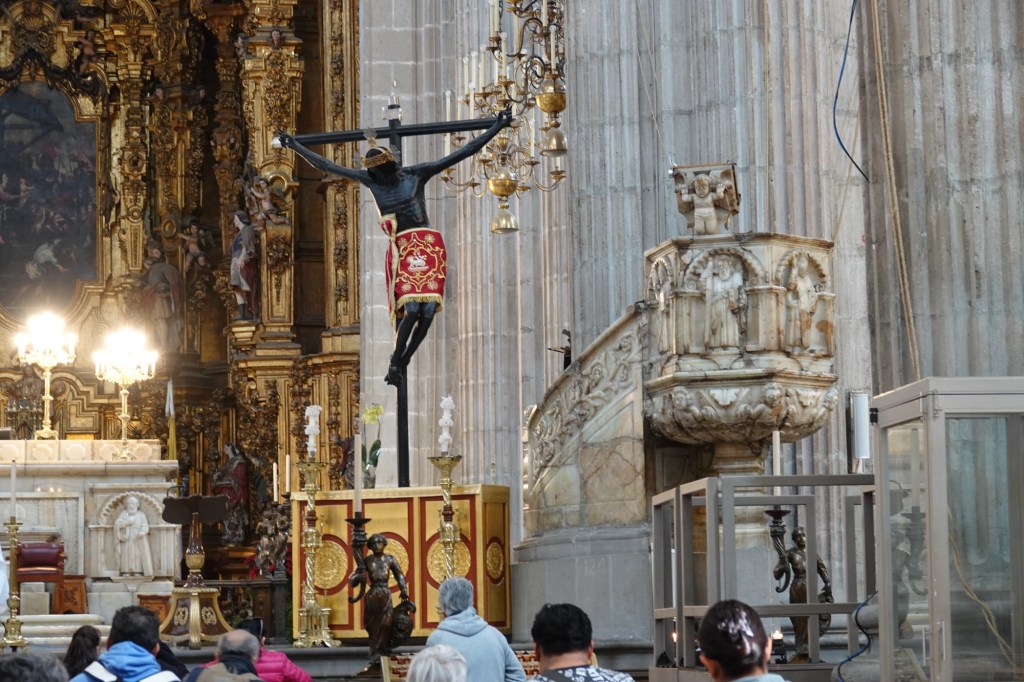
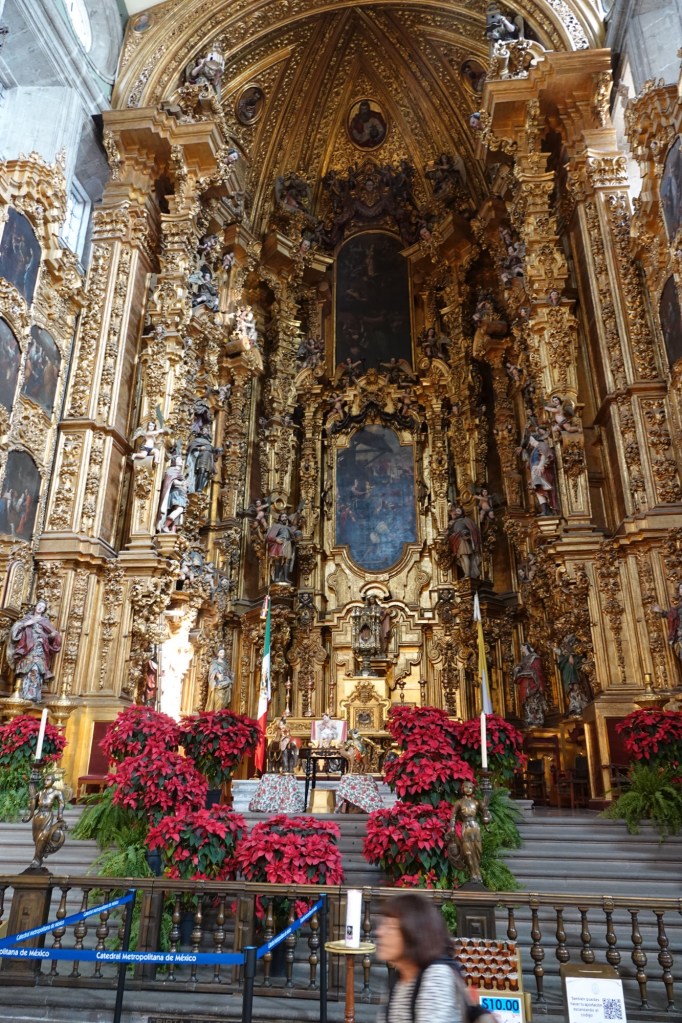
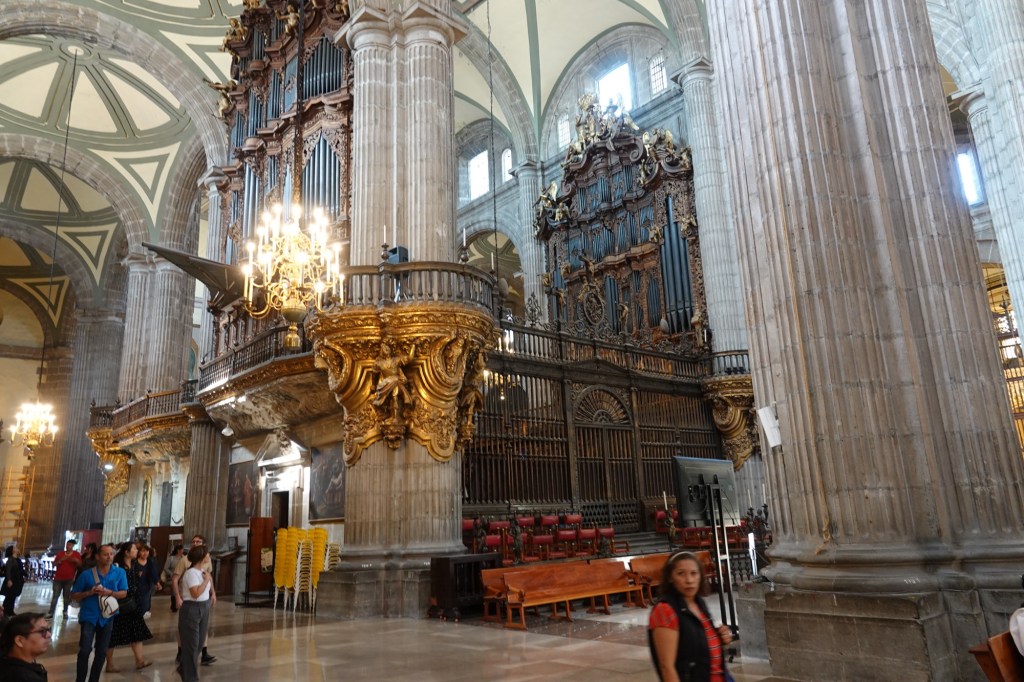
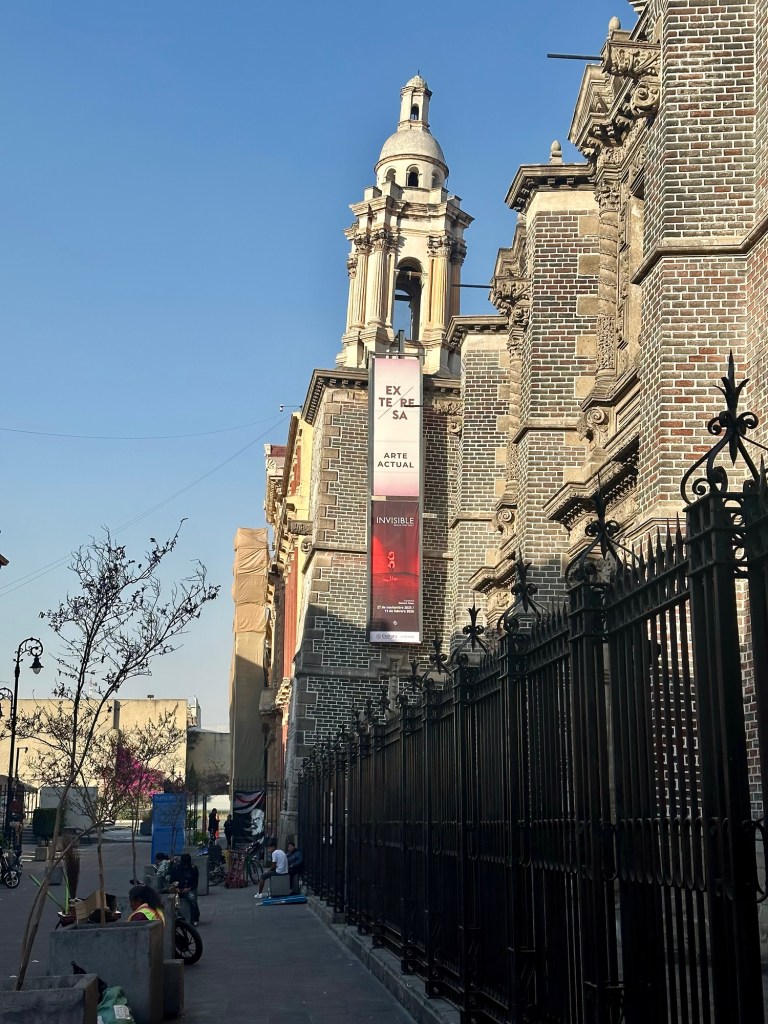
One of the first things the Spanish did was to tear down the central temple in Tenochtitlan and use the material to build a very large cathedral. Which still stands today, albeit it is sinking and tilting at a high rate… because it was built on the site of a swamp , just as Tenochtitlan was. This sinking/ tilting feature of Colonial buildings in Mexico City is evident throughout the central city region.
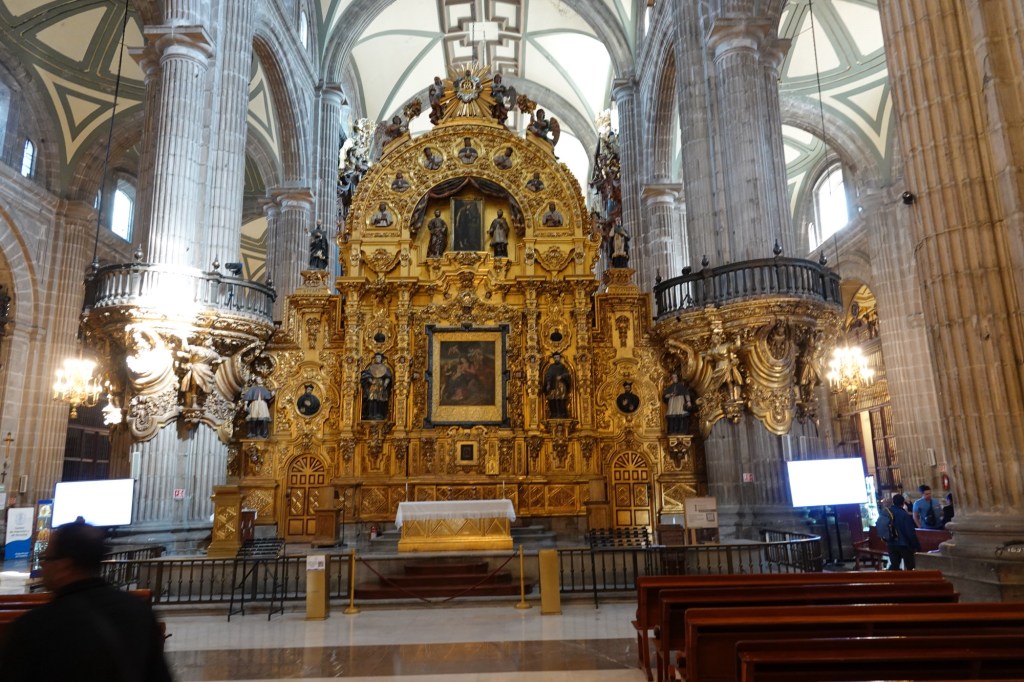
The cathedral itself is ‘grand’ – certainly on a par with those we saw in Grenada or Seville. Although we think the Mesquita in Cordoba remains the most interesting Spanish cathedral we have seen.
Images of Spanish Catholicism expression in architecture follow:
The rest of the walking tour explored many different aspects of Mexico’s history.
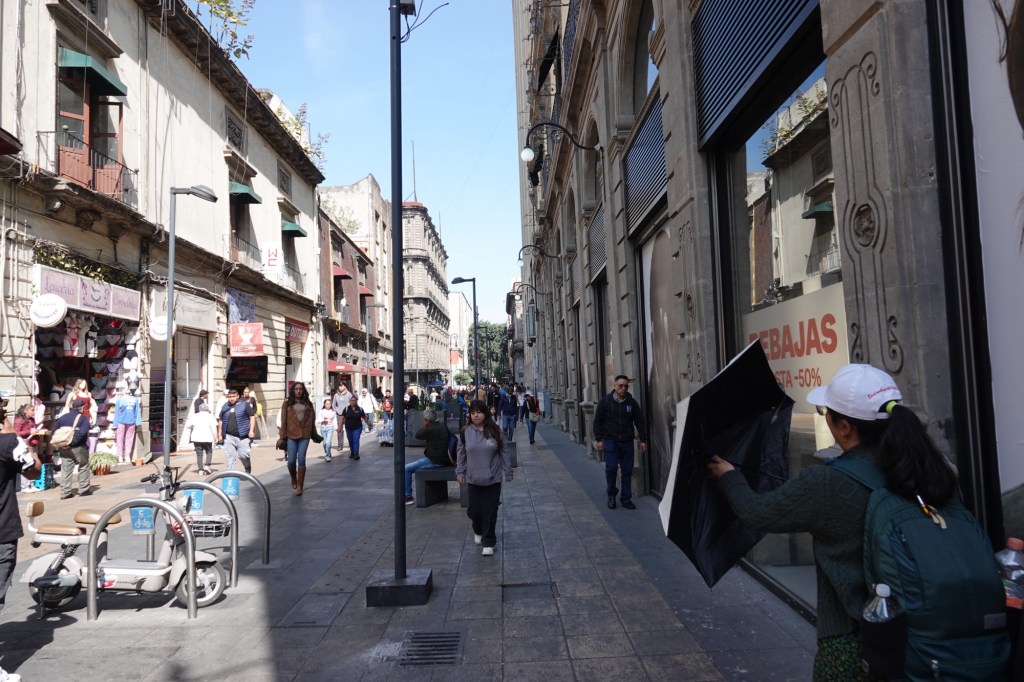
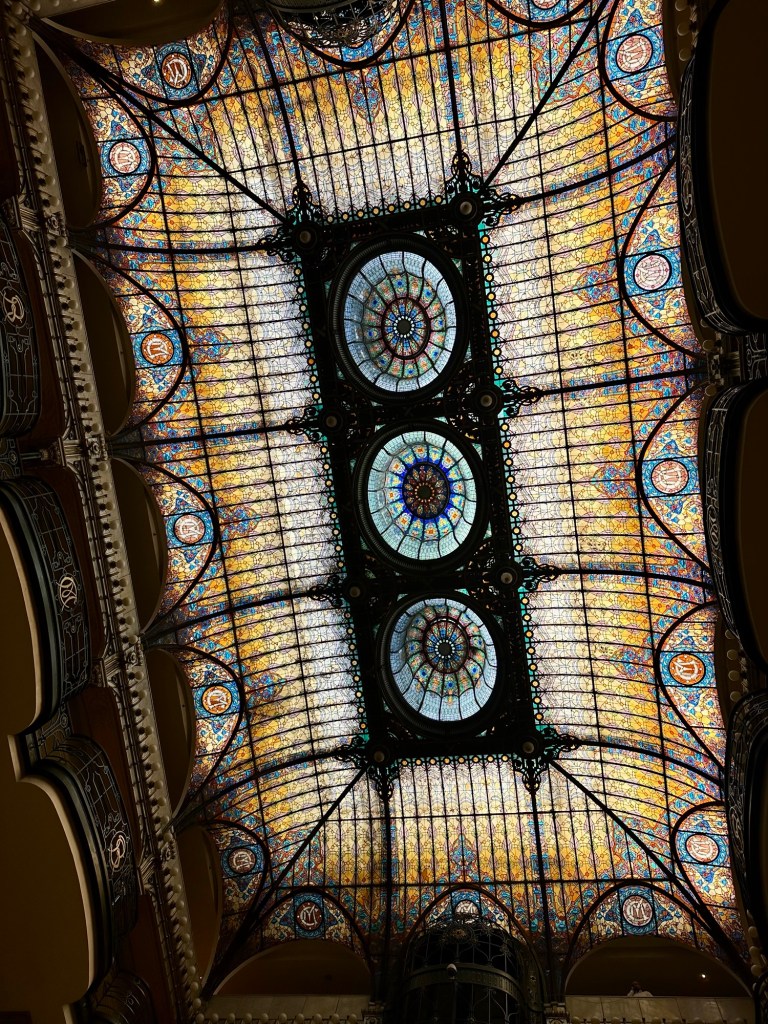
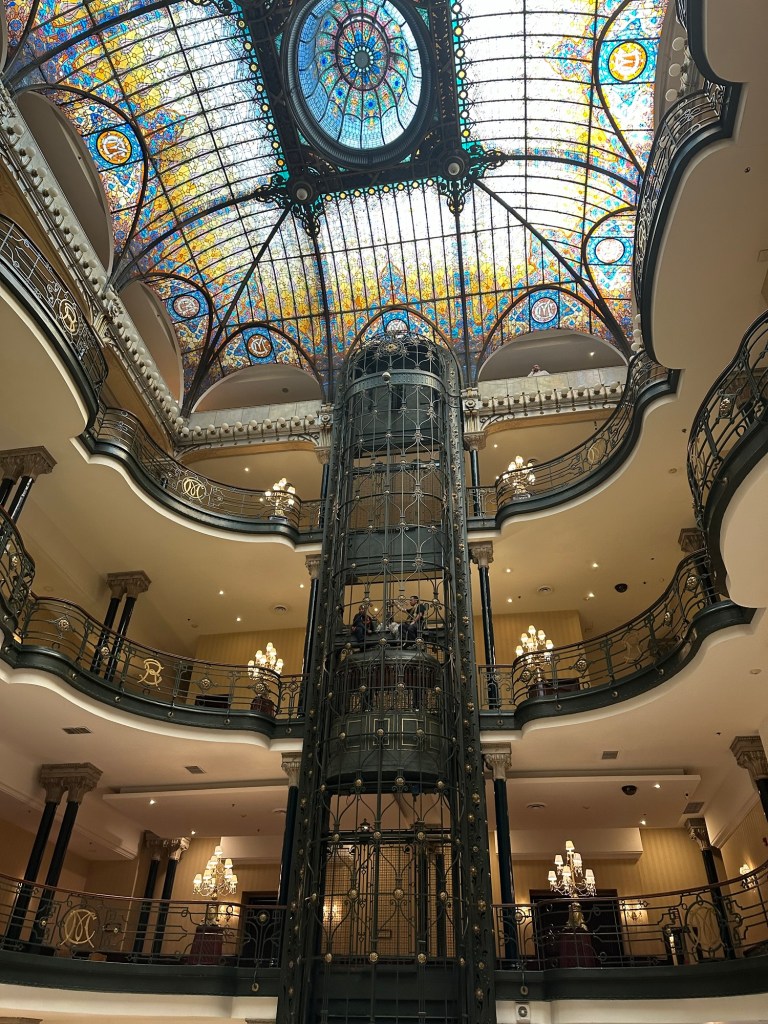
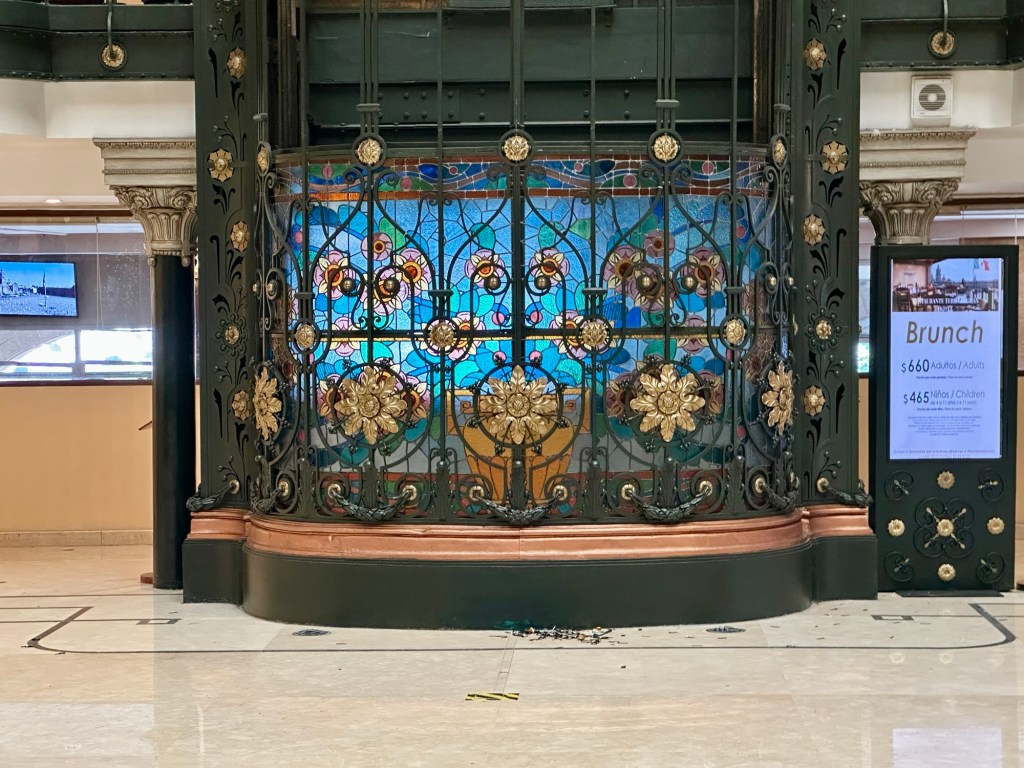
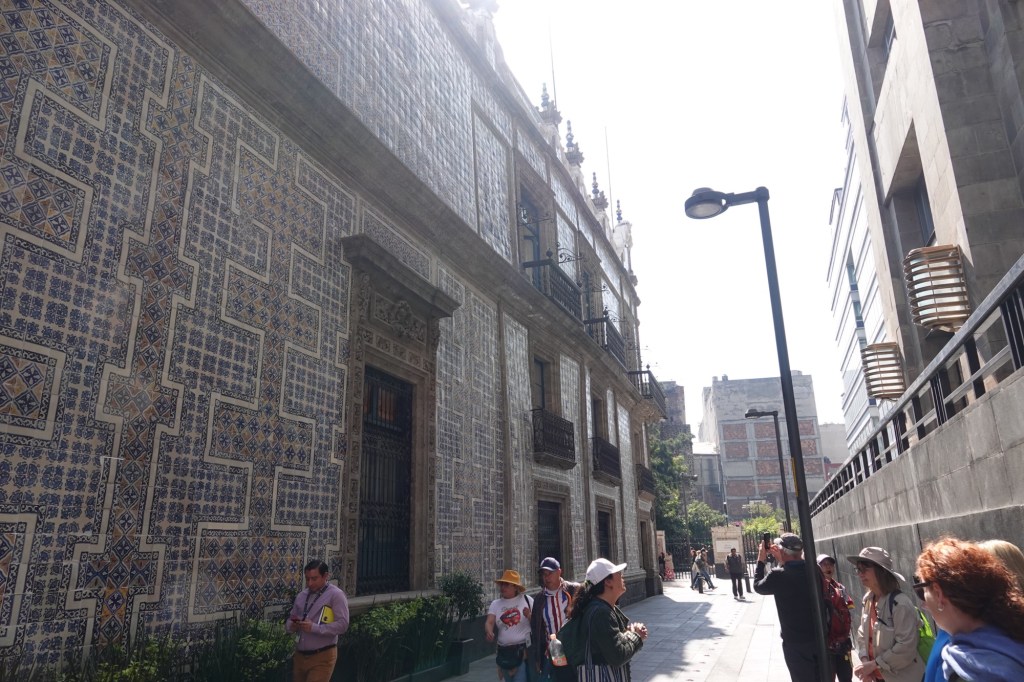
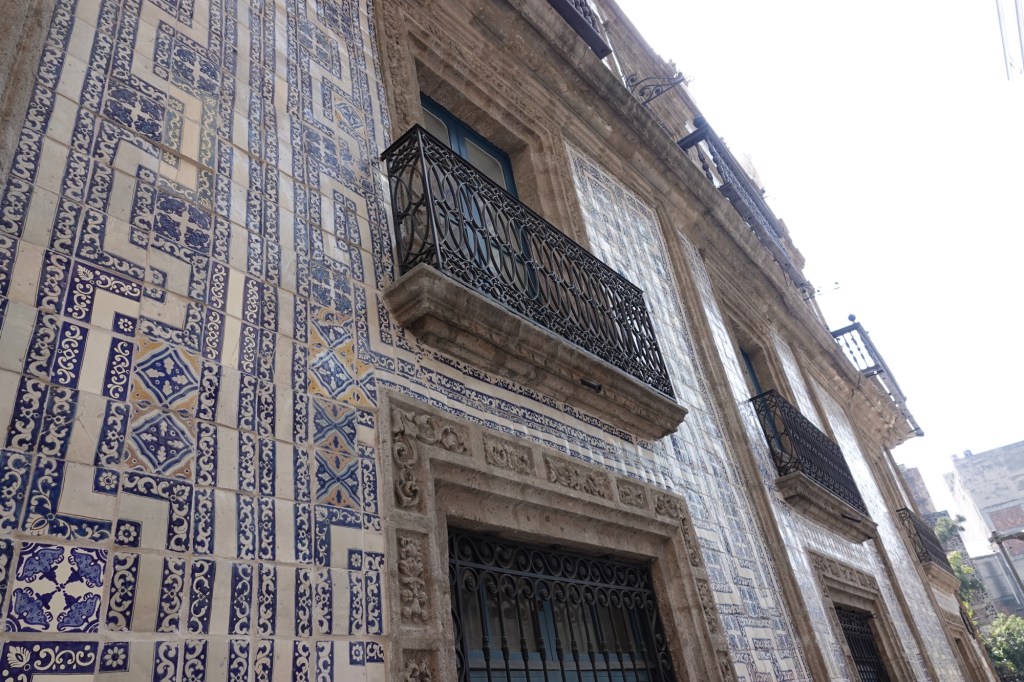
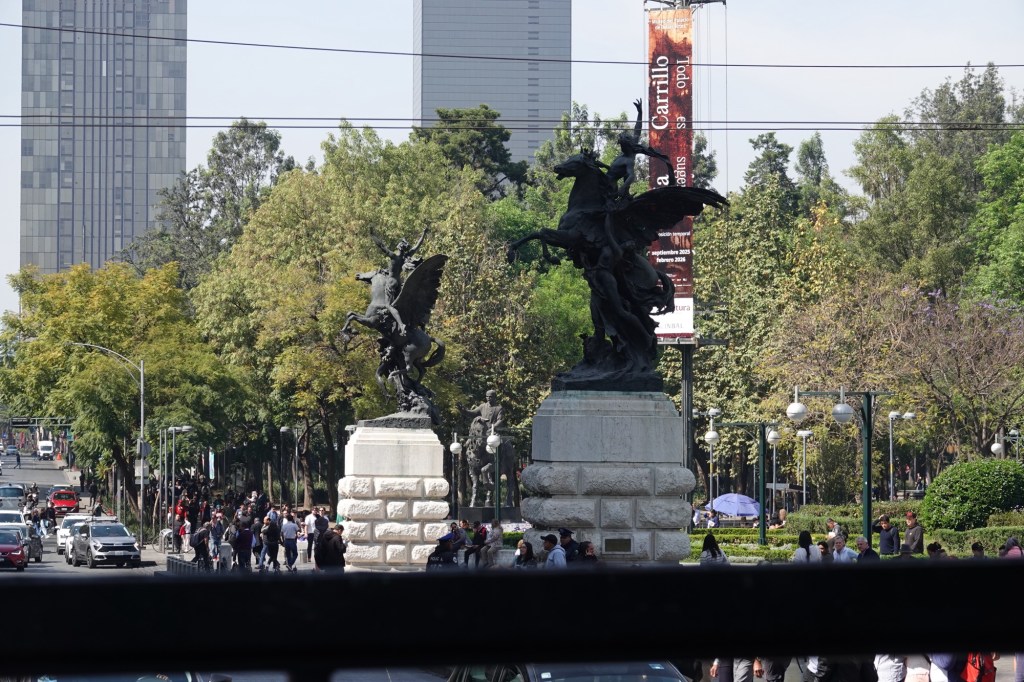
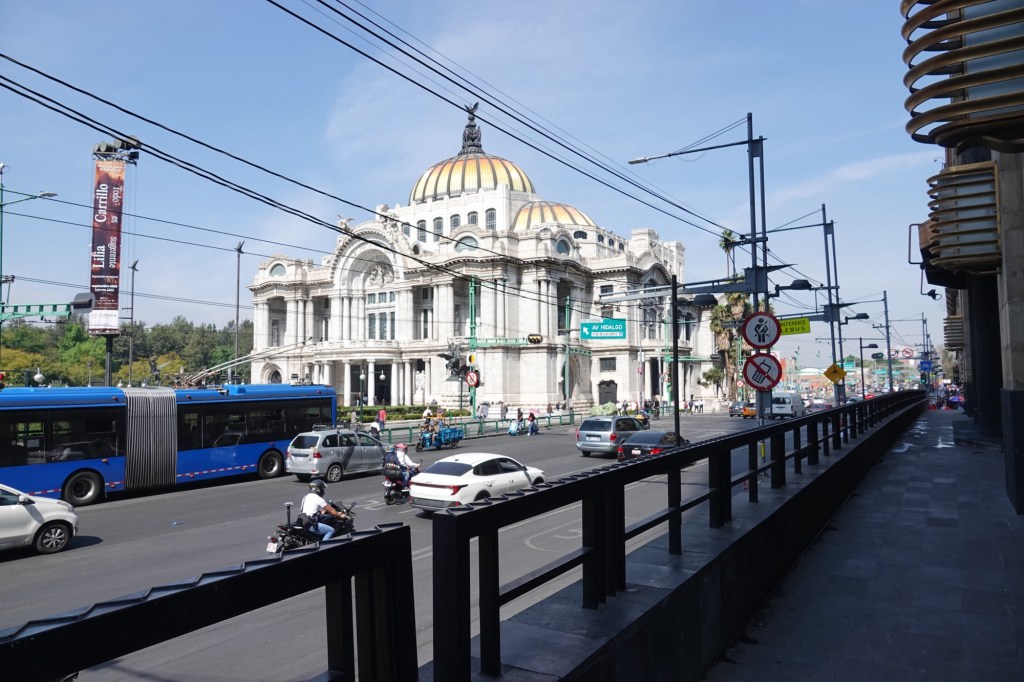
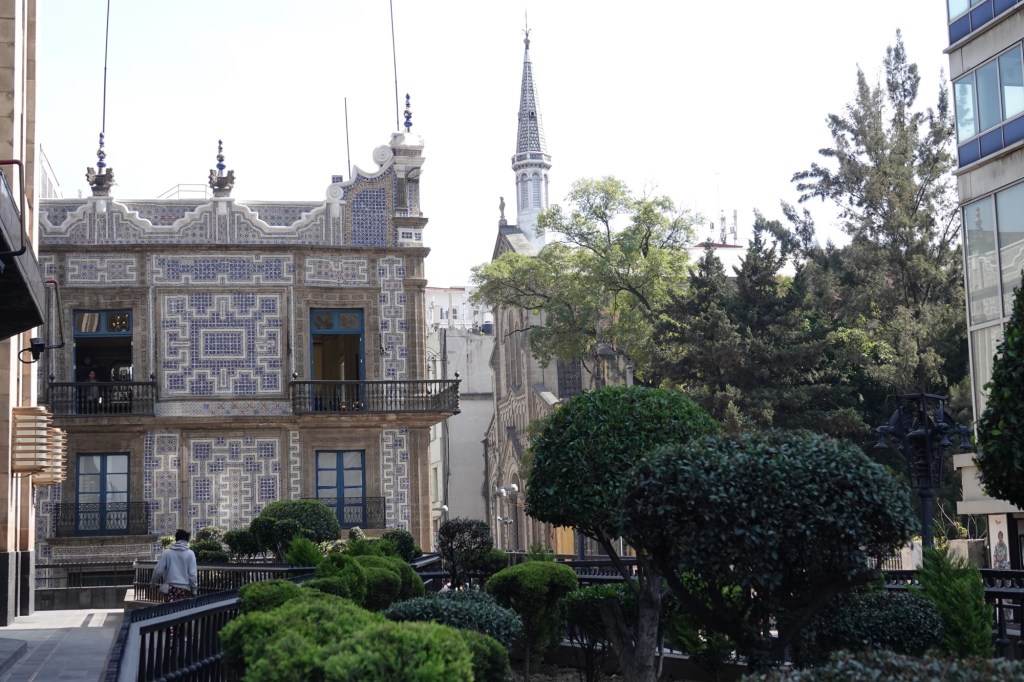
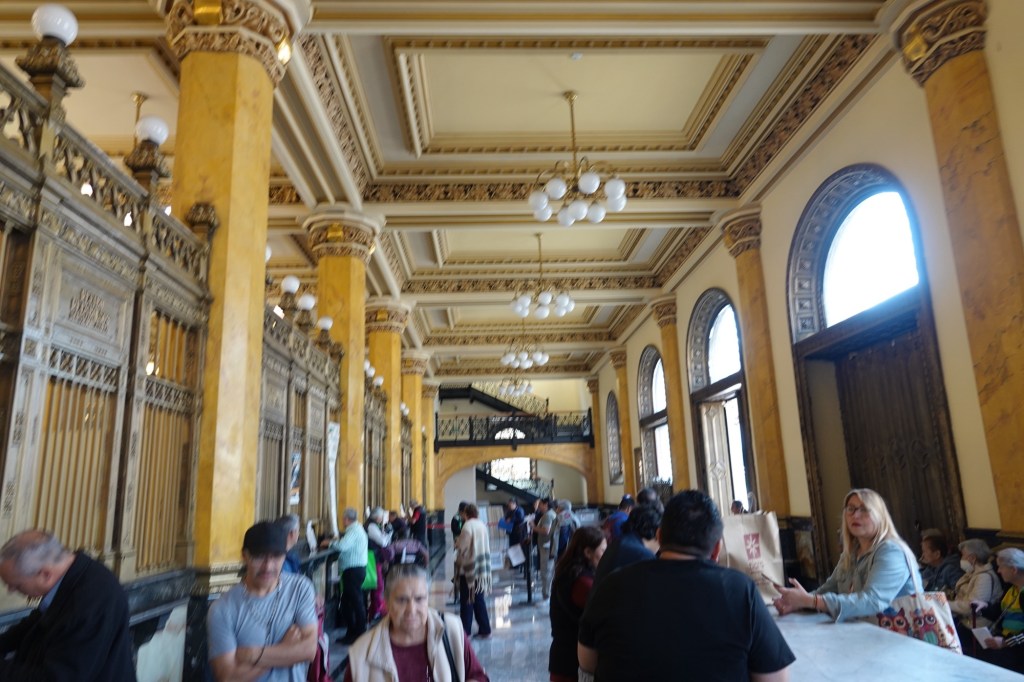
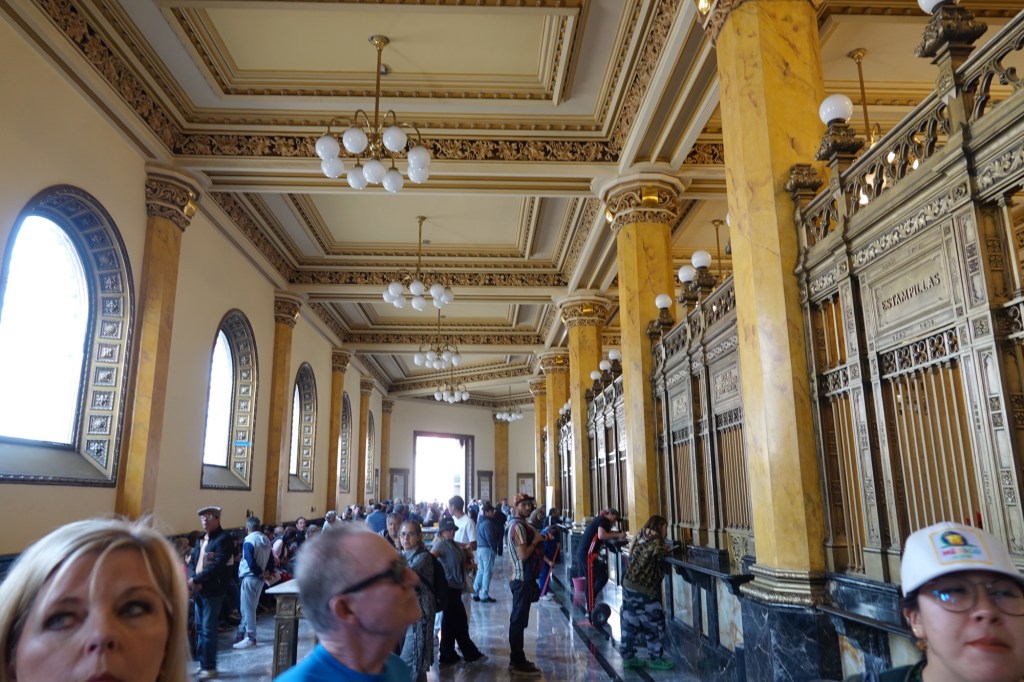
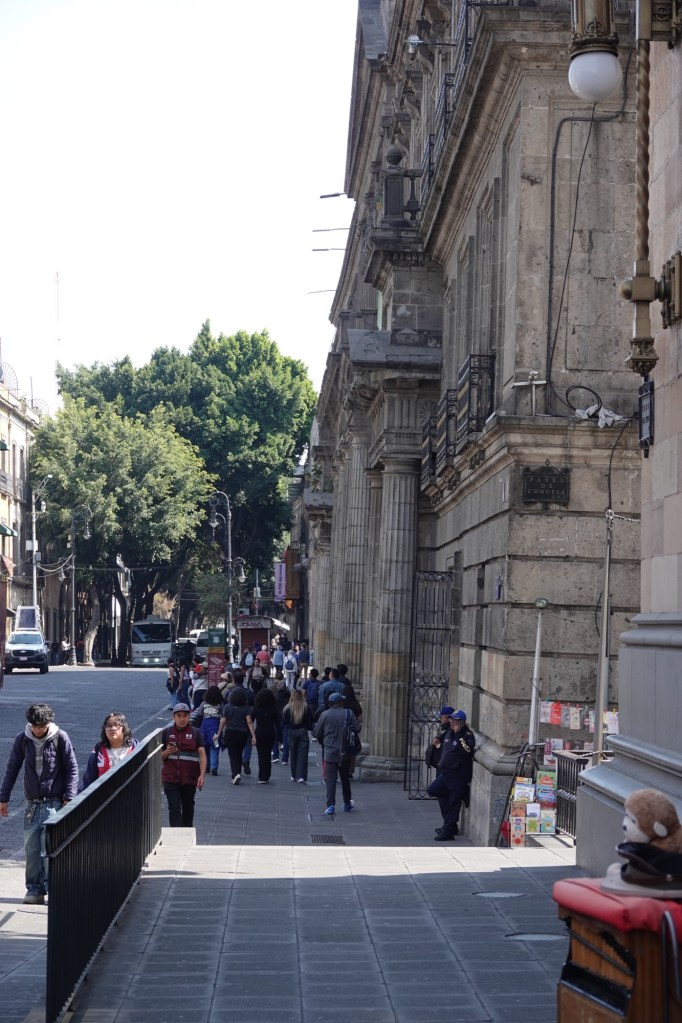
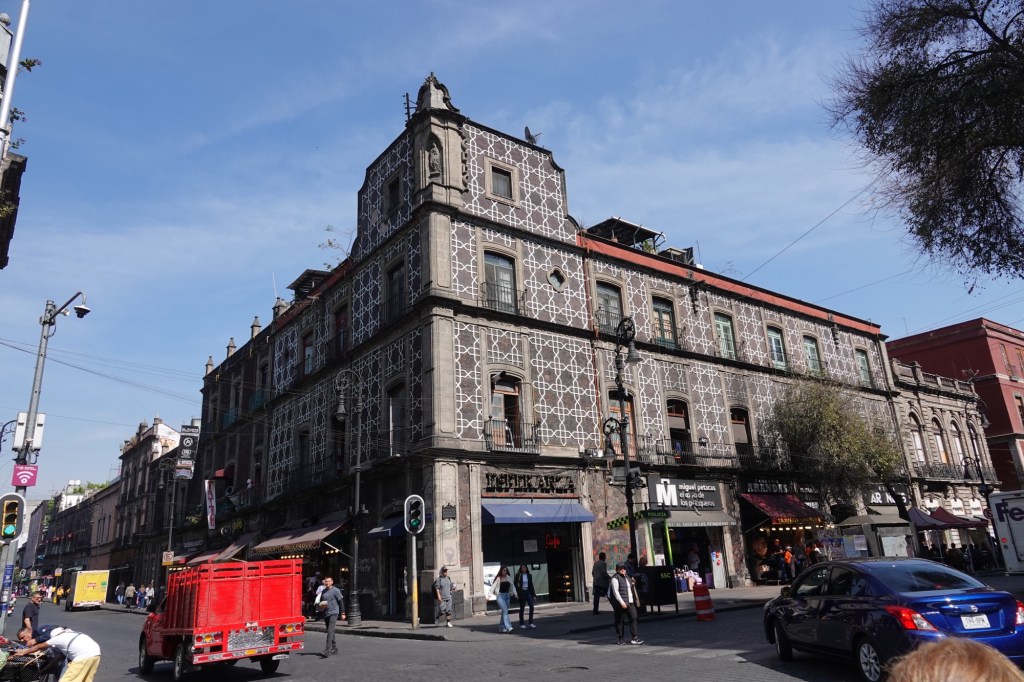
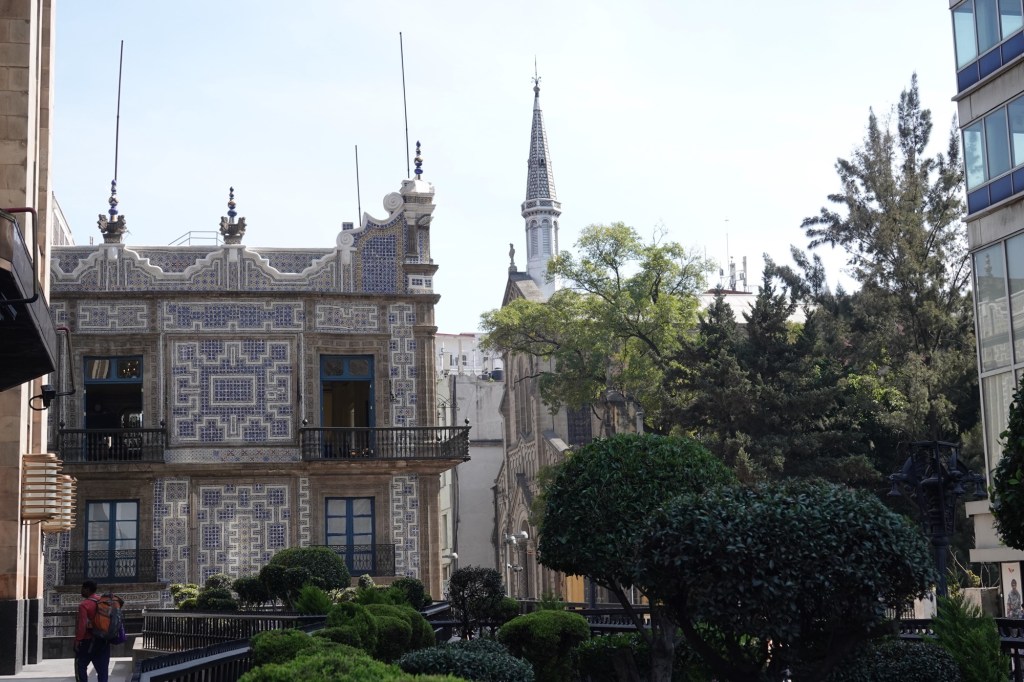
The Centro district has a lot of streets named after various revolutionary events and people in Mexico’s relatively rich history of revolutionary events and people.
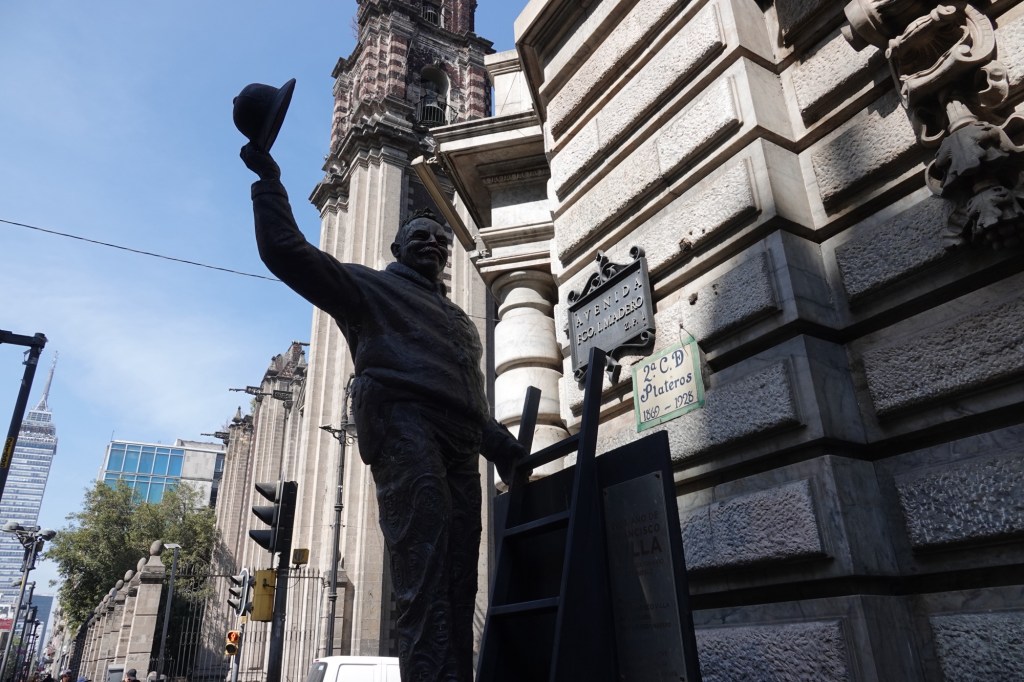
Francisco Ignacio Madero González , killed in a Coup de Etat in February 1913
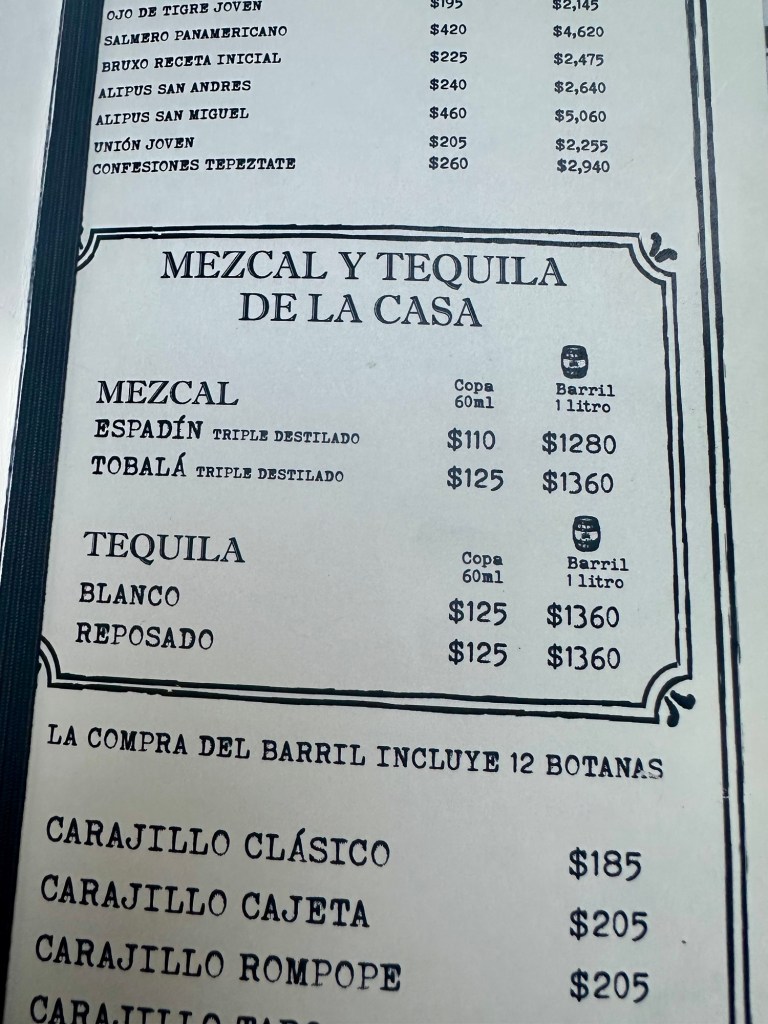
We went out for drinks and dinner that night to a local ‘tapas’ style restaurant in the courtyard of a historic colonial house. Here we discovered just how many different tequilas there are in Mexico.

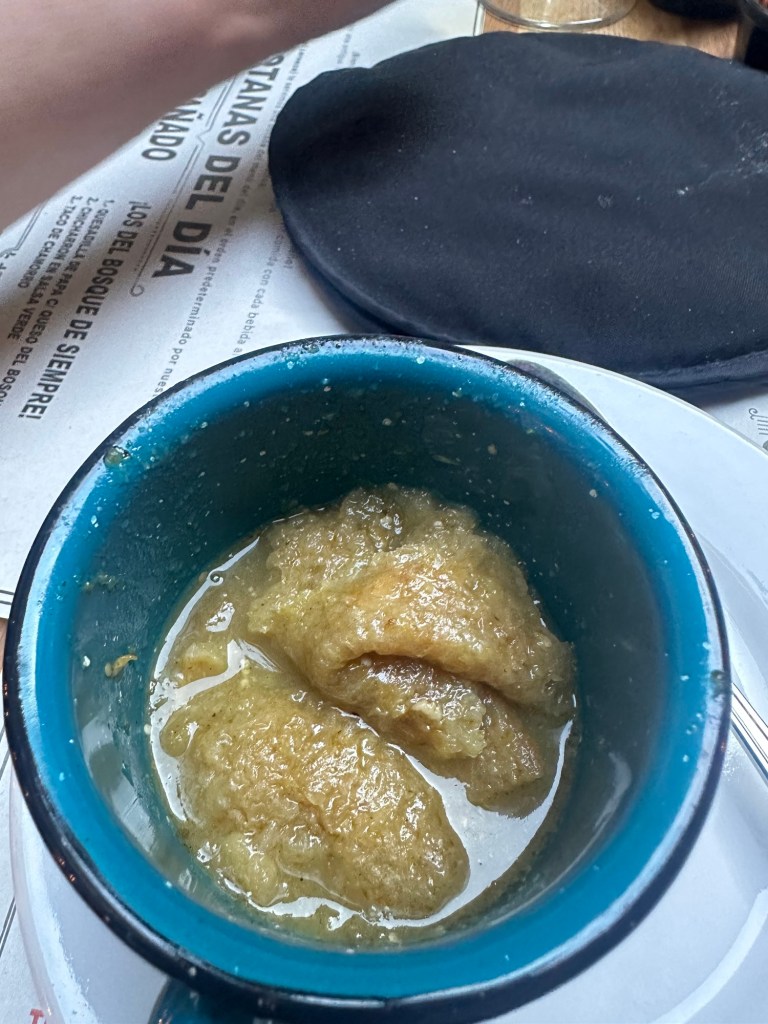
We also discovered Mexico City’s version of Vegemite- something we reckon you could only love if you grew up with it – Chicharrón en Salsa Verde. AKA pork crackling stewed in a spicy green sauce. Picture follows:
Teotihuacan
We were up early for our pick up for a day trip out to Teotihuacan. This is a significant archaeological site to the near north east of Mexico City that was occupied from around 100BC to around 500 AD. It was essentially abandoned then due to internal conflict caused by environmental degradation. Essentially they had ran out of water and wood. The subsequent fight led to the place being burnt down and the loss of many records. This means not a lot is known about the people who lived here, or where they went , as the place was dormant long before the colonial era. Indeed, when the Aztec’s wandered through some 800 years later they thought many of the pyramids lining the 5km long central plaza were tombs. This is why they called to that stretch ‘The avenue of the dead’ – a name that remains today. In time the site was lost to history, until when attempting to dynamite a ‘hill’ to construct a railway in the 19th century the Temple of the Sun pyramid was rediscovered.
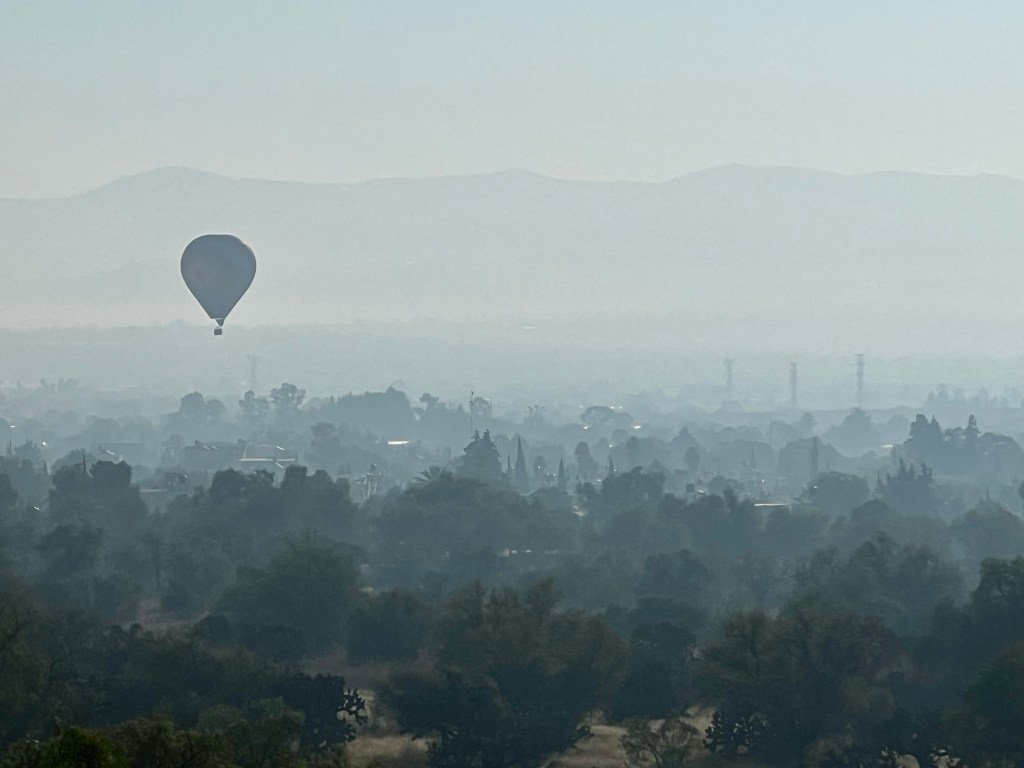
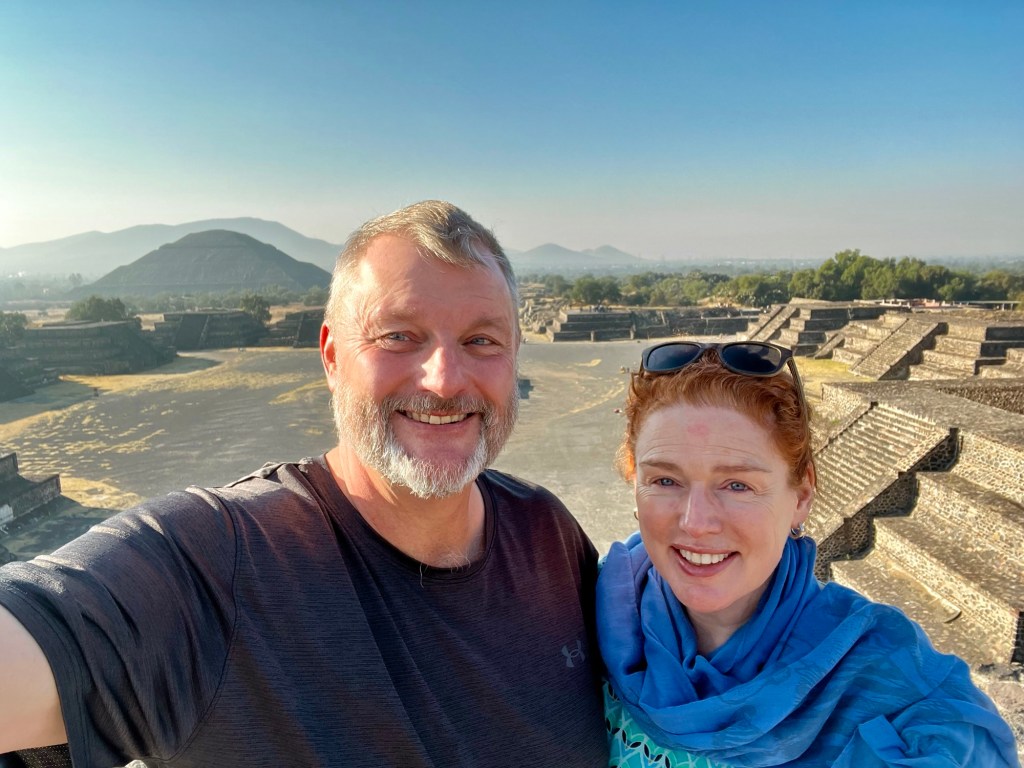
In its heyday Teotihuacan covered an area of 22 x 22 km and was home to an estimated 200,000 people . Three large pyramidal temples – that of the Moon, Sun and Feather Serpent are present. These names are necessarily what the Teotihuacan’s called them – we simply don’t know , they are names given by modern anthropologists and archaeologists. The temples line up with the pattern seen in Orion’s Belt. These Temple of the Sun had a column sit at the peak that was used to determine the equinox and set the calendar.
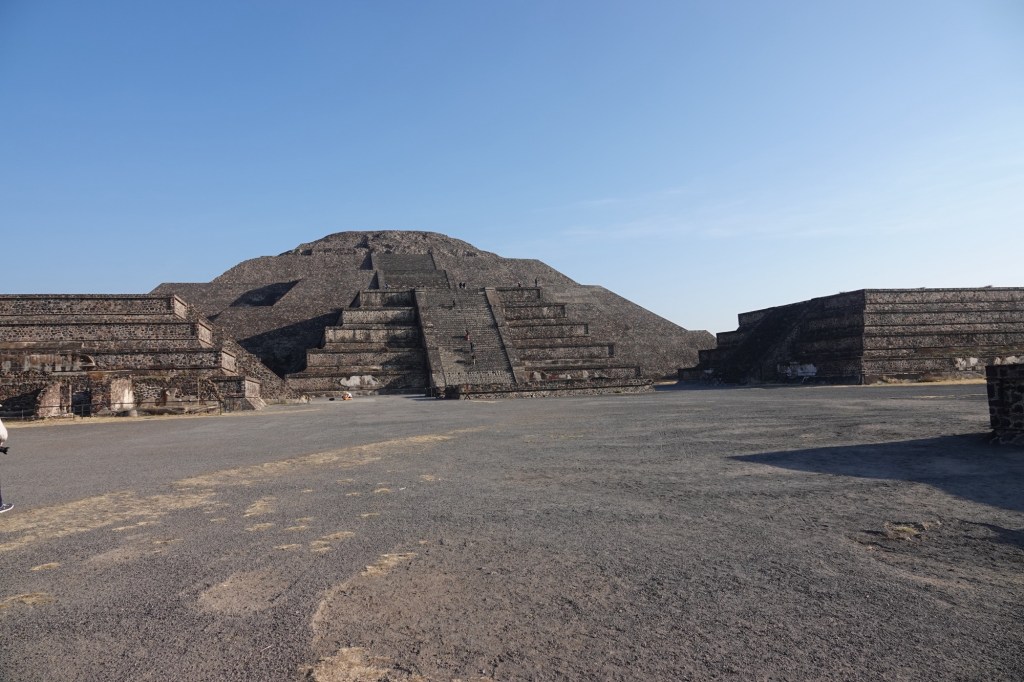
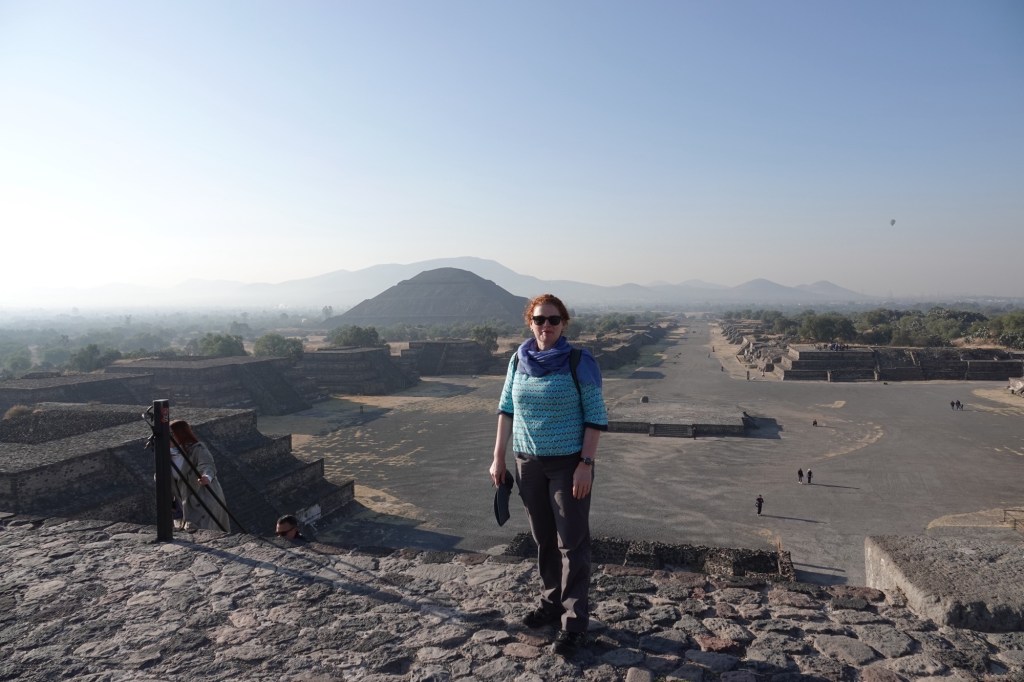
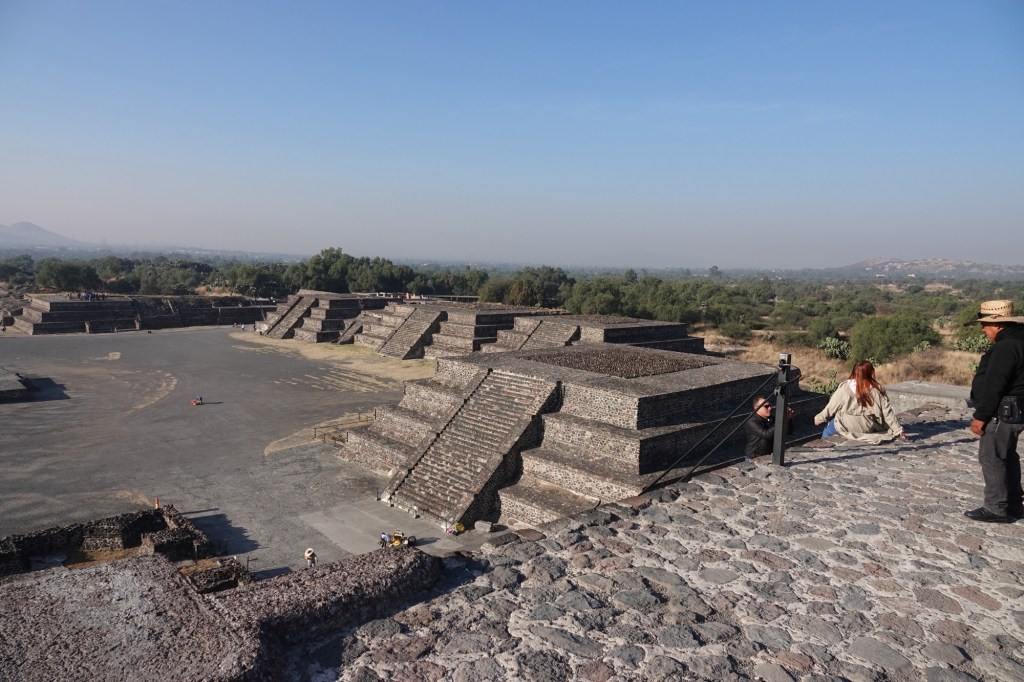
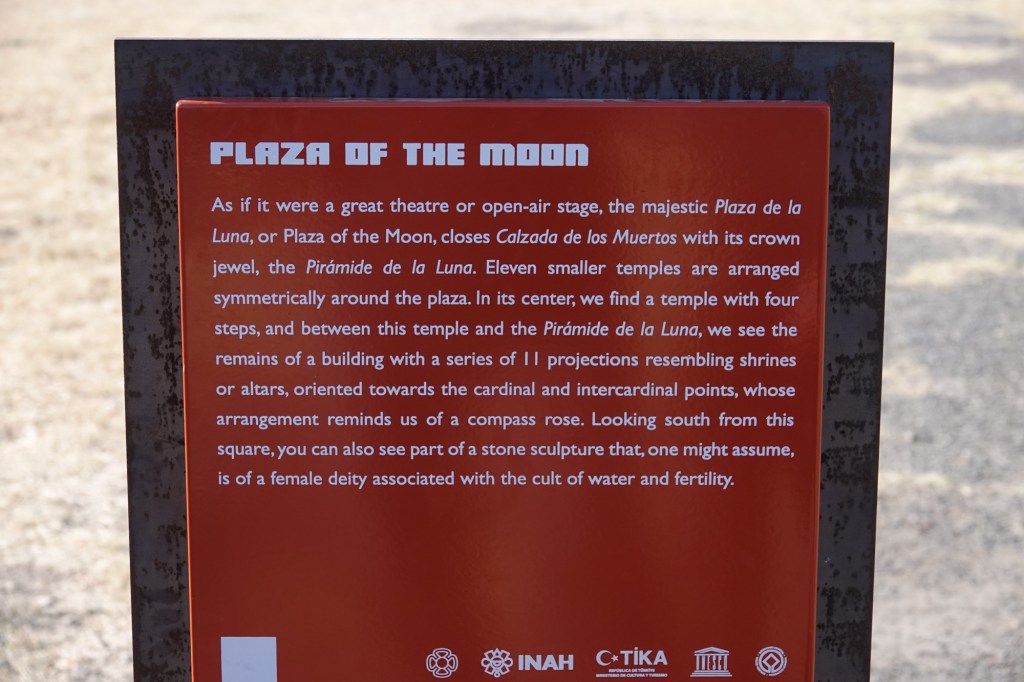
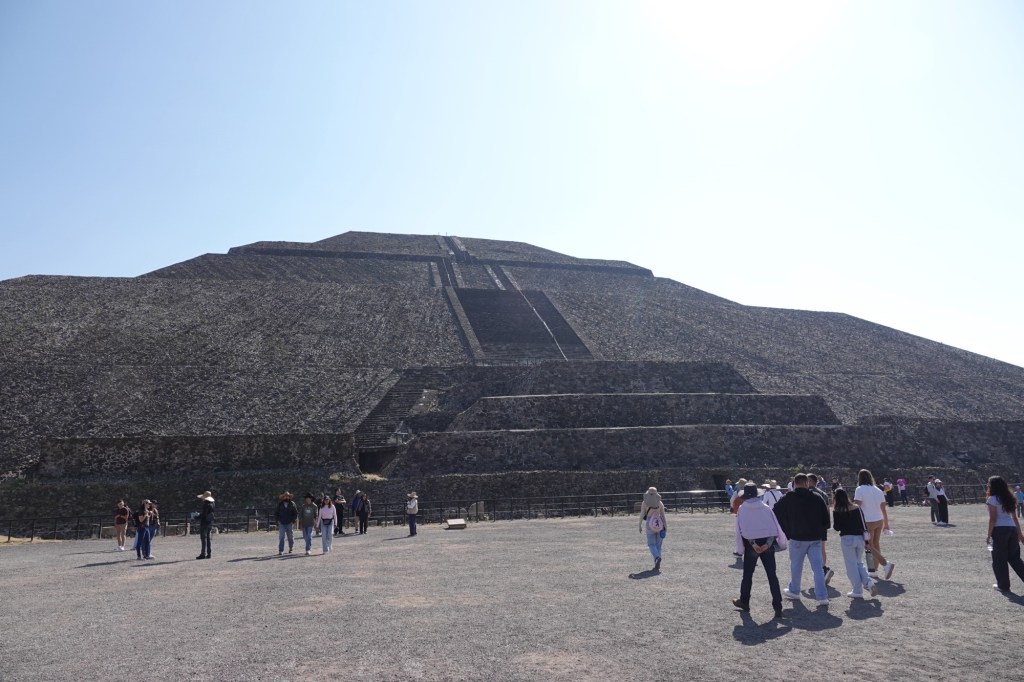
Gallery of images from Teotihuacan:
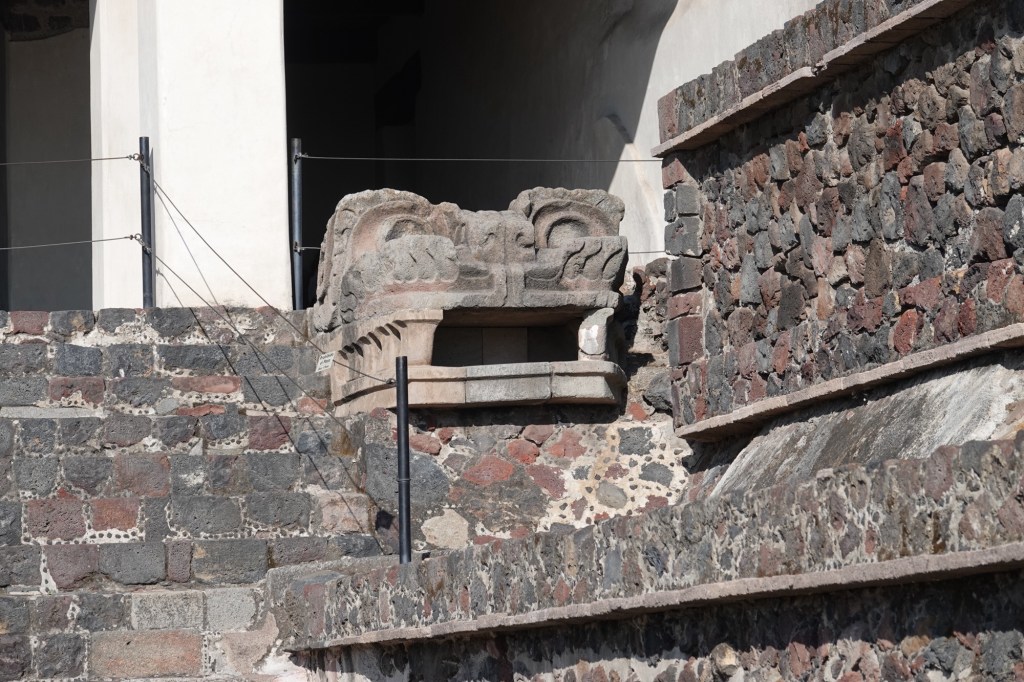
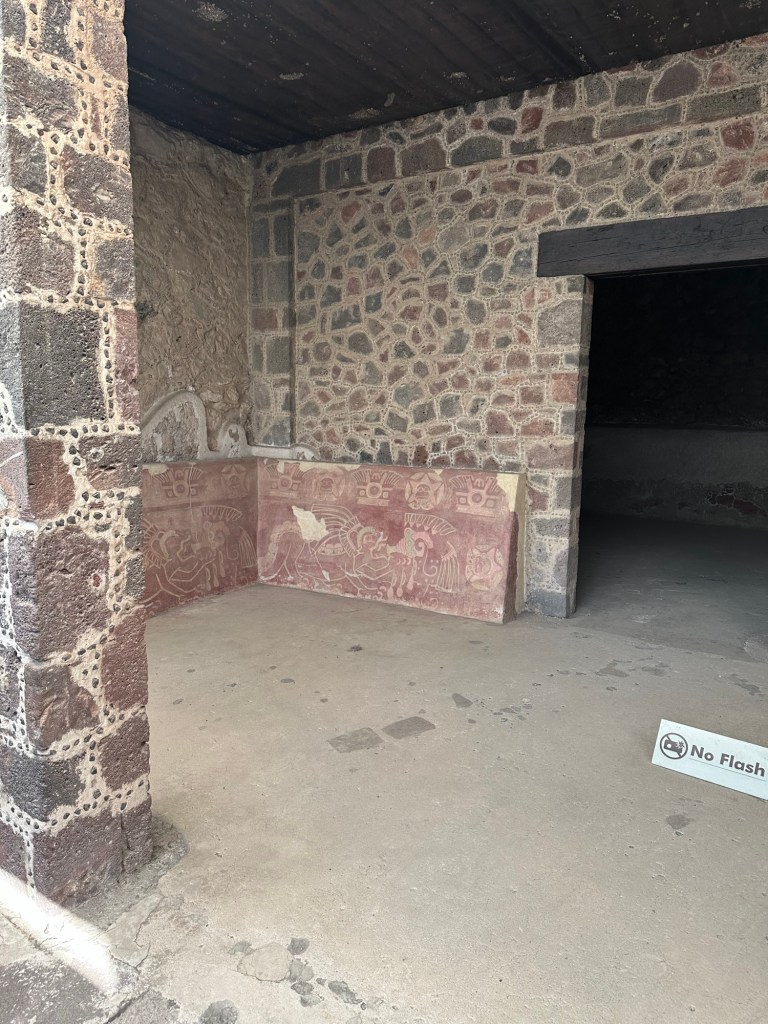
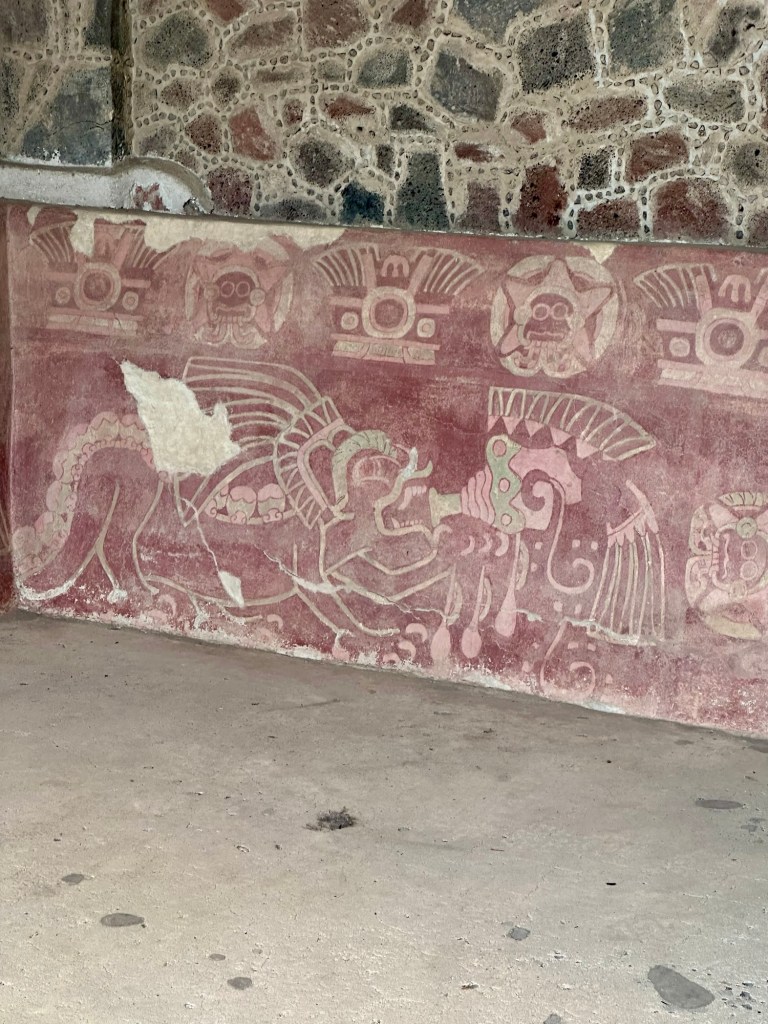
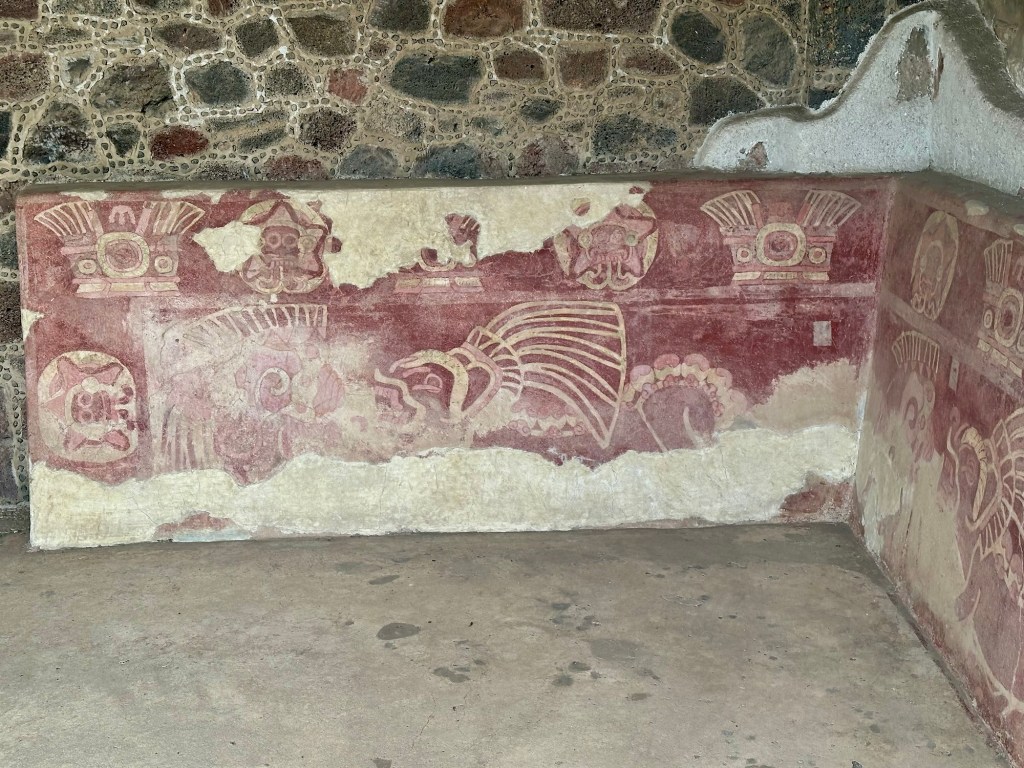
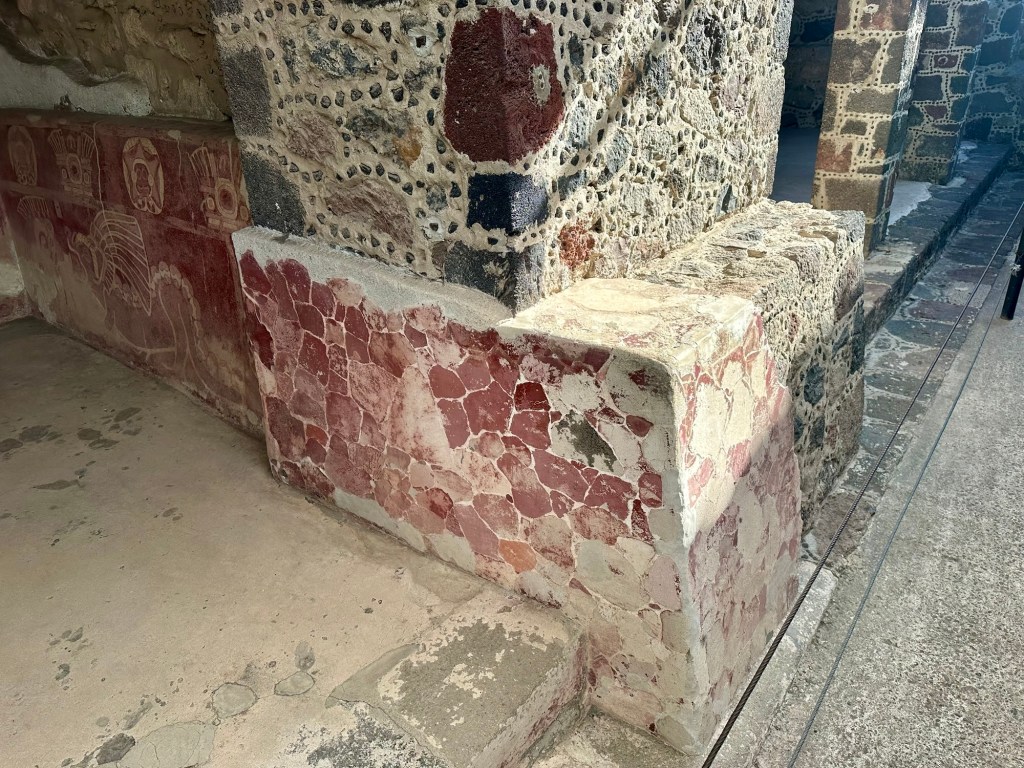
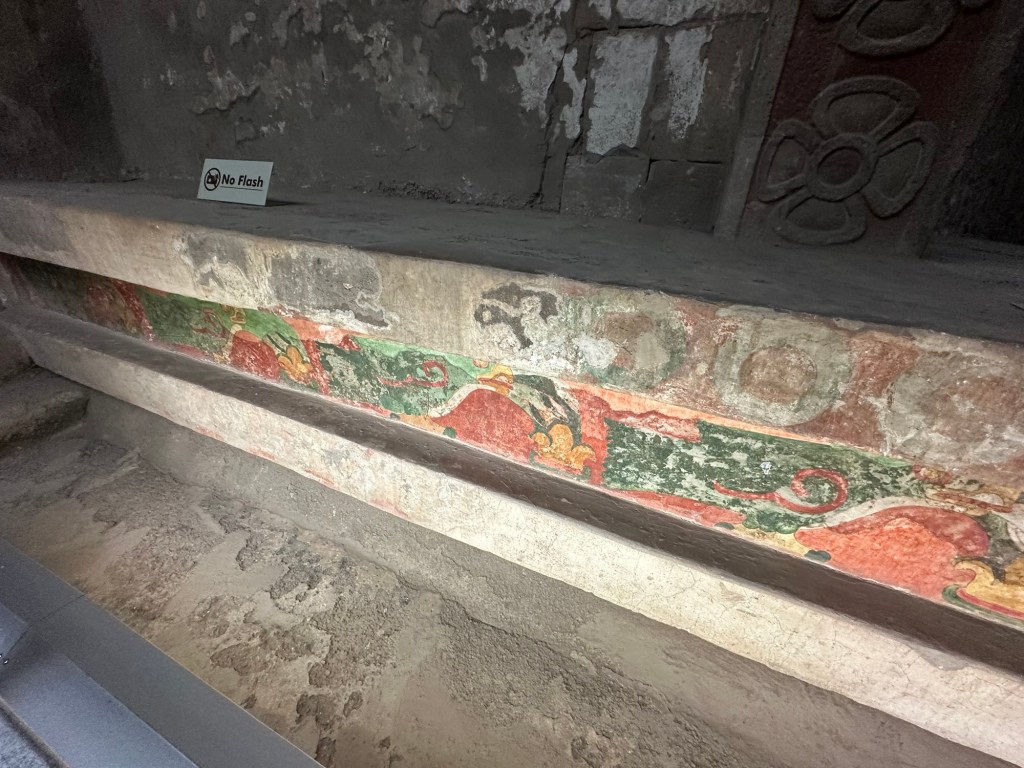
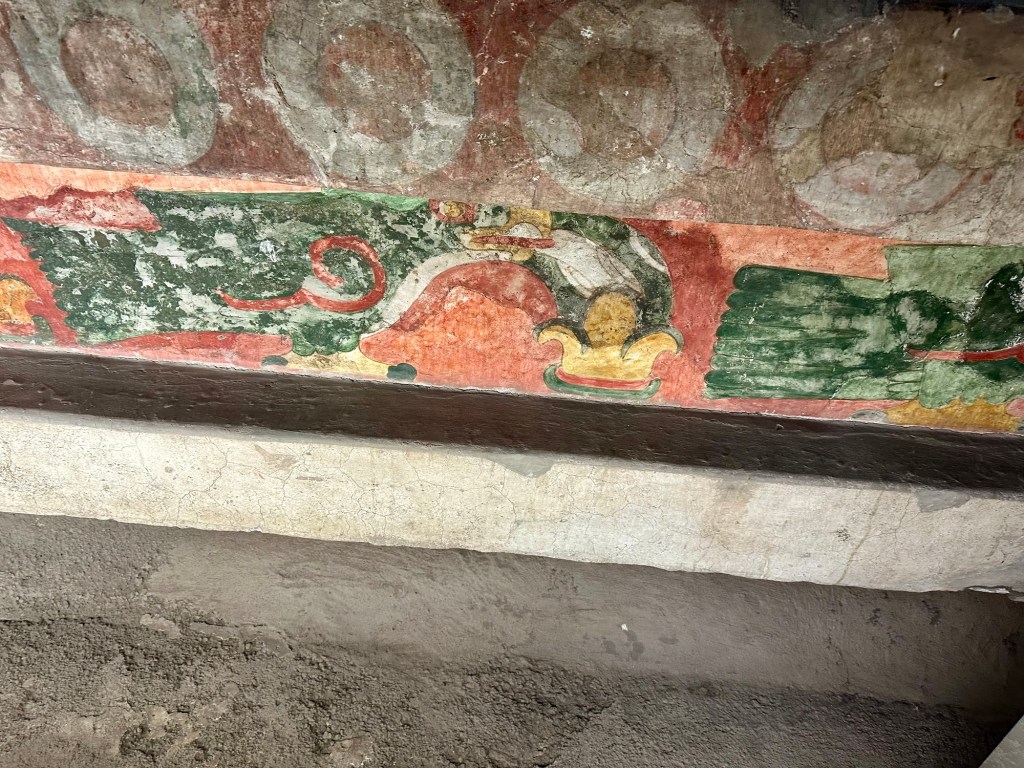
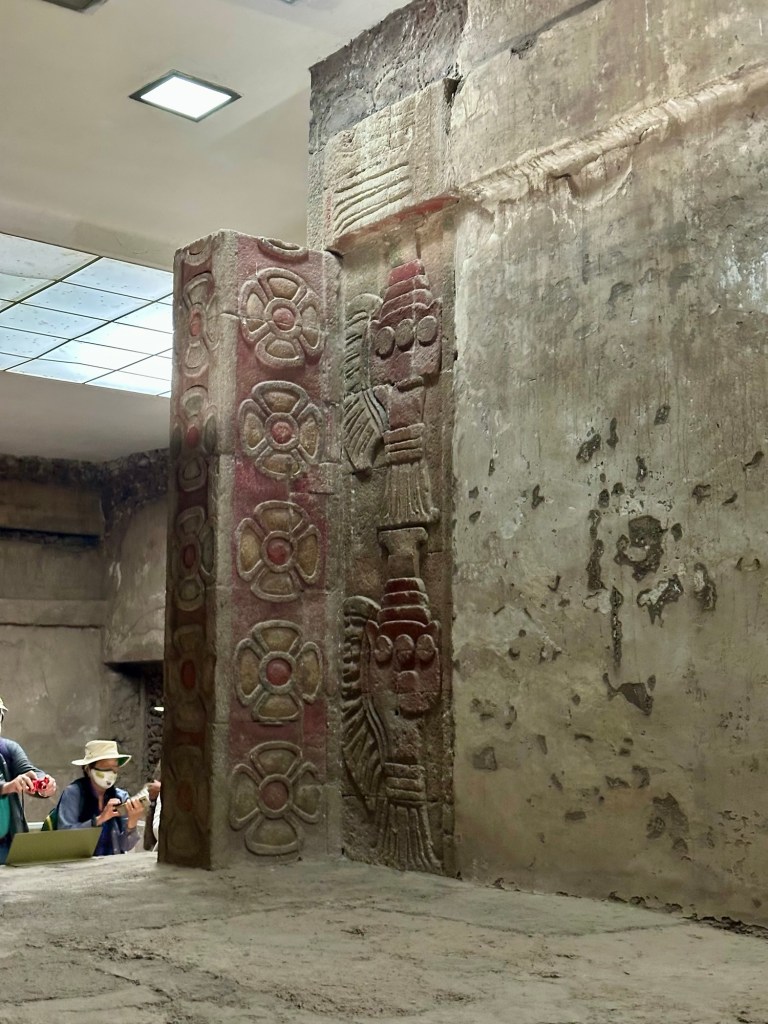
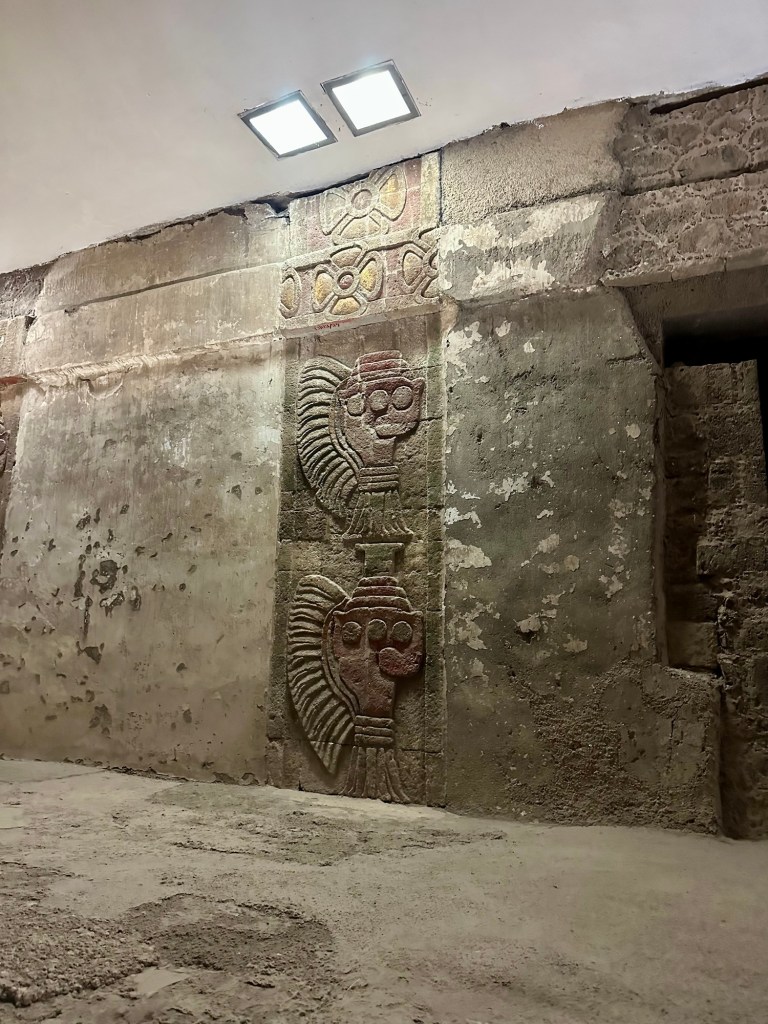
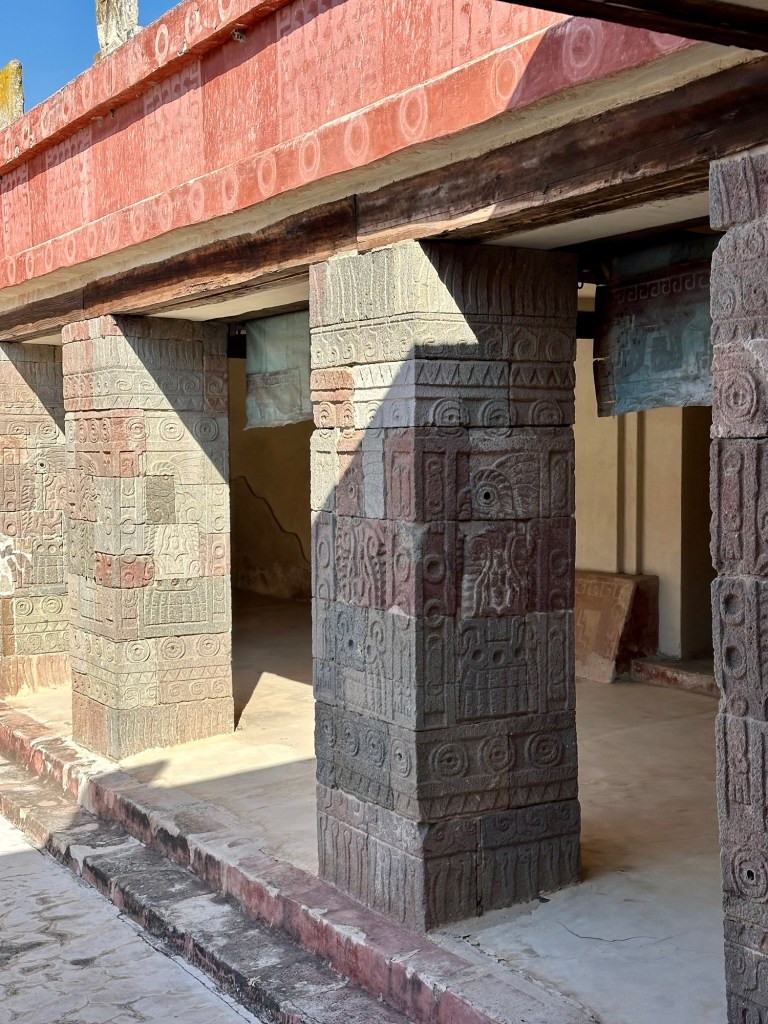
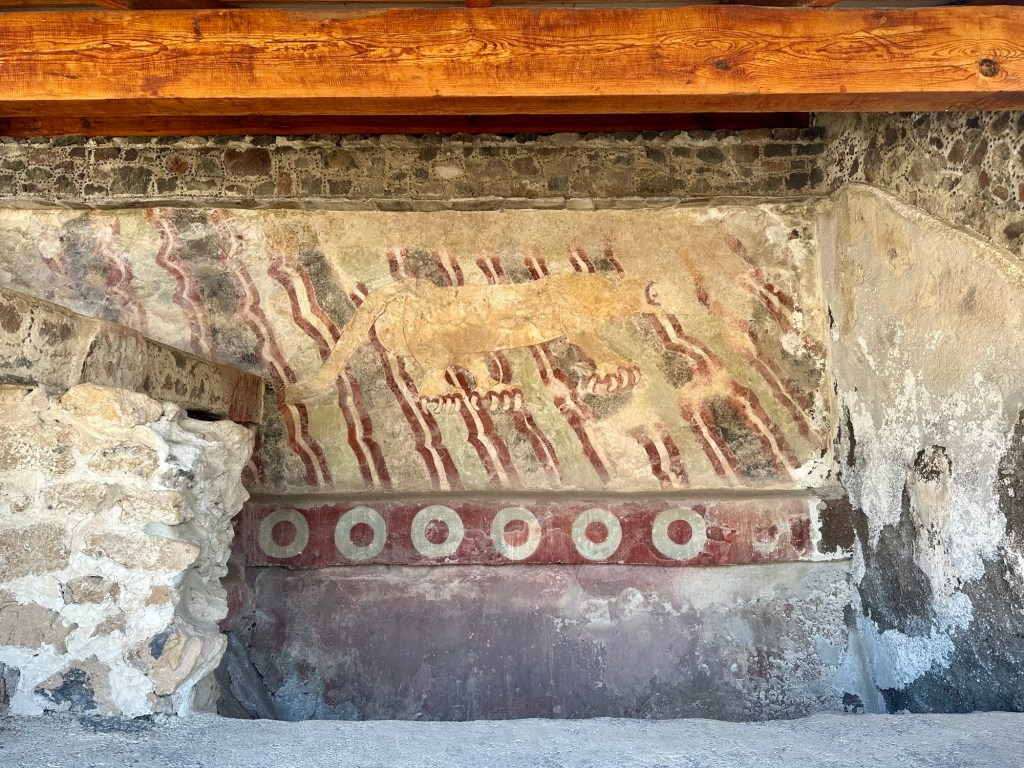
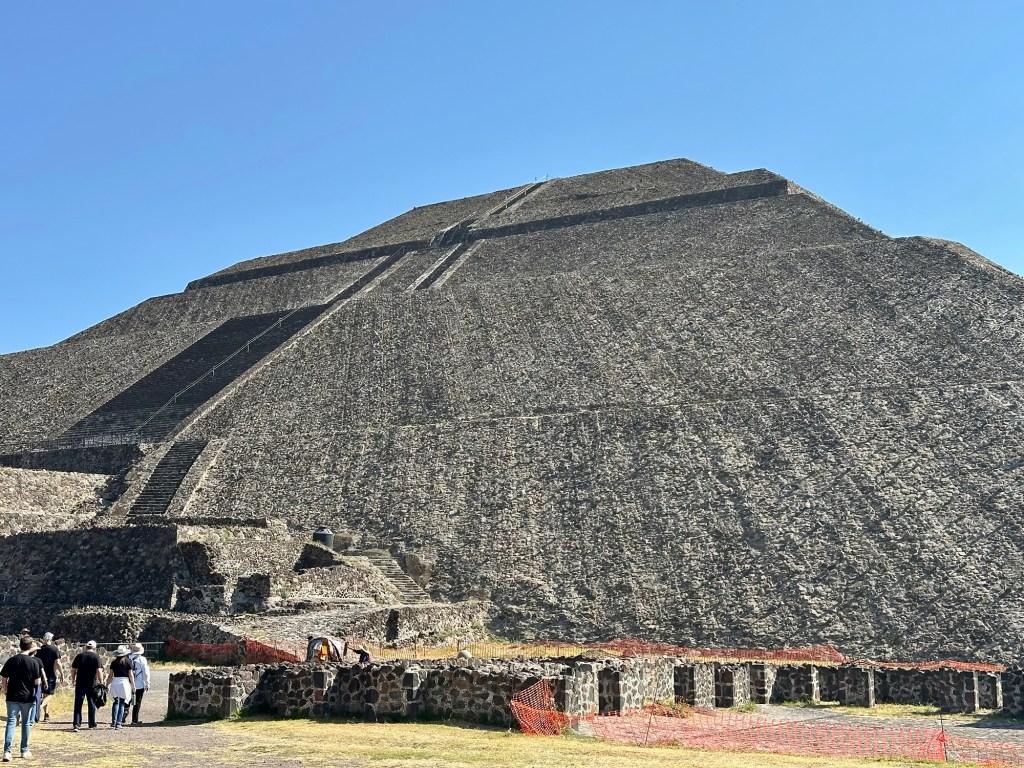
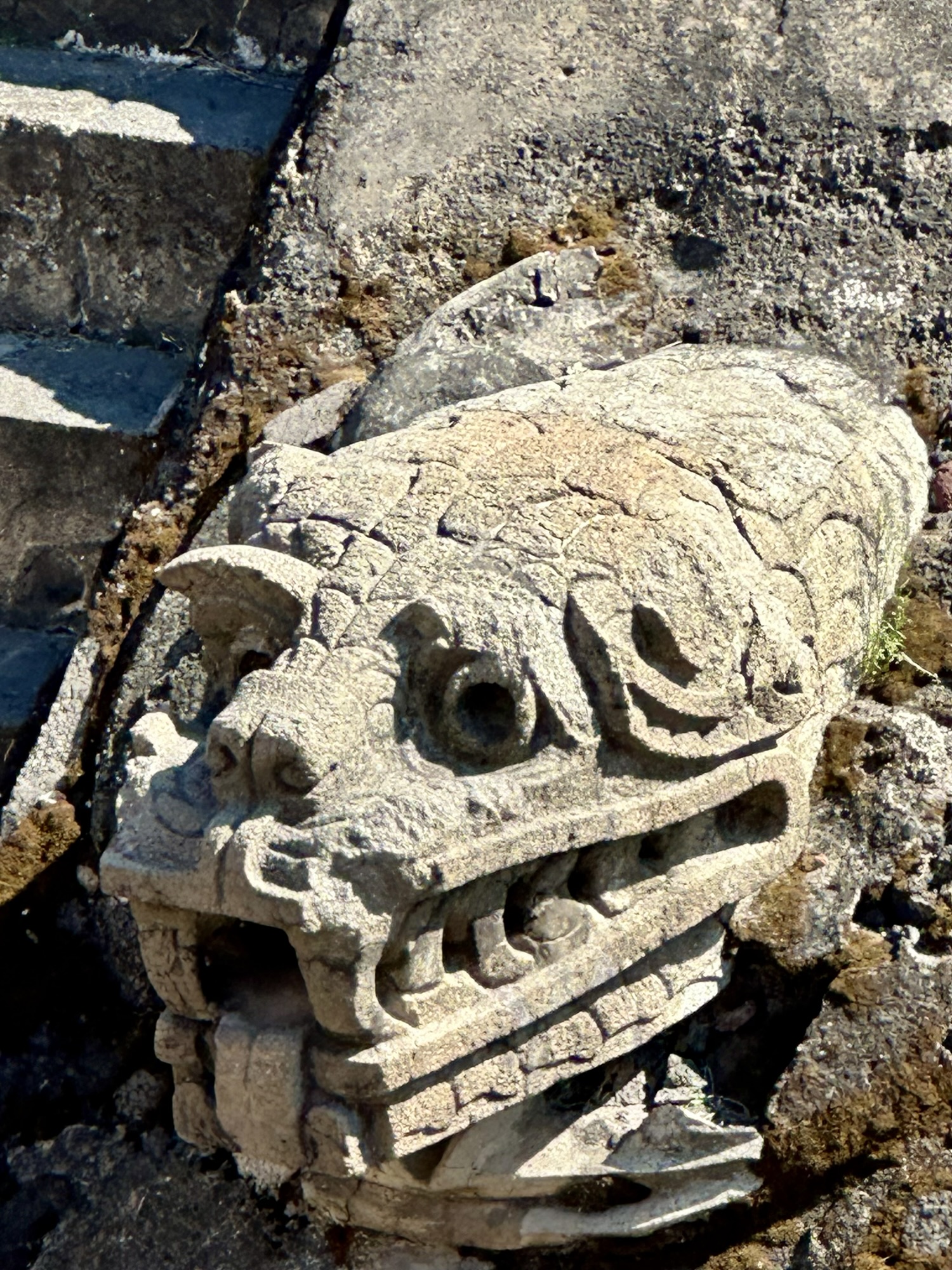
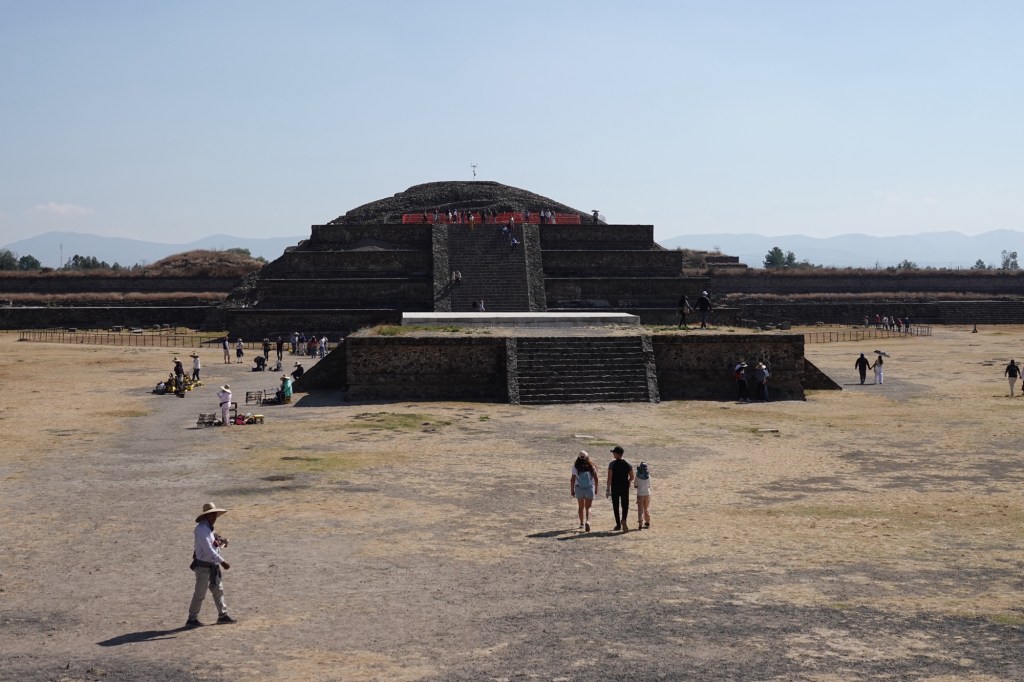
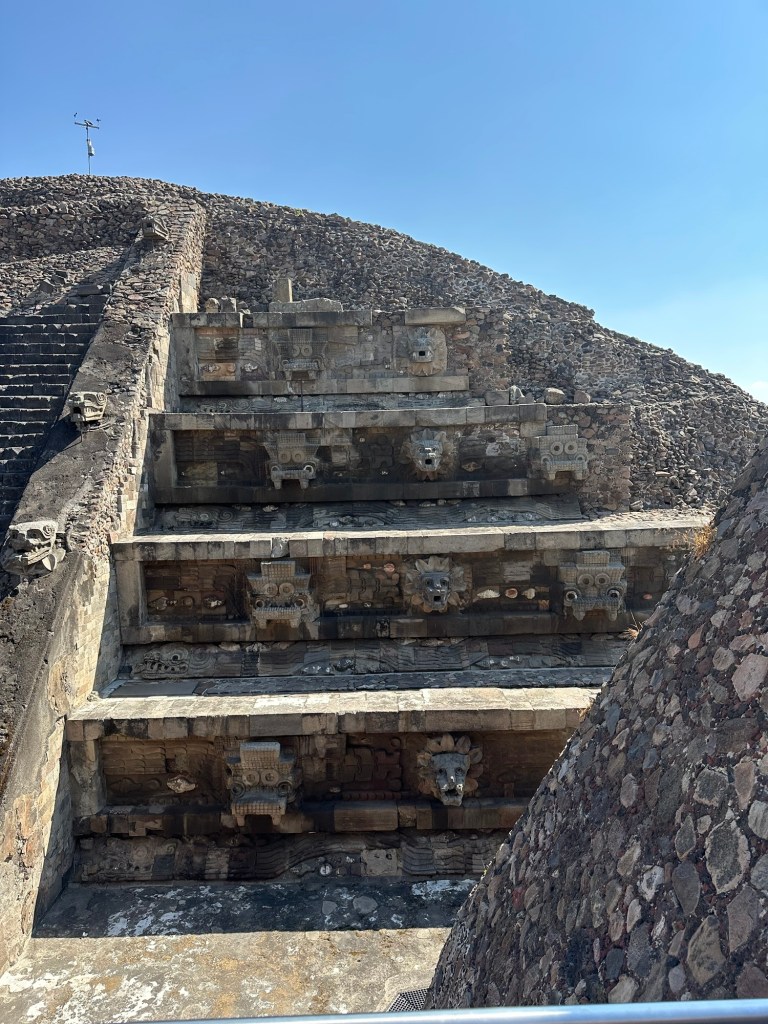
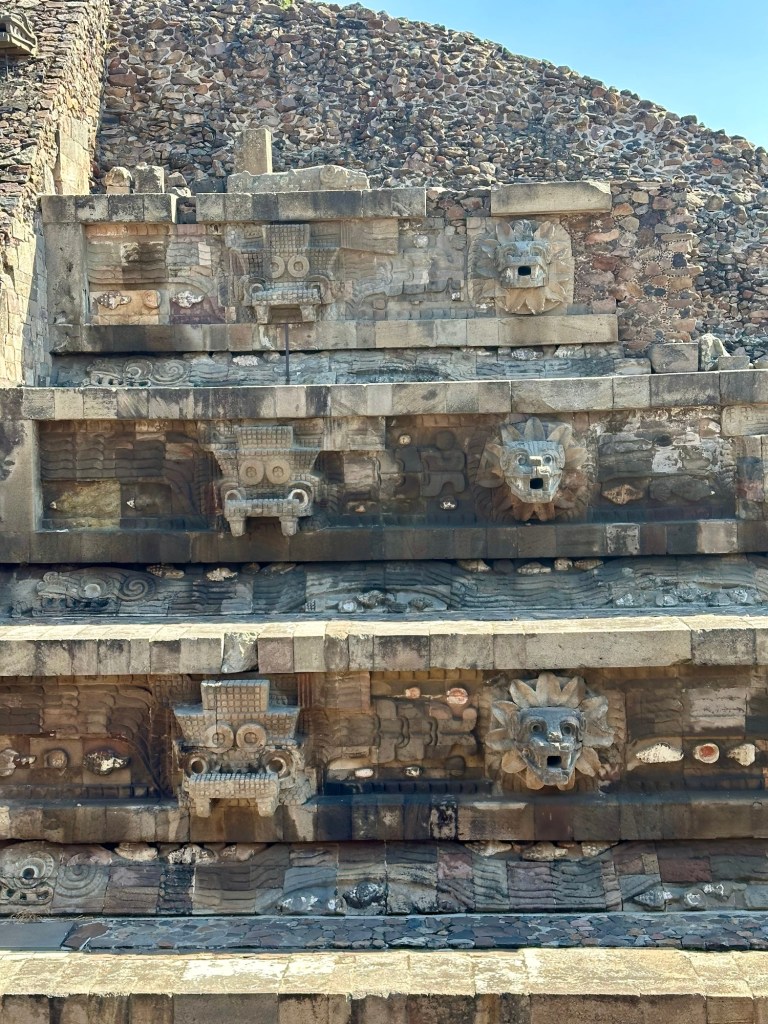
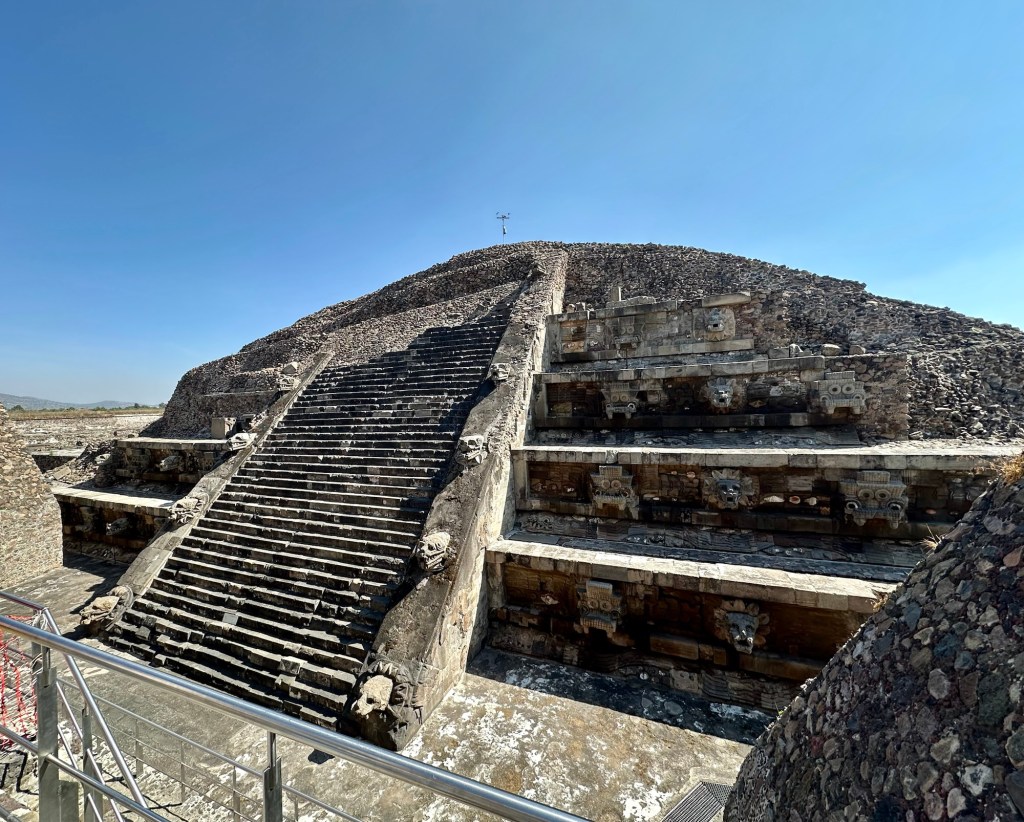
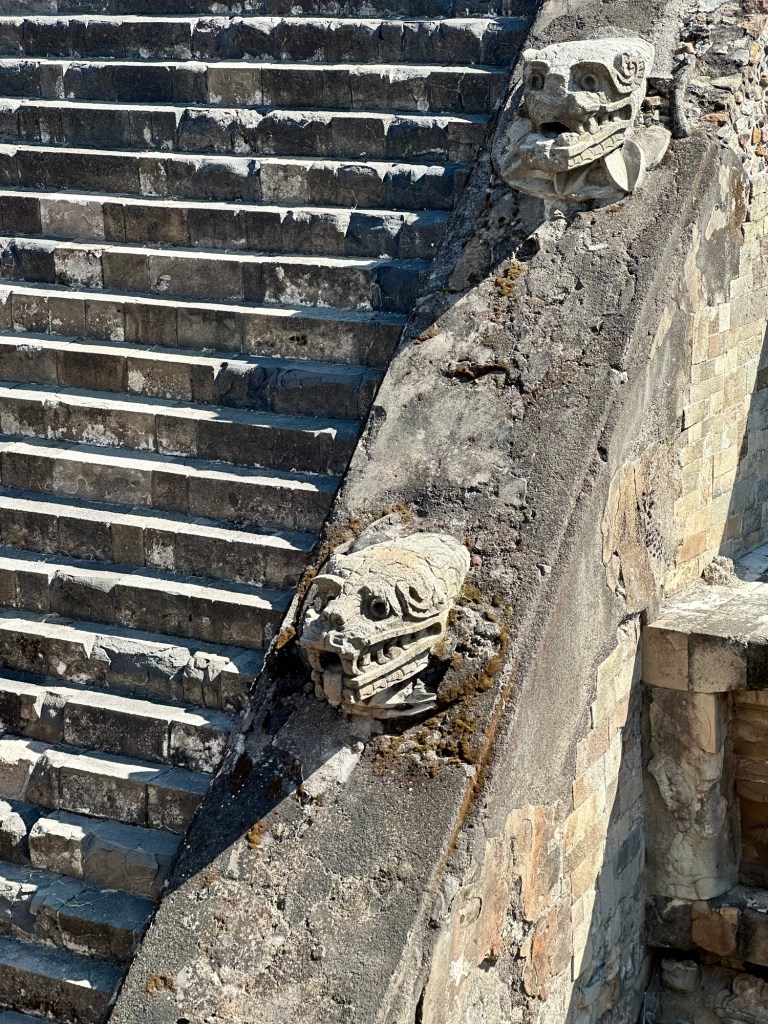
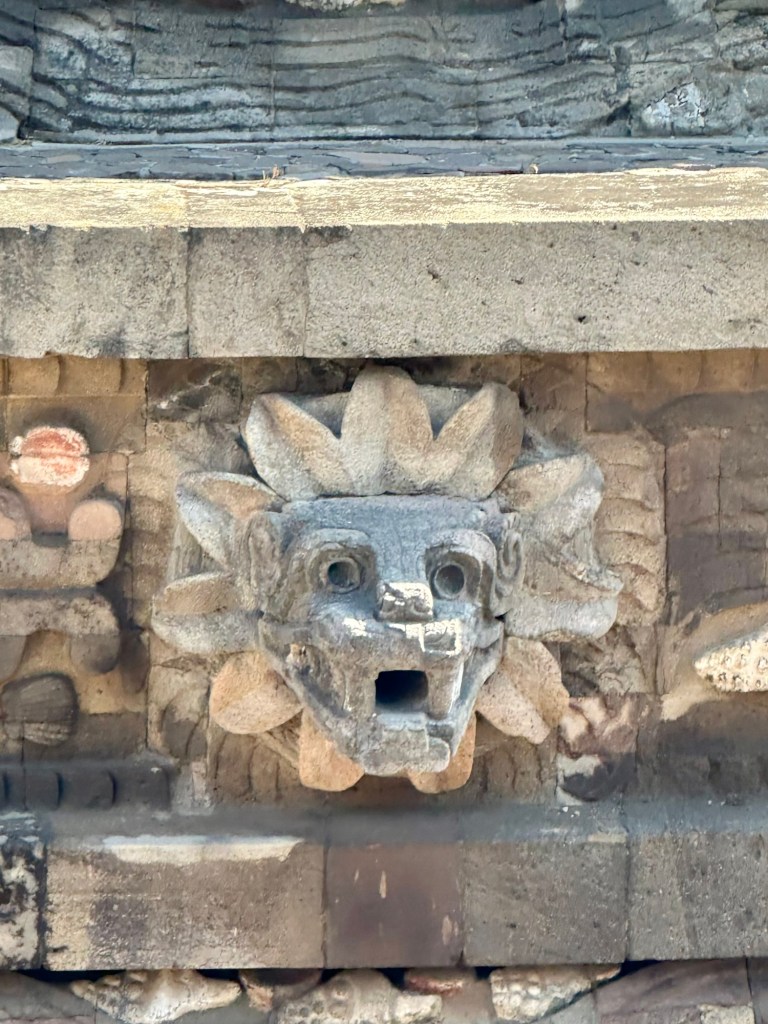
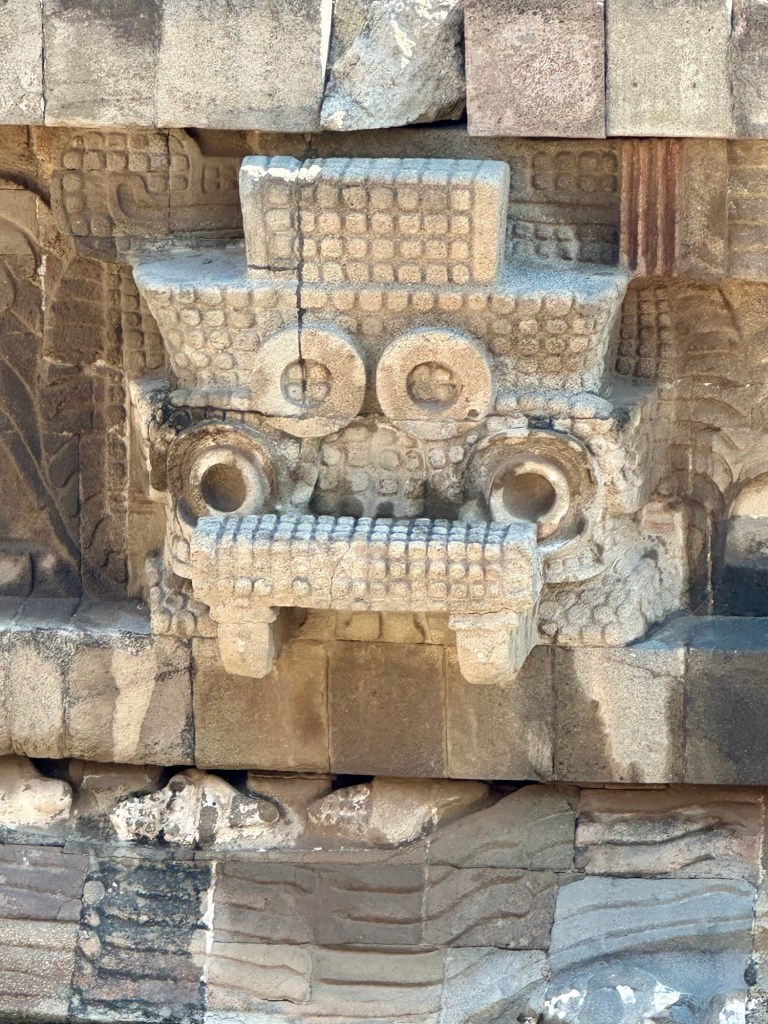
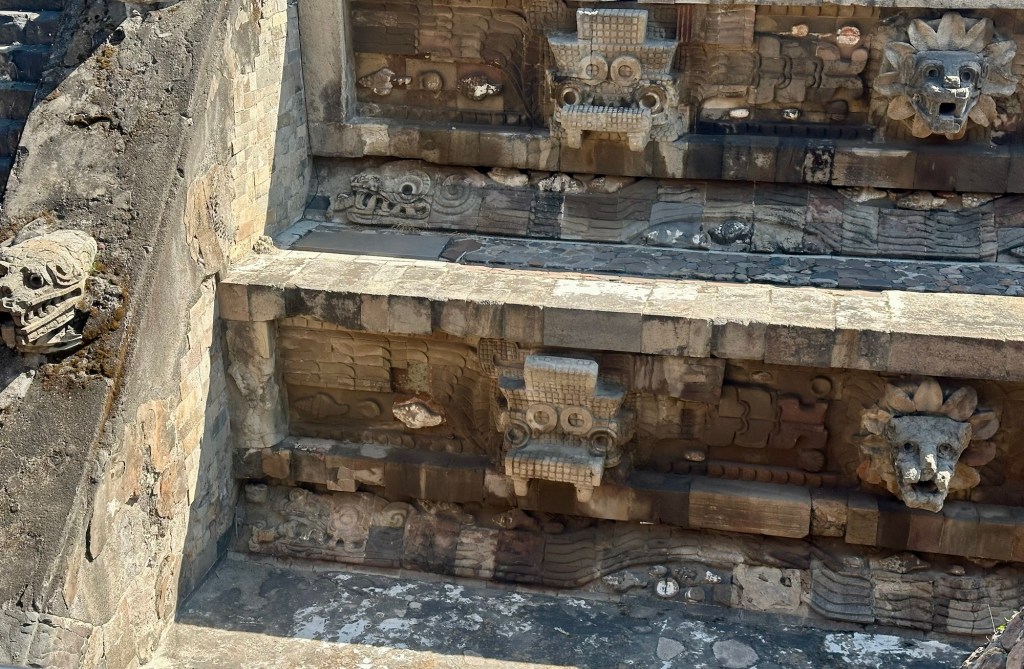
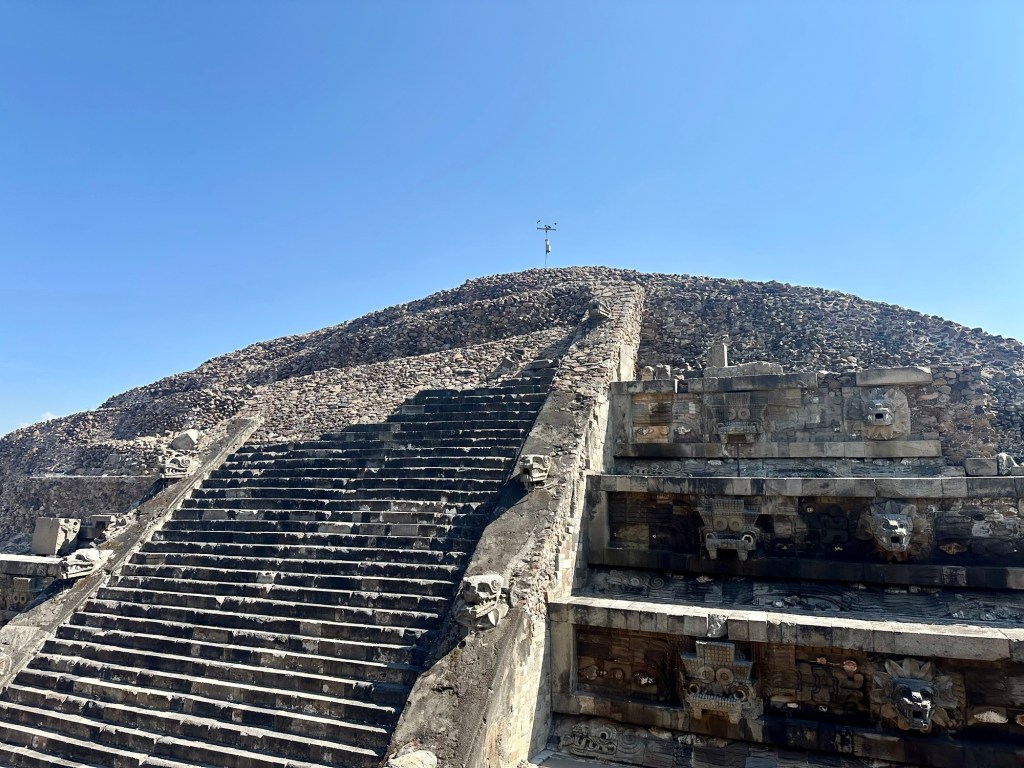
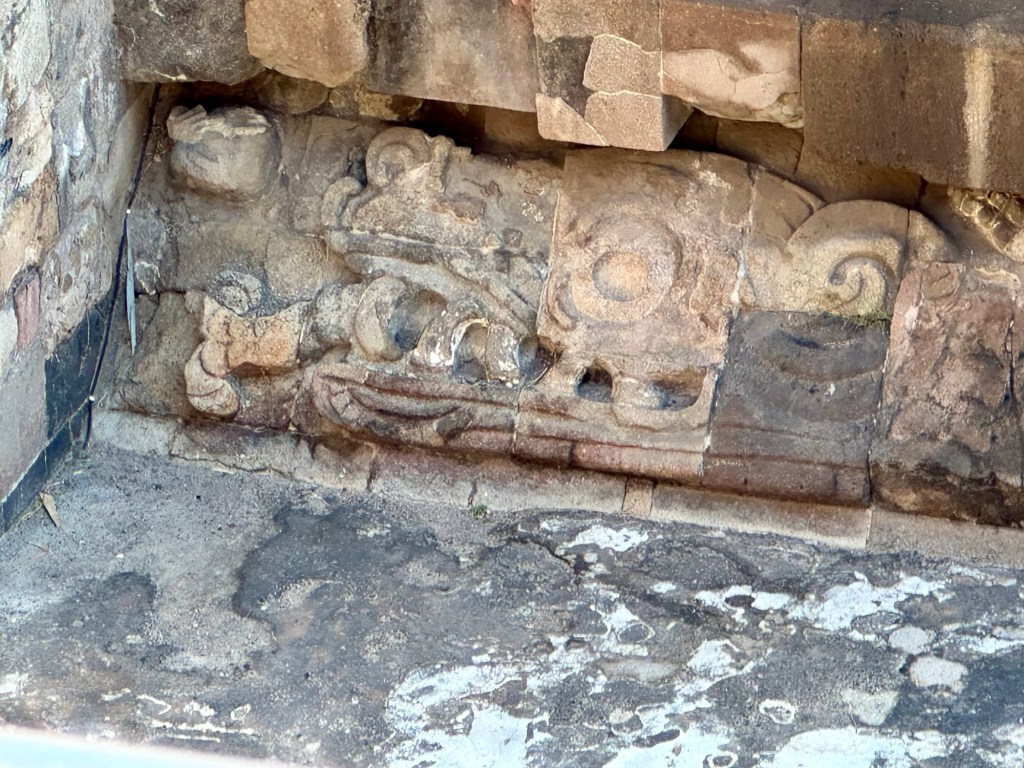
The last Pyramid towards the end of the Avenue of the Dead is that of the Feathered Serpent. It is set in a large courtyard that often filled with water during the wet to act as a reservoir during the dry season, as access to water was increasingly problematic. It was also the last pyramid built at the site.
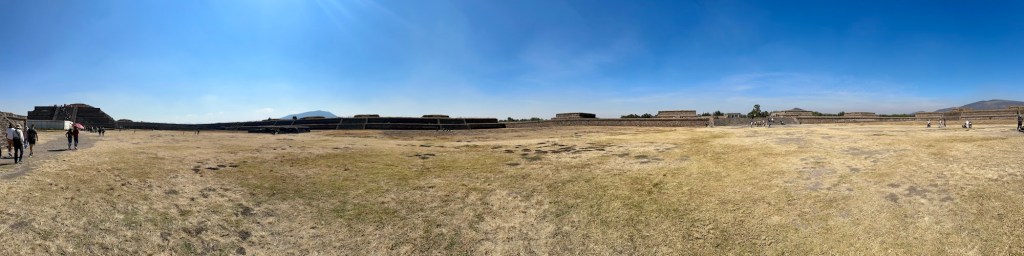
Gallery of images of the Pyramid of the Feather Serpent:
Teotihuacan was fascinating in that it suggests that we as a species still haven’t learned from the past: that no matter how mighty your works or political purpose, you cannot live as a society in a way that consumes your environment.

 Ness’ and Mark’s Wandering