28 Diciembre 2025
Up early (again) and on the boat straight after breakfast for the transfer back through the ‘canals’ and upriver out of the Tortuguero National Park. The jungle gives the journey a real Conradian ‘Heart of Darkness’ vibe.
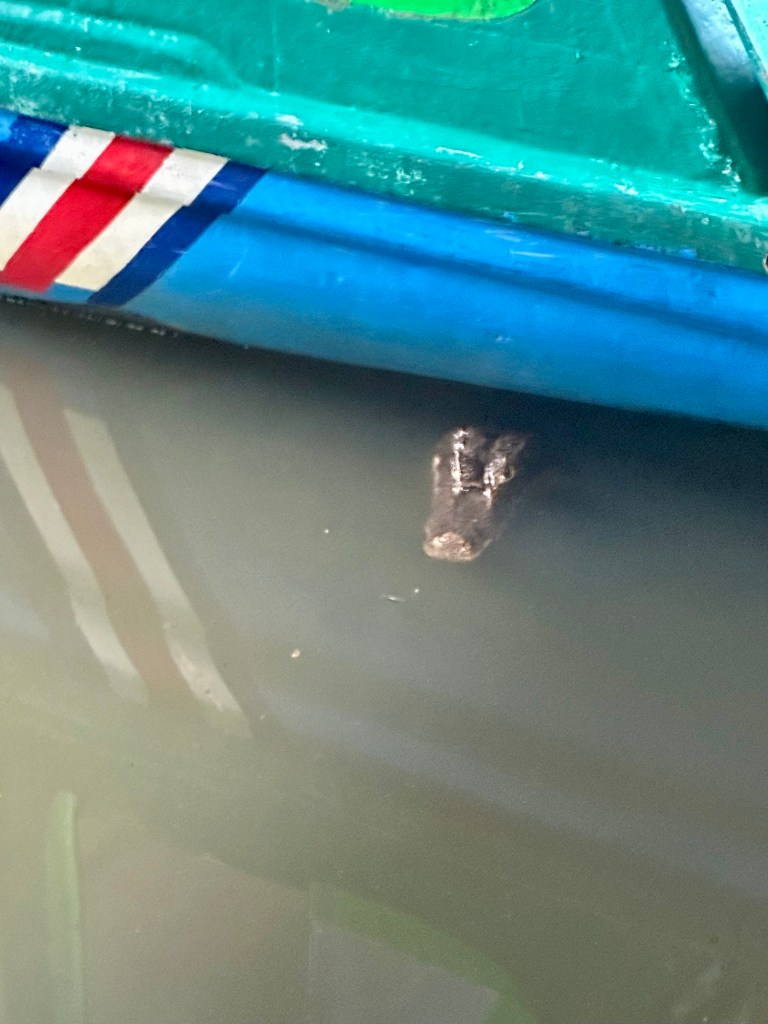
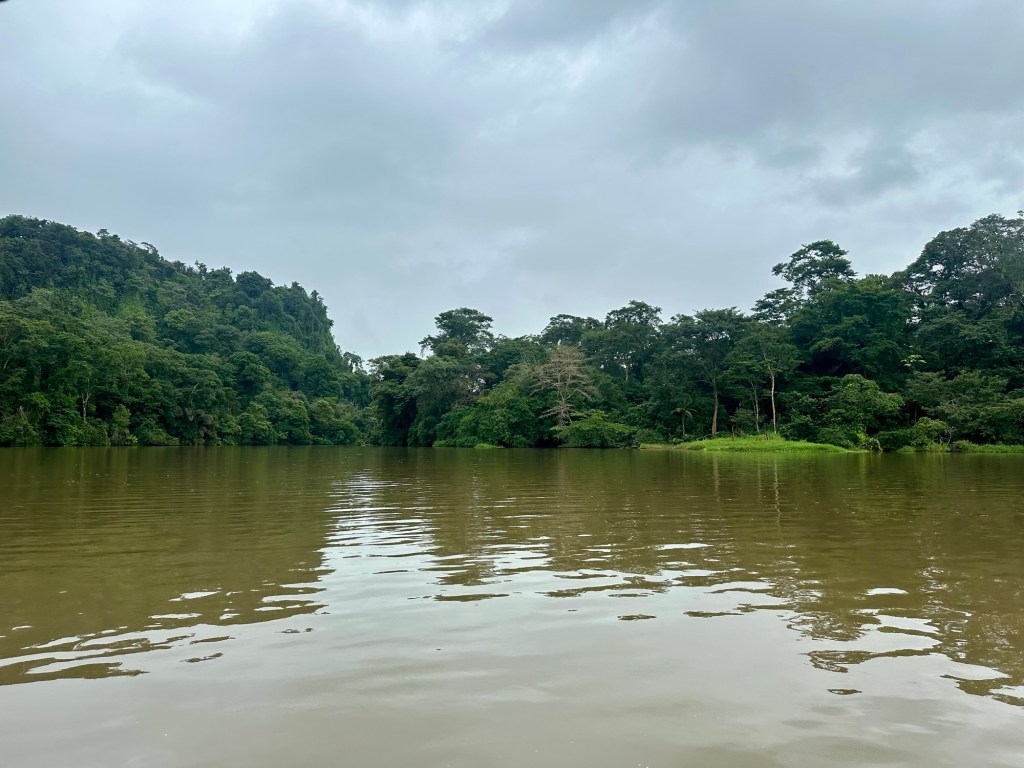
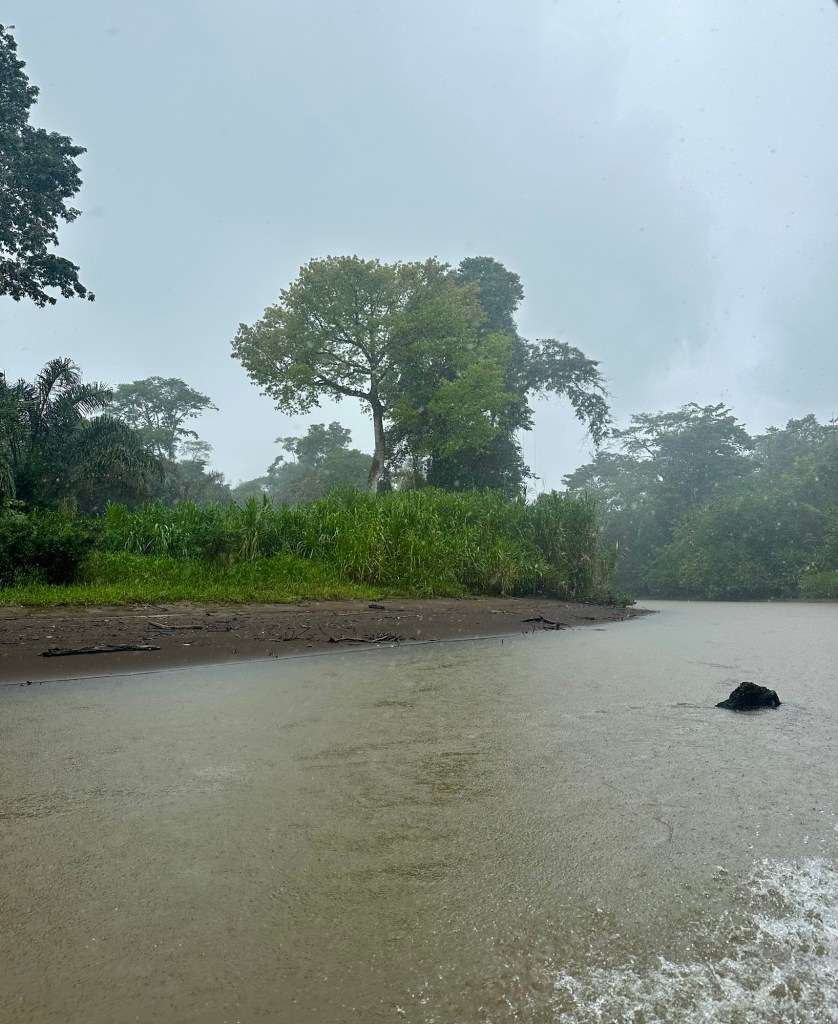
It was then onto a minivan for around three hours across one or two of the Caribbean lowland provinces- endless fields of pineapple, banana and papaya with the odd heart of palm plantation to export transfats to the US. Then into some foothills at around 1,000 metres AMSL for lunch at, and a tour of, a collective coffee farm and processing place.
Lunch was classic tico food – pico de gallo, plantains etc – and tasty . It was then into the coffee – tasting and tour. Very interesting to see how our daily coffee gets to us – and the Q&A was incentivised with shots of coffee liqueur made on site from the ‘second skin’ of the coffee beans. We got very good at answering questions! 😋
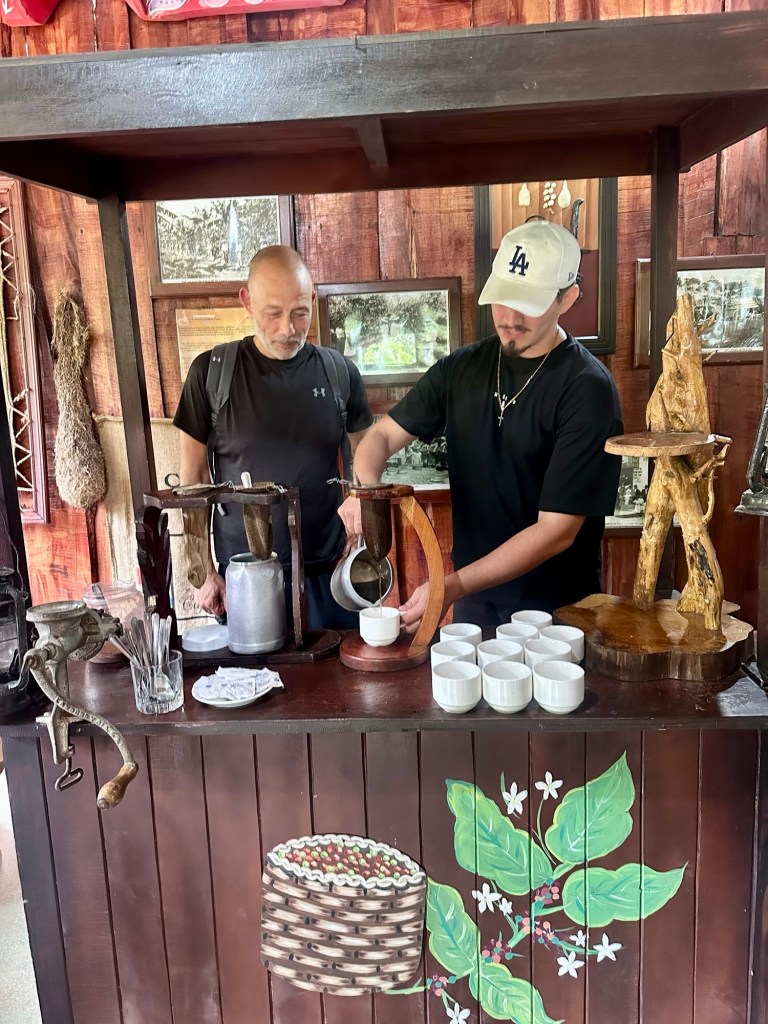
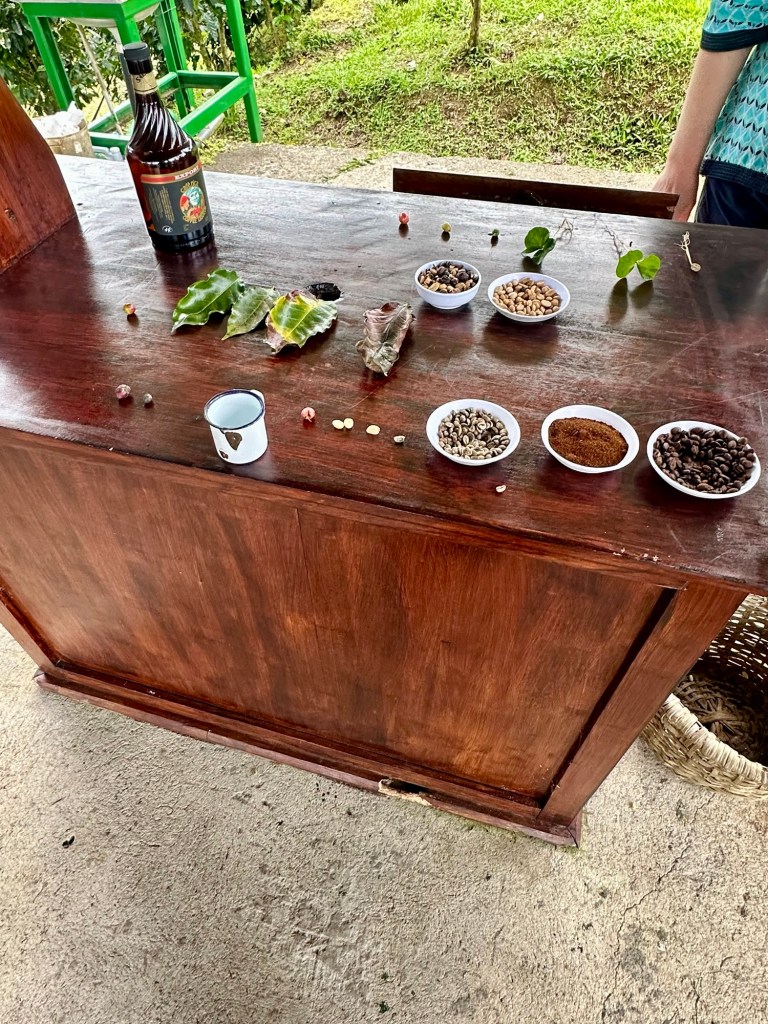
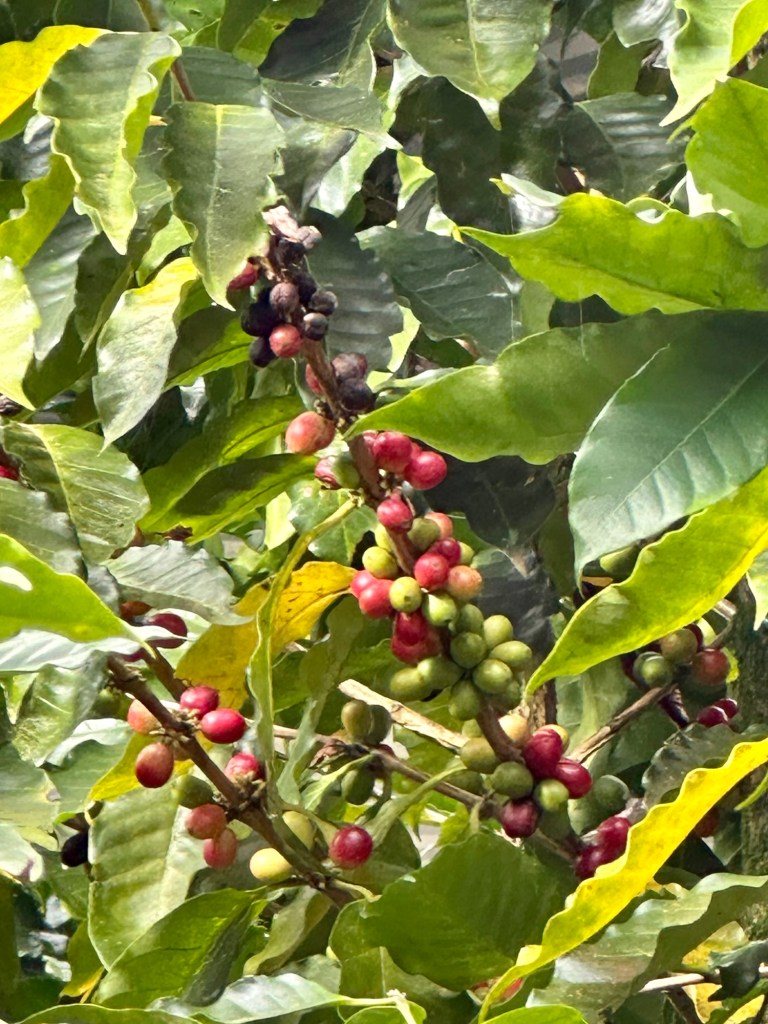
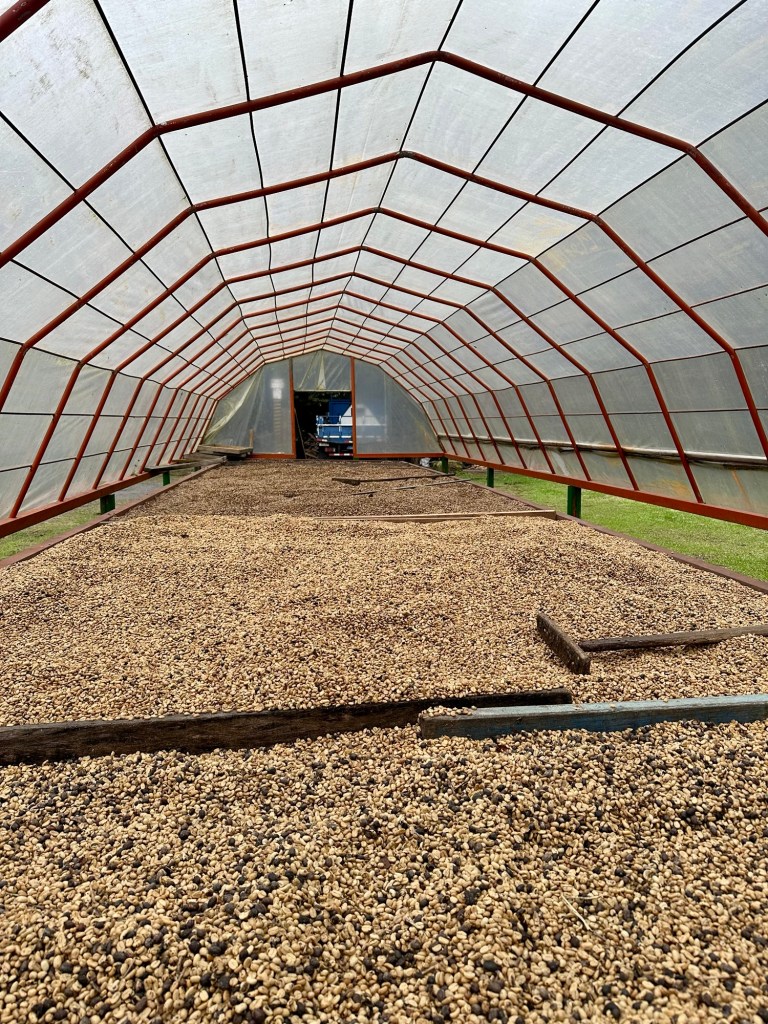
Some stats we learned – of the 3 – 4 grades of arabica beans produced in Costa Rica , different buyers take different grades. Grade 1 is the best, Grade 4 is the crap Army puts in ration packs.
Illy and Lavazza only take 1st Grade. Starbucks takes 3rd Grade – which explains a lot. Maxwell house instant also. Surprisingly, McCafe at Maccas takes mainly 1st Grade with some 2nd.
Another interesting thing. The coffee beans are handpicked. For some really cruddy wages. A 12 kg Bushel of picked beans , which will ultimately produce approximately 6 kg of roasted beans, earns the picker $US 2. The really good pickers might pick 10-12 bushels a day. The work is hot , back breaking and very poorly paid – so much so that Ticos ( Costa Ricans) won’t do it and the harvest is done by seasonal workers from Nicaragua ( the next country north). So when you hear in Australia from your local coffee shop that prices are rising because of the price of beans where they grow – that’s horseshit. They are rising because of something that happens somewhere after the beans have been harvested…
After the tour … and sufficient shots of coffee liqueur … we proceeded (very caffeinated) with the trip to La Fortuna, arriving around 5pm.
La Fortuna is a popular destination for locals and international tourists alike. It lies adjacent to the (active) Arenal Volcano. The town has a ‘Queenstown NZ in Latin America’ type vibe – with similar crowds, prices and a multitude of adventure activities on offer.

 Ness’ and Mark’s Wandering