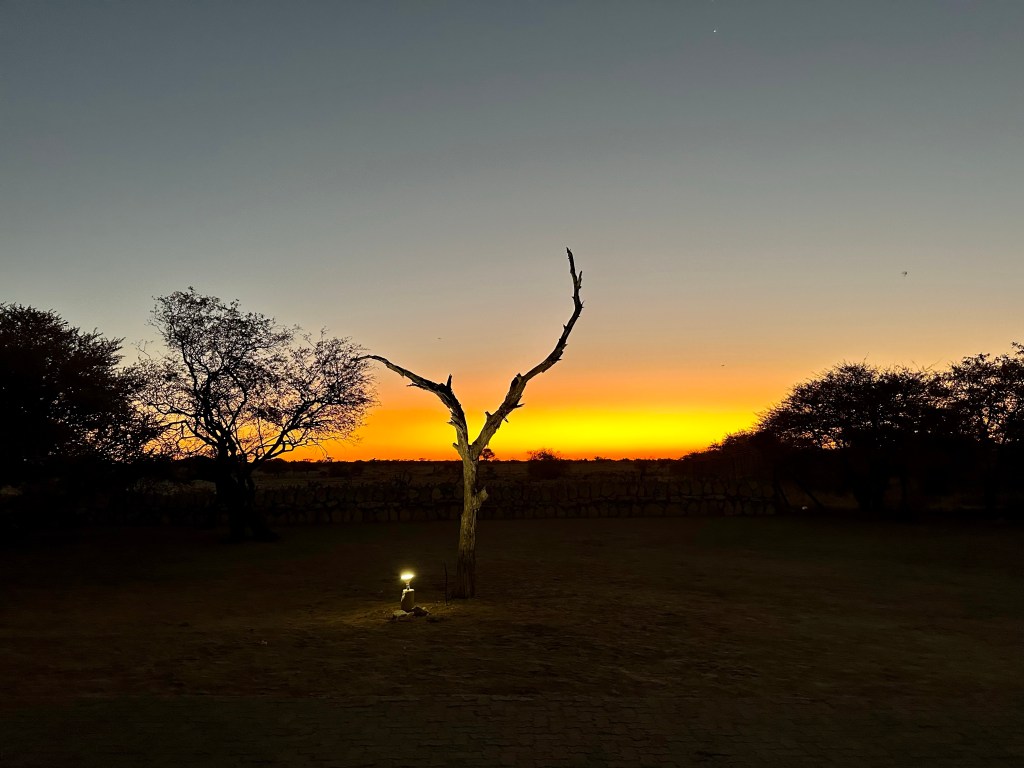
Etosha National Park occupies a large portion of central northern Namibia. Originally reserved in 1907 by an imperial German Governor, it covered nearly 60,000 square kilometres. Gradually ‘whittled down’ over the 20th Century by the South African administration of the then South West Africa, it present size of mid-20,000 square kilometres was settled upon in the 1960s.
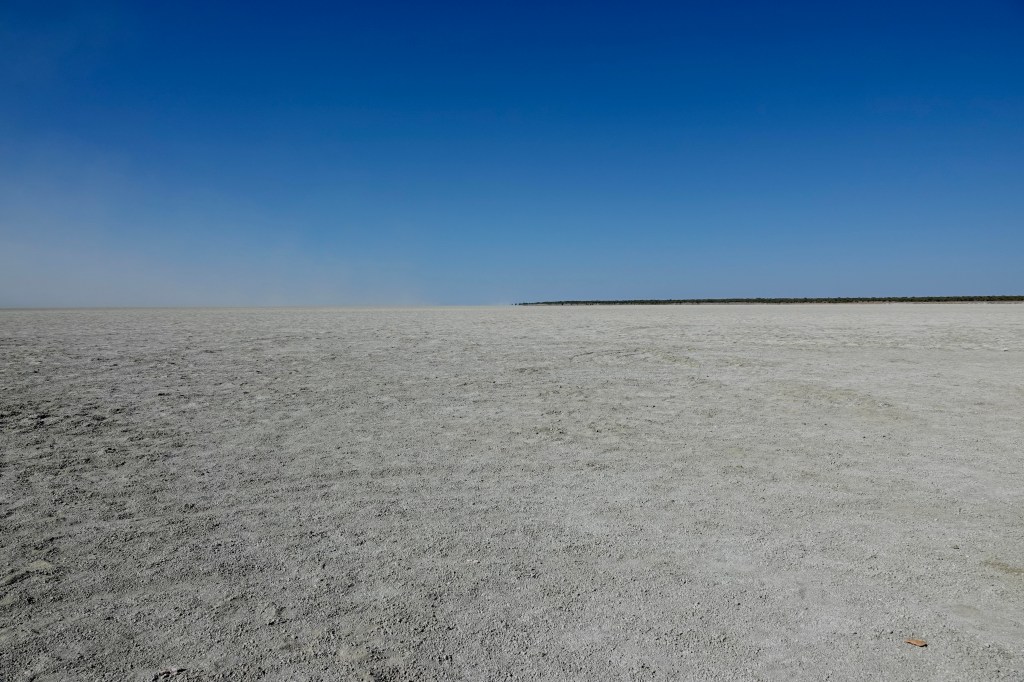
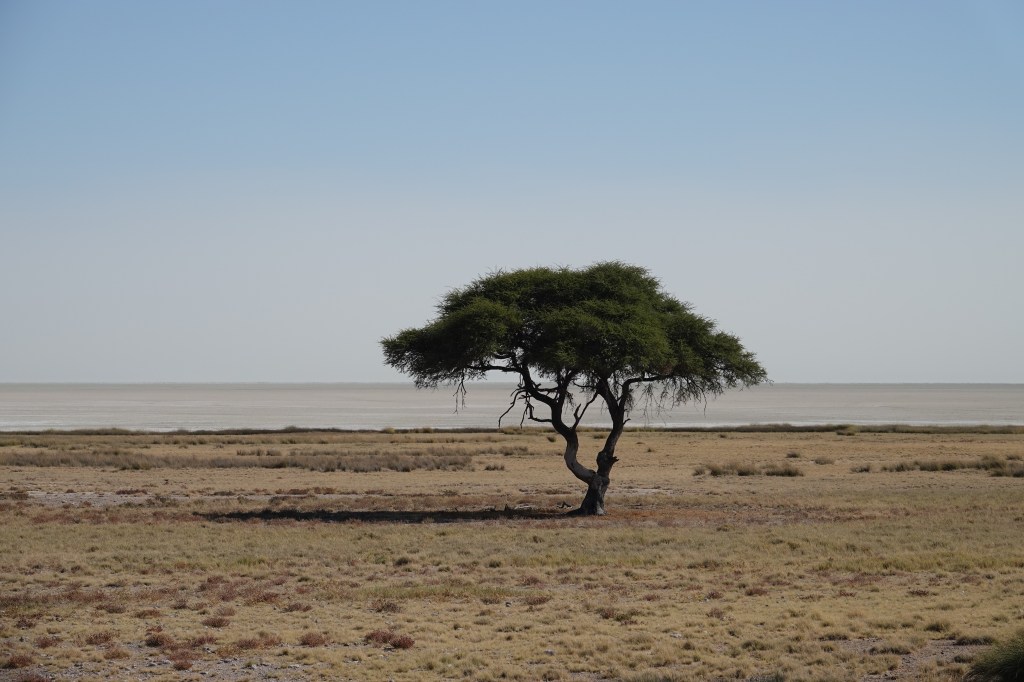
At the heart of Etosha National Park is the Etosha Pan. The largest ( by quite a margin) of several pans in the Park, Etosha Pan is essentially the remains of a large freshwater lake that used to be fed by the Cunene River . Tectonic movements over the years redirected the flow of the river and a few thousand years ago it ceased to feed the lake at all. What remains is a large dry alkaline lake bed that only occasionally receives water in parts when there is exceptional rainfall. At its widest the pan is around 75km wide.
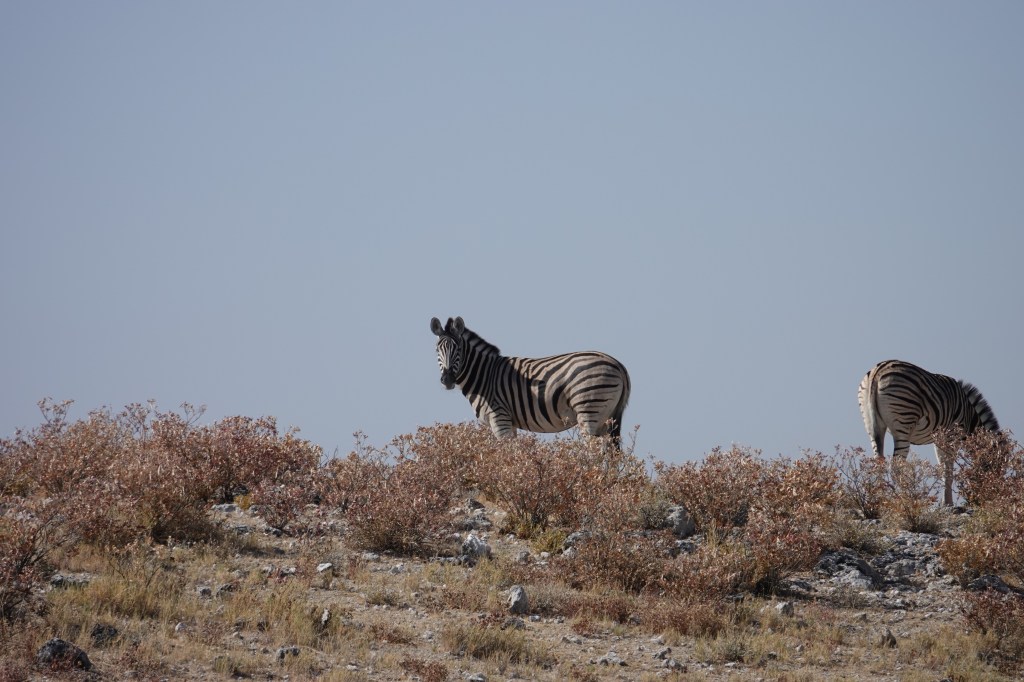
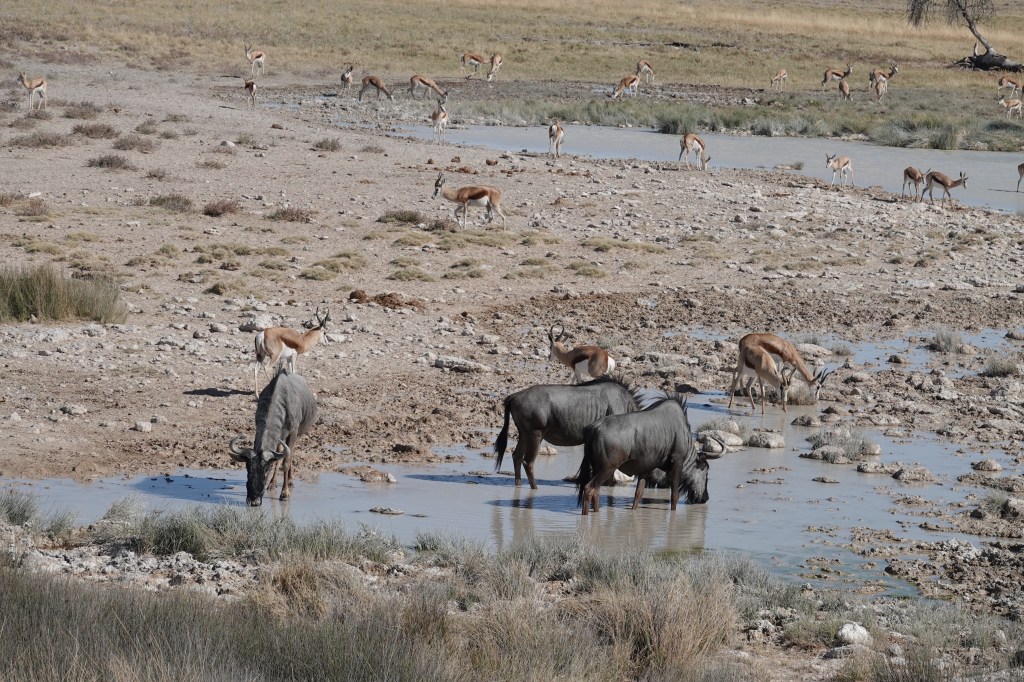
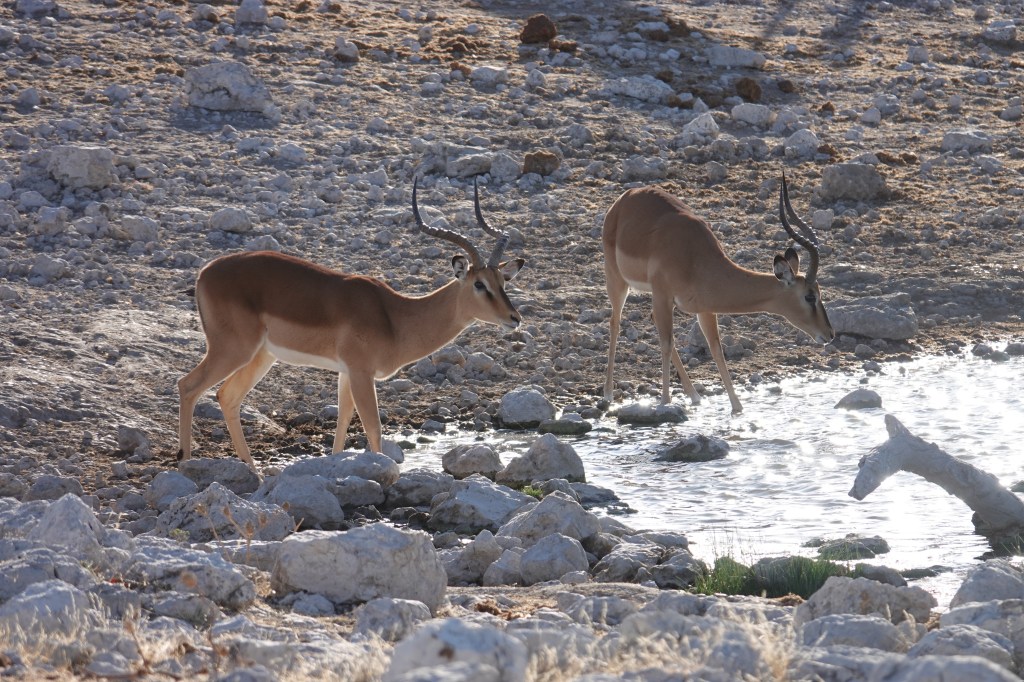
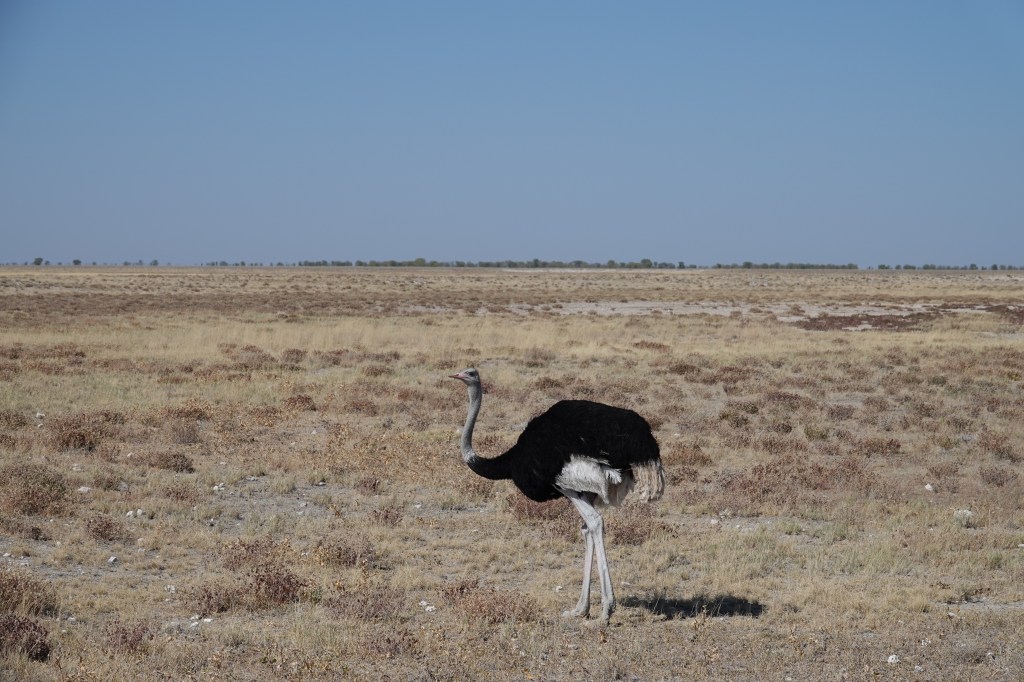
The area has a lot of wildlife, there are two main reasons. The first and obvious one is it is a large Park where they are generally safe from getting snotted by poachers and trigger happy farmers. The second is because the area ( which has a largely limestone substrate) has a lot of springs and artesian water. Where the springs don’t bubble up naturally some waterholes are assisted by being bore fed. The presence of persistent and reliable water is, of course, a major factor in the population size of the grazing animals in semi- desert areas. Similarly, large amounts of herbivores support the predators that rely upon them. So, in short, we saw a lot of game. Monday was a bitterly cold day, a wind blowing from the east was very chilly- apparently it was snowing down in South Africa, including near Citrusdal where we stayed on the first night of this trip.

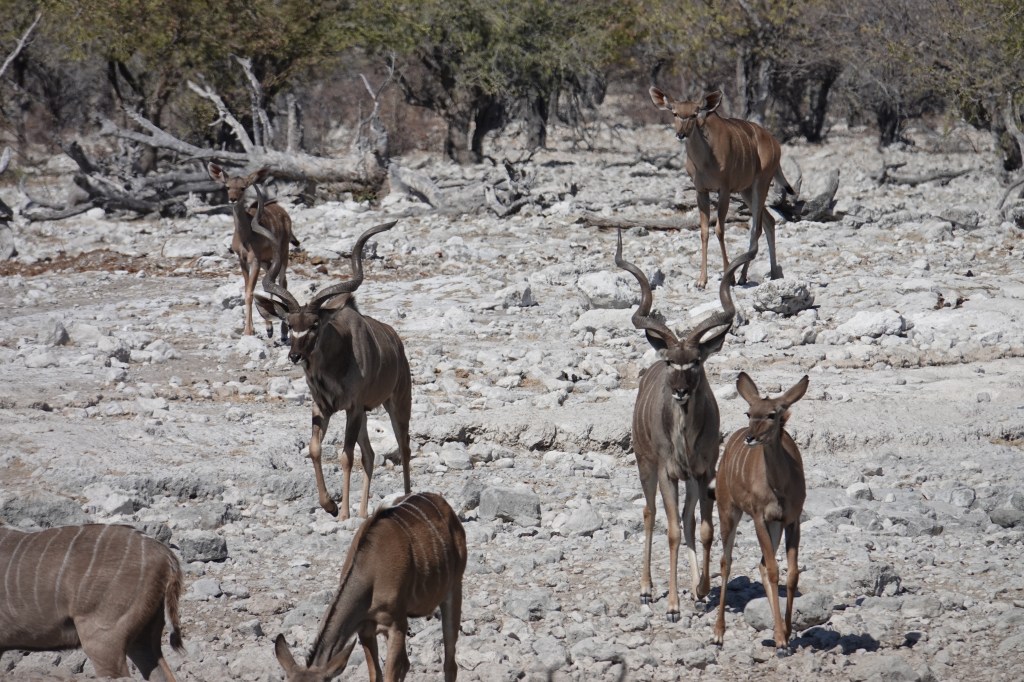
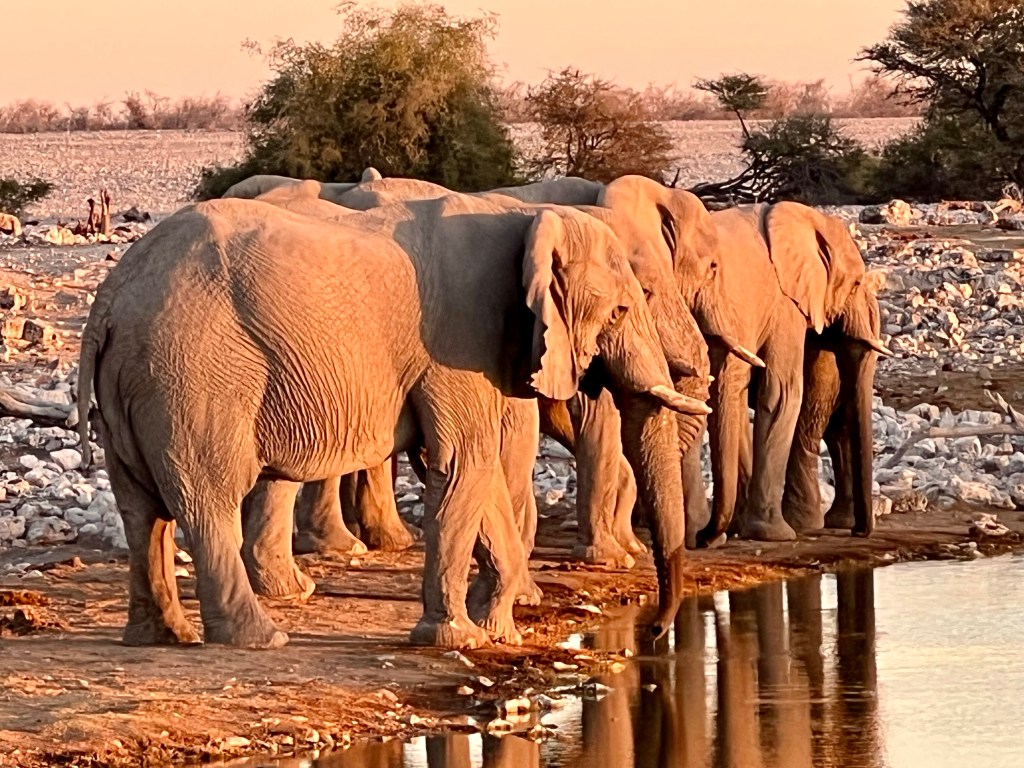
Helping with the game viewing was the fact our Camp (Okaukeujo) has a big waterhole right in the middle of it. Our room was right near the waterhole 🐘🦏
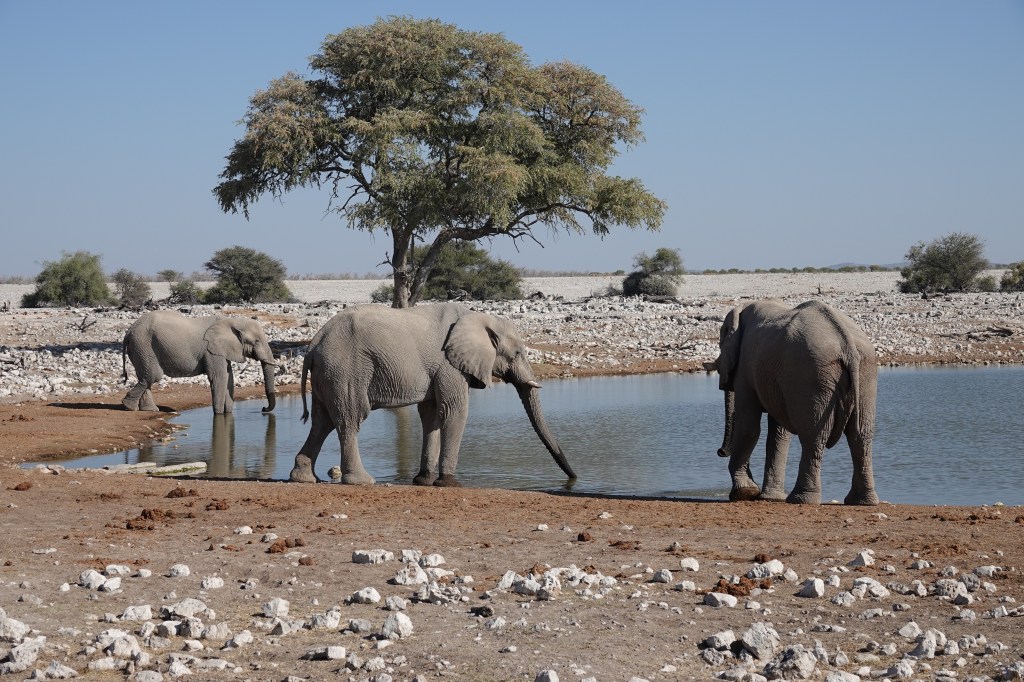
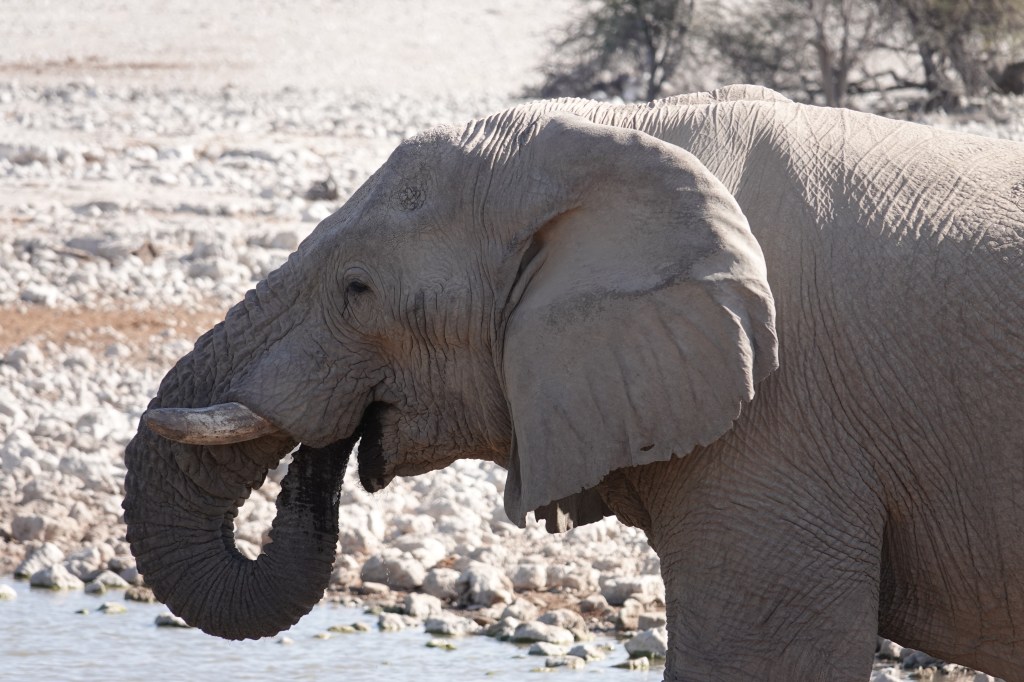
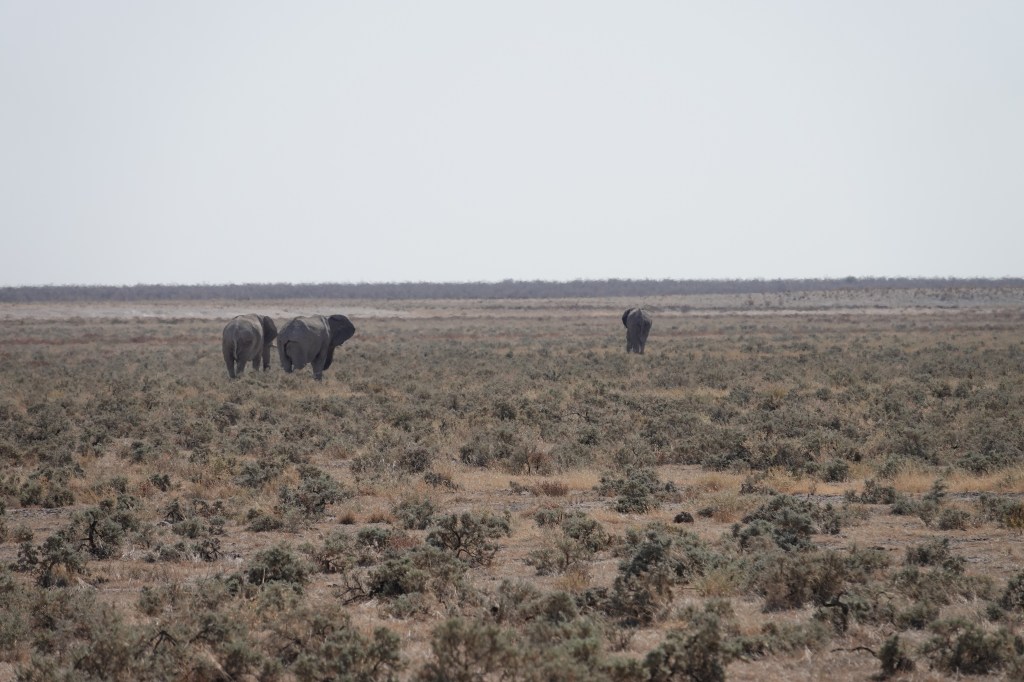
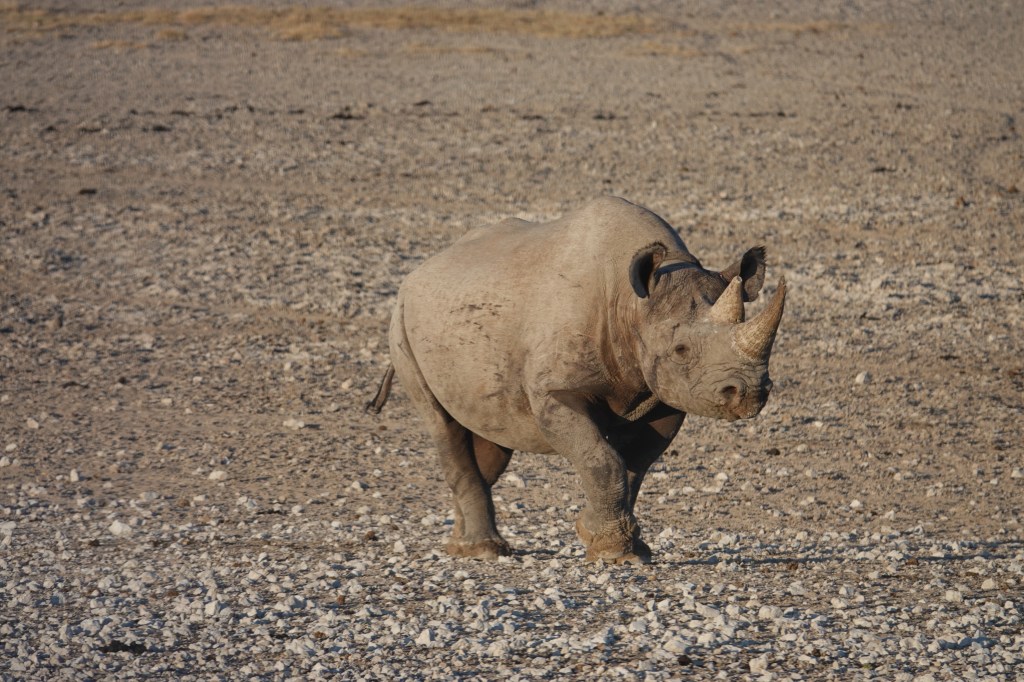
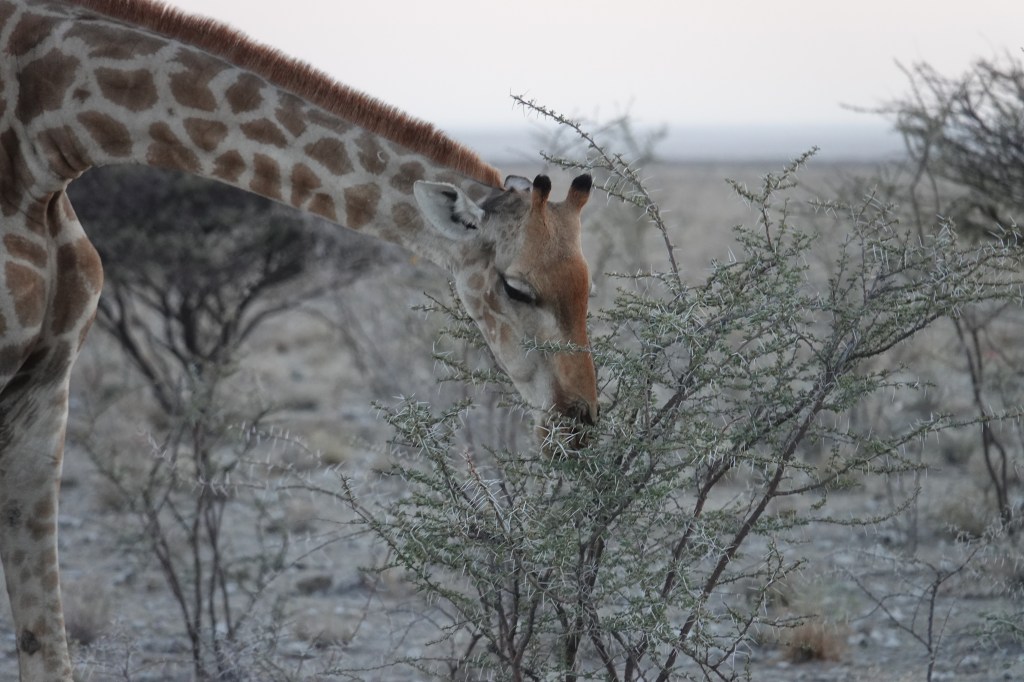
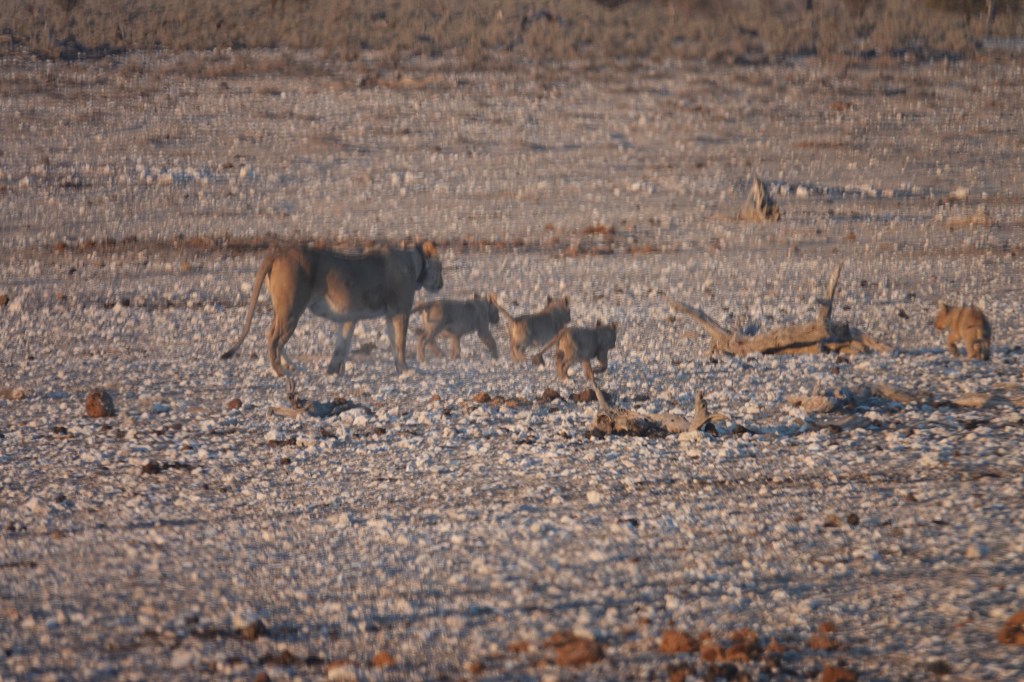
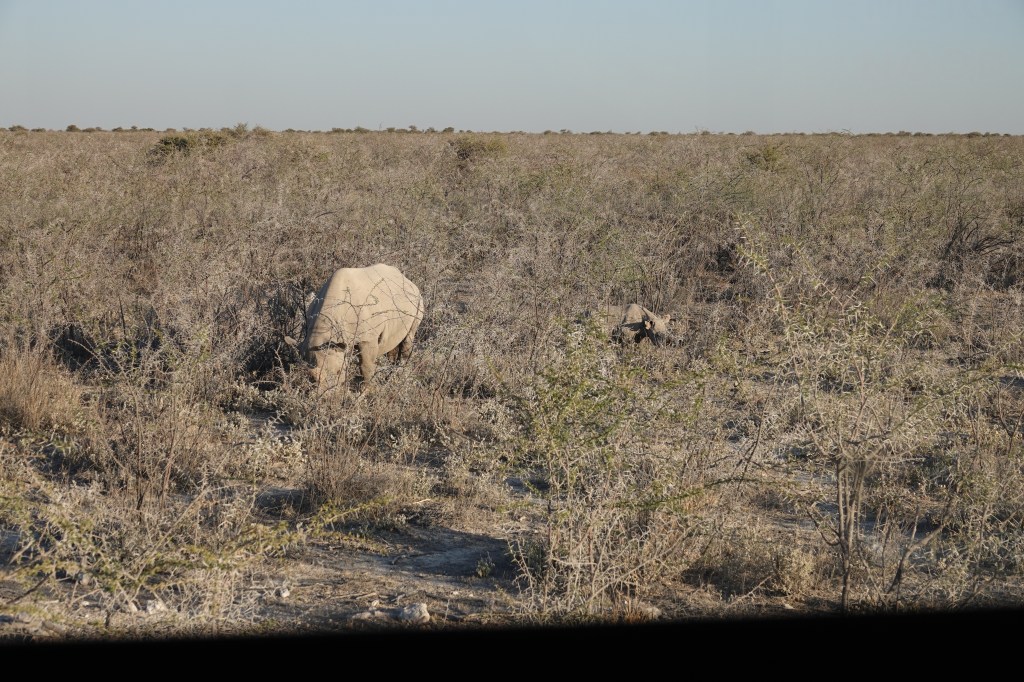
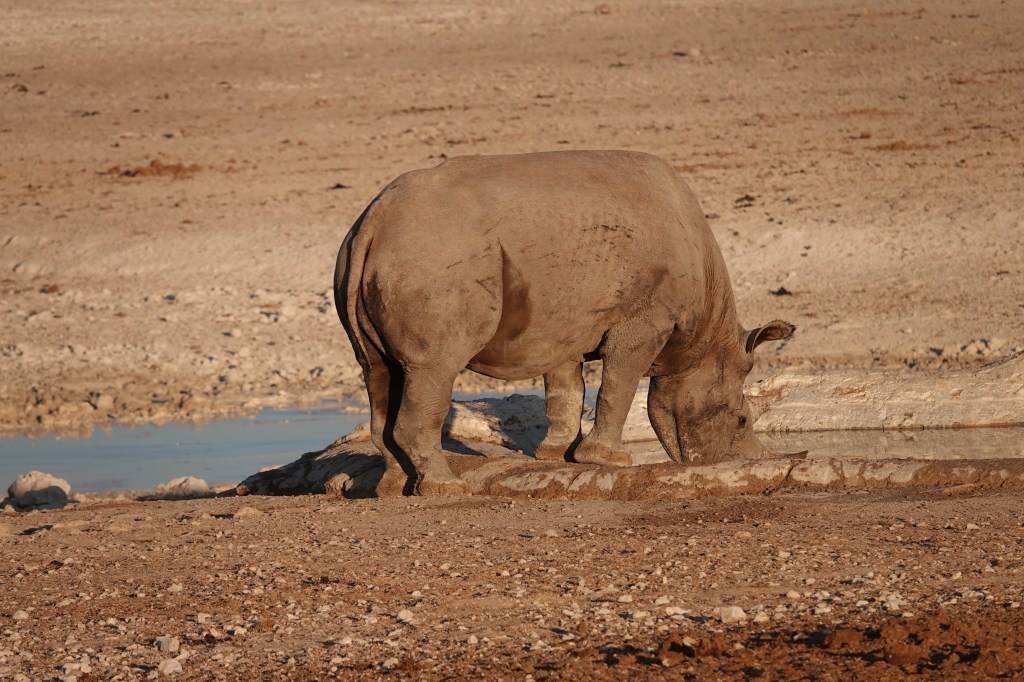
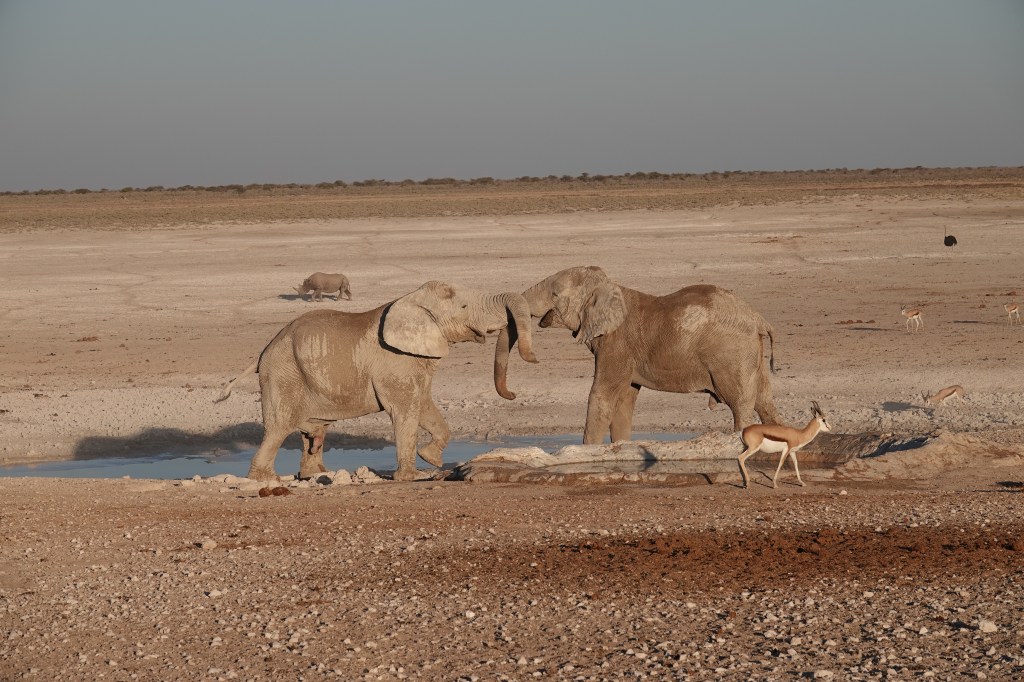
While having a lot of game, the Etosha Park does not have Buffalo, meaning only four of the so-called ‘Big 5’ are present. Per usual, Leopard proved elusive during our trip. This was more than compensated with by some real quality sightings and time with Elephants, Rhinos and Lions. And others!

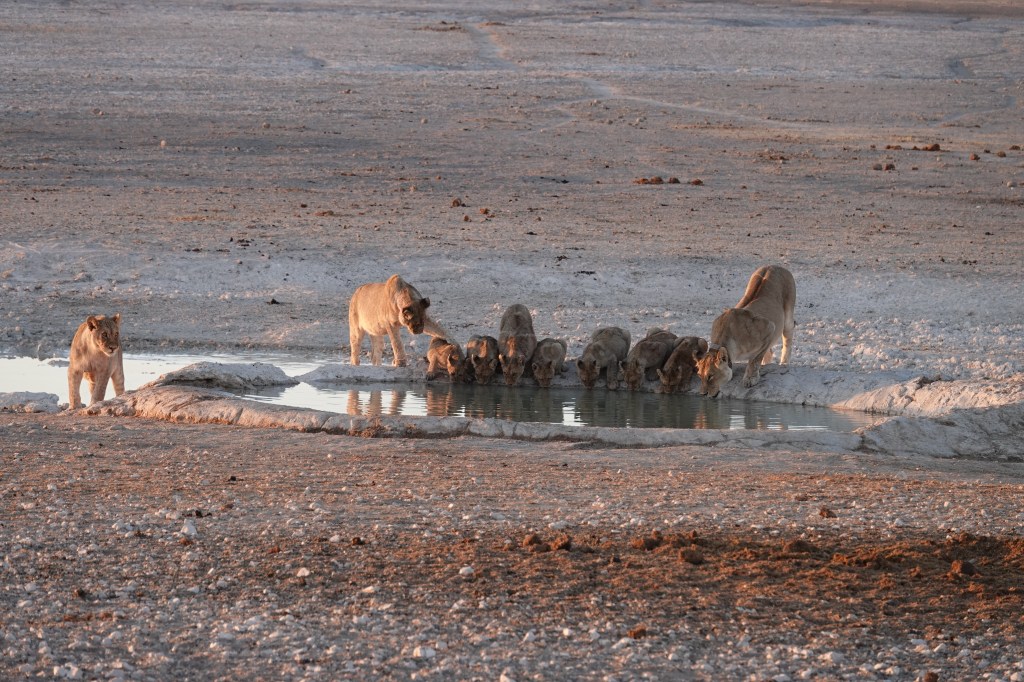
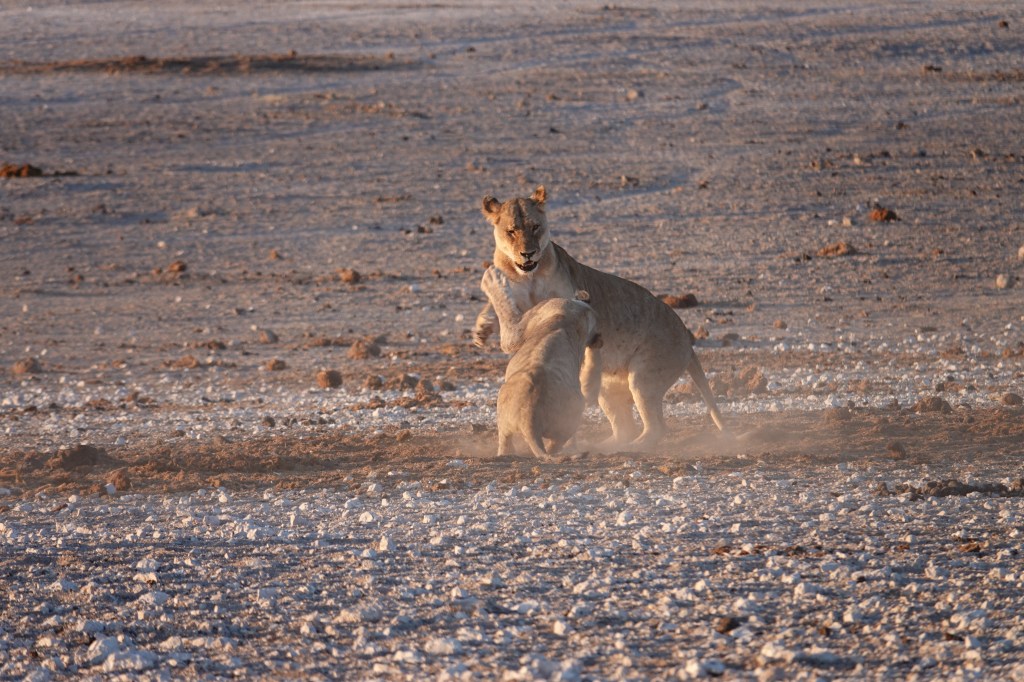
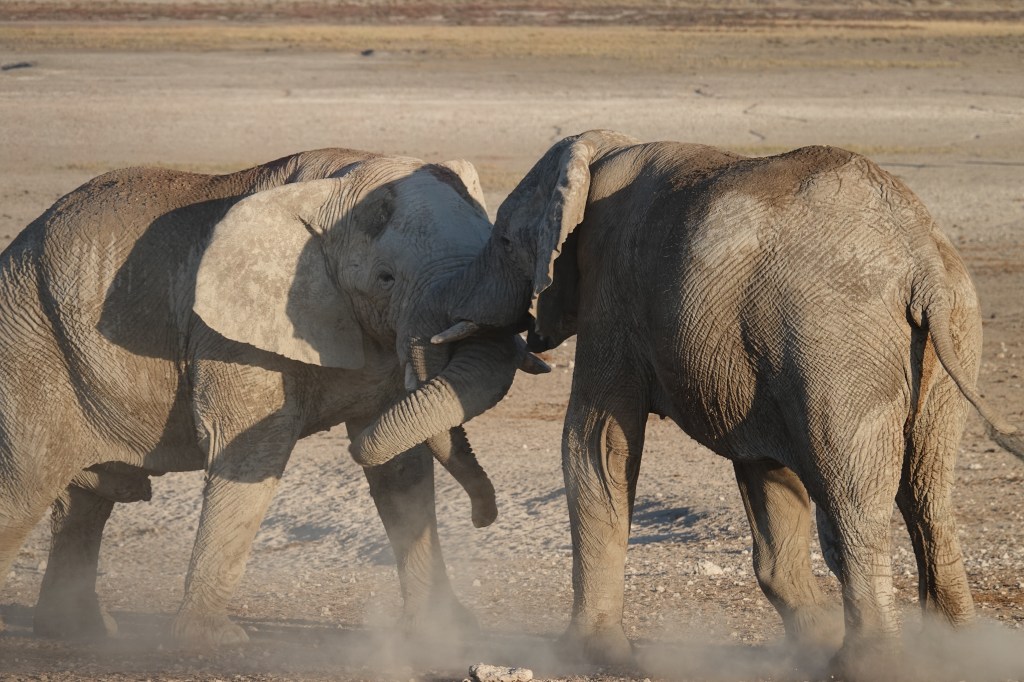
The Etosha Elephants are big. Often up to a metre higher at the shoulder than those routinely found in areas such as the Kruger National Park in South Africa. Another feature is their tusks don’t grow particularly large, nor are they particularly strong. Several reasons apparently account for this. One is mineral deficiency- while these Elephants get a surfeit of calcium from the Etosha environment, they often lack phosphorus. Another factor is the aridity of the area, with another being genetics.
After an early start on Tuesday and a brief game drive on the way out of the park, we headed south to Windhoek. The cold easterly wind persisted in the morning and all day.

 Ness’ and Mark’s Wandering