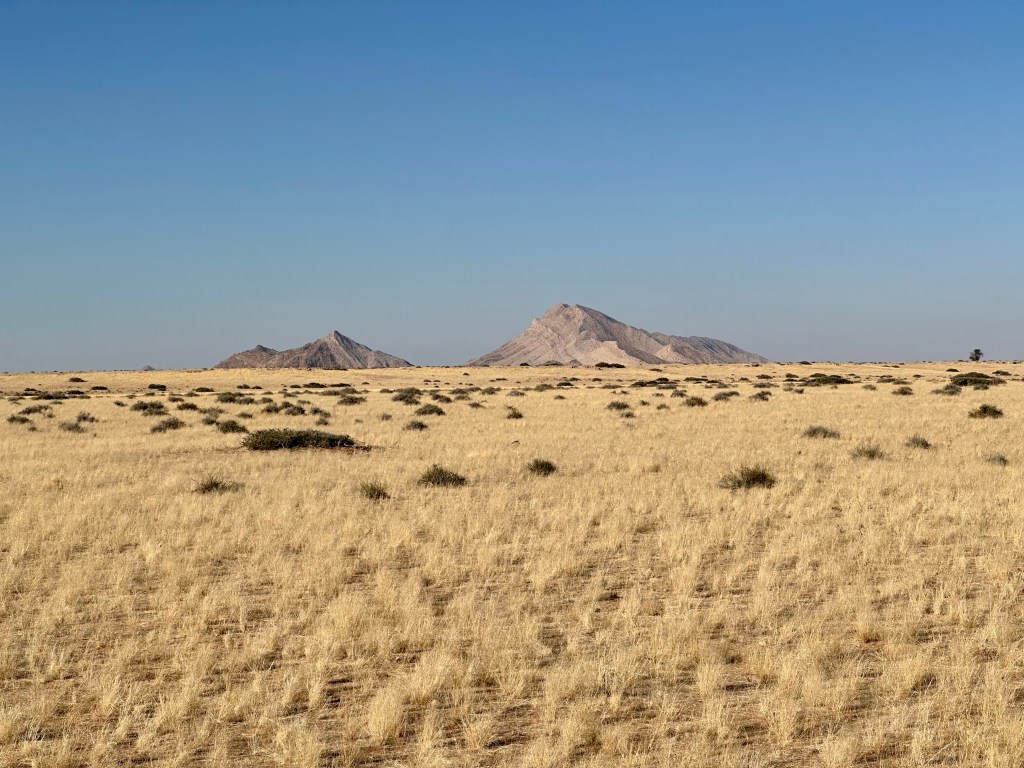
Wednesday was another big day – big on corrugations and rattling kidneys. One of the South African colleagues referred to the roads as a ‘ball-breaker’ – Ness thought ‘boob-shaker’ was the ladies’ equivalent.
The distance between our lodge near Sesriem and Swakopmund was less than 500km , but most of that was on very poor roads, we were often lucky to maintain 40kmh. Along the way we saw plenty of the now ‘usual’ Oryx, Springbok and Ostriches.
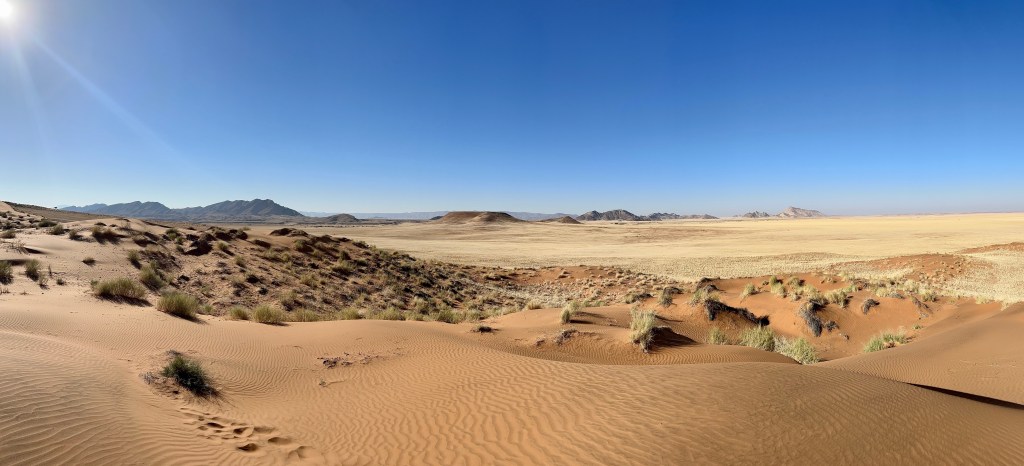
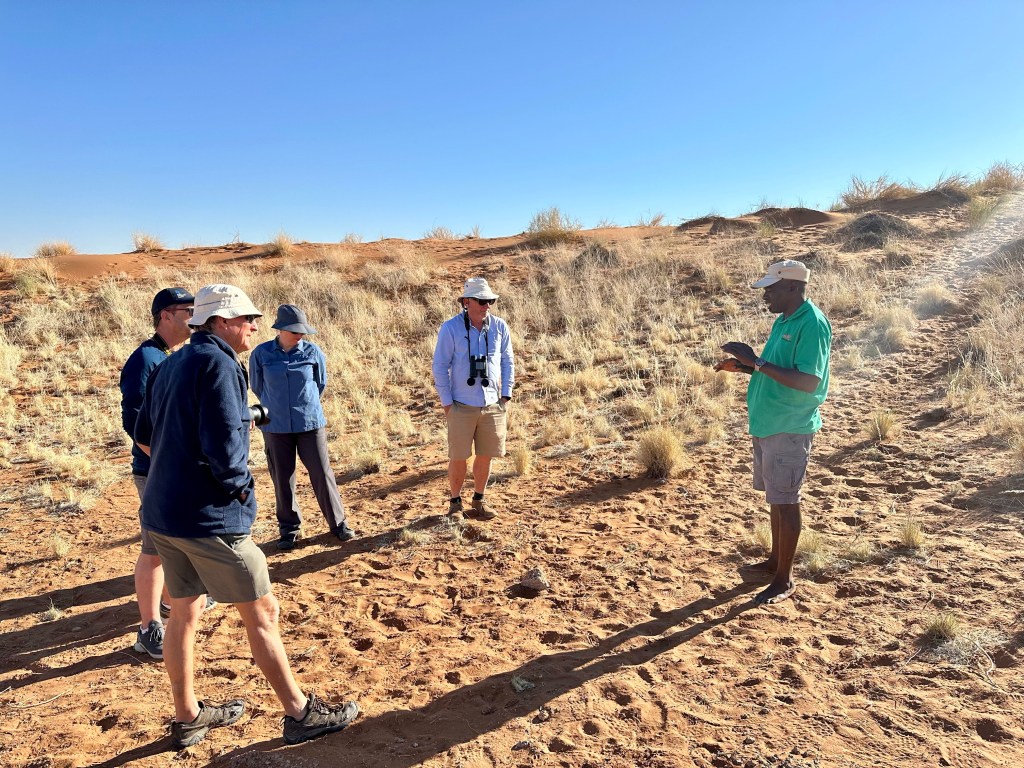
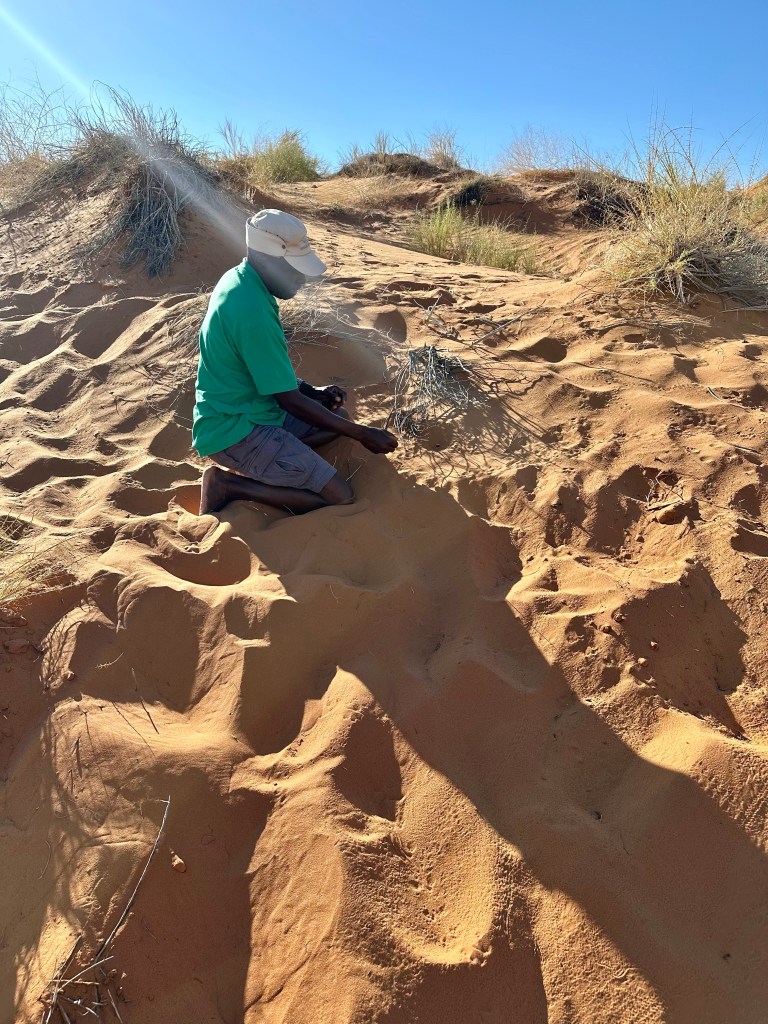
A highlight was a stop mid-morning for a trip into the desert for an hour or so with a local. Boosman was a great guide and a fantastic narrator of the stories of the critters who live in the desert. He gave us a real feeling for how the environment there works – a 10/10 experience.
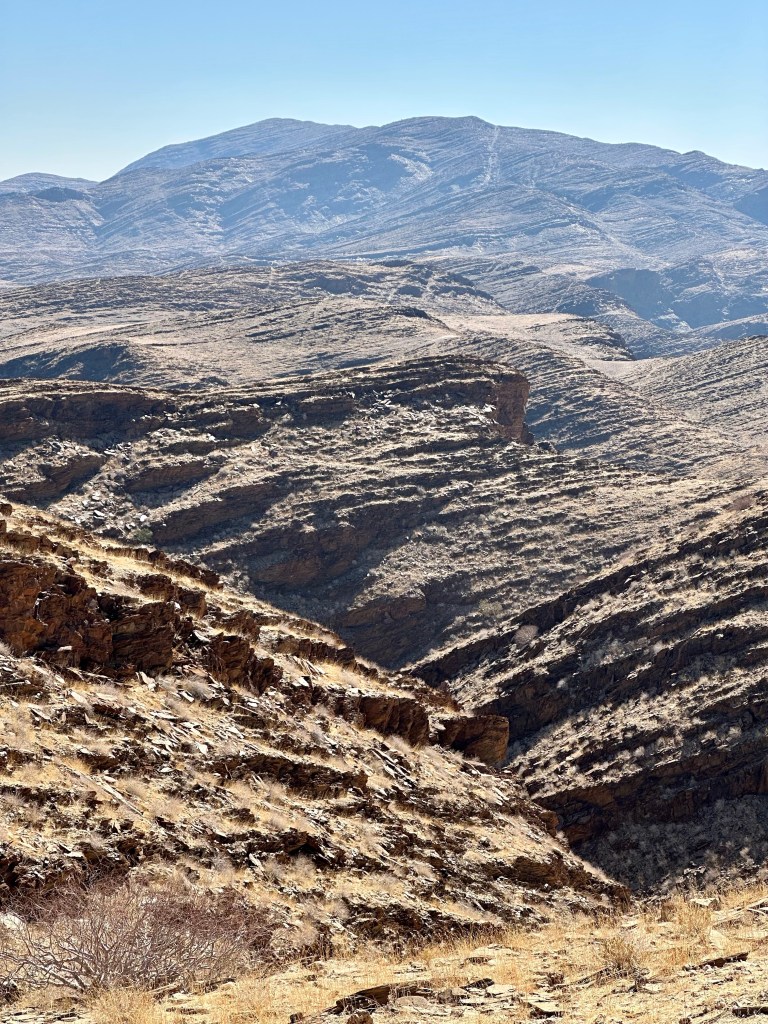
After the desert excursion it was another jarring 90 minutes or so until a look out stop over a pass, where the road started to drop from 900m above sea level – remembering our destination was actually at sea level. The views of the tortured strata , typical of much of the Naukluft mountains, were stunning. Namibia has some truly remarkable landscapes.
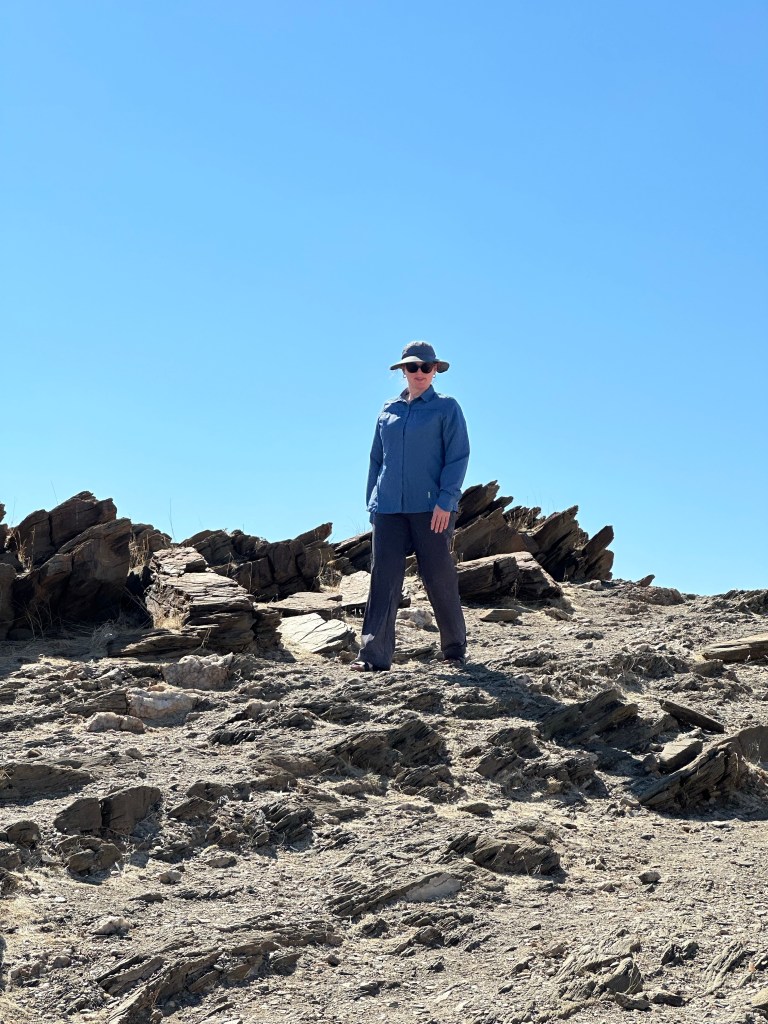
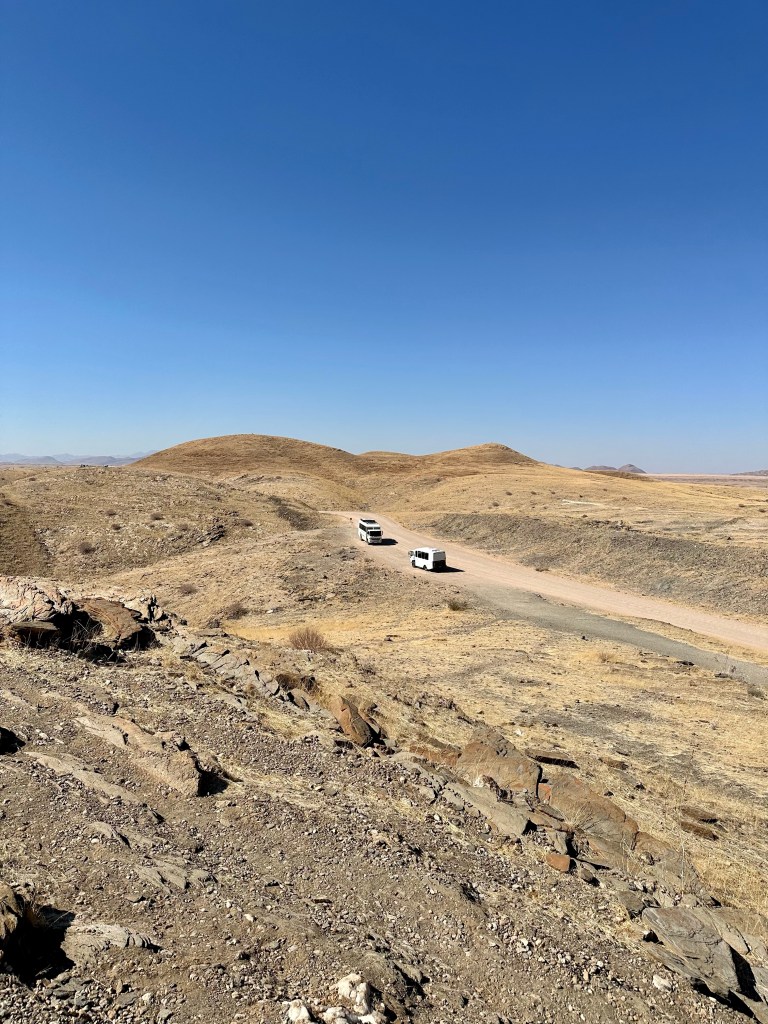
After the pass it was another hour or so, past an old uranium mine, to a lunch stop high on a rocky Kopje. Interesting fact – Namibia has the second highest amount of uranium in the world ( Australia has the most). Namibia has three active uranium mines – all run and operated by the PRC…
After lunch it was another few hours in the truck, although the roads improved ever so slightly. We had a stop to see the Namibian national plant – the Welwitschia Mirabilis -a very weird thing. And another stop near Swakopmund to see yet another ‘lunar landscape’.
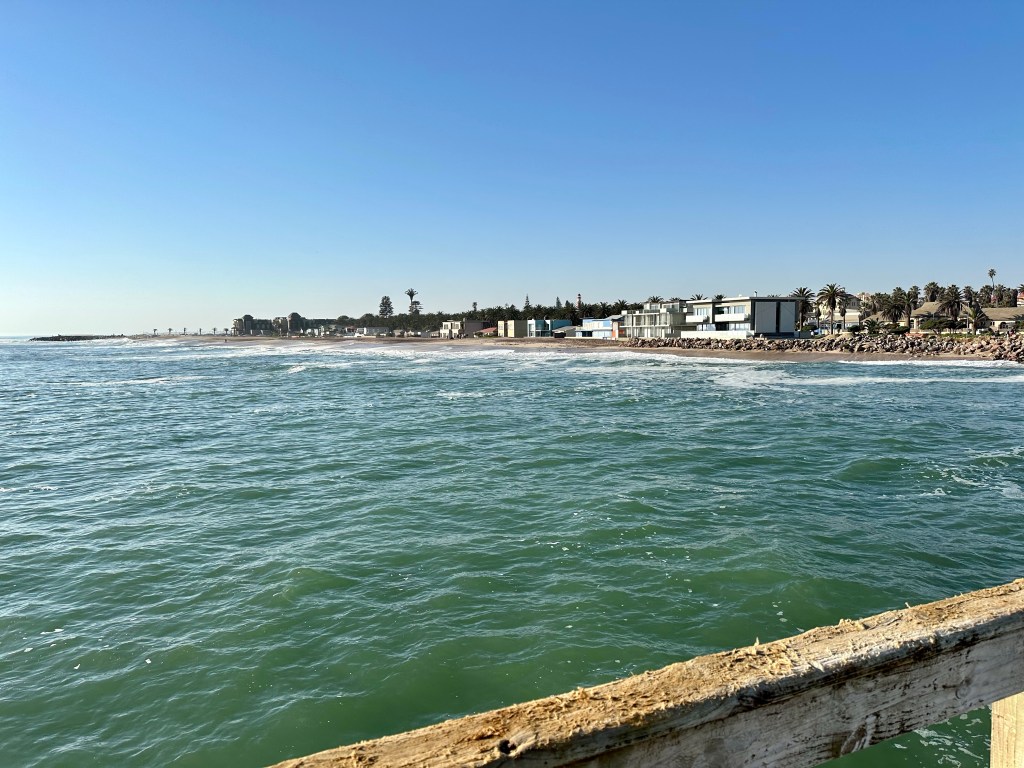
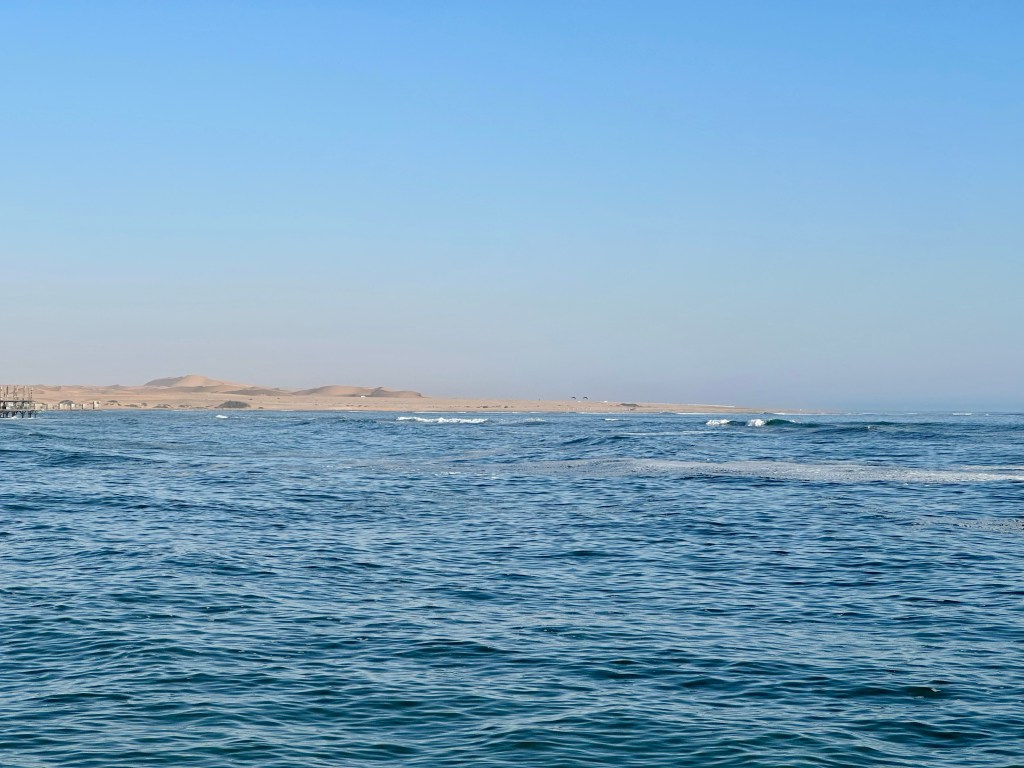
We eventually got into Swakopmund around 4pm. We had a quick drive around for orientation purposes and a walk on the pier constructed by the colonial Germans beginning in 1907. Swakopmund really doesn’t have a useful harbour- the Atlantic just hammers in. The only really useful harbour on the Skeleton Coast is a few kilometres south, at Walvis Bay.
Walvis Bay was first held by the British, then the South Africans, even after Namibian independence. It is now part of Namibia.
It was then into our hotel , followed by dinner in a local restaurant with our Nomad travelling crew of amigos.

 Ness’ and Mark’s Wandering